


.JPG.cfcada9cf1c1b502df3f5f2f2ca3ff36.JPG)
SteveJ
Community Member
-
Joined
-
Last visited
Everything posted by SteveJ
-
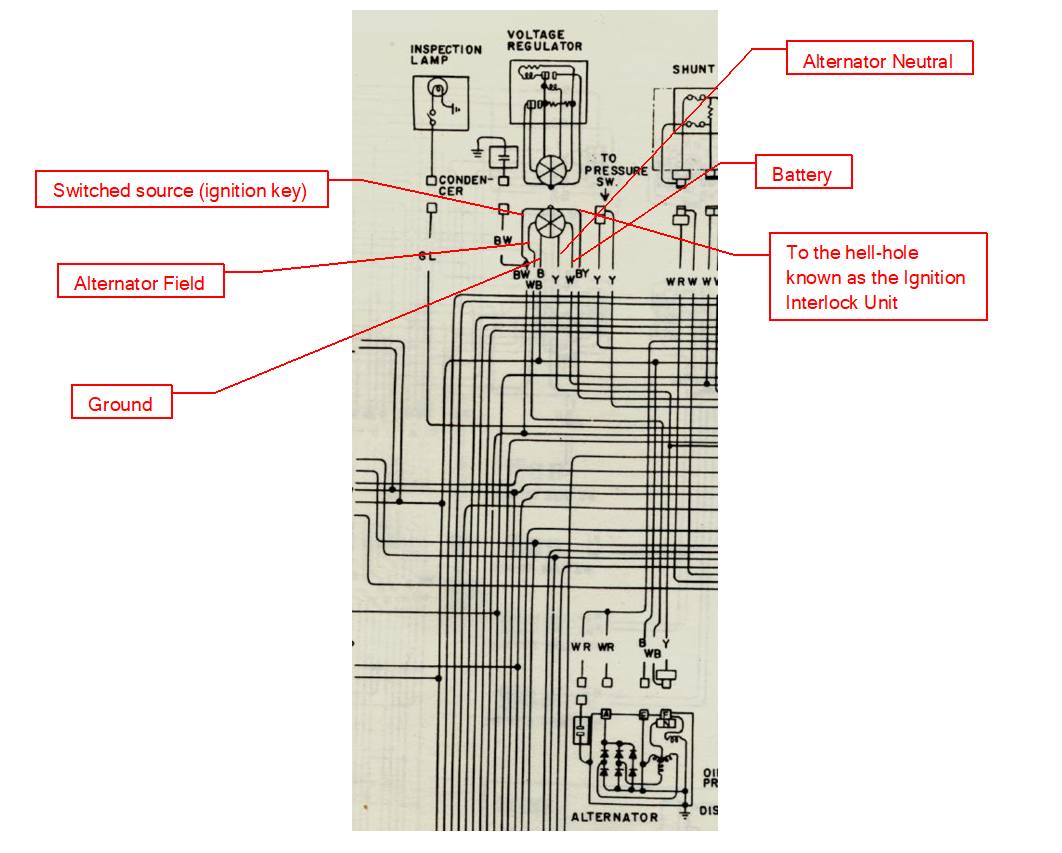
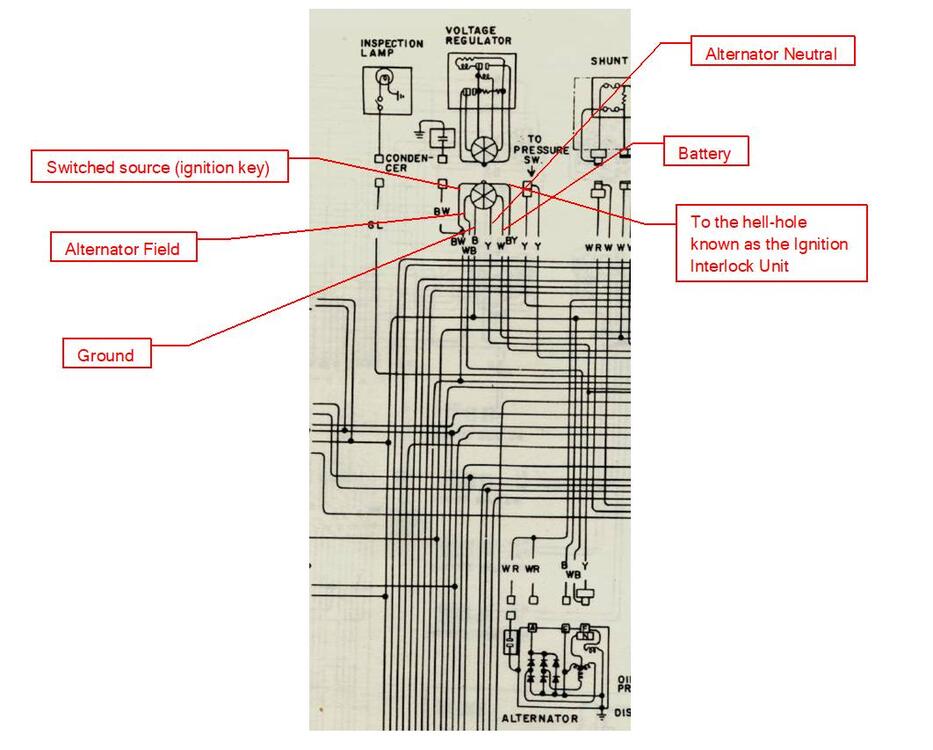
So when the key is on, the B/W wire has 12VDC. The Y wire will have about 7 to 8 volts with the alternator turning (full alternator voltage divided by the square root of 3). The B/Y wire is just to provide a ground to the hell-hole known as the Ignition Interlock Unit (Boo! Hiss!) Chances are that it has already been bypassed in your car. Note that in other parts of your wiring, B/Y is 12VDC when the key is in start and goes to the Interlock Relay (Again, Boo! Hiss!). B is your ground. W is your battery voltage and goes to the alternator through the WB wire when the appropriate contacts are closed.
-
That lines up pretty well with what I was reading on the power supply.
-
I actually did that once before I tore apart a fuel gauge to look at it. I only connected the green and yellow wires to a 12 volt source (2 lantern batteries in series) without a load. The gauge went to full, and I can't remember how long I had the circuit completed. However, later on the gauge would not register at all. This was 10 years ago before I started studying the wiring diagrams to death. It was interesting to see in the video how much the current dropped after the first heating coil came up to temperature and started operating the voltage regulator. Mind you, that was on the second run of the day after I verified I had a working circuit. I just ran a test. It took about 7 seconds for the VR to come up to temperature with an ambient temperature of 64 degrees F. I don't really want to see what the power supply ammeter reads without the VR just in case I'm right that it could burn up the gauge.
-
Thank you for the correction. What I wanted to show most in the video was that the voltage regulator should be connected while testing. I have seen in the archives about people testing the fuel gauge out of the car, and it failed when they only connected the green and yellow wires (no wire from black to ground) for testing. The gauge I used was one I purchased about 10 years ago and never tested. Fortunately it is a good gauge. Again, when testing, don't forget to connect the black wire to the negative of your power source.
-
Or you could put a short bolt in there with a fender washer on each side. That would hit the plunger on the switch.
-
So I set up the gauge with my power supply and a variable resistor. It's interesting to me to watch the power supply ammeter while I'm doing the demonstration.
-
You didn't see something like this on your brake pedal?

-
You'll need to find a longer bolt. The part is 46518-21000. It is NLA. I'm surprised that Steve Nix hasn't made a reproduction. @nix240z Is this something you might be making in the future?
-
-
I'm glad I tagged you, Cliff.
-
Here's an image that @Zed Headposted in a thread a few years ago: And here's one of how the oil pump shaft should look from the top before you install the distributor (courtesy of @siteunseen)
-
From the EL section of the FSM: Not having done that before, I would say you're looking for a mark like on the shaft in the view on the left. Or this:
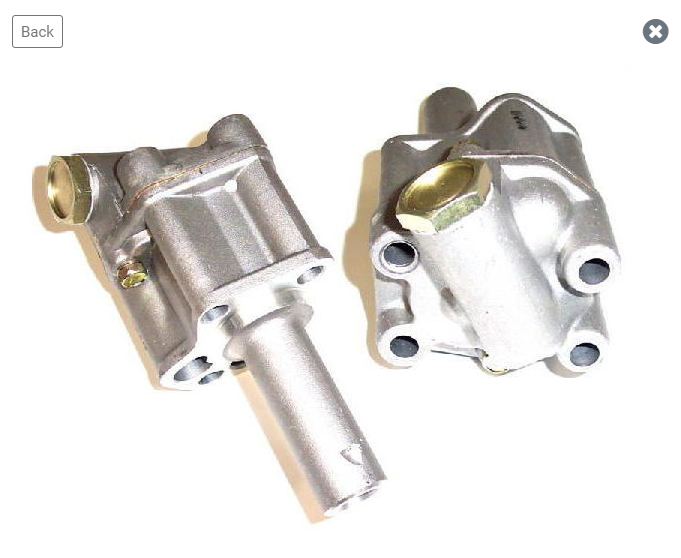
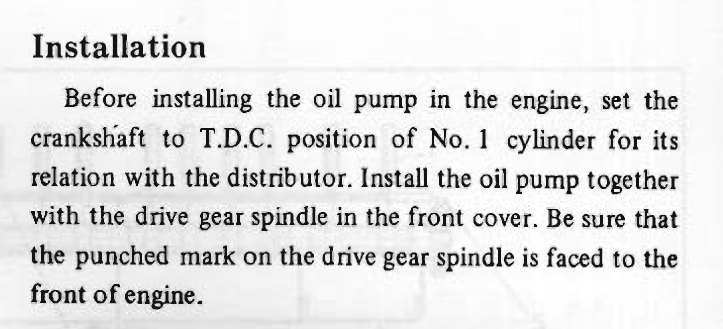
-
Well, if you have #1 at TDC on the compression stroke, yes, you put the oil pump and distributor back in wrong.
-
That's probably the right stuff. I just like getting it like this: https://www.amazon.com/3-in-ONE-Motor-Oil-3-OZ/dp/B084VPH4LY It's easier to put in the carburetor with that bottle.
-
Yes, just a little bit of 20w oil. I like using the 3-in-1 20w.
-
Just let me know if/when you need electrical help.
-
@Wally Your coil wiring doesn't look quite right. For the Pertronix, the ignitor looks to be wired correctly to the coil. Just make sure the red wire is on the positive and black is on negative. There should be a black/white wire going to coil positive. The green/white wire should be connected at the same terminal on the ballast resistor as the black/white wire. Again, watch the video I linked on how to differentiate between the black/white wires. The jumper wire from the coil positive to the ballast resistor can go away once you have the other wires in the correct position. Static timing would be to check to make sure the rotor has moved just barely past the terminal for the #1 spark plug wire when cylinder #1 is at TDC on the compression stroke. (That sounds like a future video.) Unless someone has removed the distributor or oil pump and reinstalled incorrectly, about the only way for the static timing to be off by much would be if someone forced the rotor onto the distributor shaft in the wrong orientation. That's a challenge, but I've seen some people try. From your video I can tell you have a very weak battery. Make sure it is fully charged before you try again.
-
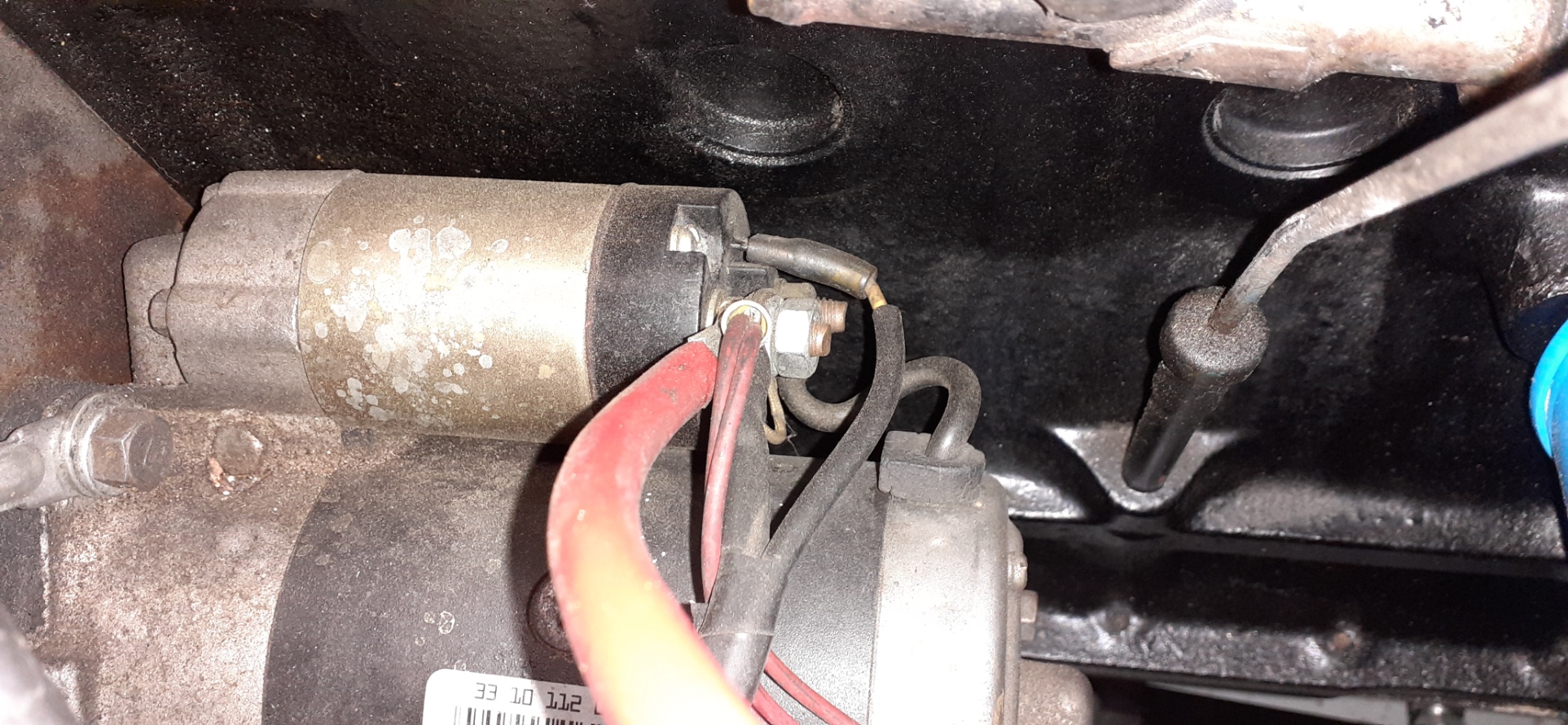
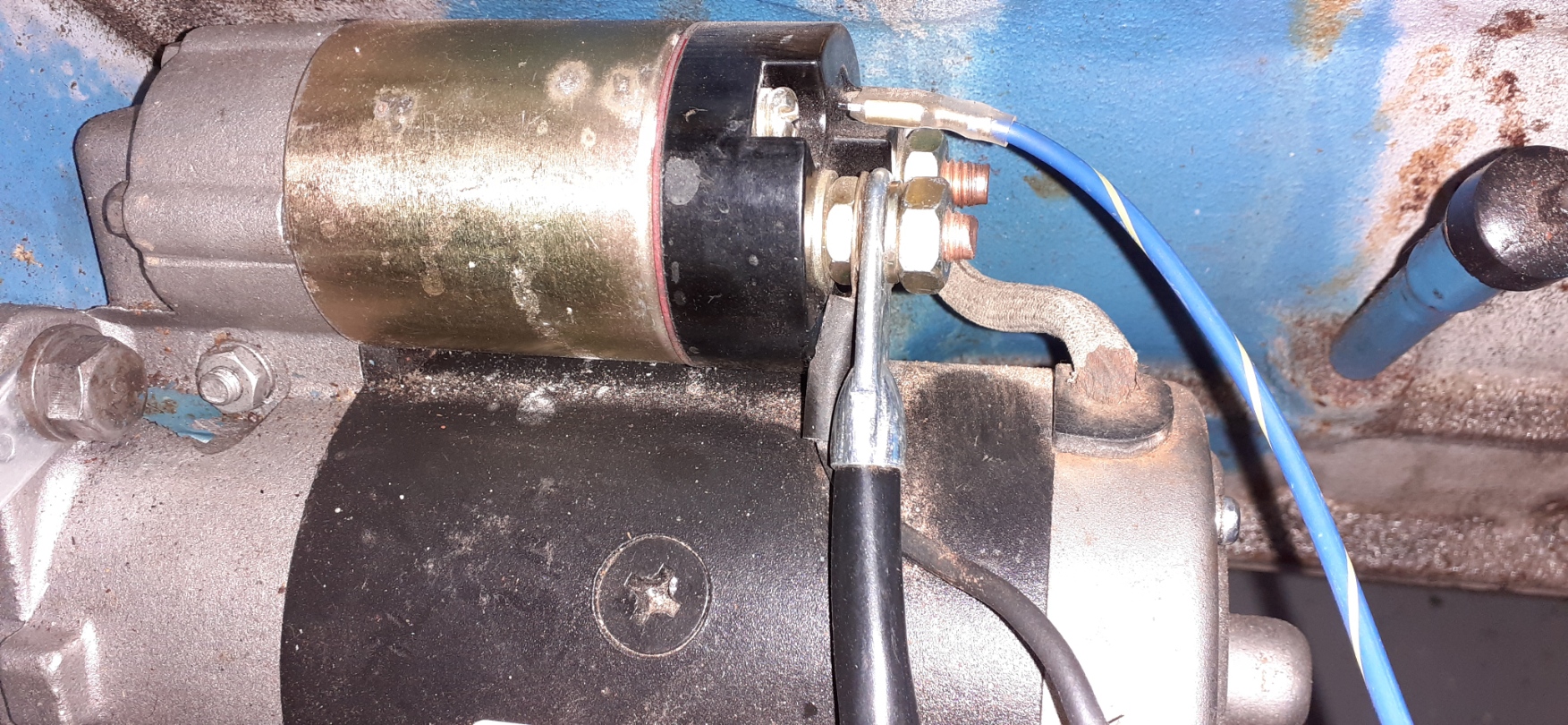
I'm not sure what lights you are referring to. When you place the key in start, the white/red wire going to the ignition switch connects to the green/white wire and the black/yellow wire. The green white wire goes to the tachometer and comes out black/white. The black/white wire goes to the coil positive. The black/yellow wire goes straight to the solenoid to engage the starter. There should be a spade connector on the solenoid to plug in the black/yellow wire. I can see the black/yellow wire going to the solenoid in you last photo, but the solenoid is partially obscured by the heater hose. Here is the solenoid power connection in my cars. In the first photo, the solenoid wire is the blue/yellow wire with the insulated connector. In the second photo, it is the yellow wire with the insulated connector and black insulating sheath. The smaller gauge red wires are for my headlight relays. I suggest setting up your voltmeter to verify you have voltage at the black/yellow wire when the key is in start.
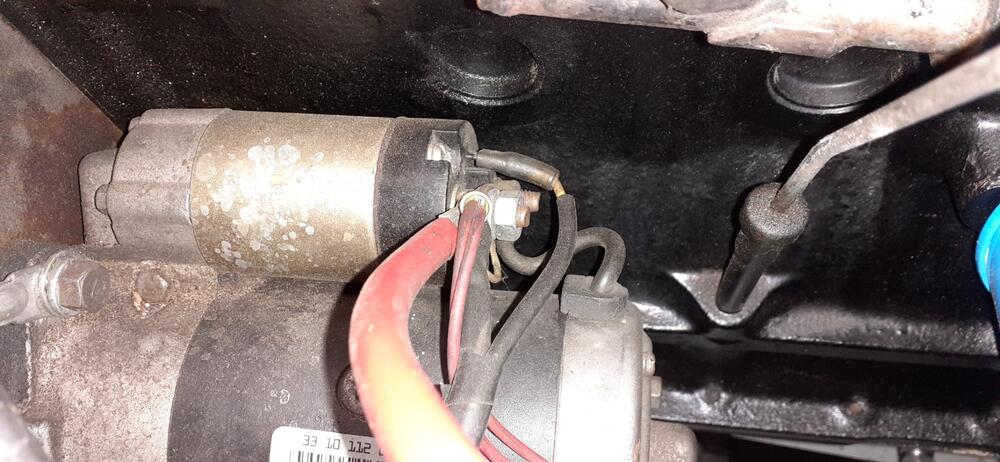
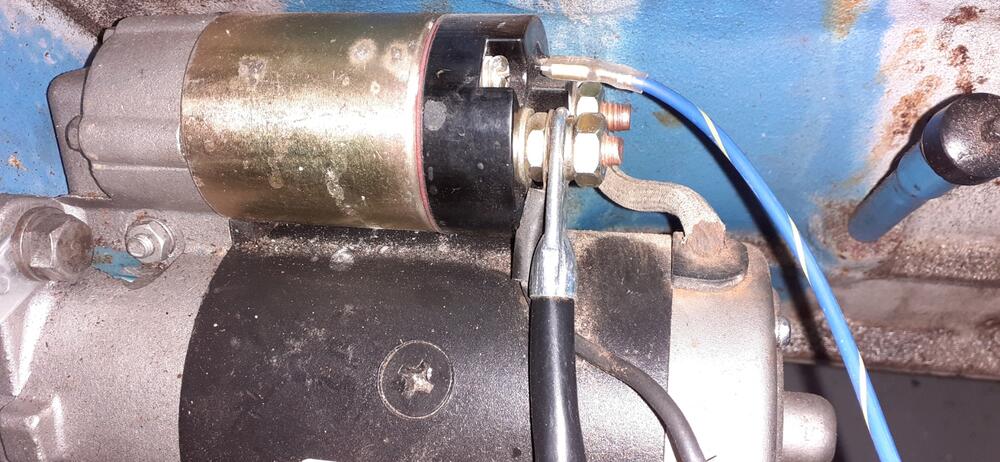
-
I'll try to remember to set up a test rig to demonstrate testing this weekend.
-
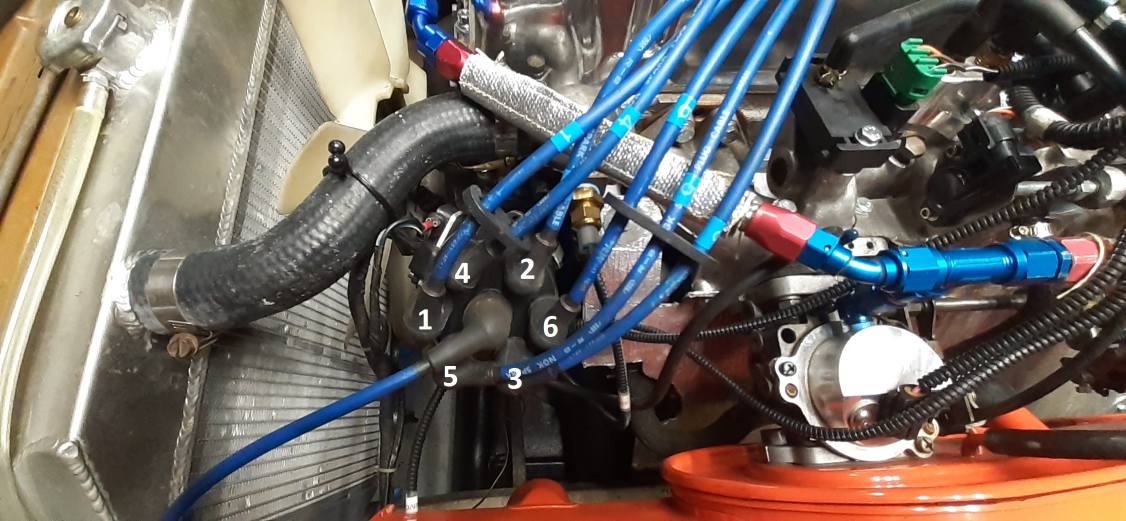
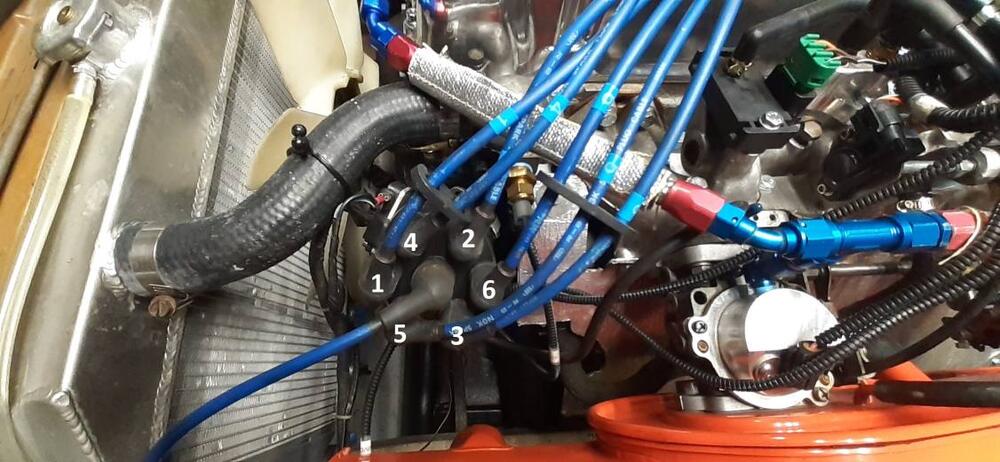
Missing data: What ignition do you have? Is it stock points? Pertronix? Crane? 1-2-3? ZX? Stock wiring: There is a black/white wire that goes to coil positive. There is another black/white wire that goes to the ballast, and a green/white wire that goes to the other side of the ballast. @Captain Obvious has a nice drawing that he labeled. If you need to figure out which wire is which, I did this video. However, you said you're getting spark, so in all likelihood that is wired correctly. You have not said anything about verifying static timing. You have not said anything about verifying firing order (1-5-3-6-2-4 counterclockwise) Have you verified that there is fuel in the float bowls? As @Zed Headsuggested, will it fire with starting fluid?
-
I'm not sure what to think without more information.
-
Post a video on Youtube of what is going on and link it here. Some visual evidence may help.
-
How old is the battery? Is the car running? If not, hook up a battery charger that has a 10A or 15A setting. Repeat and see if you get the same results.
-
The ZCON page for Birmingham is live now: http://zcon.org/conventions/2022/ Registration goes live on 1/1/22. Here's a link to the convention hotel: https://www.hyatt.com/en-US/hotel/alabama/hyatt-regency-birmingham-the-wynfrey-hotel/bhmhr
-
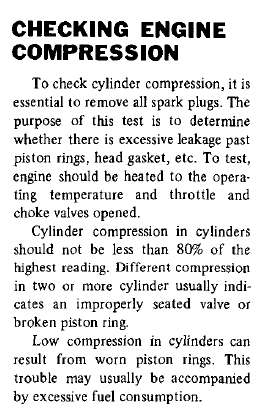
Why not go with what Nissan recommended to do for compression testing? (In this case, you can find it on page ET-5 of the 76 FSM)