


Leaderboard
-
conedodger
Community Member5Points13,006Posts -
Yarb
Supporting Member4Points2,091Posts -
w3wilkes
Community Member3Points1,002Posts -
.JPG.cfcada9cf1c1b502df3f5f2f2ca3ff36.JPG)
SteveJ
Community Member3Points9,726Posts


Popular Content
Showing content with the highest reputation on 01/02/2026 in all areas
-
3 pointsWhen was the last time you heard your horns work? The way the circuit works is that the GR wire comes from the fuse to the horn relay. The GB wire goes to the steering column to the copper tab on the turn signal switch. When you press the horn button, the GB wire is grounded. That should complete the circuit for the coil on the horn relay. At that point the GR wire and G wire are connected, completing the circuit out to the horns. To test the relay, take the GB wire off the relay and use a clip lead to ground the S terminal on the relay. (See below.) Ideally, you should hear the horns. Hopefully you at least hear the relay click. With 12VDC+ on the B terminal and the S terminal grounded, you should have 12VDC+ to ground on the H terminal. When I was waking up my 73 from 11 years of slumber, I tested my horns. They didn't work. I tracked the problem down to corrosion on the horns where the green wire connects to them.
 3 points
 -
2 pointsYup!! I hit the report button first for Mike and put up the "spot the bot" notice for everyone else.2 points
-
1 pointThe L28 is the correct motor for a 1975 USA 280Z car. It does appear that the serial number on your block 413582 does not match the serial number on the id plate in the 4th picture of your first post in this thread that shows a SN 014280 or maybe 6 for the last digit. Possible that the motor was replaced. The plate in your first post does identify the motor as a L28.1 point
-
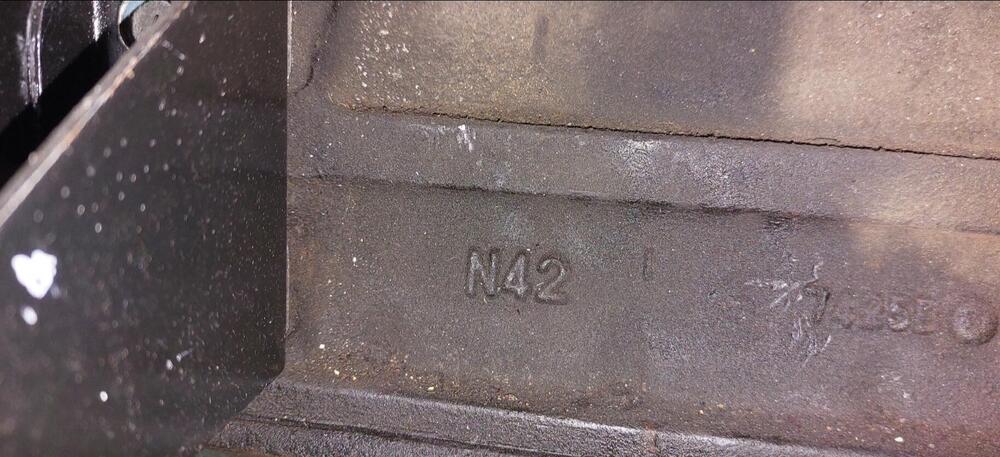
1 pointFrom the information you posted. It looks like a 2.8 ltr N42 block with an N47 head. The 280Z would be the most common in north america. 280Z used the N42 block from March 75 to June 78. After June 78 was the F54 block. The N47 head was used from May 77 to June 80 (S30 and S130) All L24, L26 and L28 engine blocks have the code cast into the side just behind the left side engine mount bracket. I have a photo, but the site is refusing to upload🤔 site keeps kicking me out.
 1 point
 -
1 pointFurther back in the thread of the engine bay pics there is a plate on the driver side. My 1/78 only has that plate as well. And of course one plate on the door jamb. I believe the 75 model also had the N42 head.1 point
-
1 pointI don't see that list you posted anywhere in that link. Maybe you clicked through to get there? Anyway, there are really just three "L" stampings on the blocks, as far as I know. L24, L26 and L28. 2.4 liters, 2.6, and 2.8. The L24 used in the Maxima was called an L24E but I don't think that they stamped the E on the block. You just had to "know". I don't think that L24E was a Nissan designation it's just what people out here call it. Can't remember for sure though, but I do know that the E was not used on the L28's.1 point
-
1 pointNot clear where you got the Wikipedia info. It's incomplete. I looked around and find that even the latest Wikipedia entires are incomplete. Kind of strange but I guess that's how "open source" encyclopedias work. No single source is dependable. Too many people can get in and mess things up. https://en.wikipedia.org/wiki/Nissan_L_engine The 240Z is not mentioned here - L24 Nissan L24 engine The L24 was a 2.4 L (2,393 cc; 146.0 cu in) engine produced from 1969 through 1984. Like the L20A, it was based on the design of the L16. It produces 130 PS (128 bhp; 96 kW) and the version with twin side draught SU Carburettors produces 150 PS (148 bhp; 110 kW). Bore and stroke is 83 mm × 73.7 mm (3.27 in × 2.90 in). A single carburetor version of the same engine was also standard in the Laurel sedan (240L) for various export markets, in the years 1982 –1984. While the last generation Cedric to use this engine in Japan was the 230-series (1971–1975), Yue Loong of Taiwan installed it in 430-series Cedrics at least as late as 1984.[12] But the 260Z is here - L26The L26 is the larger 2.6 L (2,565 cc; 156.5 cu in). Bore and stroke is 83 mm × 79 mm (3.27 in × 3.11 in). It was produced from 1973 through 1978. It produces 140–162 PS (138–160 bhp; 103–119 kW). In 1975, the L26 replaced the Prince G-20. The L26 makes around 165 bhp (167 PS; 123 kW). Applications: 1972–1975 Nissan Cedric (230 Series) 1974–1977 Nissan Laurel (C130) 1974 Datsun 260Z 1974 for North America. 260Z sold in other countries until 1978 1976–1978 Nissan Cedric (330 Series)1 point
-
1 pointDoesn't the 280 have a plate on the passenger wheel well with the engine size and serial number like my 240 has?
 1 point
 -
1 pointNot sure you have the right information. Others will chime in but that’s the correct head. IMO1 point
-
It just goes to show you, there's different strokes for different folks... The bid on the red one is already higher than the bid went to on the green 280Z.1 point
-
1 point
-
Hi there. I have a R200 mustache bar p/n 55450-N4300 available. It's all original, down to the paint and bushings. I don't have any of the other parts for the conversion though. Located in California
 1 point
 -
Thanks everyone for the tips! Really looking like the carb tuning (or nature of these carbs) is the culprit. I’ll look into it further this spring. In the meantime, the leaks needs to be addressed.1 point
-
I have been doing loads of small things over the Christmas holidays, and also got many deliveries of recently acquired stuff. Let's take a closer look at what happened in the past few days. First, I got various deliveries of Books from Japan fore some nice holiday-season reads: But then I thought i should better do some actual work on the car. So I installed the passenger seat: It's actually the first time I can sit inside the car since 12 years or so. The reason I installed this car, was to figure out which route to go with the seats (OEM or aftermarket) and find a suitable solution for installing my Autolook seats into the car. So I have ordered some parts and hope to do some final trials in a few weeks, when the parts arrive. Speaking of Autolook, I got various small deliveries of random cool stuff which I bought recently... One of them being an Autolook sticker set, including two of the original Aluminum plate reproduction stickers that go on the back of the seats. Then I also got this 1982 Nissan Motor Co / Datsun Suisse SA Image brochure, which is quite cool. It has loads of interesting pictures and information about how they operated back then and I have used many photos from this brochure for my History post about Datsun Switzerland. So far I only had this brochure as a Scan from a friend, but after a few years of searching, I finally found an original Printed one. Some random Datsun (Switzerland) and Safary Rally Stickers: And various Datsun Spare-parts stickers. The left one is a Swiss one (German and French) while the other ones are international ones. I like the evolution of the "Spare parts dog". If you look closely you can see how the names slowly transitioned from Datsun to Nissan from left to right. (Cap and pants of the dog, and the Logo on the Sticker) Speaking of cool Parts. My man Stefan found a NOS hood release cable mechanism. And gave it to me. Very nice find: And then some work again: decided to install all the heater / Blower components. The reason was that I wanted to install the original Rally clock oscillator box: On JDM RHD cars there are two factory installation points in the passenger side of the fire-wall. Thanks to Alan for giving me the reference photos: I wanted to install / mirror it in the same position on my LHD car, but wanted to ensure that it actually fits there, when everything is installed. Which it does: So, I got my holes drilled. (Ignore the shady primer-work...) And got the box fitted. Nuts will go on the other side (not where marked). It will look straight when the insulation is in place. This is the position in the rear, just behind the battery tray. I will ensure that the body shop will weld proper nuts in place. Also, ignore that third hole (I believe some previous owner drilled that hole to install some aftermarket Audio gear). And then, I got some parts again: A set of Fuel tank straps by Revive Jalopy, including the J-hooks. I prefer the ones from S30.world, as they come with the complete installation hardware and rubber insulators, but they're out of stock, currently, but should be in stock back again, soon. And just to end the old year, I found another one of these missing tools for my Datsun tool boards. That's it for 2025. I have recently bought some rare and cool stuff in Japan, and I'm planning my next steps of the build, and hope to be able to have good progress in the coming weeks.1 point
-
1 pointWow Carl, has it been that long?!! Yeah, I don't get down to Florida much. That was a great time checking out the BRE Baja car and the rest of your Z collection.1 point
-
1 pointThank you Patcon, and Carl. Kurosawa san was born in 1940, He still drives his cars including a Honda NSX! I wish everyone’s happiness and good health for the new year. Kats1 point
-
1 pointRedline (https://www.redlineweber.com/) should be able to authenticate the carb set. redline@redlineweber.com Keith1 point
-
1 pointThe upper steel line coming out of the filter is the pressure side. Take pics of anything and everything before you consider taking it apart. Ask me how I know. Tons of pics on the internet. By the way do you have an FSM for your make and model? If not that’s thats the way to move forward before changing anything IMO.1 point
-
1 pointThe lines are pressurized with the lines connected correctly. So the spraying would be normal. The hose that connects to the fuel pressure regulator is the return line. The supply line connects directly to the rail.1 point
-
1 pointHave you installed a fuel pressure gauge between the filter and fuel rail on the engine itself? You will need that for diagnostics down the road and be able to see what is actually occurring. Quite a few threads here on that. Definitely a must do IMO. So many folks have been down this road.1 point
-
1 point