
Zed Head
Community Member
-
Joined
-
Last visited
Everything posted by Zed Head
-
You need to remove the calipers to remove the rotors and hubs. The rotors are bolted to the hubs, they are essentially one piece. You can hang the calipers using a strong string or wire, you don't have to break the brake fluid seal. But, I think that it's possible to change the lugs while everything is assembled. It's easier to have the hubs off and use a press, of course, but you can knock the old ones out and use stacked nuts and/or washers to pull the new ones in, while they're on the car. Just takes a little more ingenuity.
-
Now someone else will have more info about us. Credit card, Paypal (anybody noticed what a pain Paypal is now), whatever... https://www.craigslist.org/about/help/posting_fees

-
Since it seems that the PO's mechanic might have "hacked" some things to get it to pass emissions, a new plan might be in order. A basic tuneup maybe. Confirm initial timing at idle, confirm valve lash is set correctly. Have cylinder pressures been measured yet? Has the cylinder head and block combination been confirmed? There is a low compression ratio NA engine floating around out there that we helped a guy put together. It would be nice to see a summary of engine specs and actions taken so far. Cylinder head, block (the engine serial number should match the plate on the fender well). Too many pages to go back through the whole thing. My 76 has a 78 engine in it and a bunch of other minor mods. You never know what the trail of PO's have done. From Post #1 - "1976 280z California edition (manf. date Sept.1975). Bought the car in late Jan. 2019, car passed emissions test and it started and drove fine until 2 weeks ago when problem first occurred."
-
I remember a past thread, maybe several, where intake vacuum was being used to diagnose an engine problem and they had a really low number. My premise at the time was that intake vacuum only really showed the quality of the pistons, rings, and valves and wasn't good for much else. Then they found a giant vacuum leak. The lesson I got from that was that intake vacuum is really only good for the fine details. I could be wrong, of course, but I don't get much out of intake vacuum readings when they are way off. In theory, if the injectors are squirting enough fuel, you could have a leak so big right at the injectors themselves, that intake vacuum could be close to zero and the engine would still run. Air and fuel get sucked in by the pistons, they don't care where it comes from. Maybe the PO's mechanic didn't find the main vacuum leak and adjusted the AFM to compensate. Might be time to be squirting some carb cleaner or similar at the usual leak points. The base of the injectors is a good start, since they were worked on. The big positive here is that the engine will idle steadily. So you can run a bunch of tests. Take good notes and don't assume anything. Get numbers.
-
Nah, just plain old chicken. There's a lot of good stuff in the thread that you should recheck, all the stuff that people mentioned. The EGR and the AFM glue blobs and the CSV and the coolant temperature sensor and the TPS (actually TVS). The AFM and the sensor are the most likely. Take a magnifying glass and see if you can tell if the glue blobs are not where they started from. Check the coolant sensor circuit at the ECU connector first, not the actual sensor. Make sure the TVS isn't on WOT. Check, check, check...
-
Has anybody confirmed that the injectors are the factory green or tan NA injectors and not the purple/brown turbo injectors? Always worth confirming.
-
The checklists in this book will tell you a lot. Good news on the FPR, although you do have an extra one now. Weird that you know what I'm cooking for dinner...
-
It's your horse. I think I'm out. This isn't about making an old Z run right anymore. Good luck.
-
You're not really winning anything by showing that your previous posts were unclear. You're just showing that what I said was right. The needle stop is zero.
-
Actually it's a sign of inconsistency. The gauge was stuck at 3 for a while, then it's at 0. It fits the overall randomness of the readings from that gauge.
-
I think that we've all been just farting around with a bad gauge the whole time. Pittsburgh is a Harbor Freight brand. It's been fun. I have three gauges in my garage, two good ones and bad one (but with a known offset). His FPR's are probably fine. The AFM has probably been adjusted, by somebody, in the past. Might have some high resistance on the coolant temperature circuit. But, without "knowns" you're just stumbling around in the dark.
-
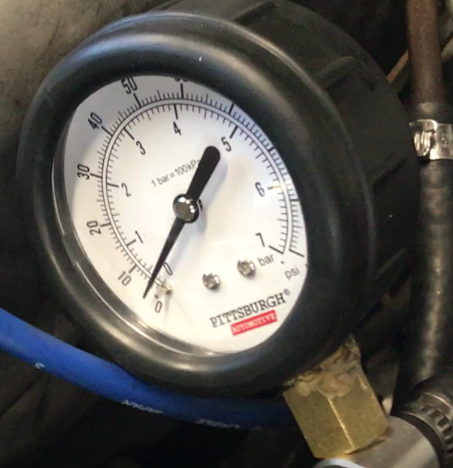
The silver thing is the needle stop. It's set at zero.

-
Your gauge has a 2-3 psi offset from the beginning. Have you ever seen the needle on zero?
-
Looking for causes for the variety of different readings.... I notice that gauge is upside down in the 5 psi reading. If you can get the gauge and FPR free on the end of the hose shake it around, turn it upside down, sideways, etc. and see if the reading stays constant. Just for reference, most of us would connect up a gauge, get the pump running, and the needle would jump to 36 - 38 psi and just sit there. Nice and steady, within seconds. Maybe you have something loose in your gauge. You really should not be having this much trouble getting a good consistent reading. Even if it's high, it should be 44 psi every time you disconnect the vacuum hose, or just on battery power. Even with a weak battery, really, you should get 36 - 38 psi. A weak battery will just take longer to get there, but probably not even a noticeable delay. The FPR does not open until the spring pressure inside is overcome. It's a pressure relief valve.
-
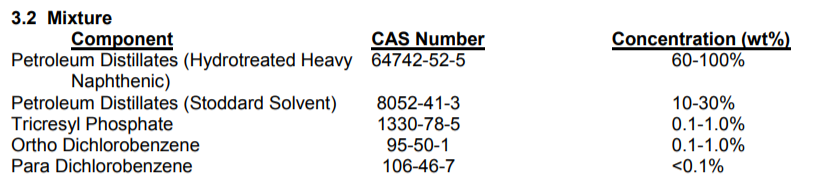
Diseazd said that his friend just fixed the tank (and replaced the fuel, I assume) . No mention of anything else. Marvel Mystery oil is basically just like gasoline, in solvent power. A good old Italian tuneup might do it. Just wear off the goo. http://www.marvelmysteryoil.com/media/1256/marvel-mystery-oil.pdf
-
44 - 36.3 = 7.7 psi. That is not 1 - 2 psi higher. I don't think that you're understanding how the FPR works. With no vacuum on the FPR port the pressure is supposed to be 36.3 psi. It doesn't fluctuate. Some of them are apparently set for about 38 psi. But none of them are set for 40 psi or above. No matter what they are set for, with no vacuum on the port the reading should be the same every time.
-
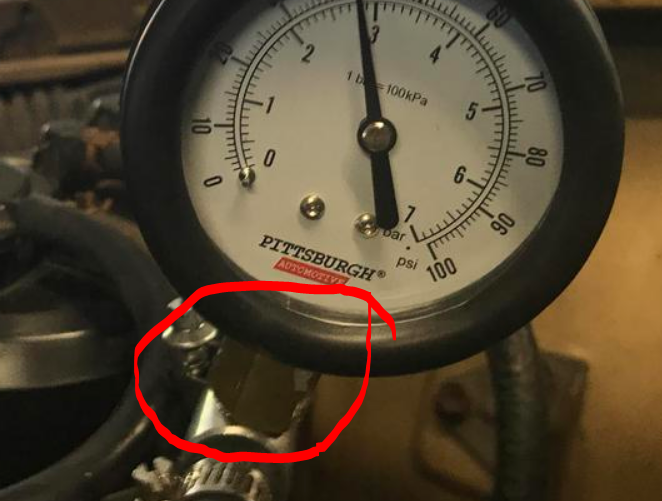
Unscrew gauge here -
-
You've found some good correlations but I think that the cause-effect might be off. Closing the AFM vane makes it act like a throttle blade, cutting off air (lowering idle speed), and also causing intake vacuum to increase (causing fuel pressure to decrease). Maybe the vacuum leak guys were right, but your bad fuel pressure gauge is making things confusing. You might have a big vacuum leak, causing low vacuum to the FPR which increases fuel pressure, a bad pressure gauge, causing the fuel pressure look high when it isn't, and and AFM that might be adjusted (except that it appears to be adjusted the opposite way to make things leaner). You have a lot of bad information. Bad in produces bad out. Notice that your fuel pressure reading with no vacuum is now the highest it's ever been. 44 psi. It keeps changing, nobody knows what it really is. If it was mine, I'd get a new gauge first thing. You can unscrew the gauge from the hose, you don't need a whole new setup. Any oil pressure gauge will work also. A 0 - 50 oil pressure gauge will probably screw right on there.
-
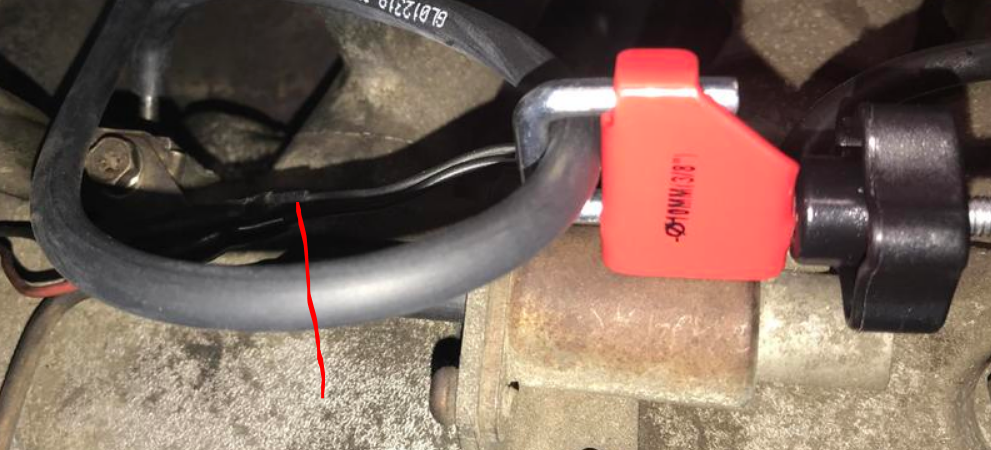
The clear one would work. You could clamp the hose with your clamp and break the connection at the clear connector. The vacuum in the FPR will be released and pressure will rise. The clamp will prevent a vacuum leak at the manifold.
-
If you cut the line where I marked and have some sort of connector it would work. But the clamp alone won't work because there will be vacuum inside the FPR. You have to release that vacuum. So, you'd clamp the hose, then release the vacuum. That would close the potential vacuum leak, but let the FPR vacuum out. You could also put a T fitting in the cut section and block the third connection.
-
Reread those posts and the ones right before them. You're back to the same type of situation. The same things apply.
-
And here...
-
Let's review...
-
Enough to be confident that you see or do not see a difference. You're kind of to the point where you should have a better feel for how things work, than you did when you started the thread. Since the engine does run, you can poke around, take measurements, and see what happens. If you just run through the list of things to do your progress will be very slow.
-
Hose on - pressure reading. Hose off - pressure reading. Repeat a few times. Tell us a story. Your pressure readings are so erratic throughout the thread that you need to do those comparison within seconds and tell what happened.