


.JPG.cfcada9cf1c1b502df3f5f2f2ca3ff36.JPG)

SteveJ
Free Member
-
Joined
-
Last visited
-
 Wait until you find out about power tools...
 -
M16.4 - https://www.rockauto.com/en/moreinfo.php?pk=3270447&cc=1209169&pt=10231&jsn=605 That is approximately 5/8, but I'm not sure
-
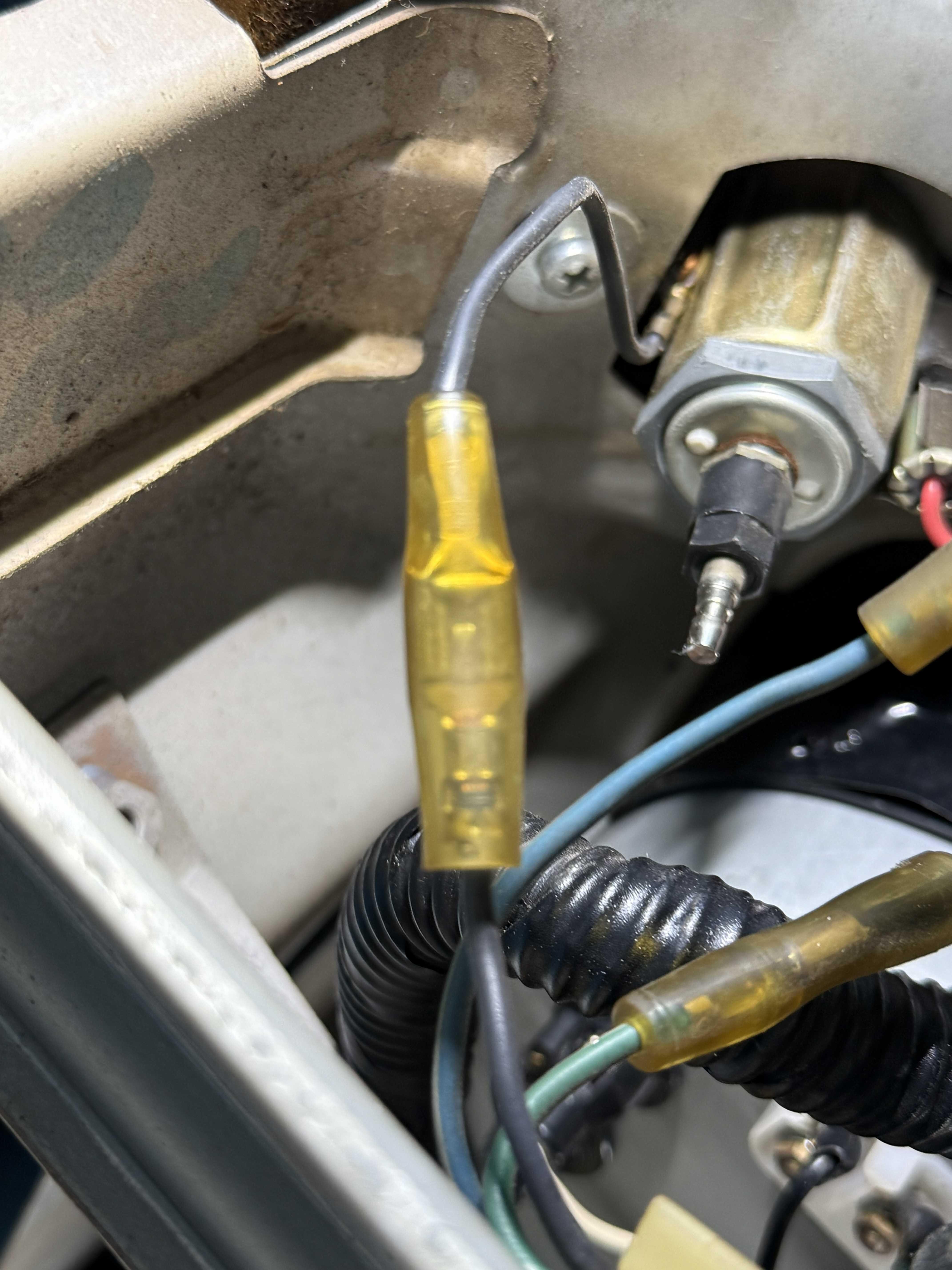
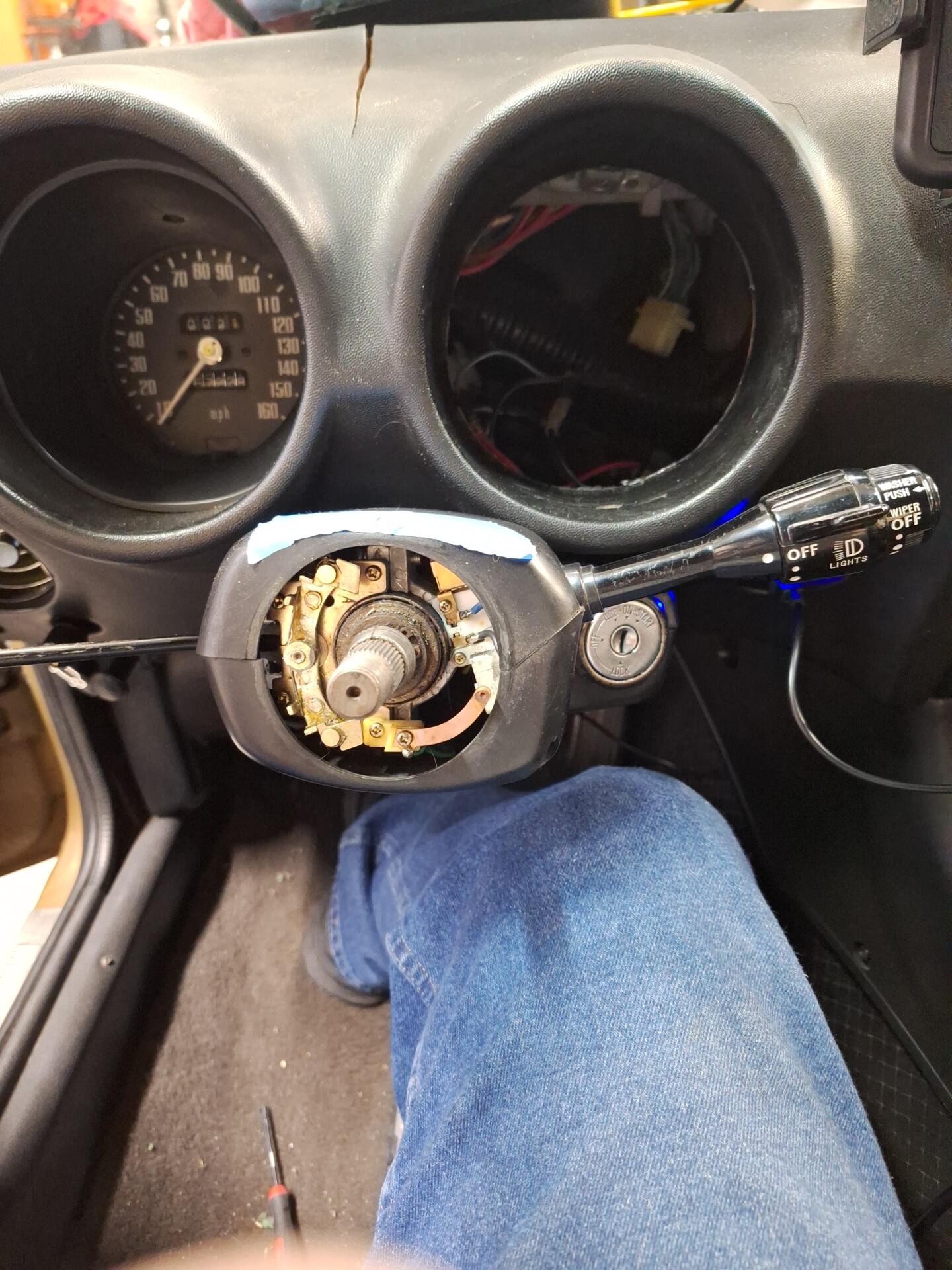
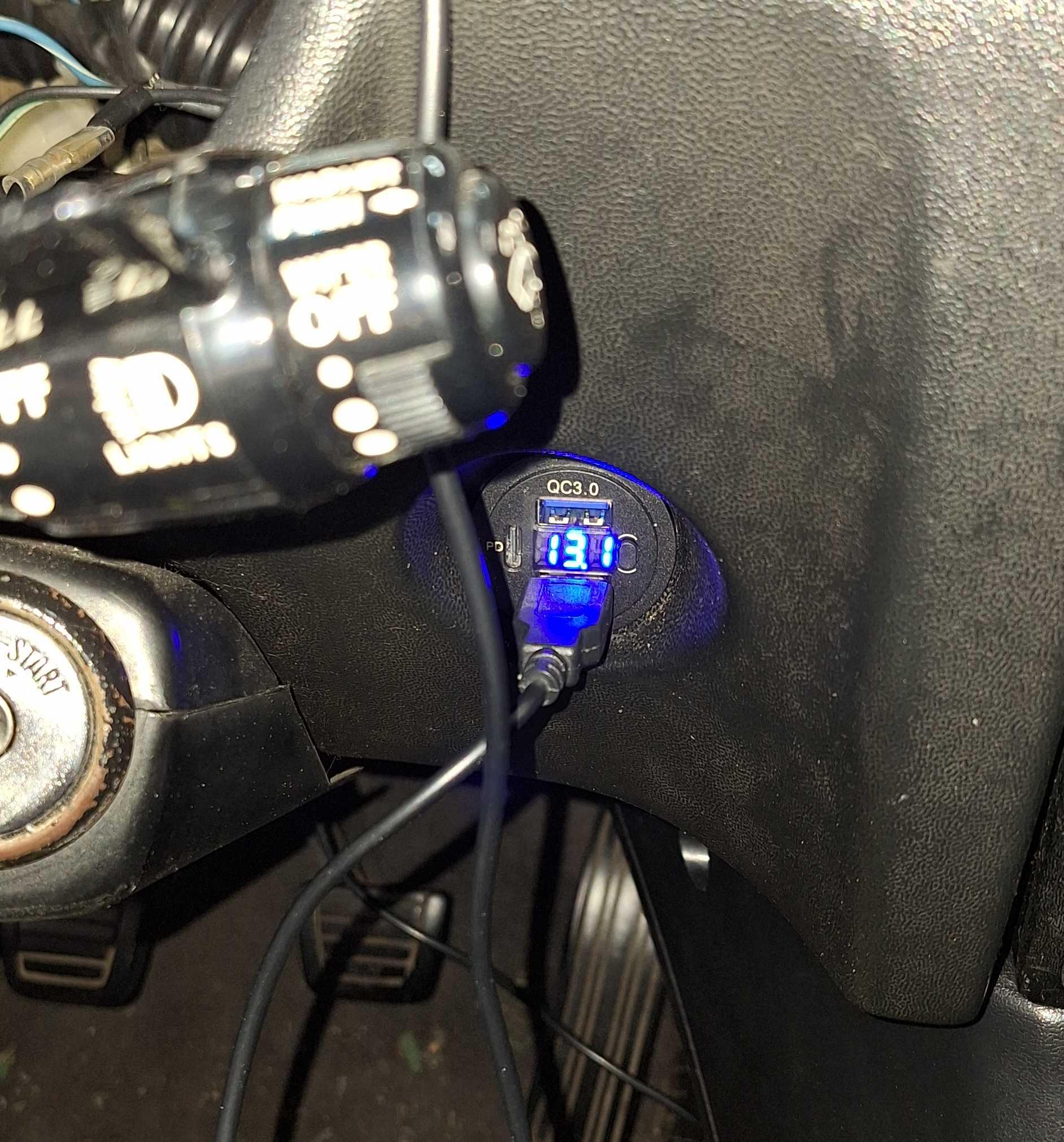
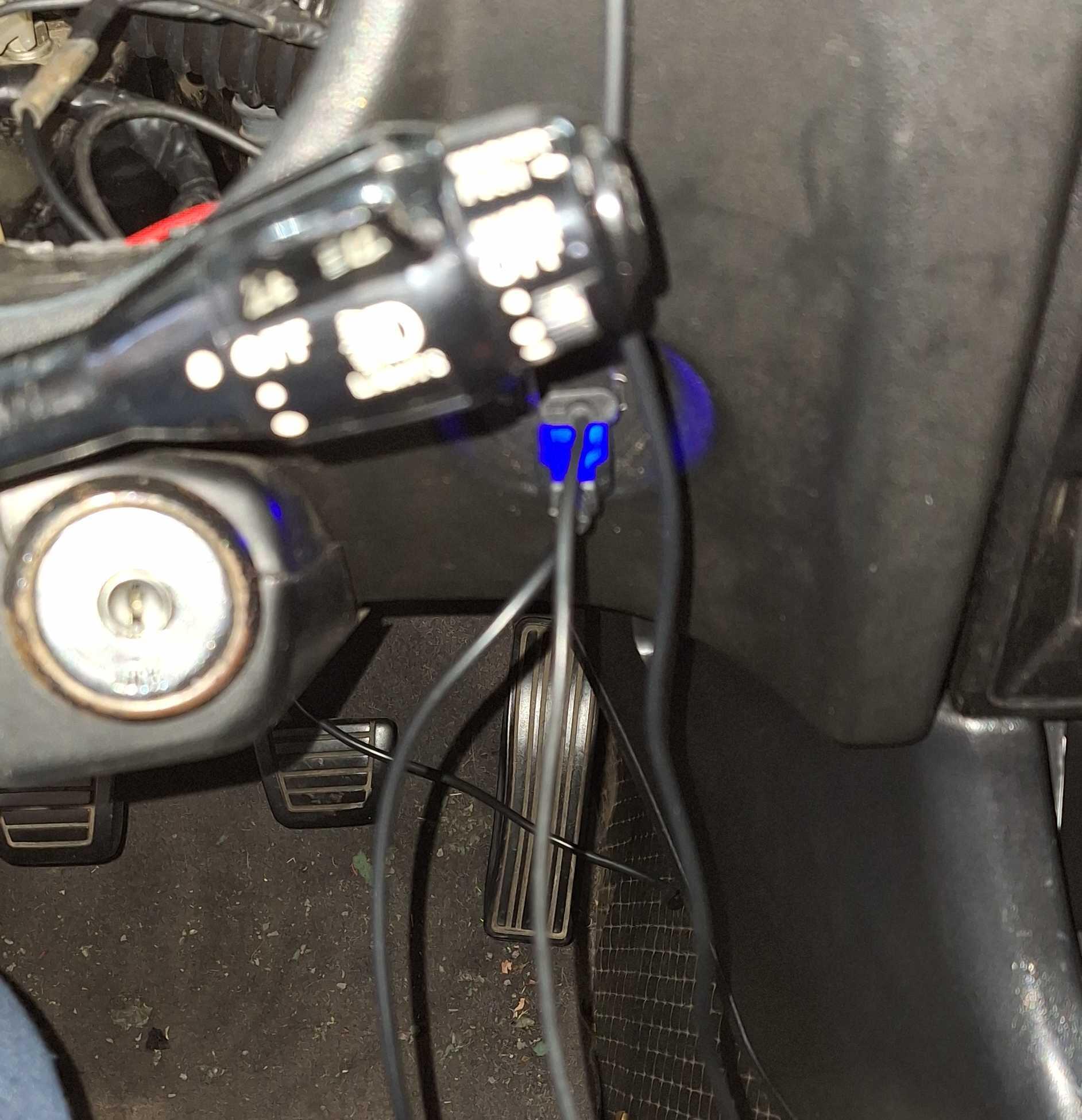
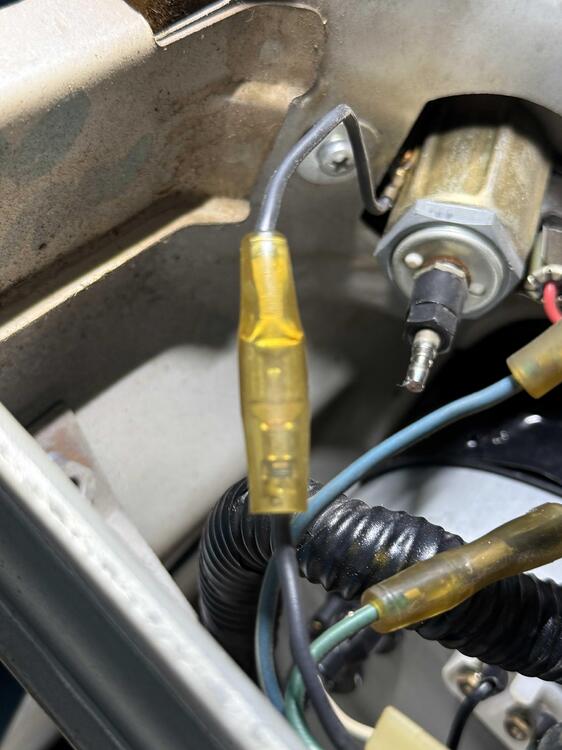
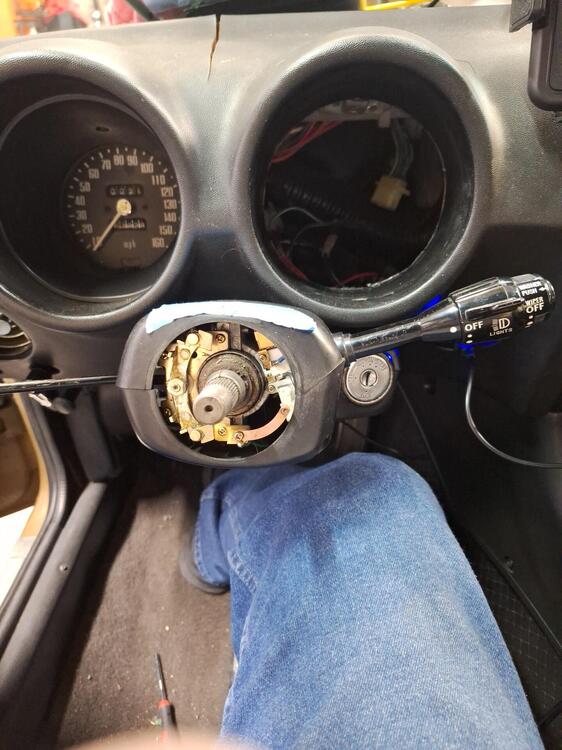
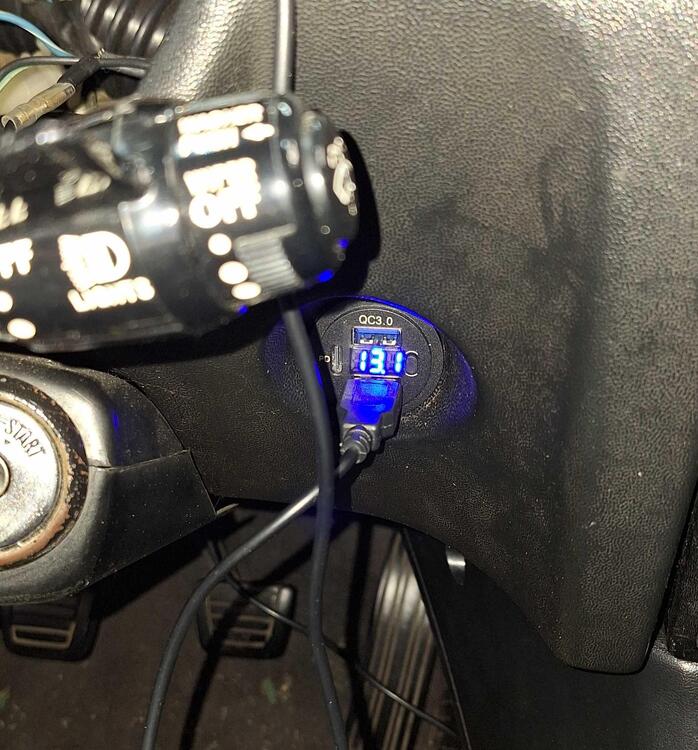
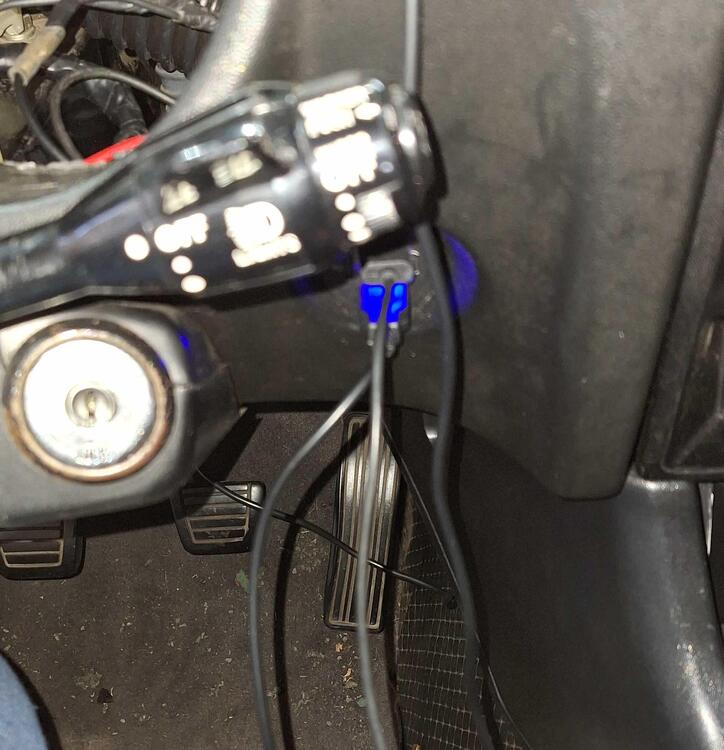
I finally did something with my 260Z today. I replaced the cigarette lighter with a USB port adapter that has 2 Type A ports and one Type C port. If you're interested in doing this, you may want to buy one with an on/off button since the circuit for the lighter is hot all of the time. To match up with the car's wiring, you'll need to attach a male bullet connector to the positive wire and a female spade (6.3mm) to the negative. Installation: Remove the fuse for the lighter. (For 280Z & 260Z) Remove the fuse for the horn so you don't honk the horn while trying to get the horn button off. Remove the steering wheel. Remove the tachometer. This gives you access to the back of the lighter. Remove the retaining nut on the back of the lighter. Disconnect the negative and positive wires. Tip: Slide a pick under the insulation for the negative to break the adhesion. Pull out the lighter and remove the surround. Use a step bit to enlarge the opening to 28mm or 1 1/8 inches. Video below. Once the hole is the correct size, insert the USB adapter and install the retaining nut on the back side. Two tips: 1. Plug a cable in the USB adapter to hold it in place while tightening the retaining nut. 2. I used a 90 degree pick to turn the retaining nut when the dash frame made it where I could no longer turn the retaining nut with my fingers. Connect the positive and negative wires. Replace the tach, steering wheel, and horn button. Replace the fuses. Enlarging the opening: While the adapter has a voltmeter, it is recessed in the lighter opening and blocked by the headlight switch. You could lean over and see it, though, as long as you don't have a cable plugged into the top port.
-
Cast impeller water pump: https://www.amazon.com/Aisin-WPN-013-Engine-Water-Pump/dp/B008EEZ2XY
-
When I searched ebay for the iBooster, I actually looked more at the Hondas because I don't think they have the booster mounted at an angle like the Tesla. I'm still not sure about what reservoir would be best to use in this application.
-
An ammeter can fail, but that would also cause the car not to run. Bad wires at the ammeter would also cause the car not to run.
-
The ammeter doesn't really have good resolution, especially the ones that range from -60 to +60. Also I have no idea whether or not the one on @70z4fun's car has been zeroed out properly. Also consider the first test in the FSM for the alternator is to check the voltage. Why not make it easy and use a digital meter in the car? Also, one other thing I just remembered. Sometimes people add additional electrical loads to a Z and connect on the battery side of the ammeter. That could give a false indication of a failing alternator.
-
You could buy a cigarette lighter USB adapter like this: https://www.amazon.com/dp/B0C9DLDN19 It has a built in voltmeter. If you see it dropping below 13VDC while driving, you have a good clue that the alternator isn't putting out current or your battery is going bad.
-
Are you talking about the white and white/red wires at the fuse box? They branch off the wires going to the ammeter. I suggest not speculating too much. You will confuse yourself. Don't throw parts at problems. Diagnose.
-
FYI, I diagnosed a bad EFI relay on a 77 and told the owner to get the relay that @EuroDat said to buy. He got that relay, slapped it in, and the car ran just fine.
-
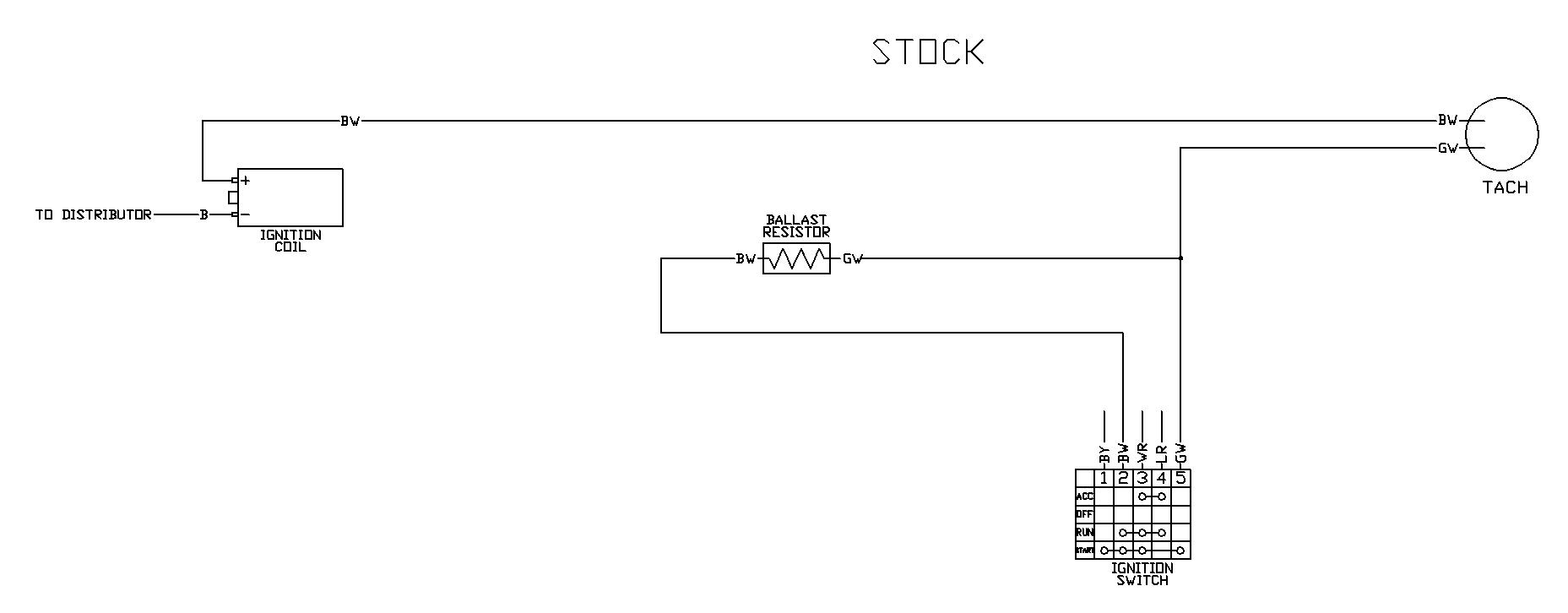
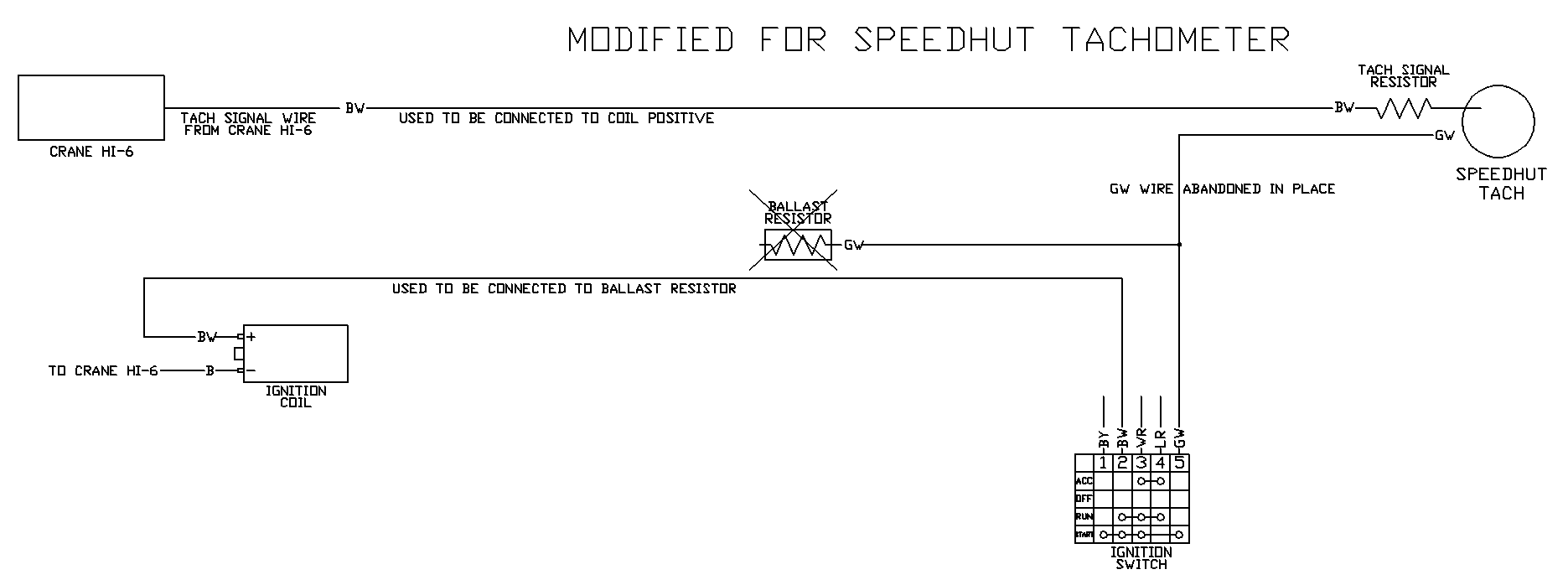
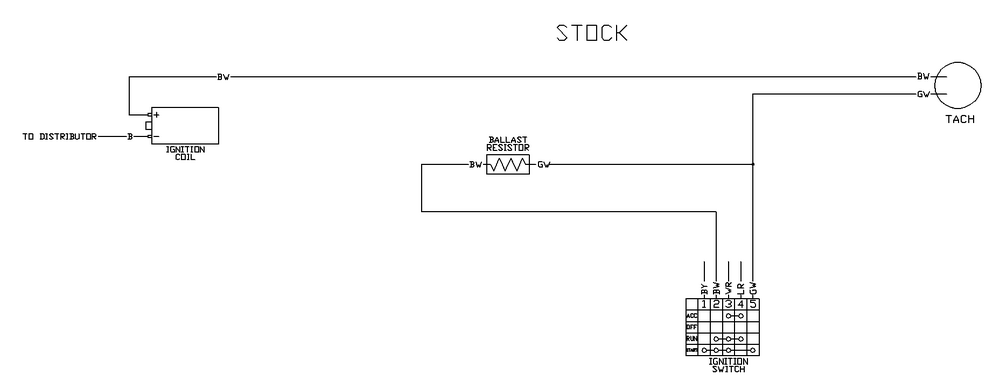
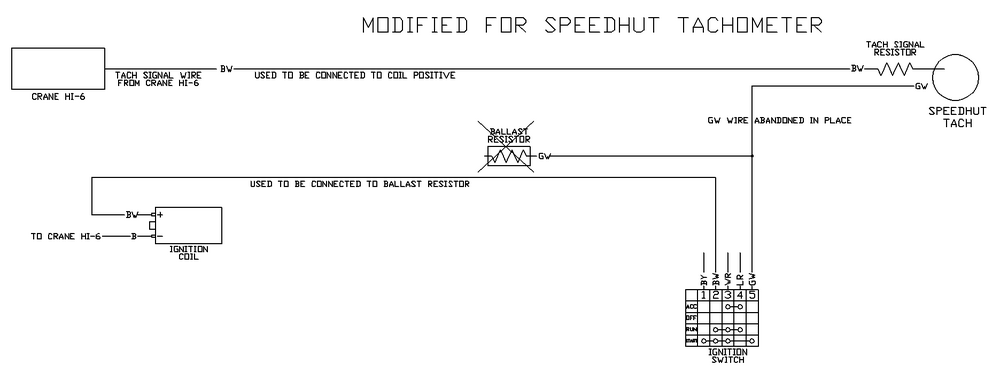
To combine what we talked about on the phone with the guidance from @cgsheen1, here is the stock wiring. This is essentially what the modified wiring would be.
-
While the wiring diagram shows a fusible link at the alternator, I personally have never seen it in the wild. The output from the alternator goes to the battery through the ammeter. If you do not have continuity from the alternator output to the battery, that usually indicates the ammeter failed or the fusible link at the starter failed. In either case, the car would not start/run (unless it was hacked up by a previous owner).
-
Yes, it can be checked, but there is a risk of shorting out the fusible link if the owner does not insulate the end of the alternator wire properly. I try to lay out the tests to minimize the chance of introducing another problem.
-
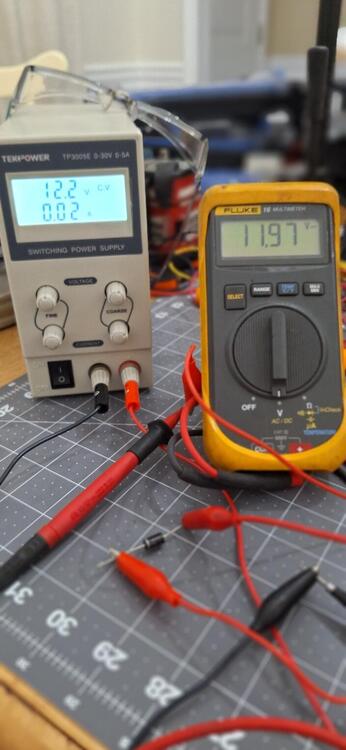
Well, the diode seems to check out. Test for voltage at the white/black wire with the key in ON when you get the alternator put back in.
-
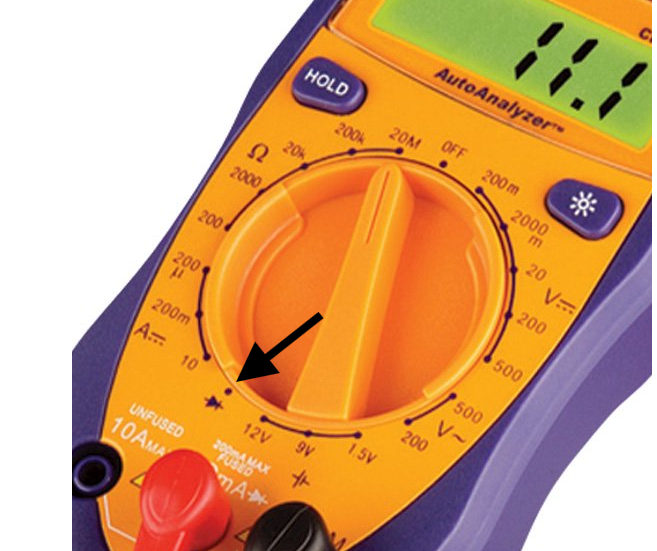
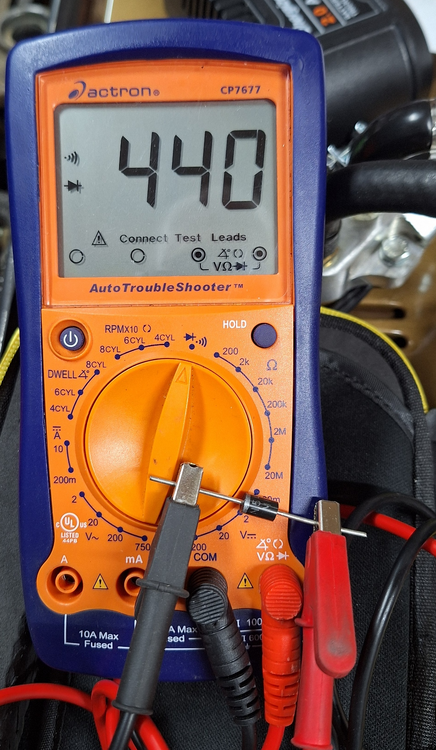
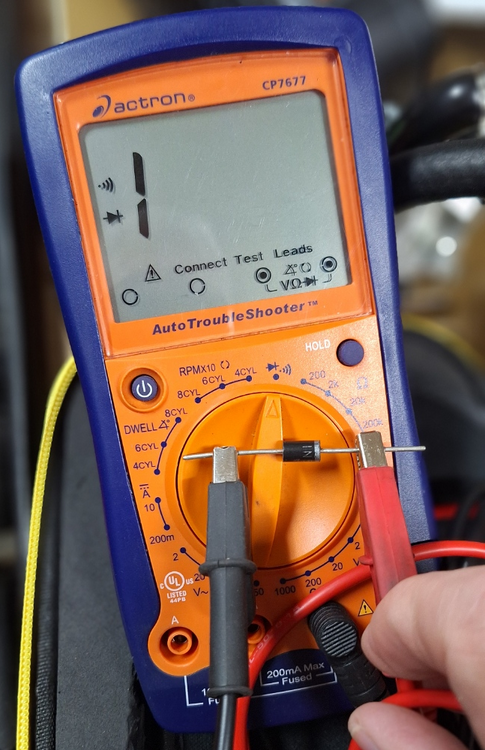
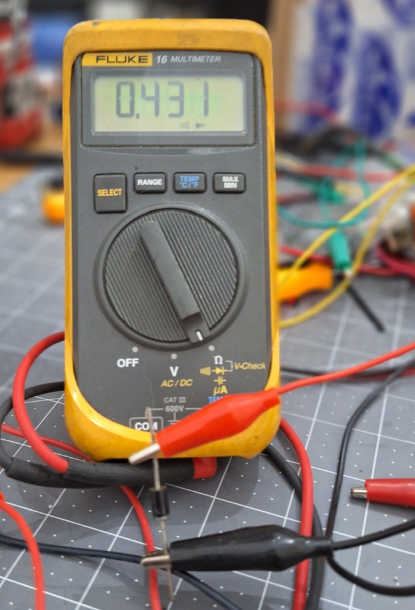
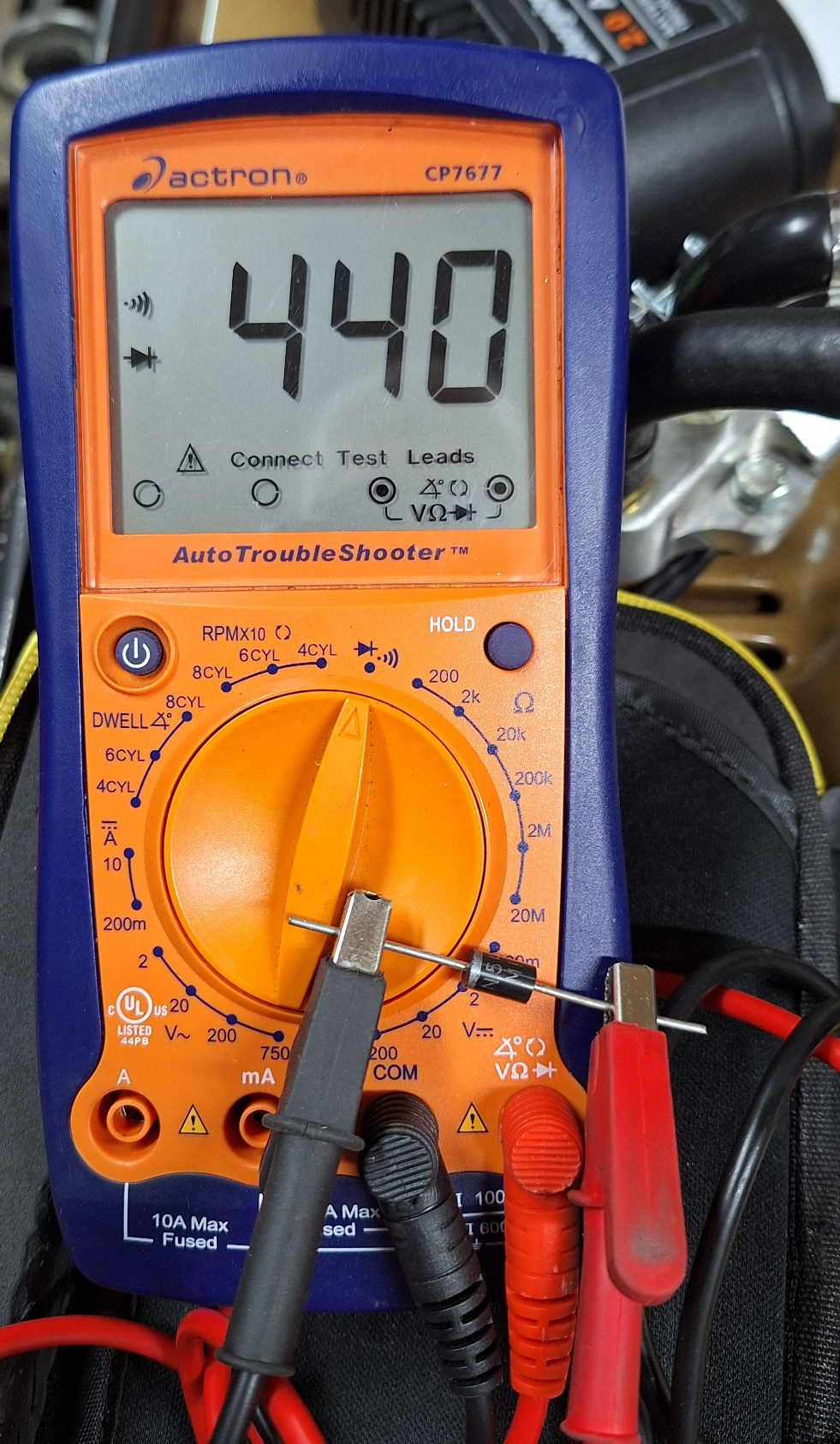
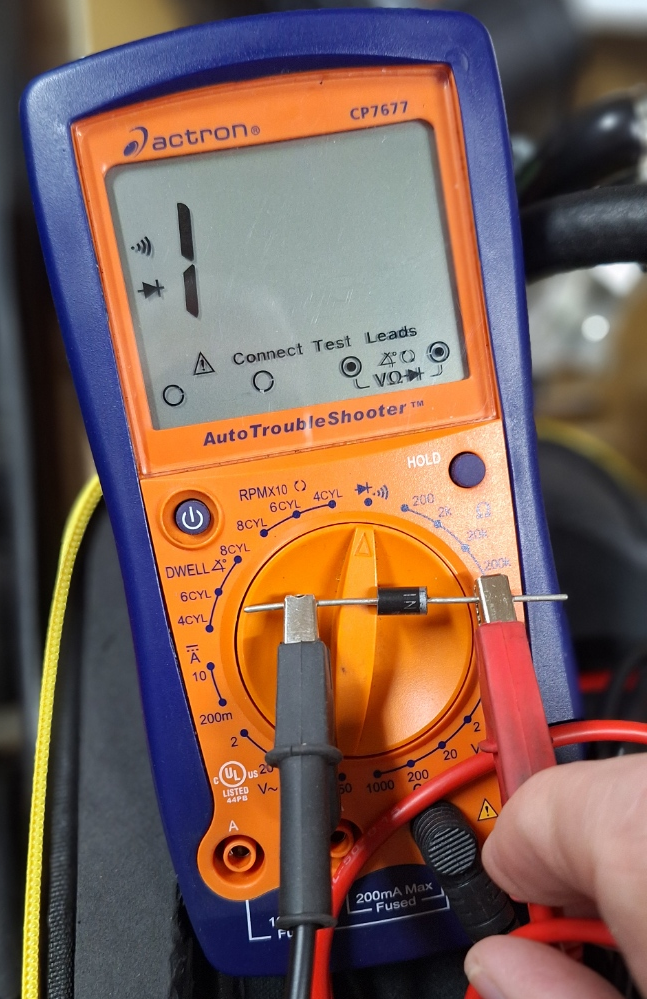
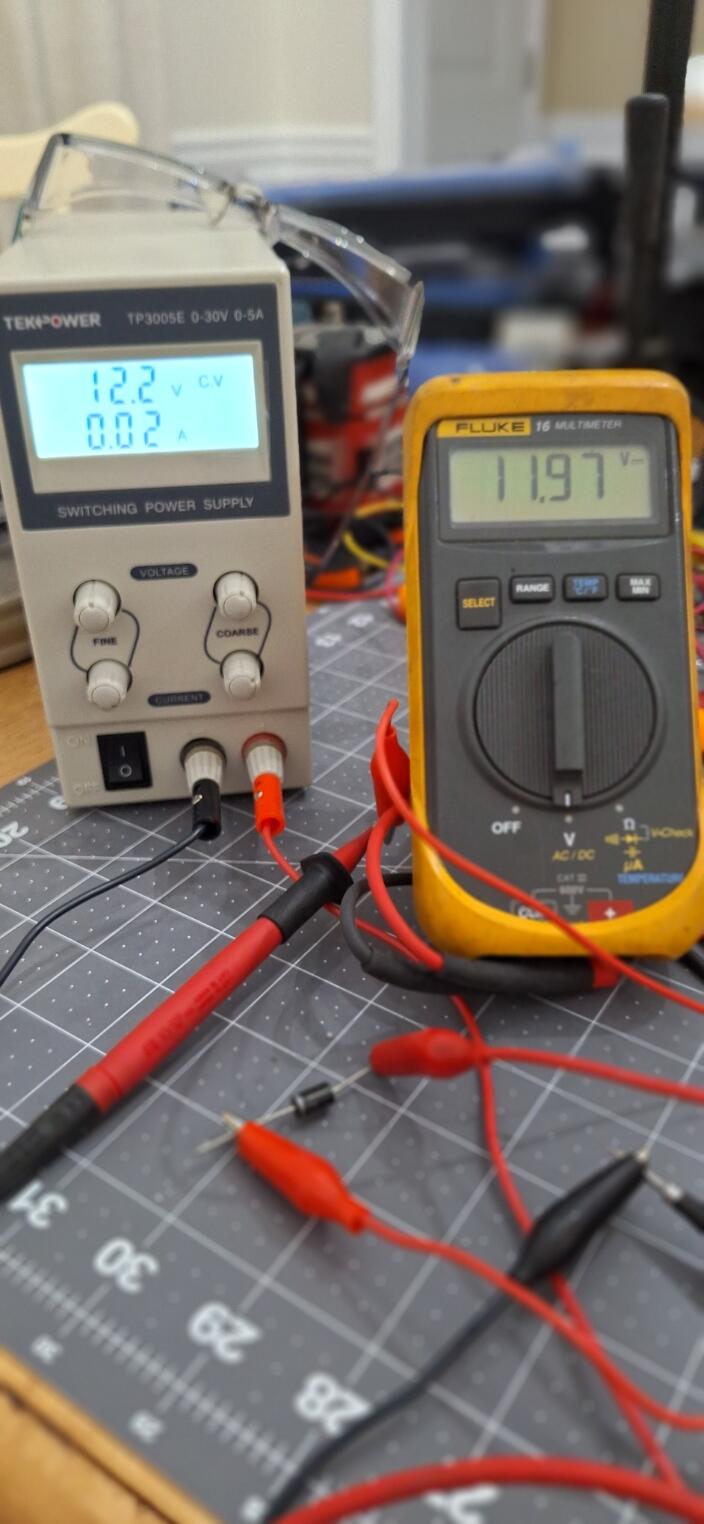
Of course, there is one other possibility. I could have designed the test wrong. I dug out a diode that should be the same spec as the ones used in the plug and tested myself. I found my instructions were lacking. You should re-test with the meter in diode testing mode. You can leave the key in OFF, too. If you test from the ballast resistor to the white/black wire, you should get a result similar to this: With the leads swapped, you should see this: If you do the voltage test, you should see a little less than battery voltage as the diode causes a slight voltage drop.