.JPG.cfcada9cf1c1b502df3f5f2f2ca3ff36.JPG)

SteveJ
Community Member
-
Joined
-
Last visited
Everything posted by SteveJ
-
First two guesses would be Underhood inspection light Glove box light (if the door isn't shut completely)
-
How much is your time worth? You might be able to recondition the tank, or you could save time with buying a tank from S30.world.
-
Thanks for following up to share your solution. Many diagnostics I have offered people were based upon hearing how others solved their own problems.
-
With unmolested wiring, it's unlikely to be the fuse unless the right headlight is dim. (Note: This only applied to sealed beams and halogens.) Some LEDs don't have polarity set right, but since you said the incandescent bulb didn't work either, it's not likely a polarity issue.
-
I believe the circuit is pretty much the same for all S30s. The power for the high beam light comes off the fuse for the right headlight (red wire). It comes to the high beam indicator bulb, and on the other side of the bulb, you have a red/white wire that goes down to the high/low beam switch. In the high beam position, the red/white wire for that bulb and for the headlights is grounded. Things to check off the top of my head: Make sure the right headlight fuse is good. Make sure the bulb is seated properly in the socket. Make sure the socket is seated properly in the gauge. If you don't want to remove the speedometer, I have had good luck in the past removing the tachometer to get to the bulbs behind the speedometer. Are there any modifications to the wiring that we should know about? Are the headlights coming on and switching properly between high and low beam?
-
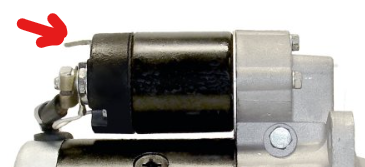
If you are looking at the solenoid, you should only see 1 wire attached to it.
-
This hit my inbox via Hagerty this morning. https://www.hagerty.com/drivers-club/my-garage/76xlk0bd/yafa/90724980-90b3-444d-8f83-638ae7f6f615 260Z 2+2 with this in the description: Power with a 2.6L with a longer wheelbase that makes her look even prettier. I guess everybody is entitled to his/her own opinion, but the car does look nice.
-
Thanks for pointing that out. The 12+8 are available on Rockauto, too. https://www.rockauto.com/en/moreinfo.php?pk=13416221&cc=1277243&pt=1704&jsn=1404
-
Definitely 'yota calipers. https://www.rockauto.com/en/moreinfo.php?pk=9744180&cc=1272260&pt=1704&jsn=1203
-
When I have a car up on ramps/jack stands, the wheels on the ground always get chocked. As a matter of fact, when the wife guides me up the ramps, she chocks the back tire as soon as she hears the car go in park. I am pretty good about not rushing anything that I think can crush me.
-
Get the SUs on the car, and I'll help you tune them. The only better way would be to install triple carbs, and that's above your budget.
-
The 250 mA seems high, but you would have to do further testing to see if that's from your alternator.
-
It's not a short to ground. The field wire should be dead with the ignition off. The VR controls the field wire.
-
That makes sense. Like I was saying before, the voltage regulator is trying to excite the field of the alternator to produce voltage even when the car is off. The way it works is that when you are trying to raise the voltage of the alternator you inject current (This is your current draw.) into the field coil.
-
Is it still drawing current from the battery?
-
If the VR is bad, I would expect to see voltage to ground on the F terminal of the alternator all of the time when everything is connected. That is the white wire. If there is voltage to ground at the F terminal when everything is connected, then disconnect the two wire connector at the alternator and see if there is still voltage to ground at the F terminal. If there is not, there is your proof.
-
So if you don't mind me asking, what were you messing around with that bolt for?
-
That's not the base. That's the distributor. I had that happen about 28 years ago. Then the extractor broke when we tried to get out the bolt. YIKES! I still have that distributor, too. Many times the frustration is part of the learning process. All of us had to get from not knowing the difference from our asses and a hole in a ground.
-
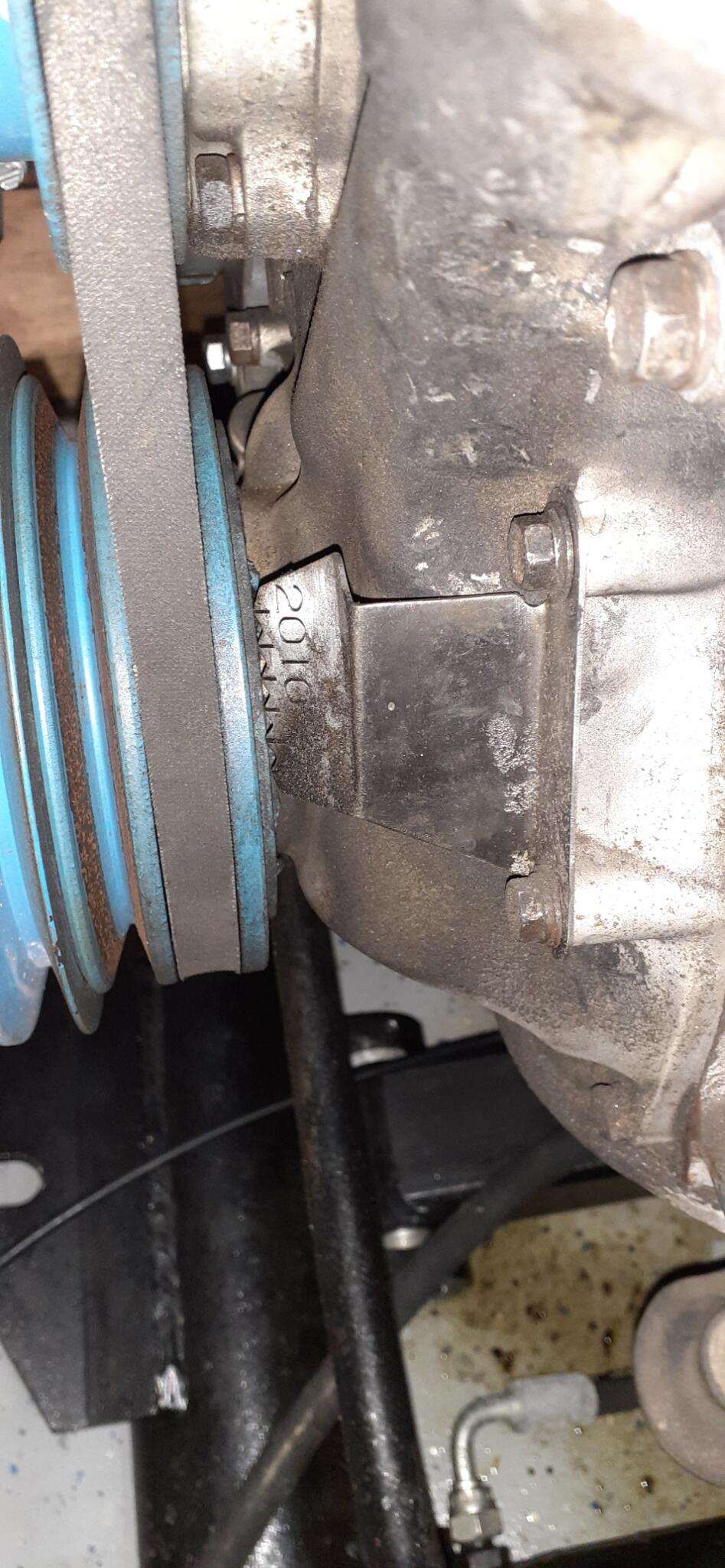
Usually it's a challenge to make out the TDC mark unless someone has put some white or fluorescent paint on it.
-
Google is your friend. https://www.google.com/search?q=fuel+pump+eccentric+240Z&oq=fuel+pump+eccentric+240Z&aqs=chrome..69i57j33i160j33i15i22i29i30.6975j0j7&sourceid=chrome&ie=UTF-8
-
Given the purpose of the VR, if there is a current draw when it is plugged in that is absent with it unplugged, yes, it's bad. I have a 74 VR that I bought from Black Dragon many years ago that I never used. You can have it for $30 shipped. No warranty. I opened it up only to see if it's similar to the VR you have. I can't confirm what you're asking because I don't know what you mean by "the feed to all other wiring and the fuse box" Feeding what to what? What other wiring?
-
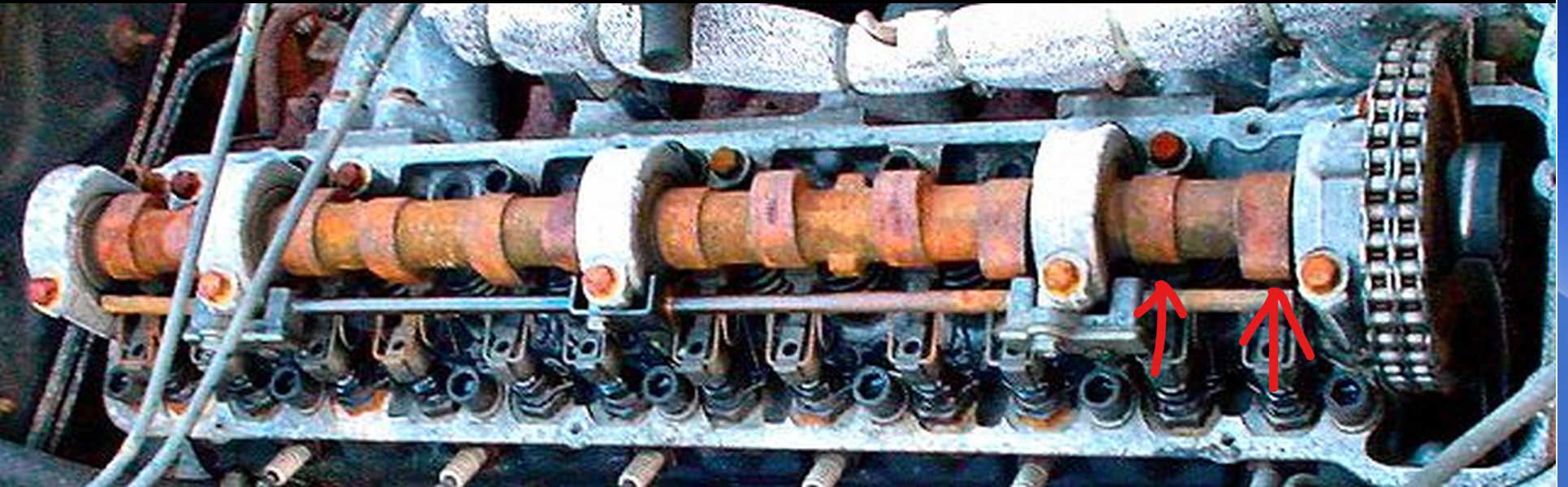
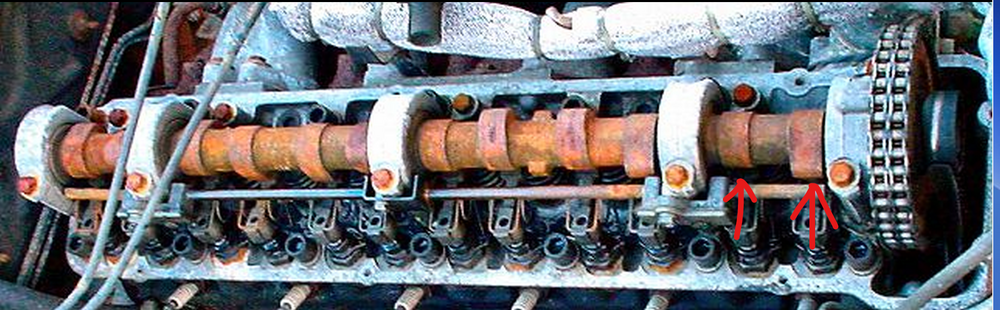
One of the easiest ways to get the engine to TDC is to use a remote starter like this: https://www.amazon.com/INNOVA-3630-Remote-Starter-Switch You'll need to remove the valve cover so you can see the camshaft. You take the wire off the solenoid and clip the remote starter to it and clip the other wire on the remote starter to battery positive. Make sure the car is out of gear and use wheel chocks to keep the car from moving. Squeeze the trigger to turn the engine with the starter. You are looking to get the intake and exhaust lobes for cylinder 1 on the camshaft to be pointing up like "bunny ears". I marked the lobes you want to look at in the picture below. (Thanks, @240260280, for the photo.) After you get the engine to TDC, remove the remote starting switch, put the wire back on the solenoid, and replace the valve cover. What is "it"?
-
That certainly looks like you went on Mr. Toad's Wild Ride. I'm glad you weren't banged up too badly.
-
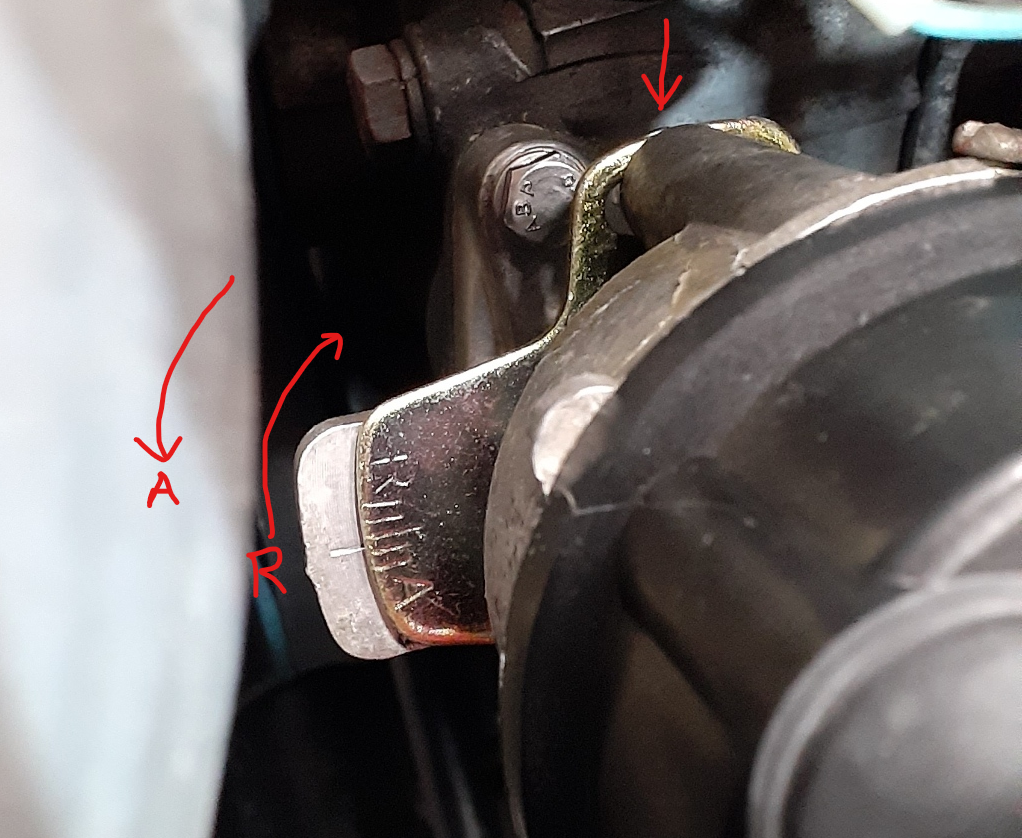
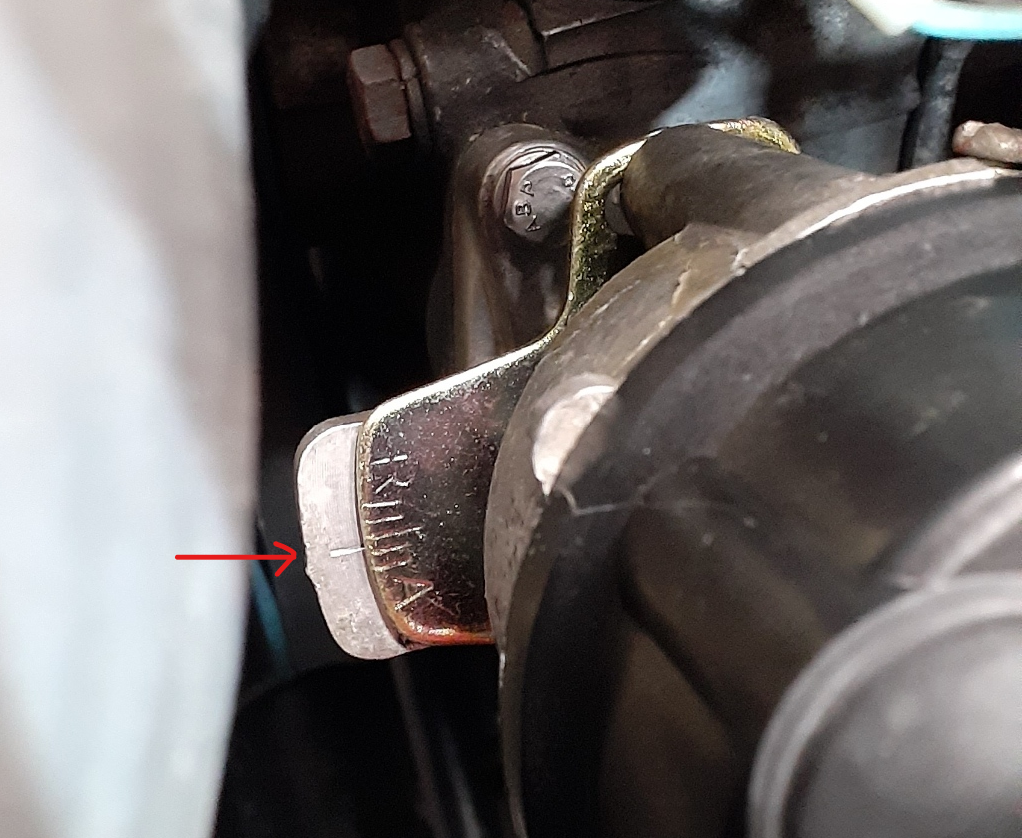
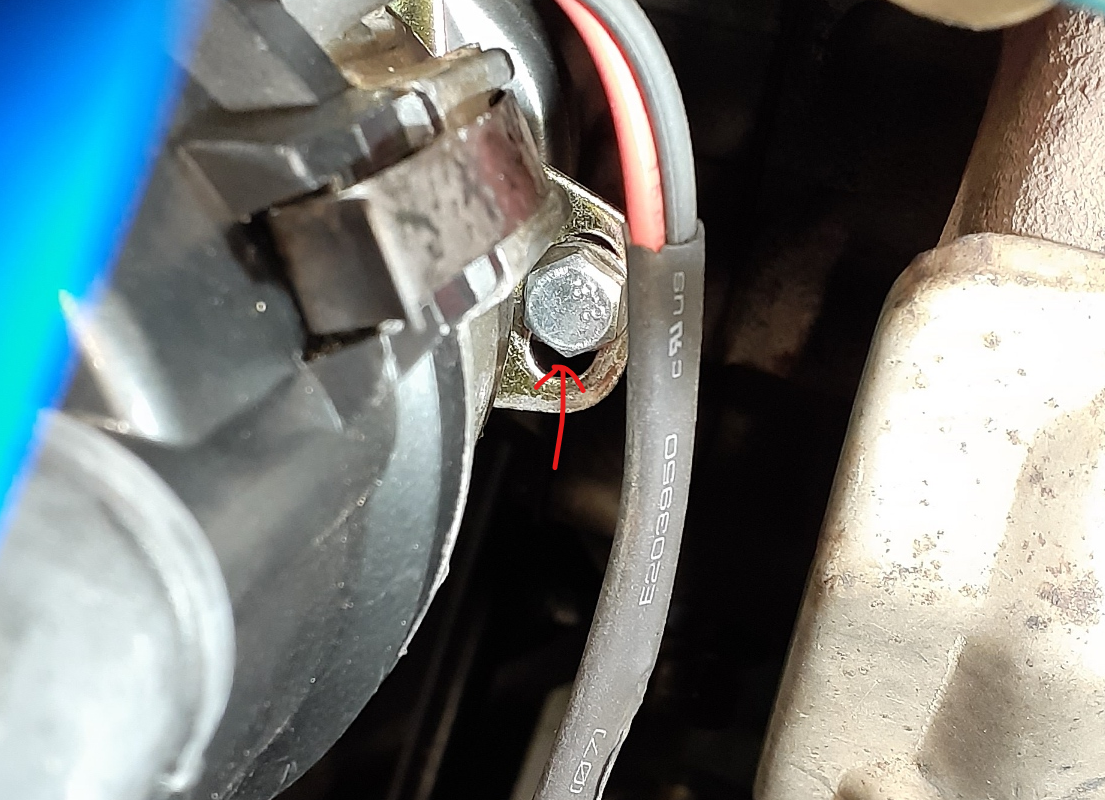
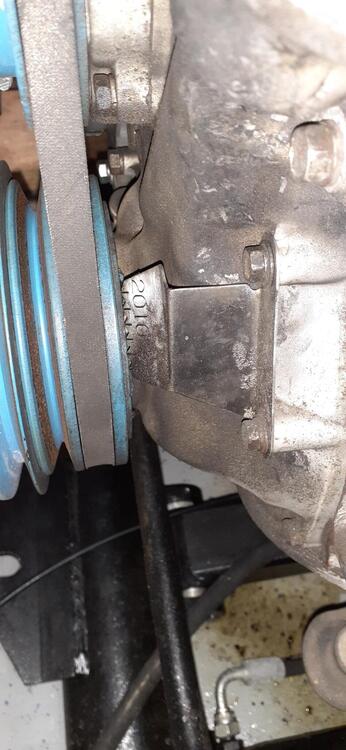
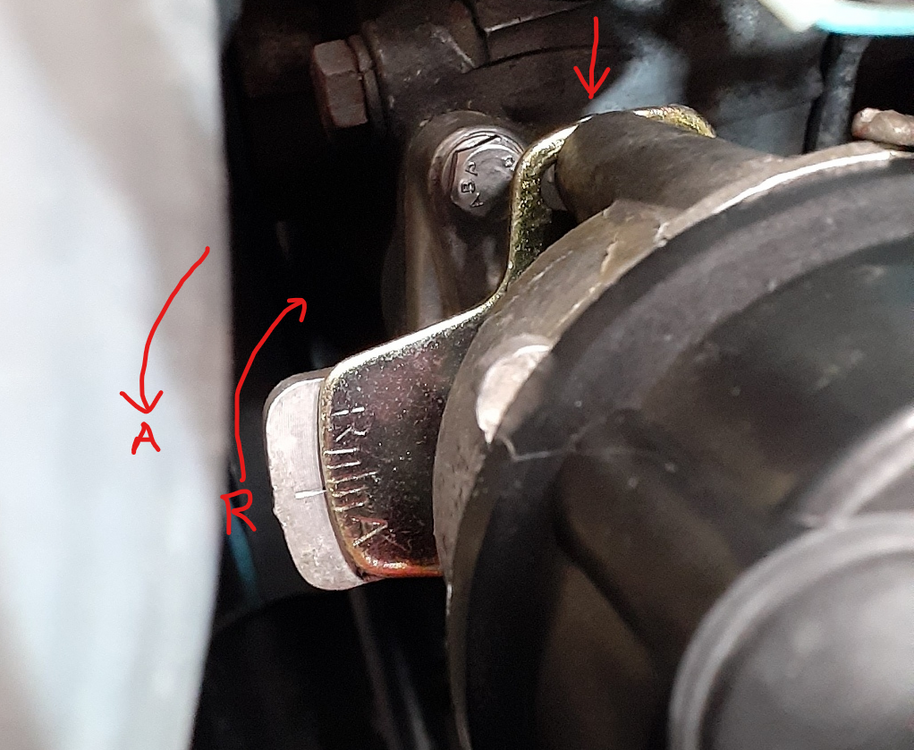
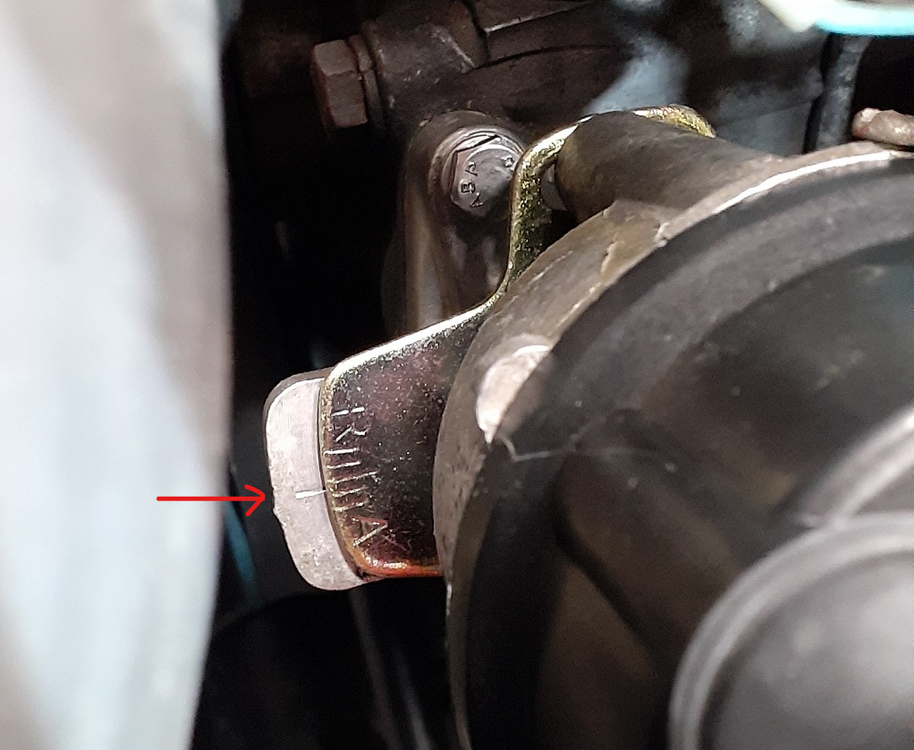
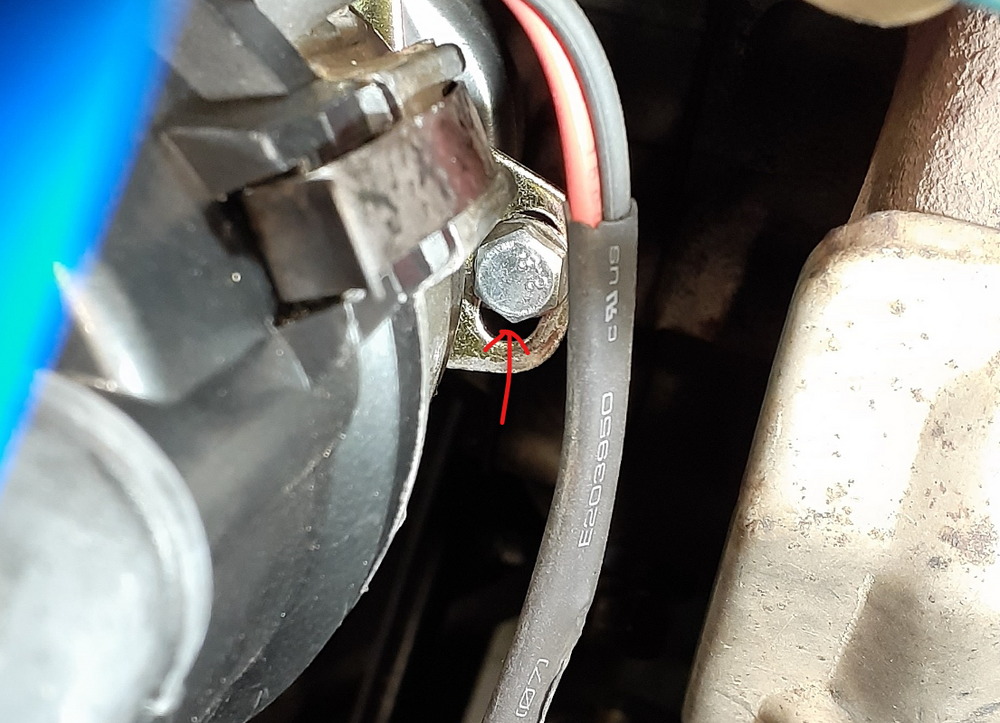
Well, first you need a timing light. You may want to get a higher end one if you think you'll own old cars. https://www.amazon.com/gp/product/B000EVU8J8 Next you want to locate and clean your timing marks on the engine block. After that, rotate your engine to TDC and find the mark on the engine pulley. You will probably want to mark it with a dab of white paint. White nail polish is great for this. Get a baseline timing. If it's not at 15 degrees, turn off the car and loosen the bolt on the distributor. It's on the bottom side of the mounting point. (See photo) Start the engine again. To increase timing (more degrees), rotate counter clockwise (A - advance). To decrease timing, rotate clockwise (R - retard). Keep measuring your timing, shooting for about 15 degrees. If you cannot rotate the distributor enough with that adjustment, you may need to loosen the other bolt. First, rotate the distributor so it's in the middle of the indicator. Then loosen the other bolt on the distributor. Rotate the distributor just like you did before with the engine running and checking timing. If you can't get it close to 15 degrees with both bolts loose, something isn't right. After you get the timing set, make sure you secure both bolts so your timing doesn't change.
-
The black/white wire is supposed to be switched. Do you have voltage to ground at the black/white wire at the ballast resistor?