Carl Beck
Community Member
-
Joined
-
Last visited
Everything posted by Carl Beck
-
Hi Guys: It sounds like the ZCCA needs to add another "Class" named "Personal Taste". This would be for cars that the owner has injected his personal taste into - without regard for any of the usual Competitive Show Car classes, class rules or judging standards. The Judgment in the Personal Taste Class - would then be based strictly on which car the Judges simply liked the best - who has done their thing - with the best Personal Taste. Or simply "display" the car in the Non-judged Class... At least at NY there were as many nice Z's outside as there were inside for the Judged Classes. FWIW, Carl B.
-
Hi Ron: I'm not sure what the seller's reserve was for the car below - but it only brought a high bid of $12K. Check the detailing on this one, the documentation of the rebuild, the engine compartment etc etc etc. <a href=http://cgi.ebay.com/ebaymotors/1972-Datsun-240-Z-Ground-Up-restortion_W0QQitemZ110088051231QQihZ001QQcategoryZ6187QQrdZ1QQcmdZViewItem TARGET=NEW> Nice White 72 </a> Like I said, I don't know where the above seller sat his reserve - but I've written him to ask.{matter of fact I just called him too} I'll guess he was thinking $18K to $20K... but it didn't sell - and now he may grab $15K. He has to have $25K or more in it... No question it is easy to spend $15K refreshing or restoring a 240-Z - but when you do it yourself you know what's under that shinny new paint - and if you put that kind of money into one - your going to have a far far better result. You are also more than likely to document the process with full before and after photo's and a box of receipts. Shop, shop, and shop - sooner or later you will find a 240-Z that someone else has done correctly and who has put well over $25K into - that can be bought for $15K cash. A truly solid #3 Car... FWIW, Carl
-
What you see here is "maybe" a good body, maybe a good paint job and maybe a few good parts. Almost everything else needs to be restored. Wrong Carpet Cracked Dash Wrong Door Panel - drivers side Wrong Steering Wheel Wrong Radio Wrong Wheels Engine Compartment Looks like a Flood Car. If the paint and body are actually done to OEM or better quality - it's a $7K car at best. Then you'd have to spend another $7K to put everything else right. Photo's of the undercarriage? Does he have photo documentation of the process used for the body and paint? Original Engine? Documentation of mileage and service history - owner history etc. Window sticker, original bill of sale, owner manual, service booklet? This car is a long way from a $15K 240-Z. Worth a close look - but IMHO already over priced at $8K By the way - who is bidding on this car so early? Do you know people that bid seriously before the last few seconds? (other than the sellers brother, mother, friends?) FWIW, Carl B.
-
New pictures show more rust than before... $3,500.00 max... and then only after close inspection.... this one has been ridden hard and put away wet. FWIW, Carl B.
-
Someone got a super bargain... Carl B.
-
They should bolt on with no problem - and it seems they did. The latches should work and it seems they did... The problem is - they won't seal, because the two doors have different shapes where they fit inside the bodyshell. The shape of the door frame above the rockers is different... Driven at speed you'll hear the difference and when it rains you'll see the difference. Someone on this forum went through this a couple years ago. Carl B.
-
Hi David: It the data tag is still in the engine compartment - It would be interesting to know the original engine serial number - Should be something close to L28-00200. Carl B.
-
You never know until you look at the car - BUT - if it's as presented it should bring $5K to $6K. Front bumper looks bent - it will need a complete refresh but should be a good car to start a refresh on... Carl B.
-
An update to this thread... Bryan rightful points out that his repo, was patterned after the shift boot supplied... So it is more than likely that the NOS shift boot on E-Bay and the one Kats pictured - is of a later style/design/manufacturer... So maybe we don't want the newer style... and maybe my comments were poorly thought out. So now it's time for everyone - including me - to go dig out the old shift boots and see what we come up with. I think I have a NOS boot that I ordered years ago, stuck away somewhere.. So I'll be trying to dig that one out... FWIW, Carl B.
-
Hi Gang: If you'd like to see a couple of seconds of the BRE Baja Z, as raced by Ventura Datsun in the MINT 400 in 1974 or 75 here is an old video clip... BRE sold the car in 74... Don't know if Ventura Datsun sponsored the Z or just held it and raced it themselves. Not sure who the Driver/Navigator are... still researching it at this point. Amazing what shows up on the Internet... <a href=http://www.photoahead.com/old/zcar.wmv TARGET=NEW> See: Venture Datsun MINT 400</a> FWIW, Carl B. Carl Beck Clearwater, FL USA http://ZHome.com
-
Sad... 134 designs and not one I would spend my money on... Carl B.
-
Hi Marty: Agreed - the first prototype is pretty nice, but I believe with a few minor changes it could be better. Looking at the pictures from Kats and the NOS one on E-Bay.. it looks like the repop's grain pattern is somewhat off the mark, there is no rubber grommet supplied, and the stitching at the top goes too far up. The OEM product has little tucks at the very top... most likely to put less strain on the stitching.. Perhaps a small order of the proper size grommets from Badgerrubber.net. (if you supplied them with the complete spec.'s they might have the exact thing)... and a second prototype stitched up to look a little more like the OEM part would work some of this out.. and result in an even finer reproduction. FWIW, Carl B.
-
Hi Bruce (everyone) That is a very common question usually ask by people who don't own Show Cars. The real problem is that even if they receive an answer, they don't seem to comprehend it, and they keep asking over and over... The truth is, to an extent you answered your own question in your last sentence. If Show Cars didn't exist and all that was left is "drivers"... in a few years no one would know what that ratty old driver, now driven into the ground, or turned into another wreck on the road - looked like when it was new, nor would they understand why anyone would want to drive such an old rag in the first place... FWIW, Carl B.
-
We Do - Right here in Florida...you just have to get out early in the morning, and before the Tourists Season begins. :devious: Carl B.
-
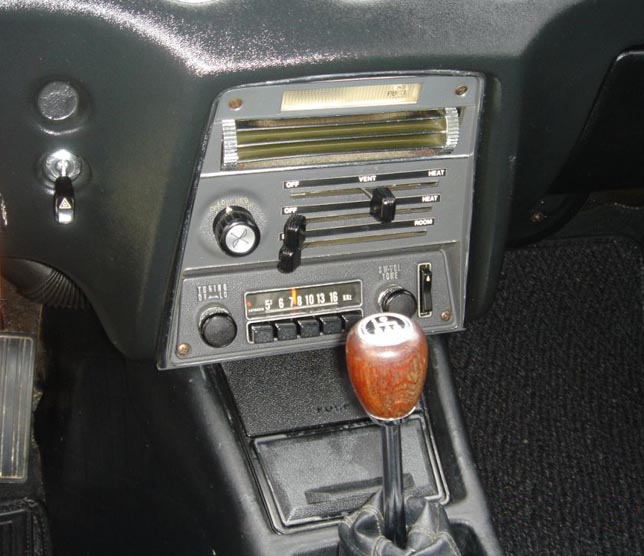
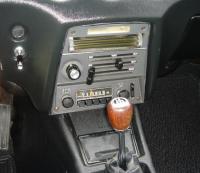
Hi Jerry: As far as I know - none of the 69 production, nor early 70 production HLS30's had the HS30's heater control panels in them. I don't know why - but I do seem to recall one version where the "off" was in the center position, then Room and Heat were at the ends... Might have been on the later 280'z when Factory Air was available... The 69 production HLS30's heater control panels,radio face plates and ashtray lids were gray - while the later panels were black.
-
Interesting side note - BRE called it a "spreader-bar" back in 73. Gives you an indication of it's purpose and set-up as far as they were concerned. FWIW, Carl B.
-
Interesting - the Stickers are quite different... Carl B.
-
Hi Randy: That TR-6 is stunning... I've always admired the styling on the car. Also good to hear that the Z is finishing up within your expected schedule... We're all waiting on pictures.. You really should plan to take some time and drive that TR-6 down for the Sebring 12 Hour mid March... Nothing like camping out in the infield with a Classic Sports Car at the 12 Hour. FWIW, Carl B.
-
Hi Avery: I pretty much agree with what has been said - only want to add a few points... When water runs down the rear hatch glass - it pools up in the corners at the bottom. IF the rubber seal is actually sealed to the glass at that point - the water sits there and evaporates. IF NOT - then the water runs under the rubber seal and down into the window channel... where it sits until the paint fails and the metal starts to rust. So the first point is that you really need to get a new seal, and have it properly installed on the glass, then in the deck lid. Those spots in the corners around the rear deck lid glass/rubber - MIGHT still be very small or they might get larger under the seal.... At any rate they will NOT get better, only worse. They will also get worse quickly! Given the current rarity and associated high price of a solid Series I rear deck lid - I would highly recommend that you order a new rear glass seal, then pull the rear glass out of the deck lid. Take the deck lid to a good body shop and have them strip it - metal patch any small holes or area's that require repair, then repaint it. You need to look closely at the very bottom "lip" of the deck lid (where it overhangs the rear tail light finisher panels) . Make sure it's not starting to rust and if it is NOW is the time to fix it. It would seem that rust free Series I deck lids are now over $400.00 if you can find one for sale .. so you really do want to address these issues now, before they have much of a chance to worse.. See: <a href=http://zhome.com/Classic/CommonZRust/RustPrevention240Z.htm TARGET=NEW> Hidden Rust Area's Of The 240-Z</a>. To stop surface rust - you can sand the area to remove most of the surface rust - then treat the area with Ospho (a mild phosphoric acid solution that chemically converts Iron Oxide to Iron Phosphate). Ospho is a brand name - carried by most Automotive Paint Stores/Suppliers. Once the chemical conversion is complete - the area can be primed and painted. good luck, Carl B. Carl Beck Clearwater, FL USA http://ZHome.com
-
Hi Gang: The "weight" listed on the sticker under the hood - is the weight to be exerted by a mass, on the end of a lever, that is swing into the front bumper - to simulate the weight of the car traveling, depending on the requirement at the time, either 2.5 mph or 5 mph. Kinetic Energy released if the car hit an immovable object at either 2.5mph or 5mph.... The Vehicle Curb Weight is printed on a sticker in the glove box... required to be there by law for 1973, but was in place before that on the 240-Z's. Along with the tire inflation pressures... FWIW, Carl B.
-
Hi Mohammed: Great to see you have the car on the road and are enjoying it. Thanks for Posting the Video... regards, Carl B. Carl Beck Clearwater, FL USA http://ZHome.com
-
How About A Picture of the data tag on the Drivers Door Jam??? This should be 12/70.... thanks, Carl B.
-
Hi Rob: I have several NOS Door Panels.... The discoloration you see is I believe the result of how the hardboard (cellulose compressed under heat and pressure in a form, usually with some type of bonding agent). It's fairly wet when worked - all my NOS Door Panels exhibit the same random staining... What looks like rust in the picture - is actually the adhesive used to bond the vinyl to the metal.. again all my NOS Door Panels have the same brown glue on them. Lastly - If Eiju tells you they are NOS - you can take it to the bank. Many of us know him personally and you won't find a more serious nor honest Z Car Enthusiast. FWIW Carl B. Carl Beck Clearwater, FL USA http://ZHome.com
-
-
Here you go Jim Carl B.