RIP260Z
Community Member
-
Joined
-
Last visited
Everything posted by RIP260Z
-
I have been lucky enough to see it a few weeks, ago, out of the top draw....worth the wait. Alan has done a fantastic job. And the work involved, not just dropping a S20 and there you go.... No pics I am afraid, toooo busy taking it all in.
-
Hi Greg, Thanks for that...interesting. The RS30 was produced up to June 1978, as I own one! We in the UK did not get compliance stamps, but the build date of mine is confirmed by the kanji dates on parts. And yes, Australia did not get any 1978 production RS30's. It is interesting that the compliance date when it reached Aus. compared to its rough production date. I know these are not "cast in stone" and Nissan was not precise on chassis number records, as discussed on other posts on here. I presume the compliance stamps were put on at the port or at rego? Yours 1974 RS30-000946 with a compliance date of August 1974 1975 RS30-005055 with a compliance date of February 1975 1976 RS30-010275 with a compliance date of August 1976 1977 RS30-015130 with a compliance date of June 1977 Nissan production, data from Nissan's 1979 parts microfiche for the HS30 and RS30. Aug '73 - Aug '74 000001 - 005000 (date and chassis nos.) Sept '74 - Jul '75 005001 - 010000 Aug '75 - Jul '76 001001 - 015000 Aug '76 - Aug '77 015001 - 021000 Sep '77 - Jun '78 021000 - 021384 As you look at your 1974 car, it would roughly, roughly, built in say, Oct/Nov/Dec. using the corresponding production dates, whilst the compliance date is approx. 8 odd months later. This is like this for the others too. All interesting (well I find interesting!). For me, what we call the late 260z, which is the Sept '77 on is what I really want to understand and whether Aus. got any of the "late" cars (this is why I asked you for your info). Not saying this is accurate (as the microfiche data is all I have to on), but months between built and compliance dates does point to that compliance dates are not a way date a cars build. Thanks again Greg
-
Classicdatto To serve my own interest of RS30's what chassis number is your car (Pm me if you want)? so I can see how it falls into Nissans month/chassis number tally. The RS30 carried on production until June 1978. Cheers Ian
-
To add, on late S30's there were clips inside the drip rail (NLA) to hold the rail in place. These are probably rusted away, and if not there it does not stop you putting the drip rail on as described above.
-
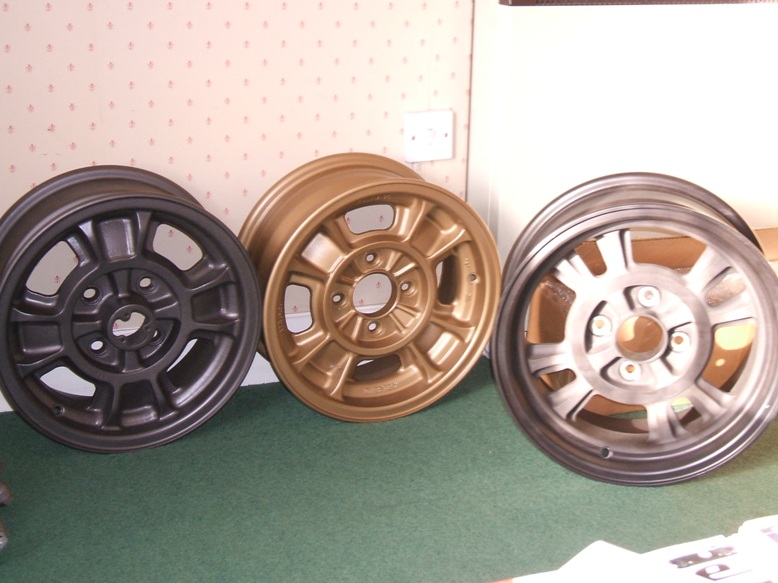
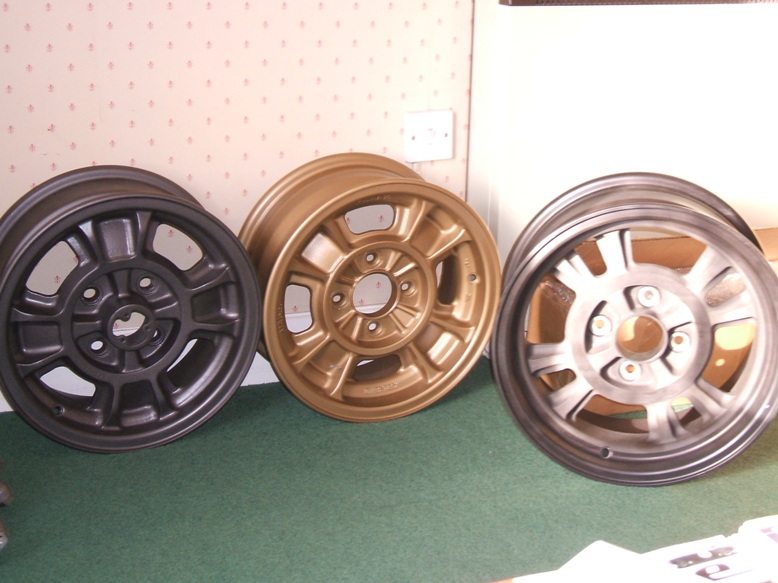
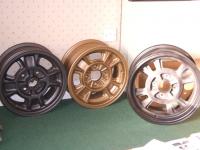
Just to clarify...from a previous post.. From left (below), a Kobe Seiko Z432 wheel, a Kobe Seiko Maglloy wheel, and copy (15") of the wheels from the Works cars. When you start looking, the overall design at a quick glance are the same, but when you look closer, they differ greatly. The pictures 26th-z put up are (from left) a Maglloy wheel, and then a set of Z432 wheels. Kobe Seiko is the manufacturer for all , but each wheel is different from each other, and made for differences in the market..the z432 to be "standard" for this model, the Rally wheel was made purely for motorsport, and the Maglloy was purely Kobe Seiko seeing this style of wheel worked and "copied" it in a general way for the Japanese aftermarket. (correct Alan?) Have to move away from just saying Kobe Seiko wheels. Did have a picture of 13 inch Kobe Seikos which at a quick glance follow the 4 spoke general style, but totally different. I did weigh each of these wheels, and the Works Rally replicas I have still worked out lighter, even when an inch bigger in dia. Cheers Ian
-
Welcome Jason, seen this 240 on the UK z site, much more friendly here... good luck with the work
-
Off the top of my head, Rebello Racing are a stockists....
-
Stevie, I think you will find they were never fitted to UK/European S30's.....
-
-
Rahail, Marty, This may help.... From left, a Kobe Seiko Z432 wheel, a Kobe Seiko Maglloy wheel, and copy (15") of the wheels from the Works cars. When you start looking, the overall design at a quick glance are the same, but when you look closer, they differ greatly.

-
Very good rahail. Keep up the good work, nice to see what you are doing, as it was not clear on zclub. I do love the Magalloy wheels, and good to see someone else in the UK having them. I managed to pick up a pair, new still in their boxes... will hopefully go in the CSP when it is ready. Cheers Ian
-
Hi Blue, Thanks for the complement on my RS30. I have one pic in my garage below my avatar. I like the tool and the way of removing stuck needles, will bear that in mind. It is worth looking at/considering, the spindle the butterfly joins, it is like the SU carbs, they don't have a bearing and seal in from new, and the aluminium body and brass spindle gradually wear, leaving an area for air to be sucked in. So, it does not matter how good the carb is refurbished, if this is not done air is being drawn in that you can't control...you probably know this, but someone may not. I like the idle circuit/idle mixture diagram, but for me (I have yet to try) is have it so each carb is individually adjustable. Especially if one carb is a little bit worn compared to its partner, each carb would require a different setting, and adjusting the one idle mixture screw is always going to be a compromise. Keep up the good flat top work. Cheers Ian
-
Blue, I see the score marks on the "nut part" of the jet holder...I had that too. They seem to be "glued" in and have to be forced out. The jet either gets clogged up with carbon (soak in Brasso does the trick), or the needle wears a slot in the jet holder. Did your new Z friend have any tips for removing the needle from the bottom of the piston? Some I have come across have been soo difficult to remove without bending the needle (as new needles are NLA as far as I am aware). Good to see some in depth on the "boat anchor" flat tops
-
Hi Carl, Yes please:)
-
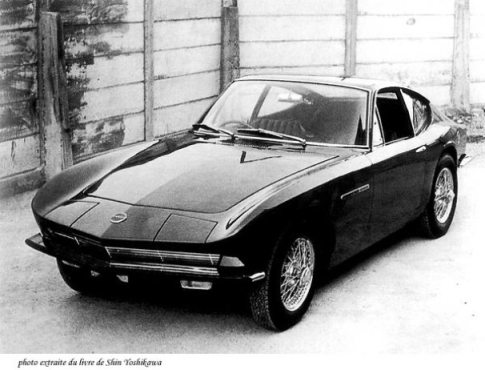
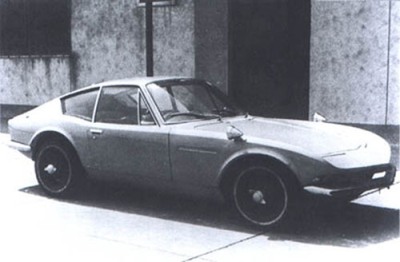
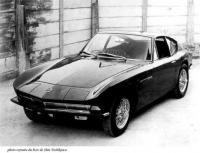
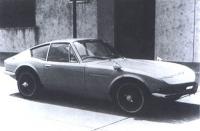
Carl, I am a little bit confused.... The first statement (taken from "who designed the S30" thread-post 61) of yours corresponds to the first photo, the second statement and photo from a few posts above on this post. I think it is now quite clear that Mr. Goertz had nothing what so ever to do with the A550-X - and that the metal prototype {pictured below} represents the Nissan 2000GT - built by Yamaha for Nissan, and which was delivered to Nissan - does in fact represent the extent of Mr. Goertz involvement. [the first photo] FWIW, Carl B. hasten to add for everyone - the final Goertz/Yamaha Prototype stayed at Yamaha, as Nissan had only contracted for Yamaha to build one working prototype - which was delivered to Nissan after the Joint Project was cancelled. That first iteration of the Nissan 2000GT, looked quite different. FWIW, Carl B. You can't give Goertz credit for helping on only one car (and only assisting) for then to say the second ("later/final") car is a joint Geortz/Yamaha collaboration. The whole project was a joint Nissan/Yamaha collaboration, with Japanese employee's of both companies first and foremost, with Goertz a minor player (given his limited time under a Nissan contract as a advisor). And on your Zhome page, you show the second car saying that it is a Yamaha A550X (using Shin Yoshikawa's book as the source).
-
Nice to know, as I was looking at a period shots of CSP311 engine bay a couple of days ago and wondering, braided hoses would be nice for my CSP311 (when I get to restoring it)
-
Yoshi, The flat top carbs are difficult to rebuild and set-up, especially for a novice. And from what I have seen, the re-build kits basically supply gaskets. Setting these up is crucial, and with worn components, not easy. One of the main things that need done is the throttle spindle becomes worn, and this needs addressed...not just a case of throwing on some new gaskets.... spares are NLA as well.
-
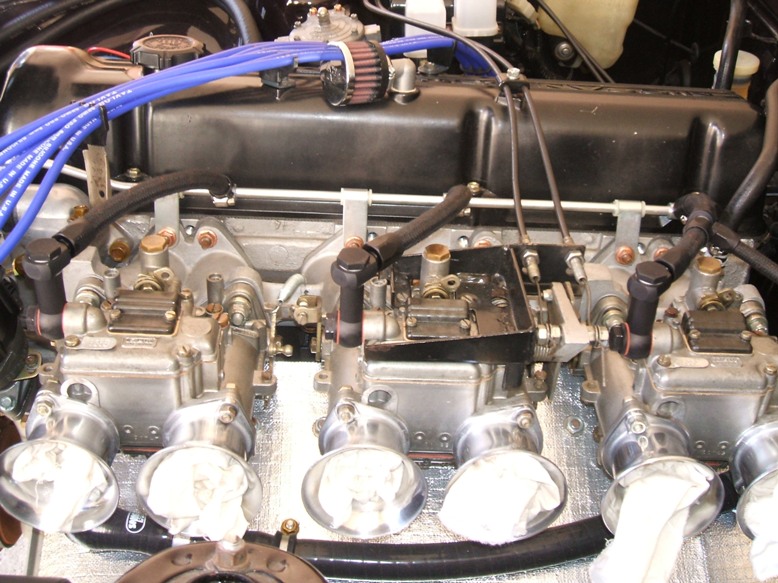
Mitchell, I think I sold Chris the fuel rail... anyway, it is the same as what I have. Mine pictured is an after-market produced one, which I saw sold on Yahoo Japan. I think this is a copy of what was available in the S30 Sports option list, e.g for Mikuni, back in the 1970's. As you see I am running a return line. The return line is smaller than what supplies the carbs. I also put a reducer inside the pipe, the gives something the fuel can pressurize against (rather than running the same dia. fuel pipe) but still let fuel return. I have a small cylinder of brass pushed in, with a 1mm hole drilled through it. I am trying to replicate the system found on the end of the OEM fuel rail. Hope that helps Ian

-
I don't know about the LHD, but for my RHD S30, I just remove the tach meter (which is simple to do) and then you can get your hand in to the back of the speedo.
-
The top of the vent tube is, but the bottom that sits inside the diff/gearbox, is not. The arrow on the top cover is meant to line up with the "cut away" side that is in the diff/gearbox. If this is put in wrongly, it would not matter how the top was put on. Have you pulled the tube that goes into the diff out? Cheers Ian
-
Hi Kats, I found this website a year or two ago, and had the relevant section professionally translated. All very convincing/interesting, but I still want to find other corroborating evidence from other sources. Seeing what some information on the web says (e.g what Goertz has or has not done on some forums/websites, even in Japan) can be wholly wrong and I don't know the veracity of the author or his source. Currently I can only go with what I find written down, rather than the spoken word from someone in the know. Cheers Ian
-
Mike B, I use the window putty knife method, works well, but does take a bit of effort. I usually find going in from the top of the diff where the diff casing and cover are at different heights, that way you know you are cutting through the gasket. A combination of using the point of the knife and curve blade, keeping the knife vertical and hitting it with a hammer. Just hitting the cover does not work, on all the diff covers I have taken off, they are very well stuck.
-
Hi Alan, Ah, thanks for clarifying, re-reading it from a blank point of view it leads to ambiguity if not pointed out which direction the statement is intended. From what I can gather so far, this is correct, maybe even finishing the first prototype on the day before the Tokyo show.
-
Kats, Sorry seemed to somehow miss your questions a while ago. Without sidelining the S30 thread which this is: Not according to Shin Yoshikawa's Toyota 200GT book, the Datsun 1500 Coupe project (e.g CSP311) stopped the A550x project that had been running for a few months. Why, the CSP311 project wanted to be finished to be shown at the Tokyo Motor Show of that year. And according to Shin, the A550X only started again once the CSP was nearly finished, probably the spring of 1964. (as a side note, just about when Goertz's 1 yr contact was up). Yes, need to hear directly from Kimura or someone close on the project. In Japanese Nostalgic Hero (Vol. 51 Nov.1995), which was written with Kimura's co-operation "rumours have appeared that it was Geortz who designed the Silvia and A550X" If the A550X project start before the Silvia and a few months prior, then at an educated guess, the A550X project started on the very late months of 1962/early months of 1963. This obviously started before Goertz was around, so who was doing the design? Kats, I have only scratched the surface of the Silvia design/development, so much yet to uncover...best leave it there and let the thread title discussion carry on.
-
Andrzej, Here in the UK, there are a few rust free LHD US cars S30's here. These are usually converted to RHD as a lot of original UK market 240z's have rotted away, or spent a lot of time with a welder, so you could get one before it has been converted....