


.JPG.cfcada9cf1c1b502df3f5f2f2ca3ff36.JPG)
SteveJ
Community Member
-
Joined
-
Last visited
Everything posted by SteveJ
-
I expect it would be a solo day trip, but it gives me an excuse to get the Z out on a trip.
-
Dang, it does sound like I need to pay you a visit. Next weekend is open.
-
Or across the wiring harness when the battery shorts out because it wasn't secured properly...Not that I would know about this.
-
The one time I had an engine fire (and one time is still one too many) I pulled the hood release (secondary latch still holding), grabbed the fire extinguisher, and aimed for the gap. I didn't attempt to release the secondary latch until I was pretty sure the fire was out, so I could survey the damage I caused.
-
You haven't messed up anything. Your grounds are fine. At least inspect the exterior light sockets - front, rear, and side markers - for signs of corrosion.
-
The SUM of the circuits is greater than the rating of the fuse. Remove part of the circuit, and you are below the rating of the fuse. Add it back, and the fuse will blow. Before you do diagnostics, you should repair the wiring harness. If you are patient, I can make a video on how to do it. I have done it before. Repairing the harness at the combo switch will reduce some of the problem. Here is the circuit in an overview. The white/red wire goes to the fuse box, through the 20A fuse and comes out green/blue. The green/blue wire goes to the combo switch and comes out of the combo switch when it is on as green/white. The green/white wire branches off to the front of the car, rear of the car, and instrument panel. Each light is a parallel branch on the circuit. In the front, the green/white wire branches off to each light, and then the circuit goes to ground. In the rear of the car, the green/white wire branches off to each light, and then the circuit goes to a ground in the rear of the car. With instrument panel lights, the green/white wire branches off to each light and comes out red/blue. The red/blue wire goes to the dimmer, and the dimmer goes to ground. The three pages in the FSM you need to pay attention to are BE-14, BE-16, and BE-17. These circuits are all tied to the same fuse. Note: The light behind the fan control panel is not shown. Isolation of the lights. The wiring diagrams help us to isolate the circuits so we can diagnose them. If you disconnect the C5 connector between the engine bay and dash harness, you take out the front lights. If you unplug the connector to the ground in the back, you take out the rear lights. You may have to remove some of the trim panels to find the connector. It's been a while since I have looked for it. If you unplug the dimmer switch, you take out the instrumentation panel lights. Why is this important? You probably don't have a dead short (Zed Head is good with diagnostics and types faster than I can.). It appears that the sum of the current is blowing the fuse. How can you confirm this? Isolate the different sections of the lights. (Start with isolating all 3 by how I described above.) Method 1: Put a 10 Amp fuse in the 20 Amp socket. Turn on the parking light switch. Reconnect C5. See if you have front lights. If not, check the fuse. After testing, disconnect C5. Next, reconnect the dimmer switch. See if you have instrumentation lights. (Make sure the dimmer is turned to maximum brightness.) If not, check the fuse. After testing, disconnect the dimmer switch. Finally, reconnect the ground in the rear. See if you have rear lights. If not, check the fuse. After testing, disconnect the ground. Measurement You can also do these diagnostics with a clamp DC Ammeter or an Ammeter with a 10 Amp scale and leads with clips. If you have an Ammeter with leads, you'll need to remove the fuse. The positive lead of the ammeter will go on the inner fuse clip. The negative lead will go on the outer fuse clip. Compare the current readings to the attached spreadsheet. A number significantly higher than the value on the spreadsheet indicates a possible problem. Inspection For the front and rear lights, the most common culprit will be corrosion in the light sockets, especially if the lens if cracked. The corrosion makes an extra pathway between the positive and negative in the socket. It has enough resistance that it is not a dead short, but it does increase the current flow through the branch. When I got my 260Z, the connector at the harness was in worse shape than yours. I happen to inspect the front side markers when replacing a damaged lens and noticed significant corrosion in that socket. I cleaned it with a Dremel, installed a good lens, and have not had to worry about it since. Also, the cheater's way to fix the problem is to replace all of the bulbs with the appropriate LED bulbs. They draw 33% or less of the current from an incandescent bulb. With LEDs all around, my parking lights draw about 1A of current. I still recommend doing diagnostics and inspection before going that route. Parking Light Circuit Calculations.xls
-
NO! Go back to my post. Read it. It has diagnostics. Isolate. Measure. Inspect. Most of all be patient. It takes time to type up a good diagnostic.
-
There are parallel paths for current. IT=I1+I2+I3 When C3 was disconnected, one path was removed. When the dimmer was cranked up or removed, one path was removed. All paths together make enough current to blow the fuse. Easy way to diagnose: Use a clamp ammeter (https://www.amazon.com/gp/product/B009CNYJG2) to measure the current on each branch (front, dash, rear) while they are isolated from the others. While noting what lights are on, you can estimate the current. The bulb wattage is in the FSM. You probably have one or more exterior sockets with corrosion. That can increase the current draw. Before you do the testing, you might want to fix the wiring harness at the headlight switch. Vintage connections (http://www.vintageconnections.com) has a perfect replacement 9 pin connector. Been there done that. Unfortunately that site is down right now. I'll do a follow-up post on how the break down the circuit for testing.
-
Can you answer that, @esprist?
-
Hatch strut - http://jdm-car-parts.com/products/rear-hatch-shock-for-datsun-240z-260z-280z The pulls for the door locks may still be available from Nissan. I'm not sure if these would work on your heater controls: https://zcardepot.com/interior/dashboard-parts/heater-control-knob-set-knobs-3-oem.html?search=heater&page=2
-
-
-
By the way, how does the curb weight of the 240K compare to the 240Z?
-
That looks a lot better. Are you going to flush the cooling system to make sure there isn't gunk left over in the block?
-
I was also impressed with the service I received when my Z broke down. The operator was very professional and efficient. Within about 45 minutes from me placing the first call to them, my car was loaded on a flatbed. They also offer assistance with parts tracking for restorations, though I haven't tried using that service, yet.
-
First, I'm glad you're using a meter to diagnose the problem. You'd be amazed at the number of people who try to diagnose electrical problems without one. (Kind of like balancing the carburetors without a flowmeter.) After following Cliff's suggestion to adjust the belt, download a copy of the FSM. The link is in my signature. Look at the EE section, and follow Nissan's procedure for testing. Let us know what the results are.
-
 I have one from DB Power and another from Lynec. I am happy with the quality of both cameras, and they both have plenty of accessories. There are DB Power cameras with available WiFi, too. I didn't opt for that. I just use inexpensive suction cup mounts to attach the cameras to the inside of the windshield and hatch. If you're not using the waterproof housing, you can power the cameras with the USB port while you're recording. Otherwise the batteries last about an hour. I have them set to 5 minute clips so it's easier to load the video for viewing. For the rear-facing camera, it helps to have some black-out fabric covering anything in the hatch area to prevent the reflection on the hatch interfering with the recording.
 -
Like I said before, I could make it up to see you if you need some help.
-
I'm one of the youngsters of the group at the half century mark. I guess we don't think of those kinds of toys much.
-
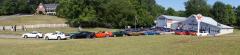
The Georgia Z Club gathered at a garage to do a photo shoot. It turned out well
-
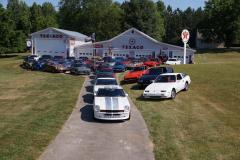
From the album: Georgia Z Club
The owner of this private garage was nice enough to let our club have a photo shoot on his property. We had over 40 cars show up with every generation of Z on hand. The garage's owner had a 73 240Z back in the day. After letting us do the photo shoot, he's interested in getting back in the game. An S30 would look nice with the rest of his great collection of cars. -
From the album: Georgia Z Club
It's a challenge capturing 40+ cars in one photo, even in a panoramic view. -
That's why for my Z I run GoPro clones facing front and rear.
-
To ensure you have good voltage, I suggest hooking up a battery charger to the battery and set the charger to the lowest setting. Please record your steps and your meter readings. It's tedious, but it helps with diagnostics when I can't see what you're doing. First, remove the relay from the wiring harness. 1. With the headlight switch on, at the plug for the relay, check voltage from the RB wire to ground. You should see 12 VDC (or whatever your battery voltage is). Also measure voltage from the RW wire to ground. You should also see 12 VDC. If you have voltage on one wire and not the other, check continuity from the headlight plug to the relay socket on the wire without voltage. You might also use an ohmmeter to look for resistance across the headlight elements with an open line/infinite resistance indicating a bad element. 2. Pull the fuse for the right headlight. Recheck voltages. Put the fuse back and pull the left headlight fuse. Recheck voltages. Also while the fuse is out, check it for continuity, just to make sure the fuse is good. These circuits are designed to backfeed between left and right on a blown fuse. That can make diagnostics tricky. Once you have determined that the wiring is good up to the relay socket, you can turn off the headlight switch and jumper the RB wire to ground. Turn on the headlight switch. If you don't have low beams, pull the headlights and check for continuity between the pin for the RB wire and ground. Also check the voltage between the positive pin on the connector and the RB wire. Report the results. Repeat the process above with the RW wire. Remember that you have to pull all of the headlights when you want to run the meter checks. If we can't figure it out the go-around, heck, I might just drive up there in a couple of weeks.
-
Hang in there.