
Zed Head
Community Member
-
Joined
-
Last visited
Everything posted by Zed Head
-
To SteveJ's point about not trying to start the engine. It might be worthwhile to remove the spark plugs and spin the engine with the starter. See if coolant comes out of any of the spark plug holes. People do see that sometimes if there's a leak in to a cylinder. If there's enough coolant to hydrolock, it will spray from a plug hole.
-
The fuel rail is 75-77 style also. Three piece. Could be a replacement motor. Not a huge deal, but something to be aware of. Good pictures of the oil and the spark plugs will tell something.
-
Not really clear what you're saying. "When we had the car"? When? How long did it run perfectly before you parked it in the garage? Since it's your first car,and first Z, the best thing that you can do is to read through the Service Manual. Engine Fuel chapter. See the link below. Your fuel pressure is too high, for starters, but there's much more in there. On the pictures, I really wanted to see the " chocolatey color, which means water." Dark chocolate would be okay, milk chocolate would be iffy. White chocolate would be bad. Could be that you've assumed the wrong problem though, there are several things that you can do to confirm. Since you put new spark plugs in, the old ones should be available for pictures. Where's the tub full of oil that you drained? If you give more information, you'll get some good ideas from out here. http://www.classiczcars.com/files/category/4-manuals/
-
I wasn't really asking about Skype. We need pictures, however you can get them. I don't think anyone is here to do an online realtime diagnosis. How long did the car sit, and how did it run when it was parked? Maybe the Datsun mechanic was right and you let a leaky roof drip water in to the engine. I asked if it was cold because frozen coolant can crack a head or block. Maybe even lift a head, causing a gasket leak. Are you using antifreeze in the coolant or just straight water? Need to figure out water got in to your oil. If the car has sat for a year or two it could be condensation. You're a bit limited because you know not much about cars. "New head cylinder" in your first post is a sign, and is most likely why the parts guy sold you some "head crack sealer". He'll probably keep selling you stuff you don't need if you go back. Be careful.
-
Don't take advice from parts store guys. Most of what the typical parts guy knows is what they heard from other people like you. Your retired Datsun "mechanic" gave strange advice. Or you misunderstood what he said. His suggestion of water "going in to the engine" and letting it sit for 24 hours then refilling with oil is odd. If you can run Skype, maybe you can use your computer to grab a picture. Or just take picture with whatever device you're using Skype from. In short, get a picture of the oil on the dipstick. Check the plugs as suggested. Has it been cold in Nampa? In your garage?
-
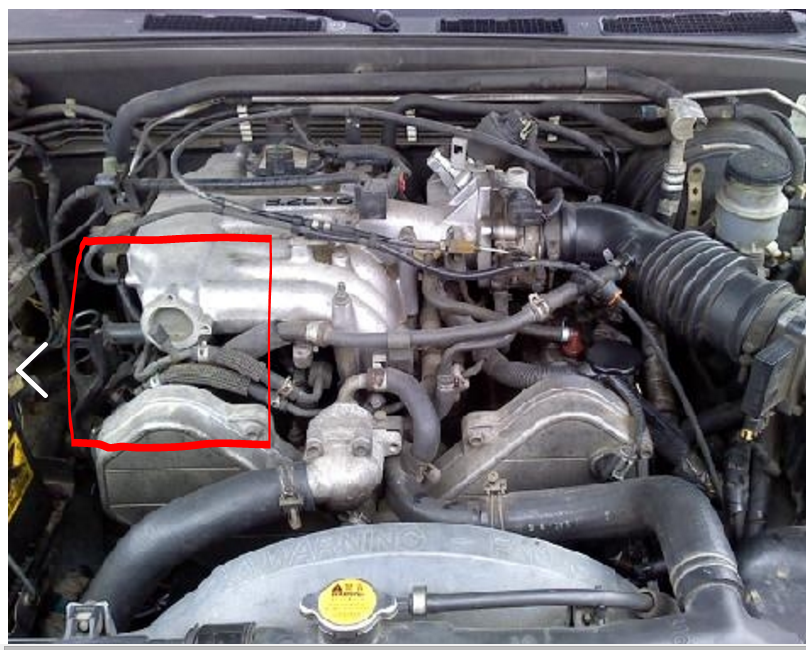
Here's a picture of the Schrader valve on a 1997 Honda Passport. The same year Isuzu rodeo has one also. Has a black cap, right in the middle of the red square. Easy to remove. You'll find many other valves on many fuel rails but they'll be difficult to apply to the Z.
-
Stanley - sorry to fill your thread with tach arguments. There are enough brainy electrical guys on this forum that you'll probably be able to get your tach to work. CO and SteveJ are out there. Might take a few tricks though. The guy in Chickman's Hybirdz thread actually used the MSD 8920 adapter instructions correctly to get his tach to work, he just ran the current backwards through the tach. People have amped up the current effect even more by taking their 240Z tach out and adding more wire loops. Actually the brainy guys could probably figure out what that 8920 adapter is doing. It's wired kind of like an ignition module.
-
Are you actually running that Haltech? Your last few posts said that you will be running a Haltech. Thought you were still collecting parts. As far as skill level - it's just connecting three wires, for the 8920 adapter. A corollary to what I said above - the guys who connect three wires and end up with something that works feel like electronics experts. The guys who connect three wires and get nothing are left hanging. It's just three wires.
-
Actually, within that thread is the typical scene. Works for one guy then the exact same setup doesn't work for another. 72_NorCal didn't get it to work, Post #4 and on. The people it worked for say it should work for everybody. And the people it doesn't work for are left hanging.
-
Looks great in words. But I'm sure that I could find a case of "it didn't work for me" for every one of your examples. There are lots of posts all over the internet about people who can't get their tachs to work. The latest I saw is a Megasquirt application. madkaw was there and you too. madkaw's pretty good with easy-peasy stuff. http://forums.hybridz.org/topic/124640-240z-tach-driver/?hl=tachometer#entry1165438
-
I've seen that before and it seemed like a lot of mixed results. Edited a bunch of my comments out. If you read through that thread you'll see people who had no problem and people who've tried everything and still have problems. I don't see one method that's guaranteed.
-
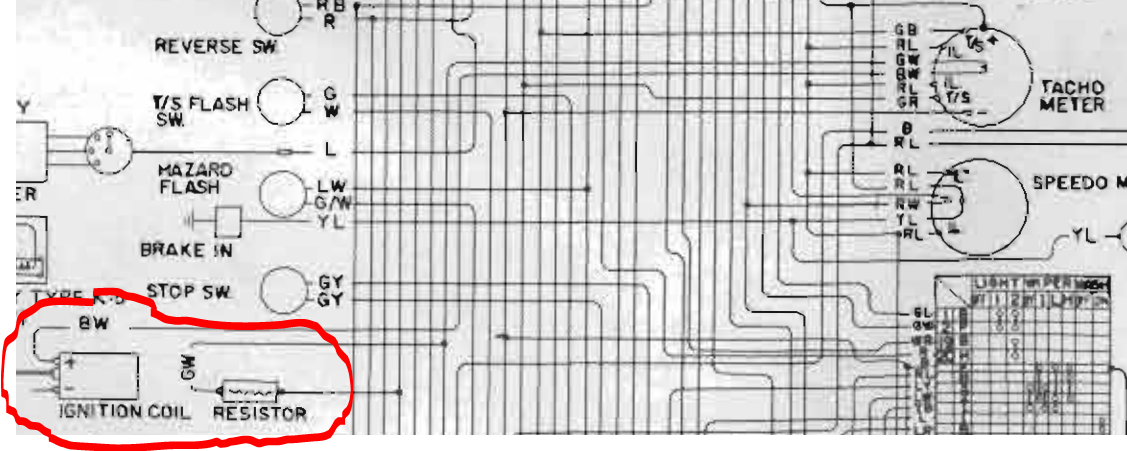
1973 is different from the 280Z's, and the 260Z. Probably had somehting to do with the introduction of electronic ignition. Power runs through the tachometer first, then to the coil. In the 280Z's and the 260Z power runs through the coil first then to the tach. So by inserting the Hi-6 box in between the coil and the tach you're affecting the trigger for the tachometer. Feel free to walk him through it though. Tach problems are common with the aftermarket boxes.

-
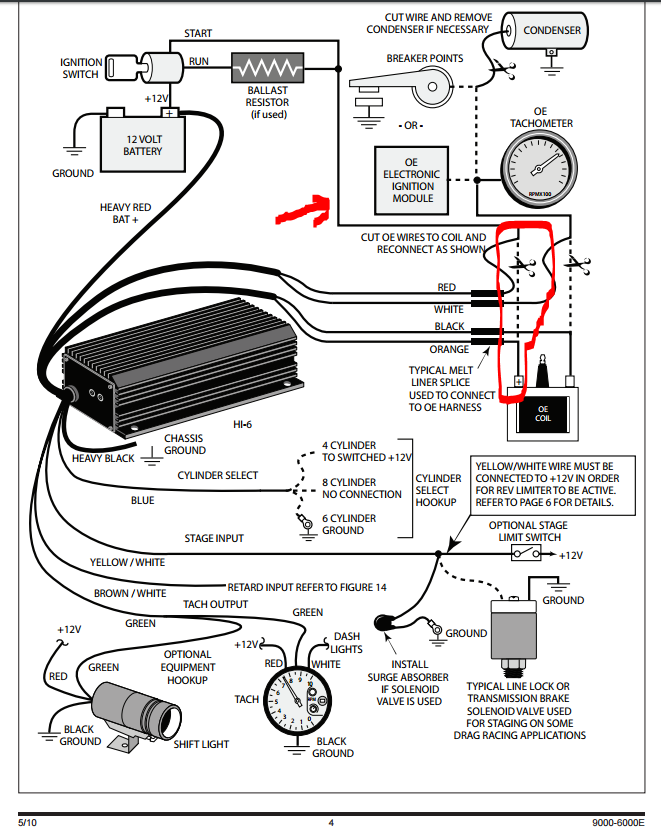
I think that you're going to have tach problems. The instructions show that the power wire to the coil positive, that runs through your 240Z tachomoeter, is cut and redirected to the Hi-6 box. The power characteristics in to the Hi-6 might be different than the power draw from the coil positive. The stock configuration pulls a bunch of current through the tach loop, then stops. The Hi-6 probably has a more steady draw, or spikier. But not the same. Your tach would be where the red arrow points. Before the coil. Now it's before the Hi-6 box. Edit - took out a bunch of CDI stuff. I don't really know why one is better than another or if one is.

-
You're way ahead of many, you have a running engine. Here's another thing that can cause rich running - a blown fuel pressure regulator (FPR). Pull the vacuum hose from the bottom of the FPR and check for liquid fuel. If you make a list of all of the suggestions being given you'll knock of the high probability stuff and might find a winner. Many ways to get there. Some people would just remove the engine and rebuild it because "it probably needs it".
-
The other hard part of solving problems is describing what you're seeing. I said "fuel pump power" but you're writing about fuel supply. You're looking at very rich conditions but talking about lack of fuel from a clogged filter. Often, just trying to describe the problem will make you think of something more to look at. If the engine will rev you might try just cranking up the idle speed to keep it running. It's the big screw head on top of the throttle body. You can turn it by hand. Get fuel flowing and let things loosen up. The TVS (aka TPS) has a full throttle position that can get stuck and cause excess fuel. The test is described in the Guide and the FSM, Engine Fuel chapter. By the time you're done testing you'll be an expert on basic fuel injection principles.
-
There are a lot of different parts on the EFI system. Try to break them down in to their individual systems. Each system needs to work right so the next system can do its job. I think that you've mixed the running rich problem up with the fuel pump power problem. These engines will almost always idle just fine forever if the fuel pump is supplying fuel. Consider jamming the fuel pump power contact switch or hot-wiring the pump while you do the other tuning. And the cold start valve is almost never the problem. It's there and it could leak, but it would have to leak a lot to cause major fuel enrichment.
-
Sounds like someone ripped your piece of retaining wire out or it's just stuck in the open position. The ends can get stuck open. Actually that's the easy way to get the plug off, is to pry the wire ends out and get them stuck. You have to put them back in to place before re-installing the plug. I think that I've read that other brands of cars that used Bosch style air flow meters have plugs that can be interchanged. Early Toyotas, BMW's, maybe Volvo or Mercedes. Forgot to say - the wire terminals can be pried out of the plug and reinserted in a new one. No need to cut wire and solder.
-
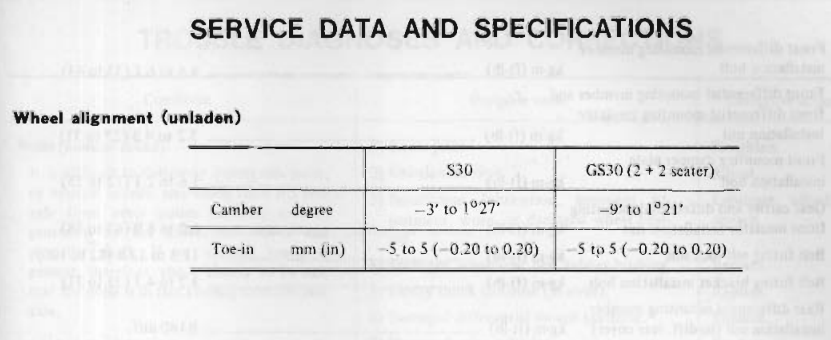
Taking the other side of the argument - the specs. are there for confirmation that everything is right. They can be measured. They could show worn bushings, or bent parts, or signs of a previous accident, or even find a basic problem that was built in to the car (some say that older 240Z spindle pin bores were drilled off design axis). If the simple toe-in spec. doesn't get the car right, then the alignment shop visit is probably in order.
-
Don't forget the rear wheels. A fun experiment would be to take your car to several different shops and see how many take your money for aligning the rear wheels and "setting" camber on the fronts. Take a fat wallet. I can't give in on the "just spend the money" argument. We're here to show people what they can expect from these shops. What's involved in doing the job right. There's no camber adjustment for a shop to make.
-
Don't confuse opening a fat wallet with getting value for what you pull out if it. And on a DIY-focused site, using bubble gum and kite string to get a job done right should be lauded. It's why we're here.
-
It's easy to miss the point of what's really being said here, especially if you take it to a shop without actually trying it yourself first. There is only ONE adjustment that can be done without a hammer or big lever or jacking/bending suspension components around. Toe-in. That's it. Nissan has provided zero adjustment anywhere else. No camber, caster, rear toe, nothing. Everything else is locked in by the part of the unibody that it's bolted to. The typical alignment shop has a book that describes what procedure to perform on whatever car that's brought in. People have described taking their Z in for alignment, then paying nothing (and having nothing done) because the guy checks toe-in, it's in spec., and there's nothing to charge for. Wheel balancing is a whole different thing. A re-centered wheel is nice also, but the same two nuts were probably turned to get there. Just wanted to be clear on what typical wheel "alignment" entails for an S30. Don't pay too much.
-
There are pictures around the interweb of the rear wheels of various Z's moving back in the wheel well under hard launches. The factory rubber bushings let the rear wheels toe-out and move back. Under braking the front bushings allow the wheels to move back and toe-out also (the TC rod is what keeps the wheel from moving back and the rubber donut they used to position it compresses easily). The factory stock S30 bushings are pretty loosey-goosey in general, and non-adjustable except for front wheel toe-in. It's an inexpensive sporty car. That's why a piece of string, some tape, and a Sharpie are all you really need to do a full alignment procedure on the stock parts. There are many aftermarket parts that will let you do much more. But the factory parts are basically done once they're bolted on.
-
I used CO's described method and it's easy and works well. Pick a spot on the tread and make it the same distance on the front of the tire as the back. The spec. for toe-in is 0 to 3 mm for a 1976 280Z, so equidistant is in spec. If you want a bit more stability, add a half-turn or two to the adjustment. I found also though, that the slightest wheel bearing looseness will magnify the wheels' attempts to track on ruts, and divert over bumps. I've also found that the factory wheel bearing tightening method of 20 ft-lbs of torque then backing off 60 degrees doesn't work well. My old worn parts may be part of the problem. But the methods they describe in the FSM can be conflicting, 60 degrees nut back-off, or wheel turning torque? The turning torque measuring method seems most logical but I lost my fish-weighing scale years ago. I use a wheel shaking method (my own) now, it seems to work.
-
I can't find any reference to such a thing as an A11-801-000. Can you take a picture? Could be a scratched 6.
-
Does the Vintage Air Gen II have its own fan? I assumed that it was just a compressor and cooling unit, and the stock Datsun fan was retained.