
Zed Head
Community Member
-
Joined
-
Last visited
Everything posted by Zed Head
-
Body Electrical has a wiring diagram that will show you how the tach works. The coil can't get power unless somebody wired around the tach, The chapter also describes how to remove the tach, No need to tear apart anything. The tachs do go bad. http://www.nicoclub.com/FSM/240z/
-
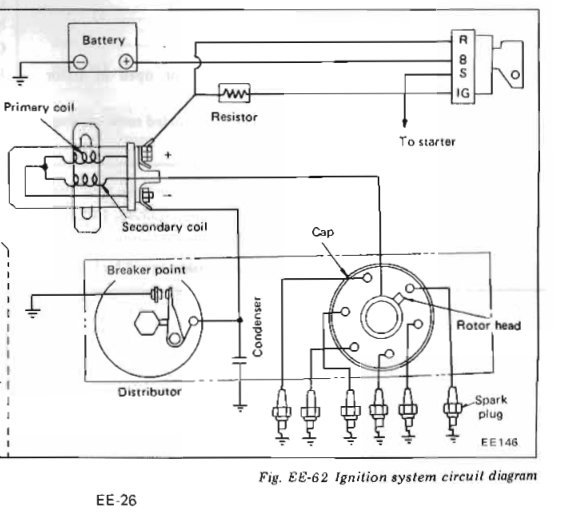
The 260Z came stock with electronic ignition from the factory. It was the first year of electronic. It's probably the stock ignition system. The wiring schematic and diagrams are in the nicoclub and xenons30 link provided before. Engine Electrical chapter, for one.
-
There's a break-in recommendation in the Owner's Manual. Looks like 1000 or 2000 miles is a common number. But those procedures were written when all oils had ZDDP, and may not even be concerned with cam lobe wear-in. So you're kind of in uncharted territory. Pretty sure I've seen higher numbers recommended, out there on the interweb, specific to the ZDDP problem, for new cams and rocker/lifters. Modern engine procedures won't work since they all have roller rockers or lifters.
-
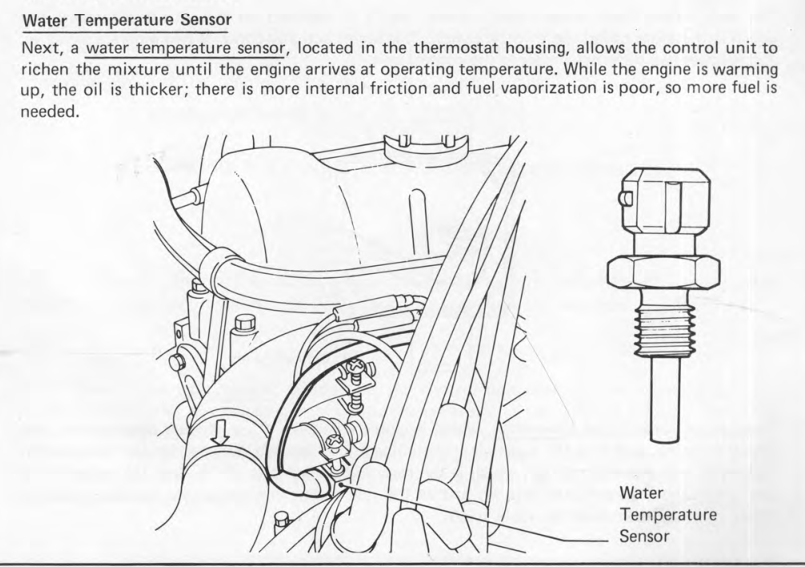
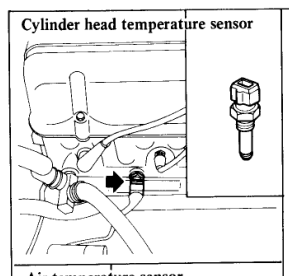
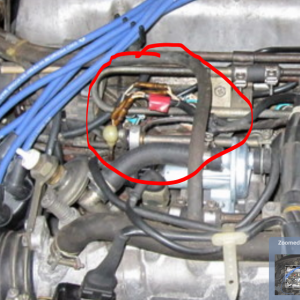
He has a ZX P79 head. Somebody ran the pigtail to connect it to the coolant temp sensor circuit but didn't finish the job. Compare the image below to post 38. If he finds a meter and uses it right it should be an easy job to find the bullet connectors to the coolant temp circuit then run some wire to the CHTS. Can't get much simpler. On the engine - there should be some letters and numbers molded in to the block beside the driver's (left) side motor mount. Either N42 or F54. 1978 stock is N42, 80-83 ZX is F54. They're both good engines. http://www.xenons30.com/Engine.html
-
-
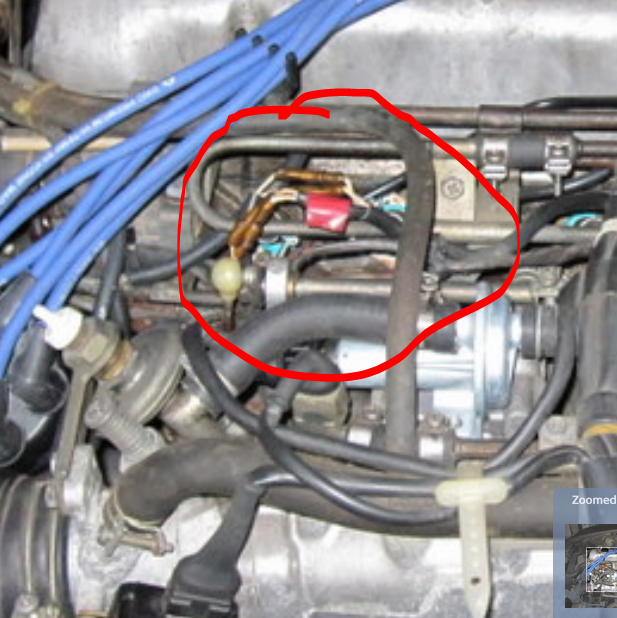
Here's a picture I took long ago of my 76 wires. Your 78 should be very similar. Look for wires with bullet connectors.
-
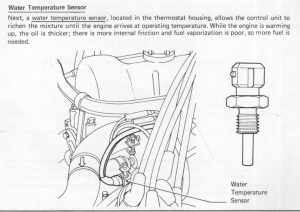
You have all of the puzzle pieces now. Your stock engine had, and may still have, a coolant temp sensor right next to the water temp sender (for the gauge), in Post #39. The wires to the sensor would run right next to the wire to the sender. The sensor might still be there and it might still be connected. If not, you need to find the wires and extend them all the way over to the two white wires connected to the cylinder head temperature sensor (CHTS) in Post #39. They do the same thing. That is not the stock head that came with a 1978 car. Look at the numbers on the head up by the #1 spark plug. It's probably a P79.
-
Your coolant sensor is on the front of the engine close to the distributor, for 1978. The wires to it come from the same harness that injector wires do. ZX engines use a CHTS that looks just like it, but it's mounted on the back right side of the engine close to the battery. It's pretty common to find a ZX engine in a Z.
-
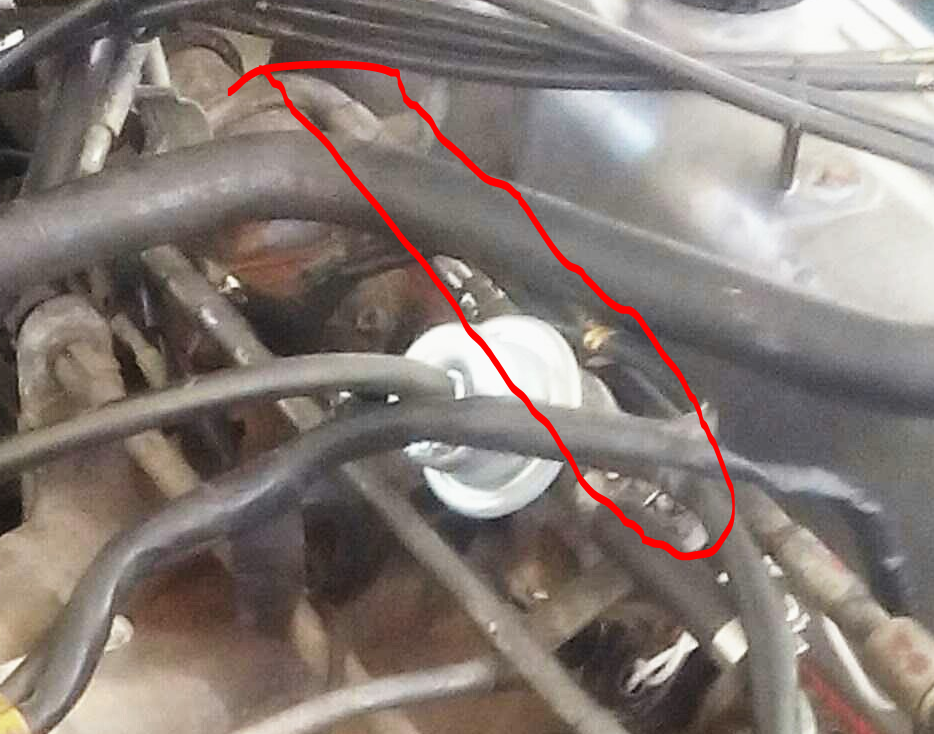
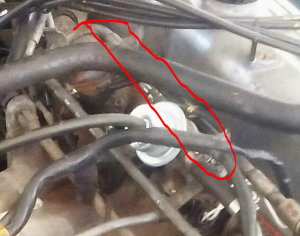
The wire to your sensor should be in the red circle in my picture. That was my point. Not where your picture showed. Think it through.
-
You're looking in the wrong spot, and maybe at the wrong sensor if you're over there. Or you have a ZX engine with a CHTS. Added a picture that shows where 78 wiring would be. Here's some links to various helpful sources - Guides, use the 1980 one - http://www.xenons130.com/reference.html FSM, read Engine Electrical and Engine Fuel - http://www.nicoclub.com/FSM/280z/
-
If you're on a budget, a wrecking yard Ford F150 pump might be an option. They're factory issue Bosch pumps. They have the long cylinder form though, like the Airtex. Late 80's / early 90's BMW's use them also. Many of the EFI sysems I've dinked with in the yards are still pressurized with fresh fuel, even though they drain the tanks. I'd rank quality as new Bosch > used Bosch > parts store Airtex. I wouldn't buy a new Airtex today although the one I have is still going strong, after about 5 years and maybe 50,000 miles.
-
Bummer! Hope it doesn't last for you, it gets old real fast. I made some injector insulators from old cellulose sponges (so they wouldn't melt, and because they're low heat conductors when dry) and the problem went 98% away. I understood when Nissan went to those plastic one piece injector mounts over the cool looking two piece mounts after seeing that. Might also explain some of the differences people see in addition to fuel. Later, and recently, I filled up with premium fuel over the usual 89 octane I get. So I'm back to no problems even though we've had some high 80's days here. I think that I might have been filling from the same big tank of 89 at my usual station and it was a funky winter blend. I'm sure that 89 doesn't turn over as fast as 87 and 90. Anyway, try some insulation around the injector bodies and see what happens. I had also placed some Mylar film between the injectors and valve cover just to buy a degree or two of radiant heat deflection, and found that the hole in the center of the manifold between three and four gets very hot. Enough to cause the bubble film to deform there. Your 78 probably has the webbed manifold with the little screwed-on sheet metal cover, but that's the hot spot I think.
-
Nice pictures. I wouldn't be surprised though if he had an aftermarket pump. Have to crawl under and see. Running the pump backward might break it free if it's jammed. Not sure if the stock pump does this, but the aftermarket pumps run fuel right over the electric motor. So moisture and crud can screw that up also. A new aftermarket pump is about $100 at the parts stores. Looks like other places are having sales though. The Airtex E8312 is a common one. http://www.amazon.com/Airtex-E8312-Electric-Fuel-Pump/dp/B000DT7Y7K
-
It only takes a little bit of moisture to get in to the pump and cause rust, or a few rust particles, and jam things up. The pumping mechanism is just small roller bearings on an eccentric mechanism with tight clearances to push the low viscosity gasoline. Not much to it. I wouldn't be surprised if the pump is just jammed, from sitting. If the motor windings haven't been damaged you might be able to get it moving again with some hard taps to the body. Jack up the back, or one side and remove a wheel, check voltage, then tap it with a hammer and see what happens.
-
Forgot to say, at first glance the way a regulator works is kind of counter-intuitive. The fuel doesn't push the valve open from the small port in the middle, it fills the volume under the the diaphragm and pushes it up, lifting the valve open and letting the fuel out the center port. Make sure you have your ports right.
-
It's not really clear that fuel isn't flowing and the carbs aren't getting fuel. You said that fuel flows from the return line, but not clear if you meant from the tank or from the line after passing through the system. In other words, summarizing, it looks like you're saying that you have a gauge that reads zero and a pump that shakes like crazy. But the rest is kind of foggy. Fighting fuel from the return doesn't make sense either. Can't figure it out. Is the regulator adjustable? Could you have the lines backward at the regulator? If you plumb the inlet line from the pump to the return port on a regulator, the pump will not push any fuel. It can't push backward through the regulator.
-
If your garage has sturdy framing you can use a come-along and move the car, then drop the engine on to a dolly. It makes people nervous if they haven't done any woodwork though. You can spread the load with an extra beam.
-
Racing oil with zinc complex is still available. S30Driver posted recently about a sale on Valvoline VR-1 at NAPA. Post #48. http://www.classiczcars.com/topic/51299-zinc-additives-cam-shaft-or-rocker-wear-and-mileage-a-poll/page-3 Pennzoil has one also, GT Performance Racing oil. Post #24, same thread.
-
Methyl hydrate being methanol? With a little hydrogen dioxide added or straight up? I did try ethanol and it cuts through it pretty well. I think the clean rag might be one key. Seem like fabric softener or lanolin is everywhere. I've never had any luck with newspaper. Maybe paper and ink vary geographically. I took out my Home Depot carpet to see if I get a few more days or weeks per cleaning. We're hitting hot weather here so outgassing should be high.
-
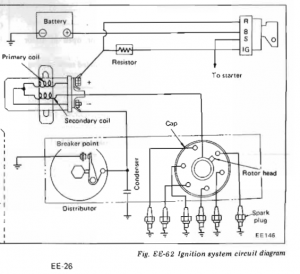
Those are some good points. Don't forget that the system grounds through the distributor body. Coil > points > distributor body > ground to engine block. You might just have a bad ground.
-
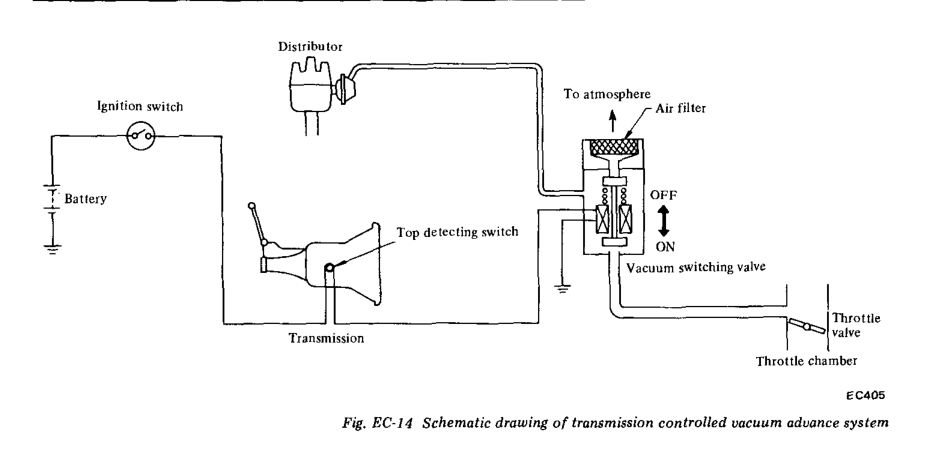
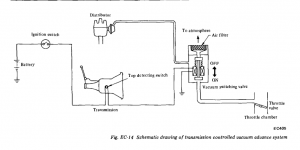
One more goofy 76 switch is the "top gear switch" that actuates the vacuum advance control solenoid. It runs through the transmission switch though so you'd need to extend the wire from the switch location. Looks like they used it to power a lot of small loads, like the hazard switch light and various gauges. It's fused though.
-
The condenser is an important part of the points system. If it is shorted, it will cause a weak spark. Probably easiest to just get a new one, although they can be tested if you have the right meter. The ballast could also be a problem. You could try rewiring the ballast to bypass it, just to see if it fixes the problem. Put both power wires on the terminal that does not pass through the ballast. It won't hurt to run it that way for a short while.
-
I'm guessing sugar or something else that's not supposed to be there, in the gas tank. The common way to test fuel pump operation and check for pressure is to remove the small yellow wire from the starter solenoid, then turn the key to Start. The pump will run but the engine won't turn. Assuming that your system is stock. If you have the later 1978 style safety system, I've heard that removing the oil pressure sending unit plug will allow the pump to run with the key On. That's easier for testing pressure since you can leave the key On. A simple way to check which system you have is to look at the oil sender plug. Early only has one wire, late has two wires.
-
Is it just my old Z, so degraded by the sun, that is really hard to keep a clean windshield? I i get a a light haze within a couple of weeks of cleaning that is really hard to remove. For a while I thought it might duck(t) tape that I had on the seats releasing plasticizer, but it's gone now. Then I thought it was a small coolant leak, depositing antifreeze stuff, but that's fixed now. Whatever it is is difficult to remove. Windex and paper towels, Windex and shop towels, clean damp wash cloths from the house, newspapers, etc. none of the cleaning tricks work. The only thing I've found that works for a while is a new OCELO sponge, straight from the wrapper. No cleaner, just the sponge, as a last step after the bulk of the residue is removed. Even other brands of sponges won't work. Anyone have any unusual cleaning tricks. Does everyone's windshield dirty up fast or is it just mine. p.s. I also have Home Depot outdoor carpet in my back panel with might be releasing plasticizer in to the air, redepositing on the windshield. Might be time to change that out just to see, but still wondering if it's just old plastic degrading in general. p.s. 2 - I've probably cleaned the windshield on my Pathfinder twice since I bought it new in 1994. It just doesn't get dirty on the inside.
-
I think that it is switched on when the key is on (pretty sure it's the under hood click I hear when I turn the key on) but it switches off above 10 mph. Checking for voltage above below 10 mph is part of the testing protocol. Emission Control chapter. If your car had AC but doesn't now, the AC compressor wire is in the vicinity. They get mixed up occasionally. You might also short or bypass the amplifier in the cabin.