
Zed Head
Community Member
-
Joined
-
Last visited
Everything posted by Zed Head
-
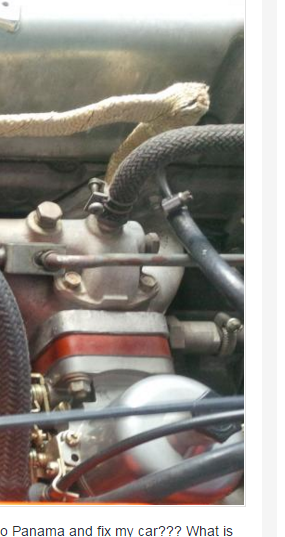
This is good information. Another clue would be what the temperature gauge does while these things happen. Even though they're not accurate, they're still good indicators. Where is the needle when you're "running the car" and where is it when you're "stuck in traffic"? If it's in the same spot, then the cooling system is working. Engine temperature is not changing between driving and stopped. But engine bay temperature might be. What thermostat temperature are you using? Maybe you just need to use the 160 and you have a 180. Here's a question for the carb guys - would measuring fuel flow on the return line be worthwhile? I don't see it in his pictures but I don't really know what I'm looking at. Could be that his guy is running it dead-head style and the insulation is being overpowered at a stop, or he just has low flow for other reasons. If I had carbs I'd probably use that as an overall check of the lines and fllters. Without good fuel flow past the carbs vapor-lock could still be a problem. Also - I attached a picture of what looks like a hose laying on your throttle linkage. Could cause throttle feel issues.
-
I can't really say. As the guy in the second link notes, the kit synchros were okay for average driving. But stock worn synchros probably are too. The bearings in your eBay kit are Nachi brand which seems reputable and is what comes in factory boxes, I think, so those look okay. But as duragg noted, some of the kit seals were wrong. So, some of the kit parts are probably fine, but you might need others. And, since you only saw problems in one gear, maybe you only really need one synchro. Four worn and one new Nissan synchro might be the way to go. You said 2nd was grinding like crazy but didn't say at what RPM, and only you know if the others were fine. Personally, I found that the fluid used had a big affect also. I tend to collect a bunch of information then put my own plan together. In short, all I'm really saying is that the rebuild kits that are out there aren't known for making people happy. Don't expect a like-new transmission, even if your guy knows what he's doing.
-
Hope you don't mind but I tend to pile on when this topic comes up. Here's a good thread from Hybridz. duragg is the guy that rebuilt his transmission many times and knows most of the inner workings. Full disclosure, I'm in there as NewZed (unintended multiple identities). http://forums.hybridz.org/topic/113022-syncro-difference-btw-closer-ratio-and-wider-ratio-fs5w71b/ Here's another link where the guy, who seems to know some stuff, was disappointed in the kit parts - http://zhome.com/ZCMnL/tech/240SX5spd/transmission.htm
-
Browsing around, I find that Courtesy has discounted the synchro prices. Not terrible. http://www.courtesyparts.com/oe-nissan/32604p0100
-
That's the same not-quite-right kit that's been out there for as long as I've been aware of rebuild kits. Notice that the name/ID of the transmission is wrong, it should be FS5W71B, not 71A. Also notice the two different types of synchros (aka baulk rings, look at the number of teeth if you use the magnifier in the eBay link) in the picture when other places call for 5 synchros of the same type (even though some also call for a different 5th gear synchro). The ones in the kit picture (called out as the actual parts), show two different styles. Plus, too many exclamation marks. And why would you call a baulk ring a "crush ring"? Don't get that. Here's a reference, also look at the other link I posted. Part #45. http://www.carpartsmanual.com/datsun/Z-1969-1978/power-train/transmission-gears/5-speed The Z car trans rebuild market is kind of messed up. I think that some parts shop created a list of parts many years ago, with the wrong trans ID number, and everybody uses it. Kind of weird how that wrong ID follows the various "different" sellers around the internet. Seems like somebody would have the details figured out by now. Don't want to be a buzz-kill. But you'll probably pay more in labor than parts. Just some odd things I've noticed.
-
Did he show the filter in a different thread? Can't see it. But it does bring up another diagnostic - fuel pressure. Carbs are sensitive to high pressure. We just need more better numbers. That's two mentions on a funky pressure sender...
-
I took the basic facts I could find and broke them up. Overall, things don't seem terrible. But you seem to be reacting quickly and dramatically to relatively minor issues. You've had the engine for quite a while, with its various problems, but it does start, and run, and drive. You're probably very close to getting it running well, IF you can resist the urge to make major changes. You're about to spend much more money and replace a bunch of parts, because, apparently, the engine stalled a few times after it warmed up. Your description looks like you sit watching while the engine RPM go up and down, at idle, then the engine dies. That's not much. You have an engine idle problem. Did you set the timing or did the mechanic? Do you have vacuum advance connected? If so, is it on a parted vacuum source or direct to manifold? Have you adjusted the carbs at all, for idle performance. If I had your problem, I would get all of my diagnostic tools connected to the engine, start it up, and wait until it warmed up and things happened. Watch the timing, fuel pressure, etc. Try to keep it running using the throttle when the idle starts to go up and down. All you have now is "it dies while I played with the radio, it dies at a stop light, and the gauges don't work very well. Even the new oil pressure senders have been known to give low readings at idle, so a view with the engine revving a bit would help. Just not much quality info to worth with.
-
Assuming that it came from a Z car (there's another discussion out there about all of the other possibilities), that looks like a plain-old 77-78 280Z five speed. The passenger-side exhaust hanger, the speedo gear bolt, and the dust shield at the tail (not often mentioned but it's a sign - the ZX castings don't have it). Not a 71C or BW, definitely, because they use a shifter mechanism that drops in through a 6 bolt plate on the top. I still wonder about your guy. One key to "success" in the auto repair business is to sound like you know what you're doing. Nobody leaves their car/parts with a guy who doesn't.
-
Could be a PO ran low on coolant for quite a while and those are just water deposits that built up on the high spots from many drying cycles. The lower return to the pump inlet might have been sucking air from the top of the head and doing the same. You can unscrew the elbow/T from the back of the head and see what's inside there. Remove the thermostat/sensor housing also and look inside the coolant outlet also.
-
I would take some chunks of the stuff and see if it dissolves in anything. Vinegar comes to mind, or some of that CLR product. If it dissolves and breaks up fill the engine with whatever does the job and let it sit. If it doesn't soften up or dissolve it seems like you have a big job ahead. It kind of looks like there was some foaming going on and maybe a leak-sealer was added. Makes you wonder if there's not a bigger problem behind it. I bought a low-cost OReilly auto parts radiator, Murray brand, I believe, and it works great, no problems keeping up. That's on a 76 280Z with a fan shroud, but some very hot days in the Oregon summer.
-
That's not very hot. Most thermostats are 180 degree thermostats. A better test of if the cooling system can handle the heat load is what the temperature gauge does while driving. If it climbs to a spot as the engine warms up and sits there whether you're driving hard or just cruising, that's a good sign that the thermostat is opening and closing properly and the radiator is removing heat when it's open. If the temperature keeps climbing the harder you drive it then drops when you take it easy that's a sign that the radiator can't remove heat faster than the engine can produce it. If the temperature climbs at stop lights but drops when moving that's a sign that there's not enough air flow over the radiator. A bad fan or fan clutch, or the need for a fan shroud.
-
I've not seen that. Two hangers has always been a 3.321 first, one hanger is 3.062 first, with accompanying gear sets. Maybe the 79-80 ZX 5 speed went to one hanger but kept the 3.321 first. 1979 has all kinds of weirdness. It's the 260Z of 280ZX's. I always check everything I look at as soon as possible. I bought a diff from a guy who is a Z and ZX expert, building engines, drag-racing, works at an import shop,,, and even he got fooled on the ratio because of the car it came in. He was sure it was 3.9 and it 3.54. Still bought it. $50, with CV's.
-
Found him, lurking. Coincidentally, I just watched The Thing the other night.

-
I'm pretty sure that, within the Z and ZX family, the exhaust hangers, one or two, will ID the ratio change. I have a 78 Z 5 speed and an 83 ZX and the casting changes are there. 78 has two, 83 has one. The speedo cog bolt orientations also. If you get in to the odd truck or Maxima transmission, maybe not. Some of the later 5 speeds are actually shorter overall also though, so you're right - best take a bunch of measurements. Pretty easy to mark front and back shafts and see what one turn in the front gives in the back.
-
"3/4" is not very hot. There are numbers on the gauge also if you want to estimate temperature. But a thermometer in the coolant will tell more. All that you've described is that the engine runs better cold than warmed up. Might still just be running lean. Don't get distracted thinking that the engine is overheating until you get some real numbers.
-
I think that the oil companies use EP additives to meet the GL5 spec. Which is what the differentials require. Sounds like you're doing everything right. Other things that will help or hurt the noise level are the padding and/or carpeting in the back deck area.. I slid some of that silver foil insulation bubble wrappy material under my carpet in the back and it made a noticeable difference. If you have no carpet or thin carpet, throw some more material back there. Your description is a little different than many though. Mine will whine or howl, actually more of a warble, at certain constant freeway speeds but is quiet at acceleration and deceleration. So maybe you do have a differential wear problem. If it were mine though, I would buy a used one and try it first. If it doesn't work, at least you'll be able to drive while you get one fixed. I have several used differentials and they all sound about the same. They're pretty durable.
-
Did you replace them with polyurethane or stock rubber? The PU bushings can be tight and cause noise.
-
If the transmission is in neutral the drive shaft can spin instead. A stock 1976 car wouldn't have an LSD. The diffs are generally whiny and all it takes is some solid contact between metal parts, or compressed old rubber, to transmit the whine to the cabin. People don't generally rebuild these diffs because they last a long time and you can find used units pretty easily. Your best shot at getting rid of the whine is to check all of the mounting points for looseness and wear and replacing them. Have you looked at them?
-
I've never seen a "field-fix" document. So don't really know what that means. Did Nissan send something out or is it just word-of-mouth? The hole enlargement to avoid the issue, your December 20 post (what happened to the post numbers?), sounds interesting. Just never heard of it until this thread. Seems like it would be a well-known while-I'm-at-it for anyone that removed an exhaust manifold.
-
Forgot to say also, that I've seen cases where people who seemed to know what they were doing rebuilt their transmissions with "kits" and they turned out worse than used factory parts. There's a guy on Hybridz who went through all of the various possibilities building a racing transmission. He ended up paying for the Nissan synchros even though they're about $50 each. The kit synchros just weren't very good. Here's a comment from Oliver at ZSpecialties about synchros, and one of his kits. Be careful. Might be best to use it as-is. "Rebuilt' doesn't guarantee better. http://www.datsunstore.com/syncro-ring-through-7083-p-1458.html http://www.datsunstore.com/trans-complete-rebuild-wsyncros-speed-7783-p-1496.html
-
Well that's interesting. And your tech seems to be saying that the kit synchros are a different size? You didn't say where the kit came from. I've never heard of fiber synchros for all five gears. But I have heard of modified steel synchros in place of brass. I don't see how the tech can see enough of the synchro face to determine brass or fiber. The teeth are still metal in both cases. Might get a second opinion from someone who knows old Datsun parts. You don't want someone in there who doesn't know the transmissions. Even the "kits" that are out there are incomplete and come with wrong parts.
-
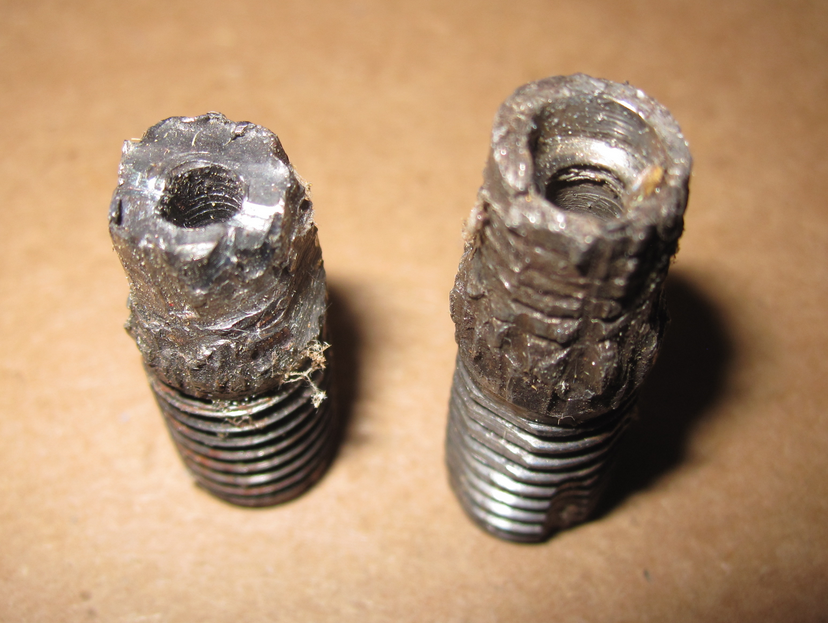
I'd still like to see the factory documents. Sometimes in a local area one guy will get the reputation as the guy that knows things. But he's really just another guy making his best guess. And I could easily see going up a size after screwing up the threads drilling out a broken stud. Seems like if the small stud was ID'ed as a problem that there would have been a recall or an if-the-manifold-is-removed fix TSB to upgrade the studs before they broke.
-
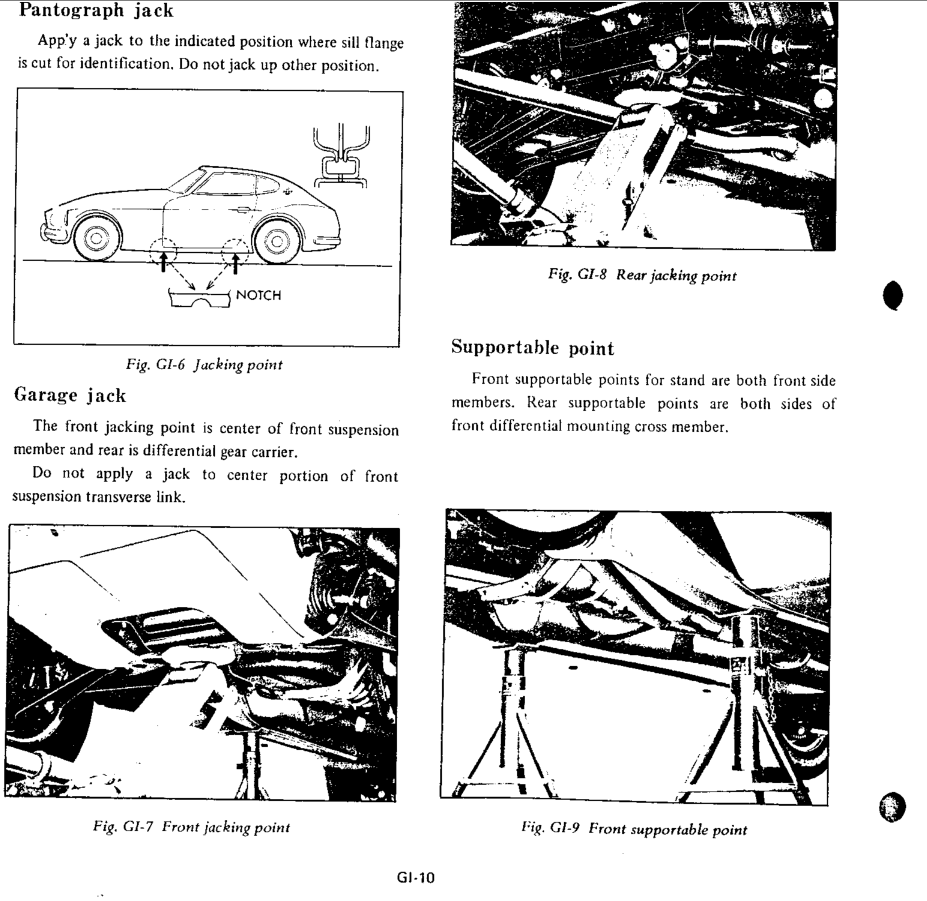
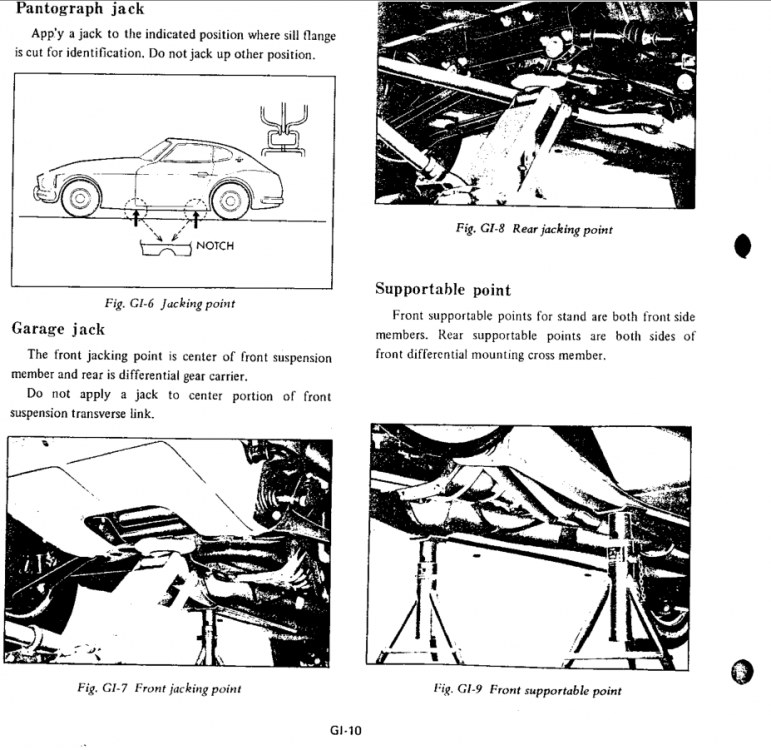
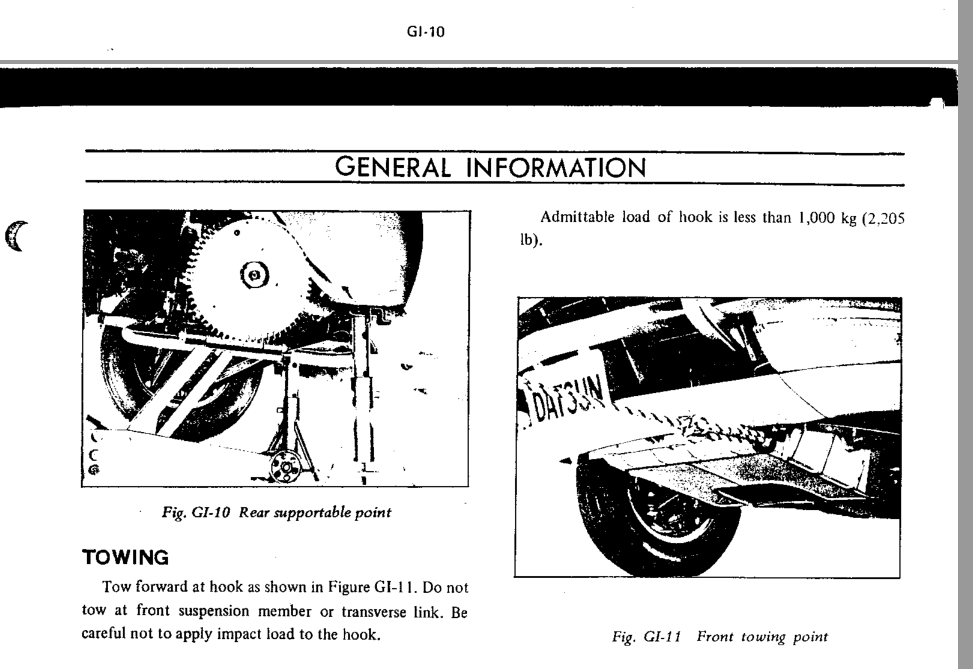
There are actually ten support points ID'ed in the FSM.
-
I have a disassembled ZX 5 speed in the garage for reference. But there are also pictures around the internet.
-
Where did you get the "kit"? Not really clear if you're saying that the tech found black fiber synchros in the transmission, or if he found them in the kit. You say he's not sure if the new brass synchros will work because they're a different size. New from the kit or new from somewhere else. No offense, but it's not clear what's what. Do you know where the transmission came from? And are you sure the tech knows black fiber from steel?