
Zed Head
Community Member
-
Joined
-
Last visited
Everything posted by Zed Head
-
I used a piece of "repair" tubing to plumb in a fuel rail. 45 degree single flares (SAE style) on the cut ends of the stock tubing. Worked very well, no leaks. Most stores have a large selection of lengths hanging behind the counter. Buy a length of repair tubing and a flare fitting to match and you're ready to go. Many stores have loaner flaring tools if you don't have your own. Example: http://www.oreillyauto.com/site/c/detail/DOE0/800156/N1650.oap?ck=Search_N1650_-1_-1&pt=N1650&ppt=C0290 The compression fitting shown would work also. I had compression fittings blocking my CSV pipe on two old fuel rails. 36 psi isn't much, even 90 wouldn't be much for a compression fitting.
-
I was talking about this comment - " only 2 days had passed since I'd put gas in, but not a half tank". Put a tub underneath and see if enough leaks out that it doesn't evaporate way. That would be a lot.
-
It is a messy place, for sure. Very exposed though so I don't think you'd get shot as long as you stayed in the open. What did you say on the note?
-
You seem to be implying that gallons of gas had leaked. That the gauge was much lower than expected, at 1/2, and it was still leaking (the gravel was still wet). If the tank is leaking and the gauge is at 1//2 then the filler hose is unlikely as the source. Could be one of the hoses to the fuel pump.
-
If someone really wanted coolant control through the carbs, one of these could be rigged to work, I think. 180 might be high but depending on where it was mounted, actual temperature through the carbs could be lower. There might be other temperature specs. out there also. http://www.amazon.com/Derale-13011-Fluid-Control-Thermostat/dp/B004XONNRQ http://www.improvedracing.com/oil-thermostats/high-flow-engine-oil-cooler-thermostat-185f-p-212.html A solenoid valve with a temperature-controlled electrical switch would work also. BMW has some low T switches, for their cooling systems.
-
Are you talking about where it came from or where it went? Smoke and mirrors is assumed.
-
Diseazd said a friend of his bought it, back in June 2015, mostly for the rust-free body. Said he's going to rebuild the engine anyway. His posts are in one of the linked threads.
-
You did ask about acoustics. I know that high frequency is very directional, so anything that points directly at the ears is good for the high notes. The passenger side should be interesting, since it's basically just a black piece of cardboard with a hole in it for the fuse box. You could probably sell just a better plastic panel, forget about the speaker. My cardboard panel has water-soaked swelled edges and is in poor shape. Good luck. Has anyone driven the car with the pod shown? Seems like big feet might have an issue.
-
My Pathfinder has tweeters in the windshield pillars and mid-range/bass overhead, behind the front seats, along with door panel speakers pointed under the knees. Excellent sound. My 280Z has two speakers behind the seats pointed straight up. Sounds like there's a small band behind me playing. Excellent sound, very clear. Is a speaker under the dash, pointed at the driver's legs a good spot? Seems like direction, along with muffling from the legs, might render it less effective. I wonder if there are better places. Just asking, don't want to be a buzz-kill.
-
Sent. Hope it's worth a trip. It's nice driving country either way, before it gets filled with houses.
-
Wow, thanks for making that clear for me. I am so far from jealous, and so far from the text-speak phone world that I didn't even get it until now. To all future California Datsun LLC customers - if you have a problem with product quality from Al Allen it's because 'you are jealous!". So don't expect good service, it's your personal problem. Just deal with it. Suckers.
-
Here's another link -
-
Never mind. And the version in the link below is gone, apparently. Funny thing though - California Datsun has changed screen name to URGELIS. Odd.
-
Somebody posted that a while ago, on this forum I think. It's kind of old. Edited out my negativity...
-
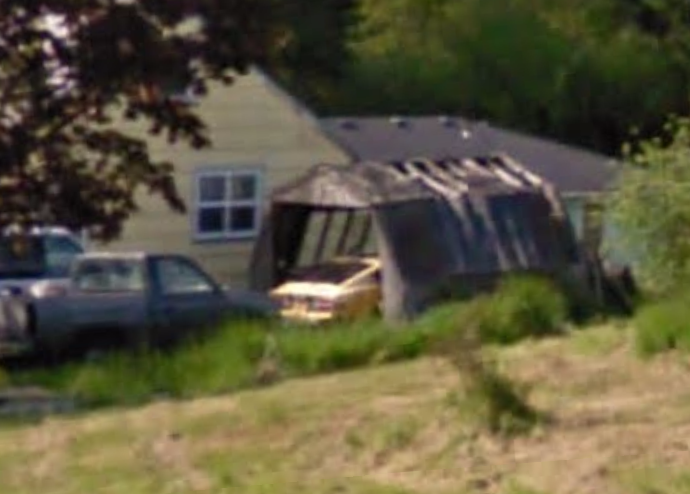
Somebody save this 280Z. It's been sitting in a shed that's falling apart for at least six years. I take a drive in to the country now and then and there it is. Made a picture from Google. Took the address out because I wouldn't want mine out there. I can PM anyone who's interested. It's west of Portland.
-
Here's one option. Notice the core charge. Not as bad as the AFM core charge but still pretty far up there. http://www.thezstore.com/page/TZS/PROD/24-5230
-
Found this, from the ZTherapy guys, they mention the difference. Thought that they would have chimed in on one of these threads - http://www.ztherapy.com/technical_stuff/spotterguides/zcar/240spotter.htm Actually, they mention just warm water but not the thermostat. Maybe the whole process was two steps: one to get the warm water in, then the thermostat to fix the new problem it caused. I had also found an image of a 1970 intake manifold that seemed to have the fluid passages cast in but no fittings attached.
-
yah, you never responded to the other post. Like you didn't read it. Have you looked at the parts yet? And is it actually a 1979 280ZX, or is it a 280Z with a 1979 differential? You said 1979 280Z, which is not an option. Not clear if you're relaying what somebody told you or if you know what you have. There are some details that you'll have to get in to. It's not just four big bolts and some heavy lifting like an old US car or truck. Take some pictures and post them. Good luck.
-
Some of the 79's came with R180's. That's actually one in the picture I posted. And 1979 apparently has a whole range of differential options, from 3.36 to 3.7, in R180 or R200 form. Plus, just to make it more interesting, 1979 still had the 3.321 1st gear 5 speed, not the later 3.062 1st, so a 3.54 would work best, IF it has the 1979 5 speed. But if the diff is welded who knows what else has been done. The OP asked this question quite a while ago on a different forum and I gave the same answer. But he/she hasn't even looked under their car yet. Maybe never even went back to the forum they posted on.
-
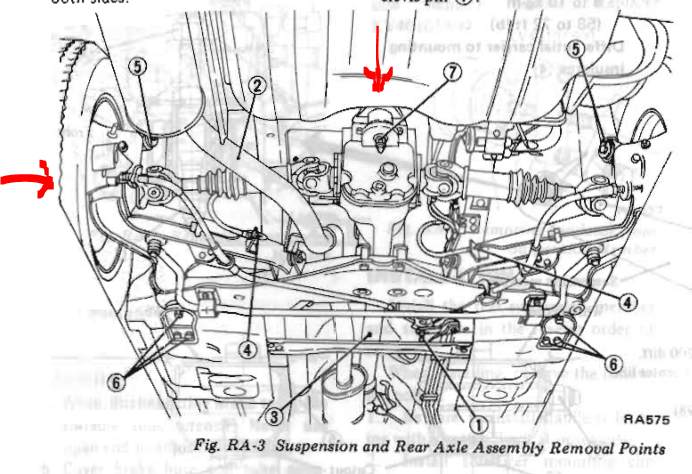
Pretty sure that you already posted about this, here or somewhere else. These cars have independent rear suspension. The differential and wheel hubs are separate. Posted a picture. The center arrow points at the differential. the outer arrow at the wheel. You can see the u-joints on the two drive shafts. The short answer is nowhere. You'll have to get custom axles or drill the ones you have. The diff is a completely separate issue from how many lugs the hubs have.
-
Braking in gear with the clutch engaged? Who knows.
-
Good luck with it. The early model boosters are difficult to find, I think, and sometimes the remanufacturers send the wrong one. The coil problem is a whole different issue. 2 seconds on a hot surface is pretty long. That's only about 110 degrees. Not really very hot. http://ntrs.nasa.gov/archive/nasa/casi.ntrs.nasa.gov/20100020960.pdf
-
Never mind. Breaking forum protocols, in general..
-
Actually, I believe that he tried to "check" vacuum and got zero. Then never really followed up. And checking vacuum won't tell you if the booster is bad. The booster only leaks when you press the pedal. The common symptom is "my idle speed goes up when I come to a stop light", but if you have a big leak or an edgy tune, it could go down. One of this threads problems is that we're all talking over each other. Simple stuff first, I recommend.
-
The corners wear off and they do get slippery. I don't know who runs zcardepot but he sure is covering the bases on z car needs. Here's some new rubber for a decent price - https://zcardepot.com/interior/pedal-pads/clutch-and-brake-pedal-pad-set-oem-300.html It's a stretch fit. No special tools required.