LeonV
Community Member
-
Joined
-
Last visited
Everything posted by LeonV
-
Great pics, I need to get out there someday!
-
I don't know, but the ebay Champion that I got is a 2 row.
-
I've had more than a few words with that pin. Had to use long pliers to (blindly) get it in there. Not fun.
-
I isolated my Aluminum radiator using nylon washers from the local hardware store. Cools better than the stock one with a hole in it...
-
Music? The only music we should hear is the straight-six symphony!
-
No problem! Just make sure you know which octane rating the manual is giving you! It can be RON (Research Octane Number), MON (Motor Octane Number), or AKI (Anti-Knock Index). RON and MON are experimentally determined using test engines, with MON being a more stringent test. Pumps in the US use the AKI rating which is the average between the two, whereas Australia and Europe use RON. RON will always be higher than MON, and what you see at US pumps is the average of the two. Just make sure you know which rating the manual is going by. FWIW, Turbocharged engines typically require higher octane fuel, but if the manual says 91 RON then 87 AKI is just fine.
-
No, there will not be a 20hp gain, nor does it affect WOT operation. Vacuum does not "climb" at higher rpm. At WOT, there is no manifold vacuum, it's completely open to the atmosphere (besides intake pressure drops). I agree with Zed Head's sentiments, you'll notice some gain in part-throttle conditions but that's about it. Fuel economy should slightly increase. Put a timing light on it and test, it's not that hard.
-
One must also realize that diluting gasoline with alcohol will drop the stoichometric mixture point. "Pure" gasoline is 14.7, while E10 is ~14.2. As alcohol content increases, AFR must be enriched. The chemical makeup of ethanol has a hydroxyl group (-OH) which oxygenates the fuel, thus requiring you to dump in more fuel when compared to using "pure" gasoline.
-
Careful with tightening to what feels right. I did that the first time around and had a strong driveline vibration from loose driveshaft bolts. The second time around I still didn't use a torque wrench, but tightened them as much as I could with an open end wrench. All is good now.
-
FWIW, I would set the cam "straight up" and go from there. Technically, you can start from anywhere, but straight up is as good a place as any. Steve had it right in post #9, set it to #1 and drive. You can then go by seat of the pants, but that's a crapshoot, so the dyno is your best bet for learning and improving anything in this case. OP isn't building a race engine. If you're not willing to dyno the car, then it doesn't really matter. Set it to 1 and go, it'll drive just fine.
-
Ok... Cam retardation/timing variance happens, but I'll repeat that what's better for him is not necessarily for you. The article's purpose is not solely to tell you which hole to put your cam into. :tapemouth Well then, it appears as though you made quite the exaggeration in your original criticism of the text then, yes? You were annoyed by his thoughts on what the cam holes are "supposed" to be for and felt like ranting? Yes, in order to be proficient at reading comprehension you must have some critical thinking skills and be able to "read between the lines" a bit.
-
I see where you're going with this, but why get "offended". I could care less what the guy does, he can be a ballerina for all I care. That's not what makes his statements right or wrong. I don't know how much timing is retarded at high rpm, but it sure does not stay constant. Nowhere did Brown say that the design is "wrong" but that it has certain flaws, just like any design. Unfortunately, in the case of the stock chain setup in a high-performance L-gata, the flaw does affect performance. Kameari didn't create their custom chain tensioner for no reason... In Brown's case, it was "better" to slightly advance the cam, but it is up to the end user to determine how much this matters to them. Will the stock chain limit your 7000rpm, 200hp L28? Probably not. Will it limit a 9000rpm, 350hp L-series? Most definitely! Brown is right (don't know about the numbers, but as far as the physics of it are concerned) but it's up to you to decide how applicable it is to your case using whatever method you like.
-
I've never had a stud break, but patience is necessary. Heat helps a bunch as well. Go slowly, and if the stud doesn't budge then don't force it. That just means you need more rust penetrant and/or heat. Once it's loose, twist it out and if it gets tight then turn it back in a bit (like tapping a hole), and then back out. Rinse and repeat.
-
Yeah, the 3 holes are for powerband adjustment... what else would they be for? I don't think you're understanding that statement correctly. To paraphrase: cam timing inherently retards as you accelerate the engine. The cam sprocket has holes to advance the cam. If cam timing is too retarded, advance the cam. I don't see any issues with the statement. There is no mention of how much it is retarded, but in order to know that you'd need to dyno your own engine to figure out how much advance is needed.
-
Any examples of aforementioned "conjecture" regarding the cam write up? Otherwise, your post comes off as conjecture. Honestly, show me what it is that you think is made up and we can discuss.
-
I get new intake/exhaust stud kits from MSA, they're a bit over $20 shipped. 1. Remove the old studs after applying copious amount of rust penetrant and heat, if necessary. Use the "double-nut" method to remove, thread two nuts onto the stud, tighten them against one another, put a wrench on the one closest to head and untwist. 2. I used Felpro for the intake/exhaust gasket. Make sure all mating surfaces are clean and flat when re-installing!
-
-
Hey, someone's using their head!
-
Usually, that's what it takes... it's not my HybridZ tagline fer nuthin'! There is no mystery and no tricks when it comes to setting up a cam, if you know what you're doing. And to come full circle, looks like the OP should do some searching and educating himself. I've added a little background, and now it's time to search out the details. http://www.datsport.com/racer-brown.html
-
It's the other way around, actually. Advancing the cam increases low end torque and takes away from the top end. This happens because the intake valve closure point is altered (obviously along with the others, but this one is deemed more important), and advancing the cam makes the intake valve close sooner. This improves breathing at low rpm by limiting reversion of the fresh mixture back into the intake, however the high end is sacrificed by the earlier intake close point as it doesn't take advantage of inertial ("ram") effects. It's nothing to do with tricks or magic. Apply scientific method and you're there. Someone should write a book titled "Suggestions from a Mechanic Friend" as a how-to guide, or rather, a "how-not-to guide".
-
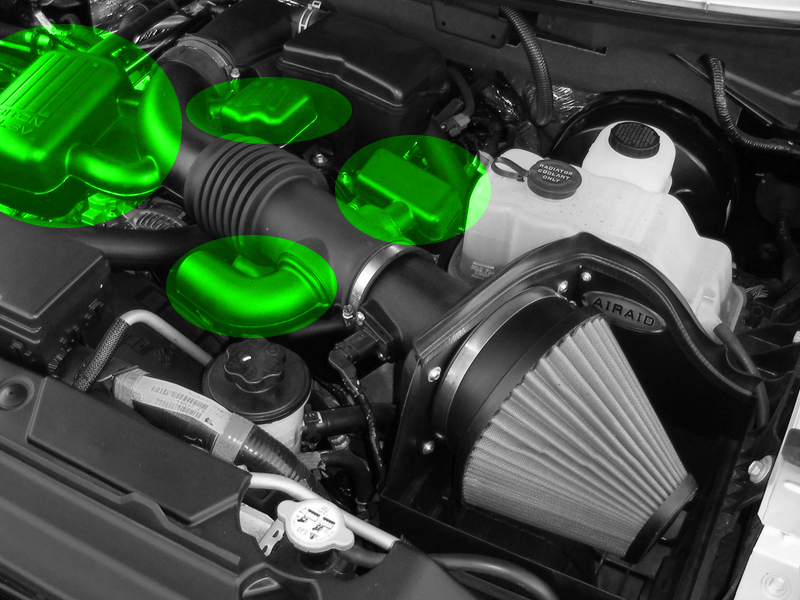
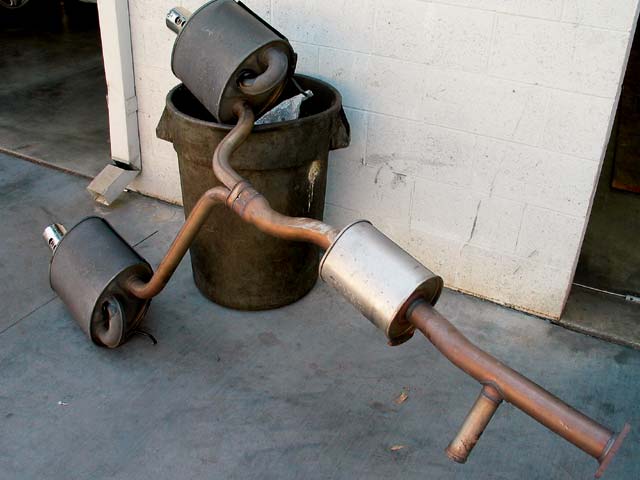
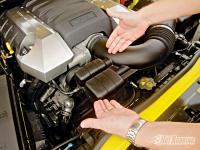
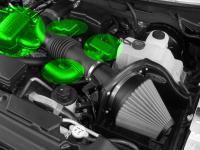
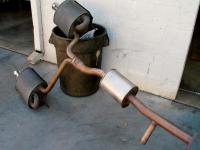
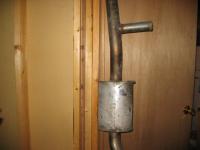
Those are helmholtz resonators and they're used on many modern production cars, mostly on intake and exhaust systems. If you look carefully enough, you can usually see tubes of varying size sticking out perpendicular to an intake or exhaust tube. They have nothing to do with speeding up gasses. What they do is damp certain frequencies out (that frequency depends on resonator volume), thereby reducing annoying resonance or "drone" from the exhaust and/or intake. EDIT: Examples Intake Exhaust S2000 IS250
-
Sounds like you need to set up your carbs right. Go through the procedure in the FSM, Haynes, or ZTherapy video. They'll all get you close.
-
Decel popping is a sign of a lean mixture. When you go too lean on decel, you will get occasional misfires which send raw fuel into the exhaust system. When this raw fuel hits the hot exhaust and mixes with fresh air, it combusts and "pops" out of the exhaust. Some people tend to like that sound.
-
Of course! The handbrake system is pretty simple as well. Just a linkage which eventually connects to cables, which split to the left and right rears. The cables attach to the back of the wheel cylinder (lever) with a clevis pin. I adjusted mine recently and it works much better. The FSM has a good diagram on page BR-19, Figure BR-33.
-
Jeezus, have you ever made a post without mentioning your car? This is getting ridiculous. It's just spam at this point.