HS30-H
Supporting Member
-
Joined
-
Last visited
Everything posted by HS30-H
-
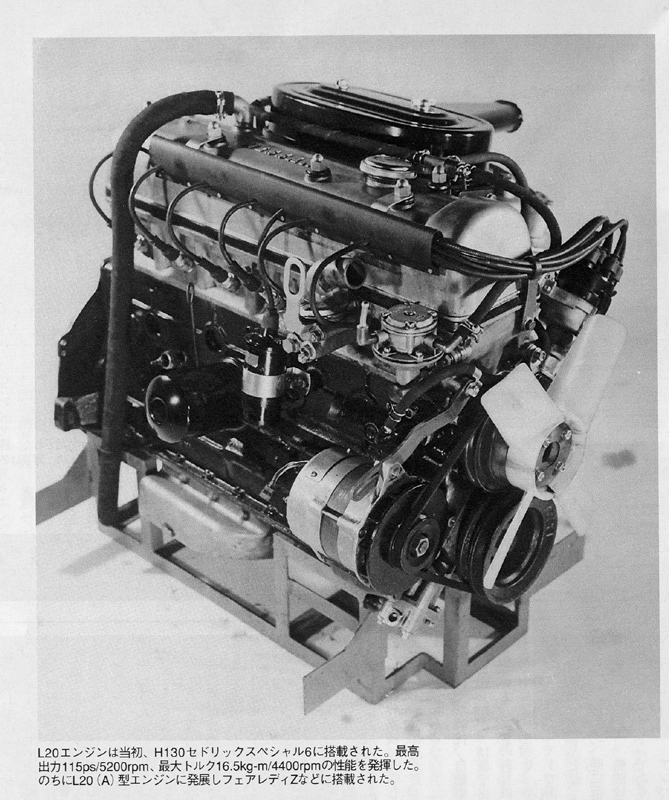
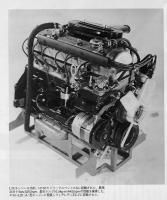
Wow Carl, it seems just like old times. You are spouting backward, revisionist - almost 'Creationist' - untruths and plain lies about Nissan history again. You're too late. The Nissan 'L-gata' engine had already been designed, tested, productionised and fitted in cars before Prince was merged with Nissan in 65/66. I'll just repeat a quote from you for emphasis: Why did you choose 1966 Carl? Does that year's L20 have any special significance over and above the L20 of 1964 or 1965? Surely you are not saying that the L20 didn't exist before 1966?....... You're still looking down the wrong end of that telescope, Carl....... Oh dear, I can see where that is leading you: There it is. Total nonsense backed up with unrelated and irrelevant data. I find it distressing to think that people will read what you have written and treat it as historical fact, just because it comes from the keyboard of a known and trusted 'scholar' on the subject of the Z. They are being misled. Carl, the beginning of the Nissan 'L-Gata' engine came more than three years before that. Why are you perpetuating the myth that the L16 'begat' the L24 - when BOTH of them are simply evolutions of the L20 six that was already on the test bed in 1964, and in a production vehicle by 1965? Complete bullsh*t. This is the distortion of historical facts simply to suit the 'truth' as offered by Nissan Motor Co. USA's advertising copy - which you seem to have fallen hook, line and sinker for more than 35 years ago. How can you say that they were "unrelated"??!! This is complete nonsense. Its just laughable. Just how you seem to think you can draw an arbitrary line of demarcation across a clear timeline of evolutionary development - for the sole purpose of supporting a lie - is shocking and shameful. I thought you had learned some fresh history about the true evolution of the Nissan 'L-Gata' engine on this forum over the last few years, but it seems not. Now you are simply distorting the truth to make it fit other lies. And it goes on: Yes - indeed why? Would it perhaps be related to the fact that you obviously know next to nothing about the origin, design and production history of the Nissan 'L-Gata' engine? Would it possibly be related to the fact that your version of 'Z history' on zhome.com for some inexplicable reason completely ignores the Japanese home-market L20-engined cars? Is that a clue? Only you know the answer. I remember you telling me that you thought the Japanese L20-engined cars were "irrelevant" to the history of the '240Z'. A clear demonstration of the way you approach the history of the S30-series Z. Quite bizarre. You obviously misunderstand the situation here too. Matsuo was indeed worried about going above the 2 litre taxation class in the Japanese market ( and it wasn't just Matsuo of course....). However, what you don't seem to have grasped is that the S30-series Z was slated to have both the L20 and the L24 for the Japanese market at that point - with the L24 also being used for 'Export' versions and a Japanese home market 'peformance' model ( in fact, the decision to use the L20 engine in the Z predated the existence of the L24 engine ). This was quashed by higher management who wanted to make the 'performance' home market model use the S20 twin cam - which would give them a prestige high performance model that stayed within the 2 litre taxation class. How you can imagine that the L20-engined Z didn't come into being until after the L24-engine had been specified for the Z just demonstrates that you always have the cart before the horse. I can't help thinking that this is further evidence of your desire to 'prove' that the HLS30U was some kind of Z genesis, and that you are prepared to distort the facts in order to 'prove' it. Duh....... If you took the time to research it properly ( and that means from Japanese sources, you would see that the L20A was already powering many of the cars that were sitting in the car park at Nissan's Japanese press-preview event for the S30-series Z in October 1969! At that point, it had been around for the best part of five years.......... Some recommended reading for people who are interested in the true history of the Nissan 'L-Gata' engine. Unfortunately, it is written in Japanese - but that should not be a surprise, surely?: *'Ten Years Of Japanese Engine History' - by Eizo Ikeda. Published in the February 1972 issue of 'Motor Fan' magazine ( Japan ). *'Secrets Of The Nissan 'L-Gata' Engine' - Published by Sankaido Motor Books ( Japan ) 2005. *'Interview With Mr Hiroshi Iida - Designer Of The L20-type engine' - written by Manabu Kumano. Published in issue no.102 of 'Nostalgic Hero' magazine ( Japan ) - April 2004. I'll just finish off by posting this picture, which depicts the L20 six as fitted to the 1965 H130 'Cedric Special Six'. THIS engine was the true evolutionary ancestor of 'our' Nissan L-series engines: Alan T.
-
Not the S30 / S31-series Fairlady Z either. First Z to be turbo-equipped from the Factory was the S130-series. Its a UK license plate, and the 'T' suffix indicates that the car was registered between 1st August 1978 and 31st July 1979. Seeing as it is RHD, there seems very little likelihood that it is a '280Z' - as the '280Z' was only made in LHD. The UK market got the 'RLS30' and 'GRLS30' '260Z' models until the S130 '280ZX' was phased in - so the car in question is more than likely a very late UK-market '260Z' model. I don't know where the spoiler came from, sorry. Alan T.
-
Nostalgic Hero has never done it for race cars to my knowledge, but they have had popularity polls for standard car models. I think Montoya_fan01 was right; this kind of thing is far too subjective for everybody to come to any kind of democratic decision - but it would be nice if the activities of Japanese cars in their homeland were to be taken into account ( and that goes for the British magazines too......... ).
-
Hi Mike, OK - thanks for the clarification. My mistake. I thought you were falling into the trap of thinking that all L20As were the same. Regarding compression ratios; The earliest Fairlady Z and Z-L models had 9.5:1 and 8.6:1 as the 'high' and 'low', but they later switched to 9.0:1 and 8.5:1 - and I think the car in question falls into this bracket judging by its age. The better translation would probably be "higher" and "lower" compression, and it was sometimes expressed in fuel grades ( 'high octane' version and 'low octane' version ). Alan T.
-
Mike, Like I said before, beware what you see in the English-language manuals relating to L20As. Not all L20As were created equal. The Fairlady Z version is different to the others..... John, I want to urge you to not give up on sourcing a set of replacement pistons for the L20A. Just because you can't find them on the 'Net doesn't mean that they aren't available. You will need to get them from Japan, and for that you will need a kindly contact there who will source them for you. I think this is your best course of action. The 'Net is NOT the cure for all ills or the answer to all questions - especially for the owner of a Fairlady Z. Even if you did use the L24 pistons ( your risk to overbore by that much ) you'd still have the small valves, small ports and small manifold passages of the L20A, as well as the 'small' Hitachi HJG38W carburettors. Food for thought?
-
And whilst we are on the subject of WEC / Group C: I would have thought that Hasemi / Hoshino / Suzuki's victory in the 1992 Rolex 24 Hours of Daytona in the Nissan R91CP was worthy of a place in that 'Top 10' list above some of the other listings?
-
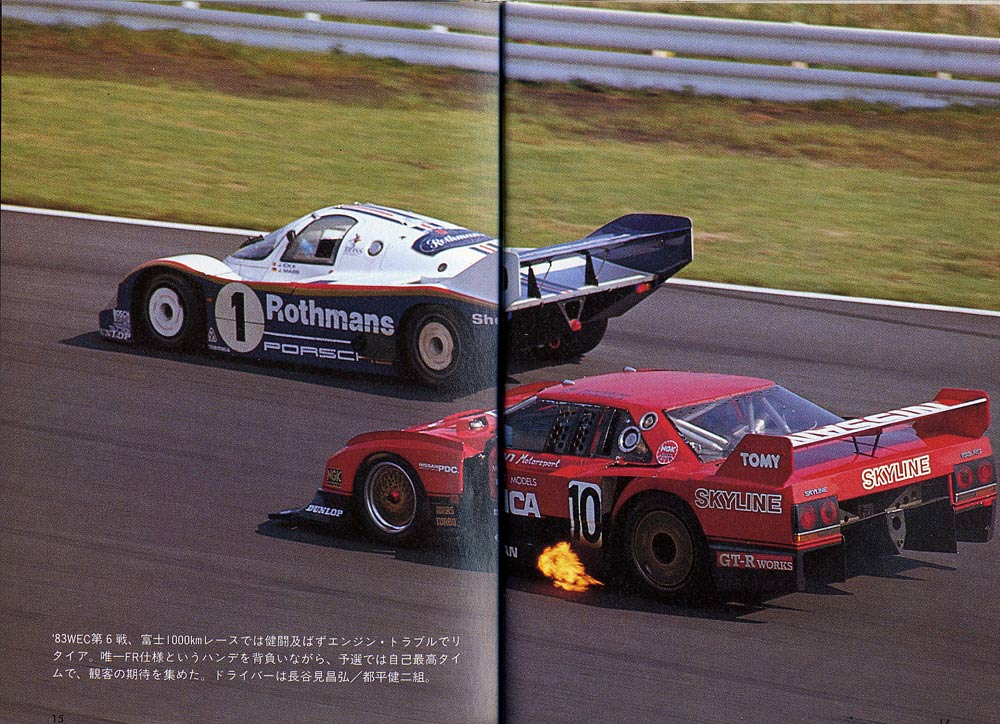
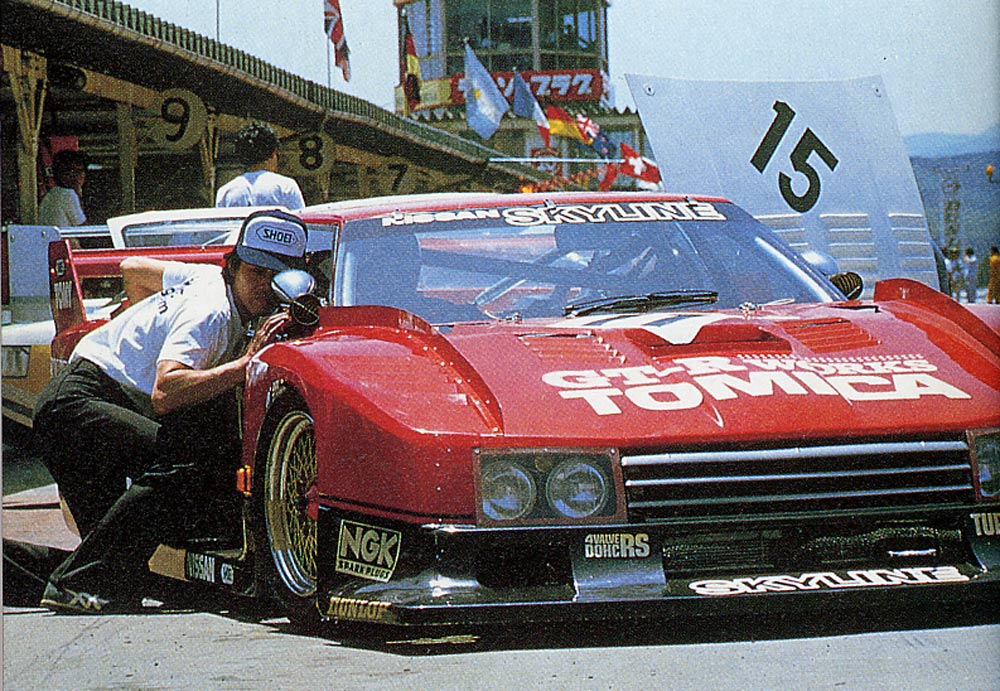
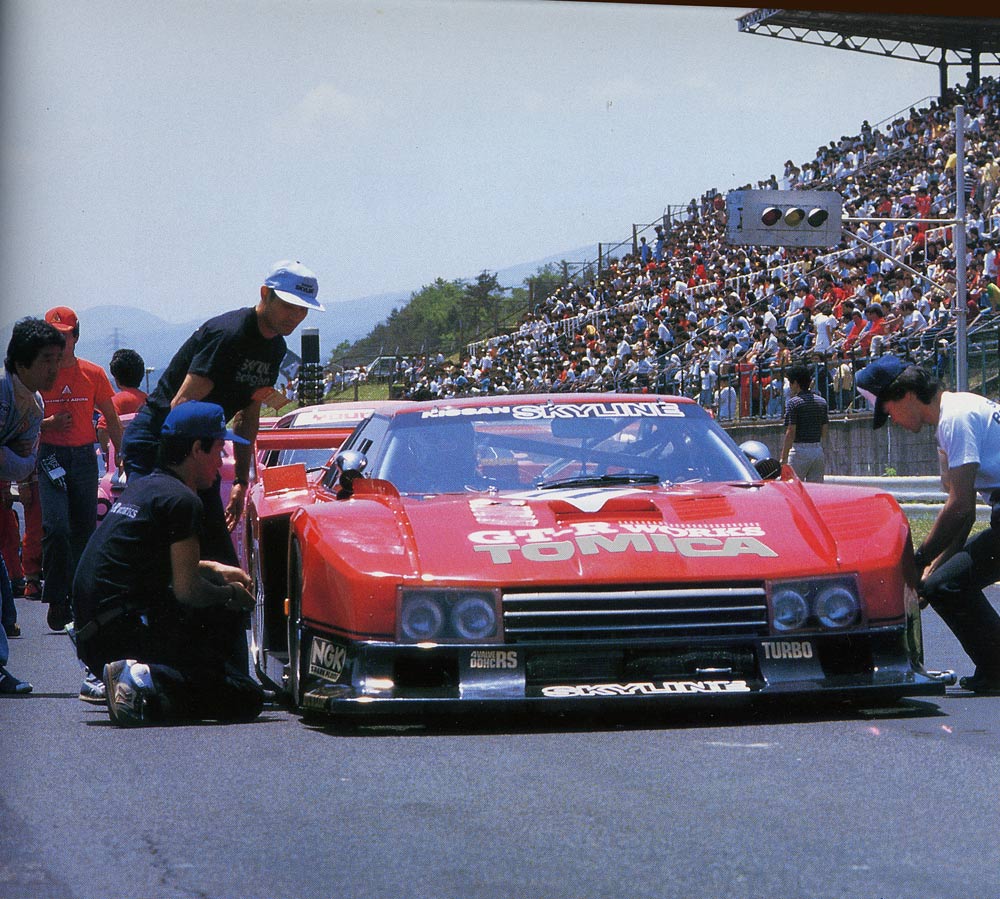
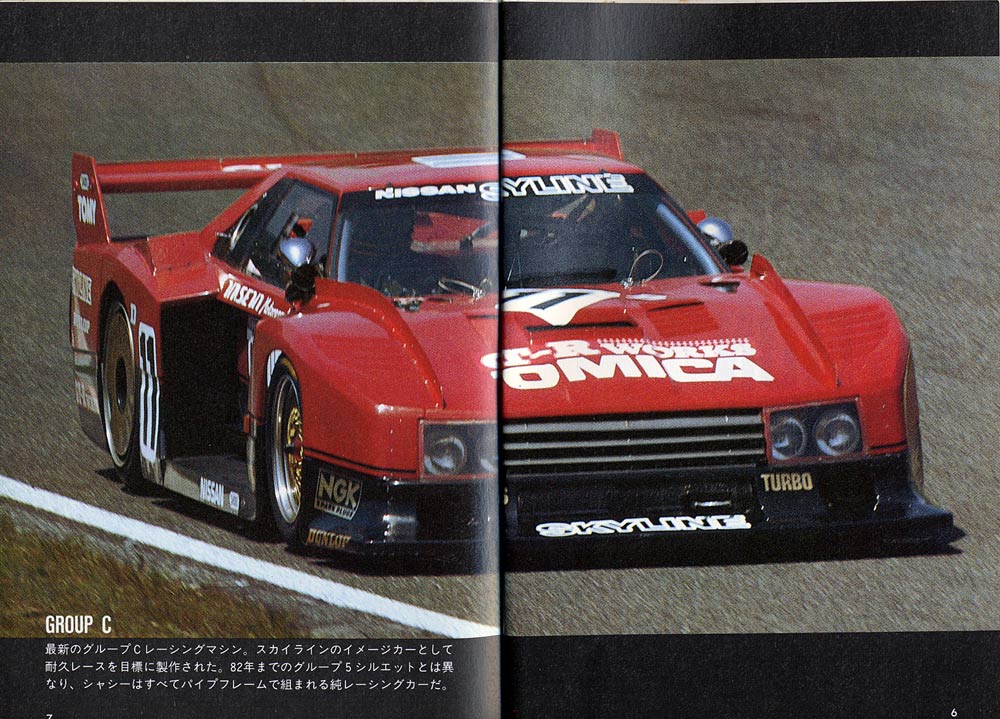
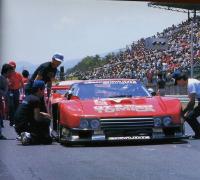
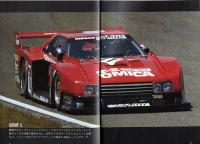
Yes. But Nissan called that first ( longer, lower, wider ) DR30 lookey-likey a 'Skyline Group C' and entered it in Group C races. The second car ( shorter, higher, narrower ) was a true 'Super Silhouette' class car, entered in Super Silhouette series races. Two different cars. Not guilty! I never said there was. Nissan made the race entries - not me. Look at the captions on the pictures. I wouldn't have mentioned the March Group C cars - but Eric associated the Tomica model with the Super Silhouette Skyline. I'm trying to differentiate between them and clarify the distinctions - not the reverse. Let's not get mixed up here. What we have is a Super Silhouette car based on the vestiges of a factory DR30 bodyshell, a Group C March 'Skyline Turbo C' with a non-Skyline Nissan engine, and something in between the two: the "Group C Skyline Turbo". Exactly. There was nothing 'Skyline' about it. Neither was there anything Silvia about the 'Silvia Turbo C' or anything Fairlady about the 'Fairlady Z-C LM03'. All were out-and-out Group C cars with the names of current Nissan models attached to them. It was just product association. Kind of like most major manufacturers did - and still do. Cite Ford with the Ford GT cribbing the Lola GT back in the Sixties, or Aston Martin ( AKA Ford ) asking Prodrive to design, build and run their DBR9 race car in 2005.
-
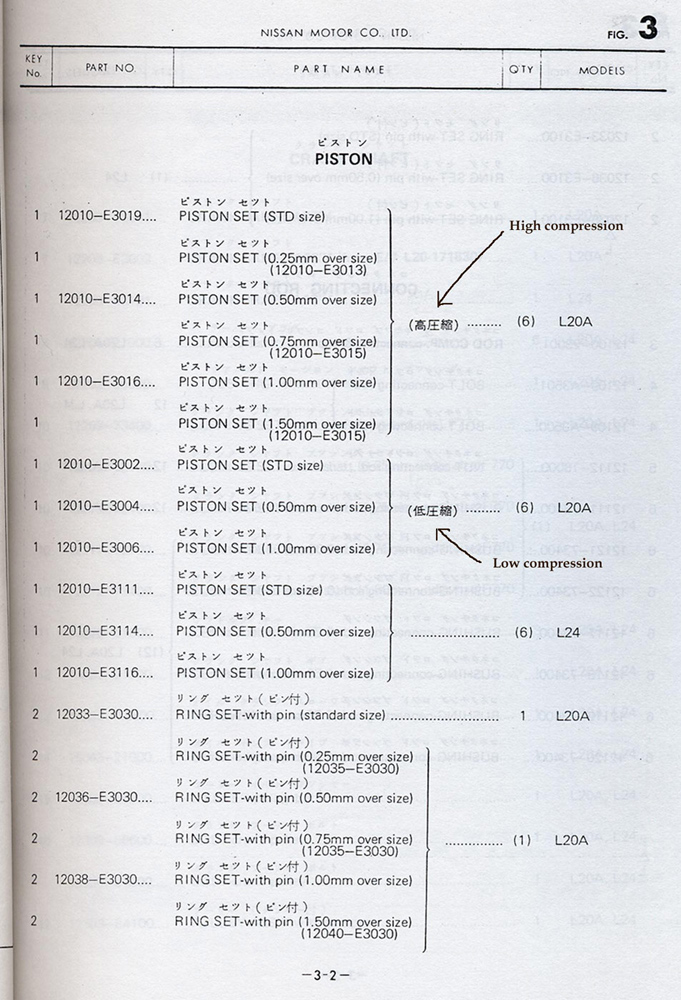
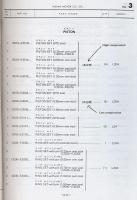
Arne, Bear in mind that the English-language factory engine manuals that covered the L20A and L24 ( green cover ) usually only listed specs pertinent to the sedan, van and pickup versions of the L20A. These were almost exclusively single carb and low compression versions of the L20A. John's car will more than likely be the high ( 9:1 ) compression version - but it is worth checking and making sure. John, Here's a scan of a page from a Nissan factory parts manual for your reference. A good Nissan dealer in the USA ought to be able to follow up on these numbers and find the superseding numbers ( where applicable ). Watch out for 'high' and 'low' compression pistons ( I marked them accordingly ) - but I'd go for 'high' anyway, although be careful that you have a matching distributor. Seeing as the car has been in the family from day 1, my personal bias would be toward keeping the engine close to original wherever possible. If you want more pep you can always put a different ( bigger ) engine in there and keep the L20A on ice. You could pick up a good used complete L24 / L26 / L28 and match it up with your transmission for not much money surely? Please tell us more about the car. Got any interesting stories / documents / photos? Was it a 'G.I. Bride'? Alan T.
-
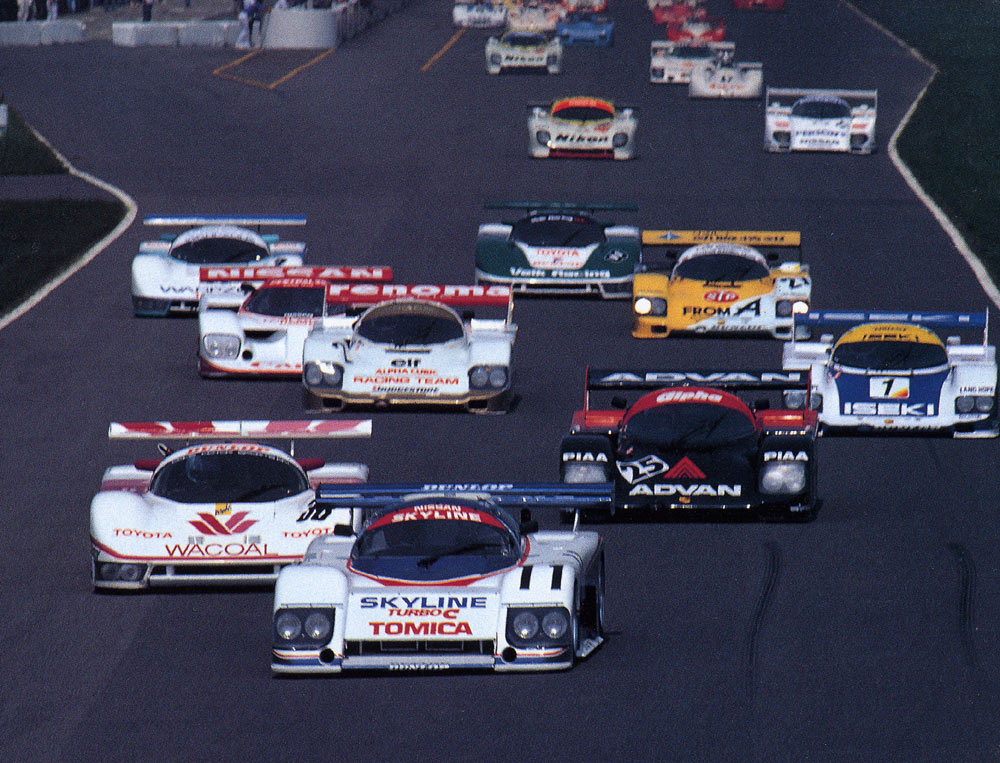
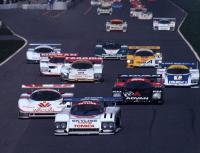
Hi Eric, Yes - the longer, lower, wider car was the earlier of the two. As I mentioned above, either the rules changed - or somebody protested - and the earlier car was no longer legal. They built the shorter, slightly higher and slightly less wide car to replace it. I don't believe that it survived. I would have thought it would have surfaced by now if it had. It probably got recycled and many of the parts used on the one that we often see today. However, who knows what's lurking in a shipping container tucked behind a storage warehouse somewhere? Some interesting cars are still surfacing over there...... Well, I think we might think of the first Super Silhouette car ( the longer, lower, wider one ) as a kind of fork in the road. It was racing against 'proper' Group C machines that had mid-engine layout and tubbed chassis - whilst the Skyline was still front-engined and with a spaceframe chassis. It didn't really stand much of a chance against that kind of competition. So you can see what they did: The next Super Silhouette series Skyline ( along with the Bluebird and Silvia versions ) was built around a genuine factory body shape - these rules being more strictly enforced - whilst Nissan went mid-engine and tubbed chassis for their 'proper' Group C machine. Here's a pic of the 'Skyline Turbo C' Group C car ( actually a March 85G ) from the 1985 Suzuka 1000km race:
-
Lachlan, I believe they did indeed win a few races, but came fourth overall in the 1968 championship. One of the cars that Toyota sent to Shelby was their record-breaking car. I notice the "Top 10" list doesn't include any of the high speed and endurance record-breaking activities of Toyota, Nissan and Prince - even though they were World records for their class. It probably needs to be a 'Top 50' to do the subject justice I'd have thought.
-
Hi Victor, Yes - as far as the data I have is concerned - the 'Group C' version of the Skyline Super Silhouette ( the longer, lower, wider version than the one that still exists ) also used the big single-turbo version of the LZ20. They claimed 570ps output. There was a weird N/A 'FJ23' hybrid engine that was used in the first of the rear-engined Nissan Group C machines, and I was once told that this engine was tested in the earlier Super Silhouette car - but I don't see any written evidence of this. I believe the longer, lower, wider version either got banned or withdrawn because it was judged to be outside the regulations of the series. I think it was to do with keeping the dimensions of the original base model, and particularly in the cabin area - but again I don't know too much about the ins-and-outs of it all. I suspect the lack of documentary evidence might point to a bit of 'brush it under the carpet' type activity.......
-
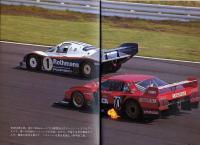
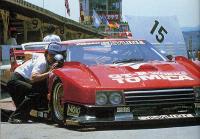
Here are some pics of the car I was talking about. Note that this is not the same car as the one in Eric's pictures; it was longer, lower and wider. Apologies for the picture quality ( especially page breaks ) but photos of this car are not all that easy to find........
-
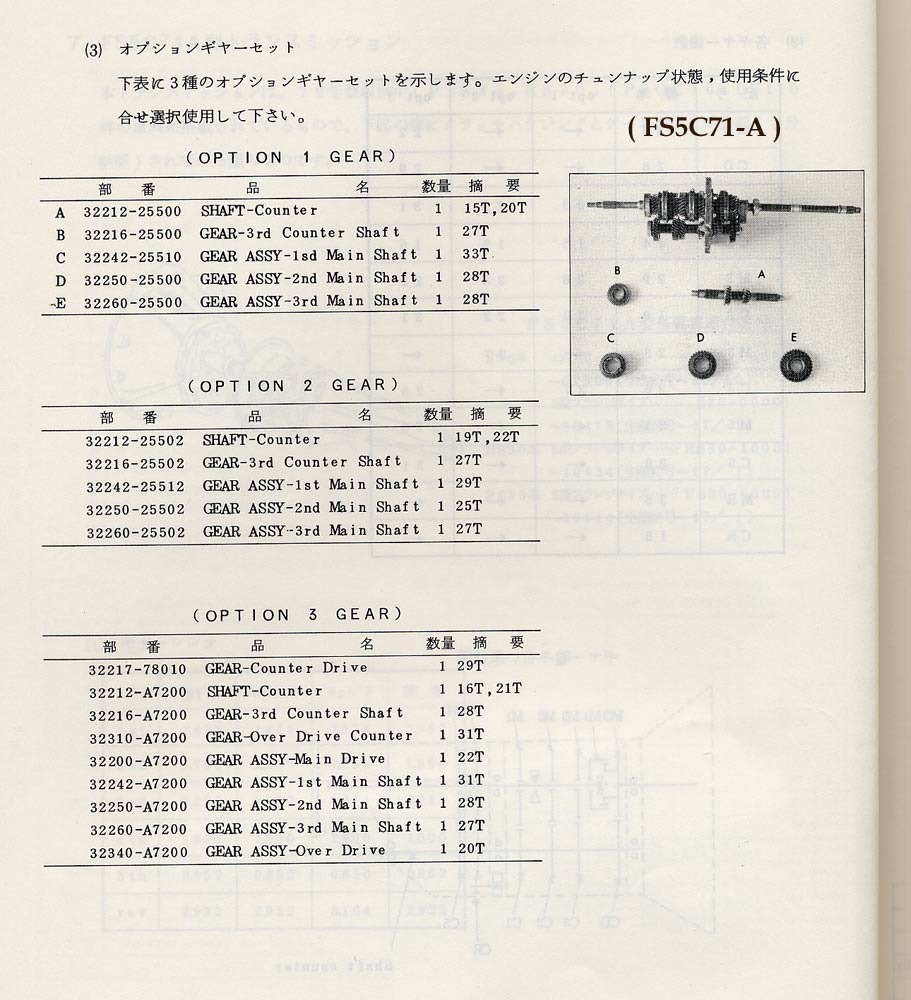
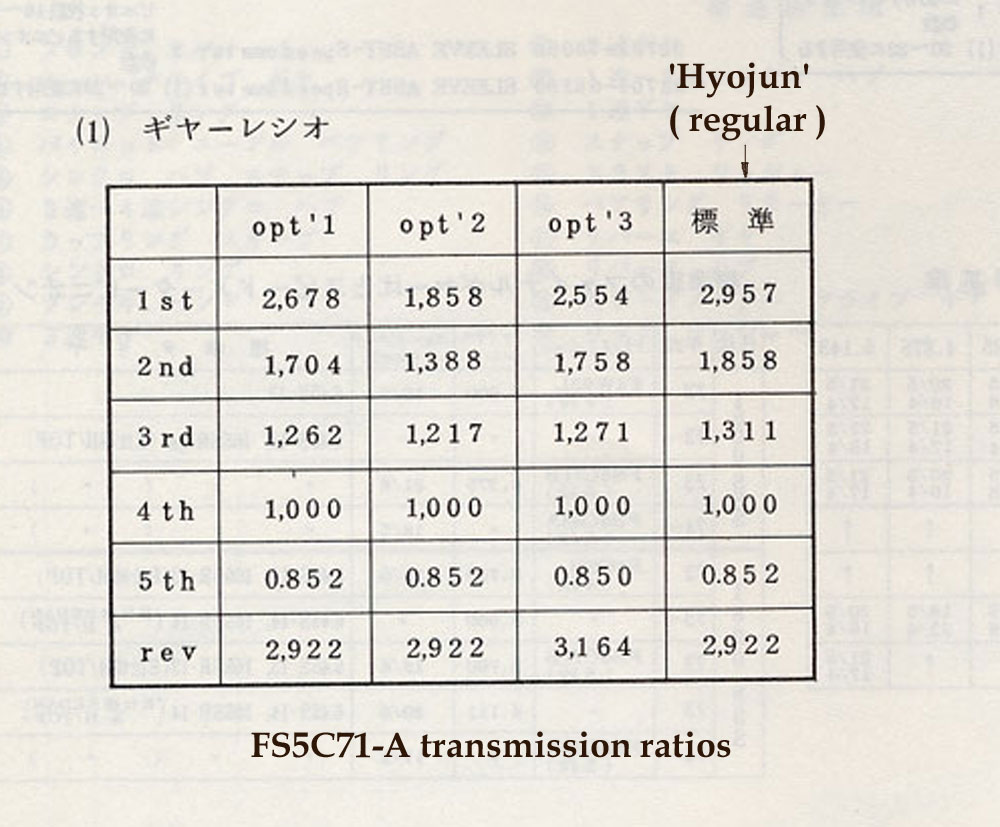
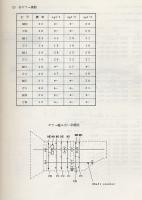
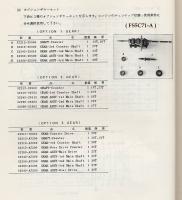
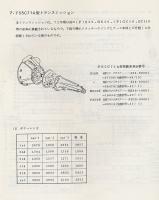
Carl, Comparing notes with transmissions used on the Roadsters is interesting but possibly misleading. Another one of those American vernacular habits I often point out ( like calling the L24 "a 510 engine with two extra cylinders added" ) is to call the FS5C71-A - as seen on S30-series Z cars from 1969 - except the HLS30U - a "Roadster" transmission. In fact it wasn't really, was it? Go down that road and you'd have to call the F4W71-A transmission used on the HLS30U a 'Laurel' or 'Skyline' transmission..... Easiest thing for me to do regarding tooth counts etc is show you more pages from the Nissan Sport Service transmission manual, which has some nice tables and schematics in it. See two scans below for the tooth counts and 'Option' gear part numbers: And the part number for the standard ( 2.957 ) 1st gear in S30-series Z FS5C71-A use was: *32242-25511 arse'Y-GEAR, 1st speed main shaft ( 34t ). Alan T.
-
Eric, In full, it says "GT-R WORKS" - which was indeed a sponsors name. They were a Skyline specialist garage / part supplier. And I agree with you about the 'Tekka-men' Tomica / Hasemi Super Silhouette Skyline, although its predecessor the 'Gr.C Skyline' was perhaps even more extreme.
-
Carl, You might want to check that 1st gear ratio again. I think you'll find it was always 2.957 ( not 2.975 ). Another typo? Three out of three I think ;-)
-
Not on the S30-series Z. Bear in mind that the L20 I posted a pic of was the first Nissan L-series engine, and was fitted to the 1965 Cedric Special Six. There are lots of detail differences between that engine and the L20A that was first used in the 1969 S30-series Z.
-
Yes Ed, they are painted red. Natural bare cast magnesium colour is dark grey ( and oxidises very easily ).
-
Eric, They are genuine 'works' Mazda race team wheels, made from magnesium. Mid-Seventies period. I've purchased from this seller before, so I think you can trust him. Katayama RX3 race replica would be fun, wouldn't it? Alan T.
-
Actually, the Nissan L-series 6 cylinder engine debuted 5 years before the S30-series Z in the 1965 'Cedric Special Six'. Valve covers from the early six cylinder engines won't fit the 'late' heads ( ie E30 / E31 / E88 / N42 etc etc ) because the method of affixing them was different. Here's a pic of the top end of an L20A six from that 1965 'Cedric Special Six':

-
Hi Jim, Thanks for the words of encouragement. I think this stuff is good fuel for the archives, to be found again in future using the SEARCH function. As for your question, my personal take on this subject is ( as I replied to James ) that the only 100% sure way to know what you have is to start counting teeth on gears. You can try and work out the ratios by measuring the difference between input and output turns, but that always seems a bit hit-and-miss to me. Taking the case apart is not that difficult and it will also allow you to inspect the bearings, synchros and gears for wear. I've seen transmissions with part numbers stamped into the top of the bellhousing, and also some with the part number printed in blue ink in the same position ( doesn't survive very well ). I've also seen them with no identification numbers or letters at all. Not very consistent, is it? Cheers, Alan T.
-
Carl, Take another peep at the chart I attached above. Notice that the 'Option 2' 2nd gear is listed as 1.388? This is consistent in all of the Japanese literature that I have - ranging from 1970 right through to 1978 - through the factory Parts Lists, 'Sports Option' lists ( 14 issues ) and the 'Nissan Sport Service' issued tranny manuals and race tuning advice manuals, which give all the individual gear and counter-gear tooth counts and part numbers. To be honest, I think I'd rather trust the information provided by the people that actually made the gears ( Nissan Japan ) over the people that sold them in the USA ( Datsun Competition USA ). But that's just me. The difference is 0.005 between the two listings ( !! ). I think the Datsun Competition USA listing is just a simple typo. Alan T.
-
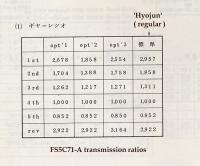
James, If it is the original FS5C71-A that came with the car from the Factory ( and who knows what might have happened over the car's 35-odd year life so far? ), then it should have the ratios on the far right of the chart below. Of course, the only way you can be 100% certain of what ratios you have is to take the trans case apart and start counting teeth on gears ( not fun ). Cheers, Alan T.
-
Typos? My copy of the Datsun Competition USA parts manual ( I think this is the second version ) lists: 'NMCRK-32011' and 2nd gear ratio as 1.388. See the scan from the 'Nissan Sport Service' ( Japan ) transmission "bible" below:
-
If they are from an Aston Martin, they will most probably be WEBER 45DCOE-9 units - which are quite sought after these days. Weber made the '9' series 45DCOE expressly for Aston Martin, and it was later used on Coventry Climax, Cooper Climax, Lotus and Maserati race engines. Weber themselves recommended the 40DCOE-18 and 45DCOE-9 as the best match for Nissan's L-series sixes ( naturally, the two sizes were to suit capacity / output ). The accelerator pump rod stroke and most of the other settings are ideal base settings. I have a nice early ( circa 1968 ) die-cast set of three 45DCOE-9s which I am currently refurbishing for use on my Nissan S20 twin cam. I have completely stripped them, drilling out the lead bungs and cleaning out all the fuel runners and having the bodies vapour blasted. Nissan themselves used the 45DCOE-9 on some of their race S20 engines in period, so it seems fitting to use them. Don't use them on a 'mildly' tuned engine. They need to be used on something that warrants them. Contact me if you need any data / information. Alan T.
-
Phew Carl, you really like giving me a lot of 'homework', don't you? When I say "Dogleg box" I'm referring to the colloquialism for the shift pattern - with 1st gear over to the left of the gate and back ( opposite Reverse ). Here in the UK we've always called that kind of shift pattern a "Dogleg" shift pattern, and it has nothing to do with synchros or the lack of therein. A "Dog Box" is quite a different thing altogether. This is the colloquialism for a transmission with 'Dog' engagement rings rather than sychromesh rings - which ( as far as I am aware ) were not offered for sale to the general public by Nissan as a 'Sports Option' or competition part whilst the S30-series Z was current. In fact, the first instance of such that would fit ( retrospectively ) a trans used in the S30-series Z ( in this case the FS5C71-B and F5C71-B ) would be the straight-cut dog box used in the Nissan 240RS. I have Nissan literature that still uses the 'FS5C71-B' code when referring to the 'Direct Drive' ( ie - 1:1 fifth gear ) transmissions, and also instances of "F(S)5C71-B" being used ( note the brackets ). As far as I am aware, the correct ( whatever that means! ) code for the 'Direct Drive' 'Dogleg' box is 'F5C71-B' ( no 'S' ). Er, be careful here. Like I said - as far as I know Nissan never offered a true non-synchro box to the general public until well after the S30-series Z had ceased production. My point was that ( from my point of view at least ) Datsun Competition USA was selling a standard production part as a "Competition" part. I'll make the point here: That's it right there: the 32010-N3200. This was the standard equipment transmission on most of the S30-series Z models that were not sold in the USA / Canada post July 1972. It superseded the 32010-E8752 ( also an 'FS5C71-B' ) which was fitted from January 1972 as the standard 5-speed to replace the 'A' box. Did I make my point clearly? Datsun Competition USA was selling a "Competition" 5-speed which was standard equipment on the vast majority of non USA-Canada market models. So did all those cars have what can be called 'Competition' transmissions? I don't think so. Pause for breath....... Alan T.