HS30-H
Supporting Member
-
Joined
-
Last visited
Everything posted by HS30-H
-
Anybody who said anything like that ( and meant it ) would be worth throwing off the forum, don't you think Chris?
-
Learning Japanese is a lifetime's work - even for the Japanese. One of the doubtful joys being that - even if you become fairly proficient at spoken Japanese - you will always come across Japanese people who tell you that you don't really understand what you are saying, "because you are not Japanese......". I've never tried saying that about the English language - but one day I might. :hurt: No, the 'LY' was never fitted to a Works car other than the S30-series Z. I wonder if you are getting it confused with the FJ24 engine that was used in the BS110 '240RS' model? I have a fair bit of 'LY'-specific information and data, and it would probably be easier to send this direct to you rather than add it to this thread - which started out talking about rocker covers, and grew like topsy. Alan T.
-
Hi daddz, I'm afraid the best sources of information about such subjects are almost always written in Japanese....... There have been a number of good articles on the L-series engine published in 'Nostalgic Hero' since it was first launched. 'Old Timer' magazine has had some good articles too. There was a really good one in 'Car' magazine a few years back, and there have also been a couple of good books covering the subject too. Period Japanese magazine and press articles from the Sixties and Seventies are also a good source ( I have quoted from them in this thread ) and give a nice glimpse of the zeitgeist of the times. Japanese car magazines of that period were ( I find ) quite intellectual, and covered subjects in great depth. Publications such as 'Car Graphic', 'Motor Fan', 'Play Drive', 'Auto Technic'. 'Autosport', 'Motor Magazine' etc etc are a mine of useful and interesting data. As for the 'RB' engine - well, we are talking about the mid 1980s here and articles from contemporary books on the Skyline range in particular are a great source, but so are most of the mags mentioned above. To be honest, you have to collect a lot of reference material and piece it together for yourself. That means getting accurate technical translations too I'm afraid. If all that seems like too much bother, you could always take the option of believing that 'Year Zero' for Nissan's L-series engines was when Katayama 'designed' the L16 over the telephone, and that the L24 was just an L16 with two extra pots. It certainly saves a whole lot of hard work......... Oh yeah, and then there's this kind of attitude to contend with: So remember, be careful not to misinterpret the "quality, content and meaning" of those Japanese "wittings"...... :classic: Alan T.
-
As far as I understand it, the truth is that PMC ( Prince Motor Co. ) licensed some Mercedes-patented design details ( not a whole engine design ) for their 'G7' engine - which debuted in June 1963. Hiroshi Iida and his team at Nissan designed the new 'L-gata' engine 'module' during 1964 as a direct response to arch-competitor Toyota's new 'M' series OHC sixes. Iida himself admits to having been influenced by the Mercedes engine design, and says that they used this as a "reference". However, they did not license any Mercedes patents...... I think it would be fair for us to expect Iida san and his team to have been influenced by the Prince 'G7' engine design details ( even if he is too proud to admit it ), but Prince was not merged with Nissan until well after the Nissan 'L-gata' engine module was designed and in production. There was no direct 'inheritance' of Mercedes-licensed patents transferring from Prince to Nissan in relation to the 'L-gata' module. We quite often see the history of the Nissan engine reported as a smooth sequence along the lines of 'Mercedes patents to Prince, and Prince taken over by Nissan' - but this is well wide of the mark. The situation was far more complex than that. When Dr Shinichiro Sakurai and his largely ex-Prince team at Nissan were designing the new 'RB' engine module during 1982 & 1983, they purposely used the bore spacing and head bolt pattern of the 'L' series engine as part of the design. Sakurai has been quoted as saying that they wanted the 'RB' to be a worthy successor to the long and diverse history of the 'L' series. Higher management were pushing Sakurai and his team to drop the straight six and concentrate solely on 'V' configurations, but Sakurai and many of his team wanted to preserve the Prince / Nissan straight six lineage and history, and keep the straight six layout for the Skyline and Laurel models in particular. We can draw many parallels between the 'RB' module and the 'L' module. Both of them were designed specifically to accommodate both long and short strokes, and small and large bore sizings. Both were designed to accommodate the possibility of 'high' performance and more sedate uses. So yes, an RB torque plate can be used on an 'L' series six - and it is not just a happy accident. Alan T.
-
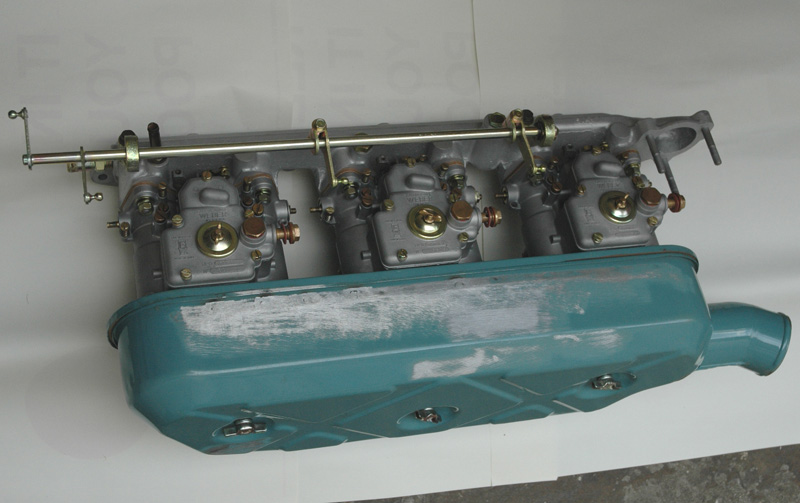
The 45DCOE-13 was a 'conversion' kit carburettor, never used as standard equipment on a production road car. That means its internal spec might have been changed to suit the engine it was originally supplied for ( anything from a Mini Cooper 1275S to the Renault engine in a Lotus Europa ). They were most often fitted singly to four cylinder engines. You don't mention it, but I presume these carbs came already fitted in Japan to the original L20A in your car? If this was done a long time ago then there is a good chance that they were originally supplied as a kit by 'Far East Trading' ( 'F.E.T' ) and therefore have been supplied with changed internals to suit the L-gata engine. That's a good thing; hopefully they will already be pretty close to what you need. But personally, I would want to check and see what Accelerator Pump Rod stroke they have. The Nissan L-series 6 seems to like a 'short' ( 10mm ) Pump Rod stroke, and this improves driveability. No sense in messing with venturis, emulsion tubes and jet sizings when your Pump Rod stroke is too long. They are easy to take out ( even with the carbs installed ) so I'd recommend you confirm what you have before going any further. Alan T.
-
What series of 45DCOE are they, and roughly what vintage? This is very important data. No point in giving you pointers on jetting without knowing what exact model of 45DCOE carbs you are starting out with. Alan T.
-
Very pretty car - but you are describing it as though it is a real GTR. Is it a real S20-engined KPGC110?
-
Ha ha ha ha ha....... :stupid: Perhaps you'll teach me how I should quote you quoting a quote that hasn't actually been made in this thread? And I don't need to validate anything, my friend.
-
When you write "American"........ who exactly are you quoting? I don't see that question in this thread. And what exactly is an "...."American 240Z"...."? Its a Japanese car - made in Japan.
-
1 type? Maybe the 'HLS30U' only came in 1 type ( and even that is not necessarily true ) but there were some rare homologation specials and limited editions for markets other than the USA, and these are the Z cars that are commanding the highest prices in the world market today. Nissan did make some special models, and these are the ones that we can expect to sell for the highest prices now and in the future too. Perhaps you would like to look into the prices and availability of prime condition PS30s and HS30-Hs. The PS30-SB would probably be the model that is commanding the highest prices in the world at the moment out of all the S30-series Z cars. Only individually historic race cars would appear to be capable of topping that at the moment. The 'HLS30U' model was made in comparatively huge numbers, so it is likely that only special-interest examples of the 'HLS30U' ( such as the lower VIN numbers ) will command the highest premiums in top condition. I don't think the 'HLS30U' is comparable to the W-30 Olds 442, as the sheer numbers of 'HLS30Us' made - and the number of them still 'alive' - is in a completely different league to a super-rare Muscle car. Alan T.
-
Deja vu! We've been here before in another life: http://www.classiczcars.com/forums/showthread.php?t=9281 The SEARCH function can throw up an awful lot of good references.........
-
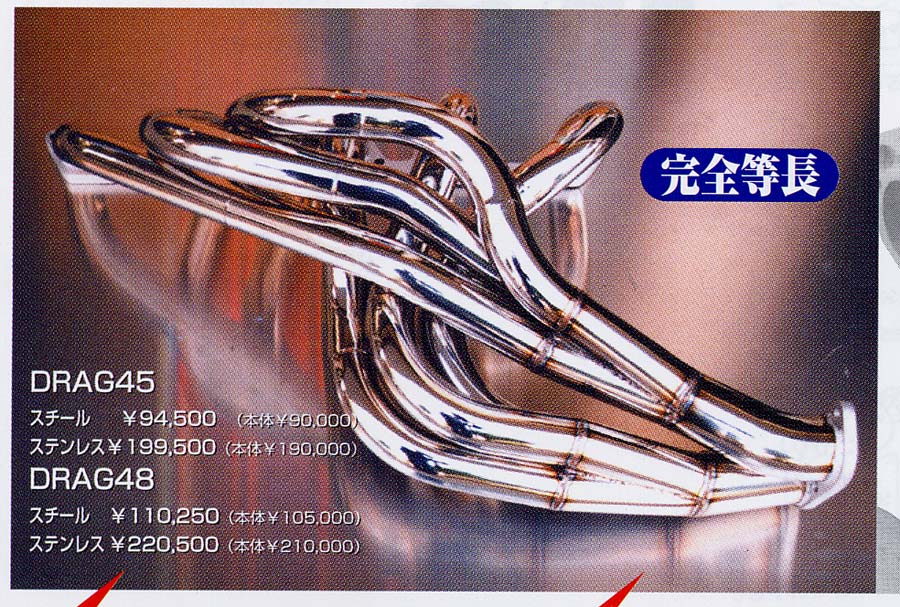
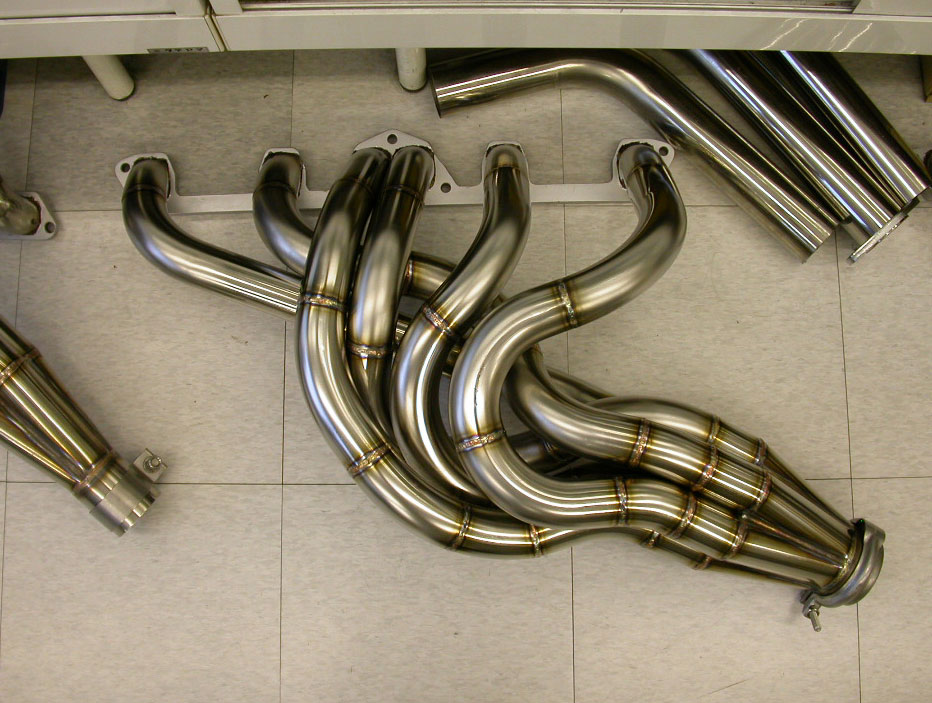
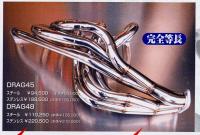
I'm afraid I don't have the kind of detailed data that you are asking for, but I'm sure that Kameari have got all kinds of graphs, readouts and technical specifications for them. They are very thorough, and they are very serious about what they sell. Obviously this manifold is Stainless steel, and Kameari say that it is a "true" equal-length design. Pipe length is quoted at 800mm ( they don't give the size of the final pipe joint diameter ) and of course I think it goes without saying that LHD fitment will probably be a no-no due to its sheer bulk. Only other thing mentioned in the sales blurb is that this header is definitely drag-oriented ( mid range to high rpm bias ) and probably not very suited to street cars, to say the least. Kameari have some other ( more sensible ) designs in both Stainless and mild steel - in sizes of 45 & 48mm. See attached pic:
-
Hi Miles, Well, I would not recommend ordering any Kameari parts through Autobacs.......... Kameari usually has three or four of each design of their exhaust manifolds in stock at their shop in Yashio-shi. Every time I go there they are well stocked, and I've never had to wait very long for anything I've ordered from them. Alan T.
-
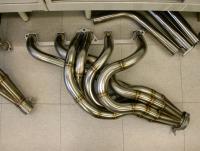
Sorry Oliver, I haven't found them yet. We are getting ready to move home soon, and that particular note may be part of the stuff that I've already packed away ready for the move....... It will turn up eventually though. In the meantime, how about a Kameari Engine Works 'DRAG 6-1' 48mm unit at 294,000 Yen?:
-
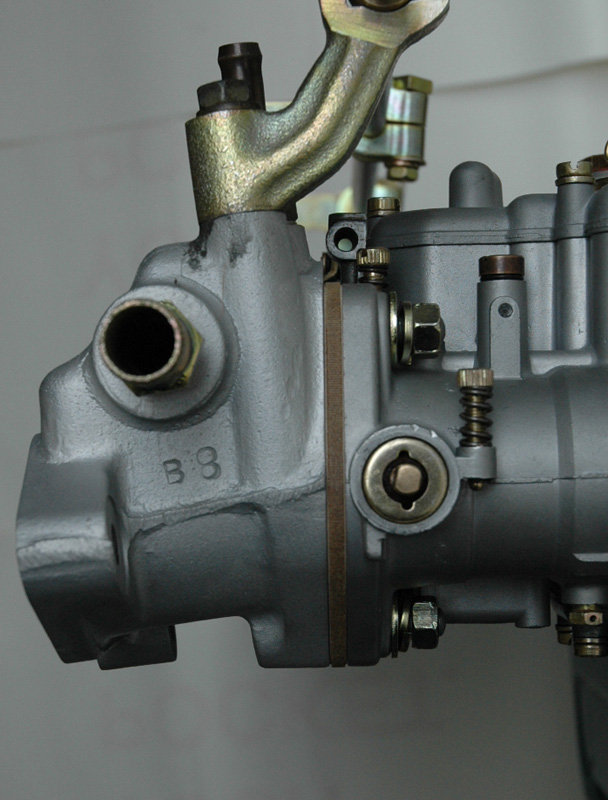
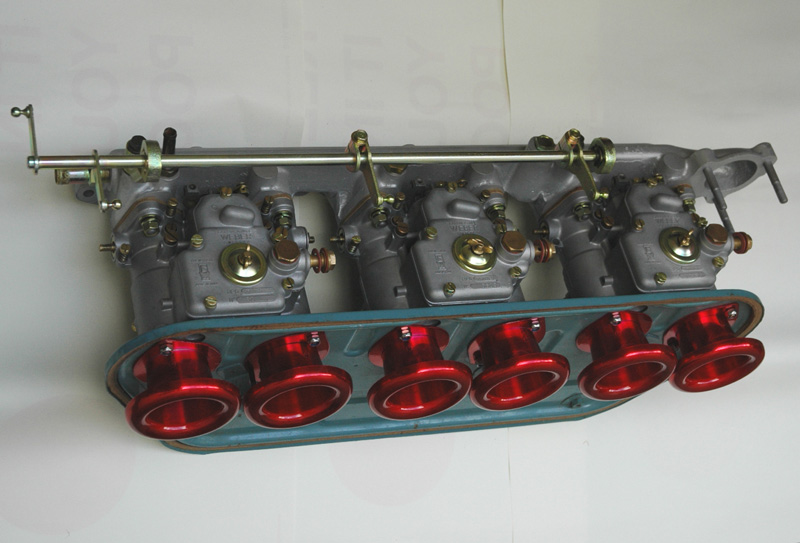
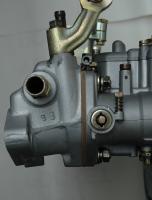
Yeah, the inlet is pretty compact on the S20, especially when you consider that it is full of coolant passages too. See attached pic of an end-on view for comparison. The point ( in relation to Gav's question about his Mikuni L-series manifold ) is that there is not 'step' down from carb to head - it is just a ( short ) horizontal plane. The stock airbox on the S20 ( and the remote filter - which was mounted in front of the radiator support panel ) was pretty big. The air box had integral airhorns for the stock 40PHH Mikunis, and these air horns were attached to the cover of the air box rather than its base plate. I think this was done to ease servicing; it would be a real struggle to get the air box cover over the stock airhorns. Nevertheless, I have had to address this issue with my project car's engine - as I am using Weber 45DCOEs instead of Mikuni 40PHHs. I reckon I can get the airbox cover over the 45mm high full-radius rampipes I hope to use, and will therefore be able to use the stock filter box too. It will be a tight fit, but I think it can be done. I think longer rampipes would be better, but for sure they won't fit under the modified stock airbox. The factory race cars were fitted with injection systems that used very long trumpets. The inlet manifolds for the ( sliding throttle ) injection system tipped the inlet UP at an angle - presumably for packaging reasons.
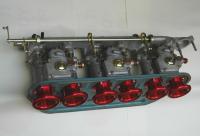
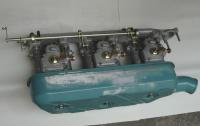
-
Gav, Steve has touched on something that you might not have thought of. The shape of your Mikuni inlet manifold might have a lot more to do with packaging issues, rather than being dictated purely by efficiency........ Mikuni made some inlet manifolds that were expressly for the LHD market, and I believe that these placed the carbs higher in the vertical plain in order to give more clearance for a tubular exhaust manifold on an LHD car. I've also been told that some inlet manifolds for the L-series engined Skylines displayed these traits, because the Skyline engine bay was narrower than that of the Z. But I wouldn't worry about it if I were you.
-
1963 'Prince 1900 Sprint'. Prince were calling it a 'Prince Skyline Sprint' at the 1963 Tokyo Motor Show. Prince employed Italian coachbuilder Franco Scaglione to come up with a swoopy sports prototype for the show. It never made it any further than that, unfortunately. Did I win anything?
-
Isn't the "Iron Cross" wheel a different design altogether? ( it actually looks like a German / Maltese cross ). I thought that first came on the S130-series?
-
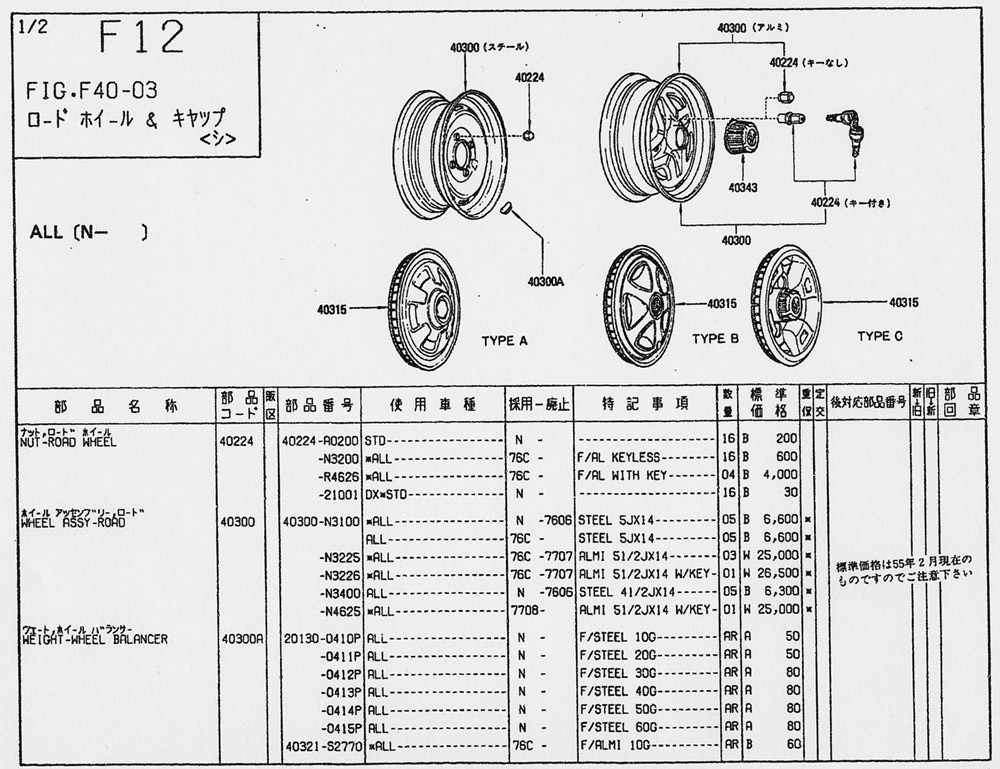
Hi Stephen, I wonder why the part numbers are different? It would seem that the part numbers I quoted from the Japanese parts list are later ( or at least a higher number ) than your wheels. Is there a detail difference do you think? The Nissan 'Service Shuho' booklet where I first see these wheels introduced to the Japanese market is dated July 1976, so I'm wondering if they were introduced earlier elsewhere? I've never even seen a set in the metal. Must be pretty rare I'd guess. Alan T.
-
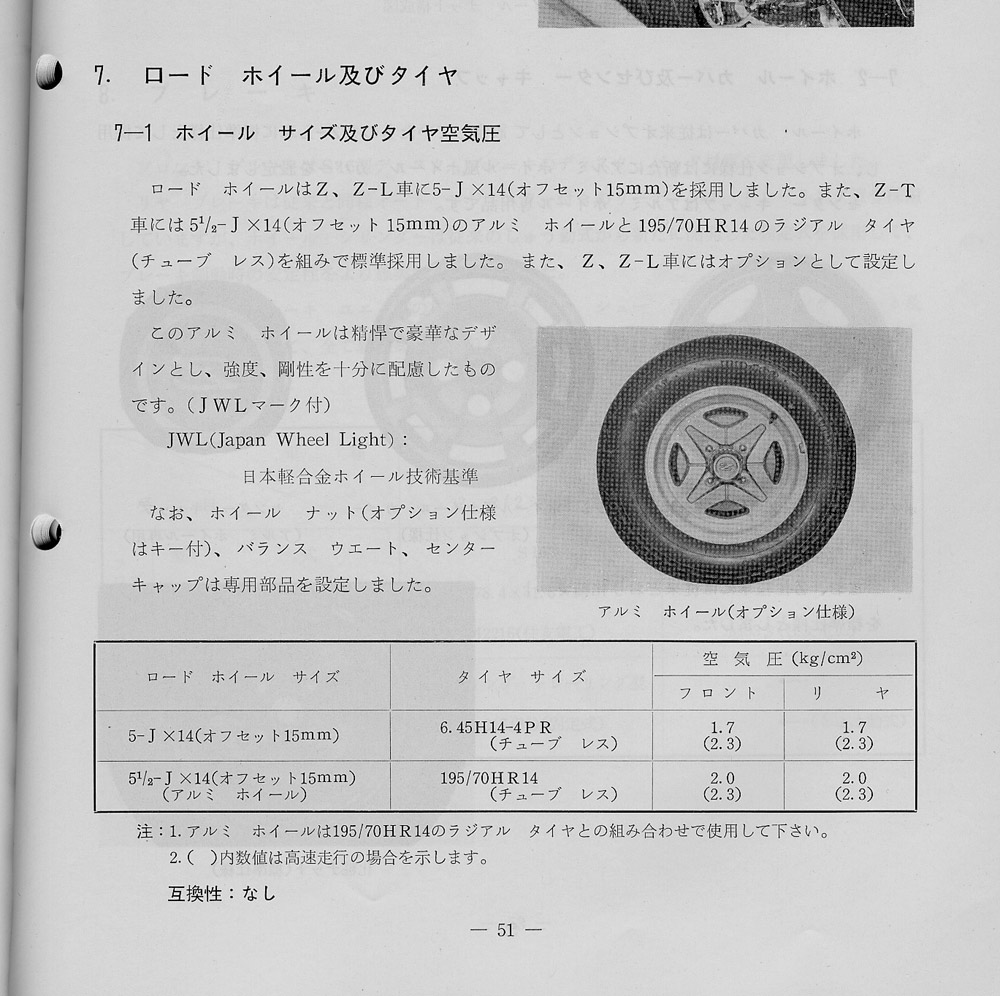
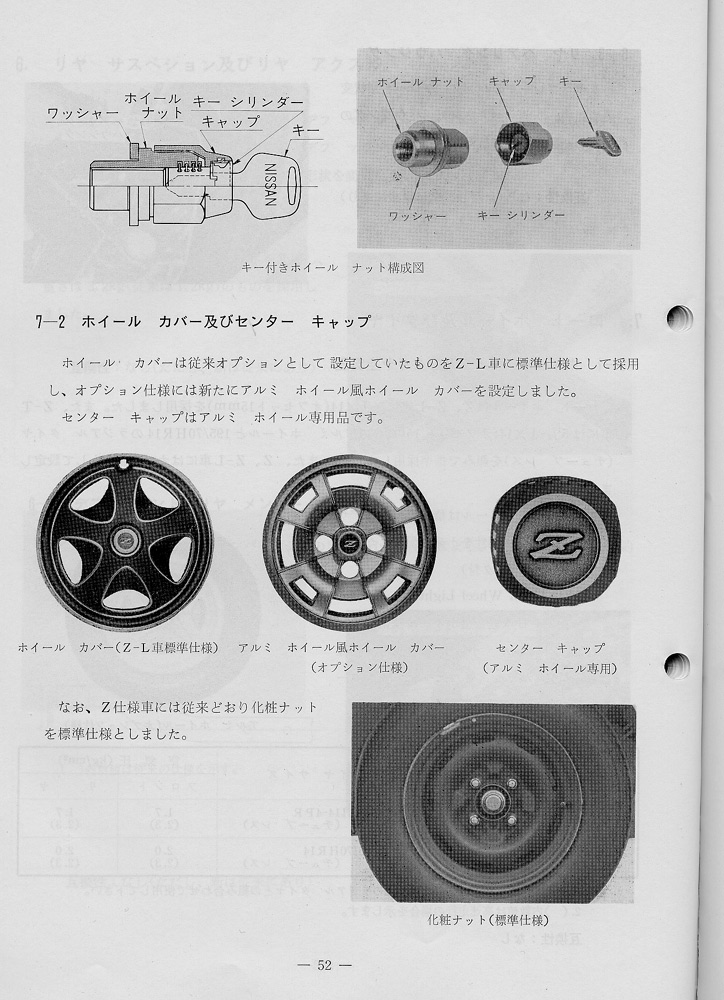
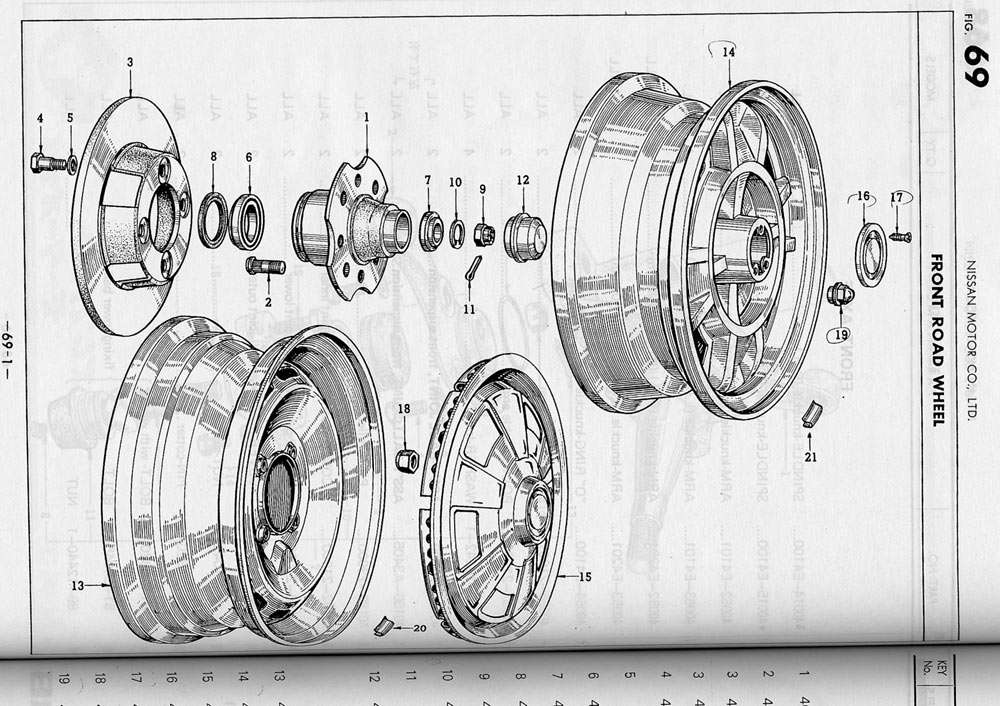
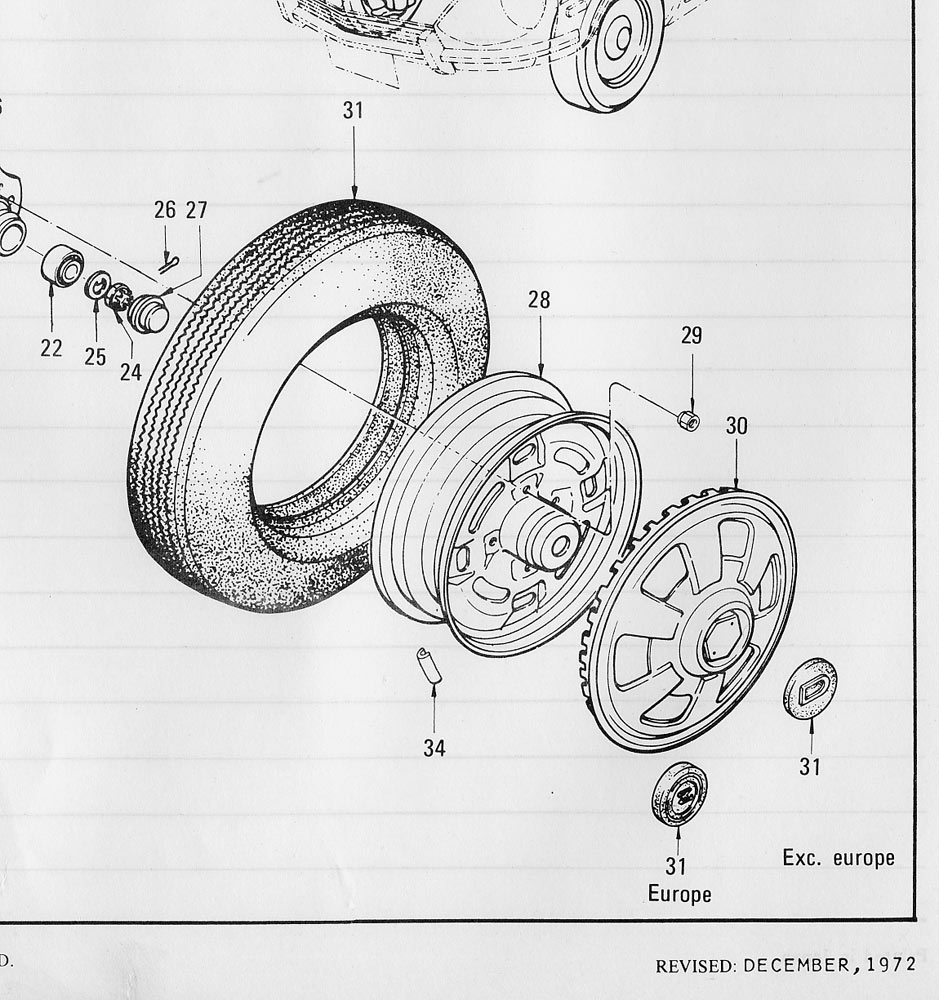
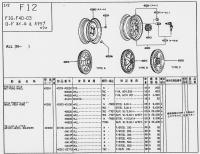
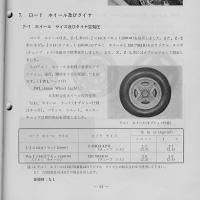
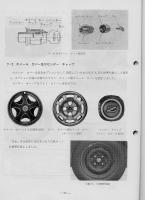
40300-N3225 & 40300-N3226 were listed in the Japanese-market parts catalogues for the later cars. This wheel was also used on some Export market cars; we first saw them here in the UK on the later RS30 '260Z' model. Scans from Japanese-market parts catalogues and the tenth edition of Nissan's 'Service Shuho' booklets for the S30-series Z are attached below. The 'Service Shuho' page scan illustrating the hubcaps also shows the rather neat 'Nissan'-branded locking wheel nuts:
-
Ha! There must be a secret subtext there. I'll have to try and dig out a few Japanese wheel advertisements that have cherry blossoms and Samurai warriors on them to even up the balance now. E42 'Part Type' usually means 432/PZ-specific........ Proves what we keep saying about "looking at the whole family in order to understand each family member"....... Alan T.
-
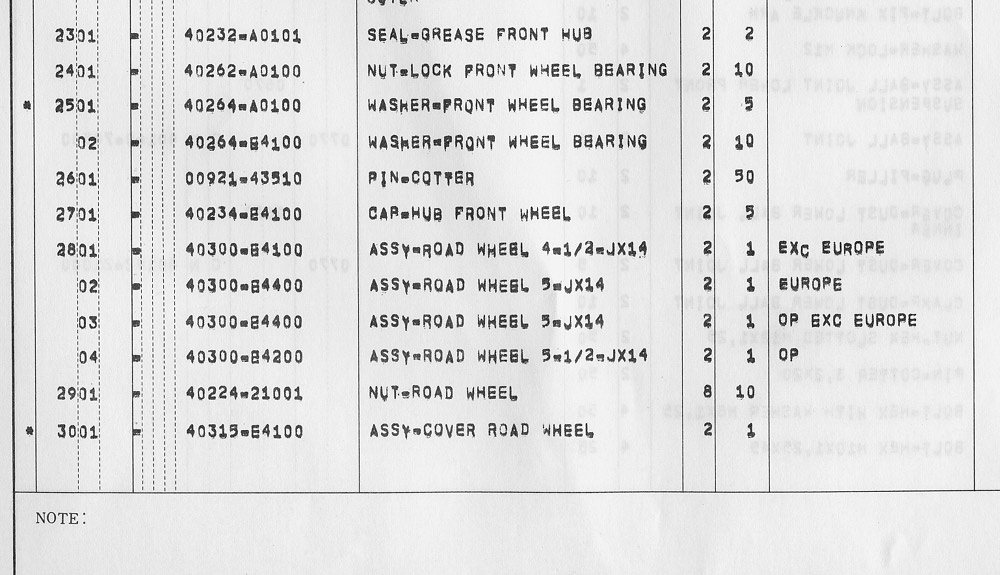
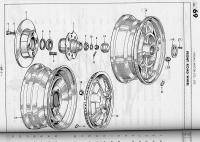
While I have the book handy, here's a scan of the Japanese domestic parts catalogue page that depicts the 432 Mag, the steel wheel, and the hubcap for the Fairlady Z-L. Part numbers: *40300-E4100 arse'Y WHEEL, road *40315-E4105 arse'Y COVER, road wheel *40300-E4200 arse'Y WHEEL, ( magnesium )
-
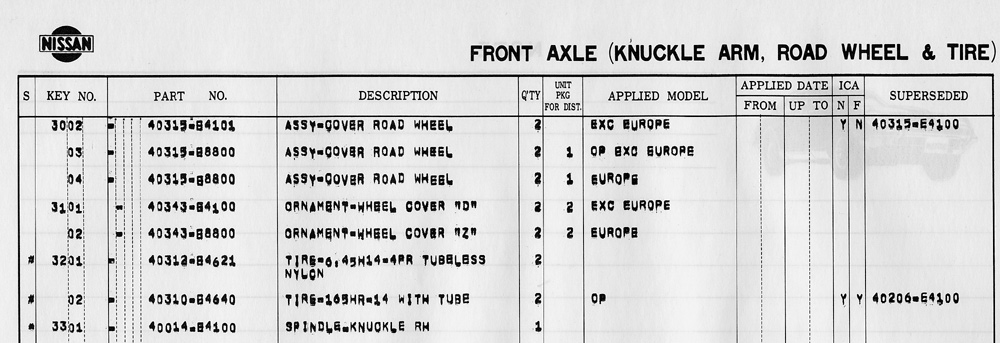
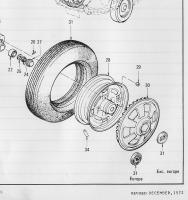
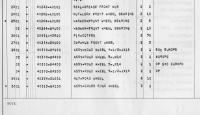
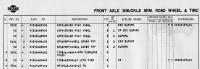
The situation is a little confusing when it comes to what Nissan called "Europe", and what it called "Exc. Europe" ( which covered the UK market cars ). Both "D" and "Z" emblems were used. See the page scans attached below for descriptions, applcations and part numbers: No idea. Could it possibly be the huge gash in the earth caused by the mining of ore to make all the Kobe Seiko wheels? I'm just glad you never asked me about the model and her silver jumpsuit.........
-
I'm surprised to hear this, Arne. I grew up in the Sixties and Seventies looking over my dad's shoulder whilst he was reading magazines such as Motor Sport, Autosport and Motoring News, as well as very glamorous 'import' magazines such as 'Hot Rod', 'Popular Hot Rodding' and even 'Hop Up'. There was a period when I would have sold my soul for a set of Halibrands to go on my Thames panel truck ( dreaming that it would become a 'Gasser' ), but a set of Appliance 'dish mags' or Superior 'slot mags' were as close as I could get. I used to go to my local - and not so local - speed shops just to stand open-mouthed and watery-eyed in front of their selection of custom wheels. Many of these were from American companies, but even then I noted that a few of these were wearing 'Made In Japan' stickers on the inside rim....... This was so surprising to me that I made a mental note of it at the time. I also noted that the ones wearing those 'Made In Japan' stickers were often the cheaper designs ( and therefore more likely to be within my reach )...... I even remember ( after later getting into old Porsches and VWs ) that some of the early Empi wheels were made by BRM here in the UK, but were then farmed out to Japanese manufacturers who could make them more cheaply for the USA market. Do you think it is possible that some of the USA wheel manufacturers were having some of their wheels manufactured ( or part-manufactured ) in Japan, and then finishing / re-packaging them as a 'Made In USA' product? I'm talking about the 1970s here. The wheel aftermarket in Japan became absolutely HUGE through the mid-Seventies and the Eighties. The array of manufacturers, 'design' and 'character' brands and 'tie-ups' with known brands ( such as March for instance ) was mind boggling. Look through a 1970s Japanese car magazine such as Auto Technic or Car Graphic and you would see what seemed like at least half of the magazine consisting of flashy advertisements for aftermarket wheels. I find it hard to believe that this did not spill over into the USA market. Alan T.
-
Maybe they were "sourced" locally ( and from USA-based companies ), but I'll bet that more than half of the wheels sold in the USA by American companies during that period were actually manufactured in Japan - and many of them even designed there too. Japan was a wheel manufacturing powerhouse during that period.