HS30-H
Supporting Member
-
Joined
-
Last visited
Everything posted by HS30-H
-
If you were a bit more specific, some kind person might volunteer to attempt to explain them to you. Which points are you having trouble with?
-
Well, I currently own three cars that wear a '240Z' badge and an 'HS30' body serial number prefix, but none of them have an externally-visible 'VIN' inside the corners of their windshields. I believe there were 'HLS30' models produced for certain markets which also did not have the dash-mounted 'VIN'. Your observations apply only to north American market models, I believe. In which case - for the sake of others who might come across the data by using the SEARCH function of the site - you might like to make this clear in your post. You might also be well advised to add the correct and appropriate prefix in front of those "#00965", "#20231" & "#22021" etc numbers, as without the applicable prefix they become almost meaningless. The term "240Z" too, on it's own, is so general as to be almost meaningless. Are you going to be reviving any more threads that are as old as this one? You might like to bear in mind that some of the participants in these threads are ( in some cases literally ) no longer with us........ Alan T.
-
You seem to have missed one of the points that was being made in this ( old ) thread. That blanking plate in the console was there because a heated rear window was standard equipment from the beginning of production on models that were not sold in the north American market. Since they shared the same console part number, the models without the heated rear screens had to have a blanking plate instead of a switch. You have - perhaps unwittingly - provided a perfect illustration of the kind of bear traps that are waiting for those who don't cross-reference details and specs across markets and contemporary models. Alan T.
-
Did they actually call Datsun an "automobile company"? Bad question phrasing if they did. The 'Datsun' emblem on the Zs did not signify a company any more. I agree. Good point.
-
Ooooh! That's a nice animated gif! Mind if I use that occasionally? When I saw the title of this thread, I thought the "Oldest Z" had been found. But then I realised that it was just another HLS30-00013 thread....... That's all well and good, but at some point he will have to take some advice from a Z expert It works!
-
Eric! I wish I'd known that you were going to be there, as it would have been good to meet you. I could - at the very least - have given you a more 'personal' look at the car. I was at the Revival on Friday and Saturday, and was on the Nissan stand for a couple of hours or so on both days. It's a pity I wasn't there when you were. Are you still in the UK? I'll PM you with my phone number just in case you are. I'll buy you a steak! I don't think the budget would stretch to a model for the GT-R, but there were other nice young ladies in Sixties-style costume on the stand too. Whole thing with the Hakosuka was very last minute, and it only really came together less than a week before the event. It was actually the UK 'launch' / debut for the Z34 '370Z' Roadster, too. Actually, that car belongs to NMGB ( Nissan Motors Great Britain ) and they commissioned its restoration with a UK specialist a few years back. It has done a huge amount of press activity in the UK, with many many journalists test driving it - so I'm surprised that it's still in such good condition, really. Spot the ( deliberate?! ) 'mistake' with the orientation of the front indicator repeaters on the sides of the front wings / fenders? They are mounted 180 degrees to the way that they should be, and this has been pointed out many times to them. Nobody seems to have a screwdriver in their hand at the right time, though....... Thanks for the nice comments about my car :classic: There are some really nice photos of the Goodwood Revival Meeting being put up on the 'net now. I took some shots myself, but nothing as good as these, for example: Stefan Marjoram: http://www.flickr.com/photos/stefanmarjoram/sets/72157622426011398/ 'richebets':http://www.flickr.com/photos/richebetspics/sets/72157622404890046/ Cheers, Alan T.
-
Matt, I'm sorry I could not answer you more promptly, as I was away for a few days and am now trying to catch up. I'm glad that you didn't buy the 260Z that was on ebay, as I think it would have been a mistake. Yes, the bonnet and tailgate from that late 260Z would have fitted your 240Z, but the doors would not. Cutting it up to use as a donor for chassis / bodyshell parts would have been a lot of work, and many of the sections are different anyway - even if they were sound enough to be used. Have you uncovered the 'air tubes' on your car yet? I'm afraid that if the rot is as bad as you describe ( you mentioned the radiator support panel is bad too ) then you might need to sit down and think about this car as too much of a moneypit to be worth continuing with. Even if you do find the chassis rails, air tubes, rad support and other sheetmetal that you need, it all still needs to be attached properly and you still end up with something made Frankenstein style. It will cost thousands, for sure, and then you need to paint and trim it..... My advice would be for you to consider sourcing a similar-year car with a sound bodyshell to put the RHD parts from the green car onto. If you source a complete LHD car, you will be able to 're-shell' your RHD and save a lot of time and money into the bargain. In the long run, you will be left with something that is better than the possibility of a patched-up mess or even an uncompleted project ( been there, done that! ). There's what I think is a good candidate on ebay in the UK at the moment: http://cgi.ebay.co.uk/ws/eBayISAPI.dll?ViewItem&item=250500841929&ssPageName=STRK:MEWAX:IT Although I don't know what that car will eventually sell for ( possibly around £3,000? ) I think it would not take long for you to spend the same amount on your car and for it still to be no better. A pair of good, sound and unrusty 240Z doors will easily change hands for £600 in the UK these days. Add in a sound bonnet and hatch lid and you'll have no change out of £1,000. Professional repair of your originals will likely cost just as much, if not more. I'm betting that most of the suspension components, brackets and pipes on your UK car will also be pretty much rotten. The USA car would likely be much better in that respect too. Don't underestimate what the whole thing can end up costing you if you go ahead with the rusty UK car. Sorry to sound like the messenger of doom, but I'd like to try to guide you away from taking on something that you might never be happy with. Cheers, Alan T.
-
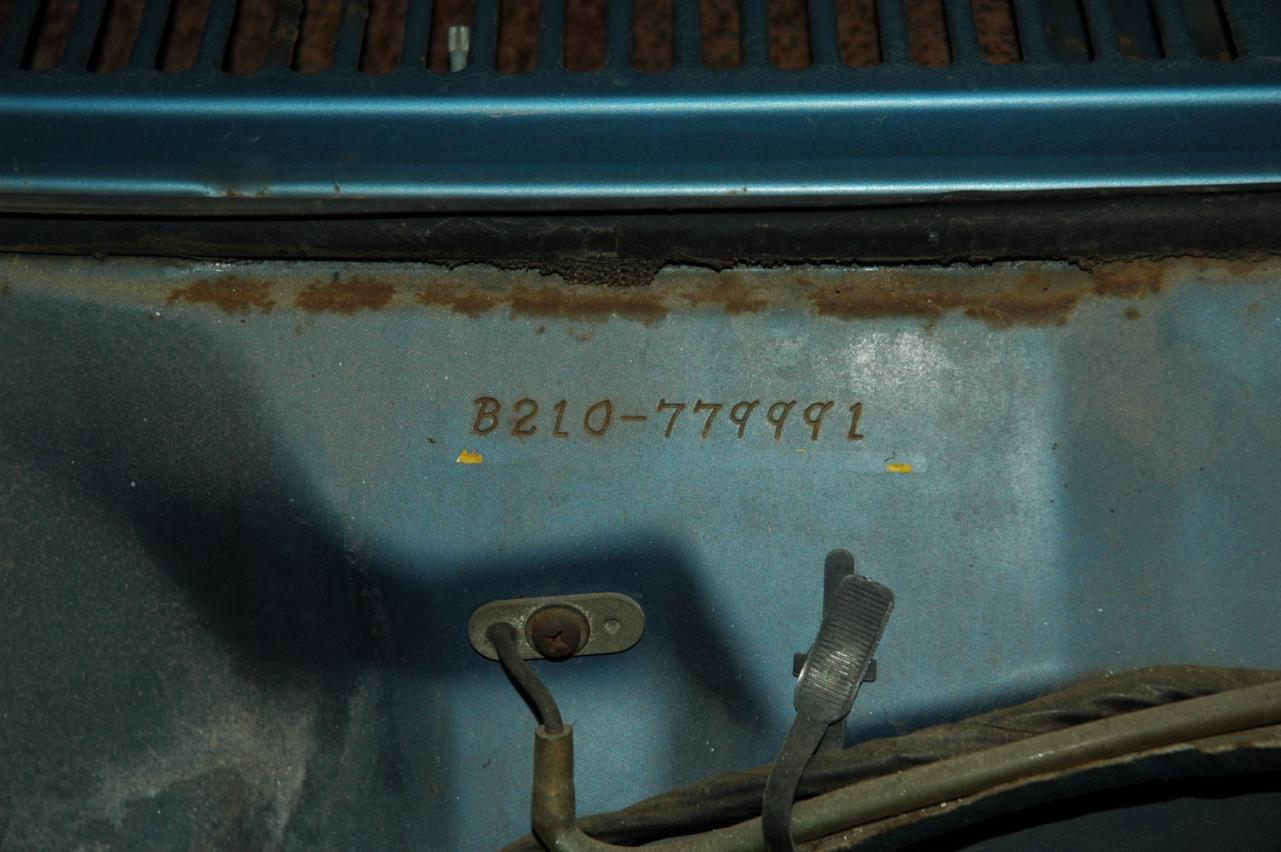
Don't get foxed by the remnants of yellow paint around the 'Shatai Bango' on the B210, Chris. That's just left over from the Japanese 'Shakken' tests, where the engraved number is sometimes highlighted to make it more legible and show that it has been checked. All of that is a continuing and regular thing through the car's life in Japan. I agree that the B210 engraving is very neat and regular, whereas S30-series Z engravings can sometimes be very haphazard. They can look a little wobbly on C10 Skylines too. I wonder if it's something to do with the awkward location of the engraving on the Z in comparison to the B210? There's plenty of space around the B210 engraving. I wonder if the machine was fairly unwieldy?
-
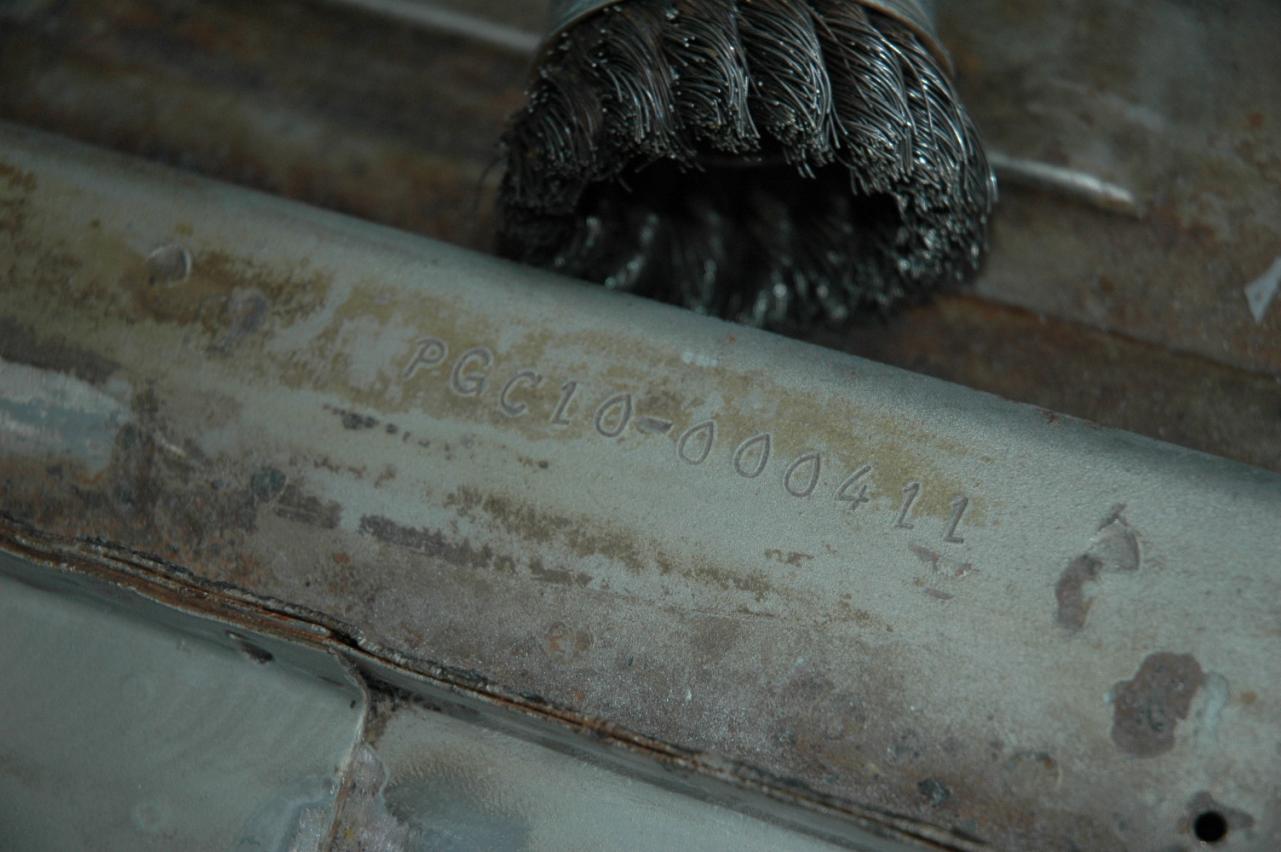
Great thread topic, Ron. It occurs to me that so many questions could be answered by the staff of Nissan Shatai's ( now closed.... ) Hiratsuka plant. Kats has made good contact with some of them, and there's a whole world of questions that we could ask them. Worth investigating for the future. As for chassis numbers, I shall have to make a mental note to refer to 'engravings' rather than 'stampings' in future. I'd certainly like to see one of the portable engraving / pantograph machines that they must have used. As reference, here are close-ups of chassis numbers on a couple of other models from a similar time frame to 'our' cars - a PGC10 Skyline GT-R and a B210 Sunny Coupe. Note that these cars were not made in the same factory as our Zs, so the same type of machine must have been used by other Nissan manufacturing plants too. Subtle differences in font, as well as noticeable similarities?

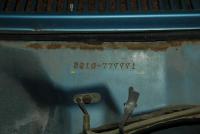
-
Mike / Chris, My maroon ZG has one of the original 'Muen' stickers on its rear window, but it is the red & white version rather than the blue & white. I've never seen an original blue & white one on a Z in Japan, and there's also more than one version of the red & white one. I'll have to try and take a photo of the original, and I note that it is a lot darker red than most of the repros seem to be..... I've got a few repros, but I bought them originally from Auto Garage Watanabe in downtown Tokyo ( thinks: that must be at least 15 years ago now...... ). I should think Usami san and Esprist buy them from Nishi san at 'Revive Jalopy', like nearly everybody else in Japan does nowadays. He has many of the Japanese market version stickers. I got Matsuo san to sign as 'Inspector' on one of my Revive Jalopy repro 'OK' stickers, just for fun. Has anybody ever collected any original 'Inspector' names from original 'OK' stickers? Most of the ones I've seen are usually faded / rubbed to illegibility, but I notice 'Romaji' signatures rather than Kanji. Alan T.
-
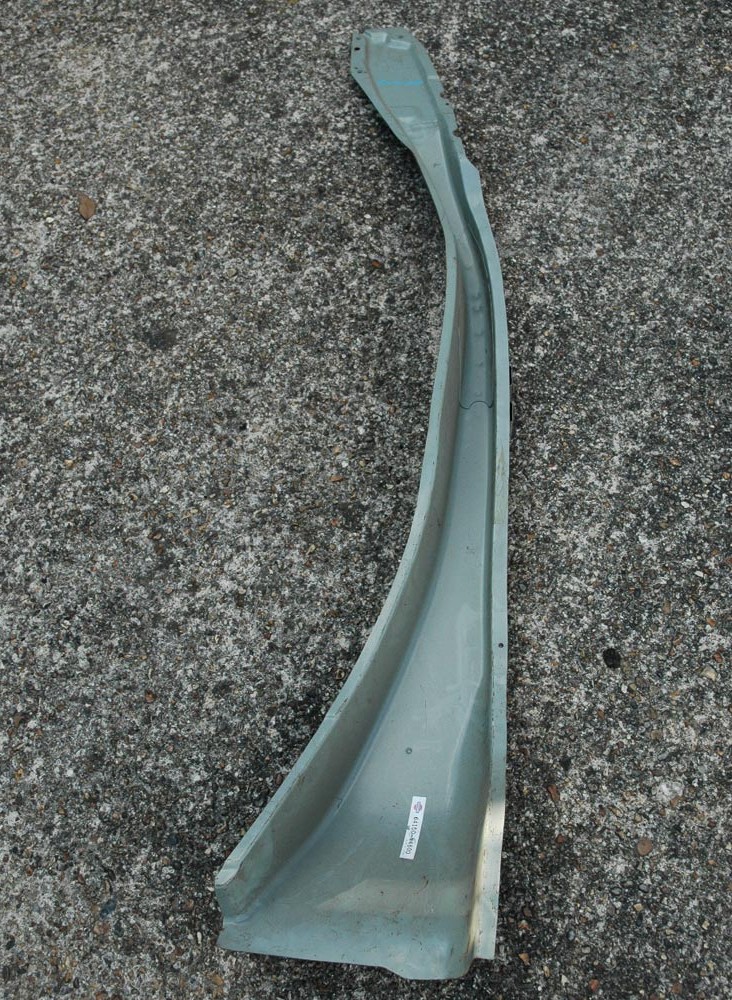
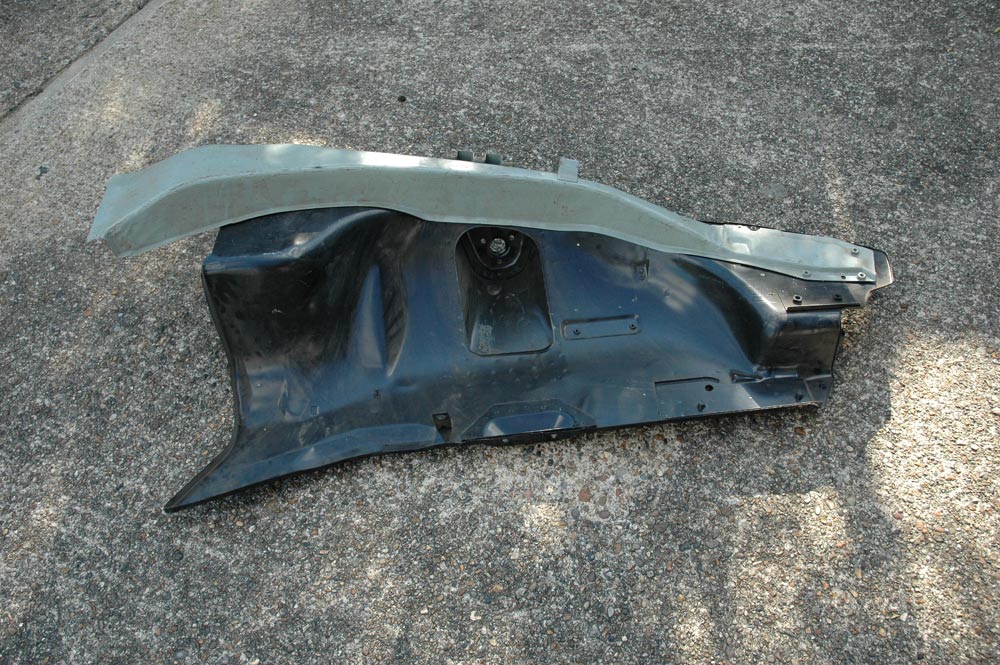
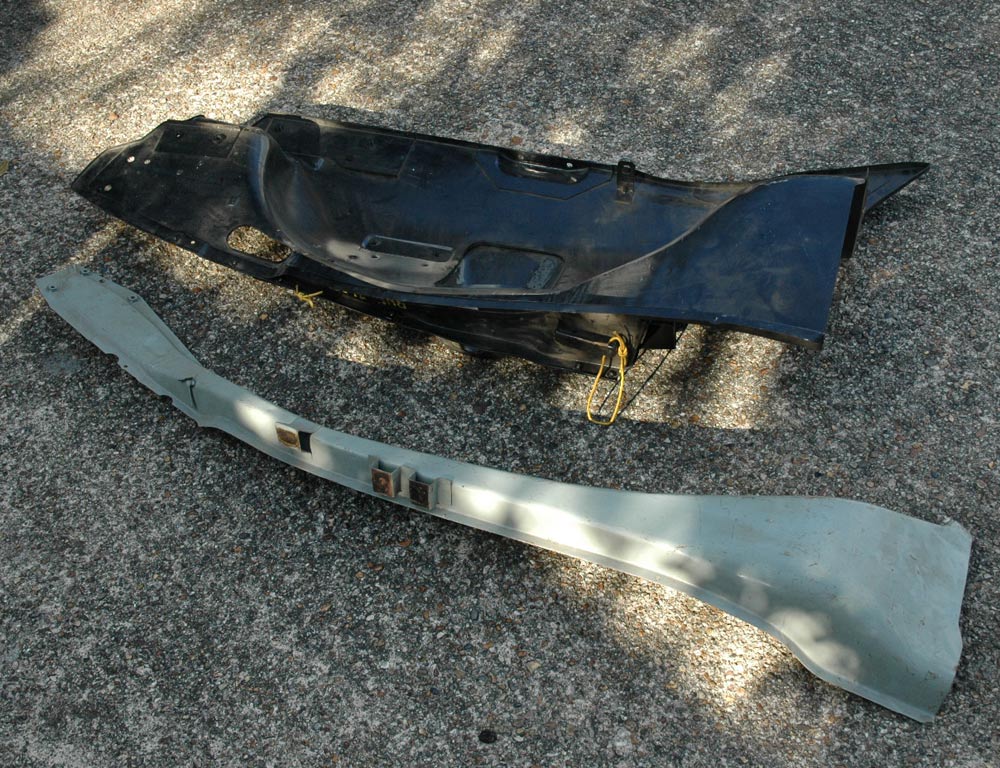
Matt, I think you're referring to what Nissan called the "Hood Ledge Reinforcements", and what have come to be known colloquially as the 'Air Tubes'. Reason they are called 'Air Tubes' is because they have a secondary function of ducting fresh air from the front of the car ( inlets are in the radiator core support, and plastic tubes connect them to these 'air tubes' inside the engine bay ) to the outlets under the dash, where they are turned on and off by pull/push knobs located either side. Take a look under the dash on the extreme left and right, and you will see the ducts, flaps, cables and knobs. However, the primary function of the 'air tubes' is to act as a front upper body structural member. So yes, they are structural, and very important. Road muck thrown up by the front wheels builds up on the top ledge of the air tubes, and eventually rots through them. If they are badly corroded on your car, then it can be a BIG job to repair / replace them. NOS panels can sometimes be found, but they are expensive and fairly complex to attach properly. Big structural repairs of the air tubes, front crossmember / rad support and front chassis rails really ought to be done on a jig. Here are some pics to illustrate the shape of the parts:
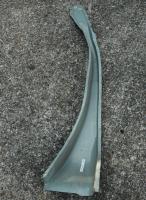
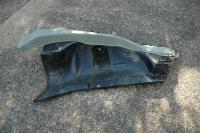
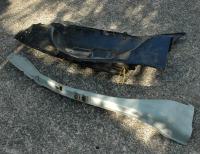
-
Sorry if I offended you about the "Camero" spelling thing, but it's exactly the same way that Carl Beck (mis)spells it so often. I found that funny and ironic at the same time, given recent ( and historical ) forum exchanges. Don't take it too much to heart, please. As for changing the subject in "answer" to your question - I wasn't aware of that habit. I'll have to be more careful, won't I? I thought I'd posted quite enough about the subject to make my case, as have others. Sorry too for believing that you are one of those "designed for the US" people, if that's actually not the case. It's just that everything you have written around the topic lately ( like in that interesting Datsun USA press release thread that Mike B posted ) makes it look as though you're not willing to accept the fact that the concept, design, engineering and production of the cars was not centred solely on the USA market version. I was genuinely hoping to hear your opinion ( as an engineer ) on the details of the car, but if you don't want to then you don't have to. Alan T.
-
There are literally hundreds of indications all over these cars that show they were designed and engineered with both LHD and RHD configurations in mind. Many of them have been discussed on this forum over the last few years. Perhaps if you had the opportunity to have a really close look at a stripped down RHD car that was made around the same time as yours - and you compared them side by side - you might notice a few more. But rather than me trying to convince you of the built-in dualities in design, how about you try to convince me that the cars themselves demonstrate that they were conceived, designed and engineered with solely the USA market in mind? Show me something in the very fabric of the car. As an engineer, you might be able to point out a few things on these cars that are proof positive of these "designed for the USA" claims. What are they? Where's the proof on the car? Come on, drop the bomb. It might make a refreshing change to hear some engineering-led 'evidence' from the USA-only minds, as it's usually only sales flannel and production quantities that are used as 'proof'. Alan T.
-
"Camero"? You are Carl Beck, and I claim my prize Doradox, there's a big f'in hole in the radiator support panel of you car that has the S20's name on it. You might not have noticed it yet. I invite you to take a peep, and open your mind a little. Alan T.
-
Thanks Ron, I was hoping you would comment. I agree that the thread drifted off topic, but they always do, don't they? I'm afraid that some of the initial claims being made ( look at that codswallop about HLS30-00016 for example ) did not stand up to scrutiny, and from then on the inevitable debate was always going to happen. You will - I hope - have noted that I was not the only one taking the thread 'off topic' ( even though I believe what we were discussing was putting HLS30-00013 in perspective ) but that the only complete posts that have been deleted were mine ( and Chris's ), whilst Frank T has chosen to add his choice comments about me whilst misrepresenting the chain of events. I think forum moderators need to be seen as fair and even handed, and the fact that he was part of the 'problem' he perceived - as well as his obvious courting of Carl Beck - was never going to allow him to act as a moderator should. Now the thread at ctzcc.com - as Chris has pointed out - contains some really crock data, leftfield opinion presented as solid fact, and no toleration of it being debated let alone corrected. It will now go be preserved as reference material for other unknowing souls to believe in good faith, and the whole thing starts over again like a Typhoid infected water source. That's how we got to this "foreign Z" and "American Car, Made In Japan" nonsense in the first place. Sorry for the thread diversions..... Cheers, Alan T.
-
Thanks Chris, that means a lot to me. Much appreciated. Alan T.
-
This was the first post on this thread: If you want to find out what's happening with HLS30-00013 ( and what the 'experts' are telling everybody it is worth, even though it isn't for sale ), just click on the link to the ctzcc.com thread. Alan T.
-
And the reply I made to Frank T's post, here: http://forums.ctzcc.com/viewtopic.php?t=4114&postdays=0&postorder=asc&start=0 THANK YOU Frank, For the record, I think you might find that the expression 'having your ear close to the ground' is not necessarily a slang term of solely "American" origin..... That exchange rate was fixed by the Bretton Woods System in 1949, and by the late 1960s it was starting to cause problems in Japan because it effectively undervalued the Yen. Japan had changed a lot since 1949, and by 1970/71 Japan's imports ( including most of the raw materials that 'our' cars were made from ) were costing Japanese industry too much, and its exports were earning less than they should. On the path to a floating exchange rate system, the Yen bounced around in value a fair bit. The $US was devalued in mid 1971 and the Smithsonian Agreement set the $/JPY exchange rate at 308 Yen. This did not last long, and market forces brought the agreement to be abandoned. By early 1973 the $US was buying just 270 Yen. For the rest of the decade it was averaging around 295 Yen. This is not quite the situation yourself and Carl are portraying, is it? You must understand that all of this had deep implications on the manufacturing process behind 'our' cars, let alone the amount of revenue they brought in sales. So once again we see that the situation was a lot more complex than a few - unquestioned - paragraphs can convey, and that if you look a little deeper into the Japanese side of the story ( of a Japanese car ), you can get a much better handle on the big picture. I'm sorry Frank, I'm not really seeing where you are going with this. My point - made to Carl - was that while he claimed to have been looking for 500-and-something 1969 production HLS30s, there is no 'given' that these would all have been north American market models, or that they had all been sent outside Japan in the first place. It might seem a small point to some, but I think it is very relevant when there is so much talk about these 'first 500' or so Export cars and so much time and discussion is spent on trying to find the missing pieces of the jigsaw. See below for more on this point: "Unimportant"? Frank, the whole point is that the cars I'm talking about were given series production prefixes and body serial numbers. They are important pieces of the jigsaw puzzle, and their very existence - even if we do not know their specific serial numbers - affects the story, and the surrounding history, of all the others. Yes, it even affects the way that 'HLS30-00013' fits into that story.... You're perhaps revealing a little too much vehemence in your post than the point deserves, don't you think? You might like to reflect on the fact that we are gradually finding out more and more about these cars and the stories that surround them. If it wasn't for 'Kats' Endo, much of the data from Nissan Shatai we have been discussing ( which helps to put 'HLS30-00013' into context too ) would not have been available for us to chew the fat over. Never say never. It was a relatively short time ago in the scheme of things that Carl was insisting than NO export spec HS30 had been built in 1969, and not much longer ago than that he was under the impression that ALL the early S30-series bodies, regardless of prefix, shared a body serial number sequence. We are all learning as we go along, aren't we Frank? As for me supplying 'VIN' numbers for cars that are known to have been in certain locations at certain times, again I'd say 'Never Say Never'. Don't bet against data turning up. I recently got hold of some 'Katashiki' data for some competition cars that I knew existed, and had been chasing for years. The key point was in knowing that they existed in the first place, where they were at a certain time, and what they were doing there. Would you advocate that we ignore cars that might have had 'interesting' prefixes and low body serial numbers just because you seem to have a personal dislike of the person providing the sighting? That would appear to be an inefficient method of acquiring information....... Yes, but 'HLS30' does not solely designate north American market - does it? Er, two things here Frank: First of all, HLS30-00013 was certainly not the "FIRST 240Z off the assembly line". It may well have turned out to be the first car sold to a customer in the USA ( remember that another car was claiming that particular accolade in the beginning of this thread? ) but I don't believe this was the pre-determined plan when it rolled off the production line in Japan, was it? There appear to be cars with lower numeric serial numbers that were originally planned to be sold before it. Secondly, the "Z car" was not designed solely for the American market, as I think I have made quite clear. I think you're thinking of the HLS30-U model........ I apologise for my trivial "facts" ( ), but thanks very much for writing the brilliant "foreign Z cars" quote, which I think puts this whole thing in perfect ( warped ) perspective. I feel obliged to point out that all of these cars are in fact Japanese, even if it should be rather obvious to all of us. Posting whilst you have a little bit too much adrenalin flowing is probably not such a good idea. Especially if this is the kind of stuff that results: Oh dear! Er, Frank - even the S30-series 'Fairlady' was a 'Z'. I think you're getting a little bit mixed up. Too much adrenalin, maybe? "Sissy" :: I think you're giving that little bit of Katayama lore another airing, whilst seeming oblivious that this was really just a sideshow dating from the SP/SR Roadster days. I think you'll find that one of the main thing Katayama didn't like about the 'Fairlady' name was that he didn't like the guy who came up with it ( that ring a bell for you at all? ). Regardless, when the S30-series Z range made its debut at the Tokyo Auto Show in October 1969, the sole HLS30 on the Nissan stand was already wearing its 'Datsun' and '240Z' emblems, whilst also wearing a plaque on its rear license plate position that read "Fairlady Z - Export version". Matsuo san has related just how late in the day the 'Datsun' and '240Z' script emblems were prototyped and put into production, whilst the 'Fairlady Z' and 'Nissan' emblems had been finalised much earlier. If Katayama was in such strong control of the Z's concept, design, engineering and destiny then you might imagine that he'd have a little bit more control - and a little earlier in the process - than this illustrates. Of course, the answer is that he wasn't. I couldn't care less if you , or "homophibic" ( sic ) America think that the 'Fairlady' name is "sissy", and it certainly didn't matter in Japan. For the record, I think 'Z' was a good name, but I don't care for 'Fairlady' one bit. Not because I think it's "sissy" ( is it really? ) but more because I think it's a link to the SP/SR series that they needed to break away from. One thing that this difference in naming for different markets did achieve was to draw an arbitrary line through domestic and export models that didn't really - in terms of concept, design engineering and production - actually exist. It confuses the issues, and makes it easier for people to justify their intentional 'them and us' stance. It's a Maguffin. The plain fact is that all the S30-series Z range, as seen at launch in 1969, had been conceived, designed, engineered and prototyped at pretty much the same time. You could point out that the majority of prototypes and mockups were RHD, and that much of the layout of the design displayed a clear bias and design concession towards the car's Japanese roots, but that should be obvious when we are talking about a Japanese car of that period. What it all boils down to - and the reason I'm posting on this thread - is that we should remember that these are all Japanese cars, that the vast majority of the players in the story were Japanese, and that they were designing a range of variants that were all part of the core design. This is a message of democracy and inclusiveness, not elitism, nationalism or bragging rights. I'm off to play with my "foreign Z". It knows what I'm talking about, I think. Regards, Alan T. ---------------------------------------------------------------- Again, if anyone can see anything hugely insulting or objectional in there ( surely not? ) then I'd appreciate having it pointed out to me. I don't expect Frank T to sign up here, but anyway..... I like the "foreign Z" quote ( ). Sometimes great comedy lines can be delivered quite unintentionally, I think. Cheers, Alan T.
-
from the ctzcc.com thread here: http://forums.ctzcc.com/viewtopic.php?t=4114&postdays=0&postorder=asc&start=0 So you want to set the agenda of the discussion, and only answer what it suits you to answer? What is the "subject of discussion"? The answer - of course - is that it all is..... You were actually using the production figures of the SP/SR Roadsters to illustrate a point in relation to the production capacity of Nissan Shatai's Hiratsuka plant. I notice you now rewind and bring the 'average' down by including the figures from 1958 ( a whole different world to the 65~70 period you initially quoted! ), but the real question is just what the figure of "21,000" means here: ...so once again, I ask you exactly what this figure of "21,000" represents? You connected it to 'Model Year' - but how can that include domestic and export markets outside north America? If you don't state whether this is TOTAL production for any stated period of time, then how on earth is it relevant to the subject of production capacity? This is missing the point. None of the above takes into account what Nissan Shatai were making out of all this, and the sticky mess that grew out of it - let alone factoring in what Nissan's true costs were for its north American operations. Ironically enough, one of the main reasons that we have had such a struggle to get accurate production data about the early Z - and all the associated history that goes with that - is precisely because of the baggage that went with all this. All we hear is that Nissan made buckets of cash out of the Z, when the real bottom line was a rather more complex and messy conundrum that didn't pan out until a few years later. Oh dear, here we go again - quoting figures that completely ignore the Japanese market. This - once again - is a perfect example of the way that you approach all of this. Why are you specifically talking about the 'Datsun 240Z" when the full story needs to include models that simply didn't wear the same emblems? And if you are insisting on including only HS30 and HLS30 prefixed models, then where do my two 'HS30' prefixed Fairlady 240ZGs fit into the figures? The production figures for the domestic market models are hugely bigger than the combined totals of the export markets you quoted above, but you insist on ignoring them. Why? Is it because they don't fit the 'Datsun 240Z' pigeonhole that you want to isolate from the term 'S30-Series'? So - straight question - are my two Fairlady 240ZGs something so completely different from those RHD export market cars ( for Australia and UK ) that you quoted above, that they can't be included in sales figures, let alone production figures? Do you even know how many 'HS30' prefixed cars were made for the Japanese market? If you know, why discount them? If you don't know, then why don't you know? To purposely ignore a decent percentage of production quantity seems, well - just bizarre. ALL of our cars are the product of the same design and engineering team, working for the same company, and made in the same factory, in Japan. I don't know how many times it needs to be pointed out, but this "designed for America" mantra does not tell us the full story about the actual 'design'. Most of the occasions when "designed for" is being used, the term "sales targetted" would be much more appropriate. In an engineering design sense, it is patently clear from looking at the product itself that it was not designed solely "for America". Nobody disputes that the great majority of cars produced went to the north American market ( as was planned and expected! ) but if anyone disputes the fact that their own car ( regardless of RHD or LHD, Domestic or Export spec ) displays clear evidence of design for multi variant adaptation, let alone natural design concession biased toward the origin of the mechanicals, then they obviously can't have a full understanding of the car or the circumstances surrounding its creation. Alan T. -------------------------------------------------------------- Can anyone tell me what exactly can be described as "caustic", "abrasive" or needlessly confrontational in the above? I'd love to know, for future reference if nothing else. Have people forgotten what a written discussion looks like? Carl, I invite you to continue the discussion here. Alan T.
-
Well Mike, as you know I joined up to the ctzcc.com forum and got into a little debate. Carl Beck also joined up there, and I see that you and 26th-Z did too. Unfortunately it seems that forum administrator Frank Thomas has decided that the sound of one hand clapping is preferable to any kind of reasoned discussion, and has 'taken his ball home', so to speak. He has deleted two long and detailed responses that I made to posts by Carl Beck and himself, citing "caustic and abrasive" language ( huh? ) as the reason for deleting them. He has also deleted some of the follow-up posts I made which - I think - politely questioned why he had deleted the whole of my own posts, but had removed offensive remarks from his own post. If anybody was following the discussion, and would like to see what was deleted, I am posting it here. I don't think there is anything "caustic or abrasive" or even excessively confrontational in what I wrote, and I think I made some fairly on-topic responses to what Carl Beck and Frank T had written ( and which are still up on the original thread at ctzcc.com ). Some of the data that was posted was clearly wrong, and I think it is worthy of debate. If you're really not interested in this, then please ignore. At least you will have been allowed to make your own mind up from the data and opinion presented, which seems to be anathema to some.... Cheers, Alan T.
-
I was looking at the bit where he's talking about: ...And the fact that he seems to be talking about his 1970 HLS30-U. But you're right. I guess anything's possible. He doesn't really make it clear as to exactly what part of Carl's posts in this thread he's agreeing with' date=' but it's likely that he'll be agreeing with [i']anything and everything Carl writes...... :classic:
-
Good plan. At least you'll stay friends that way...... :classic: I think you mean SRL-311? In which case you'd need a few more parts to convert that FS5C71-A transmission to fit the Z ( including a bellhousing, T/O bearing & sleeve, tailhousing, driveshaft and driveshaft flange ) - so it was hardly a straight swap, was it? Meanwhile, outside north America, the guys who wanted a Z car with a 5-speed went and bought a Z car that came with a 5-speed as stock equipment off the showroom floor. Wouldn't you have liked to have that option too? So this wasn't in 1970, was it? Sounds like you bought an FS5C71-B ( 'Close Ratio O.D.' ) or FS5W71-B ( 'Wide Ratio O.D.' ) so-called 'Competition' transmission, which was standard equipment for models outside north America. I think your 5th gear overdrive ratio would have been 0.864:1 rather than 0.854:1. Typo? If you bought an R200 diff with a 3.9:1 ratio ( again, a standard ratio in markets outside north America ) then it certainly would not have been in 1970, when you bought your car - would it? I'm guessing this transmission and diff upgrade that you are telling us about was likely 1973 or later - yes? So what changed for you in the three years or more between buying the car and upgrading to a five speed overdrive trans and 3.9 ratio diff ( with LSD )? Did you finally realise that you might have been missing out on something? Sorry, but you appear to be saying that this setup was better than the 1:1 four speed and 3.36 diff ratio that came as standard equipment on your car when you bought it? In which case, you're agreeing with me too. It's a win/win situation! Alan T.
-
Matt, Enrique ( EScanlon ) is giving you some very good advice, so please be sure to take notice of it...... As for your dash - I would recommend that you put it to one side and deal with it occasionally whilst you pay attention to the other ( BIG ) jobs that need doing on the car first. From the looks of it, I don't think you are going to need to re-fit it for a good while yet.... I had a similar problem with a long-stored RHD dash that smelled bad and seemed to have all sorts of microscopic life growing on it. It was not cracked though, so the incentive to reclaim it was high and I persevered. After several months of occasional washing / intensive cleaning and feeding with Johnson's Baby Oil ( believe it or not ) it looked just great and smelled, well, of Baby Oil. You can get dashes re-skinned, but you can always tell ( and it's expensive ). I suggest you think about other more basic things on the car - like the structure, mechanicals and paint - before you worry too much about the trim and cosmetics that you will be re-fitting to it some time down the line. Have you got any literature that pertains to the cars? I'm talking about a proper Nissan-issued Factory Service Manual, and/or a Nissan Parts List? Both would answer a LOT of the kind of questions that you have already asked and will probably be asking here. There's also a really useful book titled "How To Restore Your Datsun Z Car" by Wick Humble, which - even though it is specific to the north American market models - can be a great aid and a good source of inspiration. Many of the parts and techniques in the book are also applicable to your UK market RHD car. You might also like to sign up as a member on the UK Z Club forum ( www.zclub.net ) for RHD-specific advise, parts and sympathy. And don't throw ANYTHING away yet! Alan T.
-
And by the way, this thread is located in the MEMBERS ONLY section of the forum - so nobody can see it unless they are a member, and 'signed in'. I'd like to see this interesting project getting a little more forum exposure, so maybe you'd like to start another thread in a different section of the forum that you can add progress updates to, and which everyone can readily see? Don't hide your light under a bushel. Up with Fairlady Zs! :classic:
-
Mike, Yes, the dipstick location and sump orientation identify it as what we could call a 'sedan' ( Cedric, Laurel, Skyline etc etc ) version L20A rather than a Z version L20A. Not so difficult to convert ( re-drill the dipstick tube location, change the oil pump pick-up / strainer - not forgetting to plug the original drilling - and swap to a Z-type sump ) but you might like to investigate the spec of the engine a little more closely in case it is a low compression version...... It looks to me as though it is a remanufactured / reconditioned unit rather than a brand spanking new Factory crated item. The block colour would seem to support that. Lets see what you find when you take it apart. You always have the option of modifying it for a little extra pep ( valves, cam, slight head skim, little pit of port work etc ) to suit the Mikunis and the ex. manifold. The L20A can be a nice sporty little powerplant when matched up with the right gearbox and diff. If you PM me with your postal address I'll send you a parts list CD, which you might find useful. Cheers, Alan T.