HS30-H
Supporting Member
-
Joined
-
Last visited
Everything posted by HS30-H
-
I presume (hope!) you haven't bought the book, Ian. I don't recommend it for CSP311 scholars, as it might be a health hazard. For example: Page 121: Talking about the CSP311 Silvia: "The car also fostered some characteristics similar to the Chevrolet Corvair". Wow. Just....wow. Let that sink in for a moment. Had he mislaid his spectacles?
-
We've been here many times before, haven't we Carl? I'm even slightly nostalgic for the days when you were denying that the first two engines lined up for the Maru Z/270KK project were the L16 four and L20 six. Remember when you were telling us that the prototypes were widened and lengthened to accommodate the L24, which didn't even exist at that point? Your (rather bowdlerised) translation of Nostalgic Hero magazine's Hiroshi Iida/L-Gata engine story as seen on zhome is still pushing - through you, as that's not what Hiroshi Iida wrote - the idea that L-Gata 'Year Zero' was somehow the L16 (notably ignoring the L13 which was designed alongside it...) even though the whole article makes it clear that this was a story of evolution rather than revolution. Their use of the photo of the 1964/5 L20 six is the most obvious clue to Iida and Nos Hero's linear presentation of the story, but you insist on adding your own L16 Year Zero skew ('Made For USA' confirmation bias) to it. Iida makes it clear that - when developing the first four-cylinder L-gatas - he and his team had the advantage of being able to do what they had not been able to do during the time-pressed design, development and initial production of the L20 six. They were able to take advantage - significantly - of new tooling and advanced metallurgy now available to Nissan (especially significant was the new pressure diacasting machinery that was coming on line) and were able to incorporate improvements that were simply not feasible beforehand. It was perfectly natural for the L20 six to evolve into the L20A and L23, and - later - the L24, utilising the advantages of the modular system which could share components and tooling across both six and four cylinder variants of several capacities and beyond. Drawing an arbitrary line between the L16 and everything that came before it is not something that Iida did, and it is not what you should be doing either. But you do, and you will won't you? It's no wonder that Mr Evanow writes about the L24 as though the L20 and L20A did not exist, and paints a direct jump from L16 to L24. Evanow namechecks Zhome.com several times in his new book in just the same way he did with his previous book 15 years ago, so it should be no surprise that he swallows that stuff whole. This time he namechecks Hitoshi Uemura and his book, although he doesn't seem to have read the parts of the Uemura book which make the L16, L20 and S20 plans for the Maru Z/270KK project clear. Not 'On Message' enough, perhaps? "Bulletproof" enough to hold up production and require a crankshaft re-design? Something that wasn't necessary on the L20 or L20A. Guess they just got lucky, huh?
-
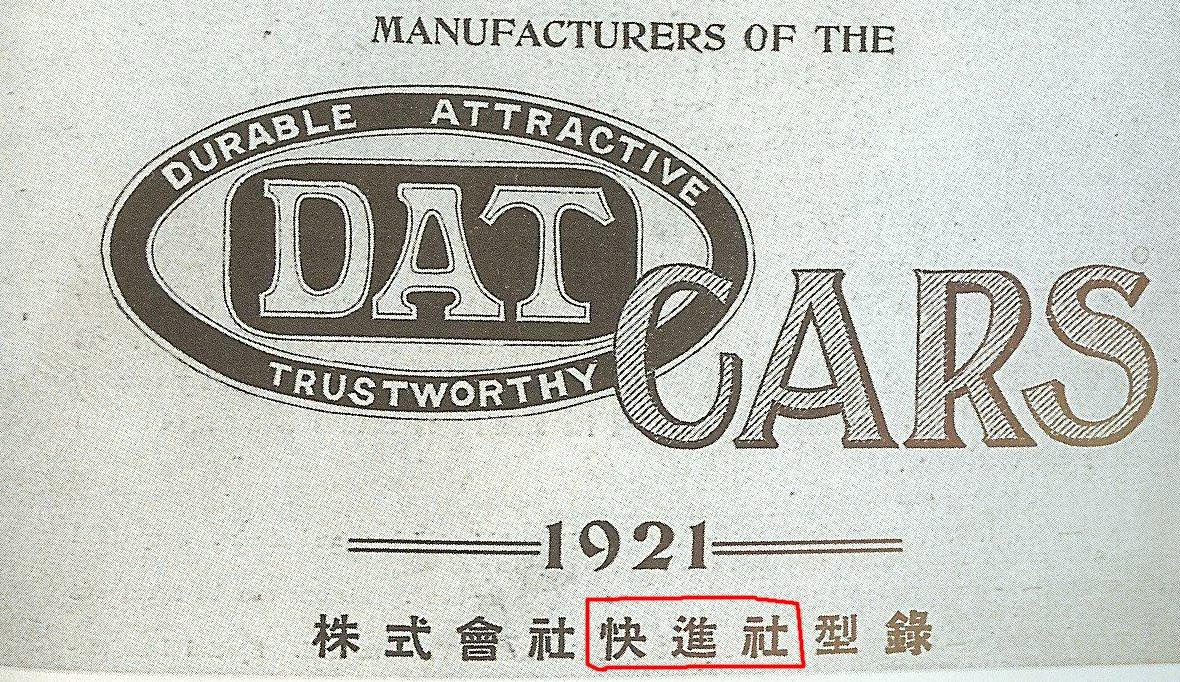
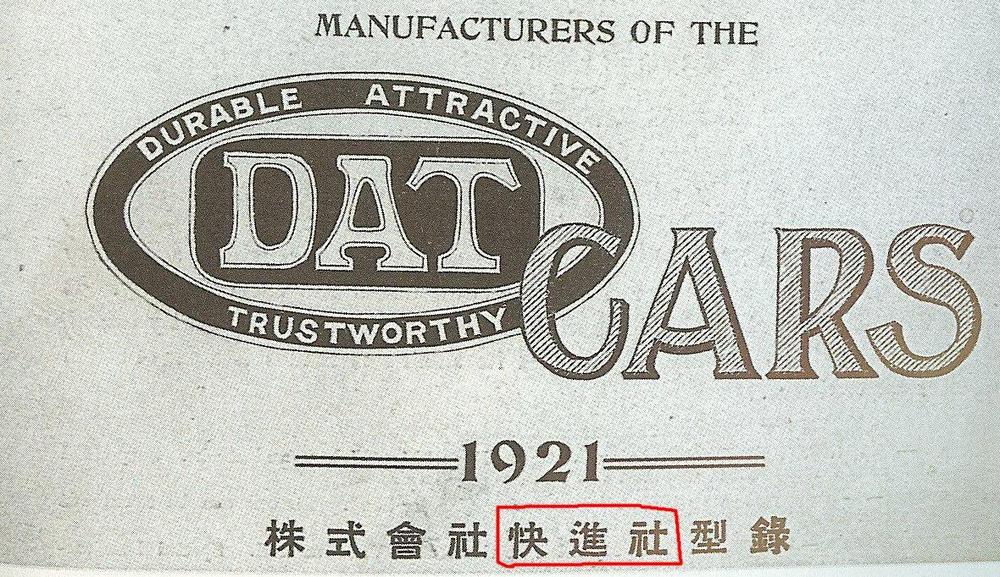
You're making my point for me Carl, whether you realise it or not... The whole point - as I tried to make clear on another thread where I criticised Nissan's constant repetition of old mistakes - is that the original Romanisation of the company name as 'Kwaishinsha' was wrong. Yes, they even wrote it in large white letters on the outside of their factory in Toshima-ku, Tokyo. I don't know who was originally responsible for this - and I have some sympathy for them - but they made the mistake and it has stuck. In plain terms, that letter 'w' in 'Kwaishinsha' is a Japanese linguistic impossibility. Take a peep in a Japanese dictionary and see how many cases you can find where the Romanised version of a Japanese word has a letter 'w' following a letter 'k'. It won't take very long, as 'Ku...' is followed abruptly by 'Ky...'. There will be no 'Kv...', 'Kw...' or 'Kx...'. Look at the bottom line of the 1921 catalogue. It is written in Kanji. I have highlighted 'Kai Shin Sha' in red: So it's right there in black and white. 'Kai Shin Sha'. Rather quaintly - and perhaps a clue to the 'Kwai' mistake - the final two Kanji characters in the above line say 'Kata Roku', a naive form of the English 'Catalogue'. These days it would be written in - phonetic - Katakana characters (カタログ). The question is, why do Nissan themselves still carry on with this mistake whilst others do not? From many Japanese technical and scientific sources you will see it correctly Romanised as 'Kaishinsha', and - somewhat ironically - Nissan's arch rivals Toyota get it right in their own museum and museum literature. Back in 1994 the Toyota Automobile Museum held a special exhibition for 'Pioneers of Japan's Early Automobiles' in which Masujiro Hashimoto, Kaishinsha and the DAT car were heavily featured. The research and display was better than anything I've ever seen Nissan themselves present. Japan's National Science Museum in Ueno, Tokyo has an extensive collection of material relating to early Japanese automobile and motorcycle manufacturing. Mr Kazuyoshi Suzuki, who curates the collection, wrote an excellent book called 'The Japanese Motor Industry in the 20th Century' which I highly recommend. Mr Suzuki fittingly chose his Chapter 23 to be titled 'The Origins of Nissan - Kaishinsha and DAT'. Anecdote: The location of that original Kaishinsha factory (the 'Dai Ichi Kikai Kojo' in Higashi-Nagasaki, Toshima-ku, Tokyo) is now a large supermarket. 100 years ago it was surrounded by small plots used for agriculture with the occasional private residence dotted around it. Now it has been completely subsumed by urban sprawl. I used to live in the area, and made a pilgrimage.
-
More tea, Vicar? ? Page 12: "The Z's L24 powerplant was a six-cylinder adaptation of the four-cylinder L16 used in the 510 and would prove to be a bulletproof workhorse." Ah, that old chestnut. No mention of the L20 six, or indeed the L20A six. Of course not! And "bulletproof"? Not in initial form it wasn't. Crankshaft re-design and re-homologation required... Page 12: "While the additional two cylinders required a new, longer block, crank, and overhead camshaft, most of the engine's internal components - pistons, rods, bearings - were the same as within the 510. Displacement grew to 2,393cc and horsepower to 150." The two engines first lined up for use in the 'Maru Z'/'270KK' project (in mid 1967) were the L16 four and the L20 six. Soon after, a High Performance version of the L20 six (with triple carbs and 160hp output) was added to the plan, but this was dropped when the S20 twin cam was green-lighted for inclusion in the project. The L24 six only came into the picture much later, as an Export spec with extra capacity that would help to mitigate the power-sapping anti-emissions measures necessary in some markets. Six cylinder L-gata engines existed before the L24, so painting the L24 as a direct jump step from the L16, and created solely for the Z, is both inaccurate and misinforming. Either he doesn't know about the L20/L20A, or he's ignoring it. The above quotes are taken from a section titled 'Z DNA'. Ironic. It would be fun to give the S30-series Z a DNA test. A few people might be surprised to find out that Daddy isn't who they thought he was...
-
Well, the Z-specific auctions are only a small part of what goes 'across the block' on Bring A Trailer auctions, so I don't expect any direct kickback of funds. It seems much more likely that Larry Stepp's frequently observed big-upping, namechecking and positive endorsement of BaT as "THE place to sell" would be enough to grease the wheels, so to speak. And he certainly seems to receive favourable treatment from BaT admin, as does 'The 240Z Guild'.
-
LOL. Top trolling.
-
So fraud, basically. I have often found it 'interesting' how quickly and freely Mr Larry Stepp ('Lstepp4re' on Bring-a-Trailer) and Mr Robert Jackson ('The240ZGuild' on Bring-a-Trailer) have been able to get their comments past the scrutiny of BaT administrators and published tout de suite. It's almost as though they were getting favourable treatment. Whenever I've tried to leave a comment I often find a long wait (if I'm lucky) or it just doesn't get published. And if it does get published, it only takes five individuals to get a comment flagged as 'Unconstructive' and deleted, so easily open to cliques who find a particular comment not to their advantage. Mr Larry Stepp, Mr Robert Jackson/'The 240Z Guild' and Mr Randy Nonnenburg/'Bring-A-Trailer' are all heavily featured in the same chapter of the new Pete Evanow book. Interesting...
-
Here's some background information on Mr Robert Jackson of 'The 240Z Guild': https://www.volvoforums.org.uk/showthread.php?t=229228 http://forums.turbobricks.com/showthread.php?t=301907
-
There's no 'maybe' necessary here. They did. Notwithstanding all the "Made For The USA" propaganda, evidence is all over these cars that they were conceived, designed and engineered as a series of models, accommodating several different markets and both LHD and RHD configurations. And a very good job they made of it too...
-
Mr Robert Jackson / 'The 240Z Guild' has a reputation: https://www.volvoforums.org.uk/showthread.php?t=229228
-
I intend to. In the meantime, I'm carrying on with my critique here in the hope that it will elicit some discussion on the topics raised, and - thereby - get us all a little closer to the truth. If anyone disagrees with the points I am bringing up, they are most welcome to counter.
-
If there were not so many mistakes in the book, it wouldn't be possible to pick it apart piece-by-piece, would it? And this is classiczcars.com, where we - hopefully - pride ourselves on getting this stuff right. If we don't, then who will? WE are the enthusiasts. I presume that WE are the target market, no? Perhaps Mr Evanow just needs to write a better book? Or get it double checked by people who know their stuff before publication? Oh, and from the publisher smallprint in the book: "We apologize for any inaccuracies that may have occurred and will resolve inaccurate or missing information in a subsequent reprinting of the book."
-
Page 118: "...the Z432. Four valves, three carburettors, two camshafts. Carrying the S20 engine originally installed in the Skyline 2000GT-R (KPGC10), which was built by Prince Motor Company, the automaker Nissan acquired in 1966..." The PGC10 Skyline GT-R debuted in February 1969. The PS30 Fairlady Z432 and PS30-SB Fairlady Z432-R debuted in October 1969. The KPGC10 Skyline GT-R debuted in October 1970, a full year after the 432 and 432-R. So, if we want to say that the 432 and 432-R received the Skyline GT-R's S20 engine, we have to cite the four door PGC10 as the 'source', not the two-door KPGC10. In any case, it's not strictly accurate. By the time the S20 engine was being finalised for production, it was already lined up for use in the S30-series Z chassis as well as the C10-series Skyline, and the cylinder block was engineered to fit both mid-rear sump (Z) and front sump (GT-R) configurations and their corresponding oil pickup/main oil gallery and dipstick locations. In fact, the first batch of 432/432-R engine block castings were made at the same time as the first Skyline GT-R blocks. And 'built by Prince Motor Company'? The S20 engine was descended from the Prince GR8, but was quite different. In truth the S20 was a Nissan product, designed and made by what used to be Prince before it was subsumed by Nissan...
-
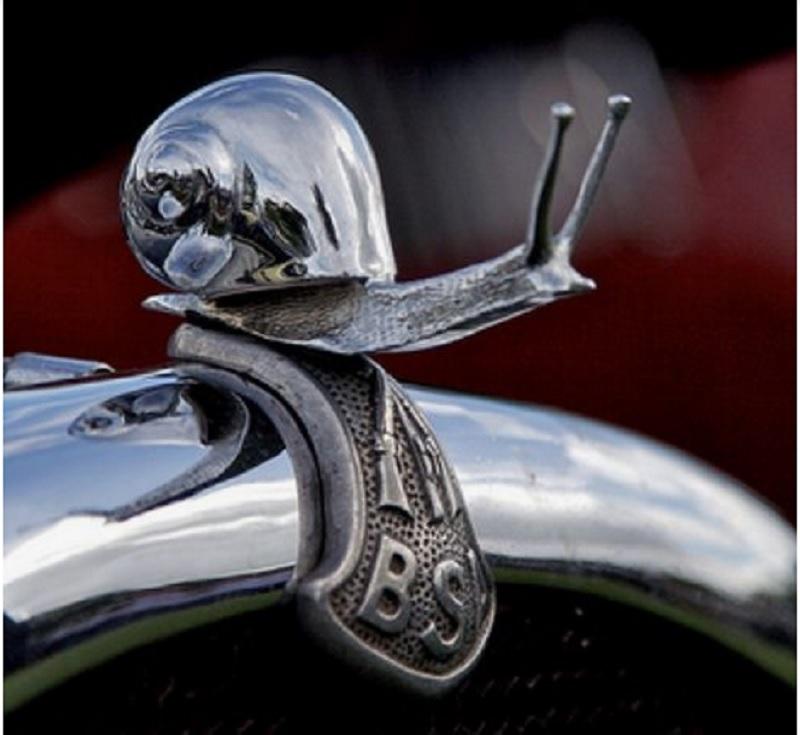
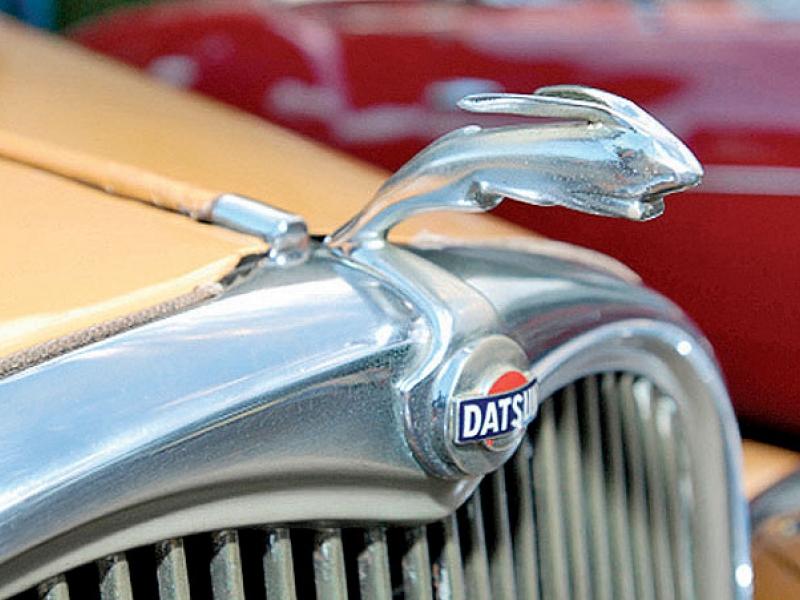
Splitting Hares, 26th-Z...? ? It's all very well for us to wax lyrical about the symbolism of motoring ornaments - and it's a good thing - but that beautifully realised Deco figure on the top of the Datsun radiator is not a 'Dat', and 'Dat' is not Japanese for 'Hare'. Happy 4th July, by the way. Here's an English hood ornament on the day we celebrate having got rid of the troublemakers:
-
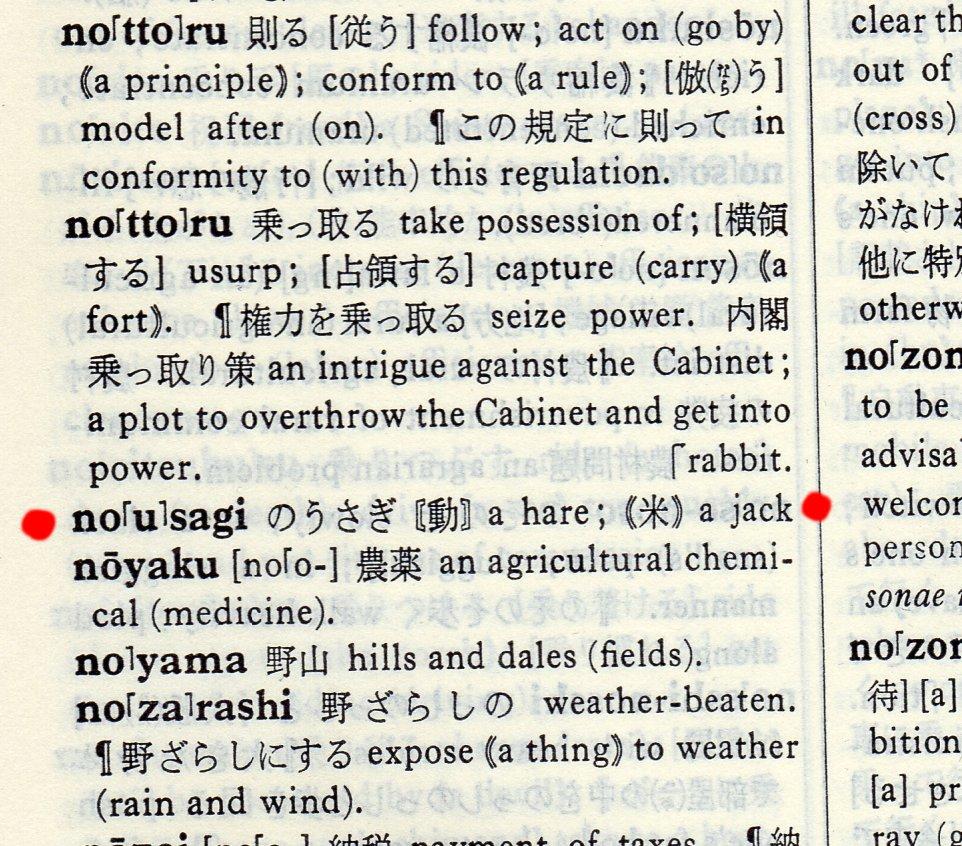
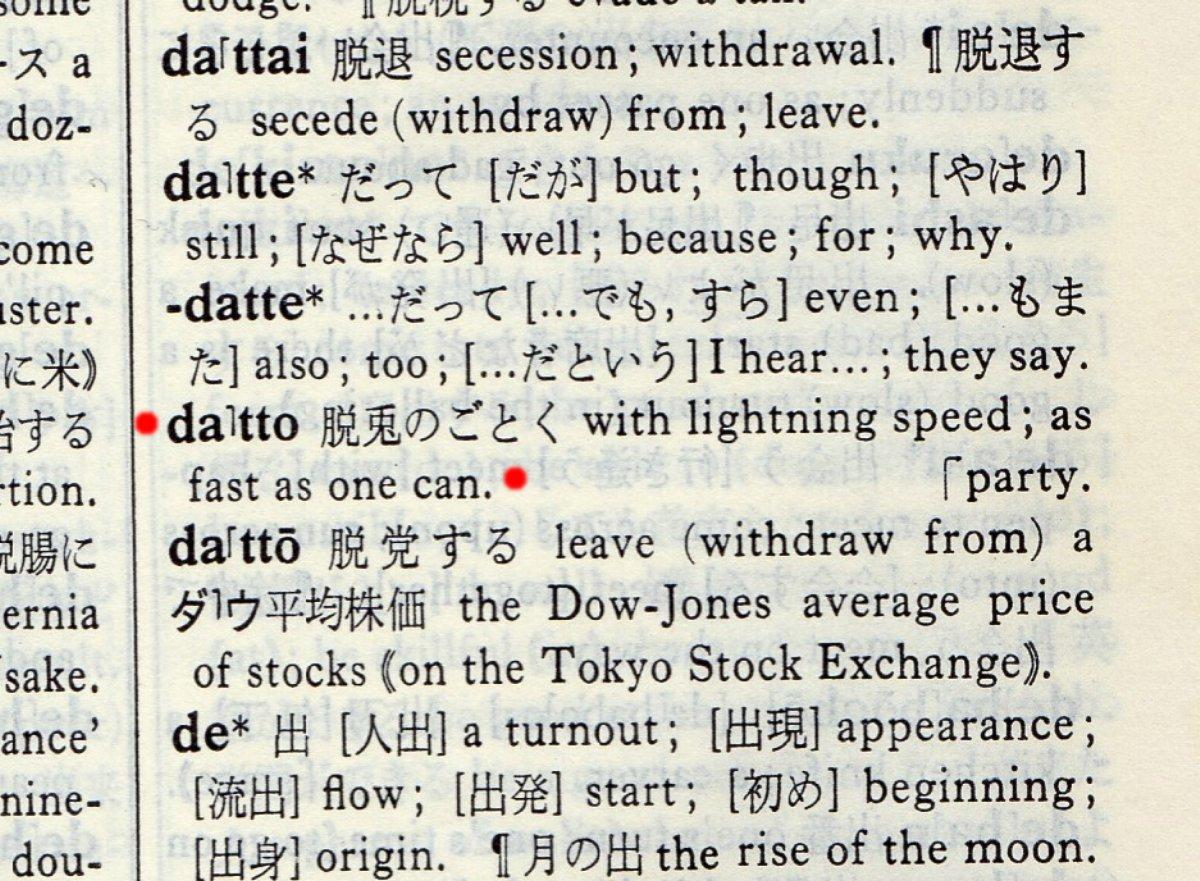
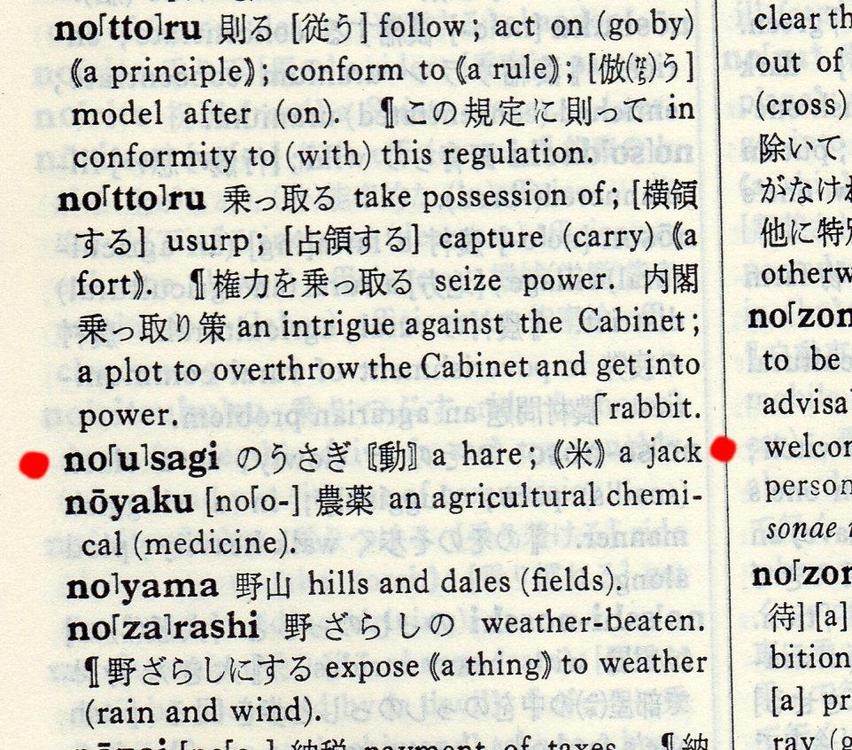
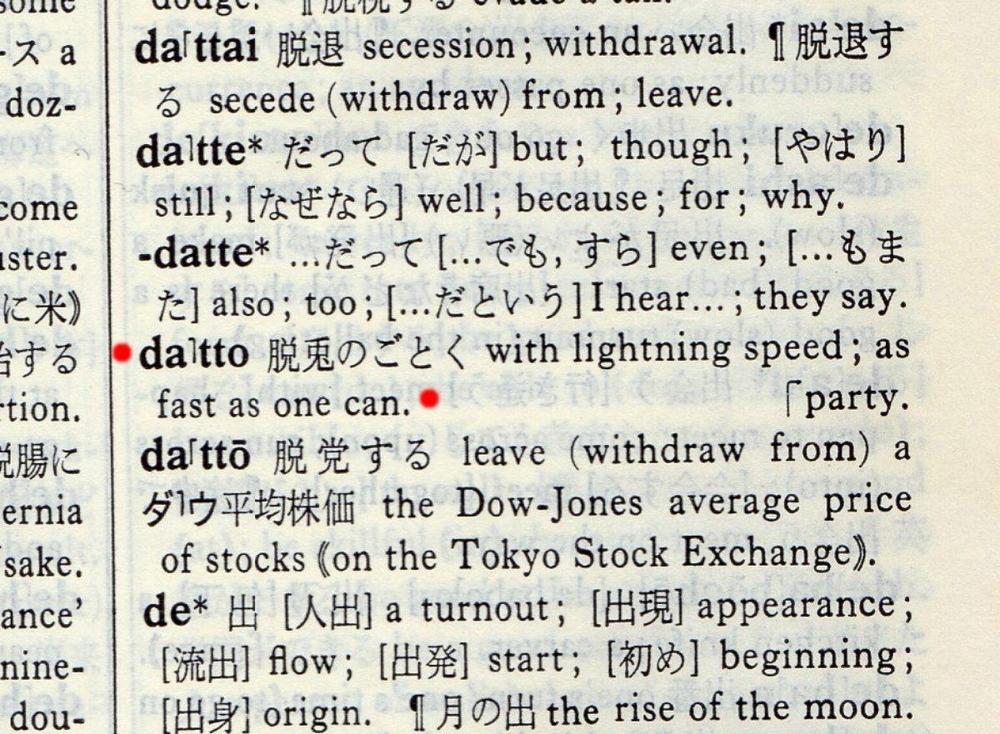
Page 16: "Hashimoto took three years to build his first vehicle, a two-cylinder, 10-horsepower car he called the "Dat". The name derived from the initials of his three supporters. Dat also means "hare" in Japanese, reflecting the vehicle's presumed speed and craftiness." Here's a classic case of copying the mistakes of others. The Japanese word for the common Hare is 'Nousagi' (literally, 'Field Rabbit'). The running hare emblem on some of the early Datsun products: This is not 'a Dat'. In Japanese, the word which can be Romanised as 'Dat' (phonetically 'Da-tto') is a verb. Here's the Japanese dictionary again: ...so the emblem uses the wild Hare as a symbol of speed and agility (whilst still being fairly modest) and it is not 'a Dat'.
-
Page 16: "....but in 1911, US-educated Masujiro Hashimoto began the Kwaishinsha Motor Company in Tokyo." There was never any company called 'Kwaishinsha'. It was 'Kaishinsha'. Here's the original Kanji: 快進社
-
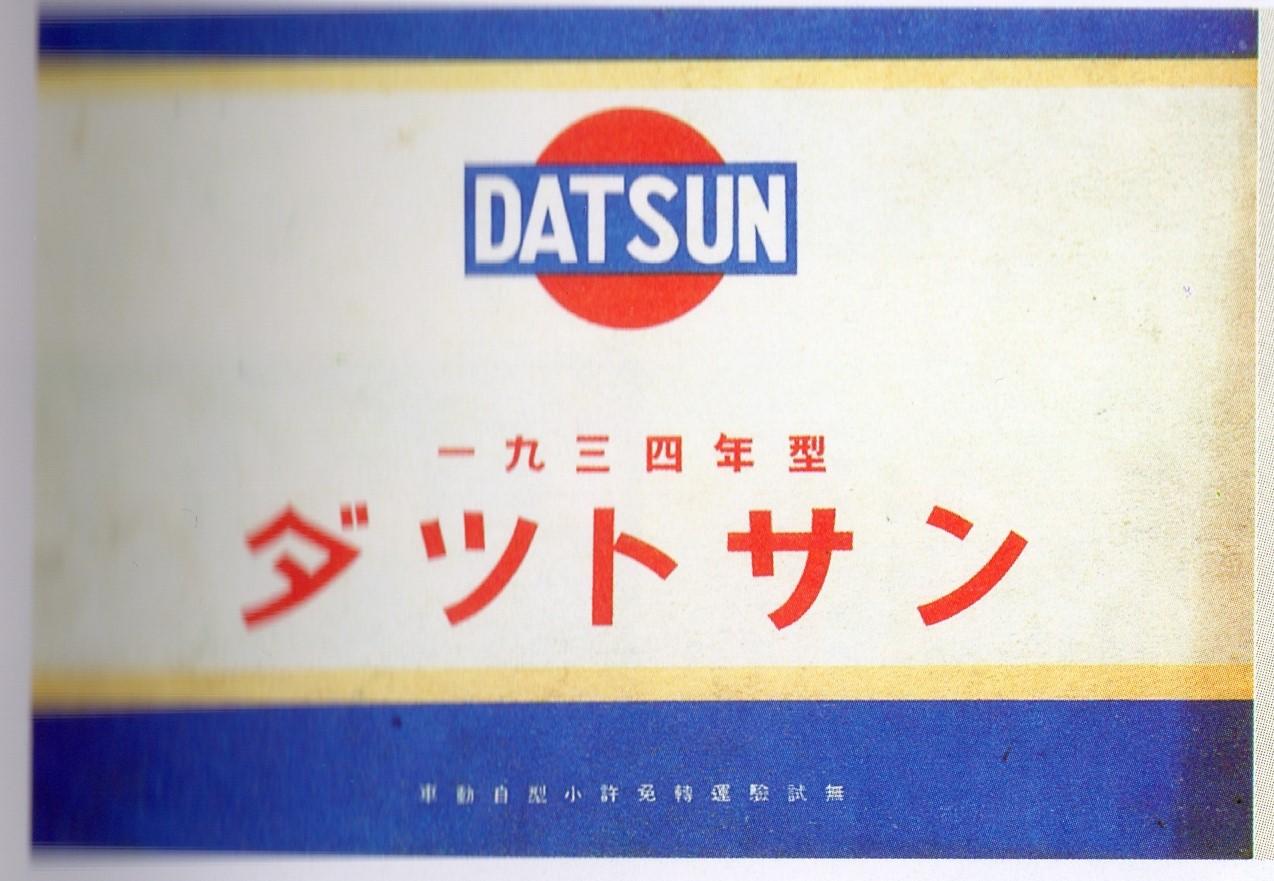
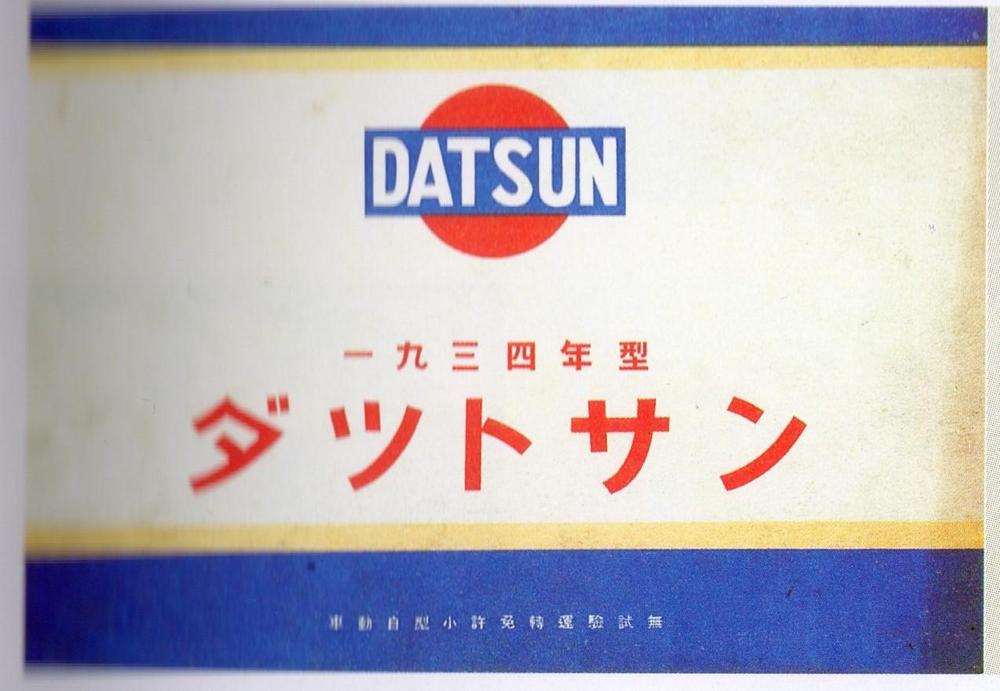
Page 71: "The red, white and blue Datsun logo and brand reflected a fusion of Japanese heritage (the rising sun) with American patriotism". What...?! How on earth was that logo anything at all to do with "American patriotism"? This is almost a cargo cult level of nonsense. They say that 'man created God in his own image', but here's America seeing itself reflected in something that has nothing to do with it. Bonkers. Here's a Nissan Jidosha KK 'Datsun' brochure from 1934. I think its a fairly sure bet that Nissan didn't come up with their new 'Datsun' logo's colouring as any kind of hat tip to the USA:
-
I've been dipping into this new book occasionally over the last few days, and I have to say it is right up there. Right up there with the worst. Its really, really poorly put together. In fact, I'm not even sure what it is supposed to be? It's not a 'history' type book. It doesn't bring anything new to the table in that respect, and - indeed - perhaps it is not even trying to be? It seems to be more of a typical coffee table book, an accumulation of Nissan's stock press images with blocks of text filling in the gaps and chapter headings which don't necessarily have much relation to their content. Example: Leafing through a chapter titled 'The 50th Anniversary Z', you'll suddenly come across a photo of a Nissan Figaro, on Thailand license plates (?!), taking up a full page. Why? Well, apparently it illustrates the talent of Nissan's designers. Now, the products of Nissan's 'PIKE' studio in the late 80s and early 90s are an interesting and worthy topic in their own right, but how do they relate to this book, and to this particular chapter of the book? The photo caption states the Figaro was "...primarily a Japan-only vehicle." In fact it was solely a Japanese market vehicle, never intended for official export. Ironic that the concept, creation and marketing of the Figaro as a Japan-only vehicle is apparently not questioned when, just a couple of chapters previously, the author is apparently unable to imagine the CSP311 Silvia as anything other than some kind of USA-focused 'test'. So what is this book? Perhaps the main clue is that it is being endorsed as a NISSAN MOTOR CORPORATION 'Official Licensed Product'. I guess it fills what would otherwise be a gap in the marking/marketing of the '50th Anniversary', an English-language American take on five decades worth of product in a time when what comes next is still somewhat unclear. So, perhaps I should view it as 32 Pounds Sterling (42 US Dollars) worth of advertorial? I might be tempted to use it as a fancy drinks coaster...
-
The more I look at Chapter 7 - titled "The Car Hobby Culture" (???) - the more bizarre it gets. There's a section headed 'The Limited-Run Silvia And Its Z Connection'. It's about the CSP311 Nissan Silvia of 1964, and Mr Evanow credits it to Albrecht Goertz. In fact it was styled in-house at Nissan by Kazuo Kimura before Goertz got anywhere near it. Kimura doesn't get a name check. Poor research there, but it gets worse: Page 121: "...a two-door hardtop said to be based off the Fairlady convertible..." "Said to be"? The clue is in the chassis code. CSP311. It was built around the chassis and running gear of the SP311 Fairlady. There's no "said to be" about it. Page 121: "Because of its uniqueness in the marketplace, the Silvia carried the Nissan name rather than Datsun." What does this actually mean? It doesn't make any sense. Page 121: "...the two-door, short-wheelbase coupe could very well have been the starting point for the Z". No. But it gets worse: Page 121: "There are plenty of doubters, but why would NMC-USA go to so much effort to essentially hand-build approximately 550 units, only to test the market for such a hardtop?" What?! Is this a typo or something? What on earth did NMC-USA have to do with the CSP311? The author is making it sound like the CSP311 could not have existed without being some kind of 'test' for a USA-targeted product. No apparent regard for what such a prestige, coachbuilt item might mean to Nissan and - by extension - the Japanese people themselves. It was a statement, a demonstration. Japanese styling on contemporary mechanicals, craftsman-built by the artisans at Tonouchi and arguably a match for anything else from the rest of the world in 1964. Why is a production run of 500+ being framed as some kind of 'failure'? Auto manufacturers have been doing this kind of thing since the beginning. There is absolutely NO reason to view it solely through the lens of the United States, or as anything other than what it was. The CSP311 was a success in its own right, an elegant and refined product with some exquisite attention to detail and a match for anything being turned out by the big Italian styling houses of the time. Recommendation: If anyone is interested in the deeper story of the CSP311 and its genesis, please take a look at Ian Patmore's excellently researched website csp311.net https://csp311.net/csp311-development-history/
-
I'm scratching my head wondering how some of this stuff gets written in the first place, let alone get past an editor or proof reader. Page 117: "Initially, the Z had few export sales other than the US. According to Carl Beck, the only other countries that received Zs in the early '70s were Australia, New Zealand and the UK." This would be a surprise to France, Holland, Germany, Belgium and Portugal - as well as several other nations - which received HLS30 model Datsun 240Zs during the 1970 through 1973 period. Page 117: "Zs in Japan of course received a smaller engine, due to taxation issues established by the government." Apart from the ones that got an L24, right? Japan got three distinct L24-engined models, available from late 1971 through to the end of 1973. Page 120 mentions the 'Fairlady 240ZG', but not the fact that it had an L24 engine. There's a photo of an HS30-H model Fairlady 240ZG on Page 121 ('Fairlady 240Z' emblems plain to see), although it is captioned as a 'Fairlady ZG' (?). Page 118: "Zs also seemed to earn a five-speed in Japan before any other country, the overdrive offering fuel economy, especially important as gas prices always exceeded those in the US. This was either a luxury option or was unavailable in export markets for many years, to the dismay of legions of American drivers". Was this written by a car guy? The overdrive 5-speeds were a performance-related feature, being close ratio and using Servo synchros, and being linked to a matching differential ratio. The whole point was about having 4 closely-spaced gears for sporty driving with a 3.9:1 (or 4.44:1) diff ratio, but with the overdriven fifth for longer-legged cruising when necessary. Economy was a secondary concern. And ALL export markets - except North America - got the 5-speeds as standard equipment from the beginning of sales. Japan had model variants with both 5 and 4-speeds from the beginning of sales. North America was odd one out here. I think one of the symptoms of lack of comprehension with regard to the structure of the S30-series Z range is demonstrated on Page 118: Page 118: "One of the real collectibles among early 240Zs remains the Z432". As I've said many times, if you don't understand that the S30-series Z was a family of variants from the beginning, then you'll never fully understand each individual variant.
-
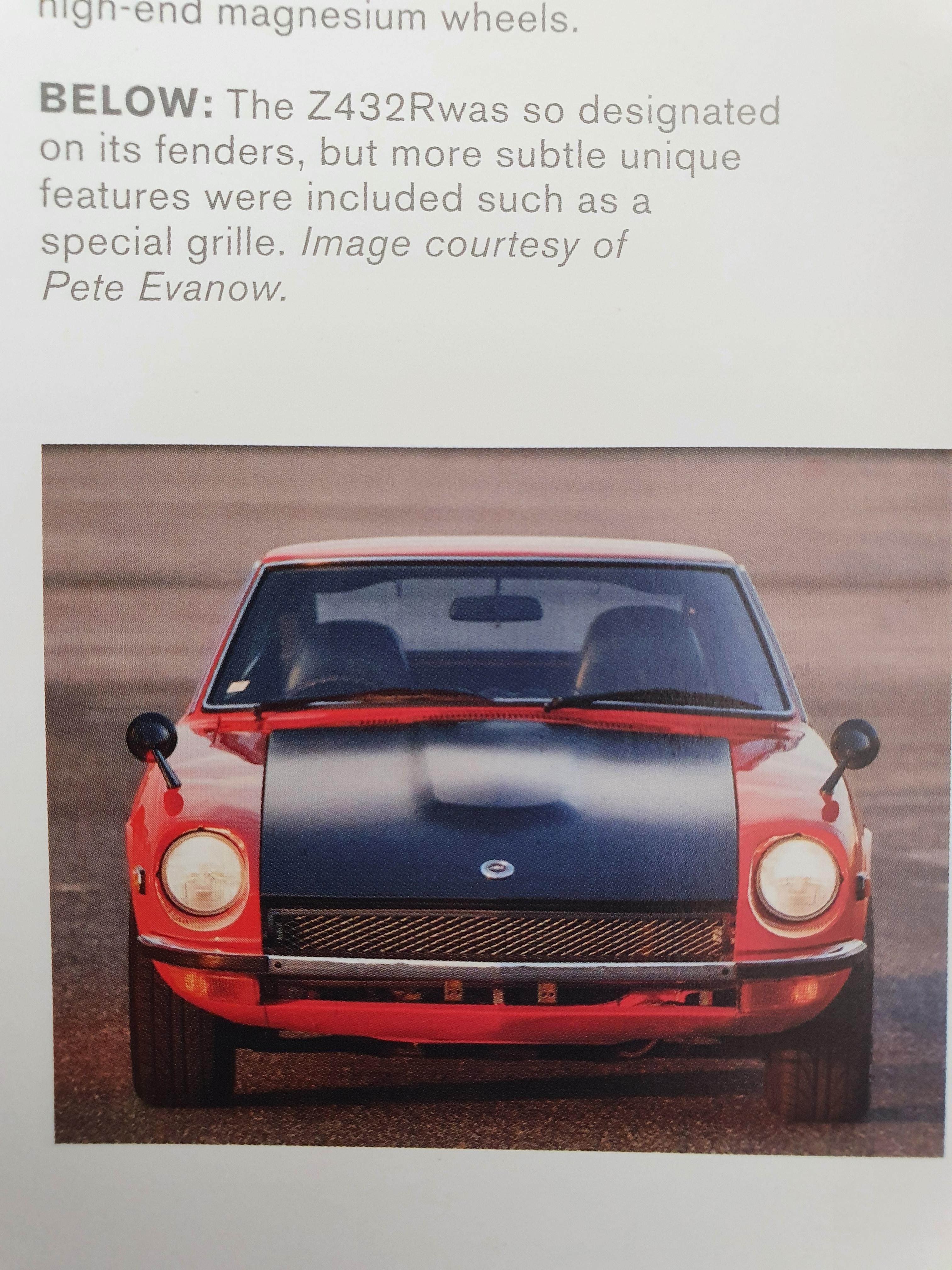
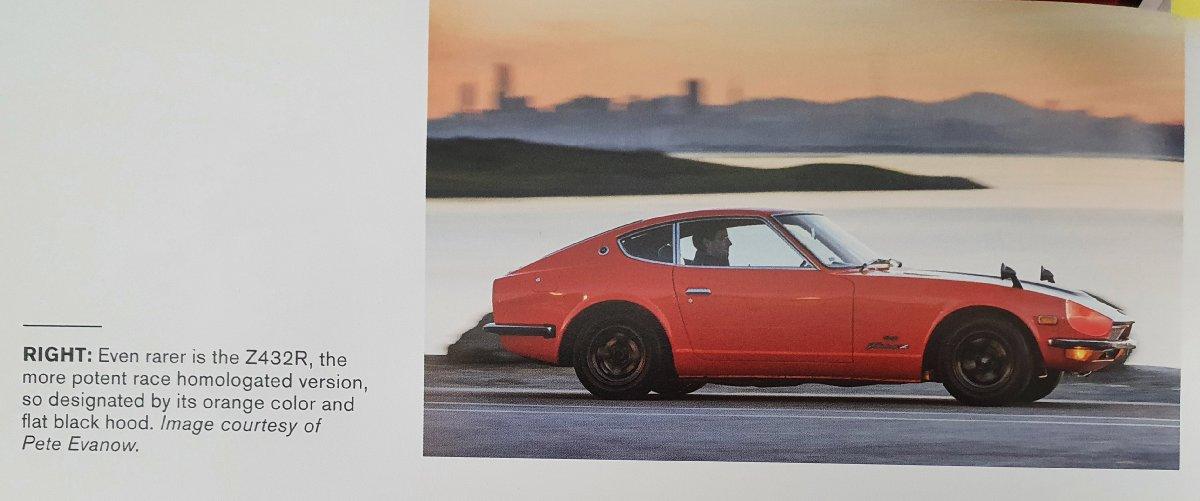
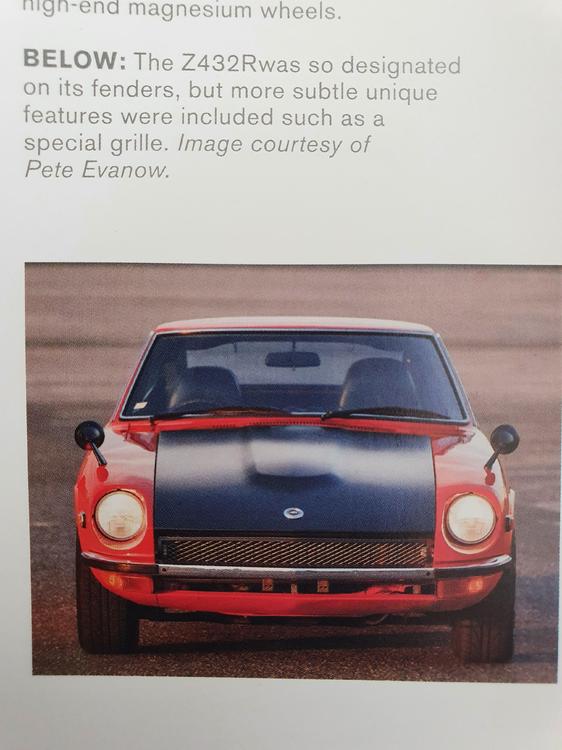
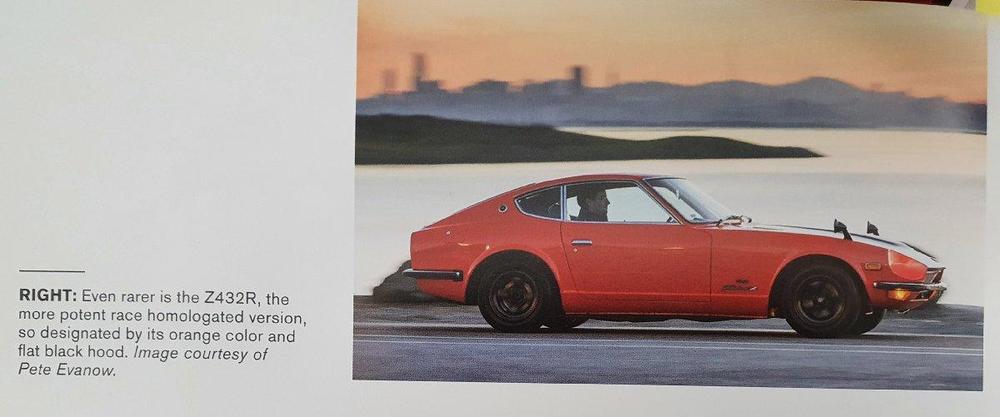
Pages 119 and 120 carry photos of a car that is captioned as being a 'Z432R'. P119 caption tells us that "The Z432R was so designated on its fenders...", but this is not true. The 432-Rs were fitted with exactly the same 'Nissan', Fairlady Z' and '432' emblems as the standard 432 models. In fact the car in the photographs (credited to Pete Evanow) is a PS30 model Fairlady Z432 with a satin black-painted bonnet. It is not a PS30-SB model Fairlady Z432-R. This particular car has passed through more than one pair of hands whilst in the USA, once at auction, and is well known. I cannot understand how it is being confused with a genuine 432-R model.
-
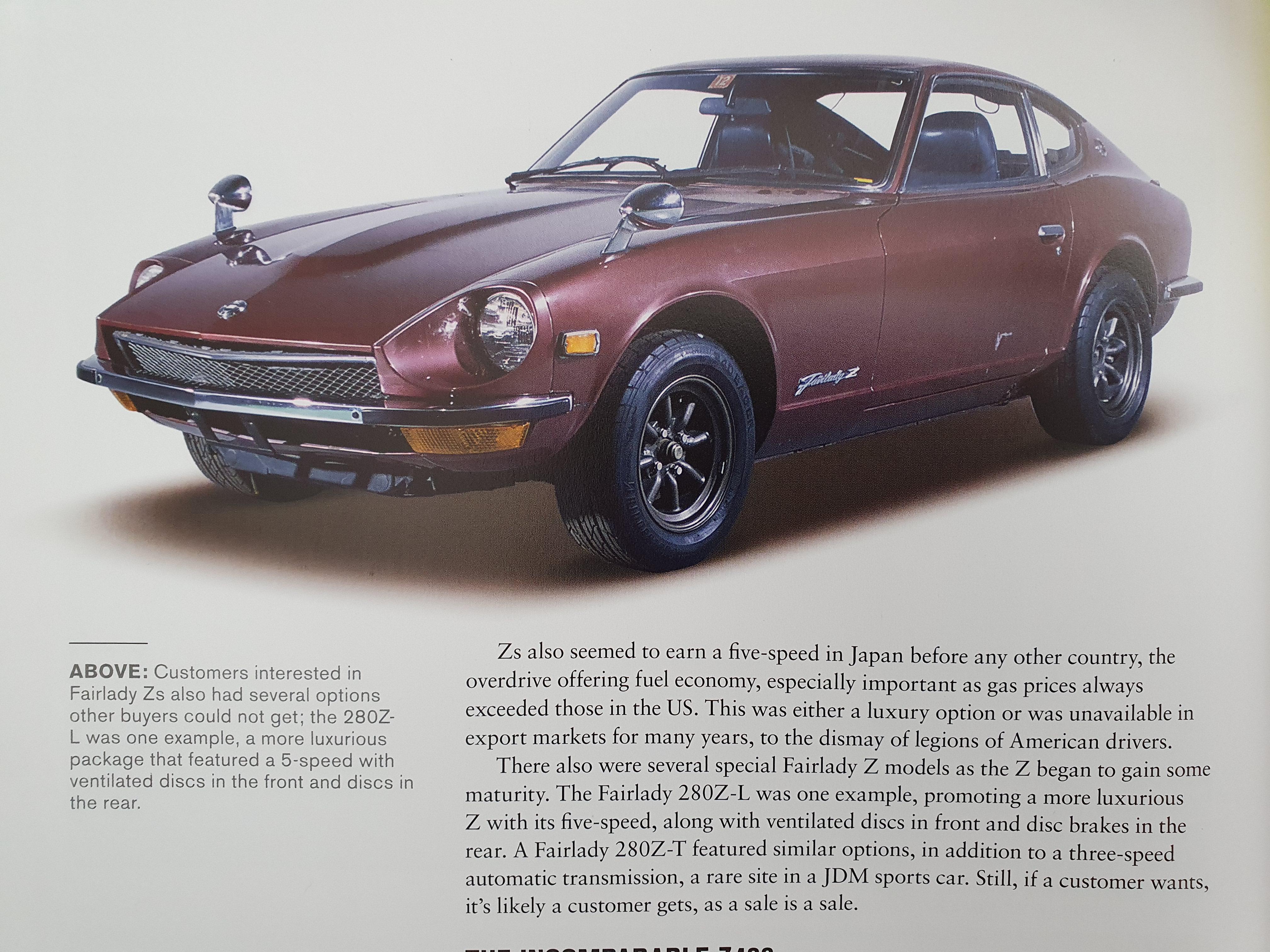
Page 118 shows a (Nissan stock) photo of a car which is in their Heritage Collection at Zama. It's a 1977 CS31-D model Fairlady Z-L 2-seater. And yet the photo caption tells us it is a "280Z-L" and that it had "...ventilated discs in the front and discs in the rear". The adjacent paragraphs talk about a "Fairlady 280Z-L" (once again with ventilated discs on the front and discs on the rear) and also a "Fairlady 280Z-T" No stock S30/S31-series car had ventilated discs on the front and discs on the rear, and the L28 engine was not fitted to the Japanese market S30/S31-series cars. You have mixed up S30/S31-series cars with S130-series names and equipment.

-
Sorry, but that doesn't follow. I've bought your book (as I did with your previous tome) and I am perfectly entitled to give my opinion on it. Apparently (and you might want to double check this...) top-selling music album this week in the USA - according to Billboard - is a Korean 'group' called 'NCT 127' with their second album. Now, I can't dance, can't sing in tune any more and certainly don't look like any kind of sculpted plastic pop star any more, but I can tell you that - in my opinion - NCT 127's music and 'act' is pure, manufactured garbage of the first order. Do I need to start my own band in order to qualify that opinion? No, I think not. I will, however, volunteer to proof read and sub-edit your next book (The Big Double Nickel?), as it looks like you could use the help.
-
Datsun was a 'brand' just about everywhere in the world at the time, but it is irrelevant to the point. The people making the presentation of the new product were working for Nissan Motor Co. in USA and the product itself was made by Nissan Motor Co. of Japan. Unthinking devotion to the 'Datsun' brand is part of the problem here. If you're the Datsun way inclined, perhaps you can explain for me the inclusion of a 'Datsun Z432' and a 'Datsun Z432R' in the book? No such-named models existed. You have the book, I take it? Oh, and you swerved the first point. Noted.
-
Two points here. First, do you think it is accurate to describe the Pierre Hotel event as a 'formal introduction' without specifically mentioning that this was a press-and-dealers preview, not for the general public, and had been preceded by the Tokyo, Ginza event which took place on the 18th and 19th? Secondly, how could 'Datsun' introduce a car? 'Datsun' was a badge. The company doing the introducing at the Pierre Hotel was 'Nissan Motor Company in USA' and the car was a product of 'Nissan Motor Co. Japan'.