




HS30-H
Supporting Member
-
Joined
-
Last visited
Everything posted by HS30-H
-
OK. Where are they made, what is the specification of the alloy used and do they come with any testing certification/guarantee/statement of liability? Lastly, what do M-Speed Japan think about you buying these wheels out of the back door of the factory who makes their product for them?
-
Its most likely the N3130 'Close-Ratio Overdrive' or N3030 'Wide-Ratio Overdrive' version of the FS5C71B transmission, with flanged output. It required a flanged propshaft. Sold by Datsun Competition in the USA, but not a 'competition' part per-se as they were factory stock equipment in other, non-USA, markets.
-
Correct orientation: Reads: 'Sugi'. Very possibly an individual's name, in abbreviated form ('Sugimura', 'Sugimoto' etc).
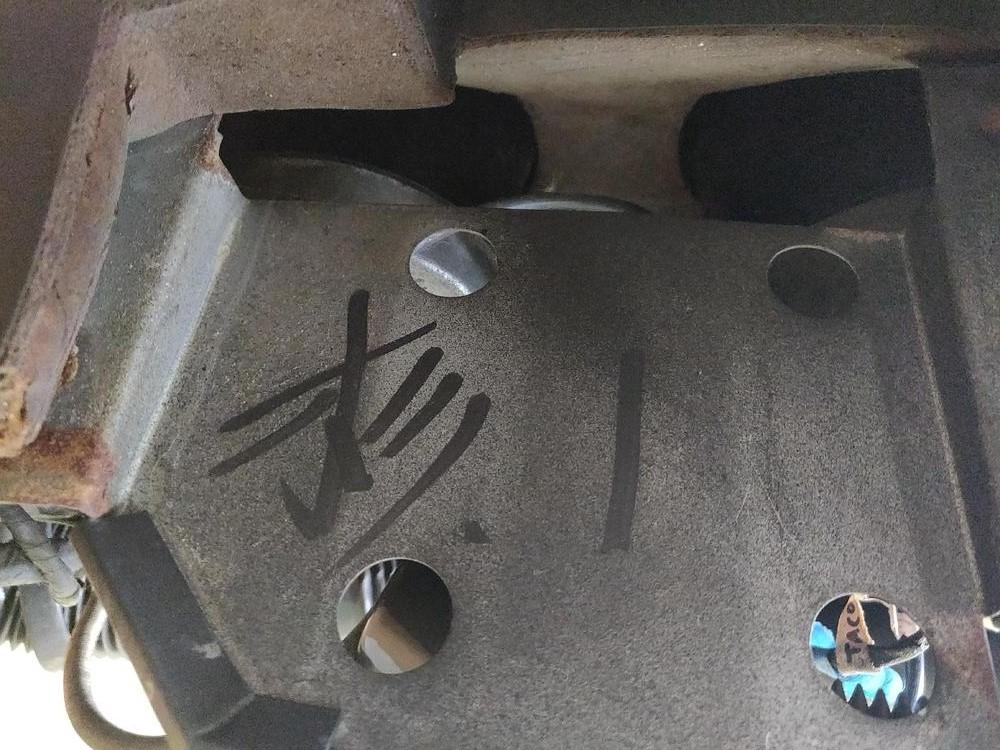
-
Roughly as the Captain suggests, I believe it was put onto the glass like a big transfer print.
-
As I wrote before, this type of piston was supplied as a service replacement. I have not said anything about being fitted to stock L24 engines, in any market. You seem to be hung up on the idea that piston relief cutouts = 'high performance'. But the 'Pop-Up' pistons were designed to intrude into the combustion chamber of particular types of cylinder head, and required the relief cutouts because this brought them closer to the valves. They are not high performance pistons per se.
-
Neither. Go back to post #11.
-
That number '3' stamped into the piston crown in one of your photos indicates that this engine has been apart at least once since it left the factory. It is not a factory stamping. I still believe that you are looking at H2716 replacement pistons, and that they have been incorporated in this engine during a rebuild. I also believe the H2711 stock pistons in that TSB were flat-topped, without valve pockets.
-
Kats is fine, don't worry about him. We keep in touch and - as you can perhaps imagine - the Japanese airline industry is facing a lot of upheavals at the moment, so he has been seeing some changes in his work pattern.
-
You'll have to measure, and make your own decision. Once you start modifying factory parts, that's the deal...
-
Sometimes it's like people just don't want to understand what they are looking at. They are H2716 'Pop-Up' pistons, designed to 'pop up' above the block surface and protrude into a large, recessed combustion chamber in an effort to mitigate the effects of other (non ideal) circumstances. They have valve relief cut-outs because they - by their very nature - impinge on valve stroke territory at certain parts of the 4-stroke cycle. They were a Nissan service part. Nothing to do with high performance per se, although they could be used in a clever way to utilise certain aspects of their design for a non-stock build. Which is what I would guess we are looking at here...
-
I recommend SWEPCO 201 for use in Servo (Porsche patent) synchro 'boxes. The proper Porsche specialists in NL should be able to supply it, but here's a UK-based supplier: https://type911shop.co.uk/epages/de867ca1-377e-432e-84fd-bdccf2206766.sf/en_GB/?ObjectPath=/Shops/de867ca1-377e-432e-84fd-bdccf2206766/Products/2042
-
AMPCO was/is a majority Nissan-owned affiliate company, making parts for use on Nissan vehicles. Whilst the H2716 'Pop-up' pistons were not OEM on any S30-series Z, they were supplied by Nissan as a service replacement part on Nissan L-series engines. They are not 'aftermarket' or custom.
-
S20-engined models (432 and 432-R) had an electric pump from the beginning of production in 1969, hence the mounting bracket captives being present in the crossmember on all contemporary S30 models. No mechanical pump on S20 engine.
-
I remember Carl Beck making the 'dirt floors' assertion with regard to Nissan Shatai's Hiratsuka plant, probably mis-remembering or misunderstanding something that Matsuo san mentioned. Matsuo san was talking about the early days of Hiratsuka's Roadster production, and probably exaggerating a little for effect. He told me the same thing.
-
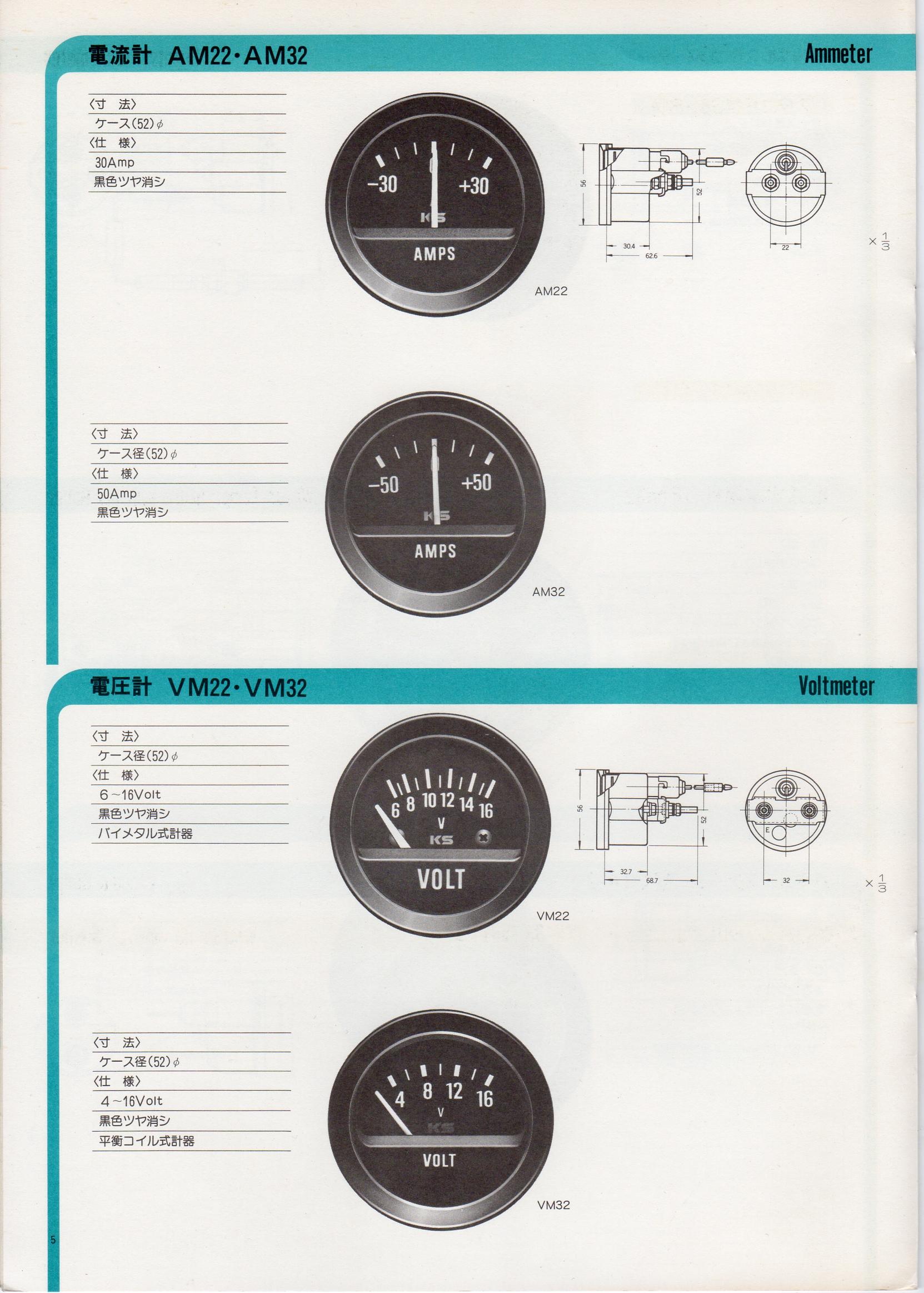
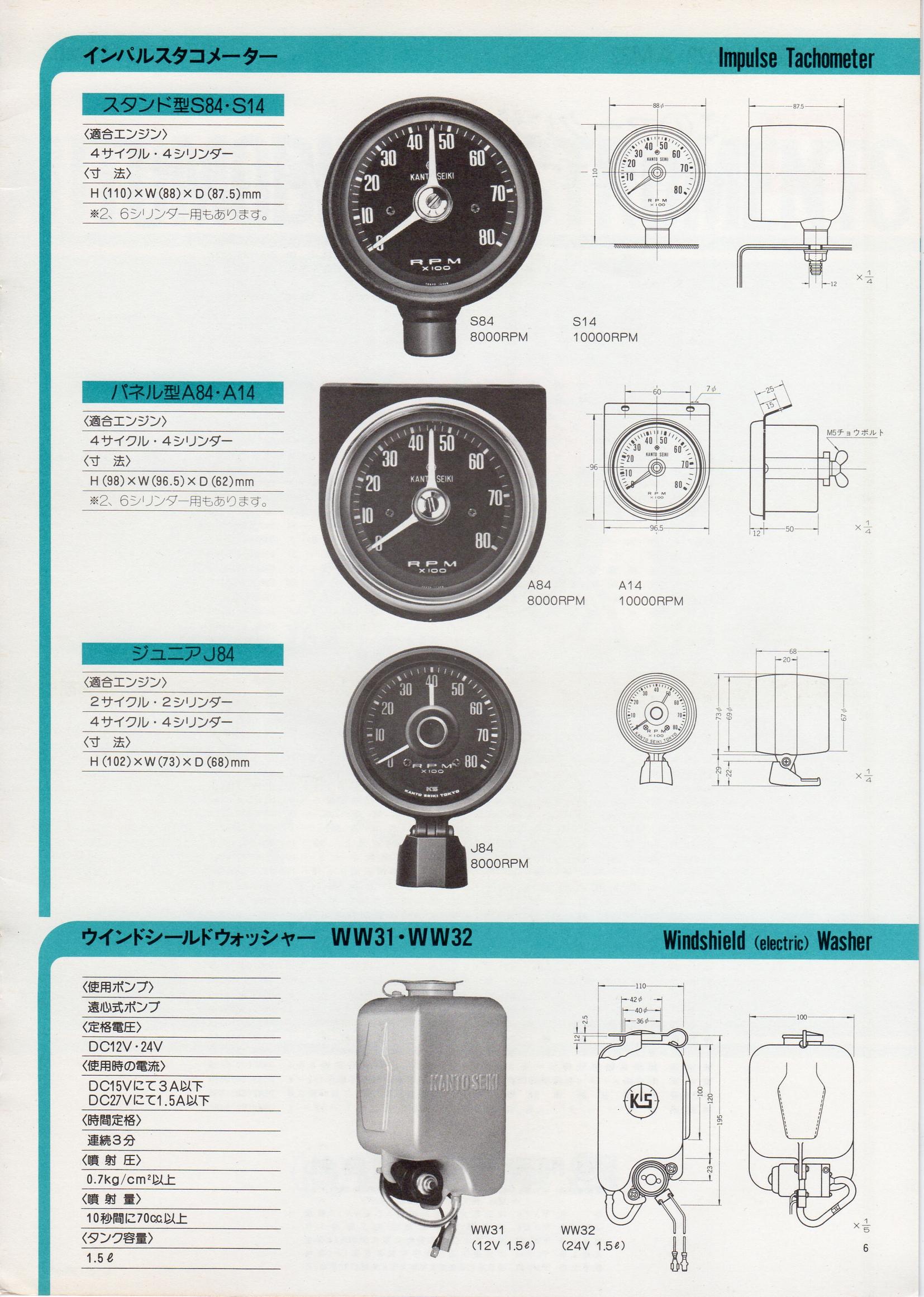
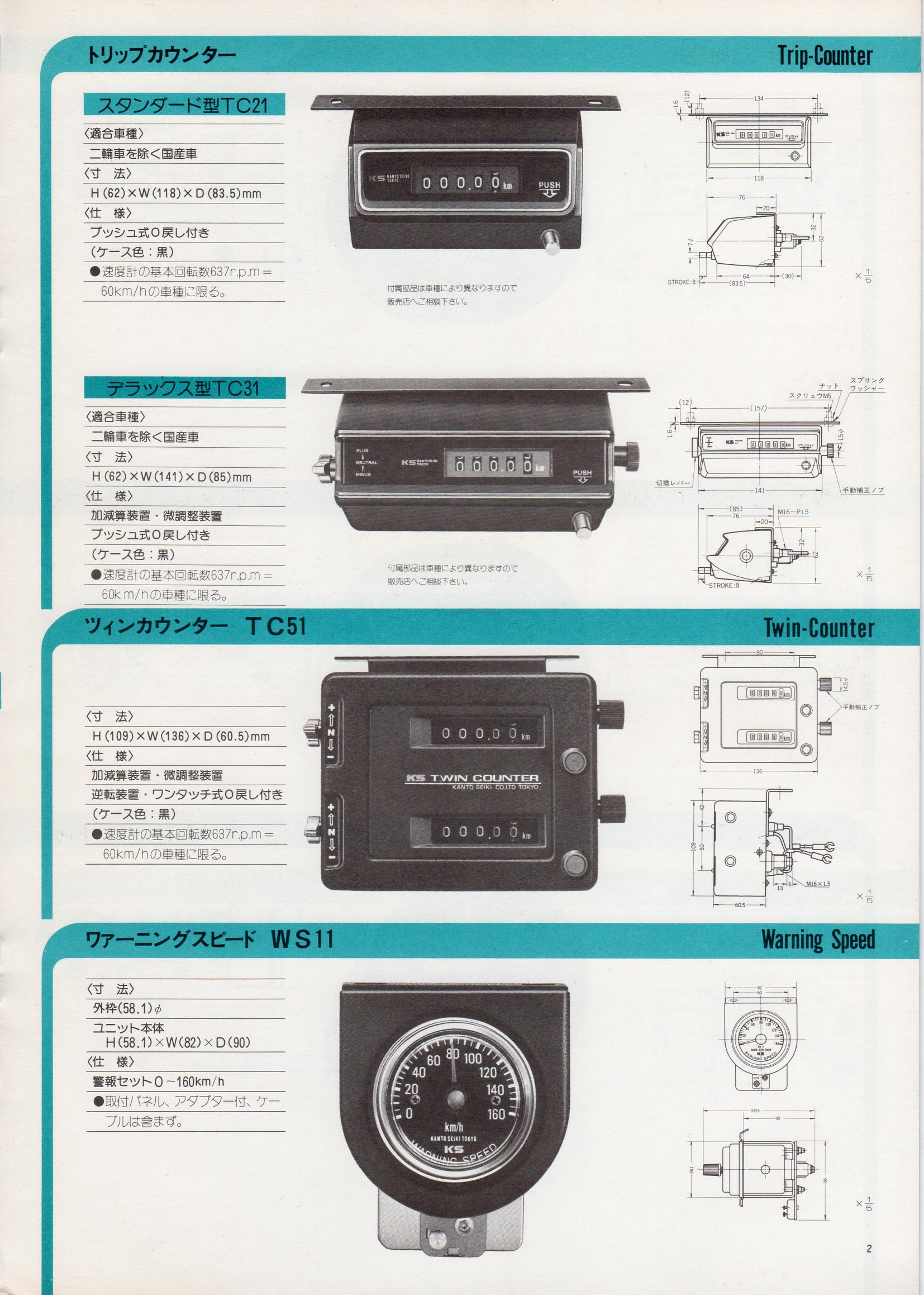
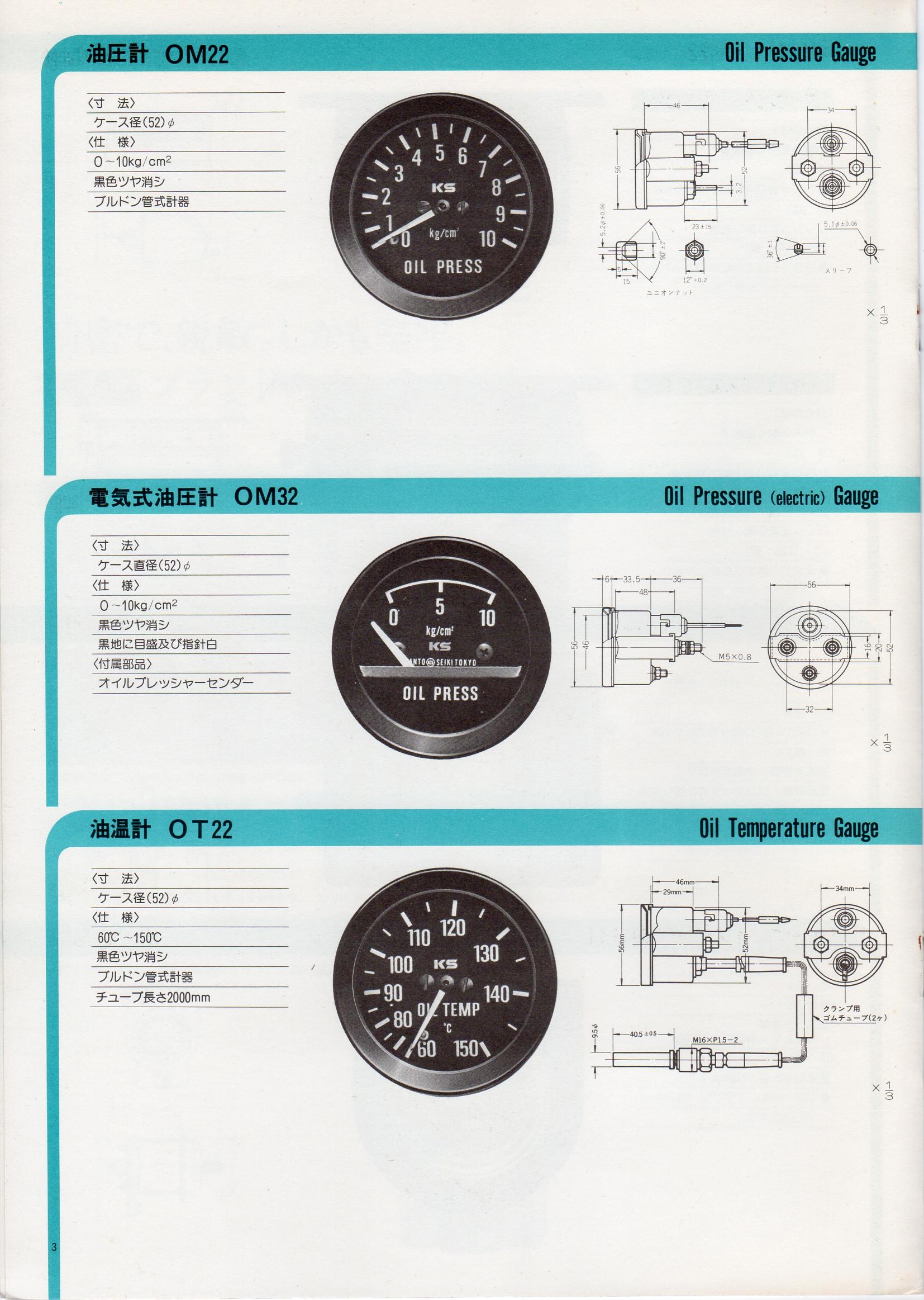
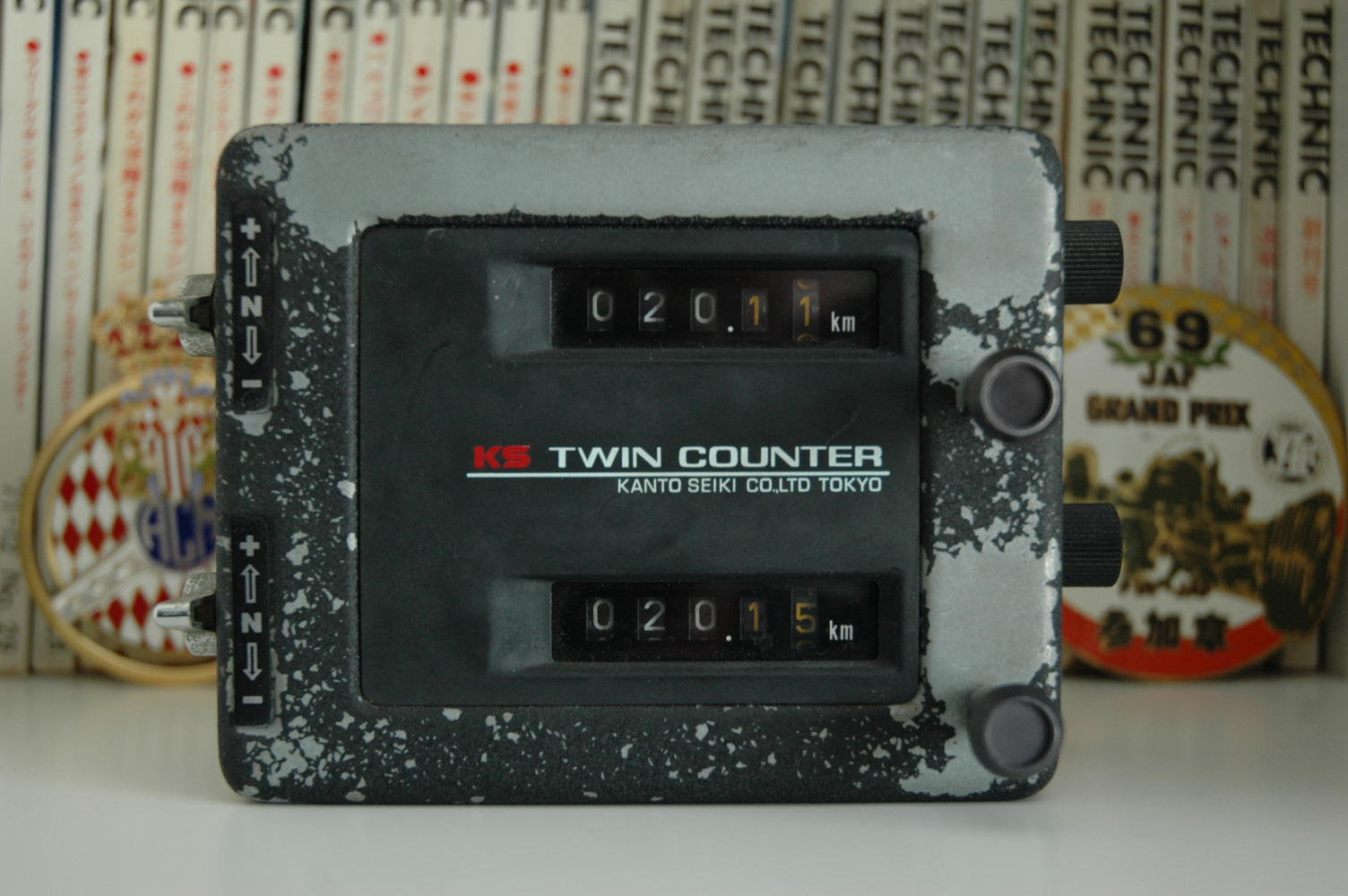
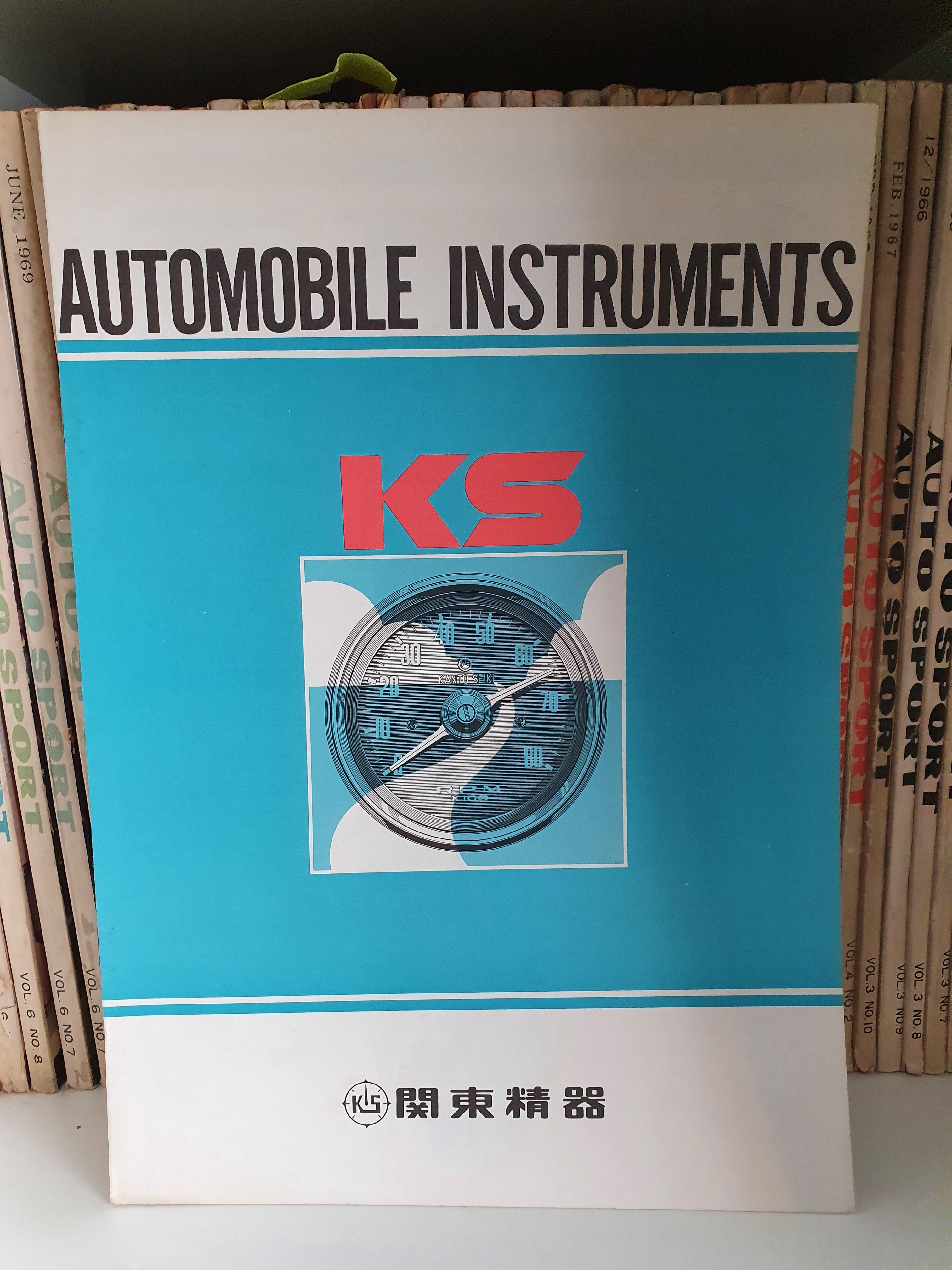
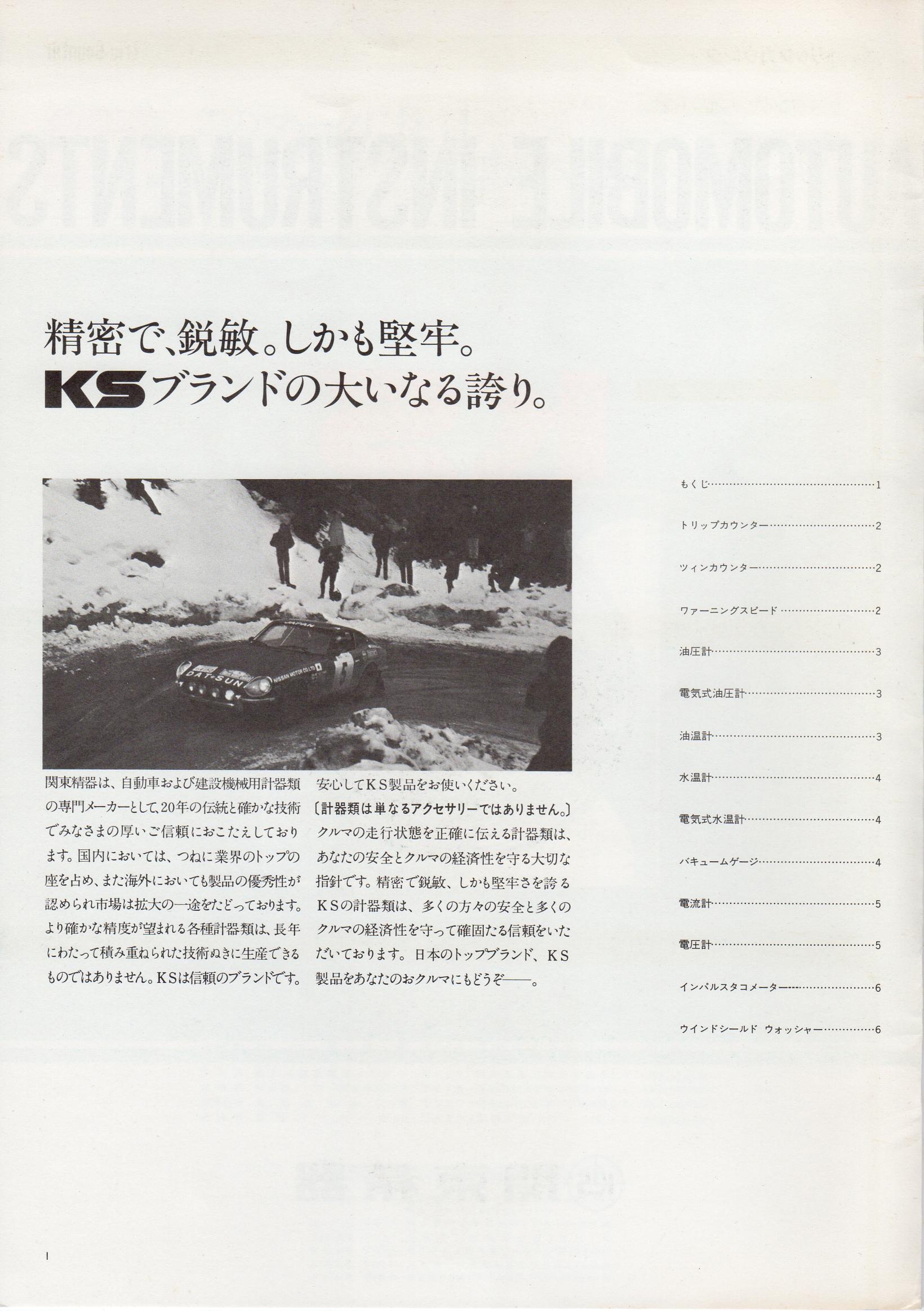
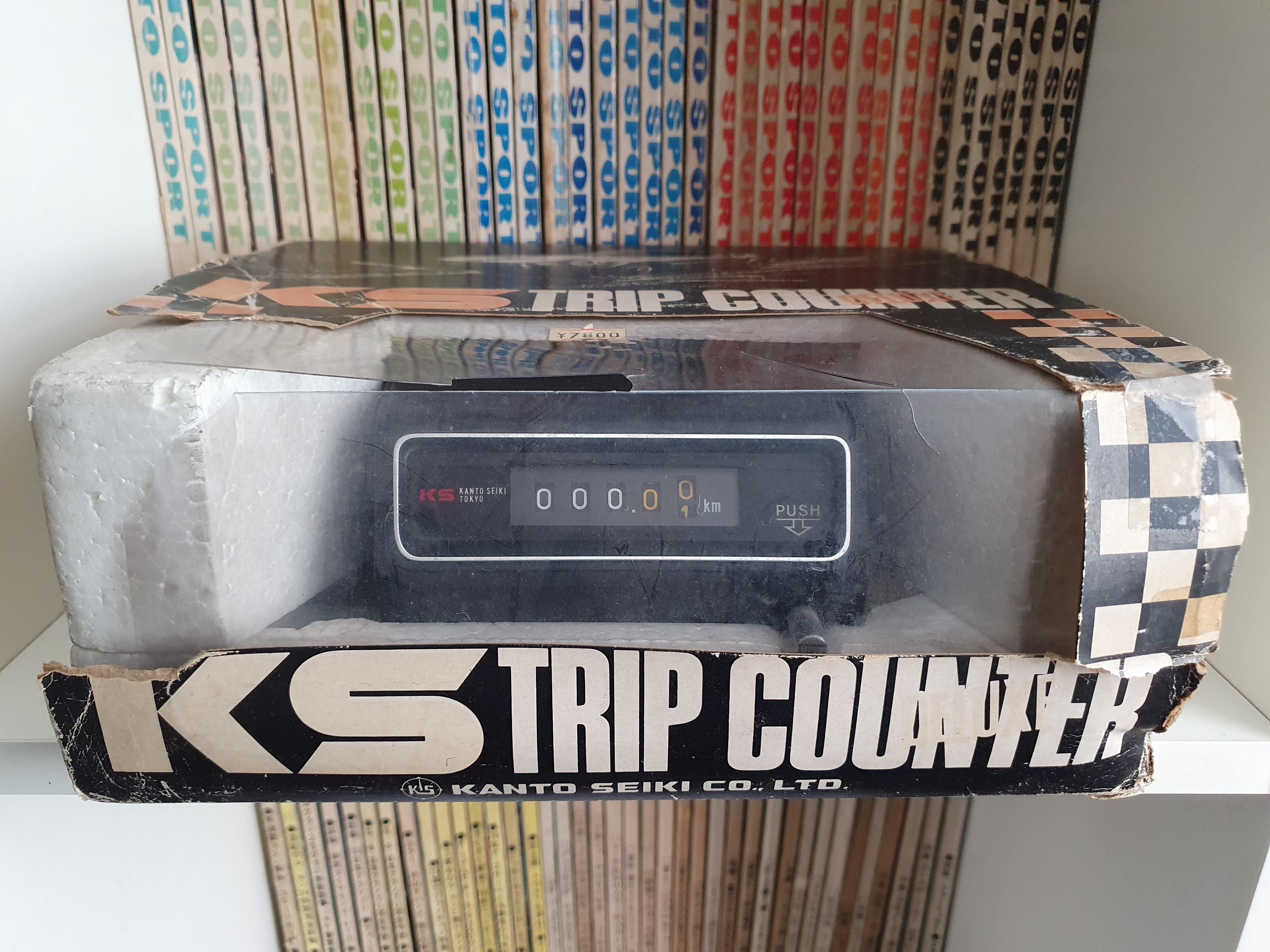
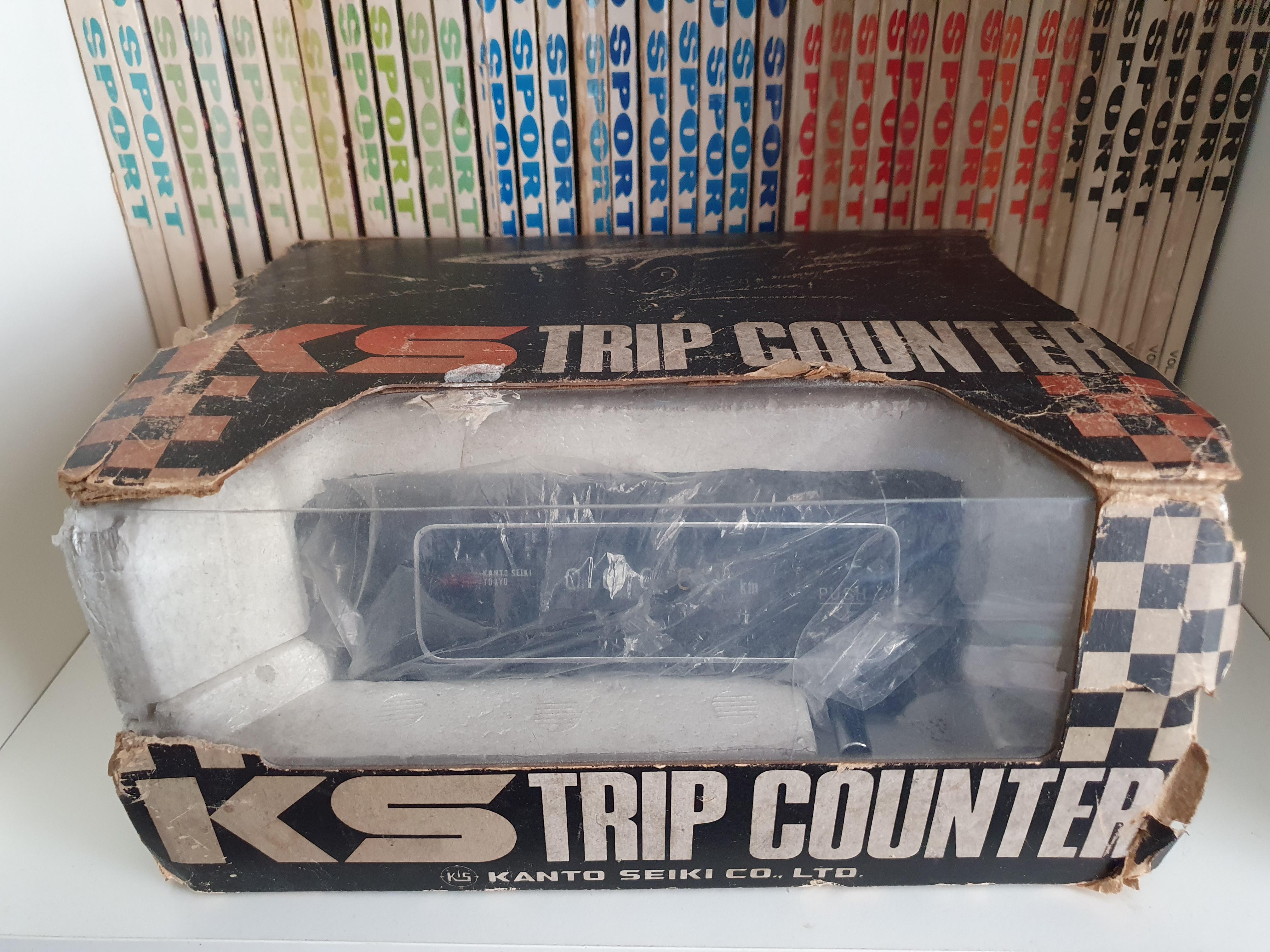
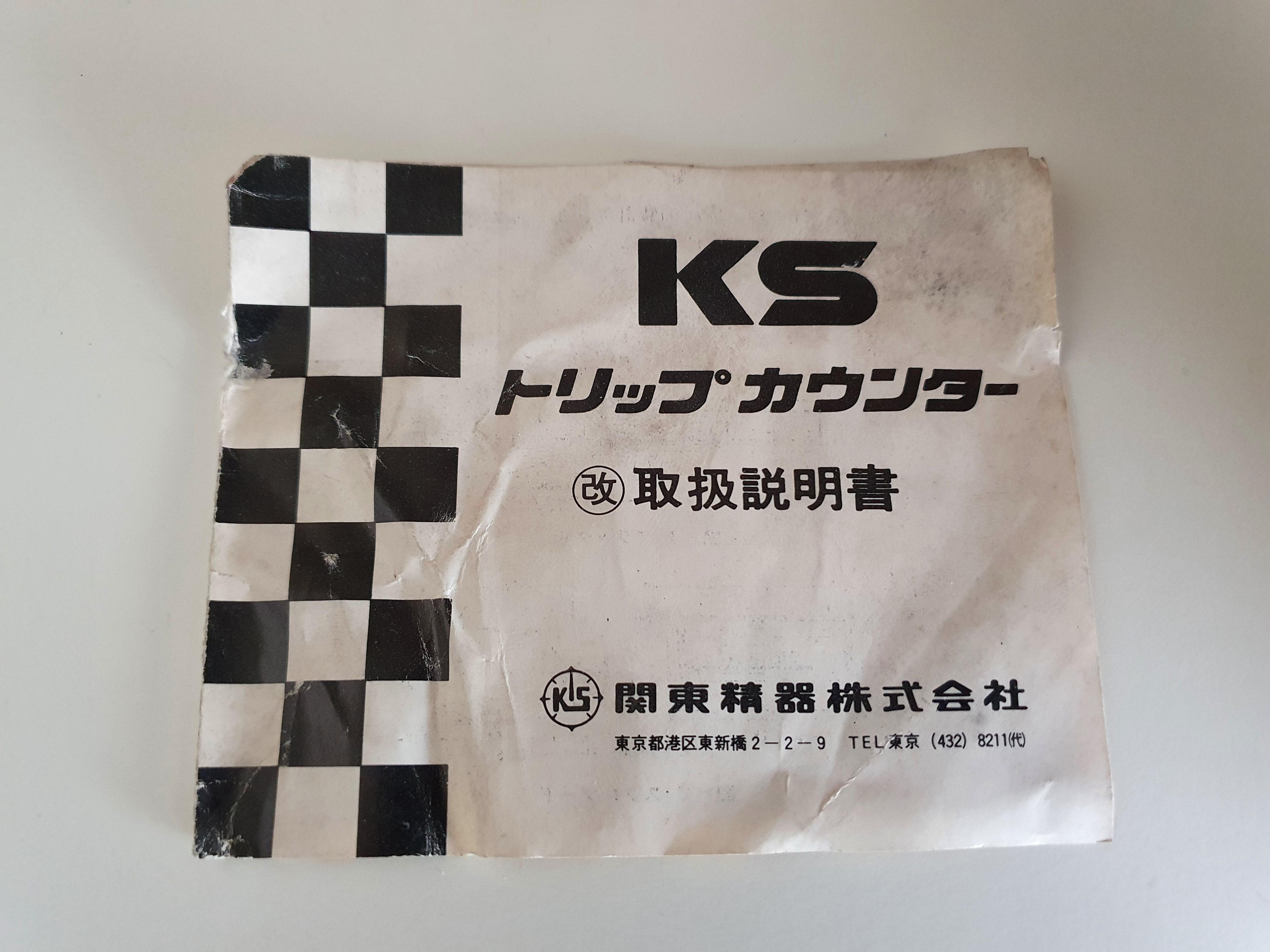
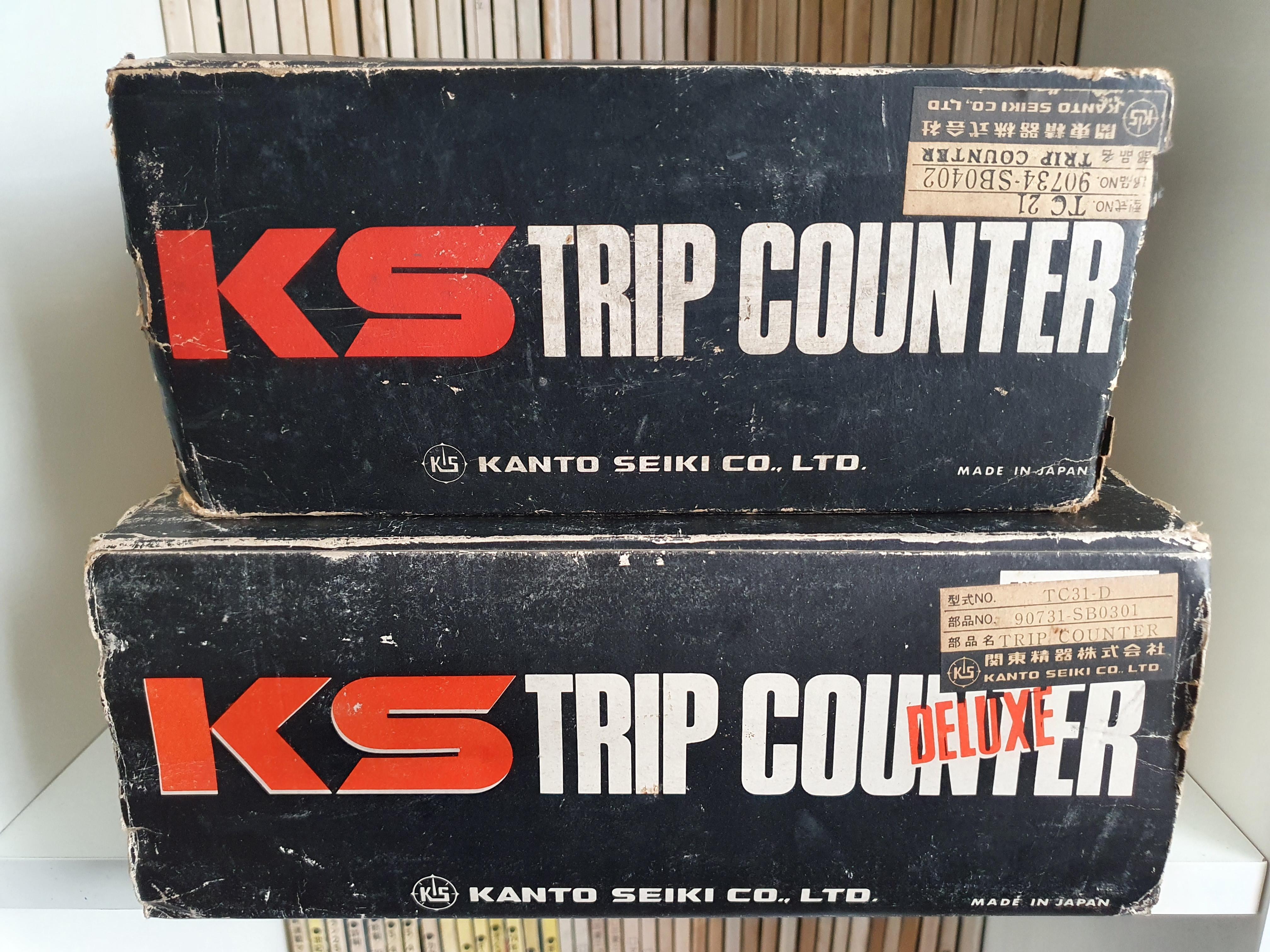
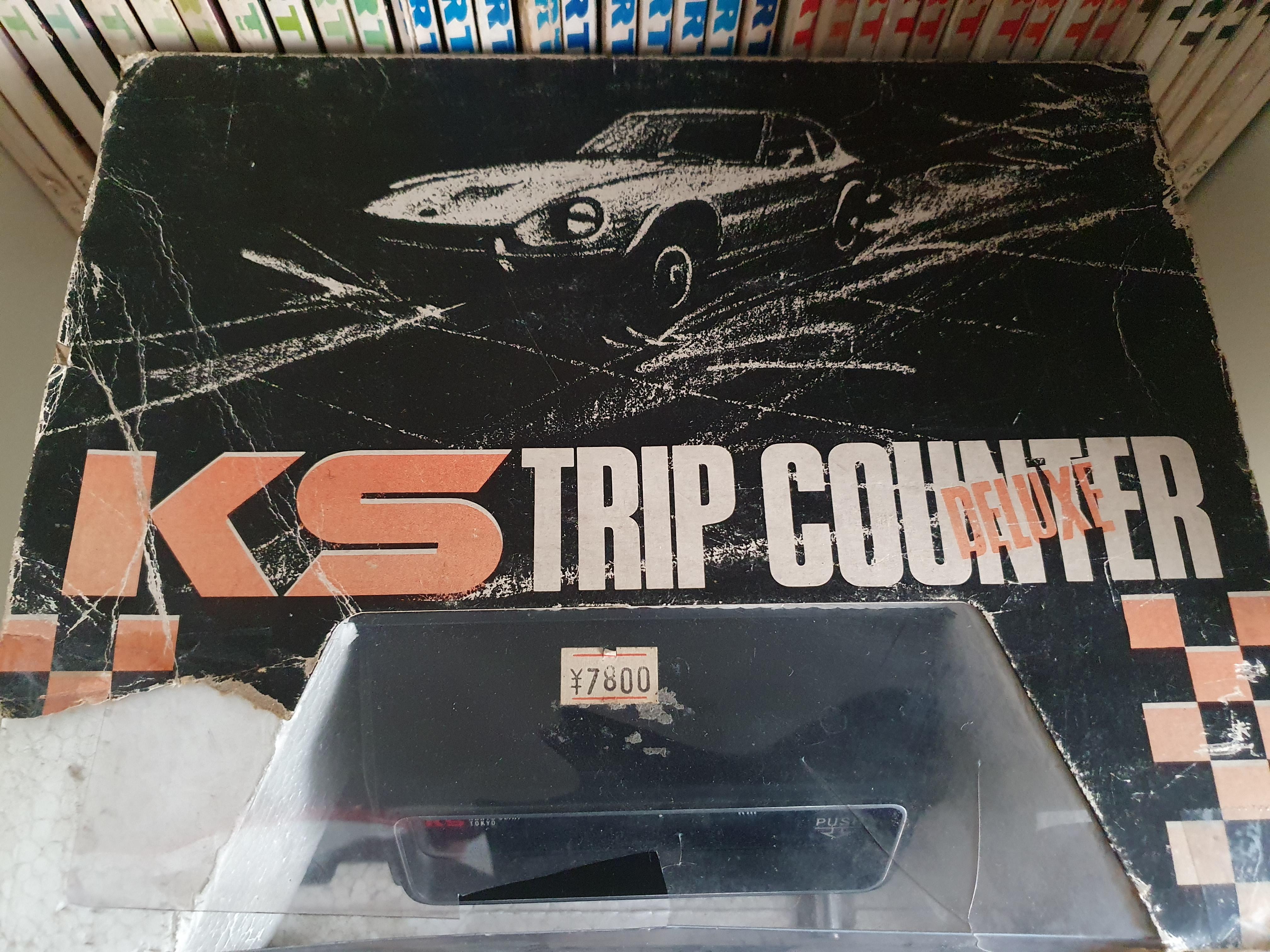
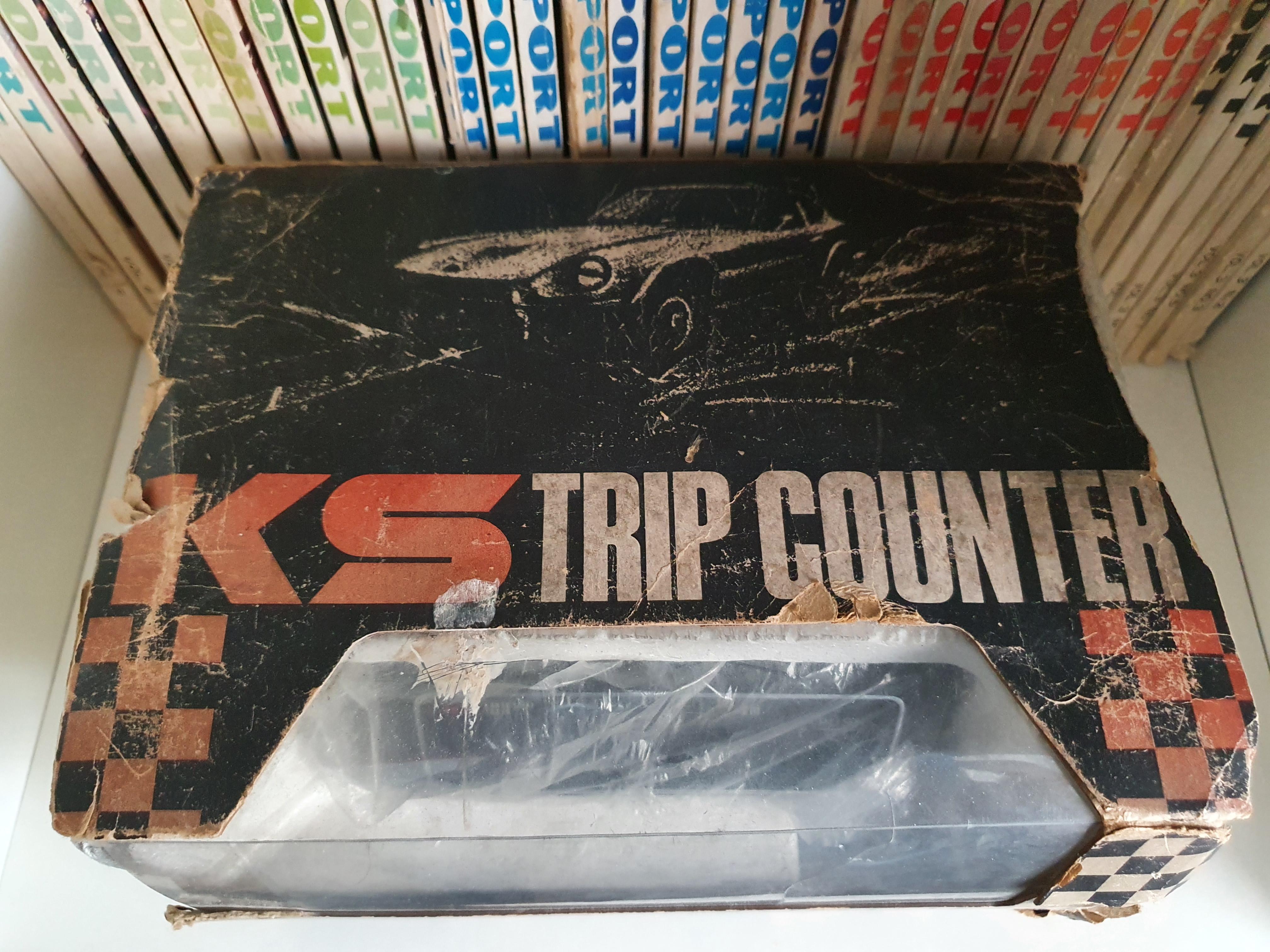
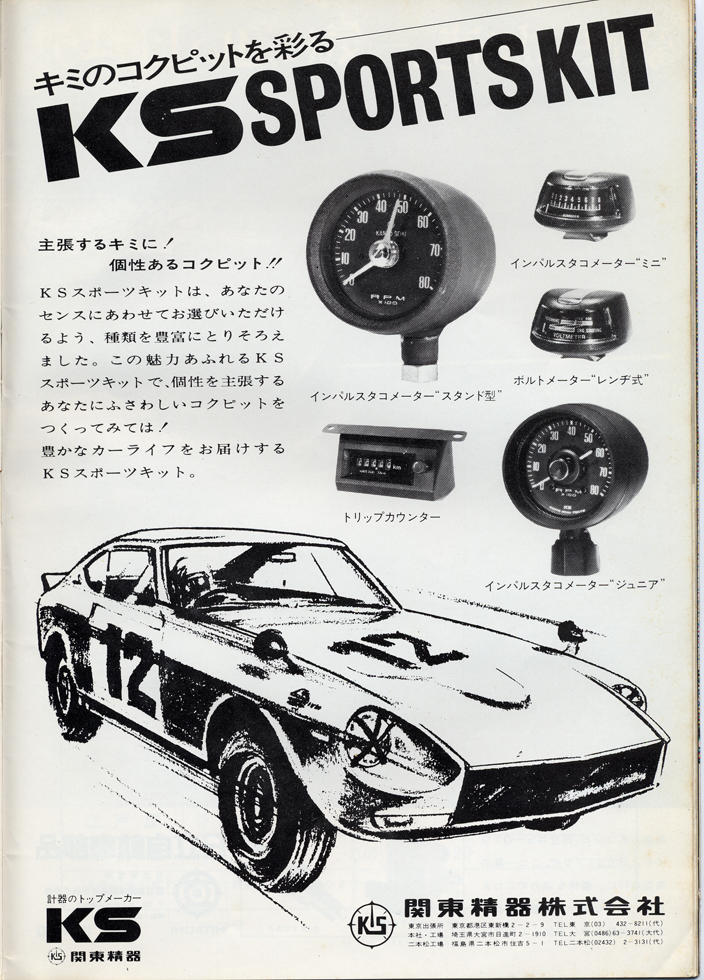
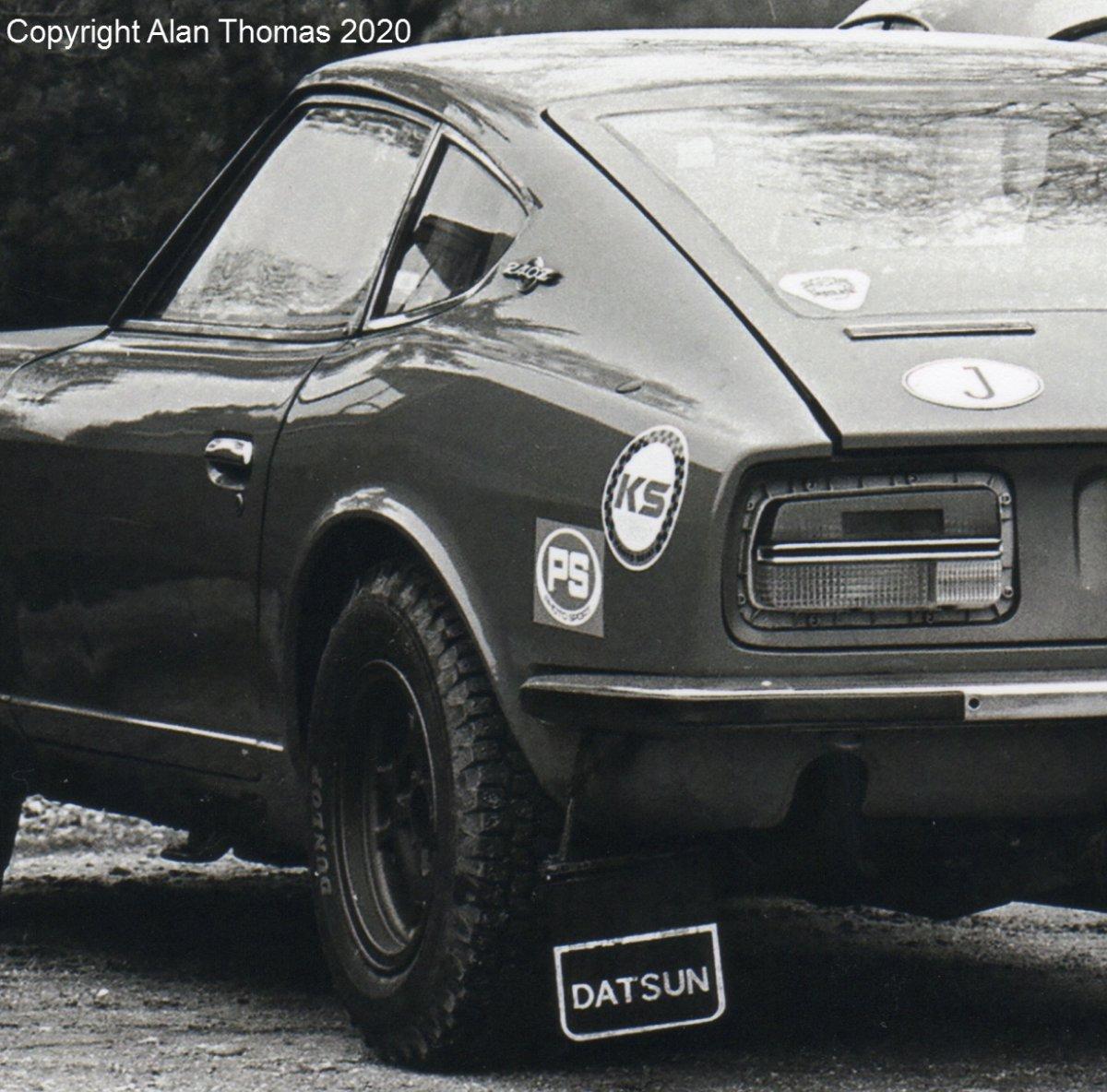
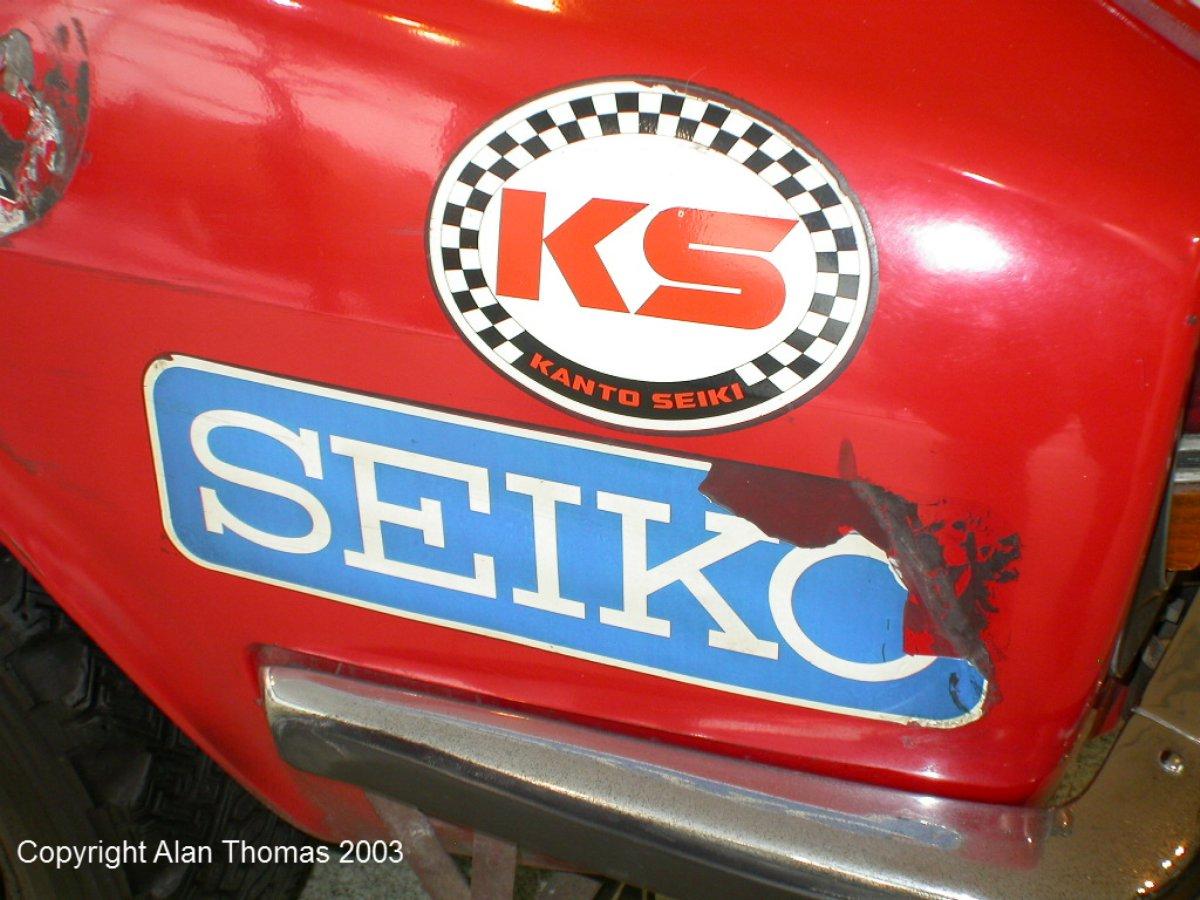
Many of us will recognise the name and logo of Nissan-affiliate gauge and instrument makers KANTO SEIKI and their 'KS' trademark as they made most of the gauges in the S30-series Z, and a few other parts besides. Perhaps less well known may be the fact that KS had their own line of sporty aftermarket gauges and instruments, which they sold independently to owners who wanted to upgrade their cars for more sporting use. One of my current (long-running and sloooow...) project cars will have a 'Rally' theme, and will incorporate a few Kanto Seiki aftermarket parts that I have accumulated over the years. I have two of the KS 'Trip Counter' kits (one standard, one 'deluxe') and one of the rare 'Twin Counter' rally odometers (basically a crib of the Swedish-made Halda 'Twin Master'). There was some nice Z-related content in KS's period literature, and KS stickers on some of Nissan's Works rally cars:
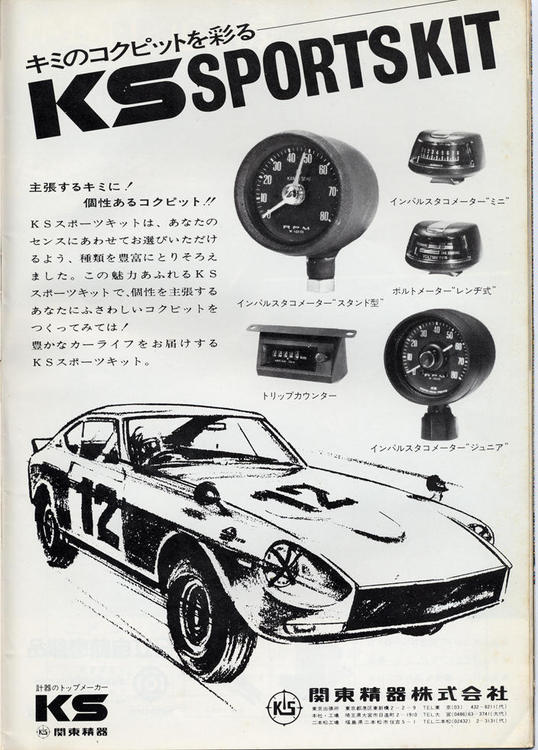

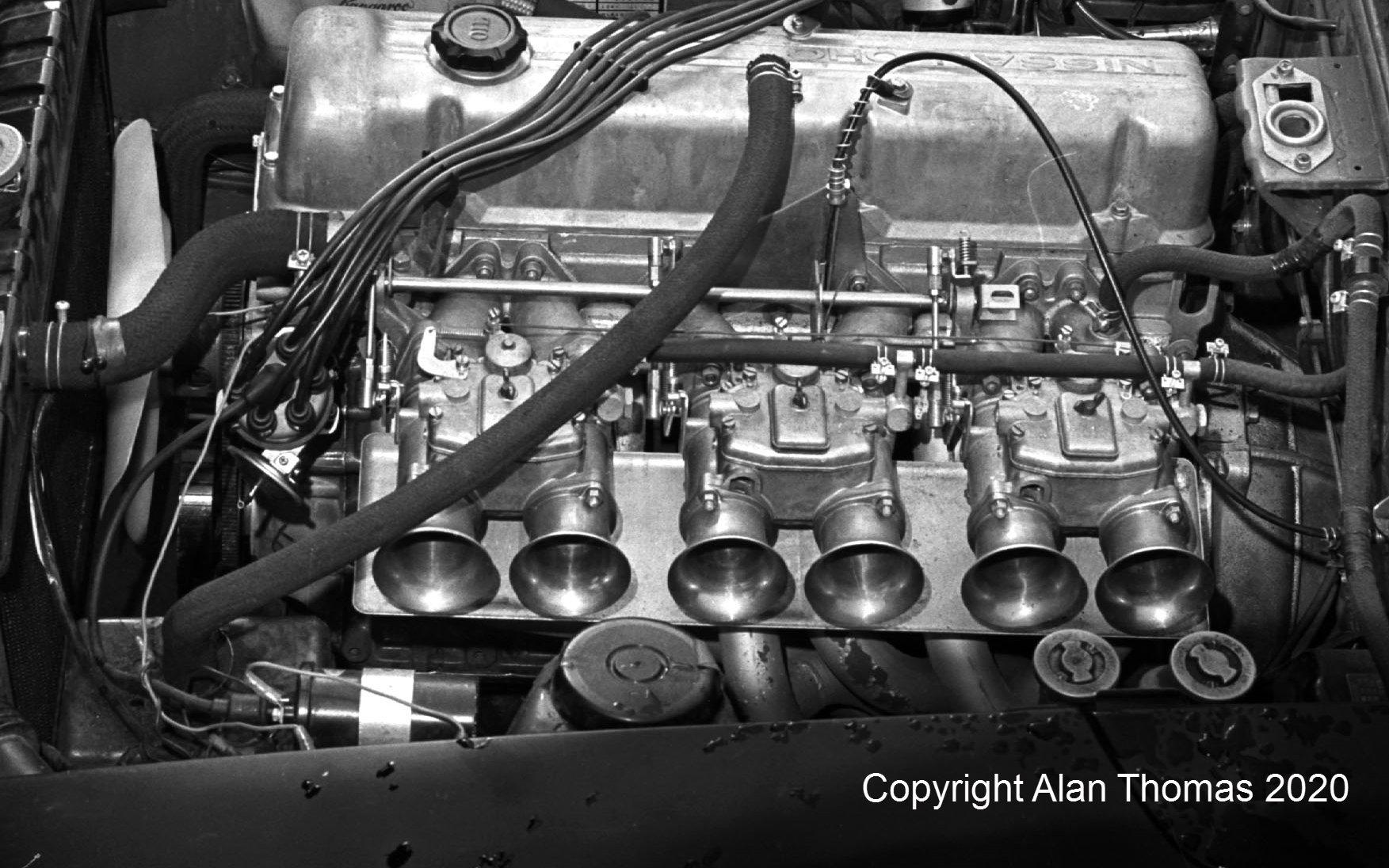
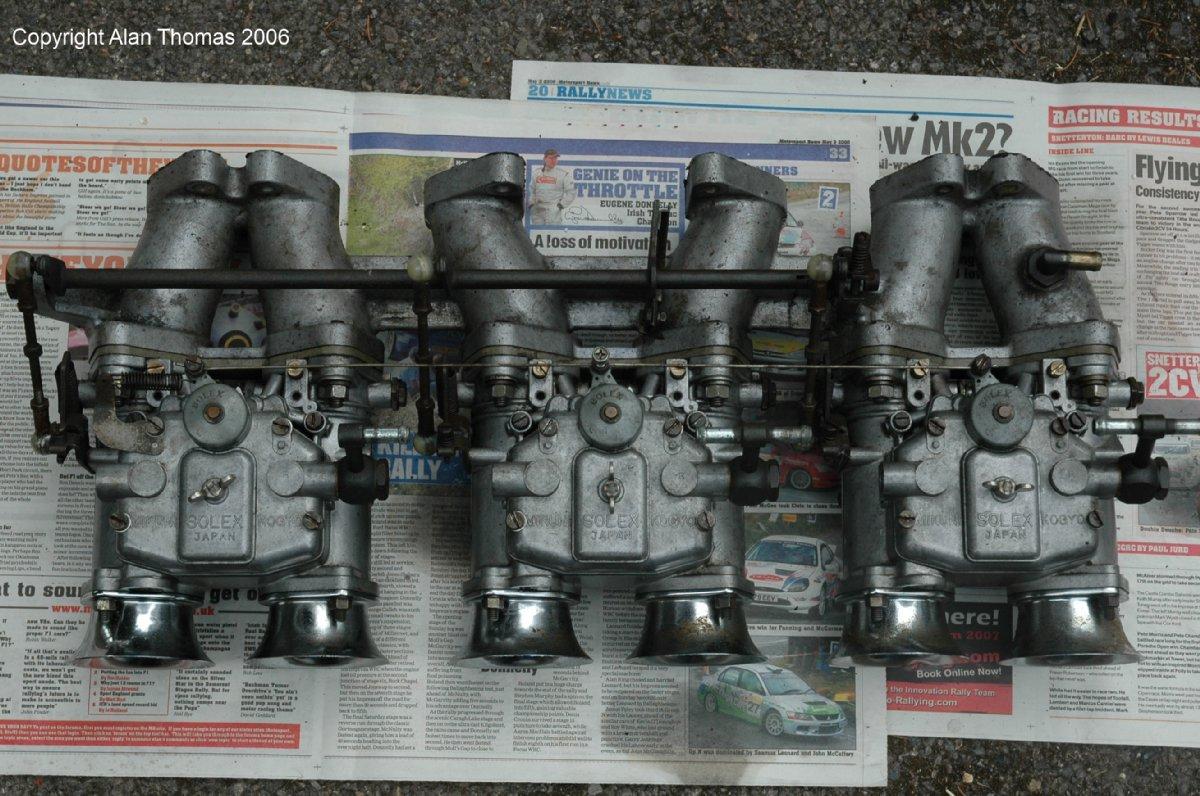
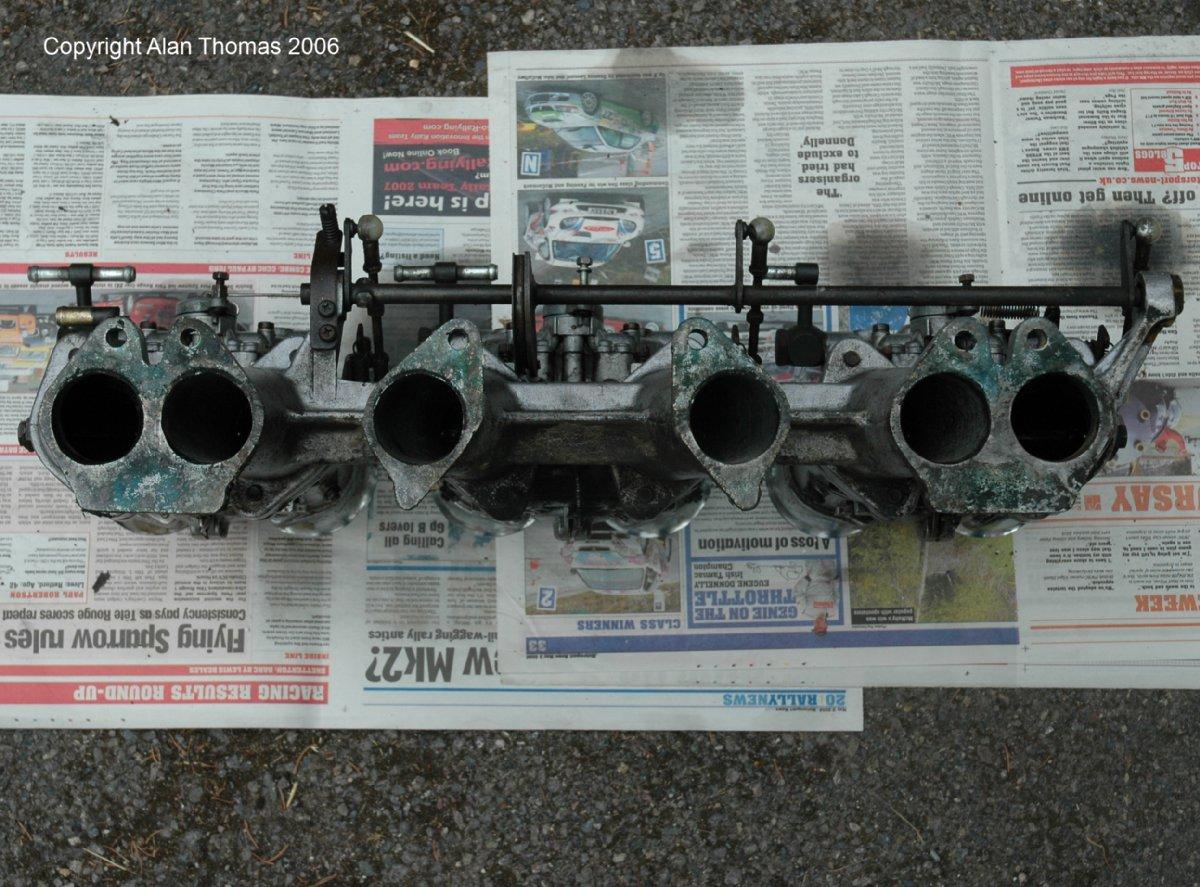
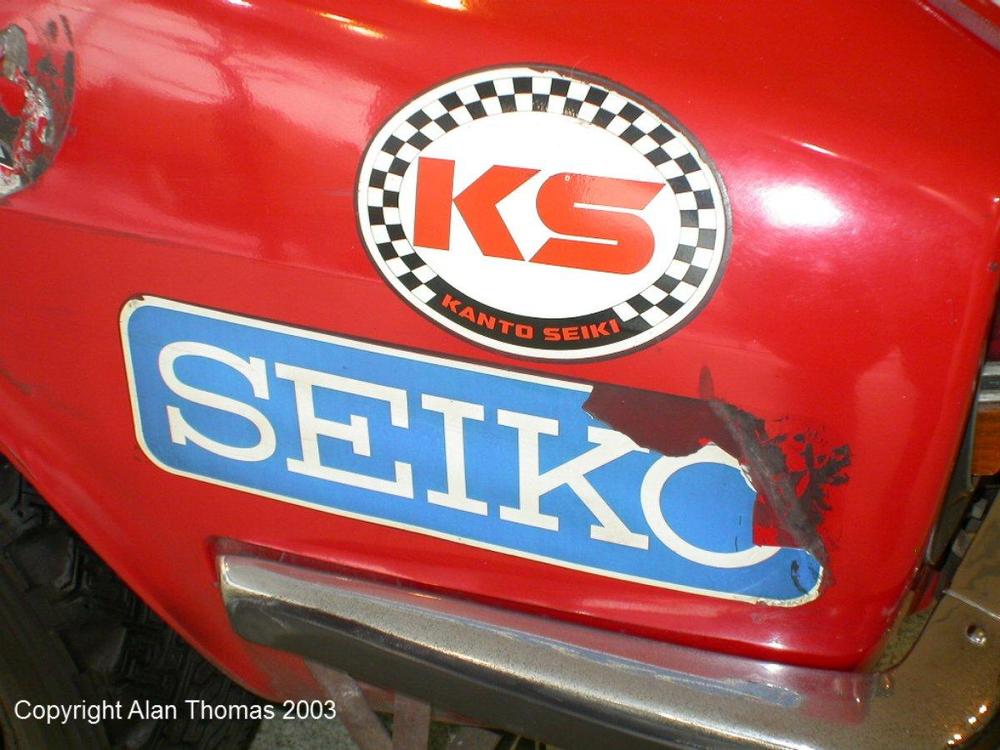 No, it's a design that was based on the earliest Nissan Sports/Race Option triple carb inlet manifolds for the L-gata, subsequently adopted by the likes of Tomei and Datsun Competition in the USA. It properly accommodates the linkage to the front carburettor - the Sports/Race Option Mikuni 40PHH and 44PHH having their throttle linkages on the LEFT side of the carb body viewed from the carb inlet side - and gives the main linkage rod full support where it is most needed, unlike the 'rod end' type supports which typically hang the front linkage off the end of the main rod. Harada Shokai also chose to put a fully-adjustable main rod return spring on the end of the main rod, and it is a good solution - used by other manufacturers such as the early Sanyo Shokai manifolds. It works. For reference, Nissan Works items:
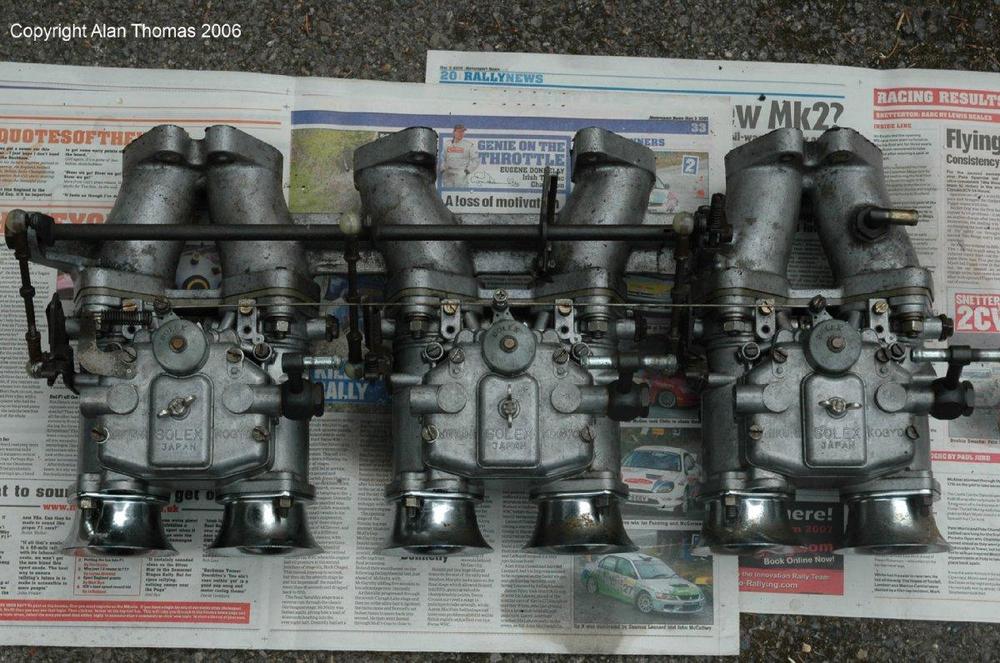
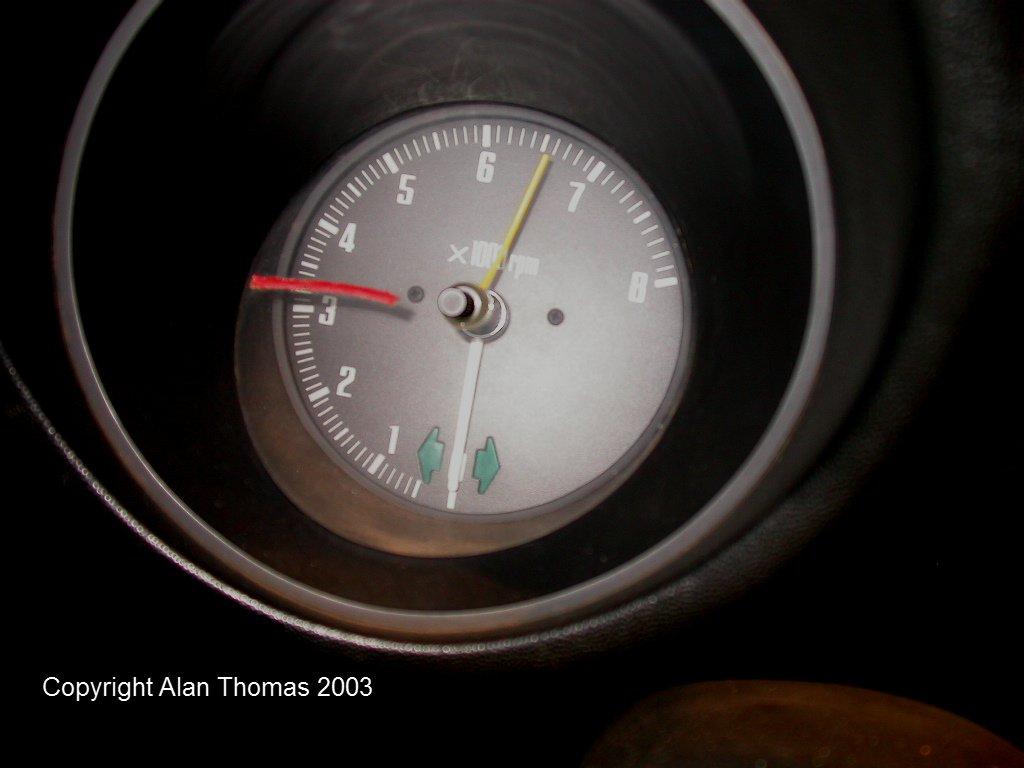
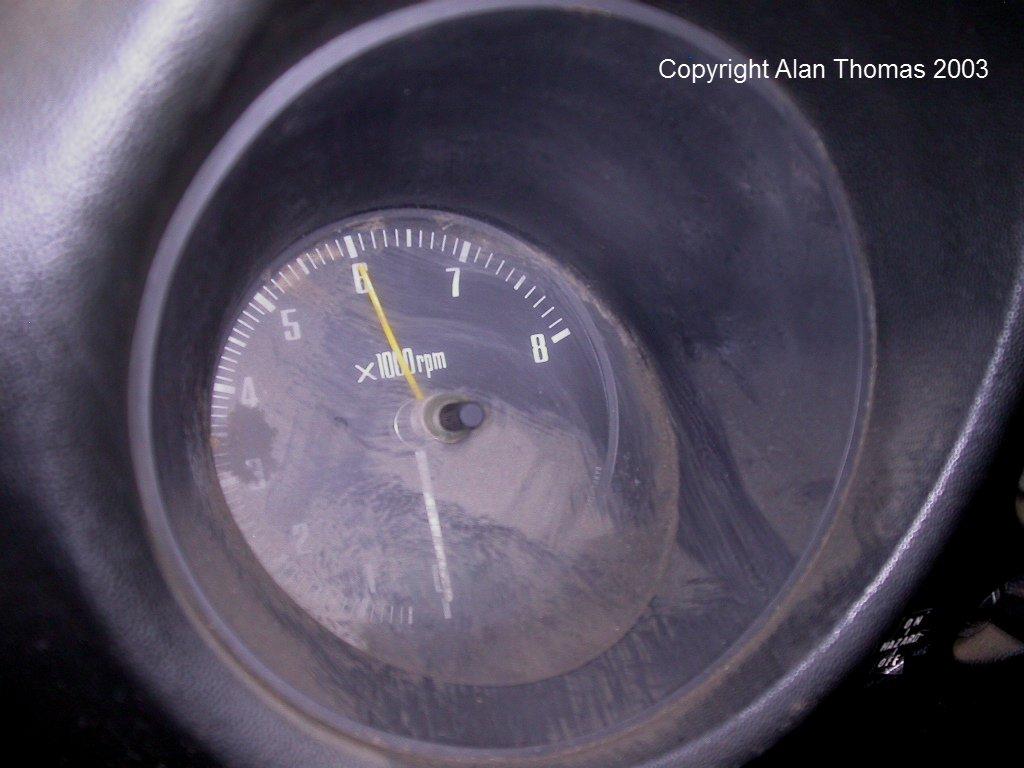
 I'm stating the obvious here, but - of course - that fitting is usually deleted completely and replaced with a flush plug when converting to triple carbs. That's hardly Harada Shokai's responsibility, and it certainly doesn't make their manifold a "POS". Wind your neck in.Hi Ian, The Works rally cars usually used the 8k tachometer with the adjustable limit needle. This wasn't a 'tell-tale' type tacho which recorded highest RPM reached, but simply a hand-adjustable needle to set a rev limit for a particular period/engine/event. They were used with a hidden CDI unit: In my experience, the 'Works' 8k tach is extremely rare. The 10k tachs were sold as Sports/Race Option parts slightly later, and were designed to be used primarily for circuit race use (higher RPM than rally type) with the 'White Box' and 'Orange Box' CDI units. The complete kit included a dedicated distributor. My sympathies on being outbid. Happens to me too!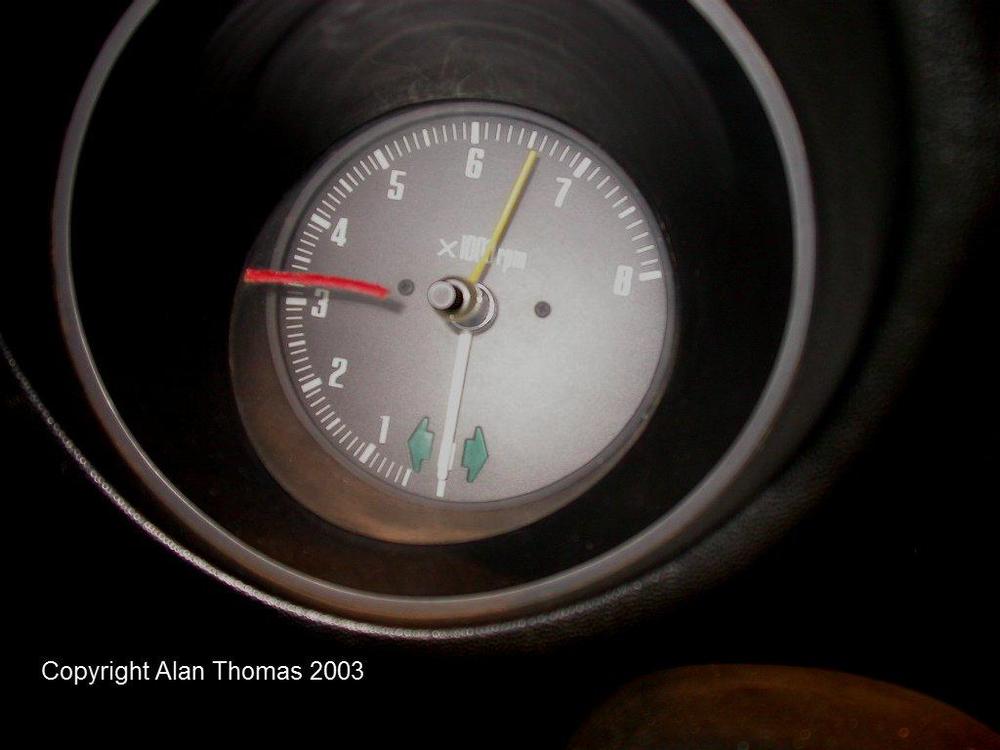
 Have a couple more on me: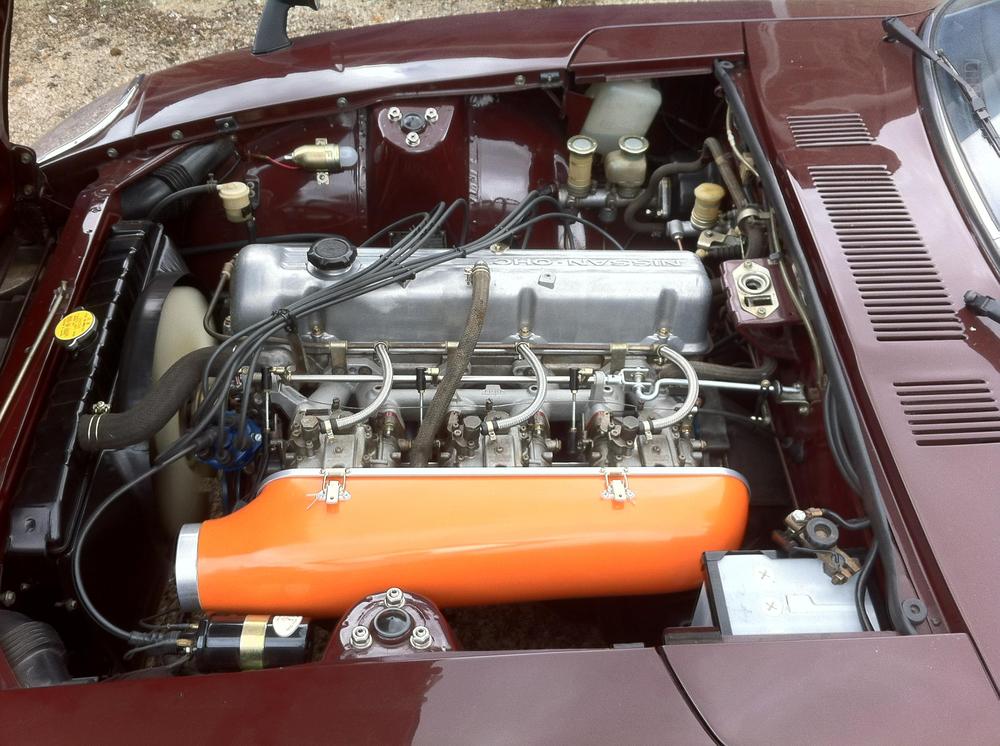
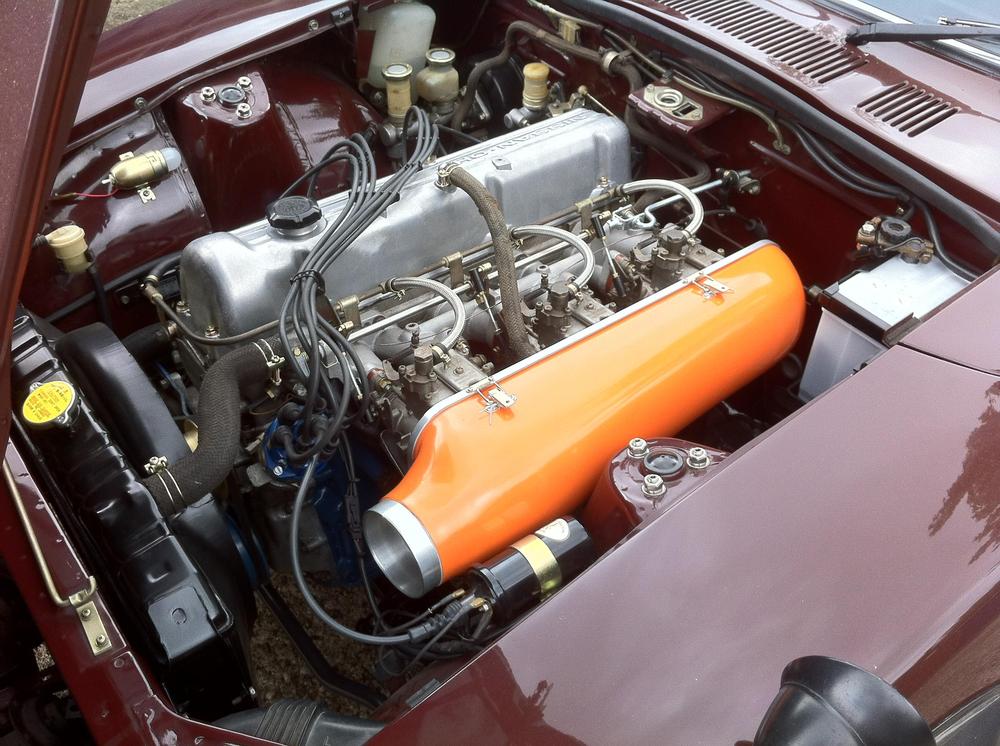 I've used, fitted and supplied umpteen Harada Shokai inlet manifolds over a couple of decades or more, and never had any major problems with them. Any inlet manifold/exhaust manifold interface has usually been the fault of the exhaust manifold flanges being way bigger than they need to be and/or too thick/thin, and any inlet manifold/thermostat housing interface has been due to either incorrect user assembly of the linkage (getting the return spring clamp round the wrong way/not even understanding how it works) or a slight amount of clearancing being necessary due to the wide variation in thermostat housing shapes/castings. The linkage parts - especially the linkage arms - are not as good as they used to be (I preferred the old cast items), but I don't see any alternative. In my experience they are very far from being the "POS" that you claim this one to be. So my money's on the Harada, not you.





Important Information
By using this site, you agree to our Privacy Policy and Guidelines. We have placed cookies on your device to help make this website better. You can adjust your cookie settings, otherwise we'll assume you're okay to continue.
Account
Navigation
Search
Configure browser push notifications
Chrome (Android)
- Tap the lock icon next to the address bar.
- Tap Permissions → Notifications.
- Adjust your preference.
Chrome (Desktop)
- Click the padlock icon in the address bar.
- Select Site settings.
- Find Notifications and adjust your preference.
Safari (iOS 16.4+)
- Ensure the site is installed via Add to Home Screen.
- Open Settings App → Notifications.
- Find your app name and adjust your preference.
Safari (macOS)
- Go to Safari → Preferences.
- Click the Websites tab.
- Select Notifications in the sidebar.
- Find this website and adjust your preference.
Edge (Android)
- Tap the lock icon next to the address bar.
- Tap Permissions.
- Find Notifications and adjust your preference.
Edge (Desktop)
- Click the padlock icon in the address bar.
- Click Permissions for this site.
- Find Notifications and adjust your preference.
Firefox (Android)
- Go to Settings → Site permissions.
- Tap Notifications.
- Find this site in the list and adjust your preference.
Firefox (Desktop)
- Open Firefox Settings.
- Search for Notifications.
- Find this site in the list and adjust your preference.