Phred
Community Member
-
Joined
-
Last visited
Everything posted by Phred
-
This thread is exactly what I need. I am about to start installation of a 15 gal. Fuel Safe cell in my 240. The floor/tire well area has been removed, and the cell cage is next. I would like input on a problem you all have been discussing. I would like to have a flush "trunk" area, but am not sure I can mount everything low enough. The cell (with nice aluminum container) is 25x17x9.5 but the fittings and fill cap add another 1.5in so overall depth below the floor is 11in. Add 1in for the square tube frame and depth below floor is 12in. Do you think I will have sufficent ground clr. for a road race setup? Any advice will be welcome. Thanks guys. Phred
-
http://members.aol.com/drsideways/auto/index.htm
-
If anyone is in need of 80' calipers, I've changed my plans to install them on my Z and so they are for sale. They are in "as removed" cond. Also have the used discs. Make offer. Phred
-
Try: www.modern-motorsports.com www.arizonazcar.com Phred
-
Victor, I havn't bought stock 8mm rod bolts for years, but a call to your local Nissan dealer will reveal availability and price. Don't be surprised if they cost the same or more than ARP. Also, you can't go into an engine rebuild and expect to do even a halfassed job without spending some hard earned money. You wouldn't believe the number of people I've built engines for who don't have enough money to do it right the first time, but always have the money to do it twice. Phred
-
Tanny, I should clairify, and note the official Nissan communist Party Line on replacing rod bolts. These were designed as a one time stretch bolt. They recommend replacement at each rebuild. General Info: Rod bolts 101 A rod bolt maintains its torque through tensile strength. This is measured as elongation in the bolt when torque is applied. Typical bolt stretch is from .0055 to .0065 depending on the bolt type. When torque is removed, the bolt will "relax", and return to its original length. If too much torque is applied, the bolt will yield, or deform to a longer length than it was originally. when this happens, the clamping force is reduced or lost. The Nissan bolt will not return to its original length after being stretched. Therefor the second time the bolt is stretched, it will not create the same clamping force as it did originally. A poor design for sure. but thats the fact jack. Having said all that, I have used 9mm bolts over with no disaster taking place. But since the engines I've built have been for performance applications, I have never reused a stock 8mm bolt. Note: do not exceed 28lbs. with a stock 8mm bolt. Phred
-
Tanny, I have built several L-24's and have seen both 8mm & 9mm bolts in that year. It seems they just used up their bolt stock, and then switched over to 9mm at some unknown (to me) eng. #. The bolt is measured at the thread. If you have 8mm bolts and are rebuilding, replace the bolts with ARP #202-6002 8mm bolts. They are actually stronger ( in tensile strength) than a stock 9mm bolt. The torque for the ARP bolts is 30 lbs. with Moly lube. When replacing rod bolts, The big ends should be checked for cap shift, (ID roundness and taper) and proper brg. clr. with the caps torqued to spec. About 90% of the time they require resizing. Wherein a few thousanths are ground off the mating surfaces of the rod and cap, the caps are then torqued to spec, and then honed back out to the proper size, which makes them perfectly round, with the correct brg. clr. All this can only be done by a quality eng. rebuilding shop. Prefeably a race eng. shop. This can be done with the pistons attached. If you are also replacing pistons, you could also balance rods and pistons at this time if your budget allows. Hope this helps. Phred www.arp-bolts.com
-
Steve-O, In the engine compartment, on the right hand strut tower, there is a data plate with the info you seek. If the engine # matches the data plate #, its original. Thats what is meant when someone sells a collector car advertised as "numbers match". Phred
-
CoastGaurdZ, I was having a lousy day till I read this thread. What a hoot. I have been in the race business for many years, and even though I might be put off by the type of people you describe, ya gotta deal with them like their really humanoid. After all, a few of them are going to turn out to be good ol' hot rodders just like us. So hang in there. Also, thanks to you and your brother Coast Gaurd guys out here on the West coast. They saved my skinny back side one day about two miles off Depoe Bay, central Oregon coast. Phred
-
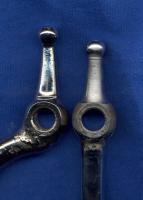
I have a 5-speed I took out of a 1980 280ZX. There is a # 7Y19873 stamped on the top of the bellhousing, between the two top bolts. I also have an earlier (year unknown) 5-speed with #7(orZ)535361 in the same place. The only noticeable difference I found was in the shift lever fulcrum length. In the pic I have hopefully attatched, the shorter lever is out of the 1980. It measures about 1.5 in. from the center of the pivot pin bore, to the center of the lower ball. The longer lever measures about 1.75 in. It seems most of the people I talk to with early Z's with 5-speeds, have no idea which model Z it came out of. which means the ratios are unknown. If anyone has any info on the relationship of these numbers to model year, or any other method of identifying a 5-speed year by visual inspection, please post. Thanks. Phred
-
Rick Hanson: No, I did'nt need to carry any extra oil, But I did carry a set of points, and a coil. "Charles Lucas-Father of darkness" is not a myth. Phred
-
Steve77, Your old wives tale has some truth. The problem occured in years past when non detergent oils were popular. When some well meaning soul put a detergent oil in an old horse that had been raised on non detergent, The s__t would literally hit the fan. The detergent would loosen up the gooky stuff left over from old non detergent and it would start floating around and sometimes plug things up. They used to try and keep the oils from getting mixed up by putting a blue color band on the top of non detergent cans, and a red band on the detergent. However, all current detergent petroilum oils are compatible with synthetics. Not sure about the old Castrol R "bean" oil though. I ran that stuff back in the early seventys in a H-Prod Bugeye just cause I liked the way it smelled. Also, I too change synthetic oil every 2500 to 3000 mi. The oil is still perfectly good, but dirt, fuel contaminants, carbon, and other nasty stuff can not all be removed by the filter. Thats why it turns brown or black. Clean oil means life to your engine. I've been building mostly racing (and aircraft) engines for nearly thirty years, and have found clean oil to be the best insurance an engine can have for a long life. One last thing. Choosing a brand or wt. of oil is like having sex. Everybody has there own preference on how to go about it. But they all seam to get the job done ok. Phred
-
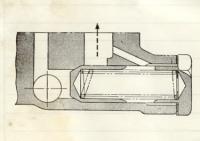
Steve: The relief valve is easy to get to. If you installed the pump your self, you had your hands on it. Its the big hex bolt head on the bottom side of the oil pump. Its either a 19mm or 7/8 in. hex. Its actually a cap plug with a spring and plunger behind it. A 1/4 in. AN washer fits perfectly in plunger. Any race shop or aviation supply has AN washers. They come in thin1/32) or thick(1/16) sizes. Mix & match till your happy with the pressure. Phred
-
As long as were on the subject, I've been looking for a 3.9 R-180 gearset for quite a while now. I found new gears for $428. If a used set is unavailabe, guess Ill have to bite the bullet. To be exact, 3.9 gears with a 115mm ID ring gear. Thanks. Phred
-
Steve, Your kind of between a rock, & a hard place. If you know your oil temps on the high side, Synthetic will protect your engine better than petroleum. However if your pressure is starting to drop when things get warm, it will continue to do so. If I had to make a decision without any more info. This would be it. I ran 20-50 racing Synthetic (any brand as long as its 100% Syn.) in a turbo motor for eight years. But I live up here where it can be 20 degrees in the morning, and sixty in the afternoon. Its probably more moderate where you live, so you could get away with a straight 40 or 50 wt. I would also replace the oil pressure relief spring, with the Nissan Comp. spring(s). Or Shim up your current spring with a couple of AN washers. 2manyZs hit on the other factor. If your bottom end (rod & main brgs) have even a thousanth too much clr. (.003 instead .002), it will tend to "bleed" off oil when things get warm. This is noticed as a drop in oil press. It should'nt be harmfull, just bump up the pressure with the relief valve spring. If you have an accurate gauge, consider 40lbs. absolute min. when hot. 50lbs. preferred. With your eng. probably a little loose on the bottom end, you might end up seeing 70/75 psi when its cold, and 40/45psi when hot, and 50psi when everthings warm & fuzzy. OK, so syn. costs $4.00 a quart. Your eng. will thank you. Phred
-
Zvoiture: Too many questions, not enough answers. Guessing is as bad as taking things for granted. Lets assume the SU is good, and the gauge is good. For now. That means the engine is really producing less pressure when certain conditions exist. Why? Oil pressure relief valve not functioning properly? possibly, not likely. Which gets us back to thin oil. If this is the culprit, this may explain why.. General info on tests I performed on an engine dyno using both a 1600 & 2000cc formula ford engines. The tests were performed to evaluate the differences between petroleum vs. synthetic oils. Oil pressure, oil temp, horsepower, and torque, were the main focal points. Brefly, the results showed: At 180 degrees water, 160 degrees oil, the synthetic showed 2 to 3 more horsepower than petroleum. it also indicated 3 to 5 lbs. less oil pressure. (synthetic is thinner than a similar petroleum, producing less resistance within the pump). At 200 degrees water, 200 degrees oil, Horsepower figures were the same. Why? because the petrolium oil thinned, and presented the same internal friction coefficient. At 200 degrees water, from 200 to 220 degrees oil, both oils produced basically the same power. However, at 200 degrees water, starting at 225 degrees oil, the petroleum oil started to show a power loss and a drop in oil pressure. Power loss was notable at 240 degrees. Due to an increase in internal friction. ( the oil was starting to break down.) The synthetic oil did not cause a loss of power. My point being, pressure is directly related to temp. And is directly related to RPM. More RPM, More H-P, More heat. I drove a six hour enduro once, where we had excess oil temp. by dropping the shift point 250 RPM, oil temp was reduced nearly 10 degrees. An oil temp gauge is the only way to know for sure. Good luck. Phred
-
You stated you were cruising for an hour @ 90 MPH, 4200 RPM. My Guess is the oil heated up, thinned out, with an expected drop in oil pres. After it cooled down, I bet your oil pres. came back up. I've seen this on the dyno many times. Try a straight 40 wt. racing oil. This will tend to foam less, and thin down less than a multi-grade, street blend. Phred
-
Cuong, Awesome yellow Z. What type of discs did you use with the Brembo 993 calipers? Phred
-
My Best guess is original Minilites. What do I win? Phred
-
All info above is true. However, even with the proper fixture, the possibility of damaging a piston exsists. If your willing to spend the money to balance your engine, consider replacing the pistons too. After all, at minimum, it needs to be honed, and rings replaced. Pistons wear out like everthing else. they might look ok, but the skirt can wear down slightly, increasing pist/bore clr. Also, more important to horsepower, are the ring lands. If they have any significant wear, which is common with a used piston, performance goes down. Also the piston pin bore will wear, especially with a pressed in type. If your budget will allow, replace the pistons too. Balancing Rods: (never when connected to a piston) Rods are balanced rotationally (big end) and reciprocating(small end) The combination being total weight. First, the caps are torqued on without bearings. They are hung on a fixture which supports the small end off to the side of the scale. The big ends are all weighed and recorded. Then The heavy rods are ground or machined on the cap till they weigh the same as the lightest one. Then the complete rod is weighed. Again the heavy rods are ground or machined to match the lightest one, but this time all weight is removed from the small end, usually around the top of the pin bore. Presto! a balanced set of rods. A good bal. job will have a +/- .5 gram tolerance. The pistons are weighed individually with the pin. As with the rods, the heavy ones are machined till they weigh the same as the lightest. This is usually done as an assembly, which would include balancing the crank, flywheel, clutch, and damper. Good luck! Phred
-
Danger!!! The Cam Tower bolts you refer to are 8mm dia. x 1.25 pitch. The hex size is 12 mm. IMPORTANT! DO NOT torque ( or attempt to torque) these bolts to 25-33 lbs. You will strip the threads out of the head!! Remember, your head is aluminum, and the bolt is steel. These bolts are the same dia. as those holding the front cover and oil pump on. Datsun Factoty Manual calls for 11.5 lbs. for them. I have assembled many racing Z heads with high lift cams and higher than stock spring pressures, and all have survived with only 15 lbs. of torque on the cam tower bolts. I have heard some engine builders only used 12 lbs. torque. So consider 12lbs. min. & 15 lbs.max. Also never torque bolts into aluminum dry. Put a little lite engine oil on the threads and under the head, then torque. If, when approaching 15 lbs, the bolt feels "soft", STOP. Phred
-
Also have someone with an adjustable timimg light check total advance (combination of mech.& vac.) should be about 32 to 34 degrees. Also verify the accuracy of your tach. A tune up shop can do the above quickly and cheaply. Phred
-
Chris, One other thing to do before you pull the head. first set valves. Then have someone familiar with dial indicators and engines check the amount of valve lift at each lobe. This will show how much wear has taken place, and you'll know if the cam needs to be replaced befor taking the head off. Phred
-
Benn9090, I assume you have already ordered a new set of main jets. The makers of jets have always said never to drill jets. I used to figure they just wanted to sell more jets. But every time I run into drilled jets, they never seem to be running right. Hope that cures your problems. Phred
-
Benn9090 Hey, those carbs look great! What kind of finish did you apply to them? I used to build airplane engines too, and we used Alodine to protect bare aluminum from corrosion. Looks similar. As far as the poping goes, that could be your distributor. Since you were fiddling around with the vac. advance, there may be something else not right in there. I'm not up on vac. adv. units as we always disable them for racing. However, I have cured some Z track cars that stumbled and popped by going to a locked breaker plate, and using only mech. adv. setting total advance to 34-36 degrees. I'm not advising you do this, I mention this only to point out theres more than one way to skin a Z. More to the point, there are a number of sensor/gauges on the market that will take the guesswork out of what your doing. K&N among others, has a air/fuel ratio monitor, or a device called a Lamda indicator which uses oxygen sensors to indicate air/fuel ratio(ideally around 14.7:1) Or a good old Exhaust Gas Temp. gauge. (EGT) We use EGT and fuel flow to determin proper Mixture settings on an engine dyno. Hang in there. I think your about to become the local Weber expert in your area. Phred