


.JPG.cfcada9cf1c1b502df3f5f2f2ca3ff36.JPG)
SteveJ
Community Member
-
Joined
-
Last visited
Everything posted by SteveJ
-
So, not trying to pick at scabs, but did you replace your links, too?
-
You better be careful. If Randy thinks his car will be more historically accurate with your spook, he'll stop at nothing to get it.
-
Here's your standard Xenon air dam in the "I'm too cheap to paint it" black.

-
Go to http://www.carpartsmanual.com Look for the parts you're interested in. When you find them, look at the month/years it was used. Both of the parts listed for the fender liner (items 79 and 80 on the correct page) did not come into production until Jan 1974 and were used through May 1976. After that, a different part was used (part 82 on the same page). Depending upon the build date of your car, it may not have received these parts. These parts were very frequently removed from the car and are less common today than unicorn farts. If you are fortunate enough to find someone who has a set and is willing to part with them, you'll probably be paying dearly for it. It's too bad. I wouldn't mind having fender liners for my cars.
-
Oh, most of those disappeared from the cars a long time ago.
-
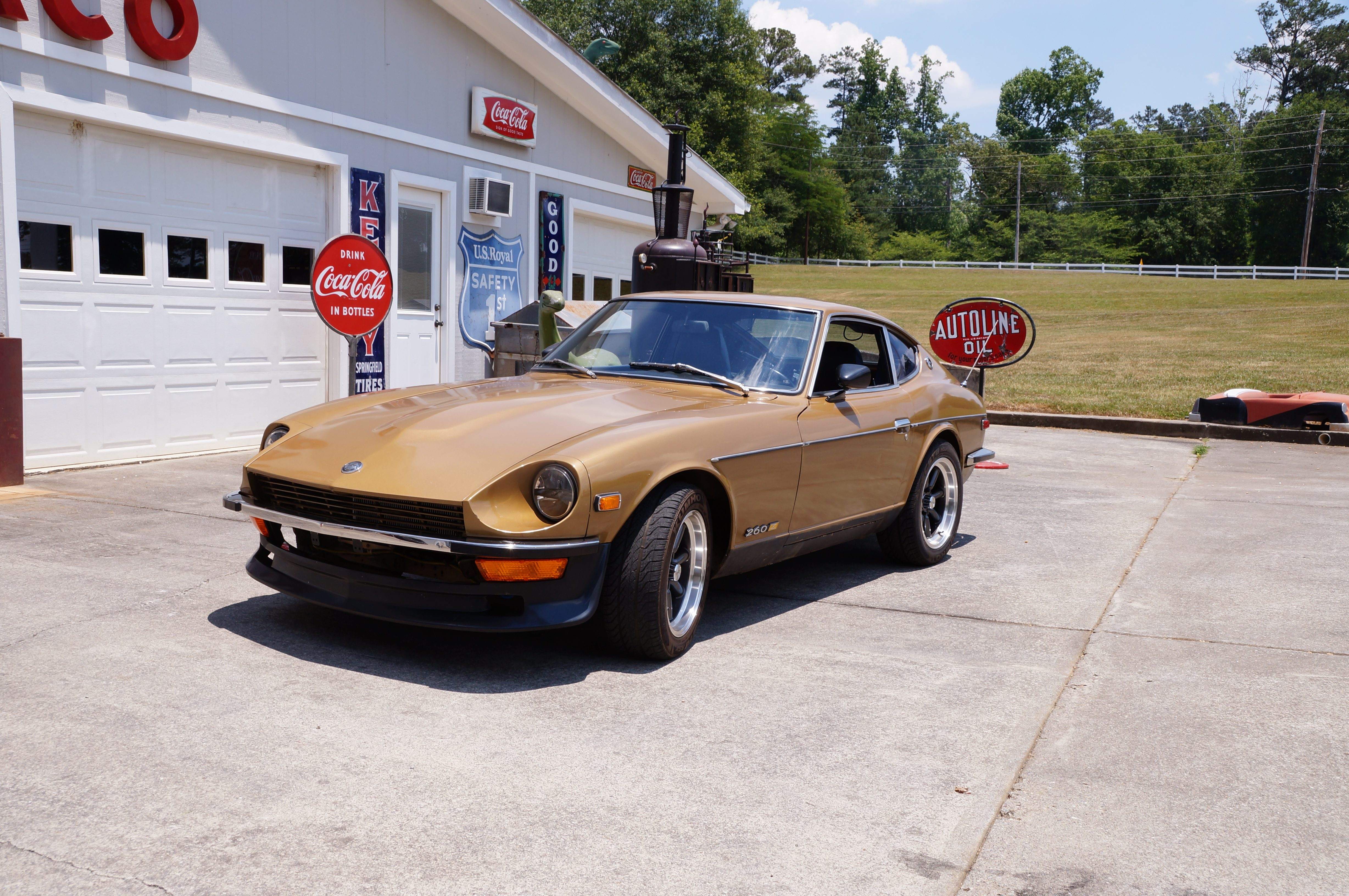
That is what I used in my 260Z.
-
You might appeal to @Zup and @S30Driver for assistance. They live in your neck of the woods.
-
-
-
-
Of course, if you saw my other thread, you'd know that I'm still having issues with fuel pressure. If this keeps up, I'll just part the damn thing out.
-
-
-
Background: When I got the car, it was a stock L26 with flat top carburetors. Three years ago, I changed out the carburetors for round top carburetors. For a while I noticed that after I had been running at freeway speeds, returning to stop-and-go traffic would result in hesitation during acceleration until it seemed like the car cooled down for a while. I enriched carburetors some more, and the problem seemed to go away. In February, I did an engine swap, putting in an L28 with an N47 Maxima head. Since the head wasn't configured for a mechanical fuel pump, I just ran the stock electric fuel pump. The hesitation returned, even with enriching the carburetors even more. I installed a fuel pressure gauge and found the pressure to be around 2.5 PSI. I changed out to a small Holley fuel pump (12-147), but the pressure dropped down to 2 PSI. Saturday I changed out the fuel pump for a bigger Holley fuel pump with a fuel pressure regulator (L:12-802-1). The FPR was installed downstream of the fuel rail. At first, the pressure was at 12 PSI. I opened the small orifice on the exit of the fuel rail. The pressure dropped to 6 PSI. Moving the adjustment on top of the FPR did not raise or lower the fuel pressure. I moved the FPR to in front of the fuel rail. The pressure held at 4 PSI. I thought I was good to go. Today I drove the car to help a friend with his Z. It did fine on the trip down. It did fine when I took him in a ride in the car. When I was leaving, the old problem returned. I checked the fuel pressure when I got home. It was below 2 PSI. I moved the FPR back to downstream of the fuel rail. Pressure was 2.5 PSI. Again, using the adjustment screw did not change the pressure. I am out of ideas.
-
I have been battling fuel pressure/lean conditions since doing my engine swap. Since the new motor has an N47 head, I'm only using an electric fuel pump. The stock one didn't cut it. The baby Holley fuel pump was worse. Too bad since it mounted right where the stock pump did. I went with a bigger Holley with a fuel pressure regulator. I had to play with the hose routing some, but at the end, I got the pressure I needed. After some tweaking (going out to 3 turns), the engine didn't act lean on acceleration, even after it warmed up. Keep your fingers crossed for me.
-
So does that mean we have a baseline value for a 280ZX shell?
-
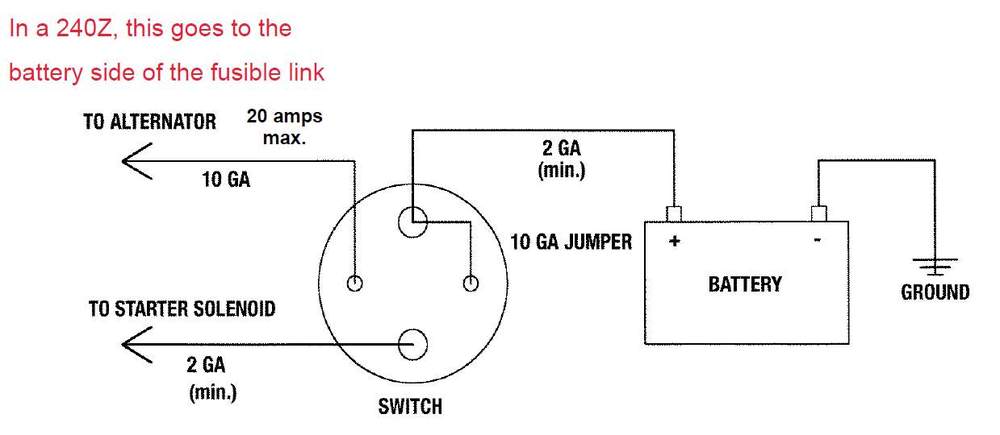
The kill switch doesn't affect jumping the battery. The problem is that a dead battery is a heavy load on the alternator. In the case of the OP, the current draw was greater than the 20A rating of the alternator circuit of the switch. You might be able to double up by placing the alternator in the solenoid terminal if the stud is long enough.
-
Funny, I didn't need to do anything like that. A lot of people say it can't happen, but I have seen on more than one occasion that a Z car distributor was installed 180 degrees out.
-
What guide did you use in doing the wiring? Did you get the ZX distributor mount? Are you sure you have a good ignition module? I had one arrive DOA on a rebuilt distributor. Post some photos of your work. Be sure to detail where you got the positive and negative for the module.
-
Yeah, if you put too much heat through it, you could weld the contacts. It is an interesting issue, though. The battery kill switch is designed for race applications where you wouldn't be expecting to start out with a nearly dead battery. You might want to opt for a tow the next time.
-
So the problem was operator error. I missed that in the first read.
-
Do you still have the door jamb plate?
-
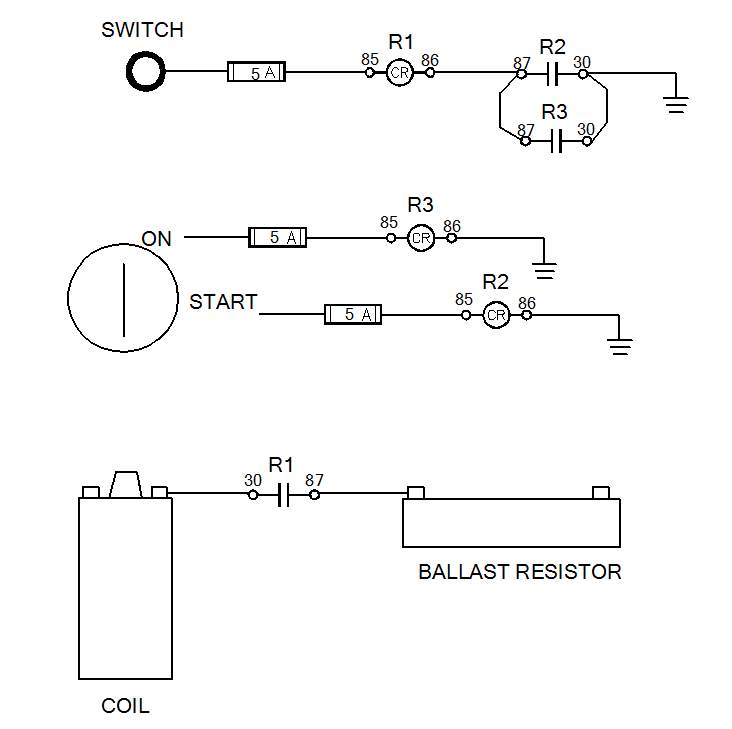
Something is not right here. If you have the jump a properly wired car with the jumper cables in the correct location (in the back at the battery), you would not have much current going over the 20A contacts of the Moroso switch. It should be going to the solenoid. As I understand it, the kill switch is designed to isolate the battery from the rest of the electrical system. As a matter of fact, that is how the Moroso switch is described on Jegs.com. As for having a 100A alternator, you still should not have much current going back to the battery. If you are pulling 20 A on that connection, you have a dying or dead battery. If you are trying to use the battery kill switch as an overall kill switch, you could wire up something like the second picture. It would isolate the battery and kill the ignition. With the ignition cut, the engine stops, and the alternator stops with it.
-
The starter motor is a very sizable load. It will draw a lot of current and pull down your voltage, especially with an older/weaker battery. The fuel pump is nothing compared to the starter. Post the voltages you are measuring, starting with the battery and the car off.
-
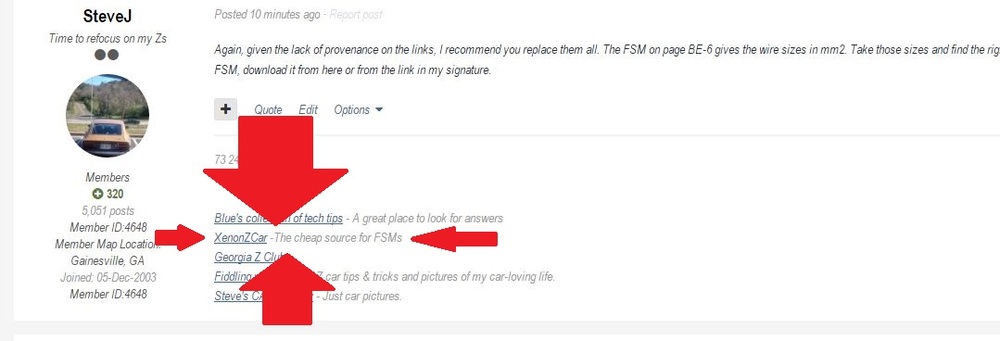
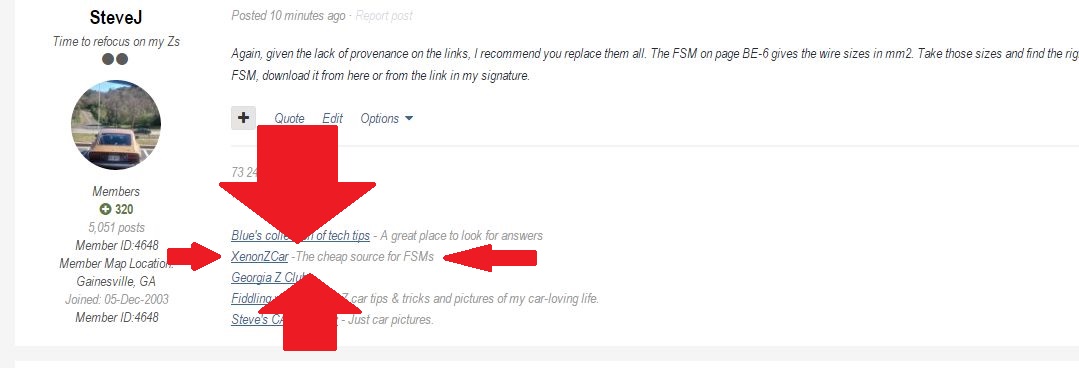
Do not use the AtlanticZ. Use the FSM (Factory Service Manual). As for the link in my signature, refer to the attached picture. You will not get ready-made fusible links from a parts store. You may be able to get fusible link wire from them, and you will have to cut the wires to length and attach lugs to the ends. If you don't get a good crimp on the lug, you will have issues further down the road. On the other hand, you could purchase ready-made fusible links from the links I posted. I'm not sure why you insist upon being so obtuse, especially when you appear to lack the requisite knowledge to perform the repair properly.