




Zed Head
Community Member
-
Joined
-
Last visited
Everything posted by Zed Head
-
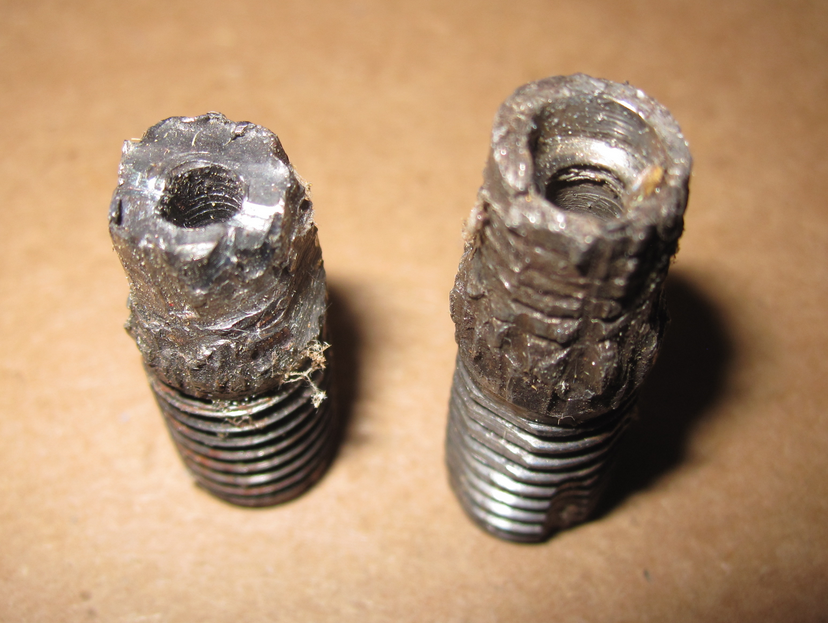
That test sheet is impressive. The mounting flange looks thick. Not a bad thing but I wonder if the bolts/screws are long enough. Might just be the pictures.
-
I think that this happened in the past and somebody here knew the guy that was running the web site. I guess that 503 is a server error? Anybody know?

-
There are some good writeups in the Downloads area. Technical Articles maybe, or somewhere else. More than one, randomly placed in the various categories. With pictures.
-
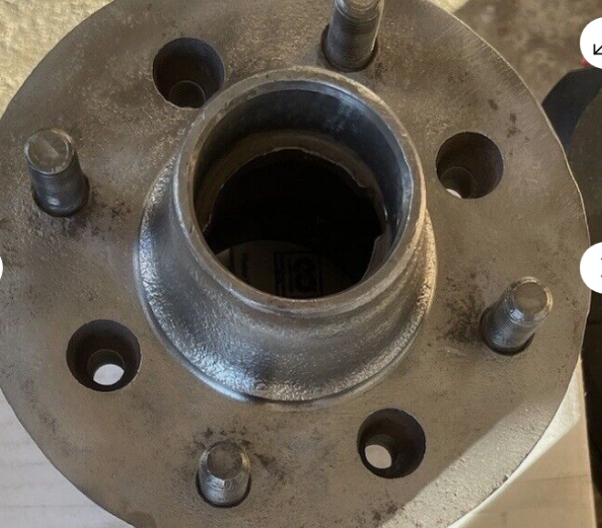
Seems unlikely that 0.4 mm would be a factor but it should be easy to find out. There should be damage on the inside edge of the wheel where it was crushed against the hub weld. If you see damage, you should be able to file away 0.2 mm around the inner edge of the wheel hole to create a clearance chamfer easily. A few swipes with a round file. The pattern on the back of the wheel is also a good indicator of seating. The spot behind the lug nuts is where the force is. https://www.ebay.com/itm/186288432645?mkcid=16&mkevt=1&mkrid=711-127632-2357-0&ssspo=fN_3lKgHSjG&sssrc=2047675&ssuid=bBzFtXzvTQO&widget_ver=artemis&media=COPY
-
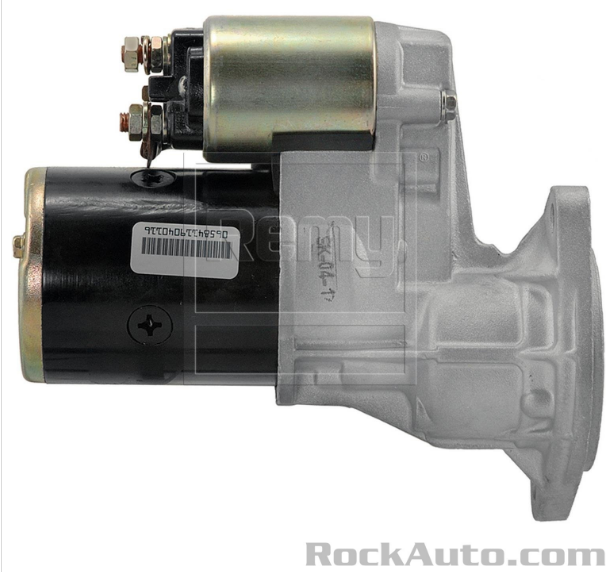
The basic problem with any reman is it's always hit or miss. The reman shops only examine the parts for obvious problems and wear and test various components electrically. There's just no way to tell how close the used part is to failure. Insulation breakdown, metal fatigue, etc. Business-wise, the only reason to introduce a new product to market is because the reman's are so bad. Take some good pictures if you have time. Interested to see what they're producing. They do alternators also. Cheaper than one of the reman's. Although, if I was going to buy a reman, I'd buy a Remy. They seem to produce good stuff. https://www.rockauto.com/en/catalog/nissan,1978,280z,2.8l+l6,1209260,electrical,alternator+/+generator,2412
-
There's a new option. Meaning not reman'ed. WAI Global. I don't know anything about them but the cost is less than the reman'ed BritishStarter unit. And no core required. https://www.rockauto.com/en/catalog/nissan,1978,280z,2.8l+l6,1209260,electrical,starter+motor,4152 https://www.rockauto.com/en/moreinfo.php?pk=12165009&cc=1209260&pt=4152&jsn=512 https://www.waiglobal.com/ Edit - didn't see the full post above. WAI already ID'ed. Good luck.
-
You might take it apart and see if it's something simple like a dirty solenoid contact or sticking mechanism. Remove the solenoid and pull it off of the slug. Here's a video. Solenoid removal starts about 5:10.
-
Nissan started using gear reduction starters in 1978. So that's not really a new thing. If you search "britishstarters.com" on the internet you can find reviews from people that have bought them. Here's one. Kind of what I was afraid of. They don't really describe where they source their motors on their web page. https://www.mgexp.com/forum/mgb-and-gt-forum.1/british-starters-com-my-observations-your.3110642/
-
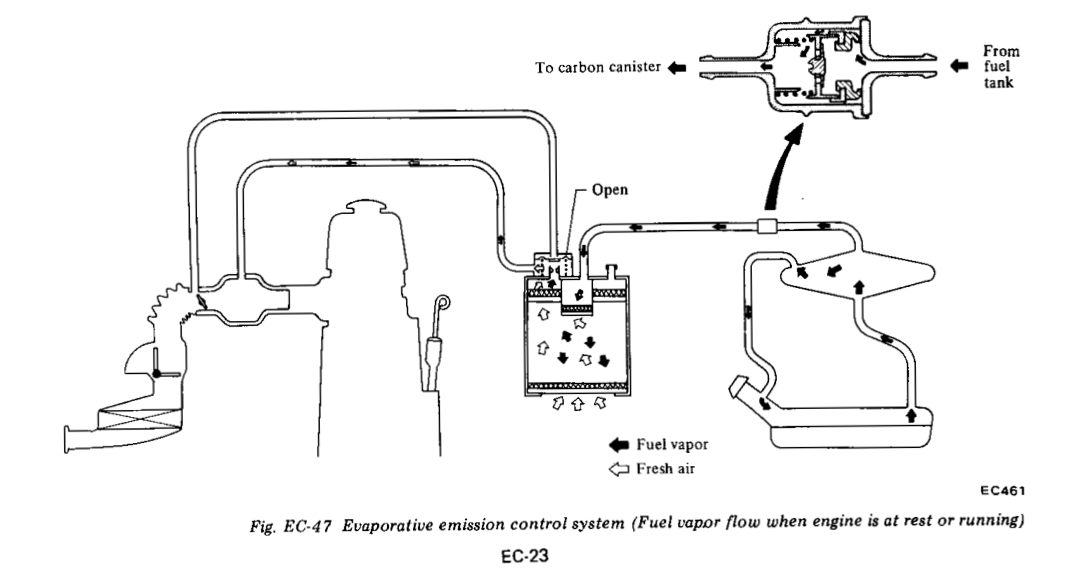
There would be no "control". You might also flood the intake with vapor as the car sits in the sun. Vaporization and condensation. Engineers spent a lot of time and effort trying to figure out how to handle the vapors in a way that solves and avoids problems. I'm sure that there are people out here who've tried to outthink the engineers and ended up back at their solution after going around in circles. The charcoal canister and its control system is really simple. The hardest part of the Pathfinder mod is probably mounting the canister.If Dave WM has found a canister from a newer vehicle that works that would probably be the simplest most direct way to go. The concept is the same and Nissan kept stuff that worked around for decades. My 95 Pathfinder had an AAR valve that was essentially the same as a 1975 280Z's (I think, it's sold now, can't double-check). Same basic shape and function.It's a controlled leak. A small one that is only open when the eninge is off-idle. The vacuum control hose is on a "ported" vacuum souce on the throttle body.Probably won't fit but it shows the concept. The old days when "PCV" was a tube that exited to the roadway from the valve cover. https://www.tanksinc.com/index.cfm/page/ptype=product/product_id=638/mode=prod/prd638.htmThis would create a large vacuum leak. It might even overpower the valve in the gas cap and pull a vacuum on your tank. That would be bad. If the seal in your canister cap is bad you might have a vacuum leak anyway. Might partially explain your "lean" problems. You could just block the line completely and get a two way vented gas cap. Maybe. Gas caps are hard to find. Although the seal on mine was destroyed and it was two-way anyway. Move the smell to the outside back of the car. Like the old days.It's not the canister that holds vacuum it's the cap on the top. The canister is completely open on the bottom. It might be that the canister "charcoal/carbon" in the canister is saturated, coated, or clogged. The basic concpet is that the gasoline vapors enter the pores of the carbonaceous material and stick until they are pulled off by air entering through the bottom. But the material does not last forever. https://www.carparts.com/blog/5-signs-youre-due-for-a-charcoal-canister-replacement/
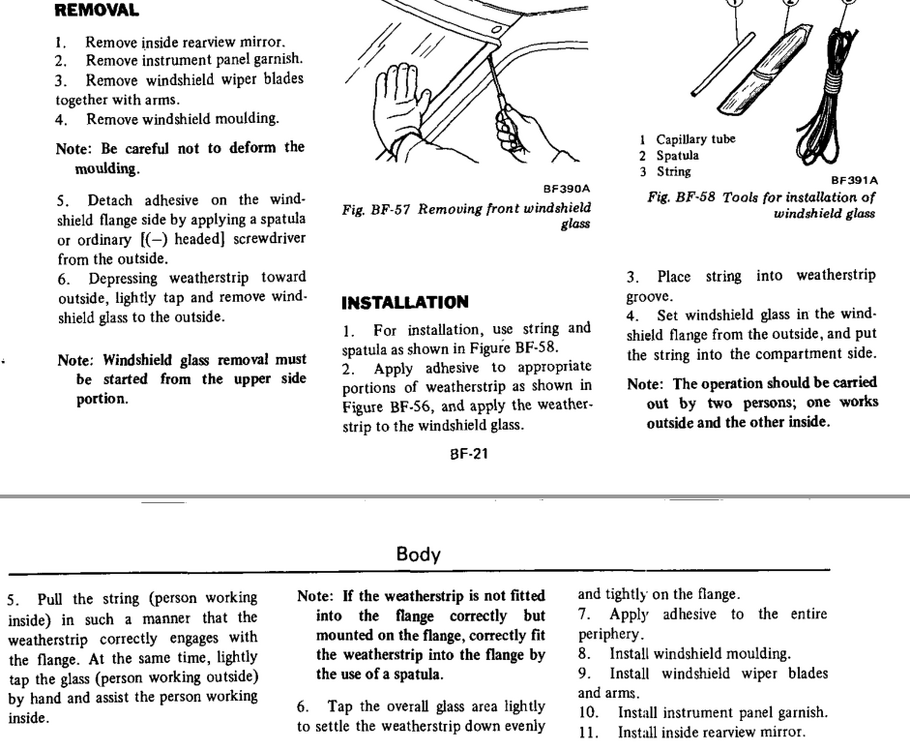
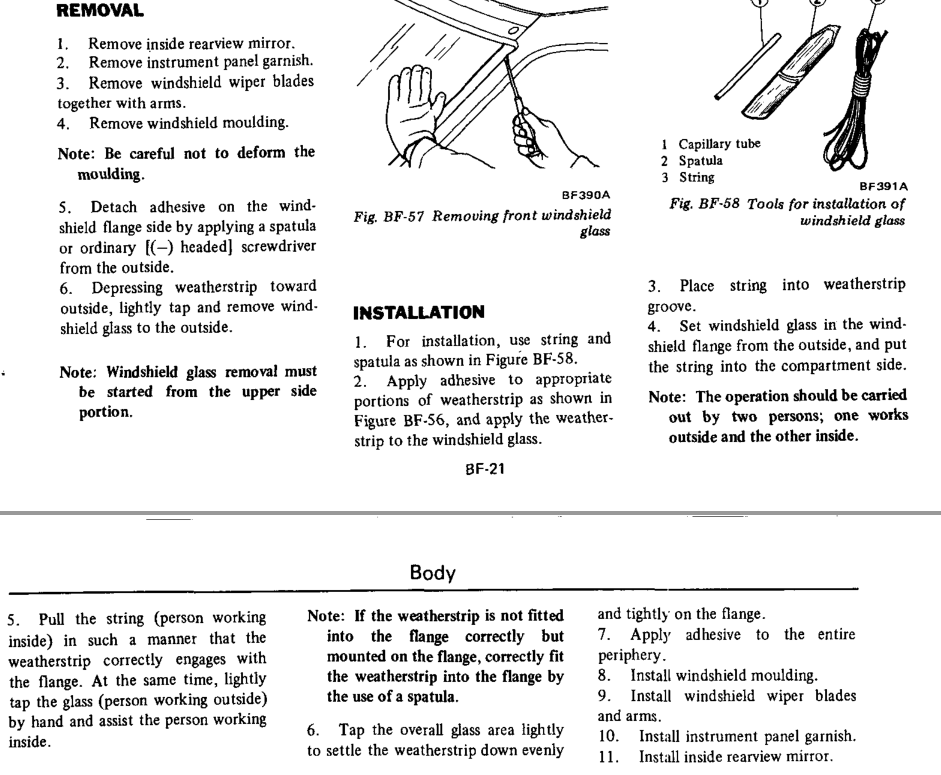
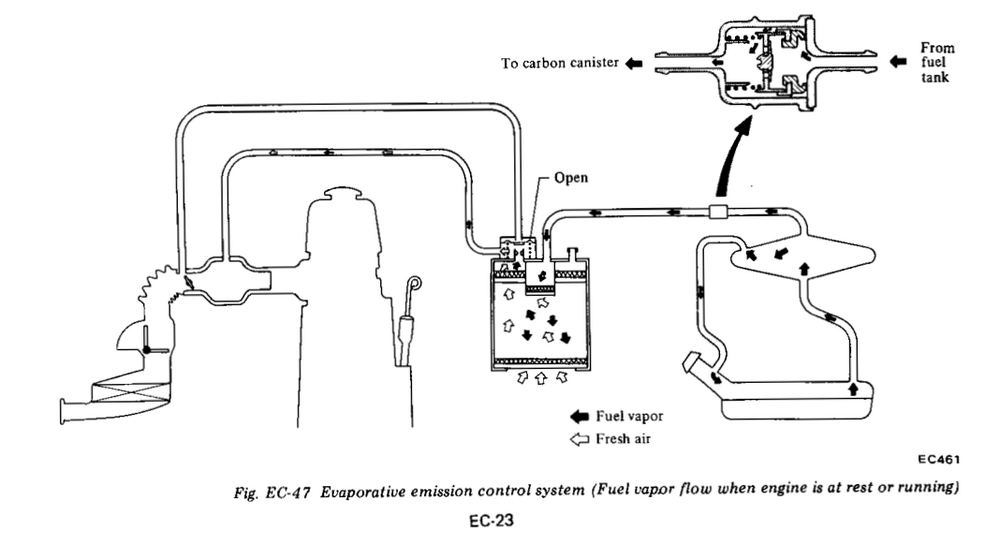 Anybody know what the "capillary tube" is for? They show it but don't talk about it.
 That's one reason the 280Z's are great tools for learning about automotive electrical. Everything on them is at the beginning of today's auto electronics. Not trying to double-down on cgsheen's point but the start for modifying the ignition system would be to understand how the one you have works. Again, no offense intended, but if you had done that you would have looked for the "make and break" device that creates spark. The original ignition module. If the coil primary circuit is not broken, no spark will be created. It's fascinating stuff! I've learned a lot by owning and working on a 280Z. Even though I knew quite a bit before I got mine. https://en.wikipedia.org/wiki/Delco_ignition_systemI was thinking more like the grinding wheel that you used on the CV end. There's room. Grind away, I say.
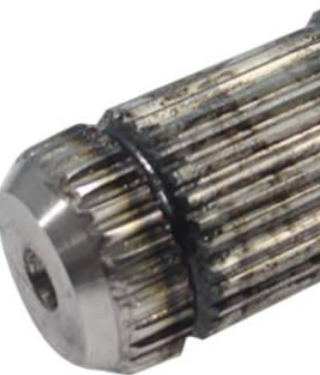 I'd remove any burrs from the end that needs to slip through the circlip. Maybe even smooth the end of the axle down and reshape it a bit so that it slips through the circlip easier. Add some grease. Once the end gets started it should slide easily until the grooves align and the clip drops in. The axle end is probably jamming the circlip against the back of the groove instead of expanding it.Hope that was it. Here's what mine looked like. I think that the theory is that the insulation breaks down on the coil wiring, causing a weaker magnetic field. A short between wires but not a short directly to ground. Fewer circuits around the core. Can't remember exactly what I was testing or saw with those leads. Should have measured resistance through the coils. But it seemed to be heat-related so hard to reproduce. Probably wouldn't have seen anything. Maybe if I had hit it with a heat gun.
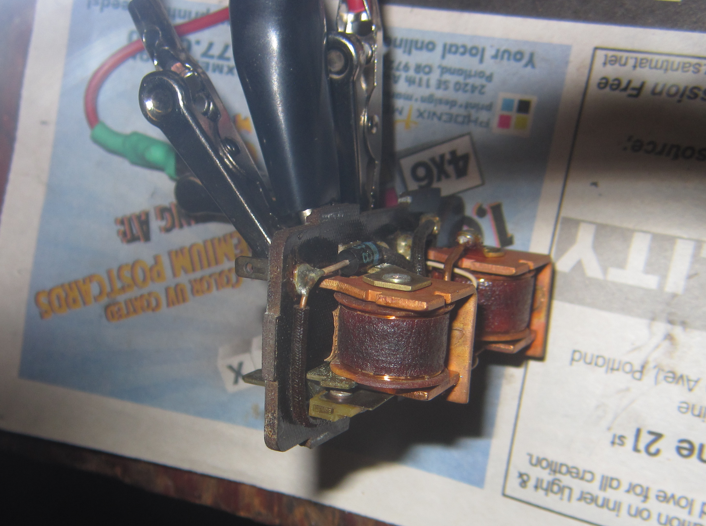 I had a similar problem with mine. It was the fuel pump relay portion of the combined EFI/pump relay. I posted about it long ago and posted a picture too. The solenoid coil looked cooked, I took it apart. It was actually a "spare" that had come with the car, that I had put back in to test. I guess that's why it was out. I was able to get home because I had already installed a relay bypass and power control switch under the dash. Because I didn't trust the old electrical stuff.Adding to SteveJ's post, re the question above - yes and no. The tachometer is on a branch off of the blue wire to the ignition module. The resistor is in that wire. Reconnect the wire at the coil and disconnect all of the wires at the old ignition module. Megasquirt will probably work but the tachometer might not. But that's a new problem.Many people switch to the later model spring clip connectors. It's a fun project. If you decide to do it you can get them cheap at any well-stocked salvage yard. 90's GM, Volvo and BMW plus many other brands used them. They're called EV1 style injector connections. Kind of spendy if you buy them new. A piar of crimping pliers and some insulated butt connectors is quick and pretty easy. They look like this -Another decent driver. 1976 was a good year. Federal model in North Carolina. https://bringatrailer.com/listing/1976-datsun-280z-85/
 How did you get the retaining clips in? The plug has to be firmly seated to get the clip in.



Important Information
By using this site, you agree to our Privacy Policy and Guidelines. We have placed cookies on your device to help make this website better. You can adjust your cookie settings, otherwise we'll assume you're okay to continue.