HS30-H
Supporting Member
-
Joined
-
Last visited
Everything posted by HS30-H
-
Like anything new, its going to take me some time to get used to the new look ( I was still learning how to use the old one ). One thing bugs me though; that "Classic Zcar Club" ident / banner thing at the top left of the page. I would have thought that a bone-stock and non "customised" car would have been more appropriate than ( what seems to be ) a UK-market HS30 with a colour-coded air dam / spoiler, plastic colour-coded mirrors and the god-awful UK-law compliant front turn signal indicators ( which always raise a big laugh in Japan ). No disrespect to the owner of said car, but wouldn't a "fresh from the factory" looking car be more appropriate? If its going to be a modified car, then surely a "period" modified look would be more appropriate? Whine whine moan moan, Alan T.
-
Ah Enrique - a voice of reason in the wilderness........... We have the "Concours" competitions over here in the UK too ( makes me laugh when they call them "Concourse" ) and its quite apparent it gets like a sickness with them. As you pointed out, many of the cars become OVER restored - as the owners aim seems to change from total originality to just getting points in the competition. Don't get me wrong; I think its well worth trying to get a resto-job as original as possible - as long as the data, knowledge and parts are out there.That's probably possible for a Porsche 356 or Hemi Coronet, as the data is out there and its pretty much accepted as correct. My gripe with this kind of thing in relation to the S30-series Z is that in many cases the knowledge is NOT out there, and many of the parts are not out there either. Anybody who thinks they can tell you with 100% certainty what a particular model of Z should look like is really kidding themselves. There will certainly be people who remember what the cars looked like when they arrived off the boat ( especially the people who sold and maintained them when new ) but I don't trust 33 year old memories either. I think I have a fairly good knowledge of the particular area of the S30-series Z car that I happen to be enthusiastic about - mainly the Factory Race and Rally cars and the Japanese "Home" market models - but there are ENORMOUS gaps in this knowledge, and I might as well be studying the artifacts of an ancient civilisation when I try to delve into the history of it all. Talking to people in Japan who were "there" on the Factory floor, or working with the race teams at the time, has just made it clearer to me that it is probably now much too late for Nissan / Datsun or anybody else to get the full story and all the facts down for posterity. In comparison, restoring a 1940's Delahaye / Bentley Continental "R" / Maserati Birdcage / Porsche 911R or any other exotic you care to mention is a BREEZE compared to getting it "right" for an early S30-series Z. There is also more literature and first-hand knowledge out there for them too. Its ironic to think that some of the most successful mass-produced Twentieth Century icons have less accurately-researched and complete history than the famously unsuccessful "one-offs" of the same period............... I also think its now becoming clear that the "unitary construction" cars of the late sixties onwards were built once, and taking them apart kills many of the original parts - stopping them from being re-used accurately. You can't re-furb and fabricate on these cars like you can on earlier stuff. Over the last few years I have been actively seeking out more and more genuine NOS and good-condition original parts to keep and trade with. I am also a long-term fan of "patina", and I really do not like to see those "100 Point" resto. jobs that get everything much cheesier than it ever was when it left the factory. My car has stone-chips, tarnished plated parts ( they were tarnished when the factory bolted them on! ) and chipped windows. It also has a life, and I let it live it when I get the opportunity; it does a fair few miles on the track every year ( I'm still fiddling with it and learning how to drive it fast ). If that causes "patina" then I'm happy with it. I was asked to join a "Concours" competition whilst at a Japanese-car show here in the UK a few months ago. I declined the offer, not because I thought I would not win ( I'd lose points for the flysquash! ) but because I did not want to be "judged" by people who know next to nothing about my car. I'm not trying to be elitist or snobby - but how would they be able to judge the originality or otherwise of something that they have no knowledge of? Half of them think my car should have an L20 in it.............. Alan T.
-
Hi Guus, Sorry for the late reply, but September is a busy month at work for me. I think the setup looks good - but you will certainly want to clean them right out and treat them to a genuine Mikuni gasket / rebuild kit - they look pretty cruddy. The linkages might be a bit tired too. Don't be too ambitious and try to disassemble them completely ( for example - don't try to take the butterflies off of their spindles ) as you probably don't need to do this. I would take out all the jets, the auxiliary venturis and the main venturis themselves, then the accelerator pumps ( you get new accelerator pump diaphragms in the rebuid set - and these are a "must do" ). You will probably have to detatch the floats from the top covers to put a new gasket on - so be sure not to mess up the float level settings if it can be avoided. Otherwise its all quite straightforward. Judging by the standard of the rest of your car, you might be tempted to clean them up so that they look "new". In my opinion this would be a mistake, as the alloy on the earlier types used to dull down quite quickly and take on a nice patina. If you try to shine them up it will spoil them - so I would just try to clean them chemically with no rubbing ( except with a toothbrush or something soft ) to leave a nice greyish coloured finish. You might need to blast clean the manifold, in which case I would recommend vapour blasting or similar ( something that will not open up the surface too much ). Seeing as your car is a replica of the Monte spec. rally car - will you be running air cleaners? I am wondering if the set that you have bought actually has the Mikuni "Air Horns" / Trumpets inside those air cleaners ( maybe not? ). They sure sound great without the aircleaners on. PLEASE do not fit a set of K&N or other "modern" aircleaners to these carbs on YOUR car - they would look quite incongruous! If you have any queries on jet sizes or anything, please let me know. You should ( might ) find the Mikuni factory labels / stickers are still on the carb bodies ( which would identify the type clearly ) - but if not, measure the size of the hole at the rear of the carb where it joins the manifold. That will tell you the size is either 40mm or 44mm. If you need any spares, let me know. Good luck! Alan T.
-
Laffeux makes some good points there.......... Its well known in Japan that most production changes on the S30-series Z production line were quite "fluid", and in fact there was almost no "cut-off" VIN number where a certain component or specification changed from "old" to "new". A Japanese Z production-line worker I met out there told me that they would quite often "test" fit new spec. components on a few cars at certain times of the day - just to get a feel for how they were working and if there were going to be any problems with them. This even applied to sheetmetal sections of the bodyshell. The truth is that there will be NO firm date or VIN number where one spec. or type becomes another. There was always a grey area of at least a few cars, and in some cases it was a little bit more than a few................ I'm sorry to say it once again ( OK - I know this is a mostly USA-subscribed site, and so is "Z-Home", even though I thought the home of the Z was in Japan.... ) but this fixation with "Series 1" and "Series 2" etc etc is entirely an American phenomenon. It must be a habit that you have fallen into just because you were trying to make sense of spec. changes and put a label on them. The Japanese have never described any spec. changes or model changes in this way - except where owners have picked it up from American-based books / magazines / websites. They are much more pragmatic about the differences than this, and the more informed Japanese Z enthusiasts know that changeovers were gradual ( even though it might seem that they conform to a "plan" ). Whenever I discuss these cars with any Japanese Z enthusiasts, we never use any terms such as "Series 1" or whatever; all that matters is the Chassis Number / VIN, the model type, and the approximate date of manufacture. We then talk about the exact spec. - and this clears up what the features of the car actually are. Both sides appreciate that the early Z production line was fairly chaotic, and that there was not necessarily any hard and fast rule to anything. I must say that the whole "Model Year" thing is just Dealer-Speak nonsense; its quite understandable that a dealer would want to convince a customer that the car he is trying to sell him is the latest type and hot off the line. Thats how this whole Model Year thing came about. The only thing that matters when discussing specs. and model types of S30-series Z cars is the date that they came off the production line. The American fixation with Model Year is a red herring. Alan T.
-
They already cloned me - where do you think Pee Wee Herman came from?
-
Try contacting MIKUNI AMERICA CORP. - the last I heard they were in CA. You are lucky in that you have your own Importer / Distributor / American division for these Japanese-built carburettors. We don't have anything of the sort in Europe, let alone the UK where I am based. Maybe they have not got their own website ( I'm happy to be proved wrong on that ) but surely they will have a phone?..... Just for the record - any info. regarding Weber carbs will not be of much use when you try to apply it to the sidedraught Mikunis. PLEASE don't be tempted to start messing around with the Accelerator Pump Stroke ( that threaded rod underneath the body ) as this will be something you find difficult to set up again. A word of warning - all these types of aftermarket "performance" carburettors are precision measuring devices. They all work extremely well if they are given a chance to do so, and if the person setting them up knows what they are doing. If you do not know what you are doing, then leave them to somebody who does. Its worth it in the long run. Alan T.
-
Sorry to be AWOL while you were scratching your heads on this. I have been out working on a job that took me away from home for a couple of days. First of all, the "Tech." guys at Beaverton Nissan need to go and bone up on their history a little. I think they are getting confused with the "S20" ( the Twin Cam 2 litre six fitted to the 432 and 432-R, as well as the GT-R models of the C10 and C110 Skylines ). The "S20" is a whole engine type, and not just an engine block. The "L20" is an engine block as well as an engine type ( thanks for the confusion - Nissan ) and was fitted to a list of Japanese domestic model types and variants that would drop off the end of this page its so long. Anyway, the L20 block and "Y70" head combination is something of a nail I'm afraid ( sorry ). It was a fairly late incarnation of Low Emissions L-series sixes, and this one probably did not come from an S30 Z originally - its more likely to be a late-ish Skyline engine that has been modded to fit into the Z chassis. You quite often see this kind of "make do and mend" modification on unloved or run-on-a-budget cars in Japan. Depending on what model of Nissan it was originally fitted to, it would or would not need a Sump / Oil Pickup / Dipstick conversion for the Z chassis-fit. More bad news is that this engine is not particularly desirable, and has unusually thin and spindly Con-Rods that are prone to break ( eek! ). Taking the L20 Crank out and installing it in an L24 Block would make a good bore / stroke ratio that would rev to kingdom come if you could make it breathe properly and stop the valves from bouncing. I have seen and heard an L28 block / L20 Crank combination racing in Japan, and it sounded wonderful. Now there's a thought........... Sorry to give you what might seem bad news - but its better if you hear the truth before you start making plans for this engine. And just to nip this one in the bud before it gets set in stone; when talking about the S30-series Z, the L20 was offered on the very first Domestic incarnations of Fairlady Z and Fairlady Z-L. They came with the E30 head first. The Fairlady Z432 and Z432-R ( "PS30" and "PS30-SB" ) were also launched at the same time as the Z and Z-L ( late 1969 ) and were fitted with the S20 Twin Cam 2-litre. This creates lots of confusion outside Japan, as people talk about "Fairladies" as though they were just one model. You have to remember that Japan had a bigger choice of Z than everybody else got. In fact, by October 1971 you could buy six different variants of Z in Japan................ Carchaeology. Fun isn't it? Alan T.
-
That was the short answer! And I can confirm - no "240Z" ( i.e. "HS30" or "HLS30" ) was ever fitted with an LSD as standard from the factory. They were however available right from the beginning as a Sports Option part. The only S30-series Z to get an LSD as standard was the Z432 ( "PS30" ) and of course its lightweight sister the Z432-R ( "PS30-SB" ) - but they in fact used the beefier R192 diff. which was kind of a superannuated R180. Personally speaking, the No.1 mod that I would perform on any S30-series Z would be to install an LSD ( with a "nice" ratio ) that had a relatively low breakaway setting. It will make the car understeer more, but to counteract this you can throw the car into corners and steer it on the throttle. Its not necessarily the fastest way around a corner, but it is certainly the most entertaining. Too high a breakaway setting makes the car handle like a race car on the street ( and that can be a real pain ). On the limit with no LSD, the nearside driving wheel will spin up and cornering traction is lost. You don't realise how bad this is until you try a Z with an LSD fitted. All those posts about "can a stock Z get rubber in second?" just prove that people have no idea what they are talking about. When you break traction on one wheel it does not count! Its when you break traction with both driving wheels that things start to get entertaining. Money spent on a good quality LSD unit is money well spent indeed........... Alan T.
-
-
Aw shucks Ross, you're such a flatterer..... As far as the Carbs to ECGI changeover goes - I can only tell you about the situation with the race cars. The swapover to Injection on the road cars ( and they did not use their own ECGI system ) is a mystery to me as it falls somewhere outside my area of interest - sorry. I tend to wear blinkers and only take notice of things that interest me ( selfish, isn't it? ). Mind you, I bet you any money that Nissan once again had no clearly defined switchover point from Carbs to Injection on the Z. They probably tried it in certain markets first and then gradually blended it in. I know that carburetted versions were being sold alongside Injected versions at one point in Japan, and this was possible because Japan always had several different models of Z to choose from on the Home market. Just about everybody else outside Japan got one particular model / spec. for their particular market. On the race cars, Nissan were also using the ECGI Injection on cars contemporaneously with Carburetted versions. They started out injecting their Sports racers ( like the evolutions of the R380 series and up; for example the GR12 was a bloody fantastic engine - big inch V12 with double overhead cams and whacking great injection trumpets ) and then they were injecting the S20 sixes in the GT-R before the Z even came out. Even "lowly" Sunnies got injected in race trim. The Z432-R racers sometimes got the ECGI and the 240ZR was used with both too. In most cases, the Injected cars went to the "Ace" drivers or were used on the cars where the most power was required. The Works Rally cars used them both on the "normal" L-series sixes as well as the LY "Crossflow" engines, with the first instances of injection being used in around late 1971. The Circuit racers had them a bit earlier. Sorry I can't help with the date for the introduction of Injection on the Aus market road cars. All the best, Alan T.
-
What's up dohc? The factory used the Mikunis on all their race cars unless otherwise fitted with the ECGI Fuel Injection. My interest only goes up to around 1975 ( or even 1976 with a little pinch of salt ) and then picks up again about 1989 / 1990 when I saw the Group A R32 Skylines racing in Japan ( wow....... ) - so I can't vouch for the gap in between, and it hardly matters anyway. There were a few honourable exceptions to the dross of the post "Oil Shock" period - notably the "Silhouette" series race cars, which were mad - but they were all injected anyway. Prince used some race engines that they married up with Weber carburettors - notably the GR8, and some of these survived the transition between the last days of Prince proper and when they were taken over by Nissan. The Prince Skyline S54 GT-B was fitted with 40DCOE Webers from the factory ( and was the precursor to the C10 series GT-R ). A few semi-Works / privateer teams used Webers on their Skyline and Z race cars - but the proper Works cars always had Mikunis. Like me, they probably thought the Dell'ortos were too ugly to love............... If ANY sidedraught carbs don't work right its probably the owner / fitter's fault. If they go out of tune ( after having been IN tune ) then its probably down to having a crap linkage. These things don't change their settings on their own. Happy twiddling, Alan T.
-
I have used both 40 and 44PHH Mikunis, as well as both 40 and 45 DCOE Webers on the L-series sixes. The Mikunis need a bit more educated fiddling to get the "transition" right on each particular engine ( thats the transition between the Accelerator Pump circuit and the Main circuit ) - as each engine is going to have individual characteristics based on compression, valve size, cam etc. The accelerator pump stroke is adjustable - but most people just bolt them on and expect them to work perfectly.......... Nissan would not have offered them as a Sports Option part if they did not think that they were any good. They also fitted them to the Works circuit race and Rally cars when carburettors were used - all the others had the ECGI Fuel Injection systems. All of these types of sidedraught carburettors ( Weber, Mikuni, Dell'orto, SK, etc etc ) are totally tuneable for each individual application. If they don't work right, its down to the person who fitted them either cutting corners on jetting and venturi sizes, or not having enough experience to know what is needed. In the carburettor beauty contest, the Dell'orto has to come out as the Miss Piggy of the bunch. Sorry, but that is one ugly carburettor............... Alan T.
-
Hi FinalAngel, I quite often see posts like yours, and I could not resist answering. As you are in the USA, you will probably need to look for an R200 from a later Z model ( the Z31 series would probably be the best bet ) and like 2Many said, you will then have the problem of needing to match up the output shafts with the stub axles already on your car. What you need to do is pop out the output shafts on the newly-sourced R200 ( presuming it has the CV-joint type of output shaft flanges ) - they are just a push fit with a spring circlip into the main body of the housing - and pop in a pair of earlier ones from a non CV-joint type output-shaft R200. Its a straight swap. If you have an RLS30 "260Z" then I am wondering what diff. is already installed. Have you checked? Are you sure you don't already have an R200 installed? If you only have an R180 in the car, then you will also need a rear crossmember ( "moustache bar" ) from an R200-equipped RLS30 body ( try looking under some 2+2's ) which would also be a good source for the output shafts you need. It surprises me that people seem to look around for information on diffs without talking about ratios. Surely it must be a matter that you want to think about? They did not all have the same ratios you know. If you were in any other territory than the USA, then you could have a bit of happy hunting looking underneath about twenty other models of Nissan apart from the Zs that were R200-equipped from the factory. Bad luck. What's this engine that's going to have "minimum 300" horsepower? I presume you are not talking about the L-series six that the Nissan God intended!? And personally I think that the NISMO LSD being auctioned on e-bay by Courtesy Nissan would still be a good deal even if it does go above $600. That retail price of $750 is a USA-market adjusted price ( they adjust them DOWN just for you ) and they are much more expensive than that in Japan! Why don't people want to pay for quality? Alan T.
-
Hi Graeme, EVA actually made the "closest" to the genuine Factory G-Nose parts, in that they were I think officially-sanctioned to make them after the supply of genuine parts ran out. Nissan Japan had the originals made by an outside supplier ( actually a furniture making company, would you believe ) and once the supply of stock had dried up they did not bother getting any more made. Once people with ZGs started to bump into things ( and hence need new nose parts ) they farmed some business out to companies like EVA. There are some genuine factory-built Fairlady ZGs ( HS30-H ) in Japan that actually have EVA parts on them as a result.......... You can still order the genuine factory hinges from Nissan if you really want a genuine set. I can dig out the part number if you want? Good luck with your SP310. Sounds like things are pretty busy down there! Alan T.
-
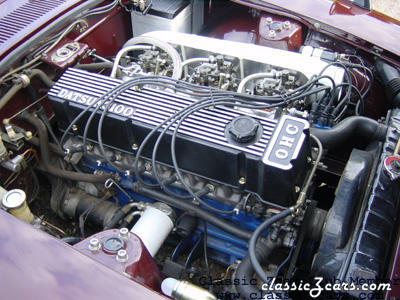 Hi Gav, Sorry for the late reply. I only just found your comment......... Sorry, no bonnet-hinge photos on file. I shall try to remember to take some for you. They just make the bonnet swing up differently. The airbox IS and aftermarket thing, but so are a lot of other things on the car too - so its a question of where to stop. Its actually a race airbox for an S20 engine turned upside down - so its kind of in period and in the family. The list of non "original" parts on the car would fill a couple of pages ( although the body is exactly as it left the factory ) but I DO try to keep it all "in period" ( early 70's ) or Factory Sports Option parts-related. Cheers, Alan.
 -
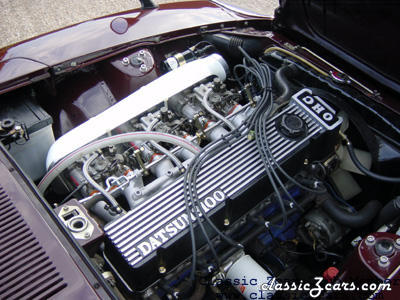 We already had it last Monday......... Seriously though, I drive it in all weathers and I'm not too worried about stone chips ( you can't see them in these photos but they are there alright ). Cheers, Alan.
 -
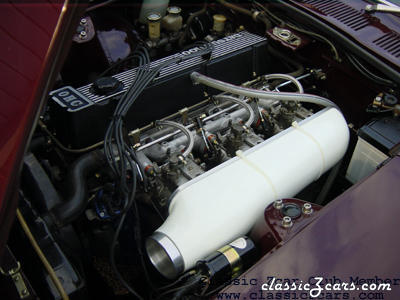 Hi Roger! Sorry for the late reply ( I don't come into this corner very often.... ). Hard to say what you could use on the standard Hitachis. I have seen all manner of things on them and nothing looks all that happy. Frankly the standard orange airbox / filter looks pretty good to me ( in a kind of nostalgic way ). Alan.
 -
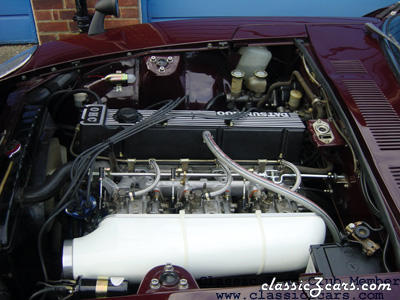 Hi Jeff, It runs down to the chassis rail where I have a little catch can / oil separator. Did you deduct me one of the stars for that?! Alan.
 -
Hi Mr C, I think I have a small write-up with my car photos on the Members cars area, and as far as I remember it tells the story of my car ( or did I do that somewhere else? - can't remember... getting old. ). Anyway, I did not bring it in from Japan myself ( that's the question that everyone asks me ) and I bought it from a guy who spent an absolute fortune on it after buying it as a running resto project. Since then I've spent an awful lot of time, effort and yes money on it - but most people can hardly see what I've been up to. Oh well. I have another car thats a long-term project ( don't really want to finish it, or I'll have to start something else ) which is a Z432-R replica ( complete with S20 "Twink" ) based on a mid 1970 Fairlady S30 shell. Its the proverbial Frankenstein car at the moment - parts are everywhere. Importing parts from Japan is like going to the dentist. It hurts and it costs you money. Despite the "close" proximity to Australia ( well, its closer that the USA and UK ) I think you will find that the retail cost in Japan of most items will leave your eyes watering and wondering why the Australian Dollar is so weedy against the mighty Yen. Don't menton G****z!! 2many, I don't know which fender flares you are talking about as I do not have the link - so I can't comment, sorry. Alan T.
-
Oh no, not that old chestnut! The Prince Motor Co. licensed some Mercedes-patented engine design elements during the mid Sixties. That's where that story comes from. Nissan took over Prince ( one of the BEST car-making companies in Japan - ever ) when they got into financial difficulties, and naturally the Prince staff who joined Nissan took all their expertise with them. Sad to hear people still mentioning the word "copy" in reference to this kind of matter. In truth, very little blatant copying went on - but a lot of genuinely agreed and paid-for licensing went on. Its a shame that the Japanese got a rep. for "copying" rather than "licensing". One is theft, the other is business.............. Keep it out of the trees on that Rally, Mike! That reminds me - I have some gas suspension info. for you, and I will post on it over the weekend. Alan T.
-
Those pics are of Les Cannaday's car, aren't they? I don't know if he got some "genuine" Overfenders and moulded a set off them, or the ones on his car are the real thing. Whatever, they look just about as close as you are going to get to the ZG Overfenders - I don't think anybody does anything better. I have seen them in Carbon Fibre in Japan, which looks a bit too modern for my tastes. Les Cannaday either works for or owns CLASSIC DATSUN MOTORSPORTS ( http://classicdatsun.com ), and they sell these ZG type Ovefenders there. You won't find them any cheaper in Japan, and the shipping / Duty is going to be more expensive too. Rick, if you want to use some for racing you will possibly be needing something even wider - like the "Works" versions. I will send you a PM about this later today. Please look out for it. All the best, Alan T.
-
Graeme, You're probably going to have to tell these two guys where you are thinking of getting yours from. You said that there are "several companies" that offer the flares - but I presume that you mean they are outside Japan. The suppliers that I know are all in Japan, and the retail cost ( let alone the cost of shipping ) is quite often enough to put prospective purchasers off. Also, there's a big difference between the ZG type Overfenders and the Works Type A and Type B................ What version are you after, gentlemen? Alan T.
-
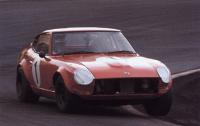
Here's a pic. of a Works ( SCCN ) 432R with the slightly wider Overfenders than the ZG type. Notice the little "lip" on the outer edge - the ZG Factory type do not have this. They got even wider on the aerodynamic cars that came just after this. Alan T.
-
Hi Graeme, The original Factory flares ( as fitted to the ZG ) were really rather dainty things, and were attached to the body with large aluminium "pop" type rivets. On the ZG, they were largely cosmetic and only intended to allow the Homologation for race use of even wider "Overfenders" on the Factory race cars. These were called the "Works" overfenders in Japan, and came in "Type A" and "Type B" versions - depending on what the rest of the body consisted of. These had a bigger base radius and were naturally wider than the ZG overfenders. If you put a set of the ZG type Overfenders on an S30-bodied Z, you will find that it does nothing to cure the problem of interference of the original wheel-arch lip with the tyre. What they did in Japan ( and quite brutally on the Works race cars ) was to cut out and re-weld most of the metal underneath the Overfenders - especially at the back. Many people are reluctant to do this, quite naturally! However, if your wheel / tyre combo does not interfere with the original sheetmetal, then you have no problem. They just won't "fill up" the Overfenders. I have a spare set of Overfenders for my car, and these were moulded off a set of factory originals. There is not much to them, and they just have the flat areas where you drill through and into the body and poke your pop-rivet into the virgin sheetmetal. I have the Factory race department instructions for fixing them on around here somewhere - if you are interested. I would be cautious about aftermarket overfenders, especially if it is the Factory-spec. ZG type that you are after. I know a couple of good suppliers in Japan, but I can't vouch for any product from elsewhere. They might not be quite "right". Only you can judge what you are expecting. The big question is what you want to do about cutting those original arches away? Good luck, Alan T.
-
All European markets other than UK had Kph speedos, as did the Japanese "Home" market. There are several different models of speedo in the Kph series ( some of them go to higher speeds than others ) depending on what model they were fitted to. Alan T.