HS30-H
Supporting Member
-
Joined
-
Last visited
Everything posted by HS30-H
-
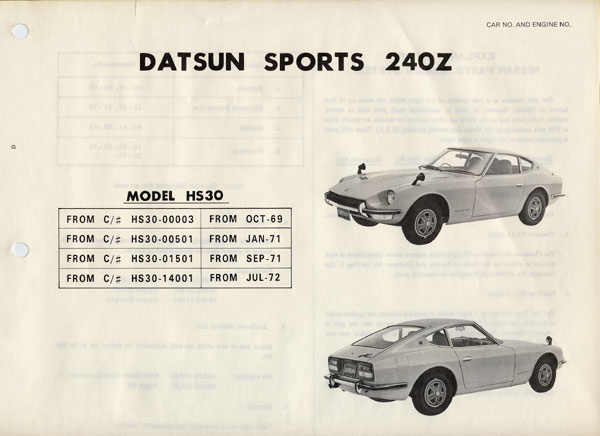
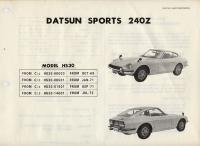
Er, so its 'HS30-00004' that is the 'lowest VIN' 240Z 'sold to the public' that you have found and verified. Correct? See what I mean? Hoist by your own petard, Sir. So you think your conclusion that 'HS30-00004' was manufactured in January 1970 proves that 'HS30-00001', 'HS30-00002' & 'HS30-00003' were also not made in 1969 ( presuming that they ever actually existed )? You are willing to be very definite in your views on this, but it seems to me that you have less than enough evidence to prove it. I believe that you might be under the impression that the '240Z' ( er, which model of 240Z? ) is not a member of the "S30 Model Series" of Z cars. In which case you had better inform Nissan, as they seem to disagree with you. So its OK for S30-S and S30 models of Fairlady Z to be lumped in with the PS30 and PS30-SB Fairlady Z ( despite their different prefixes and model variant names ) but not correct to include the '240Z' ( again, which one? ) in that group? Ah, must be the Beck Filing System at work. I remind you that the blue HLS30-U model '240Z' displayed at the 1969 Tokyo Auto Show was wearing all its 'Datsun 240Z' emblems, but was wearing a sign in place of its number plates that read "Fairlady Z - Export Model". As I have noted so many times before, you seem to be in total denial that the '240Z' ( for all territories ) was part of a range or family of cars that was covered by the appelation 'Model S30 Series'. Accepting that plain truth will not diminish the '240Z' in any way. Why can't you see it? I attach a scan from a Nissan factory parts manual for you. If you tell me that it is incorrect in the data it portrays, then it also calls into doubt the data published in the corresponding North American market parts manuals, does it not?
-
Nope ( see my previous post ). I got the same set of figures that you ( presumably ) got, but through several different sources, including a direct e-mail from Kats ( thanks Kats ). Ah, that will be the famous 'Beck Patent Blinkers' in full effect. You are trying to make a silly semantic point by pretending to be Mr Magoo again. To refresh, I quoted ( for 1969 calendar year production ): *S30 ( Fairlady Z & Fairlady Z-L ) = Chassis Numbers S30-00001~00953 *PS30 ( Fairlady Z432 & Fairlady Z432-R ) = Chassis Numbers PS30-00001~00072 For my used term "Chassis Numbers" - please note that I am referring to the body serial number and model variant type combination, as stamped into the firewall sheet metal, and stamped into the plate affixed in the engine bay. No doubt you will want to re-educate me as to what I should be calling this according to your personal interpretation ( biased heavily by customs in your home country, just like I am ), but as we are essentially discussing JAPANESE domestic models here, lets nip that in the bud and let ME tell YOU that I am talking about 'Shatai Bango' - OK? See above. You want me to list them one by one for you? S30-00001, S30-00002, S30-00003, S30-00004 de da de da de da......... You see why I love you so much? Its because you come up with nonsense like this in an effort to destroy what you don't agree with. Over 900 Fairladies were made before the end of 1969. Just how is saying that the "the first 300 or so Fairladies that stayed in Japan were made in the last three months of 1969" an accurate representation of the truth, let alone what was actually meant by NovaSS ( and which he confirmed in a subsequent post )? You really are the ultimate twister. Did you work as a speech writer for Tricky Dicky Nixon? I compared figures to 'Export' models in the Nissan Shatai figures for good reason. You obviously don't want to understand why. Well the "first 500" seems to be an arbitrary figure for a start, but you know damn well that it would be too long-winded and time-consuming to pinpoint anomalies one-by-one and then argue them through with you. I've been there before. Let's just say that my gripes with your site ( and you know what I mean by 'your' ) on the subject of its one way street view, and America Uber Alles stance ( summed up by the banner at the top of the home page - which I note you have corrected the spelling mistakes in since I pointed them out to you ) are well known to you. I can sum up the mindset of the site by pointing at title headings such as "Z Production" and "The True History of the Z Car", when in fact it would more accurately be "HLS30-U Production" and "The True History of the HLS30-U" etc etc etc. And you know what I'm talking about, and you know that I know why you do it. I'm NOT talking about the registers of early cars / original owners and the data supplied by owners - which I think is an admirable project worthy of praise by all. So stop trying to twist it. Tea break. I'm going to put the kettle on. There will now be a brief intermission. Popcorn, choc ices and Acapulco Sno-Cones will be available in the Foyer. What flavour would you like, Enrique? Alan T.
-
Hi Enrique, Your full post was very interesting and thoughfully put together, but do you mind if I concentrate my answer mainly on that part of it which I quote above? My first post on this thread ( I think it was post #11 on the thread ) contained information from two sources in Japan regarding reported production quantities and chassis numbers ( 'Shatai Bango' in Japanese ) for the 1969 Japanese market Z cars. I posted this information firstly to correct the statement made by NovaSS that "300 or so" Fairladies were made in 1969 ( I think he actually wrote "300 or so Fairladies that stayed in Japan" ), and secondly to BACK UP his assertion that his car was manufactured in November 1969. As you may know, our friend Kats visited some staff members of Nissan Shatai last year, and they gave him some copies of production records that contained details of both "Export" and "Domestic" S30-series Z cars that had been produced by Nissan Shatai during the 1969 and 1970 calendar years ( they are broken down by calendar years ). We have discussed these on this site on several previous threads, and they seem worthy of being taken seriously. Kats e-mailed copies to me, and - the World being small as it is - I also received copies from mutual friends in Japan. I stress, they apparently record the quantity of bodies / cars that Nissan Shatai made during the period recorded. It is still not clear exactly how many of these bodies / cars were assigned a series production chassis number ( "Shatai Bango" ) and how many of them were NOT sold to the General Public. We have also discussed this and other related points at length. Please note that they list Z car production broken down into just TWO types - namely "Domestic" and "Export" versions. As far as the 1969 calendar year goes, I would take that to mean 'S30' and 'PS30' prefixed models for 'Domestic' and 'HLS30' and - arguably - 'HS30' for the 'Export' types. If Nissan Shatai made even one 'Export' HS30 during 1969, then I think we should count it. The second set of figures I posted were taken from documents supplied to me personally as a member of "CLUB S30" of Japan. These are a list of chassis numbers ( 'Shatai Bango' ) recorded as issued to cars by the manufacturer, and reported to official Japanese ministries by the "Nihon Jidosha Kogyo Kai" ( my translation - take it how you will - would be 'Japanese Auto Manufacturers Association' ). These figures apparently list the 'Shatai Bangos' issued to Japanese DOMESTIC market models during the period they cover, broken down by VIN prefix type ( S30, PS30, HS30, GS30 etc etc ) and by calendar year. For example, in year 1969 they list 'S30' VIN numbers from 'S30-00001' through to 'S30-00953' INCLUSIVE as having been issued. That's 953 bodies / cars. Note that they DO NOT cover 'Export' models. I made the point that the Nissan Shatai numbers and the Nihon Jidosha Kogyo Kai numbers do not add up to the same total. I also made the point that it might be possible to explain this if you take into account that they essentially list quantities under different criteria ( one is 'bodies made', and one is 'bodies / cars issued with a 'Shatai Bango' ( serial VIN number ). Everybody is free to poke holes in these figures at their leisure, but I would remind everyone that they are arguably more credible than those published in a piece of Nissan advertising / coffee table book, published retrospectively ( as repeated and known to be total nonsense on zhome.com under the heading "Production Figures" at zhome.com/History/zproduction.html ) The Japanese lists are compiled from records filed AT THE TIME ( at the end of each calendar year ). If anyone wants to argue that NovaSS's car ( S30-00144 ) was NOT made in November 1969, then bring it on. I'll argue the case most strongly FOR. I hope it is now clear WHAT those figures are, WHERE they came from, and WHY I posted them. Alan T. Edit: sorry - can't insert hyperlink
-
Have a heart. Its 3am here in London. I might be able to do better if I wasn't so sleepy. If its any help, I believe NovaSS said he was in Delaware on the other Fairlady thread? ( take a look over there to make sure, perhaps? ). Nighty night. Alan T.
-
Shushhhhh! Speak softly, they might hear you. If you squint and take a step back from your monitor, you can just see them through the trees and undergrowth and stuff - see? There's two of 'em. One red and one white..........
-
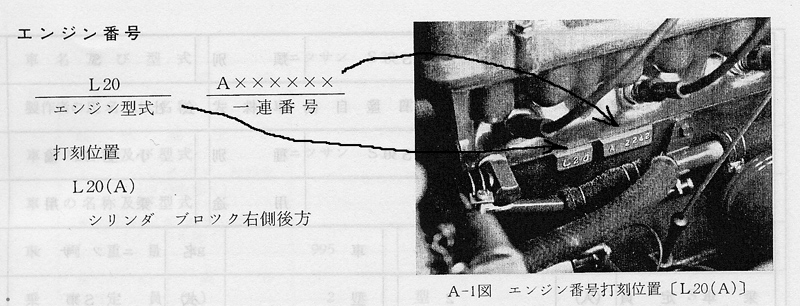
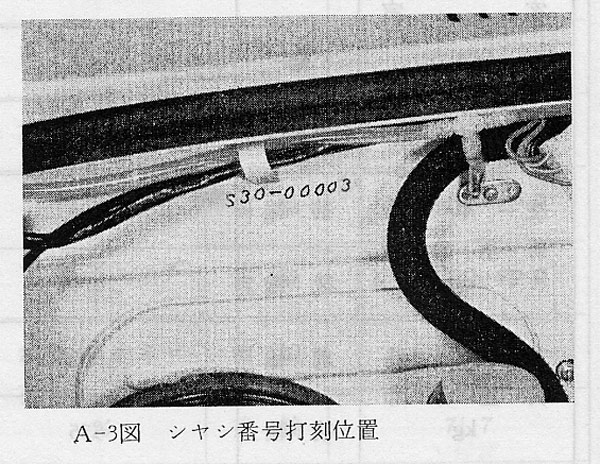
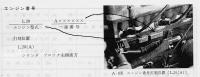
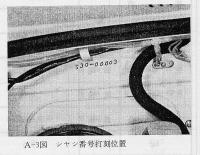
The picture of the hub cap you posted does appear to be from an early Fairlady. You can find head casting numbers on the right hand side of the head, hear the front, slightly below the spark plug holes. Expect to see 'E30' casting code for early Fairlady type ( as fitted to L20A engine ), but E31 and E88 are also possible, and were the types fitted to the majority of first generation Z cars exported to the USA. You might even come across a Y70, which was a later domestic head. Cylinder block designation is stamped into a pad on the right hand side of the block, near the back, and up near the top surface. See the attached picture for location reference. If its an early Fairlady block, then expect to see 'L20 A' as per the picture, but don't forget that Japan got the option of an L24 engine from late 1971, and you might even find an Export L26 or L28 ( even a domestic L28 is possible in the pile ). Body type designation ( VIN plus body serial number ) for a Fairlady will be stamped into the firewall sheetmetal, above the brake booster. You may need to push away wires and pipes to see it clearly. Expect to see 'S30' for an early Fairlady, but 'HS30' is also possible for a Fairlady ( from late 71 ) and so is 'S31'. USA market types say 'HLS30' and 'RLS30'. I don't think you have a 280Z there, but its hard to see clearly. Maybe the cars still have their original VIN tags too. There might be a pair of the smaller L20A-fitting Hitachi HJG38W-3 carbs in that pile, fitted to the equivalent narrow-runner manifold. Be aware that they are not a beneficial bolt-on to the USA model type heads, generally speaking. Be careful to identify them correctly before you sell them or use them. If you have any more questions then come right back with them. I'd start labelling stuff if I were you.
-
Hi Enrique, Since nobody else ( as far as I am aware ) has posted any serial / VIN number information on this thread apart from me, I presume you are referring to the figures that I posted - which relate to Japanese market models declared manufactured in 1969. Correct? I posted production figures supplied directly by Nissan Shatai ( the people that made the things ) and also Japanese government ministry records which show the VIN numbers of cars declared manufactured during the 1969. All of the numbers I posted are for JAPANESE market cars, as one of the first posts on this thread quoted "300" cars manufactured for the Japanese market during the 1969 calendar year - which was clearly wrong. Compare these figures to what you see on 'zhome.com' regarding the "first 500" at your leisure. I don't recall seeing ANY mention of the 1969 S30 and S30-S models on that site, and one would be forgiven for imagining that they did not even exist. The irony of seeing Carl Beck posting on this thread - completely ignoring the subject under discussion in the title of the thread, surprise surprise - was not lost on me. Gave me a wry smile, actually. But nevertheless, here is a 1969-build Fairlady being very relevant - in its own thread - and providing interesting conversational matter...... As far as I am aware, zhome.com does not show any information on production quantities provided by Nissan Shatai, or from any Japanese government ministry ( I wonder if a Japanese ministry would have VIN number records for exported cars? ). It seems that the information on the "first 500" ( that's a nice round figure isn't it? ) HLS30-U models on zhome.com is compiled mainly from US-based sources, and somewhat anecdotally to boot. As a guide to what was received in the USA and Canada it may very well be a good source, but what was actually made in Japan could be another thing entirely. Regarding the figures from Nissan Shatai - these are the quantities that Nissan Shatai recorded that they manufactured. We don't have any 100% reliable information that indicates whether all of these cars were assigned a VIN number, or which of them actually made it into the ownership of a private individual ( although Kats has had a very valiant stab at deciphering the numbers for the "Export" cars quoted ). As for the 'Shatai Bango, Ichi Ran Hyo' figures submitted to the Japanese ministry by 'Nihon Jidosha Kogyo Kai', these relate to VIN numbers assigned to Japanese market vehicles, broken down by VIN prefix type and year of manufacture. Pull them apart at your leisure. As I pointed out when I posted them, they don't completely correspond with the Nissan Shatai figures but they DO purport to list actual VIN numbers stamped onto car bodies. They are better than nothing, and I think the 'truth' ( whatever that is ) probably lies in how the figures are deciphered and what is counted ( and not counted ) in the Nissan Shatai figures. If you want to argue that the figures I have posted could be incorrect, then you are welcome to make that observation. However, this thread was started in reference to the car wearing VIN number S30-00144 which is CERTAINLY one of more than 900 'S30' VIN prefixed cars to have been manufactured before the end of 1969, and was almost certainly manufactured during November of that year. Alan T.
-
26th-Z, Slightly off topic but... Are you referring to the BRE SCCA C-Production cars here? I recall reading that they were using a 5 speed overdrive transmission ( the FS5C71-A ) on the BRE car(s). Was that legal under C-Production rules?
-
5 Speed ratios for 1969 & 1970 Fairlady Z-L model ( FS5C71-A transmission ): 1st = 2.957 2nd = 1.858 3rd = 1.311 4th = 1.000 5th = 0.852 R = 2.922 Diff ratio = 3.9:1 You keep making the assertion that a 5 speed transmission was fitted to "cover the lack of performance over the 240Z". I'd like to remind you that the Fairlady Z 432 and 432R both had exactly the same transmission ratios as the Z-L, and were rated at 160ps ( ie - more peak power than the HLS30-U ), as did the other non-USA market HLS30 models and HS30 models - which like the HLS30-U had the L24 engine. They were certainly not fitted with the overdrive 5 speed to cover any lack of performance, were they?
-
I'd say that the main reasons the USA / North American market 'HLS30-U' model was equipped with a 4-speed instead of a 5-speed were first of all COST savings, and secondly the perceived lack of sophistication of the potential market ( whether that was correct or not ). Don't forget that the HLS30-U model also had different ( softer ) spring rates and different ( softer ) damper rates in comparison to all other market models, and - initially at least - no rear Anti Roll Bar ( despite the fact that these were a part of the original design ). The HLS30-U also had a 'softer' front Anti Roll Bar in comparison to all other market models. This idea that all the other market models "needed" the 5-speed to compensate for a lack of power and torque is complete nonsense. Having a 5-speed transmission in that period was something of a luxury, and was still seen as rather fancy and exotic. A close ratio overdrive transmission was an essential part of the sporting drive, with the first four ratios nice and close for fun and the overdrive ratio available for high speed cruising at constant speeds. The fact that many of the other ( mainly European ) sports / GT models pitched at the USA market at the time were also equipped with 4 speeds should tell us more about the USA market than the cars themselves. Many of these cars came with 5 speeds in other markets..... Did the non-USA export-market '240Z' models have a 5-speed and 3.9 ratio diff to compensate for a lack of torque? Did the 432 and 432R have a 5-speed and 4.44 diff ratio to compensate for a lack of power? No. They had them because the buyers of such vehicles expected and wanted a close ratio 5 speed as part of the sports / GT car experience. My everyday-driver Alfa Romeo 156 has a close ratio 6 speed transmission. Does anybody seriously think this is to 'compensate' for something lacking? Do any modern cars have four speed transmissions? I can't think of one. There's a strong case to suggest that the HLS30-U was a 'dumbed down' sports car aimed at a market that was perceived ( perhaps mistakenly, I'd say ) not to require the same level of sporting character as other markets at that time. It seems that most owners of such cars have a hard time coming to terms with that fact. Nevertheless this 'dumbed down' sports car sold like hot cakes in its intended market. So maybe they got it right overall? Call it how you want to call it. The Japanese home market got a big choice of models, specs and optional parts right from the beginning of sales. The cheapest 'base model' Fairlady S30-S was equipped with a 4-speed and suitable diff ratio, with a 5-speed as an extra cost option. All other models were equipped with a 5 speed and suitable diff ratio, with the 4 speed available as an option. You'd have to say that a similar choice of models and specs would have been popular in the USA. Imagine if an official sharpened-up model for the serious enthusiast was available off the showroom floor in the USA; something like Car and Driver magazine's "240 Omega" could have been the perfect choice for the serious sporty driver at the time. Anyone who has driven an early Fairlady with L20A and 5 speed / 3.9 diff combo will know that it is a really nice package. It is irritating to see and hear people who have never even seen one of these cars in the flesh - let alone driven one - implying that they are in some way odd-ball models or are impaired by a matter of 400 cubic centimetres.
-
Yes. FS5C71-A. From the Factory.
-
Hi NovaSS, I'm not sure where you got that figure of 300 or so Fairladies for 1969? Nissan Shatai's records show that they had manufactured 969 'Domestic' market S30-series cars ( and 543 'Export' market S30-series cars - which will be 'HS30' and 'HLS30' models ) up to the end of December 1969. Nissan Shatai's figures for 'Domestic' market cars do not differentiate between Fairlady Z S30-S / S30 models ( Z and Z-L ) and Fairlady PS30 / PS30-SB ( Z432 / 432R ) models. However, official records for 'Domestic' chassis numbers ( 'Shatai Bango' in Japanese ) manufactured within the 1968 and 1976 period do exist, and these differentiate between S30 and PS30 variants. These chassis numbers are broken down by year in the records. The chassis numbers quoted for 1969 year manufacture are: *S30 ( Fairlady Z & Fairlady Z-L ) = Chassis Numbers S30-00001~00953 *PS30 ( Fairlady Z432 & Fairlady Z432-R ) = Chassis Numbers PS30-00001~00072 As you can see, Nissan Shatai's figures for the quantities of 'Domestic' bodies manufactured in 1969 ( total 969 ) do not add up with the official records of Chassis Numbers manufactured in 1969 ( 953 'S30' prefixed plus 72 'PS30' prefixed = 1025 cars total ). However, looking at the monthly breakdown of Nissan Shatai's figures, I think its safe to say that your car ( S30-00144 ) would indeed have been manufactured in November 1969. That's a nice low VIN number and I would say its a pretty rare survivor of 1969 production Fairladies. It is definitely worthy of being saved. Just one point: you mentioned that it was "numbers matching", and I know what you mean ( original engine in original chassis ) but the Japanese VIN tags never quoted the actual engine number. They just quoted the engine type related to its taxation class, as can be seen on the VIN tag picture that you posted. Whatever you do ( keep or sell ) I wish you all the best with it. If it wasn't so far away from me I would have been knocking on your door by now Good luck, Alan T.
-
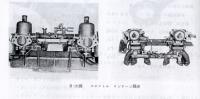
26th-Z, The earliest L20A-engined Fairladies ( roughly contemporary with your cars ) had the heat shield with the spring tabs at the bottom - same as both your cars, so I don't think the example you have with the spring tabs positioned higher up is a Fairlady item ( at least not early Fairlady anyway ). Here's a scan from the 1969 Japanese-market Factory workshop manual as evidence. It was published in November 1969, and ( as a guide to when the photos were shot ) it uses PS30-00009 as a 'model' in the 432 section......
-
Would it be considered churlish or denigrating if I suggested that Saran Wrap might be a good low-budget alternative to clear lenses? I'm trying to be diplomatic here....... :tapemouth
-
Great comedy posting! :laugh: But shouldn't this be in the 'Funnybone' section? bpilati, I think I have a job for you. Get yourself over to 'Eyerack' and sort that mess out. They need somebody with vision, and the ability to cut to the chase and sort out the good guys from the bad guys. After you have finished there are a few other hotspots in the world that need a spot of bpilati-stylee analysis. The Cast: Mr K = White-hatted 'Good Guy' ( in the Gary Cooper mould ). The Idiots In Japan = Black-hatted baddies ( er, no names no pack-drill - so no awkward questions about who they are, OK? ) Goethe = German Philosopher? Only here as a bit-part player ( but hey, he had just as much input on the '240ZEE' as that Goertz guy - so why not? ). Ghosn is about as French as I am ( ie - not very ).
-
I second that emotion. Thanks for posting data and pics, Guus. Very much appreciated.
-
Hi Michael, The Nissan Motorsports items are bound to be good ones, but don't ISKENDERIAN still make a couple of cams for the A-series? They were listed last time I looked at the Isky range. Worth giving them a try? If not, then I know for sure that some of the Japanese shops still carry special cams for these engines. Let me know if you want me to look into it. Cheers, Alan T.
-
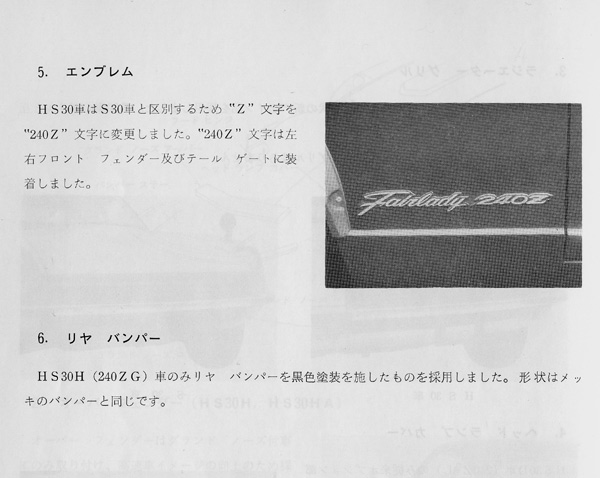
bpilati, I've been puzzling over what you wrote ( quoted above ) and I really can't make out exactly what you are referring to. Who are the executive jerks and why would they be boiling in their own juices? And what was Mr Katayama's good idea? The stories surrounding the removal of 'Fairlady' emblems by Katayama have clearly become mixed up over the years, and it is clear that 'whispering grass' syndrome took hold of the story a long time ago and blew it all out of proportion. I've never heard a first-hand account of the Japanese side of that story, and without hearing both sides of the story I think a lot of presumptions are being made. What is clear is that Katayama's personal removal of 'Fairlady' emblems from just three cars ( confirmed as being the three 'Press Cars' - thank you Carl Beck ) proves that this was already an issue that had been settled. Even before those three cars were being shown to the Press and public in the USA, Nissan had shown "Datsun 240Z" emblemed cars to the Japanese press, and displayed a "Datsun 240Z" emblemed HLS30-U ( wearing a sign saying "Fairlady Z - Export Version" ) at the 1969 Tokyo Auto Show. The issue must have been resolved before these cars were seen in Japan during October 1969. In fact, it must have been at least several weeks before that - as designing and producing the emblems ( even the first samples ) must have taken something like that amount of time. Even if the new emblems seen on the cars in October 1969 were hand-made prototypes then it surely indicates a firm decision as having been made and agreed a reasonable amount of time beforehand? Katayama's personal removal of the emblems from those cars gets talked-up as though it was a battle of wills that was still ongoing. It was clearly nothing of the sort. No way were Nissan Japan's staff trying to force the 'Fairlady' emblems on Katayama against his will at that point. Katayama's personal removal of the emblems on those three cars was just sweeping-up after the fight if you like. It was clearly already a done deal. Alan T.
-
The pair of wheels currently running on the Yahoo auction that g72s20 linked us to are a pair of Ise san's second run of replicas. He has had a very limited edition second run manufactured by the Hayashi Racing factory in aluminium, using an original wheel as a pattern. Hayashi were able to meet all the regulatory standards covering road wheels, so they are road legal. Only five sets are available, and they are being sold off in pairs. Expect to see them reach over 250,000 Yen per pair, or not reach the reserve price........ Alan T.
-
Hi NZeder, Sorry about my PM inbox. I've just been there and cleared it out a bit. I'll send you a PM straight away. Of course you would be most welcome to come and see my ZG ( you can see a half-built 432R replica and some boxes full of junk too :classic: ). Hopefully the weather will be a bit better by that time. I'll have to check dates and see if there are any interesting car-related events worth visiting while you are in the UK. Cheers, Alan T.
-
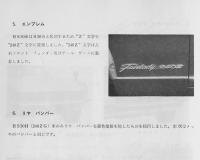
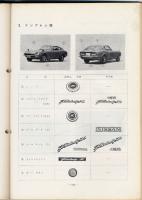
Ah, OK I see what you mean. Well, don't forget that the ZG was supplied without the spoiler in most cases, as were most of the Japanese models in fact. The spoilers were often specified as catalogue 'Option' parts, and these were fitted by dealers. When the dealers installed the spoilers, they had to drill the holes to mount them - hence the inconsistency in mounting position that you can see. It seems that the spoilers took a while to catch on in Japan, and many cars got them a good while after leaving the showroom. Here's a couple more illustrative pics from official Nissan documentation:
-
Nope. I've got his phone number though. I think I'll call him next week some time and see if he is interested in filling in a few gaps. I have a lot of background info from other people. I just sent you an e-mail about it. Tell me what you think.
-
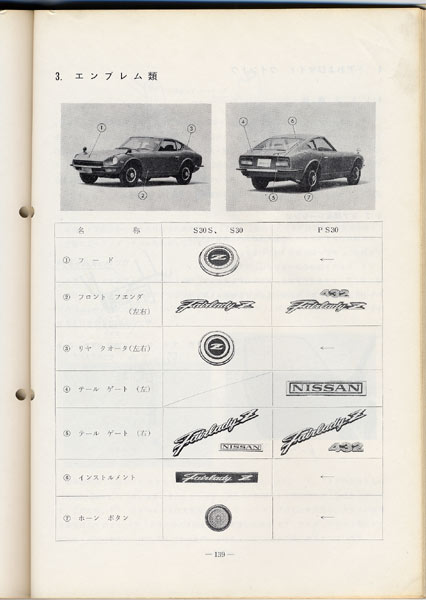
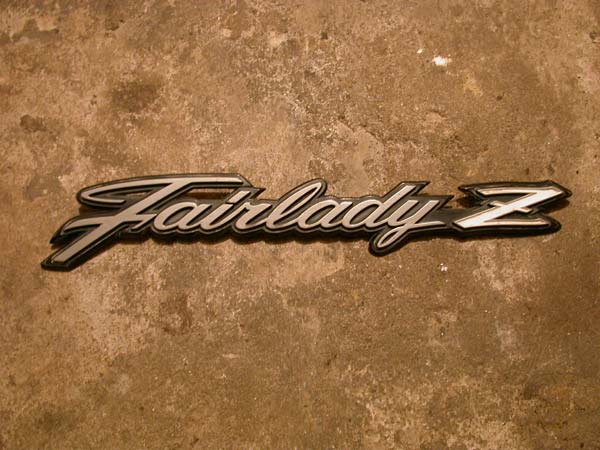
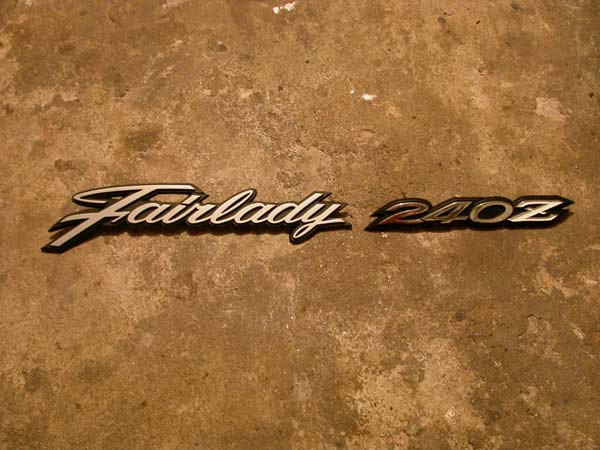
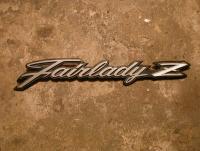
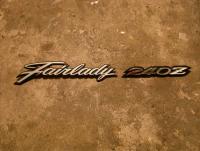
Hi Mike, I don't understand. Can you clarify what you want me to clarify? The emblems on the rear spoiler of my ZG are correct. A 'Fairlady' emblem ( no 'Z' integral ) and a '240Z' emblem.
-
Example photos of the two different types:
-
Christopher, If this is the one that you bought from the UK recently, then I can tell you EXACTLY what car it came from ( and it was categorically NOT HS30-00026 ). I'll contact you directly about it.