kats
Community Member
-
Joined
-
Last visited
Everything posted by kats
-
Thanks xs10shl, I am learning from you too. And more pictures, thanks! I didn’t expect that the Works wheel has a straight hole for the straight sleeve nut, it is interesting. For safety reasons, people don’t recommend using the old original magnesium wheel. Also Nissan says about care of it in the book “after driving in a salty water you must wash the wheel really well with the fresh water” I know most of Z432 owners are still riding on their original magnesium wheels. Never heard of bad news. Maybe they don’t travel far away? I know there is only one enthusiast who loves driving long-distance across Japan is Takeuchi-san, a PZR owner. I do drive like Takeuchi san, but he has been doing it from late 1970’s. Kats
-
Thanks Ian, now I have got you. I am not good at Physics but I can understand how the thick fixed washer does for the magnesium wheel. Then why did Kobe Seiko go to put tapered seat lately? I am wondering it like you. Also the Works car’s wheel too, put a tapered seat in a magnesium wheel. Is this something like a compromised engineering? Or, did a newly invented nut with a spinning collar achieve for both good clamping force and centering the wheel? Mr.Namba - the general manager of the Works rally team - said “ we applied it for patents “. I guess spinning collar would be nice because it doesn’t get scratched. Worn out-free collar is always keeping correct clamping force. Wheels were so many prepared and provided in the rally , but wheel nuts might have always been with the car(just my guess, I think each car had spare nuts however) . Kats
-
Thank you so much!! What we see is, your car has a 71A rubber boot, and seems to me the cut out of the center tunnel for the boot looks originally 71A, just slightly widened to accommodate the 71B. Please see this picture, my 06/1972 ZG. Originally 71B and there are four holes for tapping screws to secure the 71B rubber boot with a metal retainer ring. Kats

-
Thanks for posting wheel nuts here, I see some of them looked the same as I put on my Z432 for temporarily, I mean until I have had got correct Z432 specific wheel nuts. I remember Matsuo san told me about the wheel nut for Z432, I still don’t understand 100% correctly what Matsuo san said. He said “for a magnesium wheel, we must have a nut which presses (pushes ) the wheel nicely tightly. So that the Z432 nut has a big thick fixed basement (washer?) which is not turning separately from the nut. Coud you someone explain us about the Z432 nut story with Matsuo san’s comments? Is there any reason why the straight type nut was chosen for ? Tapered type nut does better than the straight type for centering the wheel, so that the Works rally wheel has tapered nut and even more it has a spinning collar. Kats


-
Thank you so much for taking many pictures, they looked genuine except the wiper blades. But, your wiper blades must have been provided from Nissan. At some point Nissan provided your wiper blades to customers when they got received the parts number of HZG and HZL. So, can I say that they are Nissan genuine wiper blades but shape is different? About the transmission, could you please take a picture of a little wider view of the cut out for the shift lever. I am assuming the cut out will be the same for FS5C71A. Very interesting! Kats
-
OK I have got it. By the way If you sell the G-nose assembly, I recommend selling it in Japan. Average price is like 10000 USD for a complete set. Over fenders, a new set will score 1500-2000 USD. I know a 1970 radio for US and Canada sells 1500-2000 USD, so not surprising price for you. I am trying to find out if there is an exception about the glove box markings. I saw a Fairlady 240ZG who said it is a genuine HZG has a markings on the glove box which showed exactly the one like yours. I was suspicious about the car, but I am now feeling that I need to dig a lot more about the glove box markings. Your example made me think so. Yes in my experience, genuine HZG has “H-H” for the glove box. Some genuine HZG replaced with a new one, sadly they lost original H-H markings. As we discussed before, the only certain way to identify a genuine HZG is a number written in a registration certificate. The last three digits 070 for a 5 speed, 100 for an automatic transmission, without these numbers, it is very hard to prove that the car is an original HZG if a car lost unique HZG features. Kats
-
That seems genuine! A rear bumper for HZG, please note the color of the bumper. It is not the same color with the tail light trim panel. It is a little bit glossy. And the bumper has a center rubber piece along with the center bumper. And Fairlady 240Z-L/ 240ZG have black wiper blades and arms. Kats


-
1971 or 1972, I know it is important for the US owners but I just don’t know about it. Using the interview “100 HZG a month”, your car would be completed in between November 1971 to December 1971. ( let’s say 200 HS30 cars a month, 70 for export, 130 for Japan. If 80% of them HZG, approximately 100 HZG). Oh, with that in mind, your car must have had a non- duct lower G-nose originally. There is a possibility to have replaced at some point. It is well known story that if you ordered the lower G-nose later let’s say in 80s, 90s and early 2000, Nissan provided only duct fitted lower G-nose. We can understand that because Nissan was going to sell Fairlady 260Z ( fuel injected L26 with G-nose 2 seater and 2+2) in 1974, Nissan prepared and made G-nose parts with duct. So we think Nissan sells those to us from their inventory. Kats
-
Let’s move on to other items, I believe you have already gone through every details that we have been talking about, but I will do this so please stay with me. The over fenders, rear bumper and bracket wiper arm and blade. Over fenders have identification label for each of them, in the picture you see “FL” means Front Left. Even more, the most important thing is the shape of the over fender. It has certain edge around corners, you will find genuine ones are very different and beautiful. I showed new over fenders bough from Nissan before but they lost their crisp edge, however they are still Nissan genuine parts probably made in 80s and 90s. What I want to say is, over fenders which came with a car from the factory assembly line is different from the ones later provided. Please see the position of the rivets too, they are not exactly the same to other cars but we see some general appearance on them. And one thing for the front over fenders, genuine original one has a kind of square-ish corner at the front end. Kats


-
The duct works, in the Service Shuho(service bulletins) it says the duct for the Automatic transmission car. I was thinking it is mis-writing for the Air conditioned car. But now I am feeling the book says true. Because the radiator of the automatic transmission has a oil tank to cool the oil of the automatic transmission. So, the duct is needed to cool the oil tank under the radiator.This was added in September 1972. So up to September 1972, no duct for the lower nose. Mine doesn’t have it because my ZG was made June 1972. Kats
-
Wow ! HZG important items are still there ! I am talking about the chopped bracket is this, please see the pictures hope this helps. Kats


-
Here is my view-point to see a Fairlady 240ZG, I show some pictures to enjoy. Could you see the chopped bracket which is used for the cars non-G nose S30? This is how Nissan Shatai did at the assembly line. About a torsion bar, HZG needs to have stiffer ones so that be able to assist operation the bonnet like other cars. G-nose bonnet bracket needs to be compact and perform differently and appropriately for not to obstruct the nose center piece. A big unique towing bracket is exclusively made for HZG. This one is hard to find if the car lost it. Kats


-
Wow ! First thing that caught my eyes is HS30-10324, your car has a FS5C71A (people say monkey action/ three-piece casing etc) in the new introduced center console. This combination was applied for very limited HS30 series (export and Japan) ,from HS30-10001 to 10634, Oct 1971 to Jan 1972. I have heard typical problems from the owners and mechanics who tried to get assorted parts of the transmission for the cars in that period. People usually thought the new center console should have coupled with a two-piece casing transmission, and also parts catalog did not say anything specific. So it was common that even Nissan parts center provided parts which couldn’t use for their cars. For the 4 speed cars, the new center console started from around Oct 1971 got a F4W71B, two-piece casing. Kats

-
This is a good information, interviews for Nissan engineers about Fairlady 240ZG by Motor Fan magazine April 1972. it says “ talking about ZG, approximately 100 cars a month” As a side note, at that time Nissan Shatai reached making 6000 S30 series cars a month. I think Fairlady 240Z series were made from Oct 1971 to Aug 1973, 23 consecutive months. So 100 HZG x 23 months =2300 HZG ,but I don’t think every month equally made. It must have been slow in the beginning and the end of the production (people would want to wait buying until they see a new car if they were informed about it) . So, 2560 x 0.8 = 2048, approximately 2050 HZG would have been made, just my guessing. I can’t recall exactly but I remember some people said that HZG was made approximately 2000 cars,don’t know how reliable the source was. I love this conversation, interesting! Kats

-
Thanks for referring my post dspillman, I am glad and surprised that there is such an enthusiastic S30 owner about Japanese version, “ Fairlady 240Z series”. Alan said it all, thank you so much always. I don’t have a thing to add. About my “2600 Fairlady 240Z series “ , I tried re-readings from the book. I am sorry I can’t be more accurate. Total 2560 HS30 series in Japan, that is what I read. But this is just for fun ,please don’t take it seriously, I should say that first in my old post. Also, my comment “ 80% of HS30 series in Japan would be a HS30–H “ this is just my guess. That number came from my entire experience, I review numerous pictures in my laptop and I counted the cars which I have seen in person and saw the cars on internet and books etc) . I am dreaming about to see the documents about production numbers of our cars in the Nissan Shatai factory, but I may not be able to do. I just have fun with this. Kats


-
I saw the BAT 71 240Z, I really love the car’s preserved condition and the silver color. The original 901 silver something looked different from very shiny silver nowadays. I like it. Here is a sample paint tips of Dupon. I will be happy if I can use the tips for painting my cars back to the original. Kats

-
I will check it when I home. I sold my bits and pieces last year, I hope the jack is not included in the sale. Kats
-
I hope you will find a good suitable tools and wheels. We see the jack and chocks appeared to have the date stamp quite varied to the car’s assumed completion date. So as long as the date stamp on the tools show no later than the date of completion, it will be fine. My two 03/1970 cars have different date for the jack and chocks, HLS30-02146 has 2nd September 1969 for the jack , February 1970 for the chocks. HLS30-02156 has 5th March 1970 for the jack, March 1970 for the chocks. So we don’t have to be serious about it, especially up to early 1970. Me too, I have been dreaming about to know when my cars finished at the factory. What parts would be the last thing to be installed at the assembly lines? Wheels ? What parts would be the latest produced and stamped? My guess is the seats would be the one that being hard to be made a lot earlier than the car because otherwise Nissan Shatai had to have really big room to store and need to take care of the seats not to damage before installation. And it seems to me easy to make no need to be made well before the schedule. I know my guess doesn’t work for finding out my question. But it’s interesting. Kats The half moon cut outs of the bumpers are improved feature for wrenching I think. My 06/1972 240ZG doesn’t have the cut outs on the bumpers.
-
Hi Dan, yours is super! I really love seeing the original muffler and exhaust system, even you put NOS into your car. The Long black/chrome tip is just right for our car and the front tube is an early type which makes me feel hand crafted pieces. Those parts must have been so hard to come by, harder than D hub caps I think. Even the green BAT 240Z doesn’t have the whole system. kats
-
These right hand rear quarter trim panel are used for all the S30 series no matter how the car equipped with the tank or not. March 1973, when Japanese automobile emissions regulations began to be serious, Fairlady Z series got the vapor tank associated with a gas tank(E4600) and HMB carburetors (for L24) but no air pump. Kats


-
Hi dutchzcarguy , my Fairlady 240ZG has the same configuration. The three way connector pipe for the vent tube is also made of plastic and it tends to be brittle as it gets old especially the nipple for the small diameter tube. The J shape bold vent hose from the tank is connected to this three way connector. And a small diameter tube is climbing upward to the clip on the upper edge of the quarter panel then going down to the rubber grommet to drain outside. The hose I showed here is for the US version and it has longer end than the one for the three way connector. So, the US version hose 17235-E4600 can be used for the Fairlady Z series also the cars without vapor tank. You just cut a little bit to fit the three way connector. The orange is 12/1971 US Datsun 240Z, the maroon is 06/1972 Fairlady 240ZG. Kats


-
Hi, just a reminder of the difference between the two of interior trim panel. The Blue one is an early type which has a small box for the plastic tank. The black one is a later type which has a larger box for the metal tank. If you put a metal tank into an early car, the trim panel would not fit properly. Kats
-
Thanks! I will check it and bid. Kats
-
Hi inline6, what a interesting story it is, that car would appear to be ‘FairladyZ’ (basic model, code S30-S) because of its rubber mats and 3.70 rear diff. Maybe owner’s choice 5 speed. Today I would like to ask one thing, is there anyone can provide me a bonnet catch bracket? I want a good , complete metal bracket for my car (I don’t need a catch mechanism ). I have a new fuel tank vapor hose from Nissan, I hope there is someone who is willing to trade his/her metal bracket with my vapor hose. By the way, I was able to buy the hose from local Nissan in last summer. Now sadly became NLA though. Kats


-
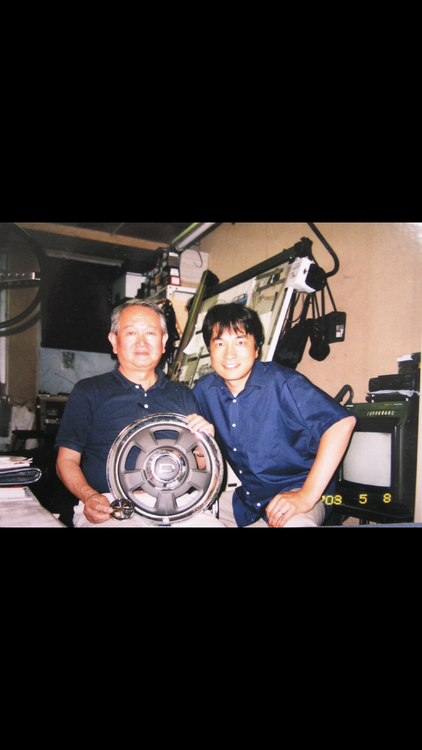
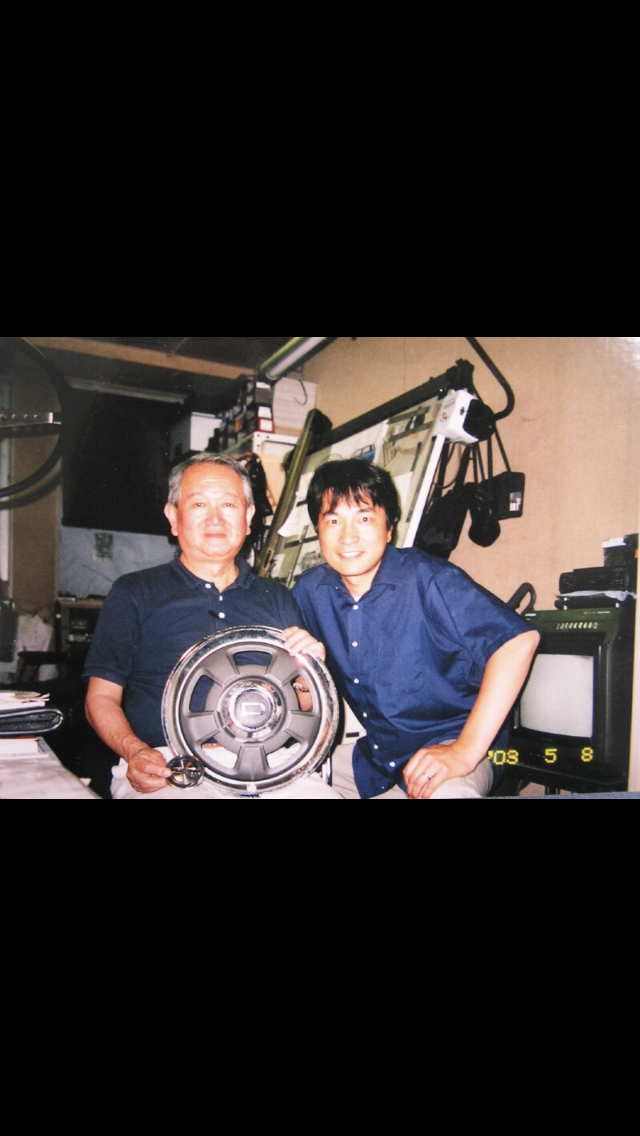
Hi Alan, Mr.Matsuo too. When I asked Matsuo-san “wood or plastic” 20 years ago, he explained how our wood steering wheel was made. Matsuo-san said “ real wood is pressed with liquid like plastic in a very strong force. Wood but same time plastic. That is what IZUMI doing”. Matsuo-san’s statement is for how, not for what we should call it. Matsuo-san was surprised and delighted, then said “ what a enthusiastic discussion (in the classiczcar.com), you guys are OTAKU, interesting!” When Matsuo-san talked about steering wheel, he always say” ウッド ハンドル” (wood steering wheel). This may sounds incorrect for someone, but do we really need to say in a different way and advise Matsuo-san not to call it wood? Probably he would say “I didn’t even think about there is a point of view that it should not be called or regarded wood steering wheel. You guys are great! But I still call it wood steering wheel”… I feel very comfortable that Nissan and Izumi called it “wood”. I have never felt I am cheated. Alan’s anatomy, that is fascinating and the pictures speak themselves. This picture was taken 8th May 2003 in Mr.Matsuo’s studio. Matsuo-san told me and showed me a lot of interesting stuff to me. A Memorial Day for me. Kats