



Zed Head
Community Member
-
Joined
-
Last visited
Everything posted by Zed Head
-
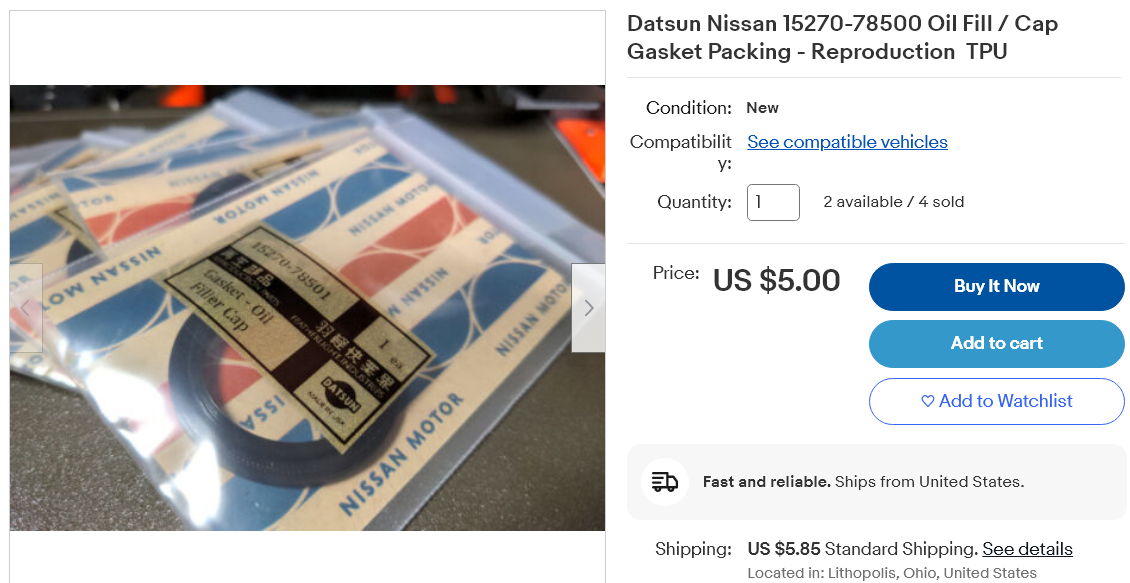
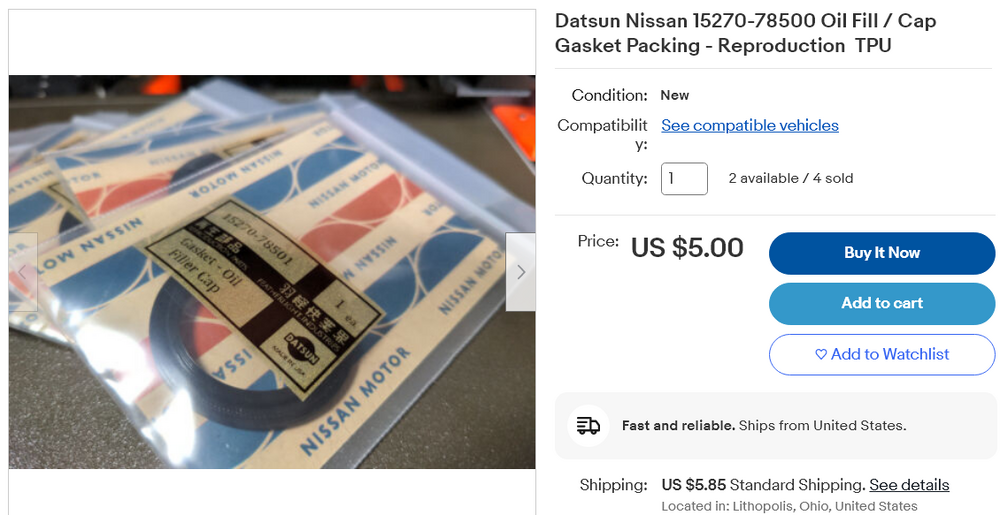
So it's basically a counterfeit part sold out in the open on eBay. Nissan packaging. I see that the guy put some stuff in the description. Still looks like a cover-up for somebody to buy counterfeit Nissan parts for resale. No need to spend time on the packaging if you're telling the world it's a reproduction. Item description from the seller I needed a gasket for my original oil fill cap for my Datsun 620. The original part number 15270-78500 is now discontinued, so I looked at a picture and took some measurements, then made my own. Maybe someone else needs one too! My part number here is 15270-78501 to denote a variation of the original part. I've used this on my truck for a couple weeks so far with no issues. Made from Overture brand TPU. This should work for any vehicle calling for the original part number with the original cap. I tried to select all vehicles based on what NissanPartsDeal says these are supposed to fit. If using the elephant logo cap, the ridge goes into the cap, but the Nissan lettering cap, the ridge should go towards the valve cover. Feel free to contact me with any issues, suggestions, or requests!
-
I don't think so. If the wheel is properly designed for a lug centric application it should have the same likelihood of misbalance as a hub centric wheel. I think that the problems come out when people use a hub-centric wheel on a lug-centric hub or vice-versa. Which looks like what you're thinking about doing. If Rota designed the wheel as a lug-centric wheel then they most likely would have balanced/centered it around the lugs. The hub hole would be low tolerance. Plus, the lug holes will be tight tolerance and if your adapter is not centered between the lugs you could find a tolerance mismatch. You might even end up putting a bending load on the lugs when you force the lug nuts in to the holes or down on their tapered seats. And, you'll need to match the center of the wheel to the center of the hub in your adapter/spacer since it's not just a gap filler. It is a spacer that has to fit two centers. Neither the hub or the wheel was designed to be the centering mechanism. It's more complex than it seems if you want the actual mass to be centered and supported. Apparently, hub centric can be stronger than lug centric. But, it still comes back to the engineering group that designed the system. Here's a simple review. The guy covers some of what you're considering. Things to be aware of. https://www.machinedesign.com/fastening-joining/article/21832042/whats-the-difference-between-lugcentric-and-hubcentric-wheels
-
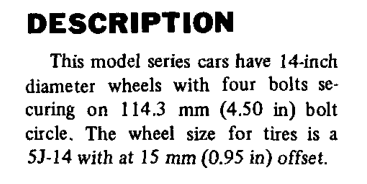
Looks like you answered your own question. Center is center, not clear why one method would be better than another, besides perception. Since Nissan did not use the hub as a surface meant to fit another surface then there would be no reason to have a tight tolerance on the machining process. So you might find that each of your adapter/spacers will have to be custom-fit. Don't forget the longer lugs or longer lug nuts. Don't know what type of nut the Konig's use, tapered seat or shanked. 15mm is substantial. Or maybe it's 25mm. Nissan either made a typo or can't do math. Probably supposed tobe 0.59.
-
What do you mean by "uniform size"? Here's Milkfab. https://milkfab-engineering.com/
-
siteunseen's head was rebuild by Dover Cylinder Head. People often converted the hydraulic pivots to solid using Timesert parts. From everything that I've learned, in the USA market, the P90(a) only came on the turbo engines. The US market has many differences from the rest of the world market. Here's an old thread about the Timesert conversion.
-
You should start a Youtube channel. Paint store head porting in Alabama. I'd watch it.
-
Have you checked the cam that's in it? Probably factory turbo cam but who knows.
-
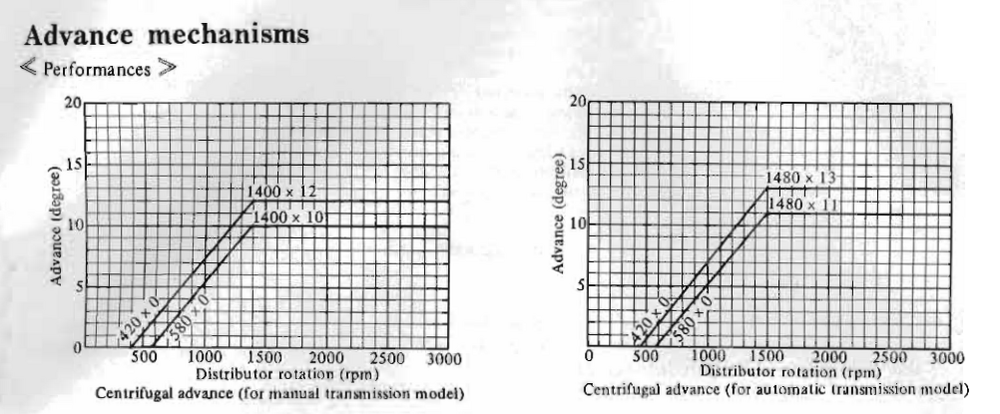
I'd check your mechanical advance weights and see what maximum advance will be at high RPM, full throttle. Then do the math to get about 32 - 34 degrees total. That's the magic number for best performance for most engines. Don't forget to double the number stamped on the weights since they are distributor degrees not crankshaft. e.g. weights stamped 9 will give 18 degrees mechanical. I've seen 11's. 34 - 22 = 12. You might even have 12's. Always a good idea to check the centrifugal mechanism anyway, sometimes things get gummed up or fall apart. Here's the plots from the 73 FSM.
-
You can even get a whole cap. Not Nissan though. https://www.carpartsmanual.com/datsun/Z-1969-1978/engine-280z/cylinder-head/39 https://www.sixityauto.com/gates-31109-engine-oil-filler-cap-for-15255-21b00-16920-60b02-e8dz-6766-a-15610-p2a-000-e7tz-6766-a-3022017404.html

-
Don't know why I didn't go here last time, it's usually my go-to place to go to. https://www.carpartsmanual.com/datsun/Z-1969-1978/engine-280z/cylinder-head https://www.carpartsmanual.com/datsun/Z-1969-1978/engine-280z/cylinder-head/39 https://www.carpartsmanual.com/datsun/Z-1969-1978/engine-280z/cylinder-head/40 Not really sure what these guys mean by "reproduction TPU". Probably better than rock hard though. https://www.ebay.com/itm/275346381999
-
Here's Dover. Still in business. https://www.doverheads.com/ https://www.doverheads.com/wp-content/uploads/2021/07/Dover-Cylinder-Head-Catalog-2021_07.pdf

-
Skimming is to increase compression ratio? Still not grasping the overall plan. It's basically a square exhaust port P79 head. Like building a flat-top piston 280ZX engine. If you put a cam in it all of those nice perfectly centered wear patterns go away. I guess I'm saying it has high value as-is. You could probably sell it or trade it for three or four heads that could really use some reworking.
-
Looks in very good shape. Sure you want to mess with it? What are your plans, there was advice in the other thread.
-
I wonder if a bore scope would show anything? Down the plug hole and maybe down the intake runners. Leaking valve seals should cause oily intake valves. Of course, if it's that you'll end up removing the head anyway. Still interested in what the block and head guys did or said that they were going to do. No details. Have you checked the spark plugs? Maybe it's just one or two cylinders.
-
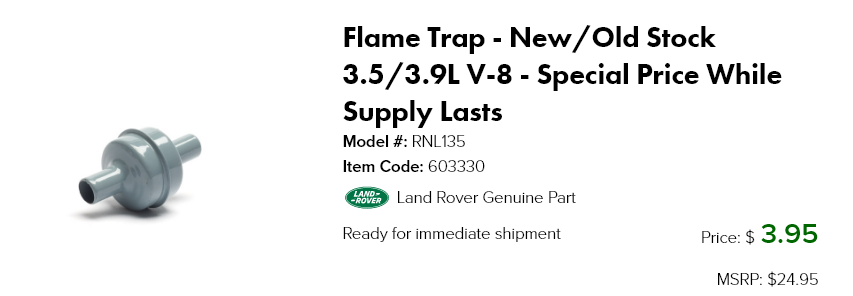
Another. https://www.roversnorth.com/parts/603330_flame_trap_new_old_stock_3_5_3_9l_v_8_special_price_while_supply_lasts
-
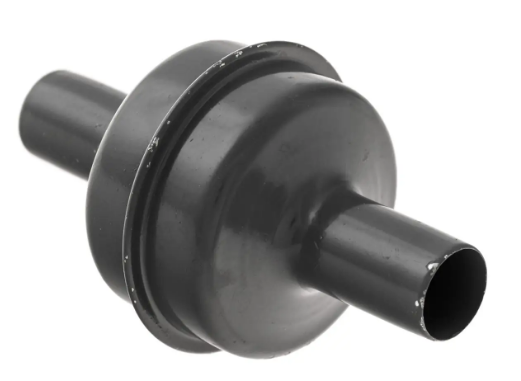
I searched "flame trap" on the Google and some interesting things came up. https://mossmotors.com/379-580-flame-trap

-
I read more of your details and see that you have 180 marked. How did you get the water temperature set? Must have taken some time. Could be some error there. You might jump the pins at the sensor connector in the harness at the thermostat housing then measure continuity at the ECU connector between 13 and 16 like suggested. It should be very low, like under 5 ohms. If it's good you won't have to mess around with the wires.
-
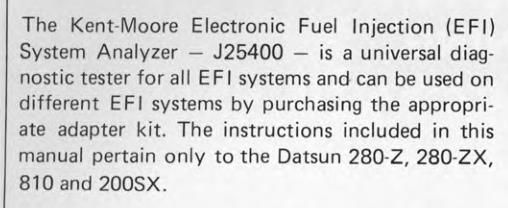
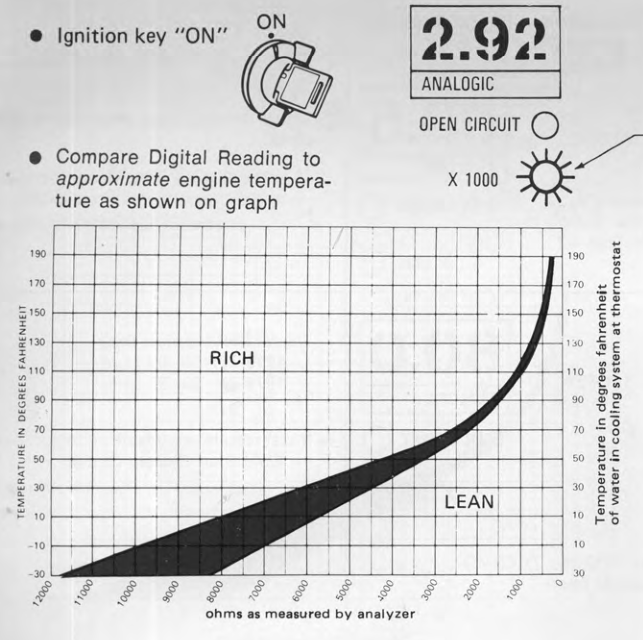
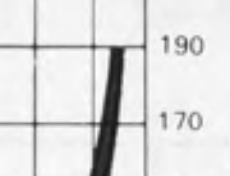
Here is Nissan's documentation from the 1980 EFI book. Since you're mostly looking at a warm engine, the resistance at 180 is probably the most relevant. I'd guess that their spec is 250 to 275 ohms, by eye (edit - probably more like 300 to 350 on the high end since the line is 500. Of course, they are just lines on a piece of paper [pixels on a video screen]). Seems to match what CO's plot shows. Yours all seem rich. Did you measure at the sensor pins or at the ECU? Might have resistance at your bullet connectors in the sub-harness oe at the EV1 connector itself.

-
I'm trying to get past the assumptions. The means to know are at hand...
-
Just curious but I had an exchange about this in the past and proposed that maybe the cap would still seat well without the gasket. Could you try yours and see? I think I was just being obstinate and that I probably actually had a gasket on my old cap. My memory was of looking at it and being surprised that Nissan used two hard flat surfaces to seal the oil filler area. But the car was gone so I couldn't check it.
-
It's actually a shaped gasket, by CO's picture, not an o-ring. The question is, does it still exist in the cap. The fact that oil is leaking from two places kind of suggests blowby pressure. Maybe a clogged PCV valve or hose.
-
Oil smoke has a distinctive smell, and so does gasoline vapor. Might be worthwhile to run through the cloud and see what it smells like, if your nose works. And water vapor dissipates pretty quickly. You could put a smooth cold surface at the exhaust pipe, a mirror or a piece of chromed metal, and see what condenses. If it's as bad as you describe you should get something.
-
Details might show something. "Did" is not enough. Valve seals can get damaged during installation. You might even see something just by removing the valve cover and taking a look. Is there blowby? Smoke from the oil filler cap? Wrong/poor rings and ring sealing should show up there also.
-
It has the same chamber volume as a P79 head. With flat top pistons it will have the same CR as a 280Zx engine, 8.8. One benefit is the lack of exhaust port liners.
-
Are those the solid rocker arm pivots? They look adjustable. Should be fun. What will you do with it when it's done? And, have to ask - what is all of that stuff?