


HS30-H
Supporting Member
-
Joined
-
Last visited
Everything posted by HS30-H
-
The engine block number matches the engine bay data plate. What makes you say it isn't the original? Description says that the car had an L28 installed for a while, but the original L24 was re-installed. The transmission is the FS5C71-A 5-speed, as fitted to the car when new. You can tell that just from the photos. Yeah. Deal breaker. I'm out... {facepalm}
-
The car has been offered for sale several times over the last couple of years, but the asking price has been quite high and the market here in the UK is particularly difficult lately. It takes a long time to find the right buyer. I've seen the car in person and it's really nice, but it's not a good time to be selling. Another - also Green - ex-Australian market car, slightly later production than this one (I think early '71?) was sold last year here in the UK and it took a LONG time for that to find a new home. It went for what I would regard as a high figure though. Late August and into September seems about right. It must be remembered that HS30-prefixed production was stopped quite early while Nissan Shatai concentrated efforts on satisfying local Japanese demand and the huge numbers required for North American consumption. It made sense for them to hold fire on other markets which required detail differences in - for example - lighting type approval, but which also had more competition and in some cases higher sales taxes to contend with. It's natural for people to see low chassis numbers and imagine that it automatically means 'early' production, but it doesn't work like that for HS30 prefixes. Nissan told us that the seventh S30-series Z to be given a serial production number and the indeed the fourth production prototype Z was HS30-00001, and that public sales began with HS30-00003 in October 1969, but production was intermittent after that. Factory data tells us that January 1971 production of HS30-prefixed cars began again with HS30-00501, so 1970 year production must have been less than 500 cars presuming no gaps/jumps.
-
However, a 'Late' production car, slightly scruffy and non-original (mostly later non-period mods) but in a great colour, put in front of people who - largely - have no idea what they are looking at. Weak Yen is distorting current USD conversion figure, but then that was the story of the S30-series Z from the beginning. If somebody wants a really good - original and correct - 432 today, 99% of the cars are still in Japan and the best ones still tend to change hands there privately (often involving cash). I think any 432 which has been brought out of Japan has already been 'picked' and therefore somebody has already made some money off it, or expects to. And if those people are buying whilst expecting to turn a profit then they'll probably be looking at the lower end of the Japanese market. "There be dragons..." I have personal experience of two 432s which pitched up here in the UK in recent years and both were horror stories that had been disguised for quick sale and bought by neophytes who had been 'advised' by shyster 'appraisers' who had no idea what they were looking at. Sad for the cars - they were innocent victims - but hard cheese for the speculators and their stupid 'investment portfolio' hubris. Meh.
-
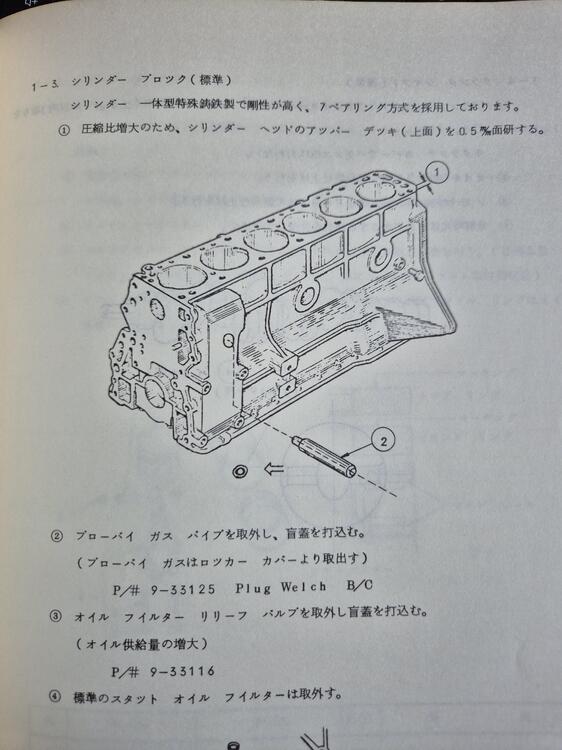
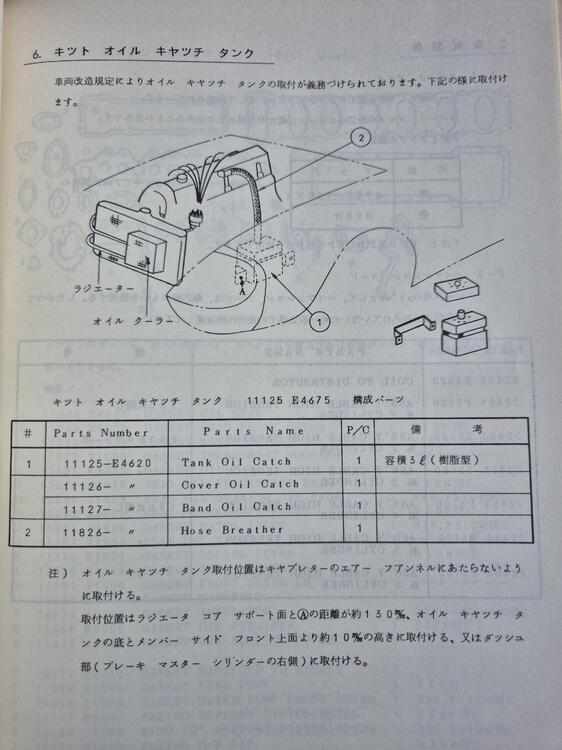
I refer you to the answer I gave in this thread: Nissan Sports advised that for competition use it's OK to cap the block breather tube and run the valve cover vent to a catch can. I've done that on several of my own cars (running both vents into a catch can in one case) with no ill effects.
-
Let us resolve to not make it one with hyperbolic nitpicking statements then.
-
The short answer is no. I believe it is 'known' to a fair few people in the S30-series Z owning community here in the UK, but I don't personally know the car, the former owner/builder, the current owner or the selling dealer.
-
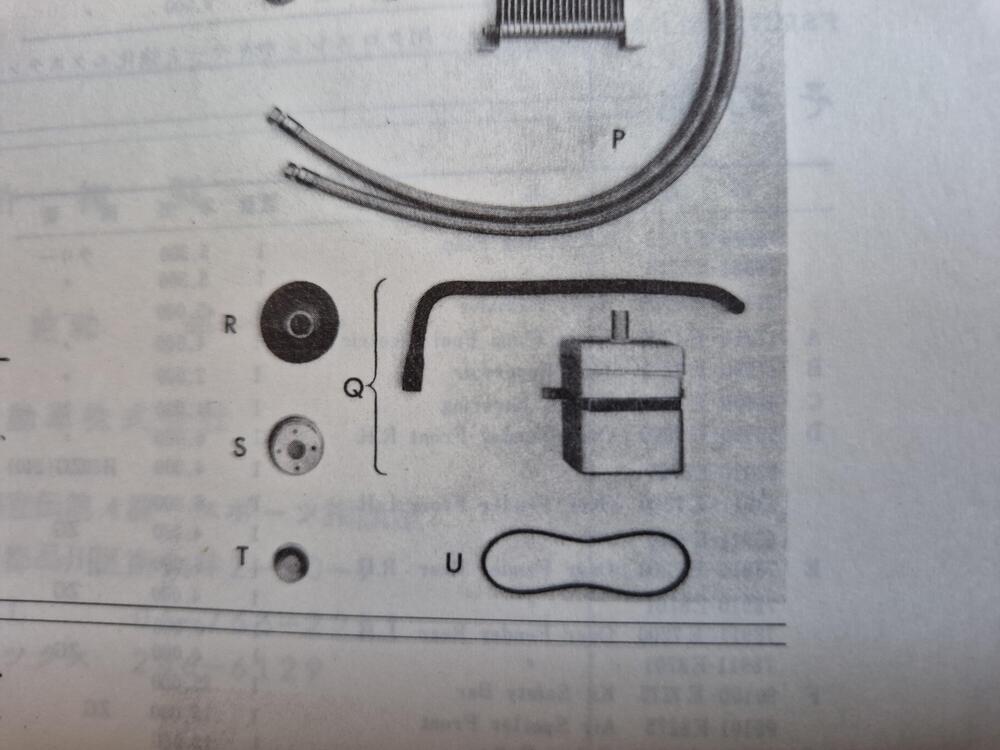
The manufacturer's own advice on modifying the cars for circuit use was that the crankcase vent could be blanked off and valve cover vents be plumbed to a catch can in just that way. They even sold parts in their Sports/Race Option lists to use for that purpose.
-
Hi Ian, Good spot! That's the slightly later screw-top type as offered in the (late) Sports/Race Option lists. I have one on my KPGC10:

-
You understand the difference between buying goods and services (as would apply when buying car parts as a private individual) and trading currencies, gilts, bonds etc? If you want to buy goods from a Chinese company like the one you are pointing at you may well be quoted a price in US Dollars, but they'll figure out their ex-factory Dollar price with an exchange rate based on CNY, not CNH. A couple of posts ago you couldn't even tell the difference between JPY and CNY, so I'd stop digging if I were you.
-
You've referenced CNH, but CNY is the relevant form of the currency in this kind of transaction. Differing rates of exchange.
-
The price is in YUAN RENMINBI (CNY). CNY and JPY share the same currency symbol in the same way that the $ Dollar sign is shared by the USA and - for example - Australia.
-
The bracket in question is very likely to be a brace between the main instruments (speedo and tacho), and simply fits between them whilst also linking them to a more secure mount point. Earlier cars had a similar - single plane - curved brace between the speedo and tacho mounts and it seems likely to me that this is a dual plane evolution of the same part.
-
Advice from Nissan Sport's 'Yellow Books' for race & rally/sporting use: Close the block breather with a suitably-sized Welch plug, then run the valve cover breather to the 11125-E4675 Oil Catch Can Kit, which is foam-filled and vented to atmosphere. The foam filling catches the suspended oil vapour. Give it a clean out occasionally.
-
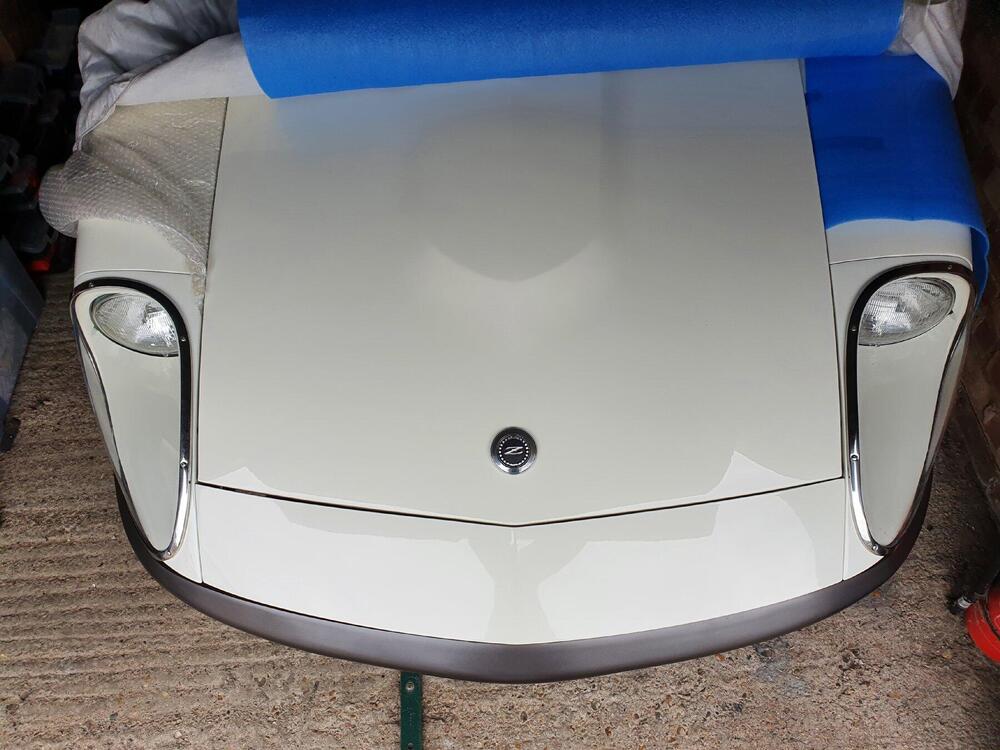
For reference, here's a shot of my white 240ZG: Maybe try to get it a few mm closer It's hard to get even gaps everywhere, especially when you're dealing with 50+ year old composite parts that were never exact dimensions to begin with. There are some characteristically wide (and somewhat surprising) gaps around the top edge of the front bumper ends which I'd say help identify true Factory parts, but my experience is also that the Grande Nose moves around a little bit on its own in use. Especially so after some sustained high speed running (I noticed 'droop' which gradually relaxed back to where it should be). So maybe just get that bonnet to top panel gap as nice as you can and don't worry too much about everything else. The colour of the car can exaggerate - or mitigate - the gap. GP White makes it look wider, GP Maroon and GP Red makes it look closer. One of my lovely neighbours once made the gap on my GP Maroon car close up somewhat (**%&£**+!!!) with his useless parking 'skills'. Claimed he couldn't judge where the front end of my car was as it was so far below his line of vision. Seems to be a ZG thing.
-
The grille tabs on both of my 240ZGs were cut off in exactly that same way. In fact they looked to have been Oxy-Acetylene gas-axed off before paint. Still some evidence of melted metal present.
-
Similar design, but my version has a metallic silver cover. Here's the page in question. Doesn't scan so nicely because I don't want to break the spine, sorry:
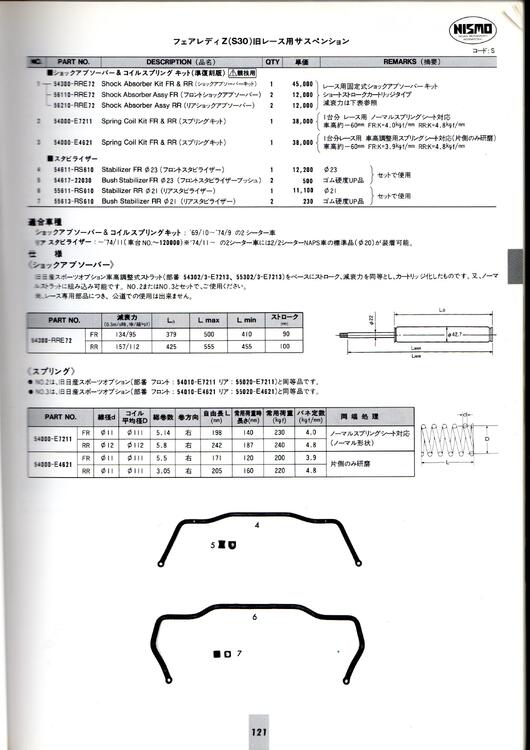 Hi Nils, Nice stuff! I have an issue of the NISMO 1997 Japan catalogue that lists the 'RRE72' Kayaba blue NISMO cartridge inserts and their corresponding springs: *54000-E7211 SPRING COIL KIT FR & RR. The listings states that they are for use with standard strut platforms (ie, non-adjustable ride height), they lower the car by 60mm and the spring rates are FR: 4.0kg f/mm and RR: 4.8kg f/mm. There's a note that says the 54000-E7211 spring set is essentially the same as the older Sports Option 54010-E7211 (FR) and 55020-E7211 (RR) springs. So they just have new part numbers. Actually it might be easier for me to scan the relevant page and put it up here, because there is additional data for the springs and dampers which might be of useful reference for you. Stand by...I'm not "taking credit" for anything. That's - as is so often the case - just a scenario going on in YOUR head. The data I have cited (for many years!) is from Nissan's own documentation relating to these cars. They published it to inform and assist the owners and repairers of their products. It's not 'mine'. It 'belongs' to all of us should we care to refer to it. Of course, that would require the faith to actually believe it too... I would have thought the classiczcars.com community was one where such official documentation would be given the respect it deserves, but you have dismissed and damned it at every possible opportunity. A particularly strange tic considering that you cite so much other official data from Nissan in support of your thousands of posts here. Your "just a piece of paper" - and the above post where you bring up past corporate misdemeanours by Nissan and Boeing - would apply just as well to Messrs ENVIROpass of Quebec, Canada, would it not? Either you trust these sources or you don't. Why would you dismiss the original Nissan Engineering Standard data but accept ENVIROpass's test results without question? The reason is of course obvious. It's all about the messenger, isn't it? I would look forward to your mea culpas on the threads where you have so ardently pushed back against the Nissan Engineering Standard data and supported the "it's Cad" narrative, but that's not going to happen, is it?Humility? Where...!? The "now we know" title tells it's own tale. Self-certificating hubris from one of the main "it's Cad" protagonists. NOW we know. Not when Nissan told us - in writing - in 1969, but NOW. Pfft. I don't know if you noticed, but previous discussions here on classiczcars have seen - for example - direct evidence of plated finishes from the manufacturer dismissed as just "a piece of paper". So excuse me if I see this thread a little differently than you. YMMV, of course. Nissan Engineering Standards (NES) plating/protective finishes for S30-series Z's componentry:
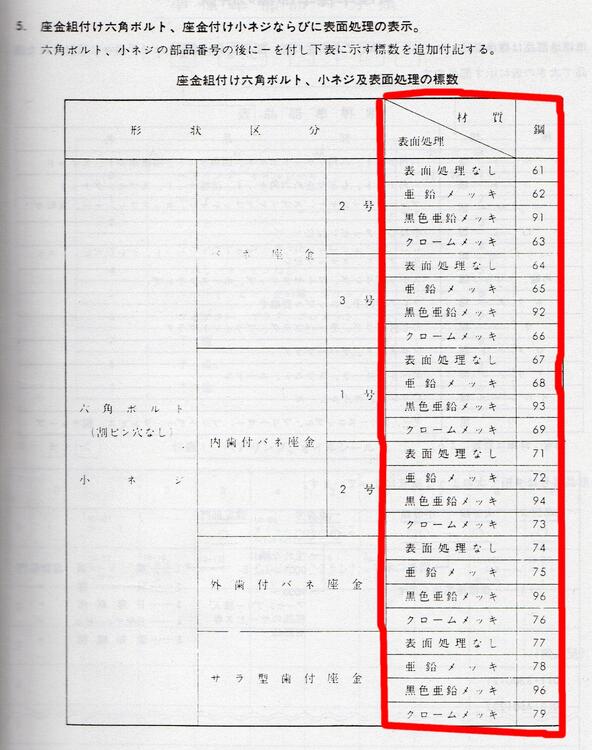 We already knew, because Nissan told us. Literally. Well done Carl. It's never too late to see the light. This is the part where you tell us that Nissan "might" have had '...remaining stock of Cadmium-plated parts that they were gradually using up.' 😄Fished this one out of the basket. Gave it a little love and it came out looking fairly respectable. Base plate is free and vacuum advance works. Little to no discernible wobble/wear. What think you? Bear in mind it'll need an air ticket of course...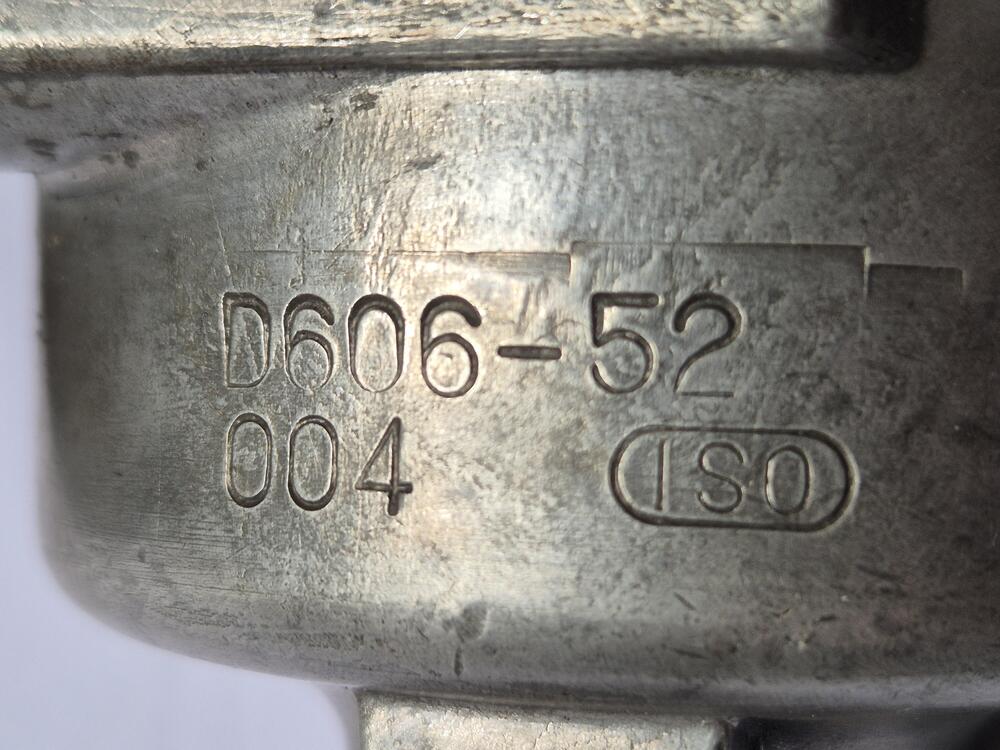
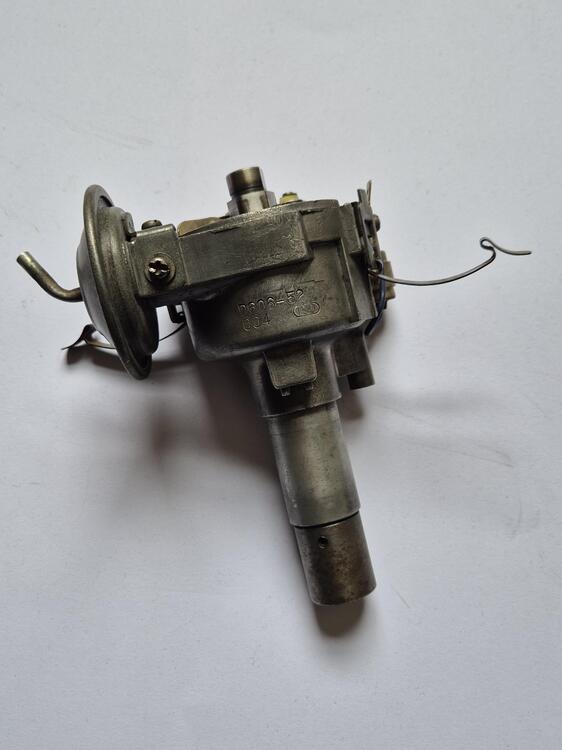
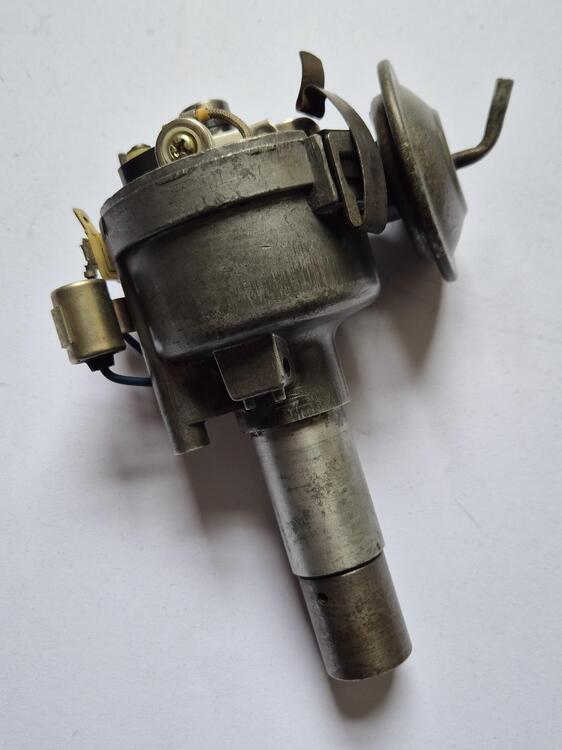
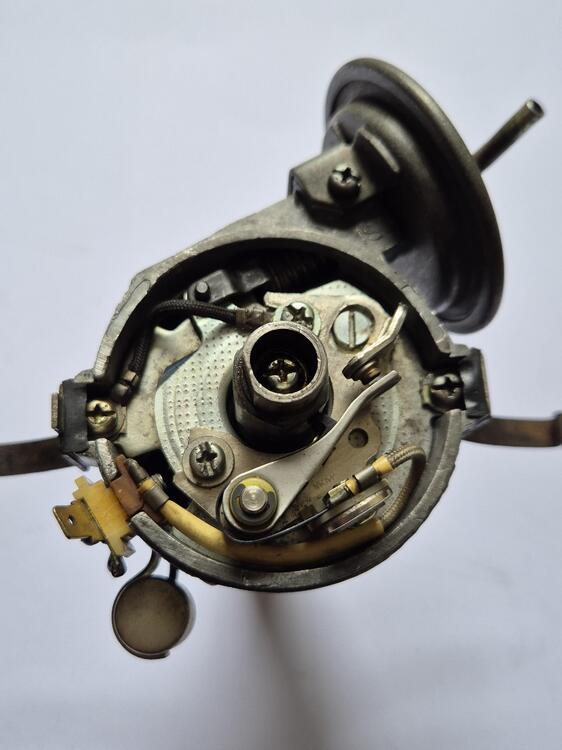
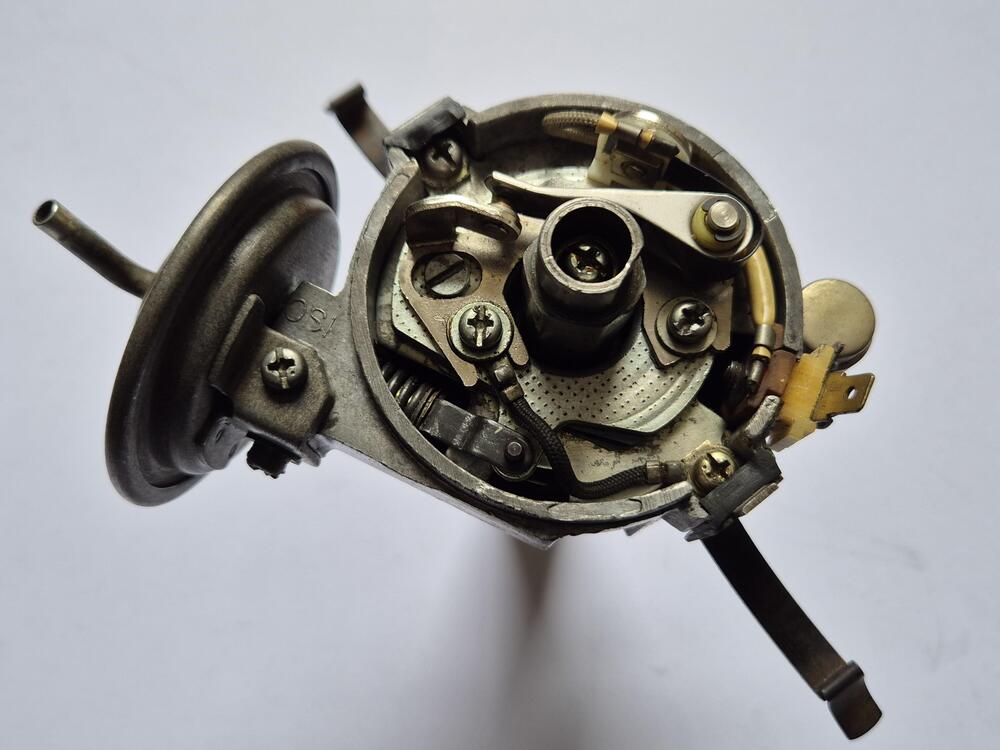
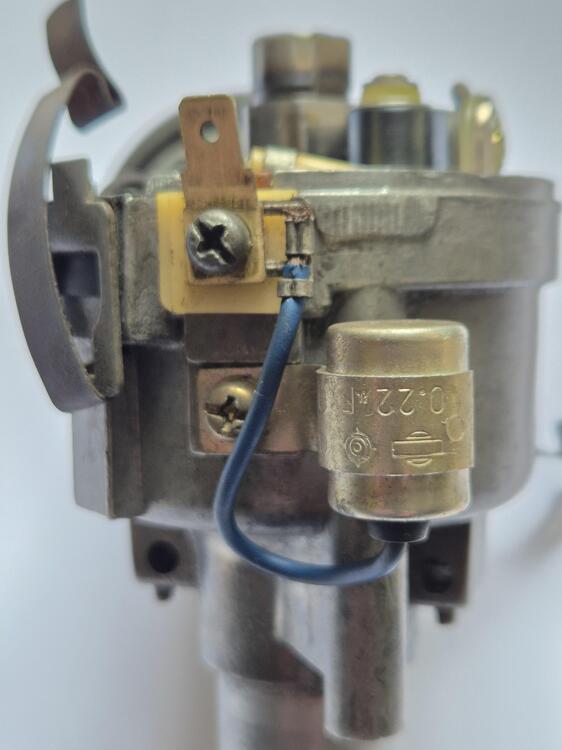 I've got a basketful of used distributors in my storage garage. Let me see if I can find a reasonable D606-52 amongst them for you. Might take a few days until I get down there, so stay tuned.I'm always amused to see discussions of component paint finishes defined as 'matt', 'satin' and 'gloss', as though there's nothing in-between. Some of the first restoration-linked discussions I ever had with like-minded enthusiasts about these cars were on the bewilderingly diverse range of finishes observable on the various parts of the cars. But we should not be surprised. The components of these cars were made in many different factories and facilities by many different companies, both within the Nissan fold and without. So the black paint used on the spokes of the steering wheel when Izumi made it is not necessarily going to be an exact match to that of the seat mounts (which - by all accounts - was applied by a Nissan Shatai line worker armed with a pot of paint and a brush...), and the black paint on the suspension legs made by Atsugi is not necessarily going to match that of the diff casing made by Fuji Heavy Industries. Hair-splitters (guilty as charged) might also imagine differences depending on who was wielding the spray equipment/paint brush, what day/time (Monday morning vs Friday afternoon?!) and even what month of the year. Not stirred thoroughly enough? A little too much thinner? Getting near to clocking out time? If you've ever worked in a manufacturing environment some of this might be familiar to you. The production line at Nissan Shatai was a busy place from late 1969 and through 1970, when the car in question here was being made. Like a good garden, A Little Bit Of Chaos would always have been involved... Not forgetting that we are now unable to source/use many of the formulations of paints originally used on these cars 55+ years ago. We have to use modern - safer, more environmentally friendly - formulas which cannot be expected to be an exact match to what was used in period. So a fair amount of pragmatism is required both by the restorer, and by the observer/judging panel.I believe a 'splash pan' (Nissan called it a "BOARD - splash" in their technical literature) is visible in early Australian press photos of 'HS30-00004'. I think I can see one, anyway... A slightly later production Australian market car (very early 1971 production if I remember correctly) was imported into the UK some years back and I watched it go through a full refurbishment. That car arrived from Australia fitted with a no-hole 'splash pan': In any case I think it unwise to expect hard and fast universal rules when it comes to items like this. Yes, it was part of the original design engineering and the mounting points are there on the bodyshells, but it may have been the case that fitment was withheld/paused for some markets/variants/territories for periods of time. We have discussed this on the forum several times in the past. Of course we are observing all this retrospectively, but I would recommend caution when cross-referencing content on cars made for different markets.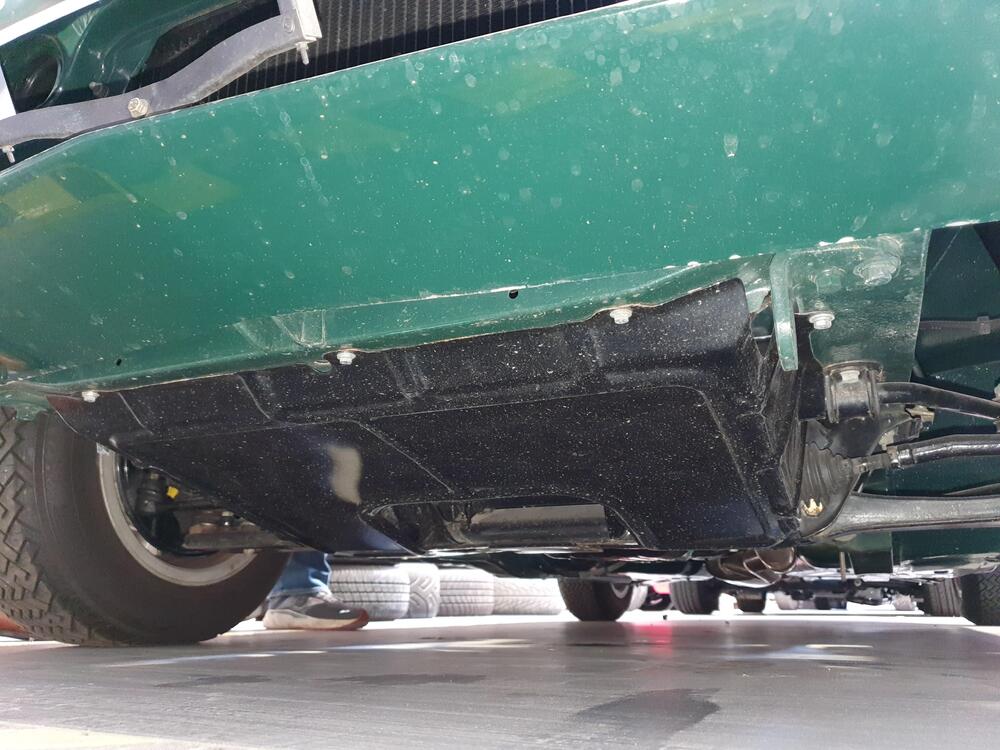






Important Information
By using this site, you agree to our Privacy Policy and Guidelines. We have placed cookies on your device to help make this website better. You can adjust your cookie settings, otherwise we'll assume you're okay to continue.