HS30-H
Supporting Member
-
Joined
-
Last visited
Everything posted by HS30-H
-
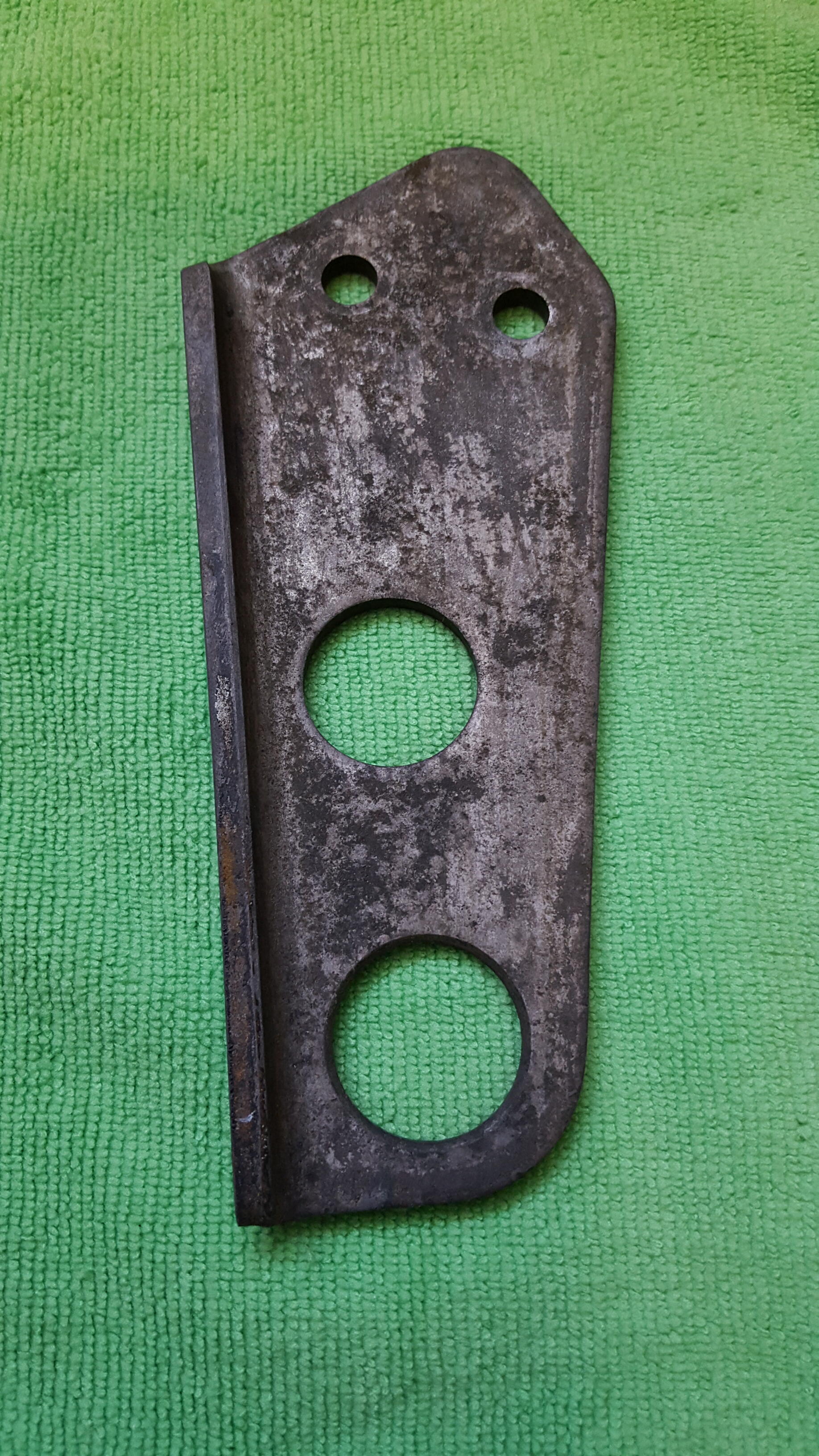
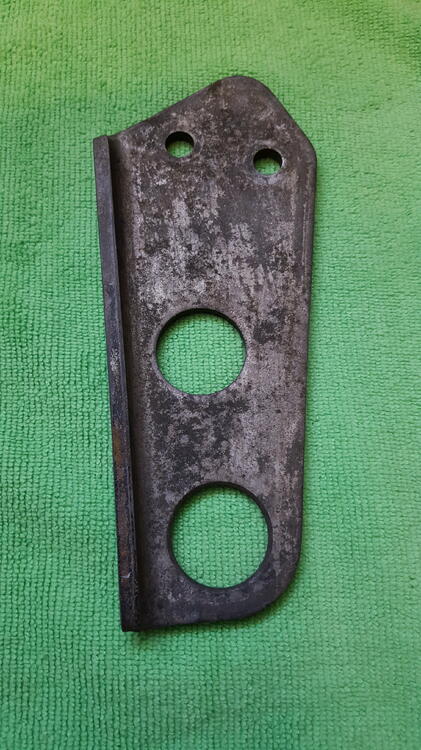
That's the attachment point for the towing bracket specific to the HS30-H model Fairlady 240ZG. The stock short nose towing bracket could not be used on the 240ZG (the lower section of the Grande Nose covered it) so the factory created a 240ZG-specific towing bracket which allowed the tow rope to pass through the nose:
-
A gentle 24th October (Japan time) bump for the 54th anniversary...
-
Sure, but case casting numbers are not going to identify ratios and open/LSD contents. Yarb, if you want to identify true 'origin' ('identified as') of your diff then most of its provenance will come from the sourcing chain.
-
I've not dealt with many S130-series cases, but I'd expect contemporary production case castings to be very similar. Correct me if I'm wrong, but wouldn't S130-series output flange be rectangular rather than round? The Z31 diffs I've sourced are very very similar to the R30 and early R31 diffs that I've had. Just different rear covers.
-
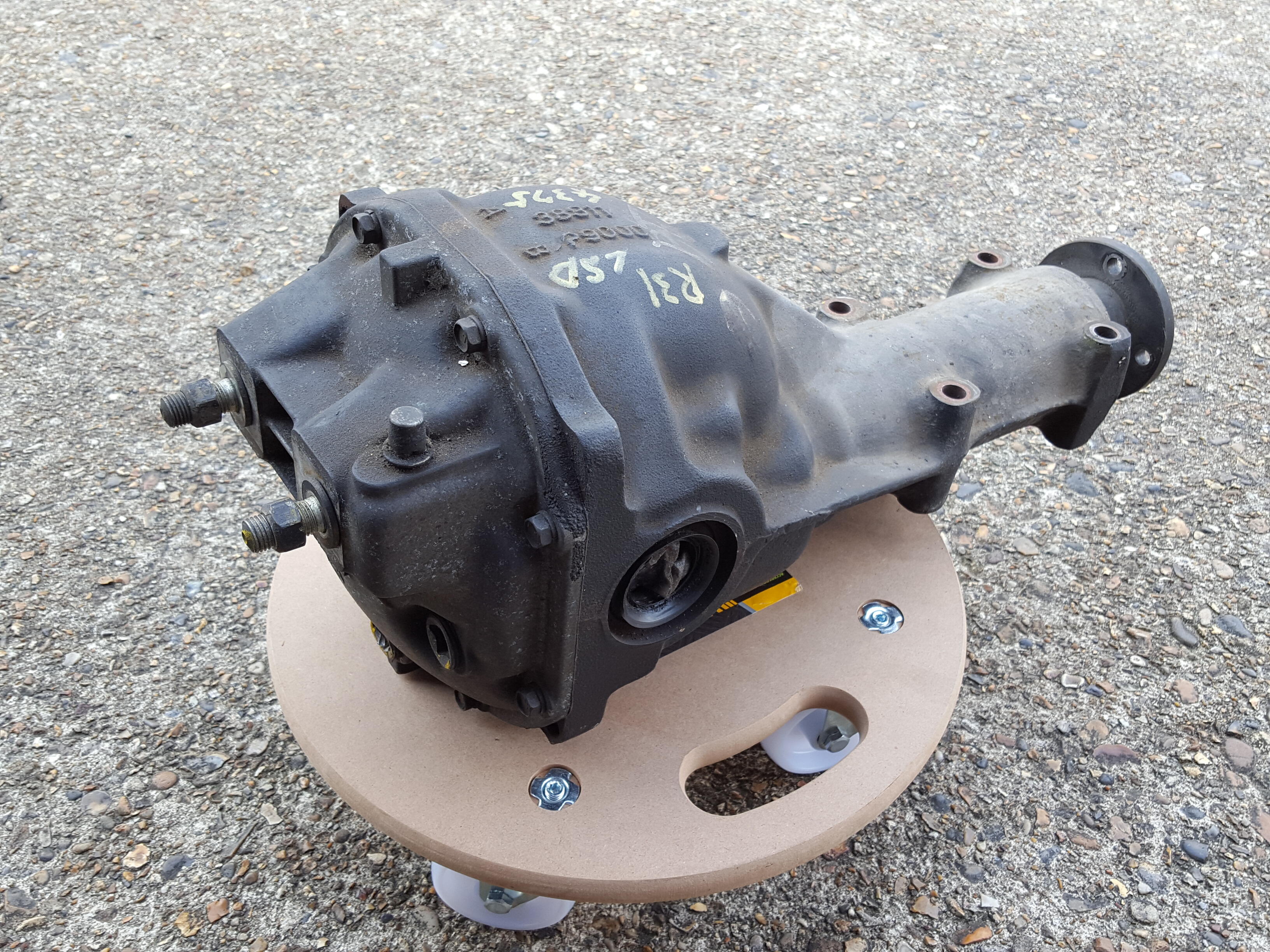
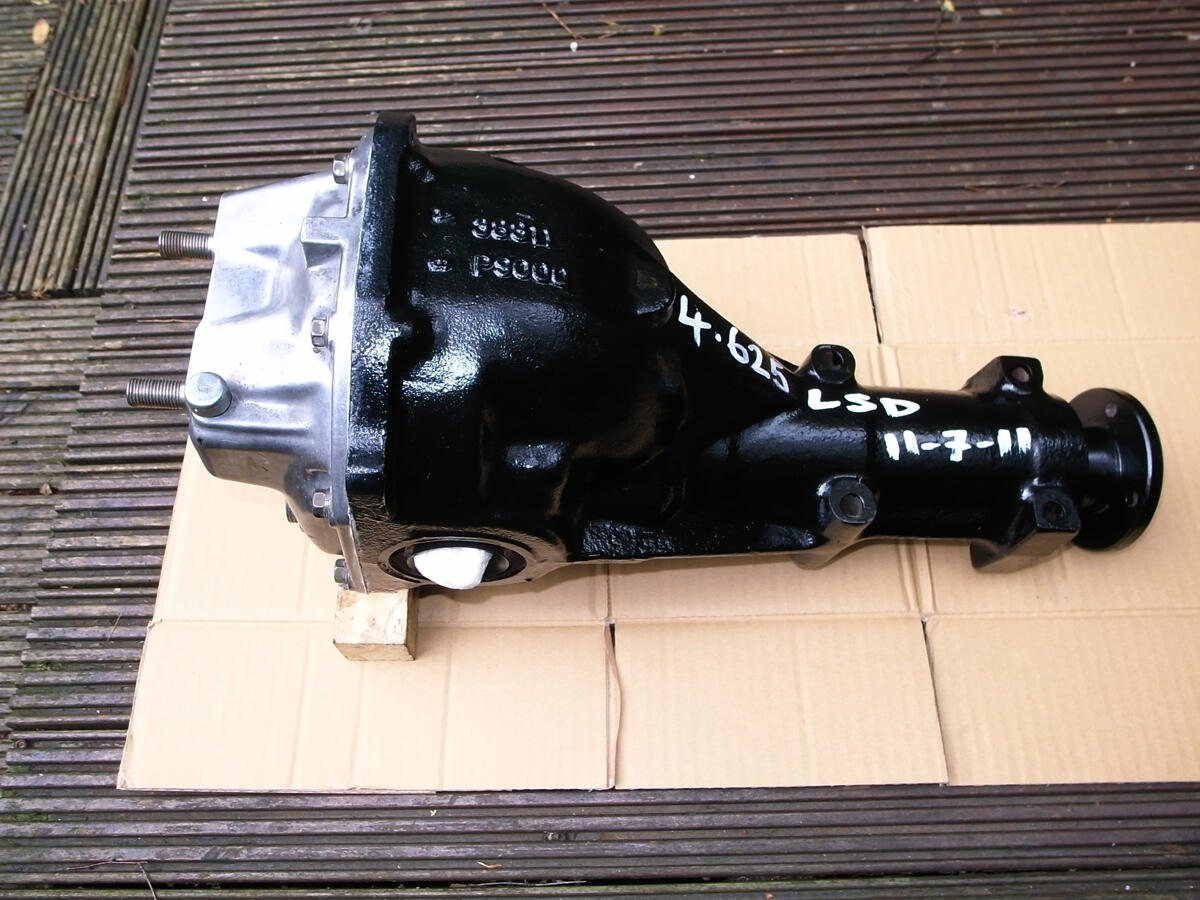
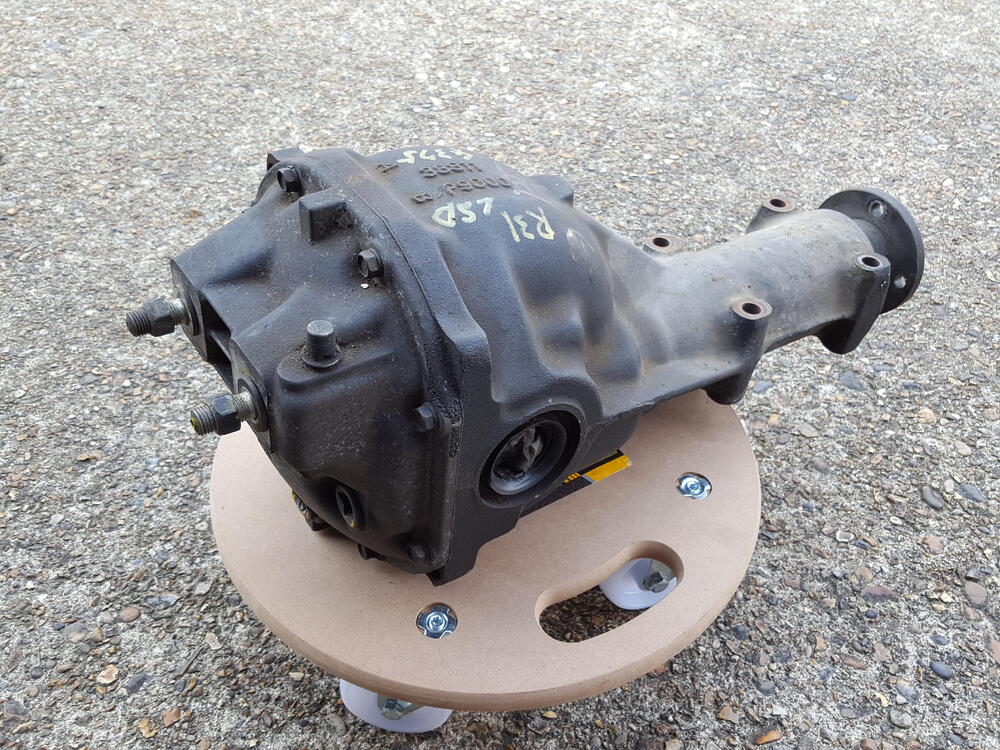
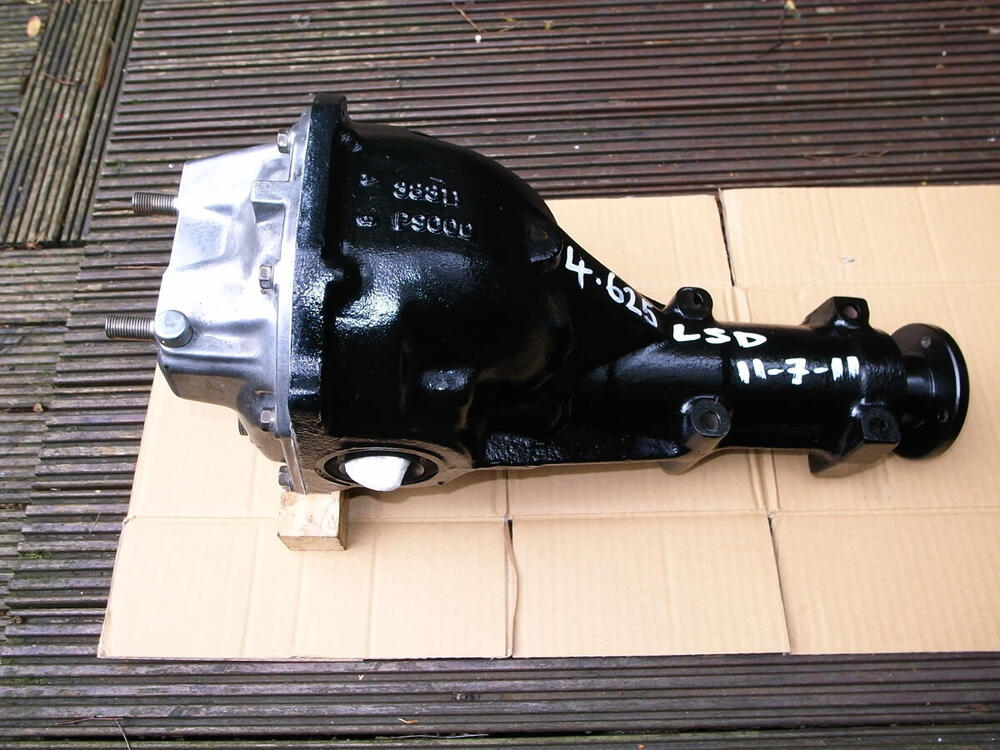
Over the last 25+ years (how time flies!) I've bought something like 30 or more R200 diffs from Japan in various ratios (3.7 through 4.875 and the occasional 5.1) and many of them came from R30 and early R31 Skylines with the P9000 case casting. However, it's hard to pin true origin (OEM fitment) down when - in my experience - many of them were modified in period, often with upgraded LSDs (switching OEM two pinion to 4-pinion NISMO) or open diffs modified with aftermarket LSDs, rear cover swaps, output flange swaps etc. Here are a couple of examples of diffs I imported and sold to the rally guys here in the UK and Europe :
-
That looks like an R31 Skyline diff to me.
-
Shanghai Auto Museum is nothing to do with Nissan. It's in China, for a start... Clearly an exhibit that they sourced themselves, of unknown provenance and with some decidedly custom details. So I wouldn't use any detail of that car as a reference point if I were you.
-
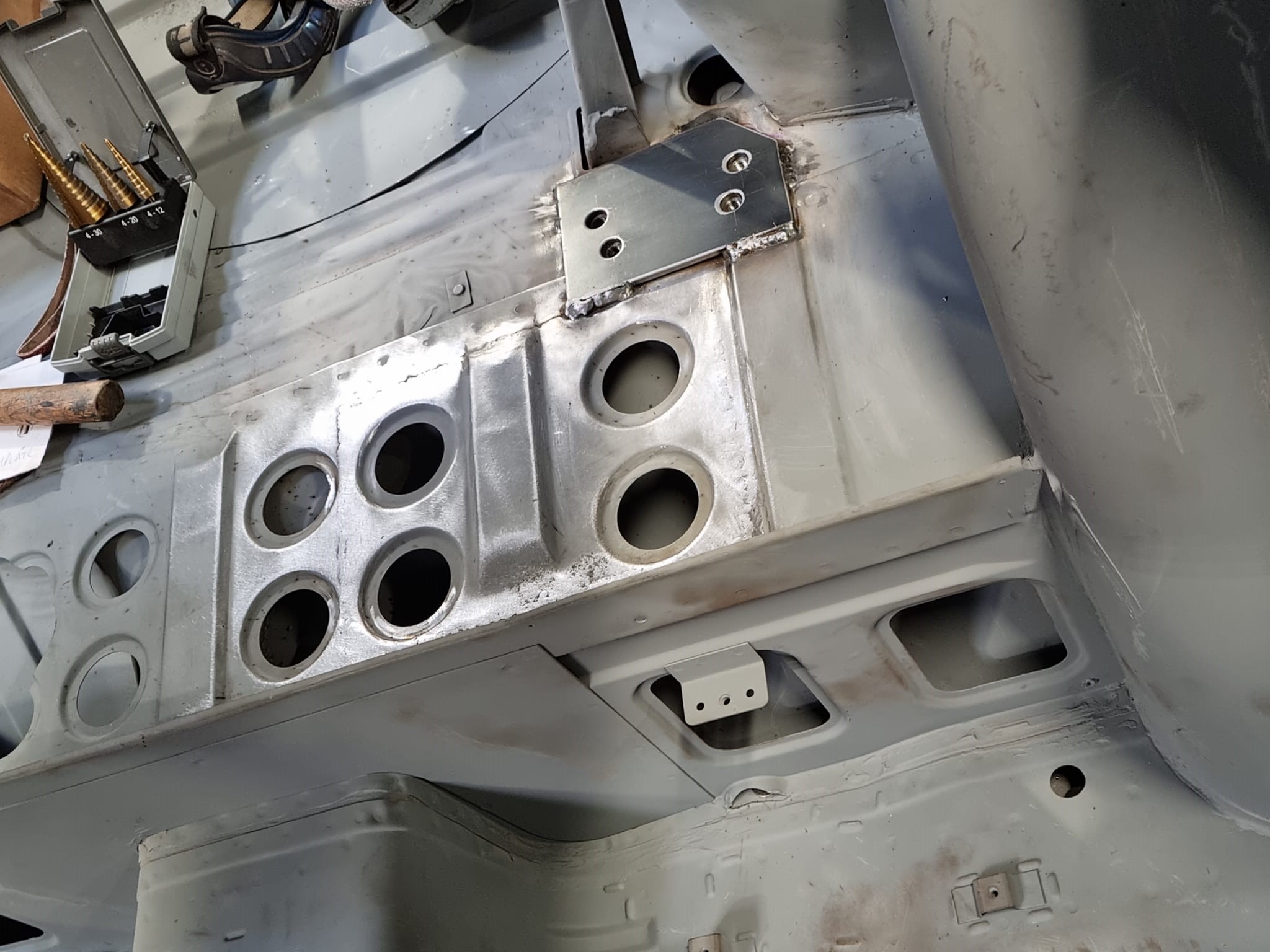
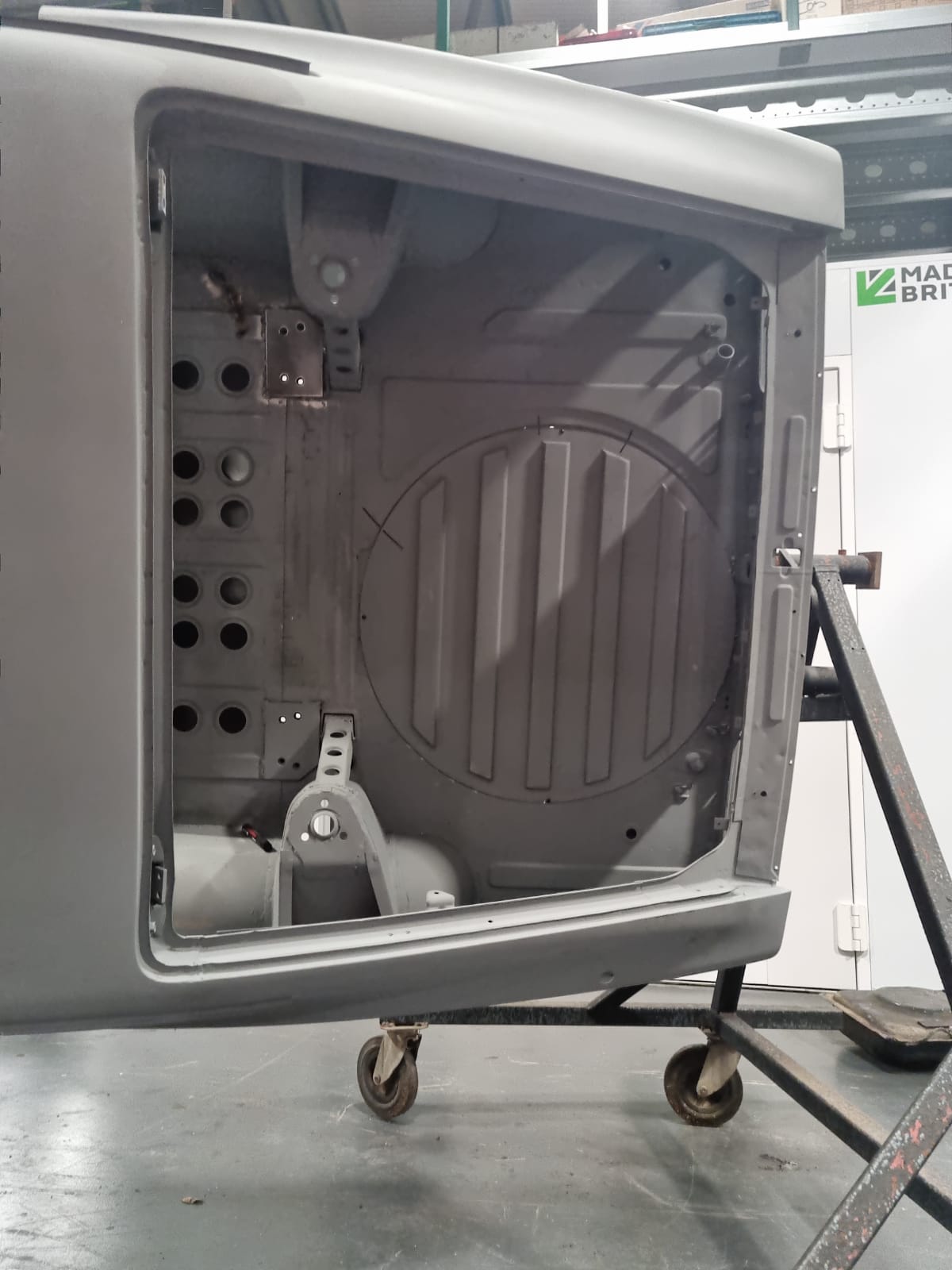
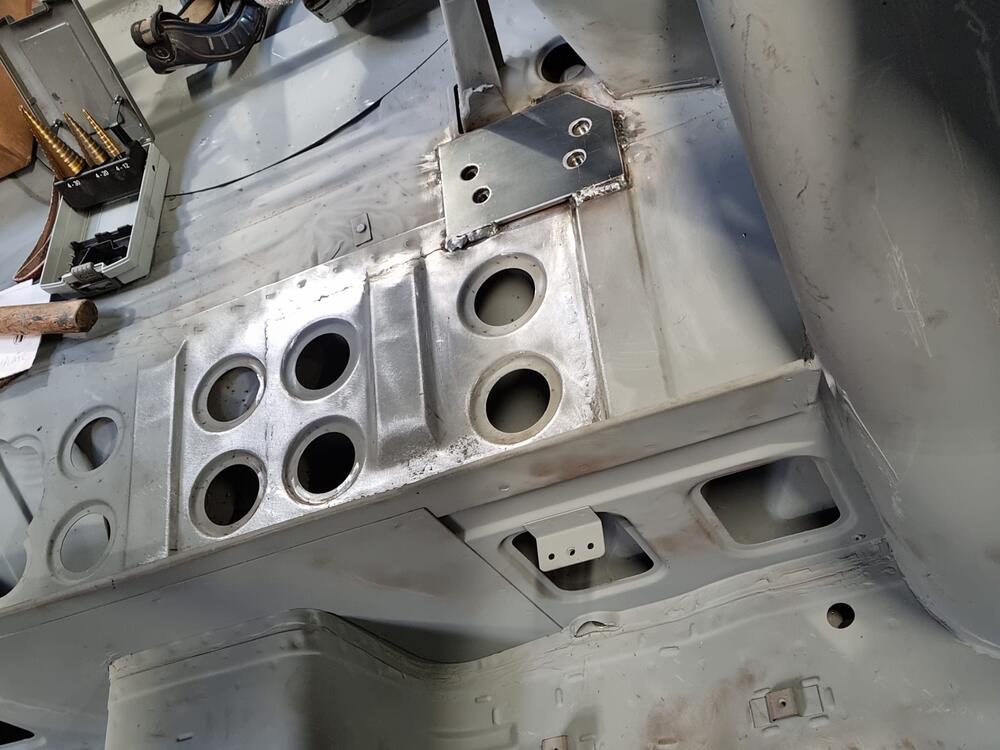
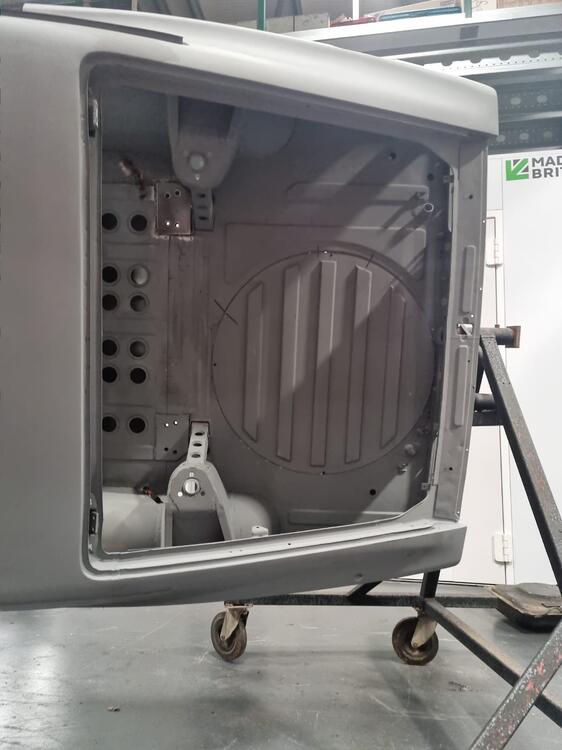
Technically, I believe the two flat plates that sit underneath the two vertical drop mounts were meant to be welded to the rear deck floor. That would be a good reason for them often disappearing when the bars were removed from cars and sold on. I've got a 'normal' Nissan Sports/Race Option 4-point bar kit in my 432-R replica car, and an original Nissan Works rally version in my ongoing Works Rally 'Test Car' replica project. The difference is that - on the Works Rally type - they moved the two vertical drop bars and mounts further apart so that two stacked spare wheels/tyres could be carried onboard, and they added a steel arrestor strap and a hinged clasp to hold them down (adjustable for one, or two, spares). All the side mount points are in every car, so they are a bolt-in. It's just the vertical drop mount plates that need to be added. Here's how the Works style plates were welded into my 'Test Car' project:
-
Yes, I've noticed that in the last few years. Sneaky! There were a few other Nissan models that had fairly similar front hub/spindle castings. Some of them probably fit the S30 series too. Is the second half of the part number indeed '16230'? Usually I'd expect an official strut for Nissans of that period to have an alphabet letter at the beginning of the part number suffix which is a great help in identification. I'm guessing that Kayaba/KYB themselves might be helpful in giving you a positive identification? Edited to add: That top mount might also be a clue? Can you post a picture of it from the top? The spring looks to be smaller outer diameter than I'd expect too.
-
That looks like quite a 'late' pair of struts (late 70s/early 80s?), and I don't *think* they were for use on the S30 chassis. I don't recognise the part numbers (54302 indicates RH Front, but is the suffix number '16230'?) and I'm wondering what other chassis they might have been made for. None of the factory adjustable-platform struts for the S30 were externally adjustable in that way.
-
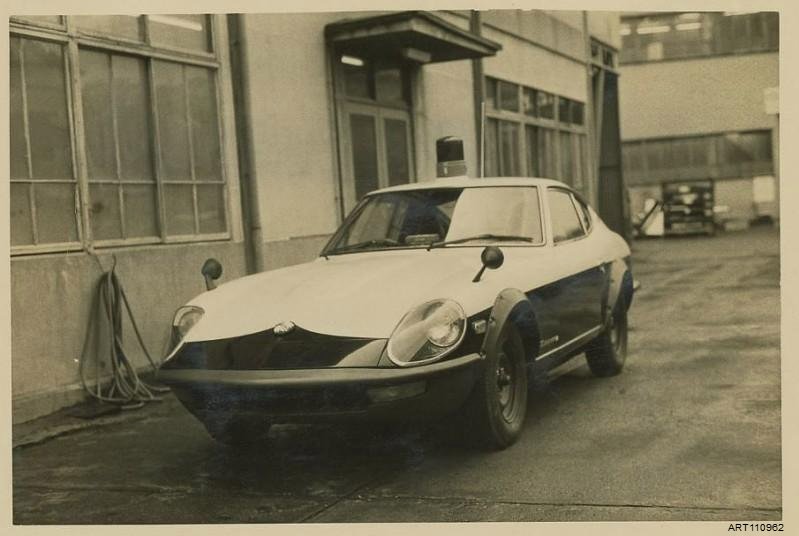
The vendor made some other comments which are worth mentioning. He said that the Grande Nose parts turned up from Japan "still in their Police livery". If he could show photos of this, it would help his story. However, the only Police-specific 'livery' paint detail on an original 5-piece Grande Nose would be the white & black paint split on the headlamp cowls. The lower cowl panel would be painted black and the bonnet extension piece would also be black. The urethane front bumper on the Kanagawa Prefectural Police highway patrol Fairlady 240ZG is in its normal factory-supplied shade of metallic charcoal grey. Further, Nissan was still supplying genuine Grande Nose components in Japan right up through the 1990s as factory replacement parts. Unlike earlier factory pieces, the later items were supplied in a black gel coat finish. This would make it harder to identify "ex-Police" parts via colouring. He mentioned that the Grande Nose parts languished in US Customs for a long time before being released, as though this was some sort of positive. I don't see how? Is he linking this to their "ex-Police" nature? Seems more likely that they were mis-described in their shipment documentation or that the receiving party didn't know how to deal with international shipment procedures and/or import duties and taxes. Kind of a bizarre detail to add to an auction description either way. He also showed the Nissan parts boxes that the headlamp covers came in, and said that they will be supplied with the car to any buyer. So what happened to the originals that that were on the "ex-Police" parts? Lastly, which particular "ex-Police" 240ZG did these parts come from? There was no mechanism for ex-Police cars to fall into private hands in Japan, and - so I'm told - Police-specific componentry would be stripped out for possible re-use before the cars were scrapped. Yes, stock parts could theoretically make it onto the used parts market, but where's the paper trail? The number of Fairlady 240ZGs used as Police cars was vanishingly small, so which one was it? Here's a photo of a Fairlady 240ZG during its transformation into a Police car at (I believe) Nissan-affiliate TONOX's Tonouchi factory. I believe that this is the same car that is now in the Nissan Heritage Collection:
-
A little closer:

-
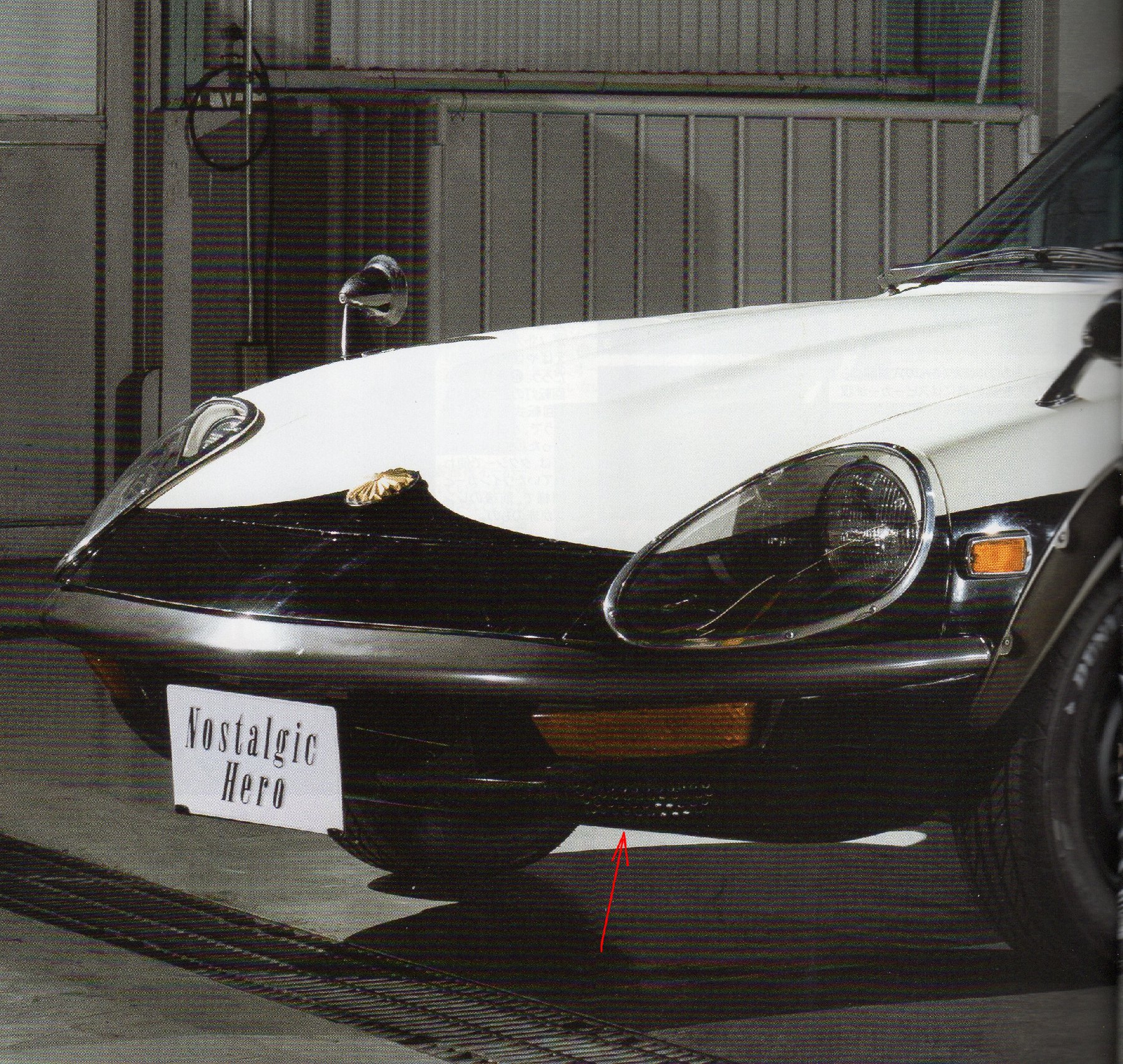
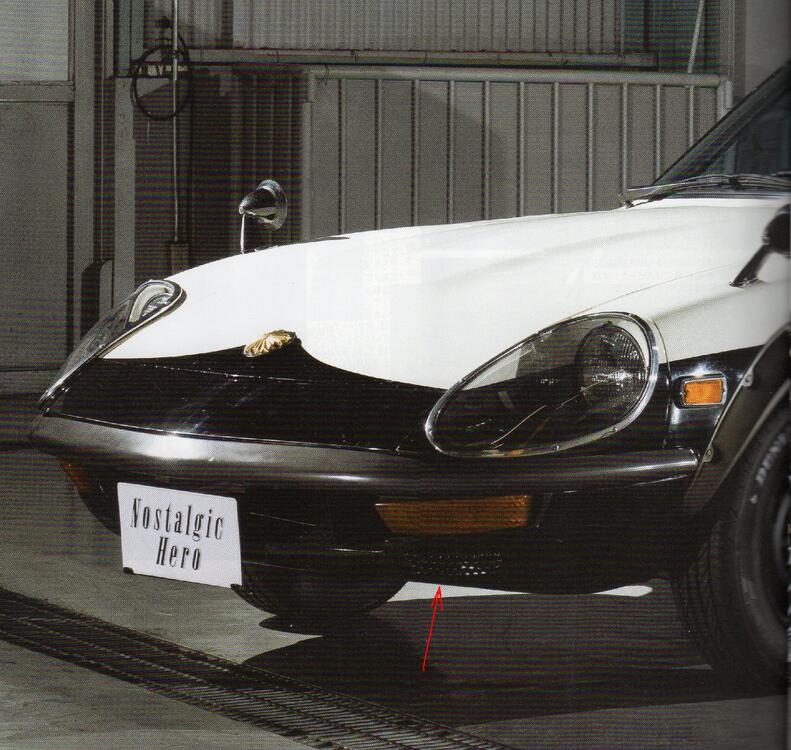
Maybe if it could be backed up with some provenance, there might be some kind of extra minority interest/novelty value. This comes back to my belief that the vendor doesn't really know what he's talking about. That would not be a problem if he wasn't making such a big point of the 'ex-Police' provenance in his sales pitch, but he is. Maybe I'm built different, but if I had bought a car with that as a big part of its story (and it seems like that was important to the vendor when he bought the car from Larry Steppe via 'The 240Z Guild'...) then I'd be wanting to research Fairlady 240ZGs in Japanese police use just out of interest if nothing else. Doesn't look like he's built that way... Here's a scan of a page from Nostalgic Hero Magazine, featuring the remarkably original Fairlady 240ZG which was donated by the Kanagawa Prefectural Police to the Nissan Heritage Collection back in the late 2010s. If you look at the lower cowl panel on the nose you can see a special modification which was carried out on this car. Multiple holes have been drilled into the lower cowl corners which are most likely an attempt to help cool the brakes. Such details are an example of the type of things which would be a help to aid provenance of any Police-specific claims:
-
Indeed, and I seem to have hit a nerve with the (non) seller because he's picking me out for some specially-dedicated comments. As mentioned before, if you are going to put a car up for auction in a format which allows comments from both bidder and non-bidders then you MUST expect to occasionally get rivet-counting and nit-picking posts along with the - mostly rather inane - positives. Picking the seller up on things that are clearly mis-described ('brake ducts' that are not brake ducts, 'metal' that is actually FRP/composite etc) can actually help the seller - as schroeder pointed out to him. I think we saw a seller who - when it comes down to it - doesn't know as much about the car he's selling as he thinks he does. He countered my (now deleted) post about Japanese Fairlady 240ZG police cars with a link to an IMCD page featuring a movie prop car (which was not actually a genuine 240ZG model or indeed a genuine, even ex, Police car). I think the whole G-Nose 'from a Japanese Police car' story is more probably a tenth-hand misunderstanding of 'this G-Nose is just like they used on some Japanese Police cars', or similar.
-
Some background character referencing: Here's a comment that - apparently - didn't last long before being deleted from the Bring A Trailer thread in question: There is a new comment on the post "1972 Datsun 240Z G-Nose Conversion 5-Speed". https://bringatrailer.com/listing/1972-datsun-240z-287/ Author: Rodeo Comment: Here's a fun fact. <a href="https://bringatrailer.com/member/the240zguild/" rel="ugc">@The240zGuild</a> is owned and operated by a convicted felon. In his prior life, he was ripping off Volvo enthusiasts "selling" them non-existent custom parts. He got a multi-year a suspended sentence that he is still serving to this day. The victims never got their money back. Now he's ripping off the 240Z crowd. I know because he ripped me off. That's when I found out he has hundreds of thousands of dollars of judgments against him, some years and years old. So if he rips you off, get in a very long line. You'll never get paid. This is a public service announcement. If you are suspicious email me at srodio at rodiobrown dot com and I'll send you the info. See all comments on this post here: https://bringatrailer.com/listing/1972-datsun-240z-287/#comments
-
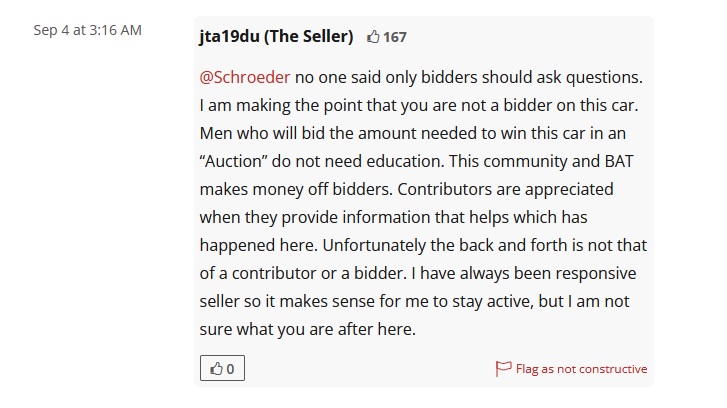
I think the seller of the ex-Larry Steppe/The 240Z Guild fantasy-in-red car has hit a metaphorical home run: "Men who will bid the amount needed to win this "Auction" do not need education". Ha ha ha ha ha. HA HA HA HA HA! That's right up there with some of the most unintentionally hilarious comments I've ever seen on BAT. Who is this guy? He should run for President of something or other. He's got my vote. On the other hand, he's probably right. Anyone who bids what this clown probably expects to net from this dog's dinner of a car will be in need of counselling, not education. A Mention In Despatches to BAT commenter 'Schroeder' who is fighting the good fight whilst so far - amazingly - dodging the incoming 'Not Constructive' deletion fire. Let's hope his piano has avoided any damage too.
-
We now have 'The 240Z Guild' calling the Grande Nose on this car a "Police Package" (LOL) and claiming that the aircon-related diverter ducts are "brake ducts" (they are nowhere near the brakes and they push air through the radiator and aircon condenser). Objective - and clearly correct - critique of the overfender mounting positions has been rejected as 'Non Constructive'. Clowns to the left, jokers to the right. None so blind as those who will not see. Reference point for the car in question:
-
There's plenty of room on here for both objective and subjective criticism of cars that are up for sale. This thread - in case you hadn't noticed - is full of it. If you're embarking on any kind of crusade to clean up our little corner of the classic car scene, I'd suggest you might like to start with the likes of this Larry Steppe character and his chum 'The 240Z Guild'.
-
If it is noisy inside it will at least drown out the cries of dismay from anybody with good taste who is unfortunate enough to encounter it. This car used to be part of the 'Larry Steppe' collection which seemed to be in some sort of curious arrangement of elastic ownership with 'The 240Z Guild'. I note 'The 240Z Guild' has said that the car changed hands before this BAT auction, but I'd take that with a very large pinch of Sodium Chloride. What a munter it is. The overfenders appear to have been fitted in the dark and George Foreman probably doesn't want that dinky little grill(e) back now. Had a chuckle at the tall claim that the 'G' nose on the car was sourced from a Japanese police car, although plenty of people will probably swallow that one whole.
-
That comment was in reference to the generic "exceptional investment opportunity for collectors" sales fluff that they all seem to trot out. When (and if) the new owner - or any future 'investor'/'collector' - check the car out thoroughly they will probably be in for a few surprises. What concerns me is - for example - a 1970 production-dated car being sold as a 1969 production-dated car (with, I'm convinced, some perceived value added for that 1969 cachet) and it being described as having the correct R192 differential when it arrived in the UK from Japan with an R180 in its place and it left the UK that way. There are many, many other examples. A simple Google search of the chassis number brings up a fair amount of past discussion of the car. If I was intending to fork out that kind of money for a rare car I think I'd do a little Due Diligence first. They could buy a much better car from Japan - without the irreversible issues and question marks - for not much more than they just paid.
-
So pointing out that the Mecum description for 'PS30-00105' is effectively a pack of lies is "missing the point" then? Call me old fashioned, but I still expect an auction to get what they put in writing right. What they hide, and what they don't know, is part of the game. Lies, not. @ "armchair experts". This thread is a veritable parking lot full of deep-buttoned silk velvet upholstered wingback armchairs. That's what we do. That's what classiczcars.com exists for. Who else is going to do it? The poorly-informed, portfolio-building-and-bailing-out-at-the-right-time-investors who bought something because their 'advisor' told them it was cool won't do it. They don't know sh*t from putty. What do you classify yourself as then, Tonto?
-
Just seen a post which says that 'PS30-00105' was sold for 270k USD at the mecum sale. Wow. I wonder if the new owner knows what he's got (and what he hasn't....)?
-
I get the impression that the vendor thinks the 432 is somehow the coolest and most collectable car in his Z-specific 'portfolio', and has brought Mecum with him on that. Kind of the blind leading the blind in that respect. An early 432 in good, original and un-monkeyed-with condition would indeed be the Creme De La Kremlin in such a collection, but this particular 432 has had a very bumpy ride through life and I don't see it as being worth anywhere near the lower estimate (325k USD?). It doesn't even live up to its auction description, let alone anything else. It's a nice enough car, but it's a long way from what they are saying it is.
-
It's the 'The Mike and Debbie Rogers Datsun Collection' that you need to search for: https://www.mecum.com/auctions/monterey-2023/lots/?wp_posts_lot_feature_sort_asc[configure][filters]=&wp_posts_lot_feature_sort_asc[refinementList][taxonomies.auction_tax.name][0]=Monterey 2023|1692230400|1692403200&wp_posts_lot_feature_sort_asc[refinementList][taxonomies.collection_tax.name][0]=The Mike and Debbie Rogers Datsun Collection|0|0&wp_posts_lot_feature_sort_asc[sortBy]=wp_posts_lot_sort_order_asc It's not *just* 240Zs.
-
A couple of people have contacted me to ask some more about the car. One question was, "...is it really a 1969-built car?", because the Mecum auction description is calling 'PS30-00105' a "1969 Datsun Fairlady Z432." Of course, it's not a 'Datsun' (it's a Nissan...) and it wasn't built in 1969 either. 'PS30' prefixed cars built in 1969 ended with 'PS30-00072' and 1970 production started with 'PS30-00073'. Clearly 'PS30-00105' is an early 1970 build date car, not 1969. So, another little elephant trap for an unwary buyer to fall into.