Skip to content

HS30-H

Supporting Member
  • Joined

  • Last visited

Everything posted by HS30-H

  1. In light of Uemura san's book, do you still feel "right at home" with this quote then? ...because it was wrong when you originally wrote it on this forum and it is still wrong today.
  2. You are - at least - consistent. A quality you share with The Flat Earth Society. A further example of EXACTLY what I have been pointing out. Where does 'Datsun 240Z' come from? You are either in denial or you have not even seen the original. Which is it? Chapter 2 title in original: "Fairlady Z no kaihatsu ni itaru made" (tr: 'Leading up to the development of the Fairlady Z'). Chapter 3 title in original: "Fairlady Z no kaihatsu" (tr: 'Development of the Fairlady Z'). You quote from the 'translated' English language version as though the original Japanese version doesn't exist. I'll keep saying it, the English language version is mis-translated to the level of Bowdlerization. Changing the all-encompassing 'Fairlady Z', 'Maru Z' and 'Z' terms that Uemura san uses to 'Datsun 240Z' completely subverts his original intention. I believe you had a hand in that. You have form. Even so, anybody who reads the English language version should easily see that Uemura san and his engineering team - also Matsuo san and his styling team - were engaged to design, engineer and develop a family of Domestic and Export market variants. The family of variants is mentioned time and time again. These processes took place contemporaneously, with engineering and design consideration for each variant having an impact on the other variants in the family. Uemura san's list of the 5 Chassis Test cars and the 11 Primary Prototype cars clearly show this. I think any engineer worth his salt would understand what this process involves. You simply cannot focus on one particular variant and treat the others as afterthoughts. One more thing. Uemura san includes a quote of some paragraphs from Teiichi Hara's own book (recommended, BTW). Hara san was manager of the First Design Department at Nissan and Uemura san quotes Hara san because he relates a KEY stage in Nissan's Go/No Go stage of the Maru Z project. Without passing this stage, Nissan's senior management simply would not have given clearance for the engineering and styling work to proceed. What was the deciding factor? The deciding factor was the inclusion of the road-going version of the Prince GR8 twin cam engine (the Nissan S20 two litre 24v twin cam six) as an option in the engineering and styling of the Maru Z project. Hara san described this as "A complete victory". Without it, they would not have got the go-ahead for the whole family of variants. It is a very revealing anecdote, the kind that automotive journalists and marque/model scholars set great store by. Will we ever read about this on zhome.com? I'm not holding my breath...
  3. I agree. I think thread-drift is almost inevitable and when a digression becomes big enough it can be worth splitting it off into its own thread. How about it @Mike?
  4. Unfortunately the decision was taken - I don't know by whom - to alter the text in order to make it more palatable to a (presumably?) American audience in the English language version. There are some inexplicable omissions too. Changing 'Fairlady Z' to 'Datsun 240Z' in the title and the text is not a translation. The sense in which Uemura san uses the term 'Fairlady Z' encompasses the whole family of variants in the 'Maru Z' project on which he and his colleagues were working from 1966 through 1969 and beyond. Substituting 'Datsun 240Z' does not. Indeed, it renders some parts of the text illogical and subverts the original intention. It turns an inclusive into a divisive. It also serves to reinforce the mistruth of statements such as "The real story of the Z Car - is carried by the Datsun 240-Z - as specified, as designed, as built for the American market" when Uemura san's original text made it clear that this was not the case. Ironic isn't it?
  5. I'm always curious as to whether you had any Road To Damascus type conversion of beliefs when you saw Uemura san's texts for the first time? I'm thinking of the great contrast between the story of how he and his colleagues set out to create a 'family' of variants for the S30-series which would be revealed to the world in late 1969 (S30, S30-S, PS30, PS30-SB, HLS30, HLS30-U and HS30) and your own take on the subject, as illustrated in the past on this very forum, in posts like these: Kind of ironic to see your name credited as 'Editor' on the translated version of Uemura san's book, but I guess that old "you are Daddy's one and only child" story which started at the Pierre Hotel on 22nd October 1969 is difficult to row back on. You do have a copy of the original Japanese language 'Fairlady Z Kaihatsu no Kiroku' book, I hope?
  6. You're still making it sound as though these 'Series 1' etc terms are somehow official. Who has agreed to their definitions? Who is saying that they are a "starting point"? Here's a screenshot of a section from a page on your zhome.com site where no less than three of these 'Series' definitions pop up within the same production year of 1971. We have chassis numbers ('VIN') given as end and start dates for lists of new equipment and spec changes, as well as 'Model Year' added into the mix. Clearly, 'Series' numbers are being linked to content: A point I have made many times. For many years the USA spec 'Datsun 240Z' was presented to us as though it were a single child and that the other contemporary variants in the S30-series were insignificant afterthoughts. Sound familiar? So 'Series 1' and 'Series 2' etc are shown - QED - to be inaccurate, ill-defined and - finally - superfluous terms, right? What's really important are the full chassis number, the exact market variant/sub-variant (a suffix becomes handy here) and the production date. Then we consult the factory literature. He does indeed. Aha. I see why you've chosen to post that. You might like to note that in Uemura san's original Japanese language book - not the 'translated' version via Motomura san - he made it clear that the North American market 'HLS30-U' was the priority among the Export Specification S30-series variants (quite obviously, as it was the market with the greatest potential for volume sales) and that the priority was largely about putting together a variant which met the target selling price whilst also satisfying MVSS regulations. You might also like to note that - at that point - the North American market variant was intended to use the L16 four cylinder engine whilst the L20 six was intended for the Japanese market, to be joined by the GR8B 'S20'. No L24 at that point. It would be wise - not to mention scholarly - for us to tread carefully around the word 'priority' when discussing a family of variants in a 'Series', lest we find ourselves taking it to mean something more than was intended...
  7. Yes, it does indeed. And I think it has been kidnapped, along with 'Series'.
  8. I don't see what any of this has to do with the 'Series' discussion. The conversation was about the term 'Series' being used to define content and specs when - clearly - it isn't suitable for that purpose. Now we have the term 'Model' being thrown into the mix. The crux of the posts over the last few days was that terms such as 'Series 1' and 'Series 2' etc are being used as though they can define details on cars which were undergoing rolling changes. Yes, Nissan gave ranges of body serial numbers for specific prefixes as cut-offs for major changes, but applying 'Series 1' etc to them can be misleading. Your own writings on zhome.com link 'Series' numbers and ranges of chassis numbers to spec and equipment changes for 'HLS30' prefixed body serial numbers when that prefix was not unique to the variant you are applying them to. You are also calling the 'HLS30' a 'Model'. How can it be a 'Model'?
  9. No takers so far, then?
  10. How about '...the people that are trying to define the parts on a vehicle by "Series" are out of line'..? That makes more sense, doesn't it? I'd say that - more to the point - the term 'Series' is rendered just about irrelevant if you know the 'VIN' (chassis number). Furthermore, if I give an example of a 'VIN' (a full chassis number consisting of a prefix and a body serial number for that prefix) would anyone be able to tell me what some of the major parts attached to that particular car will be? What transmission will it have? What diff ratio will it have? What steering rack ratio will it have? What carburettors will it have? Let's start with 'HLS30-159035'.
  11. Whether you realise it or not, you are confirming the point being made against your narrative. Nissan was talking about ranges of serial numbers, not 'Series'. Yes, we can easily see why people came up - organically - with the 'Series 1', 'Series 2' etc definitions in trying to make sense of what had happened, but it still tries to fit a square peg into a round hole. It only takes a couple of innocently asked questions - as illustrated above - to show just how blurred around the edges these definitions turn out to be. Pretty soon we get a suggestion of 'Series 1.5' and the hare is running... Most of this is down to people looking at the Japanese auto industry - which had its own systems and habits - through the lens of the USA. Sometimes it works, sometimes it doesn't. As ever, looking at just one variant in a family (hey, a 'Series'!) of cars is not going to tell you the whole story.
  12. With what? 'Series' - according to Nissan Motor Co. Ltd. Japan - is 'S30'. Anything else is just America talking to itself.
  13. At speed, it would act something like a surfboard. I think there's a skill to driving through deep standing water where you create a sort of 'bow wave' effect which pushes the water out in front of the car at the right speed to stop it coming over the top of the car? Some of the later cars had big rubber flaps attached to the corners of the front bumper to help with this.
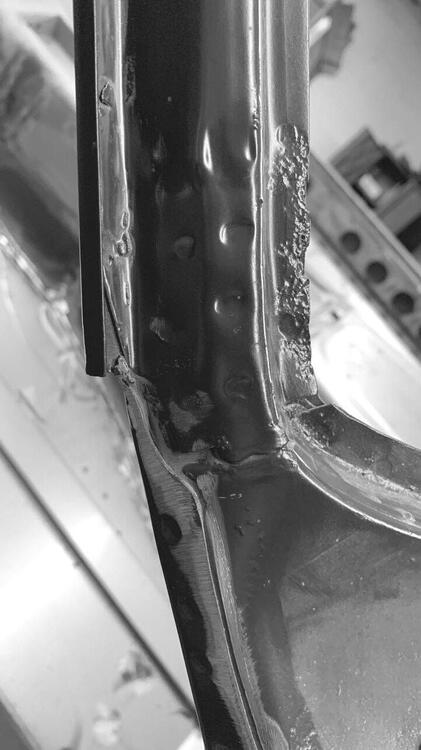
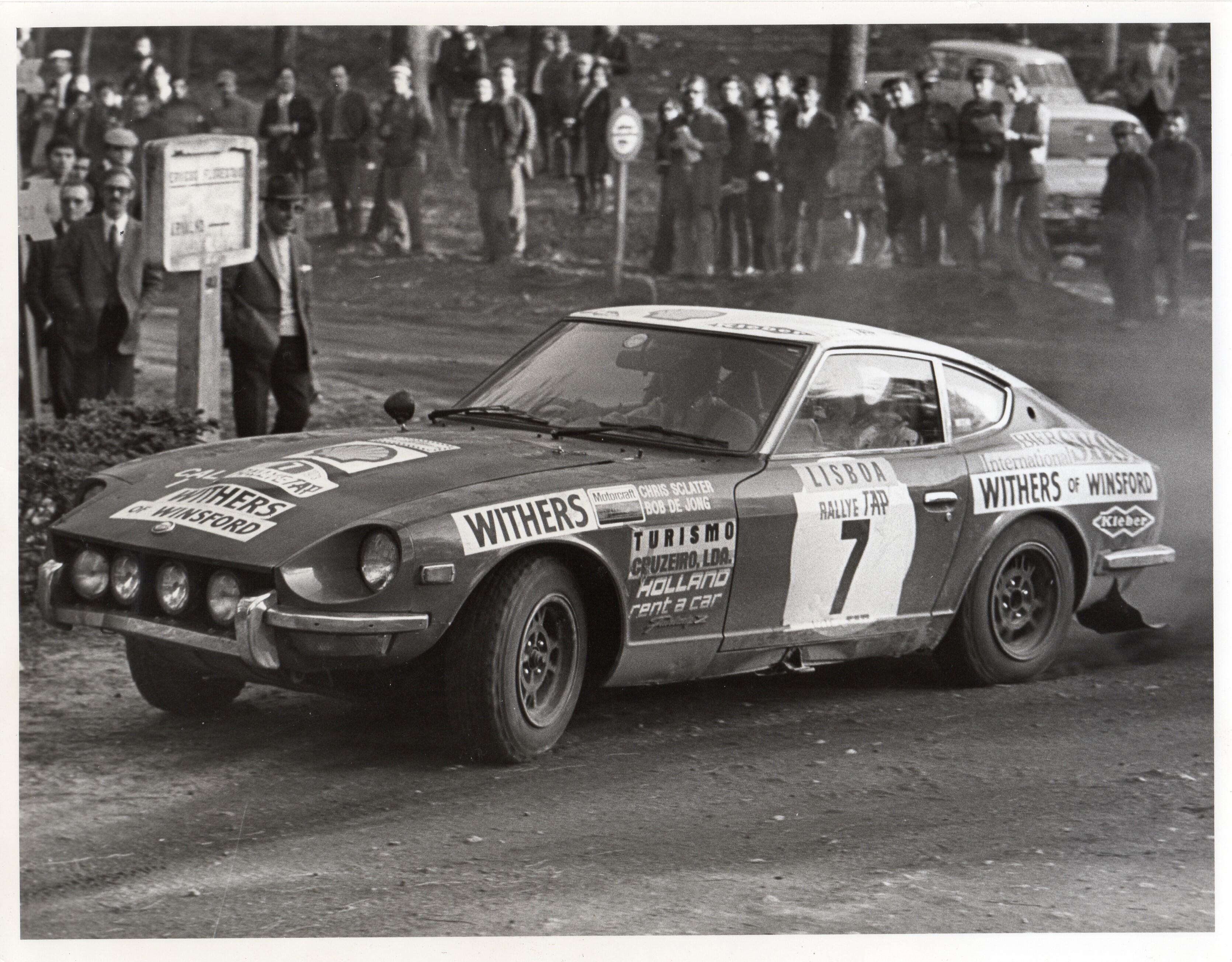
  14. Hi Kats, What was the date of the interview? I don't believe there was anything like that on the Works cars before 1972, and I honestly don't ever recall seeing anything of that nature in *any* of the Works 240Zs. It's hard to imagine how such a system could operate without big changes to the structure of the car, especially in the cowl and firewall area, and any ducting joining the cabin to the carbs or injection would easily be visible in the engine bay. Never seen anything like that. I wonder if it might be a case of misunderstanding between Namba san, Wakabayashi san and the journalist involved? The only thing I can think of is the modified cabin blower system used on the 1972 RAC Rally and 1973 Safari Rally cars, which was fundamentally different than the stock item. They turned the uprated fan and motor through 90 degrees and added some huge filters and ducts to the system. On the Safari Rally - if the weather was dry - they had huge problems with 'Murram', the fine red dust that forms many of the road surfaces on the route. It got everywhere, clogging up instrumentation and mechanisms. I should imagine the modified ventilation system was part of dealing with that. It's not a very good shot, but here's my view from the passenger seat of '7924', the 1973 East African Safari Rally-winning car (Shekhar Mehta/'Lofty' Drews) which had previously used by Rauno Aaltonen on the 1972 RAC Rally. You can see the 'clocked' fan and housing and some of the big ducting that was part of the system:
  15. What a strange take. I just checked for a snapshot on how many auctions were active TODAY on bringatrailer.com and the number was 698. The lots range from fairly regular, accessible and low value to top-end rare and high value with everything between. Its a veritable microcosm of the automotive world. The demographics of the winning bidders will be pretty much the same demographic as that of the wider automotive world, as will the demographic of the sellers. I don't see anything particularly weird or suspicious about it. "Millionaires who like to burn money frivolously"? These are often the very same people who keep the artisan end of the classic car industry in business. If they are spending money in that sector, I'm happy. "Dealers hoping to make a profit"? And what's wrong with that? Farmers hoping their crops are successful, Doctors hoping to cure their patients. Whatever next? Yes, just like in any market there will occasionally be shenanigans. It's the way of the world. Bringatrailer.com is no better or worse than any other portal in that respect. But a 1971 PS30 Fairlady Z432 selling for a price that's pretty much in line with its market value and location seems to have caused some consternation due to the nature of one hammer-blow bid. I find the reaction to that bid more surprising than the bid itself.
  16. So why are you suggesting that he overpaid? People who know what they are talking about reckon the car sold for around the car's market value in USD for a car located in the USA. I'm one of them. In fact, knowing the specific car as I do, I think it was a good buy. Again I'll say that I agree with you that his bidding tactics were odd, but you can't base your idea of true value on the underbid (what was it, 130k?). By whacking in a 250k bid so early he may well have trounced any number of people who were willing to go higher than 130k but not necessarily as much as 250k. So, let me ask you, what do you think the "correct market value" of that car is?
  17. Judging by what's on the table, prepare for trouble. That cat has plans.
  18. Shipping the car to Japan would cost money. Import taxes and duties would be payable and getting the car inspected and road-registered would also cost money. No guarantee that the selling owner had any current connections in Japan to handle that for him (especially since he was using a dealer to sell the car on BaT on his behalf) and anybody doing anything for him on the Japan side would likely be charging him for it. That's why I said the car - being in the USA - is 'out of context'. People - including yourself - seem to be amazed that the car has been bid to 250k USD, but similar cars are changing hands for more in Japan. See above. I just don't think you are familiar with PS30 values. Over the last few weeks I was contacted by a dealer in the Far East (not Japan) who had been tasked with sourcing a PS30 for a collector client. He asked me my opinion on several PS30s that are currently on the market in Japan. He wanted an "investment grade" car. ALL of them were priced at equivalent to more than 250k USD at today's exchange rates. A couple of them nearer 400k.
  19. 'Interesting' - if not unexpected - to see comments on the auction where people were calling the car a '240Z'. Clearly a legacy of what was presented to them as 'fact' over the last 53+ years. I think this car is a good choice for anyone who wanted a 432. It is MILES better than the so-called "1969" 432 which sold at Mecum's Monterey sale last year for more money. I have an inkling that the car in question may soon end up in a Singapore-based collection, if my suspicions are correct...
  20. I'll admit that I too find it a strange way to approach an auction, but second-guessing that bidder is not going to get us a firm answer as to why he did what he did. The plain fact is that the 250k USD bid is about right or slightly low for the car in its context, being away from its premium market (Japan) and needing a little work to bring it up to really nice condition, mainly underneath. I don't think he could have "saved 10s of thousands of dollars" by bidding in lower increments and in fact he may well have saved himself a fair chunk of money by discouraging other potential bidders who would otherwise have been pulled along by the more usual last-minute bidding war scenario.
  21. Did you bother to read any of the auction details? "Older 1980s restoration by St. Yves Motor Sales, with attention to factory details and specifications, using OEM parts when available." So it was restored at least 35 years ago, and for their own collection.
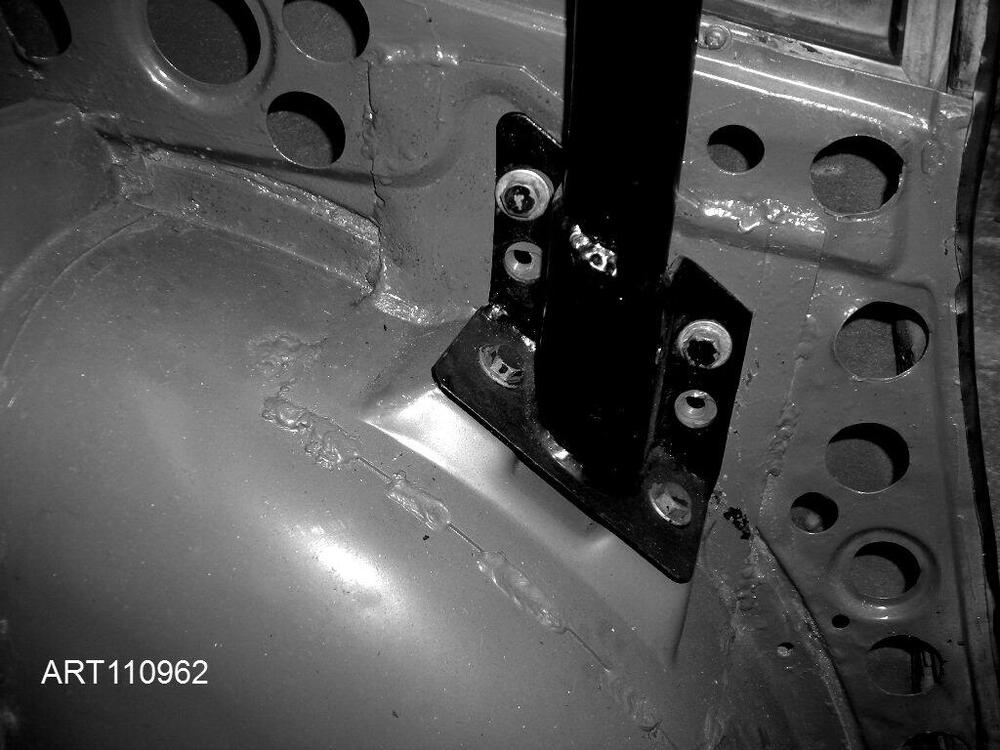
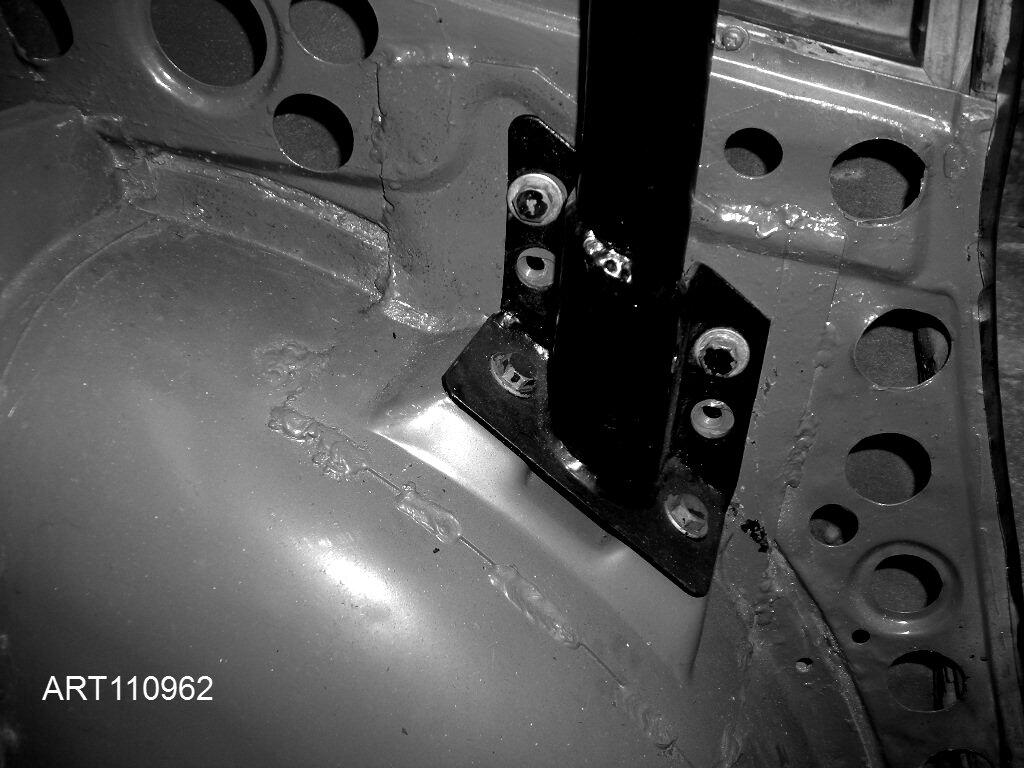
  22. The car was 'refreshed' (not necessarily fully 'restored') in Japan back in the early to mid 1990s. The panel was most likely replaced around that time as it was certainly installed in the car by 1997 when it was featured in Nostalgic Hero magazine's Vol.64 with a 6-page feature and centrefold. I believe at the time of refreshing the car that the correct RHD-layout panel was difficult to find whilst the AirCon-specific panel was still available from Nissan. The story may be as simple as that. I know that Nishi san of Revive Jalopy was involved in supplying parts for the car and it may have been the case that he couldn't get the PS30-specific panel. Easily put right today with the availability of reproduction panels and sticker sets. I see it as a fairly trivial detail. There are many other small details on the car which are not 'correct', but I don't believe the previous owner In Japan ever claimed the car was any kind of concours example. He was happy to modify it to his own taste (4-point aftermarket roll bar, Weber carbs, Takahashi exhaust manifold, oil cooler, Compe steering wheel and leather gear knob etc) and did plenty of miles in it* *By the way, the Bring A Trailer auction description mentions "33k Kilometers (~21k Miles) Shown." When the car was featured in that December 1997 issue of Nostalgic Hero magazine, mileage was quoted as being already 84,000 Km. I'd say it's been around the clock at least once. Good! Edited to add: The twin parking lamp switch on the console was still present in the car when I last saw it, but now appears to have disappeared - replaced with a blanking plug. I'm wondering if the whole parking lamp system was deleted when it came to the USA? The correct switches are quite hard to find.
Remove Ads

Important Information

By using this site, you agree to our Privacy Policy and Guidelines. We have placed cookies on your device to help make this website better. You can adjust your cookie settings, otherwise we'll assume you're okay to continue.

Account

Navigation

Search

Search

Configure browser push notifications

Chrome (Android)
  1. Tap the lock icon next to the address bar.
  2. Tap Permissions → Notifications.
  3. Adjust your preference.
Chrome (Desktop)
  1. Click the padlock icon in the address bar.
  2. Select Site settings.
  3. Find Notifications and adjust your preference.