



Zed Head
Community Member
-
Joined
-
Last visited
Everything posted by Zed Head
-
There would be three. Edit - and just to confirm what you're probably thinking - it will be difficult. Because the wire colors after the connector are different than the wire colors in the main harness. You'll need to identify the pins in the connectors on the main harness side in order to identify the relevant pins on the other side. Pen and paper and the connector in front of you.
-
-
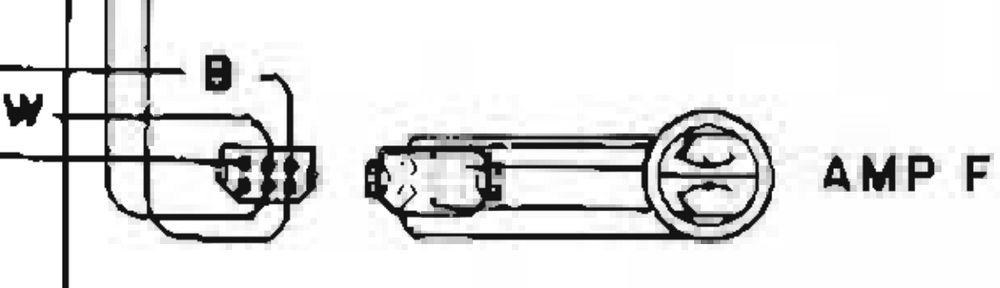
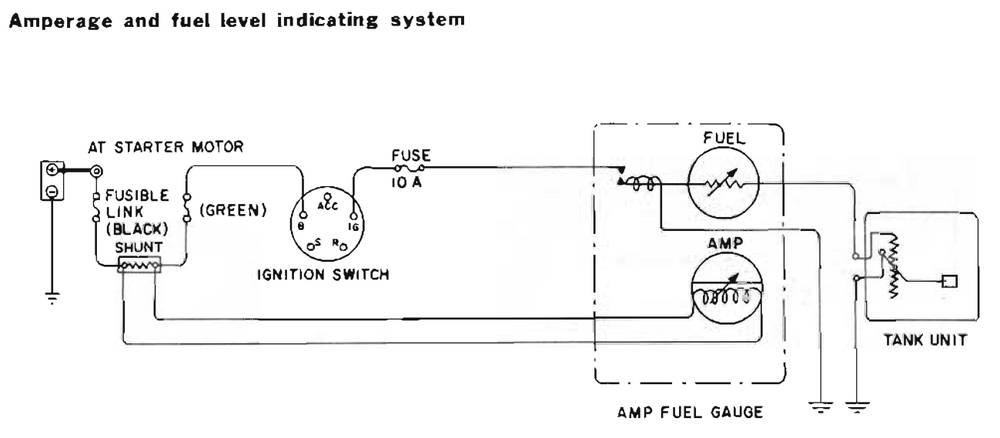
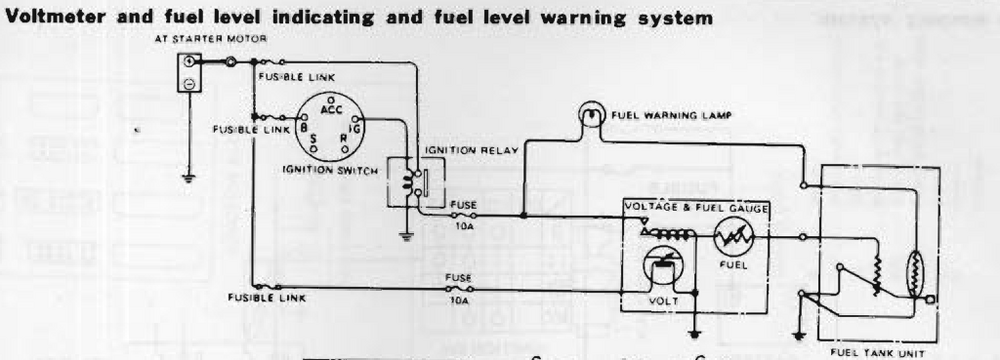
I posted the two drawings from the 1974 260Z first, quoted above. From Body Electrical. For some reason they showed the regulator in the water and oil gauges, but not in the fuel level gauge. CO is most likely correct that all of the years used it. There's a bunch on the internet about Ford and Chrysler and various English manufacturers using them, since the 50's and 60's. If I had the problem I'd identify the wires that pass through the two bimetal strips and measure resistance.


-
AI training. Firstly, don't repeat other people words. Second, get the facts correct. Check the logic of the writing. The following explanations are incorrect. Good luck, Mr./Mrs./Miss/Ms. bot.
-
Did Nissan start with the "stage 1" gauge or the compensated gauge? How do we know? Still wondering why they described compensation for the temperature and oil pressure gauge but not the fuel gauge.
-
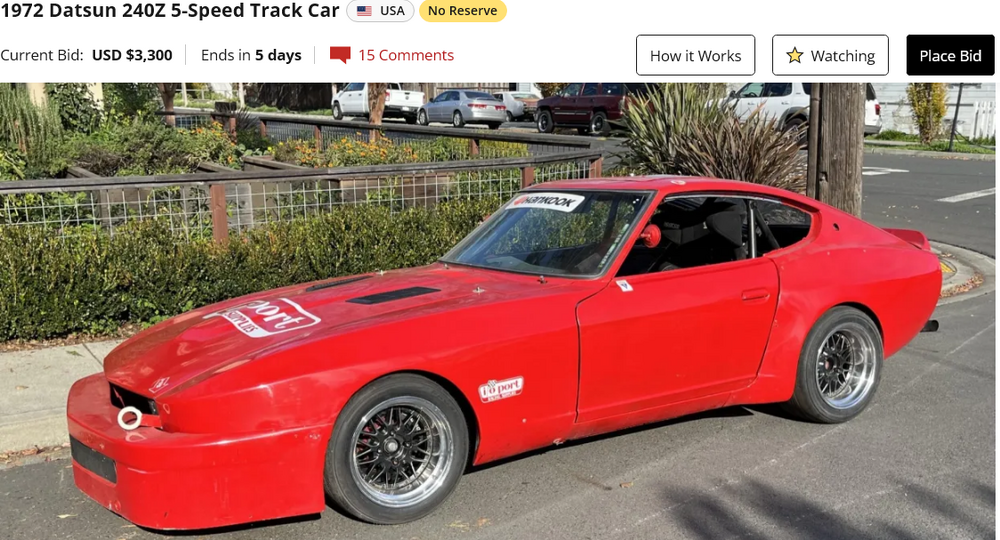
Race car. https://bringatrailer.com/listing/1972-datsun-240z-316/
-
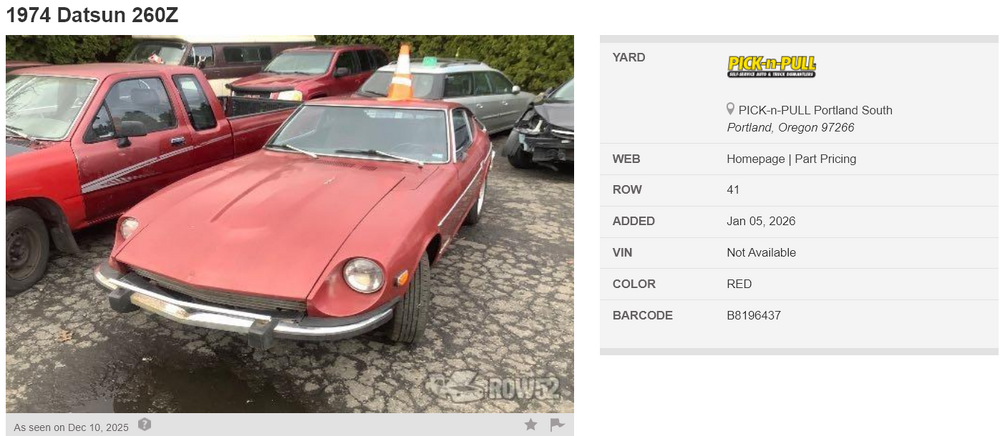
This showed up on my Row52 notification. Probably ran and drove but didn't sell from PicknPull. South Portland. Picture is from a month ago. https://www.row52.com//Vehicle/Index/RNDQyiuf2X9BwjmT45dmKShwe
-
-
Rigor demands - what is the gauge from?
-
-
So you're saying that Nissan used the wrong words. When they saif voltage regulator they meant bimetal strip? The air regulator has a voltage regulator in it? A bimetal strip used aa a switch is not the same as a voltage regulator, unless regulating means on-off. Just looking for a clear description. The modern voltage regulator linked in the Ratsun post takes 12 volts or more and regulates it down to a steady 9. I don't see how a bimetal strip, that bends due to a temperature change equates to that. Seriously, I'm not sure what you're saying. The words are wrong, or the description is wrong, or Nissan left some words out. The modern VR's are really interesting devices. I learned some new stuff. https://www.allelcoelec.com/blog/Everything-About-the-LM7809-Voltage-Regulator.html "The LM7809 is a reliable positive voltage regulator IC, renowned for providing a steady 9V output in various applications. With its ability to handle currents between 1A and 1.5A, it finds widespread use in fields like robotics and embedded systems, where consistent voltage supply is serious. To achieve optimal performance, the LM7809 requires an input voltage of at least 11V, maintaining a minimum 2V headroom to deliver its regulated output. Designing a proper power supply with adequate input reserve is required to ensure efficiency and prevent interruptions in power flow."

-
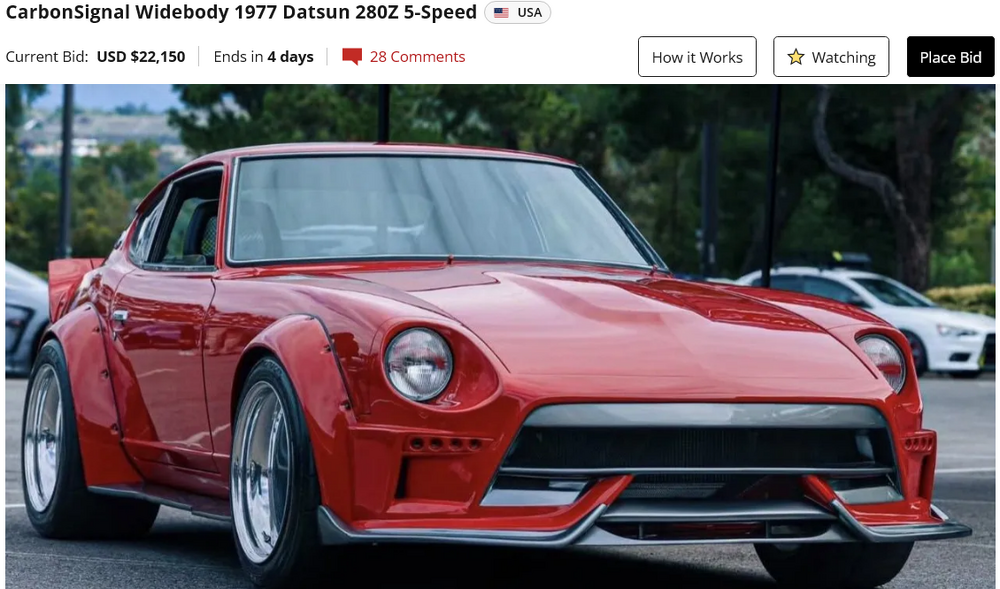
Edit - Did sell on offer. $34,000 Did not sell. Bid to #32,000. The owner added some driving and running videos. Didn't sound good and had the lowered Honda bumpstop bounce going down the road. It's a "show" car.
-
I didn't watch the videos. I went to the Nissan documents. You're saying that there is a mistake in the Factory Service Manual? The videos are for the OP's 1974 260Z fuel gauge? Not clear why I should disbelieve the FSM. I checked 1978 to see if things changed with a voltmeter. The picture is different but the description is the same. It would be odd to edit the FSM and leave an error. But it is possible, of course.
-
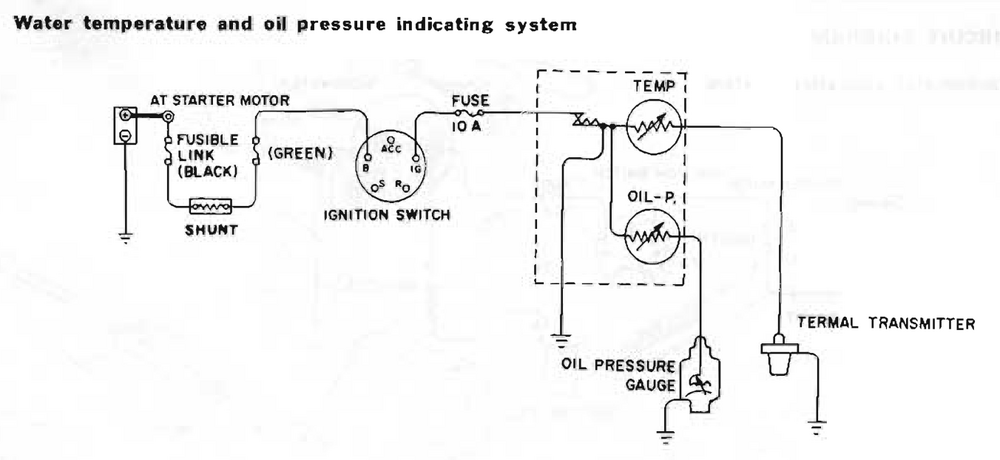
Interesting topic. I've wondered about the "regulator" in the past. I dug around in the FSM, and also read that Ratsun link and think that there might be a problem using that solution with this specific problem. The FSM only shows a regulator being used for the temperature and oil pressure gauge. Not for the fuel and ammeter. Pulled a few things out to illustrate. Still worth exploring, just not for this problem. From Ratsun. He's talking about temp/fuel, but that's two different gauges in the Z's. "You're temp/fuel gauges don't work and you've already checked the output from your fuel/temp sensors to make sure they are not the culprit." From the 1974 FSM. Looks like three triangles represents the regulator. The fuel gauge has a heat coil. Seems like that could fail and cause problems. No heat, no needle movement.
-
Something funny. I got in to Rockauto to eyeball some gaskets, and one of the gaskets that AJUSA (don't know who they are) sells in the carb'ed 1972 section has injector cutouts. Maybe Rockauto just made a mistake. One other thing I notice is that the intake port size is smaller for the carb gasket. Don't know if it blocks flow on an L28 EFI head or not. Something to look out for. https://www.rockauto.com/en/catalog/nissan,1972,240z,2.4l+l6,1209169,engine,intake+&+exhaust+manifold+gasket+set,10220


-
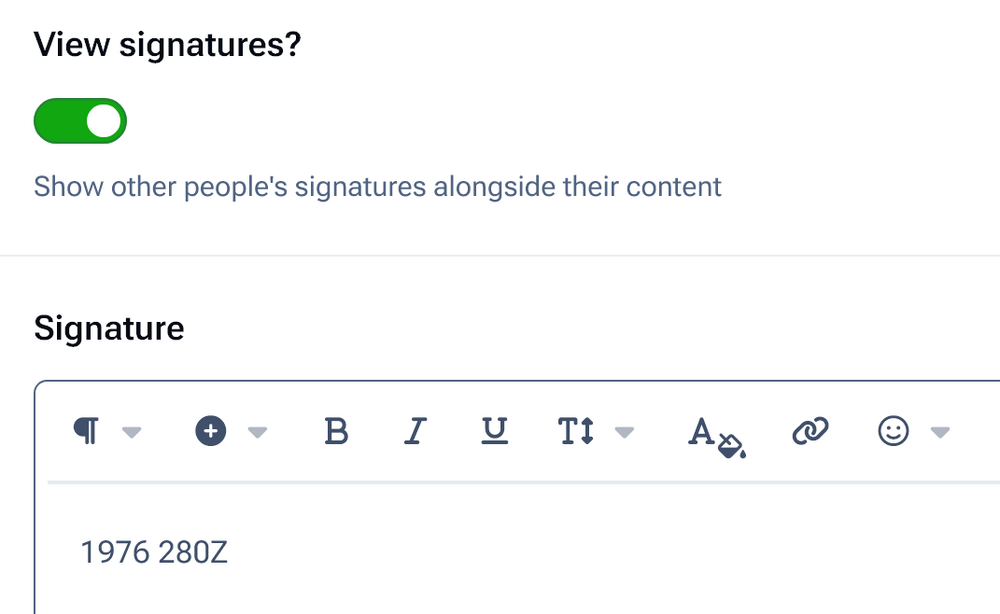
I figured it out. I have been using CTRL + to magnify the page since I have a big screen monitor. Turns out that windows just deletes some things when there's too much magnification. I unmagnified and the sigs came back. Sorry for loading up your thread nowak1981. Back to Z stuff...
-
Can't see nuthin'! Maybe it's an Adblocker thing. It was too much magnification.

-
They don't show for me for some odd reason. Oh well.
-
No mystery to some of us. This was all discussed earlier in the thread. I was just trying to lock it in as the reality. It is difficult to keep track of the many possible variations. If the heads have been swapped maybe the pistons have been too. With these old cars a person really has to do some examining to figure out what they're really working with. p.s. for example, if you swap in a 280ZX engine you also have to modify the exhaust system since the ZX manifolds are different, if you want to use the ZX manifolds. So many people just use the Z manifold on the ZX engines. At a quick glance it looks Z. But a closer look shows ZX.
-
Edit - except that I see that Signatures don't seem to work anymore. Mine is gone and so are others. @Mike Something that might be helpful on these long build threads - update your signature with details as you discover them. 10 pages is too many to easily go back through to figure out the basics. It's not under Profile it's under Account Settings. https://www.classiczcars.com/settings/signature/
-
This is the heart of the mystery. A CHTS in an N47 head.
-
I don't see that list you posted anywhere in that link. Maybe you clicked through to get there? Anyway, there are really just three "L" stampings on the blocks, as far as I know. L24, L26 and L28. 2.4 liters, 2.6, and 2.8. The L24 used in the Maxima was called an L24E but I don't think that they stamped the E on the block. You just had to "know". I don't think that L24E was a Nissan designation it's just what people out here call it. Can't remember for sure though, but I do know that the E was not used on the L28's.
-
Which one?
-
Not clear where you got the Wikipedia info. It's incomplete. I looked around and find that even the latest Wikipedia entires are incomplete. Kind of strange but I guess that's how "open source" encyclopedias work. No single source is dependable. Too many people can get in and mess things up. https://en.wikipedia.org/wiki/Nissan_L_engine The 240Z is not mentioned here - L24 Nissan L24 engine The L24 was a 2.4 L (2,393 cc; 146.0 cu in) engine produced from 1969 through 1984. Like the L20A, it was based on the design of the L16. It produces 130 PS (128 bhp; 96 kW) and the version with twin side draught SU Carburettors produces 150 PS (148 bhp; 110 kW). Bore and stroke is 83 mm × 73.7 mm (3.27 in × 2.90 in). A single carburetor version of the same engine was also standard in the Laurel sedan (240L) for various export markets, in the years 1982 –1984. While the last generation Cedric to use this engine in Japan was the 230-series (1971–1975), Yue Loong of Taiwan installed it in 430-series Cedrics at least as late as 1984.[12] But the 260Z is here - L26The L26 is the larger 2.6 L (2,565 cc; 156.5 cu in). Bore and stroke is 83 mm × 79 mm (3.27 in × 3.11 in). It was produced from 1973 through 1978. It produces 140–162 PS (138–160 bhp; 103–119 kW). In 1975, the L26 replaced the Prince G-20. The L26 makes around 165 bhp (167 PS; 123 kW). Applications: 1972–1975 Nissan Cedric (230 Series) 1974–1977 Nissan Laurel (C130) 1974 Datsun 260Z 1974 for North America. 260Z sold in other countries until 1978 1976–1978 Nissan Cedric (330 Series)
-
A 260Z should have an L26. Might be where the question comes from.