HS30-H
Supporting Member
-
Joined
-
Last visited
Everything posted by HS30-H
-
And just like so much written and spoken about Yutaka Katayama, it has a mistake or misapprehension in every sentence.
-
Tell him, not me. He's the one using Imperial.
-
I had to temporarily dumb myself down in order to realise that "visually appeared" should be "visually impaired"... Obviously that post was Made In China. So, Blue had more than 4 inches. Who knew?
-
Caveat emptor, I think you'll find. Cuiusvis hominis est errare, nullius nisi insipientis in errore perseverare.
-
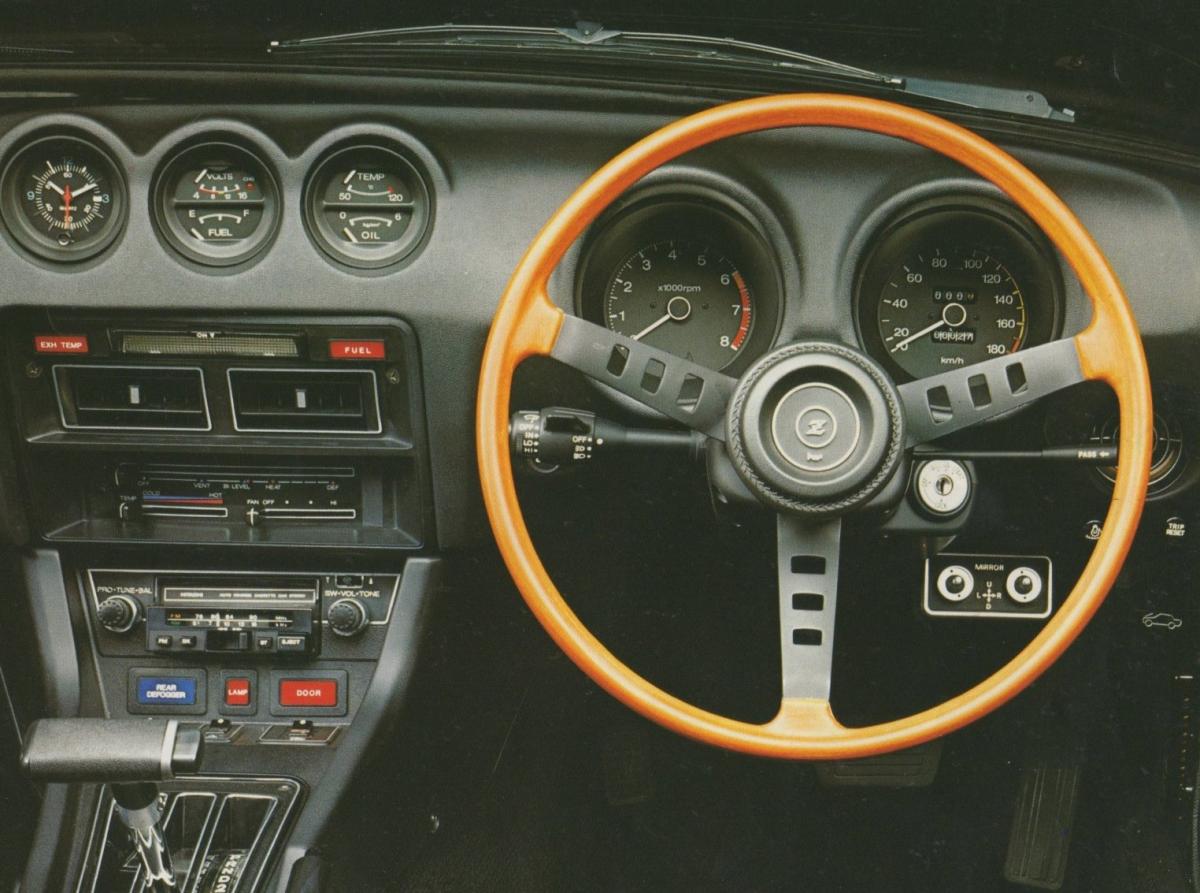
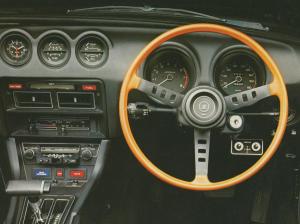
If I know I'm right I'll stand fast. Fact is I can tell if a car is an S31 just from a picture, but it depends on the picture. So the answer is both yes and no. I don't know what point you are trying to make here. The auction description is fairly clear, and at least clear enough to establish that none of the three cars is an S31. If you remember, it was you who brought the term 'S31' into the topic - despite you not really knowing what it meant or what it was applied to. Hopefully you know a little more now? Here's a photo of an S31 dashboard, showing its 180km/h speedometer in situ:
-
There are three cars listed in the auction description. One is (clearly!) a 2-seater made before the end of 1973, and the other two - a 2-seater and a 2/2 - are listed as 1973 and 1974 respectively. The photos appear to confirm this. Do you think the description is incorrect? A 180kph speedo could easily be from an S30-series Z. Do you think it isn't?
-
It's not that difficult to tell the difference, but when you know the production year (because the auction seller mentions it, for example...) it makes it even easier. The filename includes 'S31' because it depicts an S31, and because the catalogue/flyer it comes from is for the S31 range...
-
Pretty much the same as all the 1973-up Japanese market cars:
-
Why would be an "early A"? You're talking about a cross-pin attaching the gear stick to 'ears' on the trans case, which already tells us it isn't an 'A' type 5spd. It's not difficult to distinguish between and FS5C71A and an FS5C71B even when both are in the car. The 'A' type has a straight gear stick and has three main housing castings (bellhousing, centre case and tail case) whilst the 'B' type has two (combined bellhousing/centre case and tail case) so looking at the bellhousing from the engine bay (you can clearly see the split line where the bellhousing attaches) or the gearstick and its attachment (by taking off the gaiter) should show you the difference. Additionally, an 'A' type 5spd will not fit into a 'late' centre console car without a special gearstick. It needs a big dog-leg kink put into it to clear the console in the forward gear positions (1st, 3rd & 5th) so that too should be visible by taking the gaiter off. EuroDat, I don't know where all the 280Z, 620 and 720 stuff is coming from? Why make this more complicated by introducing ideas from left field? We could suggest a whole raft of other transmissions too, but seems pointless and unlikely to me. As I've already pointed out, if the car is indeed a 1973 production 'Euro' market HLS30 it would have been fitted with the FS5C71B type transmission. If you think that the transmission is the same one that it left the factory with, then that is what it will be.
-
We've discussed them several times on this forum in the past. 'S31' was the name given to the updated S30-series cars that complied with new emissions, safety and consumer law legislation for the Japanese market. They were introduced in July 1976 and were produced until the all-new S130-series models were introduced in late 1978. This forum's search function seems to be about as useful as a chocolate teapot at the moment, so here's a link to a HybridZ thread instead: http://forums.hybridz.org/topic/93310-what-models-were-s30-and-s31/
-
Luckily the people who live in and visit Gunma Prefecture know that it is on Honshu, and around 1,500km from Okinawa.
-
They are not S31s. All are pre-S31. People in Gunma might be surprised to hear any part of it described as "jungle"...
-
Be aware that your '73 'Euro' model 240Z would not have been fitted with the FS5C71A type transmission. By '73 they had been superseded by the FS5C71B. A and B 'boxes are two completely different designs. The later US '280z' models would use the same 'B' type transmissions, but in FS5W71B form I believe. Different ratios, and different synchro ring design/material.
-
Thanks for the tip o' the hat. Appreciate it.
-
Confirm no dash top 'VIN' plate on European market cars. It was purely a north American market requirement.
-
Again, you're going further than what's actually there. The single character shown is not a complete word on its own. What's written is 'Sam' (pronounced phonetically with an inflection as though it had a letter 'u' on the end) and that doesn't say (or mean) 'cold' on its own. It's similar to saying that 'col' says 'cold'. I think we should be very circumspect about assigning definite meanings to these scribblings, and that includes resisting the temptation to guess complete words when there are parts missing.
-
That one reads 'Sam', as would be used in the word 'Samui' ('cold') or 'Samusa' ('chill'/'coldness') if it had an extra Hiragana character next to it. But it doesn't. It's just 'Sam...' on its own, so it does not make complete sense.
-
Again, yes that Kanji character is pronounced 'Kan' but it doesn't - on it's own - mean anything that specific. 'Finished' / 'Complete' ('Kanryo' / 'Kampeki') would both need an extra paired character to make complete sense. I think we have to be very circumspect about applying definite meanings to these marks. We might be able to read part of the message, but it doesn't mean we know what the message actually means.
-
It's a single Kanji that - like so many other of these - doesn't make any literal sense when used on its own. It is indeed pronounced 'Kyo', but it doesn't say 'Kyo So' ('Race'). It would need the other character next to it to say 'Race'.
-
First of all, it's really hard to measure these things as there's not really any good datum point to work from. Secondly - in my experience, having had a lot of the OEM headlamp cover sets pass through my hands - there's some noticeable variation in size and shape from piece to piece. They can sometimes need some fettling to get them to fit better, and it's the fixings that pull them somewhat into shape. Rather than taking measurements from the trim rings themselves you might be better working from the shape of the headlamp housing that they need to fit... So I just don't see how you can replicate them accurately without having a set of originals in your hands as reference. And that's reference to nebulous values like 'feel' as much as any size measurement. To be honest, the originals were somewhat variable in quality and even the best examples were fairly crude (although I forgive them that) so this may be an indication of how much time it takes to get them up to an acceptable standard. You know that the original trim rings were made in two pieces and then welded together, right? The shape of the 'U' channel in cross-section is also subtly asymmetric because it overlaps the clear plastic on the outside but not the inside, and I reckon that's tough to achieve without making dies to form the channel (meaning four dies and two welding jigs) which is how the originals were made. If you make them so that they sit fully on the plastic (instead of overlapping on the outside edge) then they won't look or work like the originals. I think it would be a bit pointless to invest time and money in such a project unless you could replicate the exact look and feel of the originals (warts and all). That's what people want I think.
-
He's light years ahead of you, I'd say...
-
With regard to its pertinence to this forum, it speaks more of an "interesting attitude" for a Moderator to put forward so often. He's even got it in his sig, along with an advertisement for his business. Either he's being deliberately provocative, or he's just gauche. Maybe its both, actually? In any case, I think classiczcars.com ought to be better than that.
-
Go back and check. I haven't called you a racist. You've just got a real hard-on for "the Chinese", haven't you? It's something you've displayed on this forum many times in the past and it makes you (despite your Ruskin quote sig.) look like a fool. What's your Z a "copy" of? Can you "see the quality..."?
-
...but since you ask: http://www.telegraph.co.uk/news/worldnews/northamerica/usa/11631402/Artist-sells-other-peoples-Instagram-photos-for-90000-each.html http://www.bbc.co.uk/news/magazine-31818367 How about a little architecture: http://www.washingtonian.com/articles/images/070912-VisitorsGuide-BranchesTour-Capitol.jpg
-
But we are really, aren't we? This is just another of your anti Chinese threads/posts.