HS30-H
Supporting Member
-
Joined
-
Last visited
Everything posted by HS30-H
-
Carl, When I wrote "fundamentally different", I meant that they are two different publications with two different ISBN numbers and in two different languages. The fact that they are in different languages seemed to me to be a major point ( especially as you were discussing the English language version when Gee's link showed the cover of the Japanese version ). I didn't want anyone to order one and get the other - if you see what I mean? I am sure that the presentation of the story - and most likely all the original drawings - have stayed the same, but I can already see some slight 'tweaking' towards the perceived customer base for the English language version. In the grand scheme of things this will probably make little difference, as the original Japanese version reflected the content of the NHK 'Project X' episode that it was based on. There are mistakes and historical errors, and a large part of the story is left out whilst the whole bias of the story seems to be based on Katayama having some kind of 'vision' for the Z and everybody else working towards making that vision a reality. That's a huge oversimplification in my view. Katayama or no Katayama, Nissan would have built a 'replacement' or successor to the SP/SR anyway - and indeed this is what Matsuo and his team were working on when Katayama came into that part of the story. Such a car would inevitably have been sold in the world's biggest single market and would therefore have been designed with such in mind ( like most of the cars that were sold alongside it - although we rarely hear about them, except for the 510 perhaps ). Matsuo says he was working on designing a car firstly for himself ( hopefully we all understand what he means by that ) and secondly for Japan and the rest of the World - not just the USA market. That's where the USA-market centric part of the story grates; It is presented as though this was the single reason and aim for the car's existence - which is not the case, is it? But I don't want to criticise either the original NHK episode or the manga too much. At the very least, they introduced the names and identities of many of the key players in the story and left out 'The Lying Count'. There is a lot here that we should be glad about - but I don't think anybody ( including the main characters themselves ) thinks of this as the 'definitive' historical version, and the manga itself was something of a fun spin-off to the TV show. And Matsuo did say to me with a chuckle that he called the manga ".......the Hollywood version......". He pointed out a couple of things in the manga that had been changed to make the story 'play' a bit better, and one of these was the full story surrounding the Z signal flag - which he recounts fairly differently. Alan T.
-
Carl, Watch out for typos. One of the above ISBNs must be wrong........ ISBN for the original Japanese version is ISBN4-87287-899-X. So we are talking about two fundamentally different versions here. Anyone who wants to order one might need to be careful about which version they require ( get both! ). Gareth, The ISBN for "Fairlady Z Story - Datsun SP/SR & Z" with contributions by Yutaka Katayama, Yoshihiko Matsuo, Hideaki Kataoka & Brian Long - published by MIKI PRESS in 1999 - is: ISBN4-89522-244-6. That article in 'Classic Cars' is pretty much the usual fare I'm afraid. They don't seem to try all that hard with the pages they dedicate to the Z. Cheers, Alan T.
-
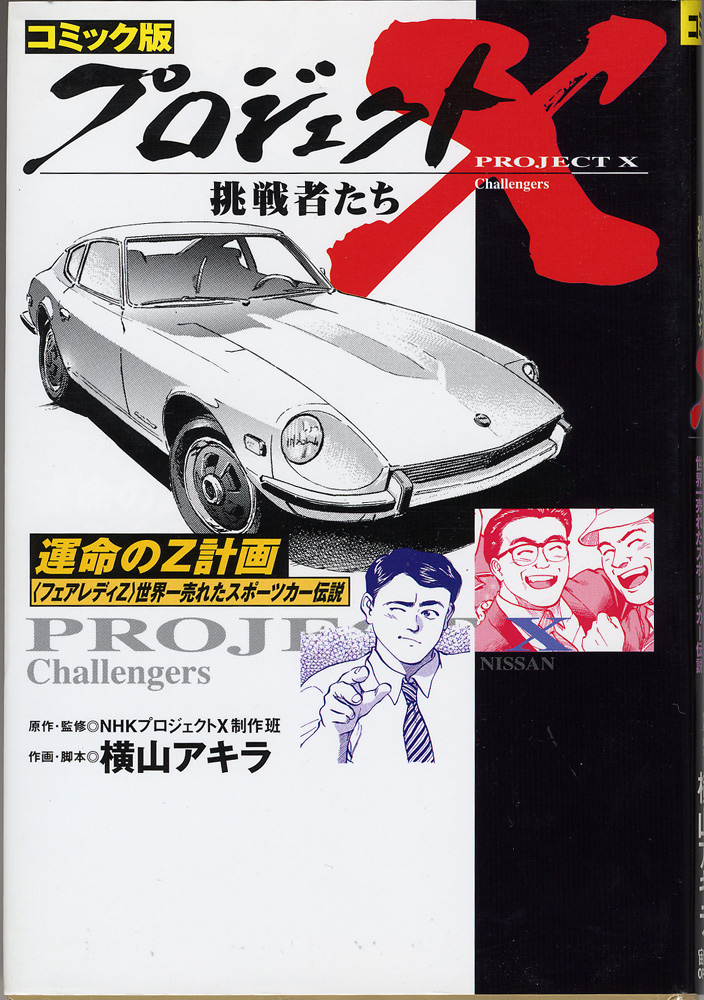
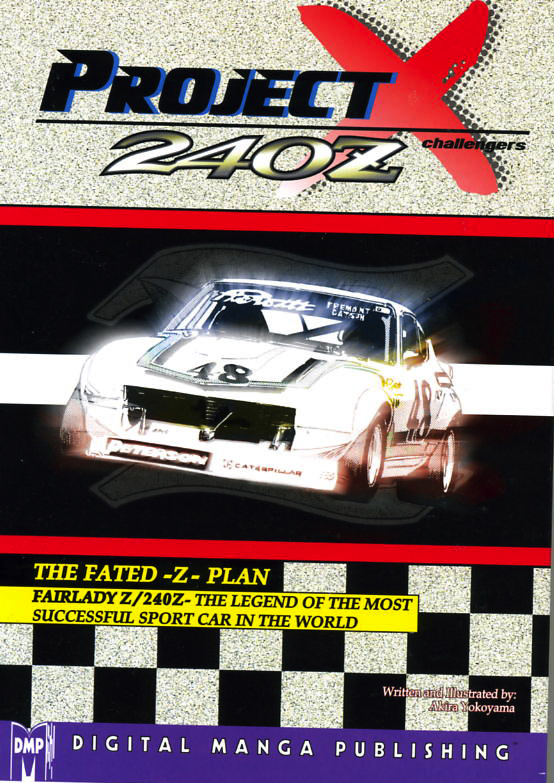
Surely we are talking about TWO distinctly different books here? The one I have is the original Japanese language version, and the other must be the 'translated' English language version. Both are by the same author, but the content ( like the cover ) appears to have been slightly tweaked to appeal to an English-speaking audience. Note the different covers and titles:
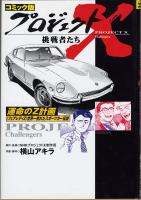
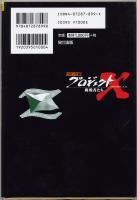
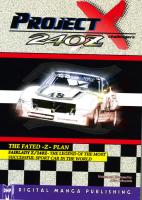
-
Carl, Did you "read" the original Japanese issue, or the 'translated' English-language version? The link that Gee provided showed the Japanese issue I believe. "240-Z" is not mentioned in the title, frontispiece, back cover or spine of the original Japanese issue - so I presume you must be quoting from another ( different ) publication. Alan T.
-
Don't look at me for a while. I'm busy moving home. I don't know where anything is at the moment........
-
I wouldn't dare pick on you. But seriously, the link shows a picture of the second Japanese edition from 2004 ( it was first published in 2003 ) which had the space on the lower front cover for the Carlos Ghosn mugshot slipover, which I use as the bullseye on my darts board. I thought the English-language version has the picture of the SCCA-type race car on the front cover?
-
I second the recommendation. I've had these books for a number of years and still keep dipping into them. They are really nice things to have on the shelf. Well worth the money. The section written by Rauno Aaltonen in 'Fairlady II' is particularly good, and I think it shows why the Japanese rally team mechanics and staff held him in such esteem. Alan T.
-
Surely Gee's link shows the original untranslated Japanese version? Are you getting it mixed up with the English translation version that was recently published? The cover is certainly quite different. That's interesting. Matsuo san described it to me in those exact same words. That's a coincidence isn't it? Kind of a microcosm of S30-series Z authorship history going on there......... :classic: Alan T.
-
websteg, You can have one of my spares for free if all else fails. FS5C71-A complete with L-Series bellhousing. Only problem is - its located in London, England. You would have to pay for the shipping.......... Might be worth keeping in mind? Alan T.
-
Here's a cod close-up for the hard of herring:
-
Hi Miles, Ah - now I understand. I was ( for some reason ) thinking that you lived part of the time on Okinawa ( maybe it was your 'Y' plate? ). Now that would be a long journey.........! The reason I asked about Uchida san is that he seems to have a bit of a 'rep' for being difficult to deal with sometimes. I visited his shop around 12 years ago ( when he was still sharing his workshop space with an 'ordinary' garage business ) and he was - at first - particularly grumpy and abrupt. He soon warmed up a bit though. Car people are car people. His business has grown a lot since that time, and I hear that he also plays in a band now ( ???! ). Ah yes, I can relate to that. My other half just leaves me to it whenever I want to go on a car-related visit in Japan. She goes out shopping or meets her friends for lunch, and doesn't expect me back until late. "What on earth do you find to talk about?" she says. Plenty! Cheers, Alan T.
-
websteg, Here's a relatively recent thread that contained lots of data that you might find useful / interesting: http://www.classiczcars.com/forums/showthread.php?t=20792 Alan T.
-
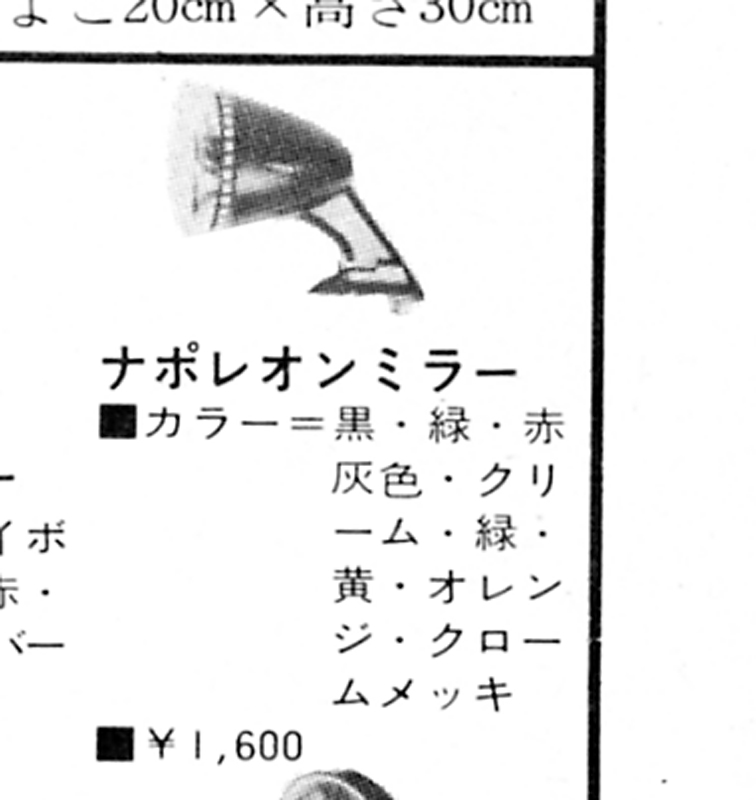
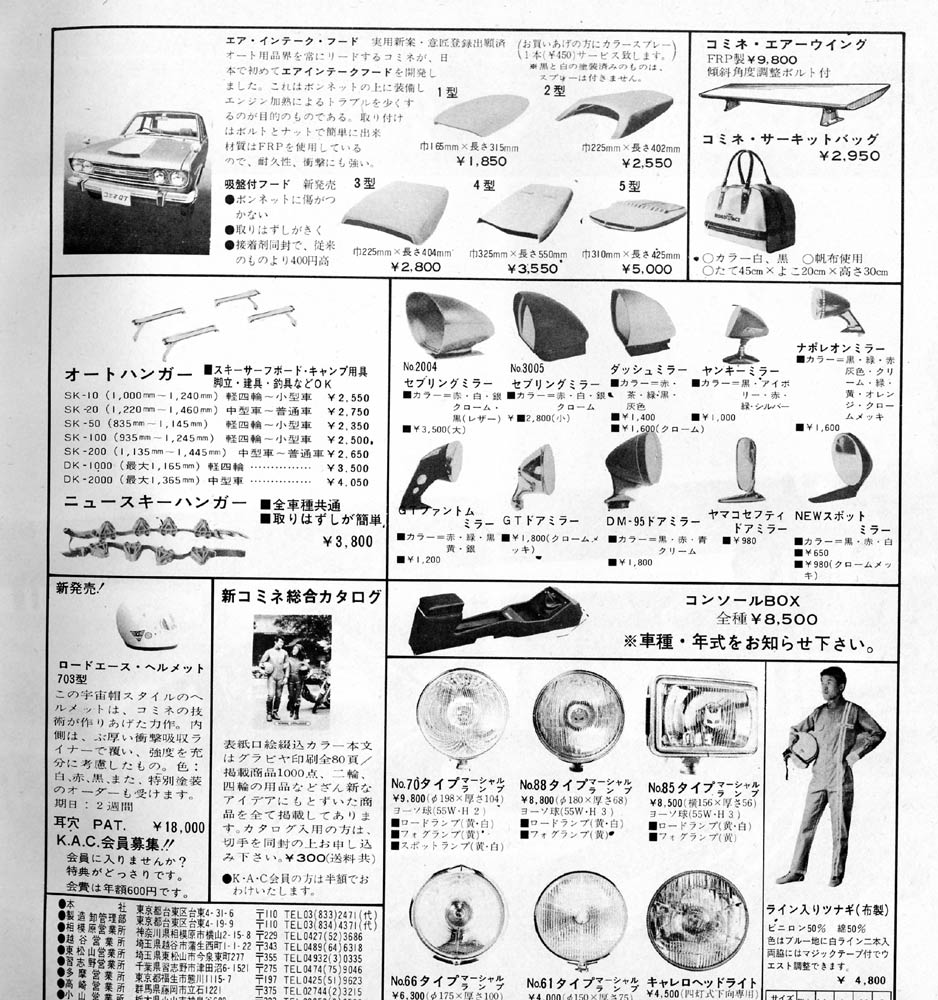
Definitely aftermarket. That's a pair of 'Napoleon Auto Mirrors' - early 1970s vintage. Illustrated top right in the mirrors section from this 1971 ad in a Japanese magazine: Alan T.
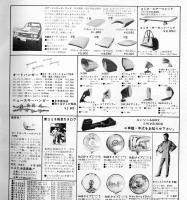
-
Miles, Glad to hear that you are reunited with your car. Its a nice time of year to be driving. Is 'Victory 50' a long way from where you live ( I don't know whereabouts you live in Japan )? It sounds like you travelled a long way. Uchida san has a reputation for sometimes being a bit 'difficult' with his customers. Was your experience with him good overall? And did he sing you a song?! ( :eek: ) Alan T.
-
The original stage play was a musical.
-
aarc240, Whilst I have your attention, can I re-ask you a question I asked a couple of months ago ( you didn't reply last time )? The original thread was here: http://www.classiczcars.com/forums/showthread.php?t=20983 You wrote ( in post #45 ): And I asked ( in post #50 ): If you have any further information I would love to hear it. Sorry to keep asking you for 'evidence' - but what you write is very interesting and begs for questions to be asked. Alan T.
-
I'm sorry that you find it troublesome and annoying, but I am interested in the truth. If your evidence is only anecdotal, then it might be best to make that clear from the outset. Opinions too are probably best clearly stated as merely opinions, rather than facts. You are referring to the cam cover drawings now, yes? Once again, I'm sorry to disagree with you - but I don't think we should classify the drawings from the factory parts lists as true "engineering" drawings. For one thing, they haven't got very much of the data that an engineer would need on them. Essentially they are guides to help identify individual components, and serve as illustrations to accompany part numbers and their descriptions. They are not "irrelevant" drawings - they just have some slight inaccuracies - and plain mistakes - in them. I have some Japanese-market parts lists and workshop manuals that were hand-notated by the dealers and mechanics to correct inaccuracies. It is clear that mistakes were made, and some inaccuracies were allowed through the net because - presumably - they would result in little adverse consequence ( I'm thinking of the "DATSUN" scripted L6 cam cover illustrations here ). If you spend time looking at the original publications you can spot quite a few incidences like this. Do you have any factory parts lists? I could give you some examples of mistakes if you don't. And with regard to the KPH to MPH speedo conversion on that single KPGC10 - you suggested that 'Jeco' could have performed the conversion ( even though I believe - there's that word again - the KPGC10 speedo and tacho were made by Kanto Seiki ) - which would point to the car being an *official* Factory-sanctioned export. To me, this confuses the situation: You are offering up 'evidence' that is clearly questionable ( Jeco ) - and which can mislead. I went back through this thread and re-read it several times. I picked out the post which caused me some surprise and aroused my interest. Here is what you wrote: So far you have backed this up with anecdotal evidence of one car ( you say it was a KPGC10 ) of which you say no pictures, written reports or other sightings seem to exist. So what about the PGC10s you mentioned? Did they come and go without ever being noted? I would find that hard to believe. This is not a witch hunt - and I'm sorry if it feels that way to you - but you should expect to be asked for a little more evidence after making such a definitive statement. Alan T.
-
Not really. I think it is funny. I know what "chaps" your "@$$" though, so I keep it up. You tw@.
-
Oh, and by the way - from the 1969 Japanese market factory Parts Catalogue: *13264-E3000 - arse'Y COVER, rocker. L20 engine. = "NISSAN 2000 OHC" script. The parts catalogue illustration - in contrast to the Export market versions - shows exactly that. Maybe there was some *intention* to fit a "DATSUN" scripted cam cover to the Export market cars, but they never quite got around to it? Alan T.
-
Mr C, The part numbers are easy to look up. I already did it when aarc240 posted the numbers. He told me to check my facts, and I did. From the factory Parts Catalogue for the USA & Canada market: *13264-E3100 ASSY-ROCKER COVER ( applied model L24 ) *13264-P0100 ASSY-ROCKER COVER ( applied model L24, L26 ) superseded 13264-E3100. The illustrations on the pages ( just like the Courtesy Nissan-supplied illustrations in the books he quoted ) show the script "DATSUN 2400 OHC" - but I think this is just one of those Nissan anomalies in the parts books. For the record, I believe: *13264-E3100 ASSY-ROCKER COVER = "NISSAN 2400 OHC" script. *13264-P0100 ASSY-ROCKER COVER = "NISSAN OHC" script. Alan T.
-
So there were no sales staff at Nissan USA HQ that day? Wow. I think you'll find that John B. Rae reported the speech as transcribed in the 'Datsun News' publication of late 1969. I presume that this internal company news sheet was seen by sales staff as well as others? When I refer to "advertising copy" I am of course referring to some of the lines from NMC-USA endorsed advertising that you quote on zhome.com I don't have any "resentment" of Katayama as a man. I have a huge amount of admiration for him. If I "resent" anything it is the bad balance of reporting, and the cult of personality that has surrounded the man and his activities to the exclusion of virtually all others. I find the whole thing rather strange - but perhaps it is an American cultural phenomenon? Nobody seems willing to bring up any suggestion that he may have made mistakes that lead to later trouble for Nissan, or that he might have inherited the credit for the hard work of others. All great men make mistakes, so I don't see why it is taboo to discuss them. Funny how you are ready to pounce at any questioning of Katayama's saint-like status, but also ready to damn the work of Hiroshi Iida and his team in their own particular field of blue collar work without even looking further than my posts on the subject. I don't think you even knew Iida's name until it came up on this site - did you? Why would we need that when we have zhome.com? After all, this is the story of "An American Car, Made In Japan". :classic: Alan T.
-
You'll have to be a bit sharper than that if you want to try and stitch me up. Here's what I actually wrote ( bold type for emphasis on what you chopped out ): Naughty naughty. Nissan offered the "165SR-14" tyre as an "Option" on the KPC10 and KGC10, and the "165HR-14" tyre as an "Option" on the KPGC10. They are exact quotes from official Nissan literature. Nobody is saying that one is a direct replacement for the other - otherwise why would it be offered as a choice at time of sale? Surely you understand that an 'Option' would by definition be something different to standard equipment - regardless of whether it was "better" or "worse", more expensive or indeed cheaper? But that's my point exactly. You mentioned that the car you saw in the Australian showroom was fitted with CROSSPLY tyres. You also mentioned that the S30-series Z standing in the same showroom was also fitted with crossplies ( we are presuming here that it was an official Australian market 'HS30-U' 'Datsun 240Z' ) - which was worthy of questioning. Why would an Australian market car be wearing crossplies when - as far as I am aware - all Australian market 240Zs were fitted with radials? You keep talking about what was "legal" fitment in Australia, and the marking that Australian market tyres should have. My point was that I don't believe the KPGC10 you said you saw was an official import ( or - more to the point - an official export by Nissan Japan ) and if it was a Grey Import then it would be highly likely that some of the specs of the car would not be fully compliant with Australian regulations and Type Approval. I simply offered the possibility that it might have had standard Japanese-market tyres on it. Thanks for the endorsement. I think a crystal ball might be handy at this point. It looks like it might be the only way of corroborating your story. You seem pretty sure that no evidence of the car's presence in Australia will be found ( what about any others? ) - which I find puzzling. Surely the only way you could be sure of that is if you made it all up in the first place? Cynical aren't I? Alan T. :classic:
-
Oh dear. I don't think everybody would agree with you there ( especially not the 'bean counters' at Nissan ). I think they would tell you that the 'HLS30' ( 'European' export model 'Datsun 240Z' ) was an arguably 'higher' spec than the USA / North American market 'HLS30-U' model 'Datsun 240Z', which was built down to a price and - again, arguably - 'dumbed down' a little to suit the market it was aimed at. That included softer springing and damping, deletion of the rear ARB and a softer one on the front, and a four-speed transmission and matching diff ratio. But then, I suppose it depends what you want "luxury" to mean in this context. No it doesn't. But then Nissan did not always use the full 'Shanai Kigo' for each model as its VIN prefix. You seem to think it did? Have you ever seen 'HS30-U' or 'HLS30-U' on a VIN tag, or stamped into a body? My particular '240Z' is actually an 'HS30-H' model, but it has an 'HS30' VIN prefix just like your 'HS30-U' model. Like I said, I don't think you are quite up to speed on this yet.
-
Good morning Carl. You yourself repeat advertising copy and sales-team motivational speeches as though they contain nothing but facts. I can see this kind of one-market bias any day of the week on zhome.com - most notably in the speeches of one man ( Mr Yutaka Katayama ). I think you will find that most of the written disdain ( "destain" is surely some kind of cleaning fluid?? ) for the Japanese auto industry found in Britain was post-war, and has to be taken with a giant pinch of salt. Much of it appeared to be a legacy of wartime propaganda that portrayed the Japanese as some kind of sub-standard species. I believe American propaganda at the time was busy convincing the American public ( and its servicemen ) that Japanese people would not make good pilots because they could not see well enough. As we sow, so shall we reap. Some of that prejudice and downright racism still lives on. I even get a slight sniff of it in your writing. All auto manufacturers during that period were purchasing, licensing, cribbing or downright stealing the designs of others. Don't try to make out that the Japanese were the only ones doing it. Awkward questions could be asked of many American and English auto manufacturers in relation to the same period and earlier. You always seem to point at that mid-Sixties period as some kind of Year Dot, but in reality you can't point at a single period and make out that it was the only "revolution" in Nissan's history. There were many. Thanks for 'summarising' some of The Graham Legacy for us. I'm sure that will be of great interest to those who don't know about that period. But why did you stop where you did - just when it was all getting closer to some bigger changes at Nissan, and at a period when their dealings with Austin came to the fore? Is that judicious editing? To sum it all up, here's a quick precis of events so far for people who like things nice and concise: *Japan is a primitive land, closed to the outside world. *'The Black Ships' from America arrive, forcing Japan to open its ports or face the consequences. *Americans teach Japanese about everything. *Nasty thankless Japanese take all the help from the Americans and then throw them out. *Silly Japanese take themselves too seriously and threaten the old World Order. They want a slice of the Empire Cake. *America puts Japan in its place. Japan devastated. *America rebuilds Japan out of kindness and charity. *Nasty thankless Japanese steal American technology and designs and don't give any credit. *Yutaka Katayama arrives in USA to sort it all out. *Carl Beck sells his "Porshay", and buys "An American Car, Made in Japan". OK - that's more than slightly satirical, but this deep historical mining of the overall history of the Japanese auto industry ( with added bias ) is leading us further away from the core truth of this thread's subject. YES the Nissan 'L-gata' engine cribbed some design details from the products of other manufacturers - but so what? This wasn't outright stealing. Nobody sued. It was engineers doing what engineers have always done. None of them existed in a vacuum. If you start splitting hairs and trying to break down this kind of activity into 'The Japanese' and 'The Americans' etc you will just end up in mire. How about we turn our 'scopes on American race engine history for example? That might be dangerous. We would soon see that Harry Miller pinched the design of the Grand Prix Peugeots, or that the Frontenac Ford conversion ( can't get more Old School American than a 'Fronty Ford' ) was designed by a Japanese-American called Sakayama, who copied some of Louis Coatalen's ideas which he had incorporated into the 1912 Sunbeam race engine. We could trace a huge percentage of high-performance auto engine design principles back to four men: Ernest Henry, Paulo Zuccarelli, Jules Goux and Georges Boillot - but they are hardly household names are they? None of were American either - so does that mean American engineers 'copied' them? Is the American nation and society itself a pastiche of ideas taken from other countries and other civilisations? Where do we stop all this? Just about all of them Carl. But then you wouldn't know that, as you don't ever seem to have more than two Japanese publications in your bibliographies. In fact Gorham, Graham and Deming are just some of the many non-Japanese figures that the Japanese automotive press and Japanese authors have covered IN DEPTH down the years. Again, you don't seem to have much in the way of Japanese source material from the 1960s and 1970s - so you will surely not have noticed the extensive coverage of WORLD automotive history that the Japanese press contained during the period that Matsuo and his team and Iida and his team were doing their 'stuff'. You don't seem to be able to comprehend that these men were influenced by ALL the products and ideas that came before them ( whether they realised it or not ) in just the SAME way that any other designer or engineer has ever been. I must say that I find this particularly small minded of you Carl. First of all, Hiroshi Iida hasn't written a book - and he hasn't been beating his chest and telling everybody how wonderful, innovative and world-changing his work was. The information I gave was taken from an interview that Nostalgic Hero magazine conducted with Mr Iida, and Mr Iida seems to be a particularly modest, unassuming and realistic interviewee. But you wouldn't know any of that because you obviously haven't got any idea of the substance of the article. You appear to be happy to judge him without hearing what he had to say. Perhaps if you read the words of Mr Iida ( Iida begins with a letter 'i' when Romanised, please don't start it with a letter 'L' ) you might be better placed to judge. I don't believe that the Nissan 'L-gata' module design ( by the way - Mr Iida was the leader of a team effort ) resulted in any patents being filed by Nissan ( I presume you mean 'patents' when you write "patients" ) but is that the way that you judge a good, solid workaday engine design? I don't think anybody has ever claimed that it was an earth-shattering addition to the world of automotive engineering. It was however a bloody good effort for the short time that it was developed in, and they had the foresight to incorporate a number of core design features that would ensure a long and varied commercial use of the design. The reputation of figures such as Yutaka Katayama were built on foundations such as the work of Iida and his team, rather than the other way around ( which seems to be what you would have us believe ). I'm interested in the 'Back Room Boys', and I'm very happy to see them being interviewed after so long in the shadows. Seems to me that you are scornful of them without even having heard what they have to say for themselves. That's not very scholarly. Alan T.
-
The 'HS30U' was the Export-spec RHD 'Datsun 240Z' that was sent to BOTH Australia and the UK. I don't think you are quite up to speed on this yet. Fishy? Like a Caelocanth for example? Like a KPGC10 on a dealer's showroom floor in Australia.......