HS30-H
Supporting Member
-
Joined
-
Last visited
Everything posted by HS30-H
-
The numbers stamped into the top surface of the bellhousing are not the transmission type codes. They are quality control / casting batch number stampings that were for internal use, and not intended for the use / reference of the general public. What you might see occasionally is a part number ink-stamped onto the front mating face of a transmission. Cross-referencing this part number will tell you the type of transmission and the ratios inside, but I have only ever seen this ink stamp on transmissions that were supplied as service replacements or as Sports Option / 'Competition' parts, and never on a transmission fitted as standard equipment on a car as it left the factory.
-
".....other ZG owners..."? Your car appears to be an HLS30-U model, modified. It's not a ZG. How's that for some "feedback"?
-
-
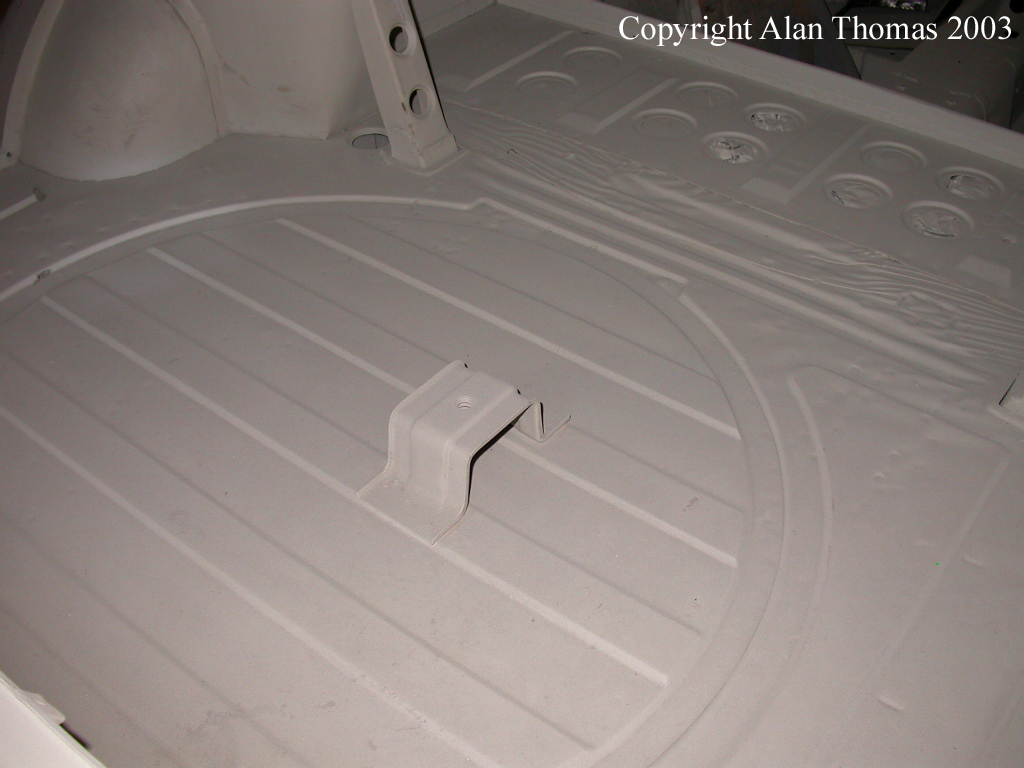
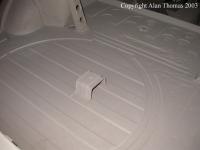
The ribbed profile is correct ( although it does not have the spare wheel retaining clamp bracket on it ), but the description is mistaken; 'PS30' model 'Fairlady Z432' had the 'normal' spare wheel well and 60 litre tank same as all other S30 models it was contemporary with. Only the 'PS30-SB' model 'Fairlady Z432-R' model had the deleted spare wheel well, flat top panel and 100 litre tank. Nissan works rally cars and works circuit race cars got the flat floor and 100 litre tank too, but with a slightly different tank on the rally cars. Surprising that 'JDM Car Parts' says the normal 432 had the ribbed "flat" floor and 100 litre tank. That's not correct. Alan T.
-
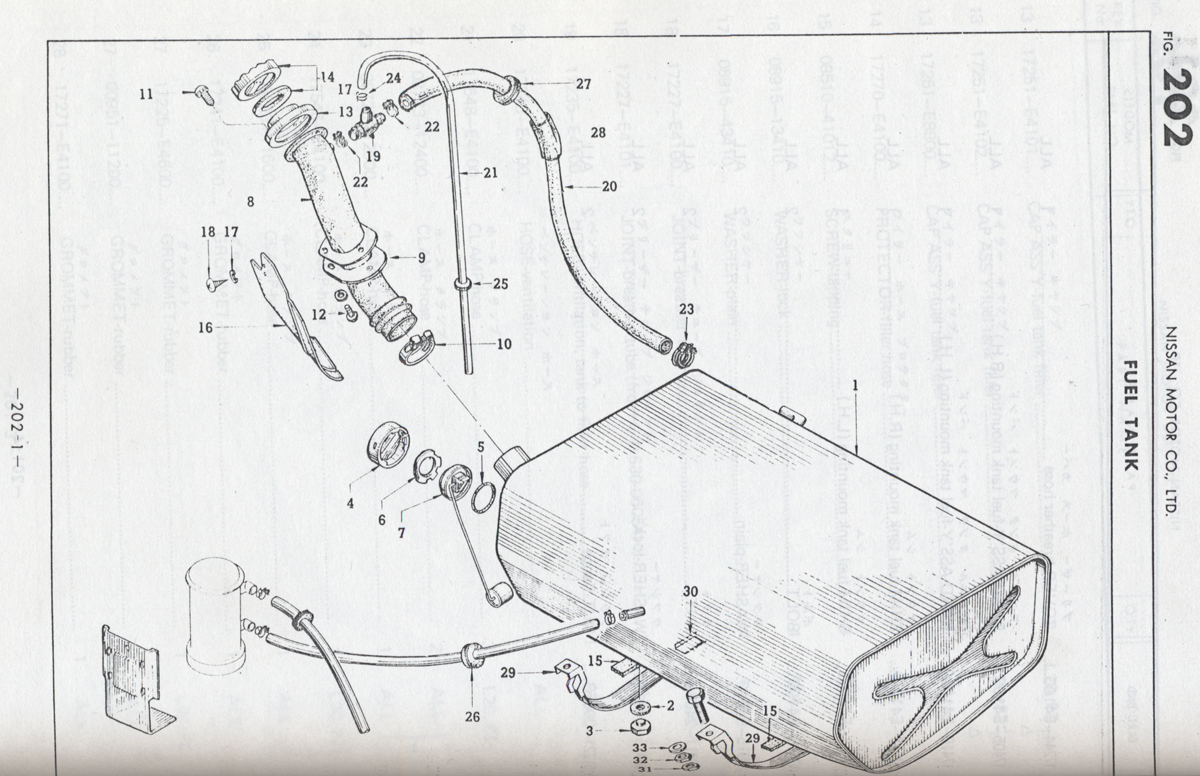
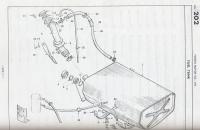
That's kind of true, but it's a little bit more complicated than that. There's quite an interesting structure inside, with supports, baffles and a shielded pickup. Dimensions were 970mm x 530mm x 270mm at their longest points, but the profile was a kind of rounded wedge shape ( deeper toward the front of the car ) and it was a roller-welded construction. Quite difficult to replicate correctly. Also had two big 'x' shaped strengtheners in the end panels that are similar to inner body 'cheek' panel and firewall strengthener pressings on S30 bodies. Note also that the original PZR type bodies ( designed to take the 100l tank ) had strengthened mounts for the tank hanging straps both front and rear. 100 litres of petrol is pretty heavy as well as expensive..... Alan T.
-
Why? It took more than one person to drive the auction up to the final price. The underbidder was only a few Dollars short. That $US price converts to something perhaps a little more reasonable in other currencies, and if you convert it into JPY you get a little over 90,000 Yen. They tend to change hands for more than that in Japan..... If you can find a regular supply of good, working 'Rally' clock and Oscillator sets for a lot less than the finishing price of this auction, then you can make a nice little business for yourself can't you?
-
CAUTION, this vid is old, and contains Katayama lore..... When the 240Z turned up in the USA ( and Canada.... ) it was called............ '240Z'. The stories about Katayama physically 'changing the emblems' / name are just stories. And Katayama had nothing to do with the naming of the 'GT-R' either.
-
'PS' is the abbreviation for Pferdestärke ( German, meaning roughly "Horse Strength" ), which is Metric Horsepower. 1 PS = 0.986 HP, 1 HP = 1.014 PS. Dating information can be found all over the car. We've discussed quality control / 'Kensa' stamps and component dating on the forum many times in the past, and a lot of the information for the S30-series is relevant to the S130-series too. Take a look around and see what the search function gives you on that topic. I'm sure we have touched on the topic of the Japanese market S130 models here in the past too. See what you can find.
-
That line on the tag reads "Ho-an kijun tekigo". You might be disappointed to hear that it simply identifies the safety ( 'anzen' ) standard legislation that the car complies with. The '0-12' number identifies the standard. It doesn't tell you anything specific about your particular car.
-
I'm trying to point out that the car needs to sit properly ( level side-to- side, and not too much rake end-to-end ) quite apart from the actual spring rates, but still taking them into account. Does that make sense? Probably not.....
-
Kats, Damper rates ( bump & rebound ) are different between north American market Export 240Z and Japanese market Fairlady Z & Fairlady Z-L. And 'European', UK, Australian & NZ market Export 240Z are different again. Spring seat heights are different too! Complicated subject...... I think it means neither. Key point is compressed length with car level and stationary. Aim was to level up the car. Spring rate ( 'hard' / 'soft' ) is a different issue.
-
I can assure you that there will be plenty of useful RHD-specific spare parts on the car. If it was local to me I'd have it in an instant. I wouldn't kick the wheels ( they look like early Minilites.... ), diff, trans, and dash out of bed either. And here's a challenge if anyone wants to take me up on it: I'll pay $300 US for that steering wheel and boss kit, if anyone buys the car.
-
Chassis number of 'S30-08589' indicates Jan/Feb 1972 production date. Looks like a 'Fairlady Z-L' model ( 'S30' factory code ), which would have been equipped with the L20A engine, FS5C71-A transmission and 3.9:1 ratio R180 diff from the factory. Some of the rarer components already gone or in bad condition, although as a 1973 build it would have had vented pillars and therefore the same 'vented' pillar emblems as the Export cars ( rather than the very hard to find non-vented Domestic pillar emblems ). Perhaps a little too far gone to bring back from the brink? Sad.....
-
Sorry, but it looks absolutely nothing like a genuine Nissan 'Monte Carlo' / 'Drop' bumper.... Obviously it doesn't have the two large chrome over-riders between the two horizontal levels, but the ends that would meet the missing over-riders would not be shaped in the way that these are anyway. Also the centre section is too short, and the genuine bumpers didn't have a rubber strip in the middle horizontal section either. Can't be off a works car either as it does not have the four mounts for the spotlamps on the centre section, or the holes that would be left over after they were removed. Looks 'home made' to me. And that may indeed be the very reason that Safari Motors or whoever at Zama didn't want it anymore.....
-
And to give some credit where it's due for the original artwork, it was drawn by artist Takeshi HOSOKAWA for Japanese AUTO SPORT magazine as part of a double-sided triple page pull-out, published in 1971. Alan T.
-
Seriously? Wow..... That's the stock, factory, design and location for the rear ARB. If you take a peek under your HLS30-00029, you will see that ( if it's still stock ) the early north American market cars had no rear ARB fitted and no chassis-mounted 'U' brackets to hold it. However, the rear transverse links ( wishbones ) still had the indentations and reinforced mounting holes for the vertical stabiliser connecting rods..... All markets other than north America got the rear ARB as stock equipment from the beginning of production. It was part of the core design of the chassis.
-
We will have to disagree then. I find it ironic. Are you saying that Nissan would have sold measurably less HLS30-U model 'Datsun 240Zs' in the north American market had the car been badged as a 'Fairlady Z' then? If so, then would you care to quantify that? I say that it would have made little difference. Key points were the bang-for-buck, the image / styling, and the letter 'Z'. Yes it was, but that was after the fact. Nissan's "number one focus" has always been - and certainly was in 1969/70 - it's biggest single market, Japan. Nissan's salesmen might very well have been focusing on the north American market as the single biggest export market for the S30-series Z ( just as had the salesmen at MG, Triumph, Jaguar, Porsche, ALFA Romeo, Ferrari et al ), but this was not the single focus of the designers and engineers. The proof of that is in the cars themselves. Alan T.
-
Ironic then that the "macho" north American market 240Z was given the softest, squishiest suspension, slowest steering rack ratio and decidedly non-sporty wide ratio gearing. I think you'll find that Nissan's "number one focus" has always been the Japanese home market.
-
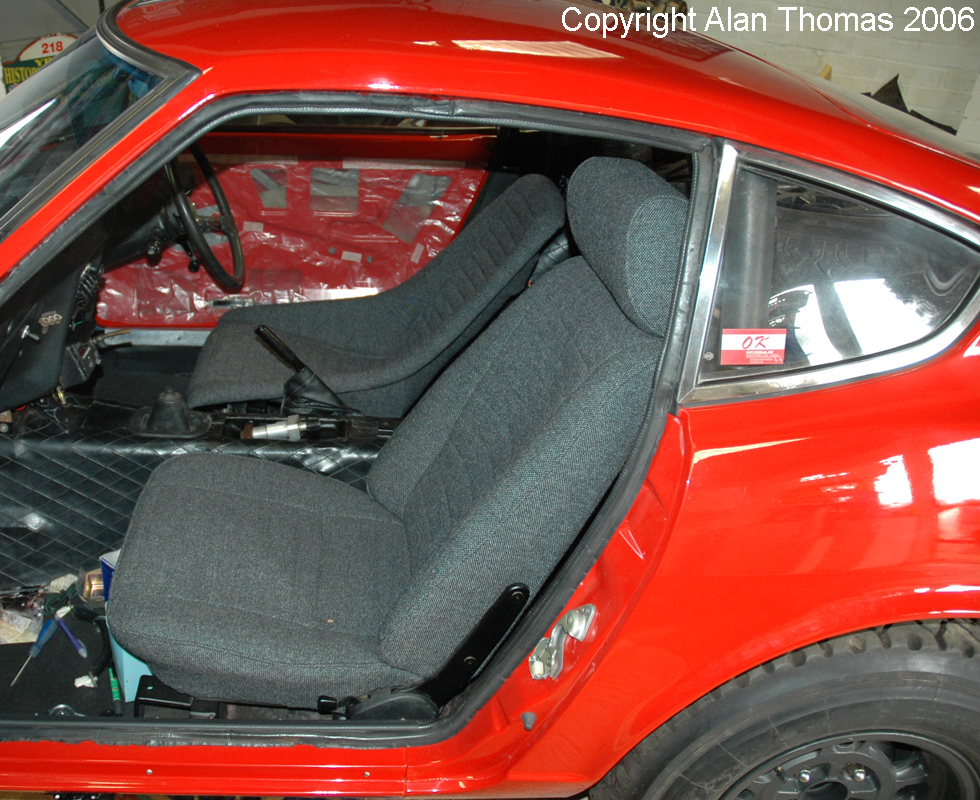
No. Some of the works rally cars were fitted with wide and quite soft reclining seats from saloon models for the navigator, at the navigator's request:

-
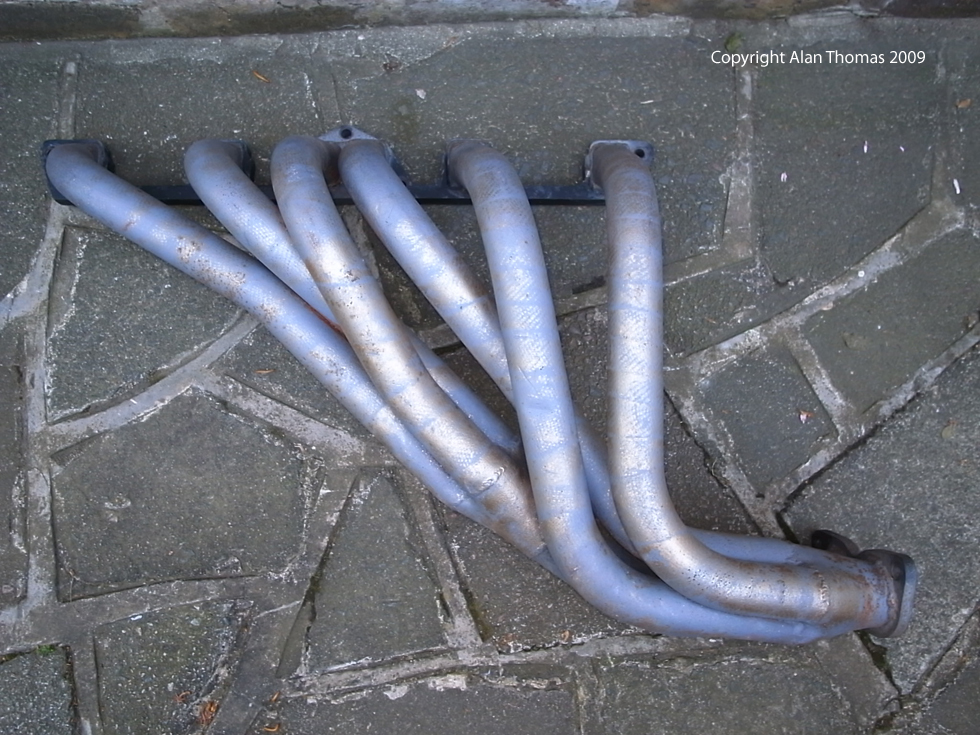
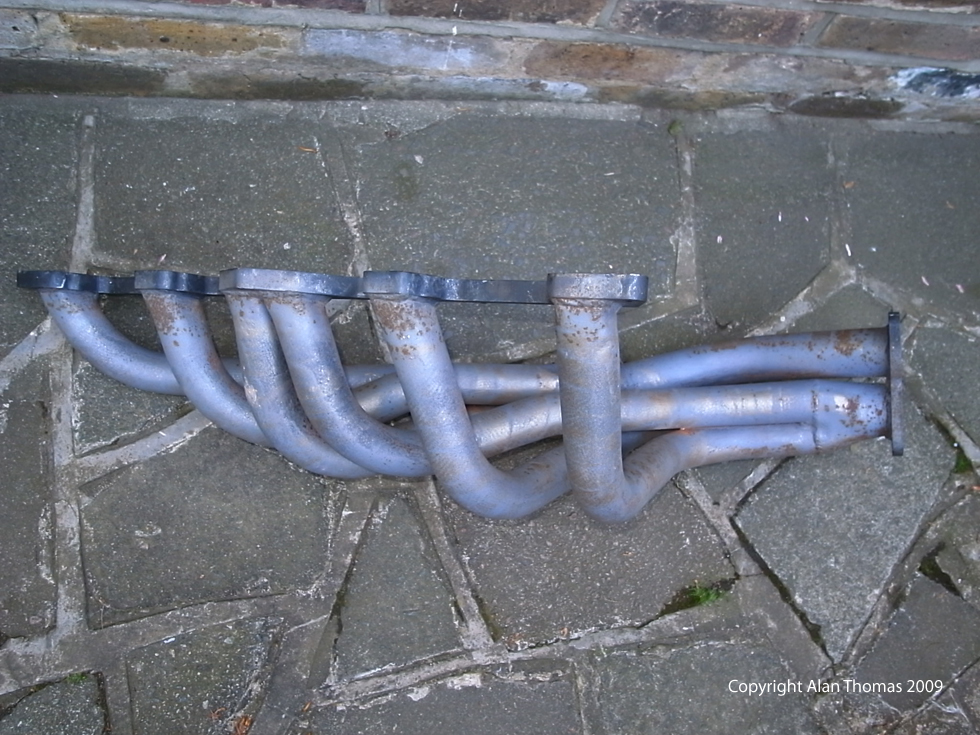
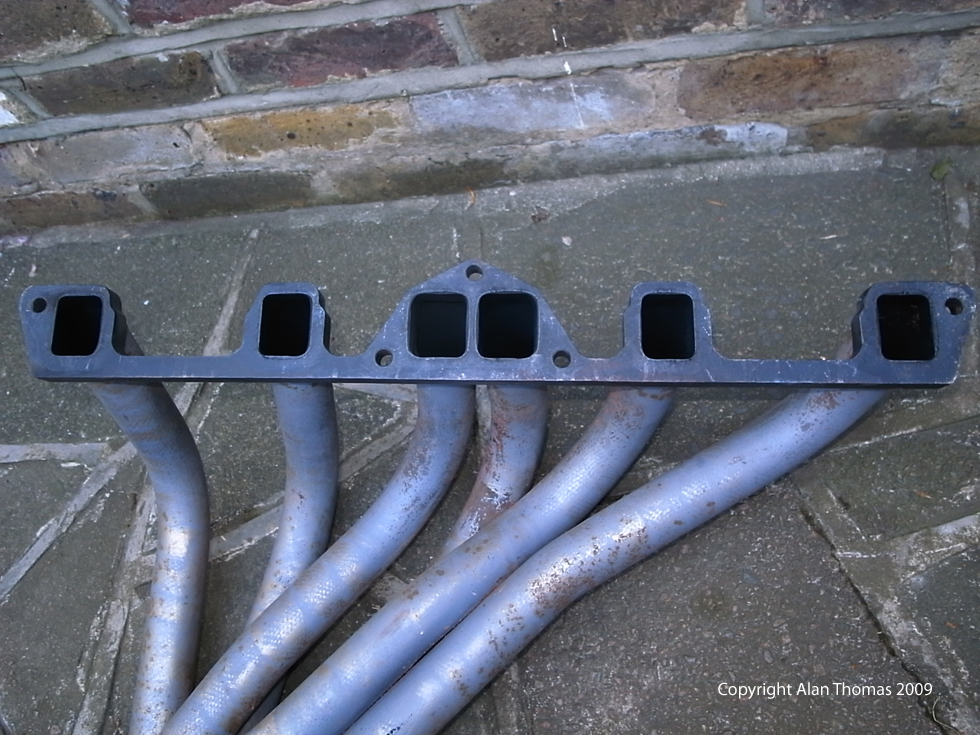
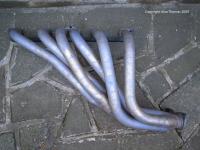
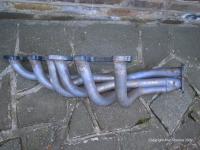
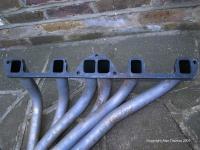
Nissan Japan 'Sports Option' exhaust manifold c.1971:
-
-
First of all, I'm most certainly not on a "constant quest" to discredit Carl. Don't be silly. It's only a part time quest...... And secondly, Carl does a pretty good job of it himself. Thirdly, I find it quite ironic that you are talking about Carl and the forgetting of Canada in the same sentence. Carl quite often needs to be reminded to tip his hat to our Canadian friends. For example, his zhome.com page which tells us about what the factory called the "Kaku U" / "North American Testing" program ( in which they travelled thousands of miles around the USA and Canada, travelling north from Seattle, through Vancouver, up as far as Dawson Creek, then dropping back down again to go through Banff and Calgary before passing back over the border and on into Great Falls ) is simply titled "Pre-production USA Road Testing". If that's not a subliminal punch in the kisser then I don't know what is. Fourthly ( I'm determined not to lose count here ), you may indeed have a point. But frankly, this event at the Pierre Hotel seems like a bit of a damp squib when you stand back and look at it doesn't it? The press didn't even use any photos of the actual car at the event, and I'm not entirely sure that we even know what was there. For an event with a pretty high falutin' title it sounds more like a bit of a cocktail party, some finger food and a press release. I'd like nothing better than to see another debut / launch for the S30-series Z outside the Japanese activities, but somehow this one's not really seeming to live up to its billing, is it? I think there's an interesting backstory to all this that we don't know anything much about yet, and I feel like I want to keep scratching around until we get somewhere with it. Regards, Alan T.
-
Carl, Thanks for taking the time to answer. I know you must be very busy, what with it being April 1st and all. Don't spread yourself too thin...... Not much bang for buck there, is there? Wouldn't even cover the cost of the vol-au-vents. Noted the small 'i' and small 'p' in the 'international preview' quote. "USA Preview" would have been more accurate, considering the model had already been previewed by the press ( unless Japan doesn't count for some reason.... ). So, is that a stock Nissan press release photo? Did anybody take a photo of what was on display in the Pierre Hotel? It's still very mysterious, isn't it?
-
Aren't most of these simply similar answers to the same problems, those answers influenced by the design 'zeitgeist' of the period, and with similar reference points? Both heavily influenced by the work of the big Italian styling houses / carrozzeria. No offence, but your "Basic shape", "Drivetrain layout" and "Forward opening hood" are a little too general to be taken seriously. They both had four wheels too....... But why would they need to look at "the other design", or indeed any one other design, whilst designing ( actually styling ) their own project? There was no necessity. Unless you believe that they could not start from a blank sheet of paper.....? Alan T
-
Looks like Carl's taken his ball home again......