SMW
Community Member
-
Joined
-
Last visited
Everything posted by SMW
-
Hi SB: I would check with both Zspecialties and Zsport to see if they have the springs you are looking for in stock. I'm sure either shop can get the parts you are looking for, but they may have to order them since I imagine it simply doesn't pay to keep those types of parts in stock around here. So if your buddy is only in town for a short time, you may be out of luck without some sort of pre-ordering. That said, I haven't been to either shop for a couple of years, so take what I say with a grain of salt. Both shops are north of seattle proper -- 25 to 30 miles away from city center. Let me know if you need more local info. Cheers, Steve
-
-
-
-
-
-
-
-
-
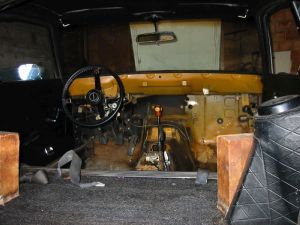
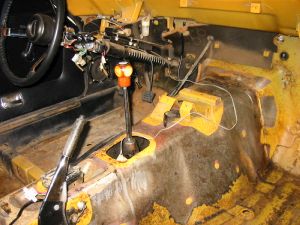
I would just like to add my interest in your custom wiring project. My electronics (stock '70 240) caught on fire a couple weeks ago, and I'm in the midst of redoing parts of the interior and wiring. I was just about to order a painless wiring kit, so if I could get a more custom set, and support a Z-specific enterprise, I'm all for it. If you need any pictures, my dash is out and I can get you a digital picture of anything back there that you are interested in. Let me know -- Steve
-
One option is to go to the junkyard and grab the linkage from a 280Z. The later linkages engage with less slop at the firewall. Also, they bolt right up in the same place as the 240 linkage. If you go this route, get everything from the donor car from the cross-piece (parallel to the firewall) to the long piece that goes from the firewall to the manifold. -Steve
-
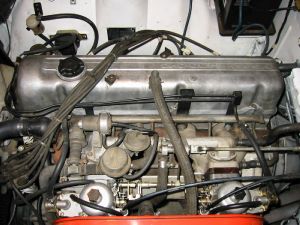
First things first, what all the screws are: 1. The one on the balance tube. This is only there to help with carb balancing. It allows you to set the rpms to 2-3,000 or so for high speed balancing. Under normal circumstances the screw should not be doing anything. 2. The screws on the center linkage between the carbs. The one on the left (towards the front of the car) doesn't need to be adjusted. The one on the right allows you to balance the carbs at the higher engine speed. You can see when you work the throttle linkage that there is slop in the system. This screw allows you to account for the slop, so when you hit the gas, both carbs are opening the same amount at the same time. 3. The idle speed screws. These are the ones right behind the dome. I believe that these only act to crack the butterfly open at idle to allow enough air to enter the engine so it'll run. These are adjusted on both carbs during the balancing sequence. I think that they only affect how the engine runs at idle, after the butterfly is opened by the throttle, these cease to function. 4. The mixture nut on the bottom of the carb. These move the jet nozzle assembly up and down. The higher the assembly, the leaner the mix. Float level: 9/16" sounds right. Other things that may lead to the ultra-rich condition: Sticking float. I've also heard that if the float is punctured it may, well, float causing the fuel level to be way too high. Sticking needle. Check to make sure the pistons are moving smoothly. If the metering needle is binding in the jet nozzle, it could allow fuel to continue to flow. Chokes. Make sure the chokes are fully disengaged. On one set of SU's I had the choke wouldn't release all the way because of road grime/grease in the jet nozzle assy. Return springs -- attached? I suppose even having the carbs way out of balance (which you probably have now, since all of the adjustment screws are all the way out) could have mixture consequences. Is the midnight black color on all of the plugs? Other possibilities would go to the general condition of the engine; ignition timing, valve clearances, etc. Sorry, running out of ideas -- perhaps something here will be useful. Steve
-
If you have only changed the idle and throttle (high speed balance - the one on the linkage) settings, then I don't think you have addressed the amount of fuel being supplied to the engine. I would recommend checking both the float levels, and the position of the mixture nut (located below each carb). I believe the baseline setting for the mixture nut is found by tightening the nut as far as it will go, then backing off 2.5 turns. Then you will use the idle and high speed balance screws, along with a syncrometer/tester, to balance the carbs. I can't remember the float level specs at the moment; they should be in any of the manuals. Also, it is a good idea to lift each piston by hand and make sure they fall smoothly. HTH - Steve
-
That blackout photo isn't real, unfortunately. Looks like a photoshop job over that 'earth at night' sat photo that circulated about a year ago. More info here: http://www.snopes.com/photos/blackout.asp The NOAA shots are great, more in line with the descriptions I've heard of the blackout. Cheers, Steve
-
A couple options for you: I recalled an ad in the forums, an L28 out in Carnation http://www.classiczcars.com/forums/showthread.php?s=&threadid=8466 There are also a couple of Z shops around, there is Zspecialties in the Monroe area (www.zspecialties.com), and Z Sport [3532 Smith Ave. Everett, WA (425) 259-4691 (800) 633-3308] up north. There are more possibilities linked on the Z Club of Washington's site (www.zccw.org). As far as junkyards go, I haven't gotten that far yet -- let me know if you find a good source. HTH, Steve
-
Yes, there is a 10 day time limit for changing car titles in CA, as well as WA. So you probably do want to switch the title to your name now to avoid hassles when you try to re-register. They do have an option so you can register your car as non-operable for something like $10. This way, the car is registered to you, but you don't have to pay the full yearly registration price until your project is done and you are ready to go. Cheers, SMW
-
I wrote up an article about removing the cylinder head in the "tech articles" section a while back. Here is the url: http://www.240z.org/forums/showthread.php?s=&threadid=1504 In regards to removing the intake and exhaust manifolds, I suppose you could leave them attached, and only detach the exhaust manifold to pipe connection. However, removing the entire set up would be unwieldy, and you are probably going to want to remove the manifolds anyway so the head can be checked for warpage -- nothing worse than going through the work of changing the gasket just to have the new one fail because the head is warped. For the timing chain: If you aren't going to mess around with the short block, what most folks do is set the engine to TDC before removing the head, then secure the timing chain with the special plastic tool (from MSA or elsewhere), or with a block of wood. This way, you won't need to reposition the chain on reinstallation. If you don't secure the chain, or it moves, you generally end up having to remove the front cover to get the chain tensioner system back into place. HTH, Steve
-
Hello all: It is time to get the short block of my L24 rebuilt, and I was wondering if any 240.org members had had good luck with any shops in the greater Sacramento (CA) area. Thanks in advance, Steve
-
I'll back up EScanlon on this one. To get my 260Z (still for sale, btw) registered as "planned non-operational" in CA, the police had to inspect the vehicle. The local officer went directly for the firewall VIN number described above, so you can be sure they will cross-check all of the numbers.
-
I used POR-15 on some light rust around the battery tray on my 260, and I am about to do the same for my 240. I brushed it on, because I had a very small and accessible area to deal with. The POR-15 info sheets indicate that it needs to be thinned if you are going to spray it. They also recommend (and sell, of course) a filter to ensure that no moisture is mixed in during the spray process. I would guess that a tap would not be very effective if you got the stuff in the treads, especially once the stuff has completely set. Hopefully someone has used it as a spray, and can give you more information. Cheers, Steve
-
1. Water Valve This valve shuts off once the engine is at operating temp (somewhere around 105F). Thus, there should not be constant flow through the intakes. 2. EGR In general, I prefer leaving smog equipment hooked up, however, since you have the roundtop carbs on the car, I don't think the EGR system will be hooked up. The EGR solenoid valve has a vacuum line to the rear flattop carb for the vacuum signal, so if the valve is blocked off, or otherwise not connected to intake vacuum, the EGR system isn't functioning. I'd say that the overall approach for dealing with the smog equipment is just to make sure that you don't have vacuum leaks, which will wreak havoc with the way the engine runs. Have fun.
-
Two more things I remembered: 1. The smaller diameter line through the intake is part of the EGR system. When the fluid is above operating temperature, the valve doesnt open, and this cuts off the EGR circuit. Thus, if you want to keep the EGR system going, you need to split the line out of the thermostat housing and hook up the smaller diameter line at the intake. 2. The larger diameter hose has a different diameter at the thermostat housing and at the intake.
-
Hello: I had similar questions when I converted my 260 from weber DGV's to round top SU type carbs. Here is what I learned about the plumbing. The hoses are there to help the intake and carbs warm up faster in the morning by running warm radiator fluid through them. I imagine the lines also help keep the intake and carbs at a more or less constant temperature when the engine is warm. The later carbs (found on the '73 and '74 models) had three radiator fluid lines, two through the intake manifold, and one through the carbs. The '70-'72 models only had one line that ran through the intake. Therefore, whoever converted your car to the earlier carbs just connected the thermostat housing to the water valve, since the connection at the carbs was no longer there. To convert to the earlier carbs, I: 1. Replaced the gooseneck with three openings (as shown in the second picture on your site) at the thermostat with a brass nozzle (from Ace Hardware ~$2). 2. The lower hose at the water valve at the back of the engine was threaded, so I capped that off with a brass cap (again from Ace). 3. I removed the smaller diameter pipe that ran under the intake. 4. I hooked the new nozzle up to the larger diameter pipe on the intake. This basically replicates the earlier round top setup. I didn't have a problem for the short time I used it (long story), but it doesn't get very cold here. HTH, and post back if you have more questions.
-
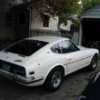
Hello all: I'm 26, and just got married last summer (no kids). I'm a grad student in hydrology at UC Davis. Current Z project: troubleshooting engine problems in my 1970 240Z. Working on the 240 is an excellent distraction from my classes and thesis project. Also, I have a '74 260Z that I have to decide what to do with. It is rapidly becoming the parts car for the '70 (one more bolt won't hurt, etc etc.) My first car was a stock '79 RX7, but only because I couldn't find a Z at the time. Thanks to Mike for all of his great work on the website and mailing list. Cheers, Steve Winter
-
I checked nadaguide.com just for kicks. Their values for a 1972 240Z (in US dollars): MSRP = 4,106 Low Retail = 4625 Average Retail = 7,575 High Retail = 13,900 Here are their definitions: Low Retail Value —This vehicle would be in mechanically functional condition, needing only minor reconditioning. The exterior paint, trim, and interior would show normal wear, needing only minor reconditioning. May also be a deteriorated restoration or a very poor amateur restoration. Most usable "as-is". Note: This value does not represent a "parts car". Average Retail Value — This vehicle would be in good condition overall. It could be an older restoration or a well-maintained original vehicle. Completely operable. The exterior paint, trim, and mechanics are presentable and serviceable inside and out. A "20-footer". High Retail Value — This vehicle would be in excellent condition overall. It could be a completely restored or an extremely well maintained original vehicle showing very minimal wear. The exterior paint, trim, and mechanics are not in need of reconditioning. The interior would be in excellent condition. Note: This value does not represent a "100 Point" or "# 1" vehicle *. I think the Nissan Factory restored Z's went for 28k or so. As always, the car is only worth what someone is willing to pay. Hope this helps. Steve