
Zed Head
Community Member
-
Joined
-
Last visited
Everything posted by Zed Head
-
This option seems like a good one. A reputable manufacturer. It's a carrier swap so a little more involved than a bolt-in Whitehead diff. It's new, not used, although Nissan diffs seem to last many many miles with no issues. https://forums.hybridz.org/topic/127169-mfactory-r200-helical-lsd/ https://forums.hybridz.org/topic/127169-mfactory-r200-helical-lsd/ Anybody noticing how you can't just paste a link anymore? You have to use the little link function at the top. Weird. Sometimes a paste works sometimes it doesn't.
-
Get one of these. Before you break the rubber mount and maybe the strap, and tear up your parking brake linkage. https://www.technoversions.com/DiffMountHome.html
-
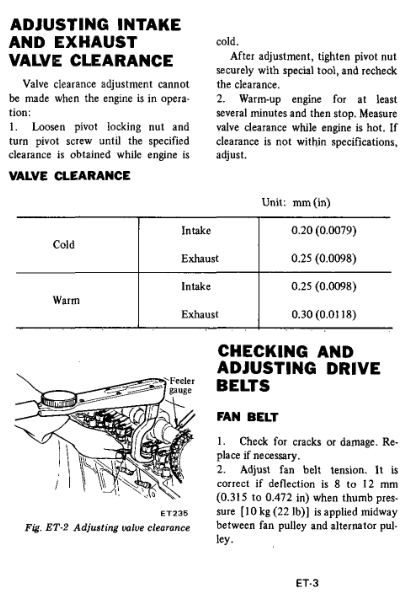
You'll probably notice that a part of each cam lobe has a brown stain, where the rocker arm did not wear on it. That is the base circle, where you'll be setting the "lash", or gap. You don't have to be exact on the cam lobes up or down, you can also check that you're around the middle of the stained area. Some people take pride in doing them hot, but many just do them all cold, then check them when hot. They're usually still in spec. One tip - use a heavy hammer to tap the lock nut loose. They can be incredibly tight. Many of us have oil in our blood now from busting knuckles while adjusting valve lash. Here's the 1976 specs.
-
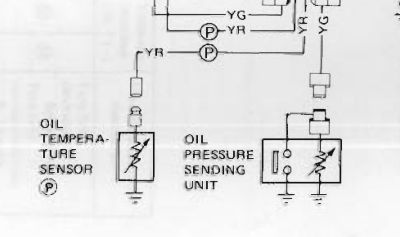
You would measure from prong to ground, for each prong. Edit - that would be with the sender in the block. Otherwise, measure from prong to sender threads. Grounding is through the threads. One will be a switch and the other a variable resistance. It's weird how bad the 280ZX FSM's are, considering how good the last 280Z FSM's were. But I did find it illustrated on page EL-90. I don't think that they wrote a single word about the oil pressure sender. This diagram is all there is. @alanburton
-
I would check/set the valve lash, since you already have the cover off. The early engines had weak valve seats, designed for leaded fuel. Then you won't have to wonder about it if odd things happen. It's the very first item in the Nissan tuneup sequence also.
-
Alright, so what the heck is going on? Rod is restoring the car for hiyabrad? Anyway, looks like fun. @hiyabrad @Rod's Garage @lonetreesteve
-
You said you wanted narrow band...? Just trying to help. Good luck.
-
I've used an old fan belt, like a strap wrench but fits a smaller spot. If you squeeze the belt together with one hand you can generate solid clamping force on the pulley, kind of like creating a handle on the pulley. Sometimes you can even pull on the existing fan belt or turn the water pump pulley by hand, or both. You can also put it in high gear and rock a wheel.
-
Check for mouse nests. They like the blower housing and the top of the glove box.
-
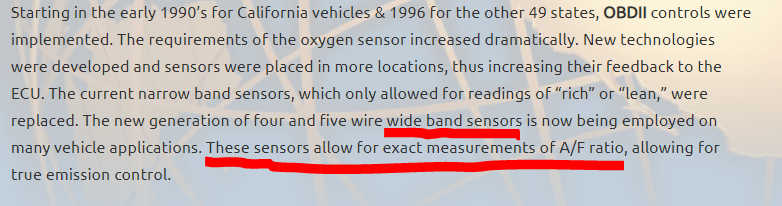
Narrow band is very limited in application. Wide band gives you what you said you wanted. Unless you're really trying to "outdo" the engineers that didn't make narrow band sensors work for AFR measurement. Or you aren't looking for accuracy. Good luck. https://en.wikipedia.org/wiki/Oxygen_sensor#Wideband_zirconia_sensor http://www.walkerproducts.com/o2-sensor-training-guide/history/
-
I remember that number. Are you a business? Google doesn't find much for Rod's Garage. https://www.ebay.com/itm/1969-Datsun-Z-Series-240Z-/352480358337?_trksid=p2047675.m43663.l44720&nordt=true&rt=nc&orig_cvip=true
-
The FSM says you should be fine with just replacing the BCDD. No need to do the TB too.

-
https://www.haltech.com/wideband-o2-sensors-explained/
-
You'll have to measure temperature also, as shown in your plot, even with a lookup table. Why use a narrow band when wide bands are available?
-
It might not even really be flooding, explaining the dry plugs. It's more of a choking. No air flow in to the cylinders to pull the CSV fuel. Also explains the gas smell, the intake manifold is loaded up with CSV gasoline that never moved.
-
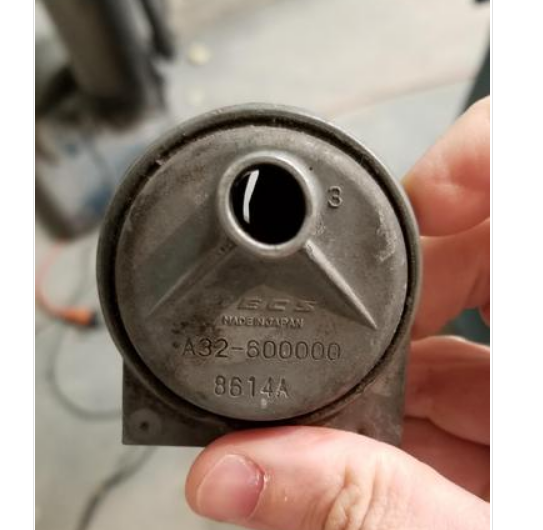
This does make the most sense. I feel bad for getting distracted with the other stuff. The assumption was that you removed a functioning AAR but if your AAR was stuck in that position, never fully closing like it's supposed to then the idle adjustment bypass would have been adjusted down to almost closed to make up for the AAR opening. When it was removed you're left with no air with the throttle closed.. If you want to take CO's suggestion one step further just open up your idle speed screw, the screw with the big head and a spring under it. Turn it counterclockwise a few turns. Then you'll still be on the idle circuit of the TVS, but with more air. You'll need to do that anyway, probably. Hope that's it. Now you are an EFI expert.
-
I might do both, plus one. Disconnect the injectors and it will probably start and run for a few seconds on CSV fuel. Disconnect the CSV and see what happens with the injectors connected. Disconnect them both and start it on starting fluid. By the end you'll probably be certain about spark.
-
If that's a lot of fuel for the amount of time cranking, and your temperature sensor reading at the ECU is in range, then bad ECU comes to mind. Disconnecting all of the injectors might get it to run for a few seconds. It might be flooding due to the ECU keeping the injectors open. Just one thought, for the action plan.
-
The facts are getting kind of random and don't fit well. Your video showed that it l almost started, more than just a pop, it sounded like a short series of ignitions, on just gasoline. But you said you didn't even get a pop before with a much more potent fuel, so the focus was on spark. Now you're measuring output at the injectors but they really don't squirt much at low RPM. Not clear if what's in the cup is a lot or a little. You're kind of at the point where it might pay to just write down what you know and put a methodical plan of action together. Many people get to this point via different ways. A bunch of disconnected observations that don't really show a solution. No offense, it happens to many.
-
You'll probably need to do the rears again. When I had my front calipers on the wrong side I couldn't generate much pressure or flow because the big air bubbles up front took all of the travel.
-
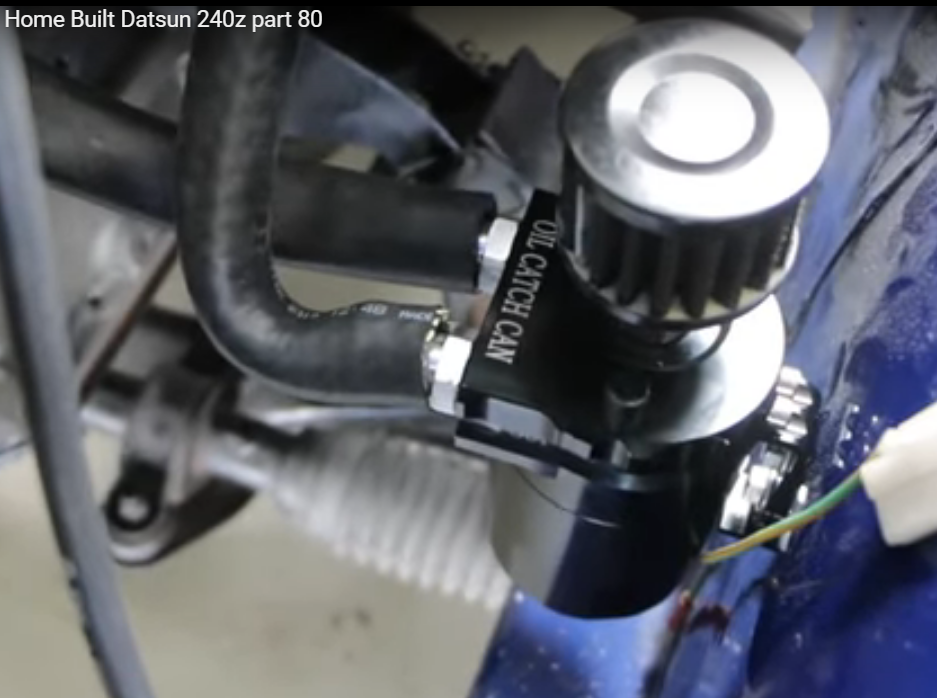
The video kind of "blew by" it but he did show the catch can with a filter on top, at 3:31.
-
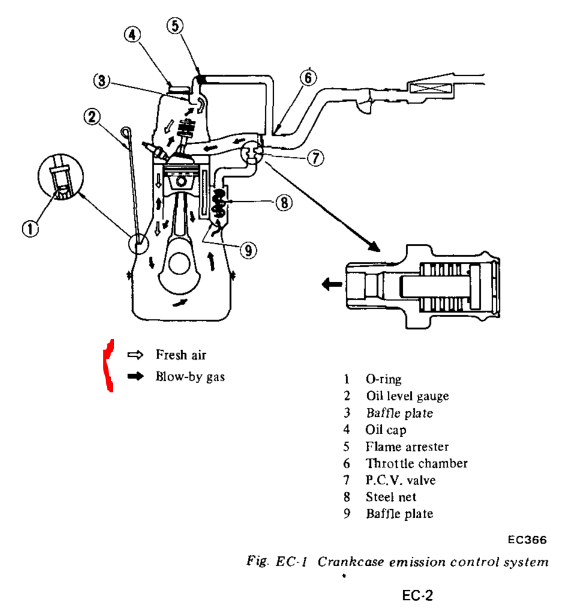
I couldn't tell how that catch can works. If both ports are open, with no check valves, then it seems like he just moved the typical little breather down below the manifold and off of the valve cover. Really, he could have just blocked the valve cover port and run the one hose to the catch can. It wouldn't be "positive" ventilation anymore, there's no vapor flow, it would be like a 1960's set up. I don't think Nissan gave a crap about crankcase ventilation until EFI days. They don't seem to write anything about it until then. Here's a diagram showing gas flow. I had a friend who rebuilt the engine in his Camaro and it would just spew loads of blowby out of the valve cover breather when he got on it, until the rings broke in and sealed. The whole point is "what do we do with this blowby?".
-
So, it does pop, I heard it. You have spark. Sounds like the timing is way advanced. Is the distributor cap tight? Check firing order and rotation direction, as suggested. Maybe the distributor adjustment screw is loose and it got twisted when you were working up there, skewing ignition timing. Could also be that something major coincidentally broke. Timing chain, camshaft, distributor shaft. You might remove the distributor cap and the calve cover and just make sure things spin like they should. While the valve cover is off, set the damper mark on zero and reset your distributor and wires to be sure that ignition timing is correct. Might be time to just start from scratch to be sure.
-
I do know about Koni's. I had a pair on my dirt bike. Waaaaaaayyyy back when. I'm just not living in the past. Much has changed since then. Joseph gave a great answer.
-
Part 2