


HS30-H
Supporting Member
-
Joined
-
Last visited
Everything posted by HS30-H
-
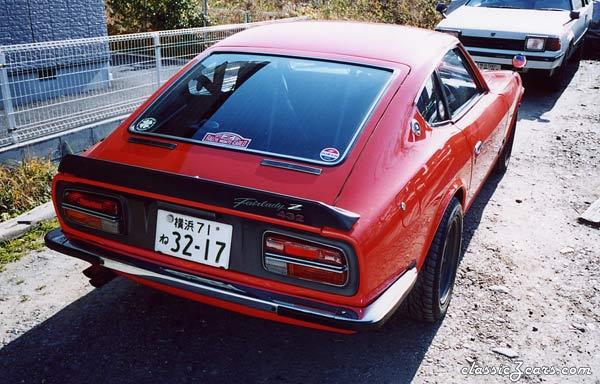 Wrong, Alfadog. The 432 had DIFFERENT quarter panel emblems to the other early cars ( looks a little like the "vent" type Z emblem - but no vent behind it. Please revise your star rating to a 5 star immediately! I have driven this particular car and I can tell you that it is the dog's bollocks. You have been warned!
 -
Sure, the "guts" can be switched - but the complexity of the actual dash frame and covering is pretty frightening isn't it? The wiring loom is handed too, so to do a full conversion you need the correct LHD or RHD loom for your application. Cheers! ( opening bottle no.4 before ascending the wooden hill to Bedfordshire )... Alan T.
-
Gentlemen, ( Alfadog, Zedrally & Bambikiller ), Thank you for your kind attention. I've necked three large bottles of "ORION" beer since my last post ( an amazing find at my local supermarket - since it's brewed and bottled in Okinawa, Japan ) and I've toasted you all. CHEERS! ( hic! )...... Alfadog, I am NOT going to attempt to list the differences between RHD and LHD versions. Over here in the UK, there are quite a few cars that have been converted to RHD from relatively rust-free imported LHD shells. You would not BELIEVE what it takes to do this properly ( even the bracket that holds the windscreen washer bottle is different )............... Zedrally - I believe that you are right, the Handbrake mountings on the bodyshell are relatively simple ( just a flat section and some captive nuts and stuff welded onto the tunnel ). The handle itself would need "handing" - but that's easy peasy in the scheme of things. There's no provision for the mount on the left side of the tunnel, but it would not be rocket science to put one on there ( like they did in those LHD rally cars ) and the challenge would be more cosmetic than anything else. Bambikiller - you may well be right. Could it be that Nissan thought the USA / North American drivers needed more space? ( but I STILL think it does not get in the way on the RHD cars.... ). Maybe this thread has run as long as its natural life. I don't think we will be able to get any closer to the truth on what Nissan's original intention was ( although I've met Mr Matsuo and he told me what he thought ). I'm pretty sure that Nissan thought they could get away without "handing" the Handbrake for the LHD market ( I'm sure that the RHD shells were engineered with no compromises, and that the LHD shells were in no way a "definitive" or "datum" version - as some have claimed ). Cheers all! Alan T. ( ps. Carl - is Pleasanton anything to do with "Pleasant Valley Sunday" by the Monkees? ).
-
That doesn't add up for me. Naturally they would have been trying to save money, but look how many other components were "handed" for LHD and RHD versions. The whole base started out as either RHD or LHD at the bodyshell stage, and look how different they were from eachother at the firewall and bulkhead area. The linkages for just about all other controls were different from RHD to LHD - so why not the Handbrake too? Its just too big a part of driving and enjoying the car for Nissan to have just left it - and yet they did. The only thing that I can think of is that they must have decided ( and you can bet your life that they talked about this ) NOT to have LHD and RHD Handbrake positioning versions, and because they thought it was not going to be enough of an ergonomic issue to make it worthwhile. I find that amazing. When I drove an LHD Z car for the first time I was gobsmacked that the Handbrake was on the other side of the tunnel to my seat. At first I thought the car I was driving was some kind of mistake or hybrid, until it dawned on me that all LHD Z cars were like that. Its just a lot more inconvenient than in the RHD version. I honestly had never noticed the LHD Handbrake positioning before........... Think of this in the context of all the other small things that they solved in engineering the car. Although not as complex as the kind of cars we see coming out of factories these days, it was still a big job to make both LHD and RHD versions. I would have thought that it would have been not that much of an extra step to have two Handbrake position versions. I make the point again - from a purely theoretical viewpoint, one of the versions has to be less ergonomic than the other. They can't both be right. I sounded out a few Japanese Z owners about this point after I noticed it. Every one of them told me that they thought the RHD version's Handbrake position was "correct", and that the LHD version must be difficult to use. Did Nissan think that the USA / North American market customers ( being taller on average than their Japanese / Australian / NZ / British RHD-market counterparts ) would be happy to reach over to the other side of the trans tunnel to use the Handbrake / Emergency brake? OK - I'll get my coat.............. Alan T.
-
NTP = "National Tapered Pipe" NPT = "National Pipe-Tapered" Now commonly referred to as "NPTF" threads. Most pipe threads including JIC & Metric are defined by the outer diameter of the male thread. However, BSP and NPTF are defined by the bore of the hose that they fit ( hence a 1/2" BSP fitting fits a 1/2" hose ). Measure NPTF threads at their mid-point BSP and JIC fittings seal on a coned seating if in a port with a washer or seal, but NPTF fittings seal by slight deformation of the thread. Hence a satisfactory joint can be made between NPTF male and BSP ports. Just block the BSP-tapped ports with the appropriate NPTF plugs. Alan T.
-
-
-
-
 Mr Morimoto's 432. Engine bay shot of S20 with 45DCOE Weber conversion.
 -
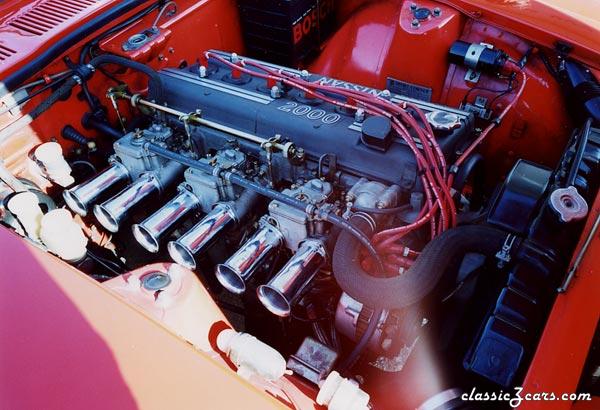 Mr Morimoto's 432. Engine bay shot of S20 with 45DCOE Weber conversion.
 -
Ah, BSP threads! Where would we be without BSP threads? ( up to our knees in water, probably ). BSP is also sometimes described as "British Straight Pipe"........... The BSP thread system is a tapered design, mainly used in sealing water and gas lines. In the USA, you will find that NTP ( National Tapered Pipe ) threads are very close to their equivalent BSP sizes. Simply running the appropriate NTP tap down through the BSP hole will enable you to use an NTP pipe plug in there. I think you will find that both EARL'S and AEROQUIP make BSP fittings ( and presumably plugs ). If not, re-tap to the equivalent NTP size and use an NTP plug. Good luck, Alan T.
-
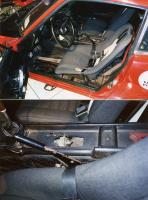
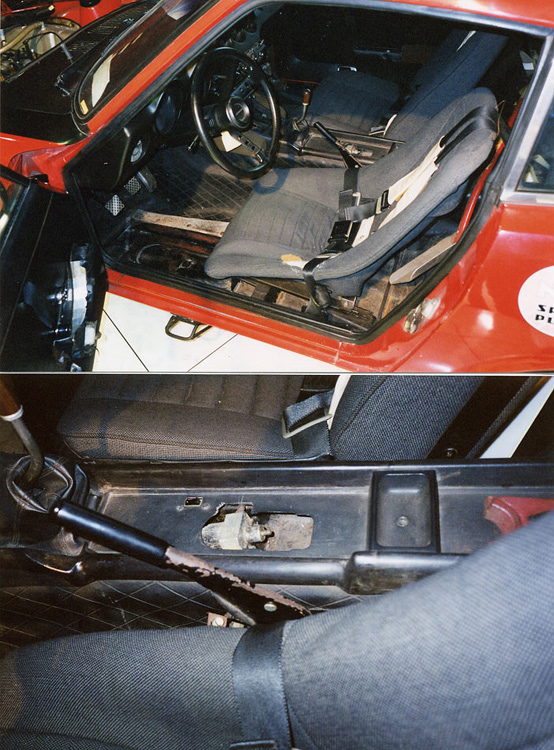
For the 1971 Monte Carlo Rally, two LHD and one RHD Works car were entered. For 1972 and 1973 there were only LHD cars. The car in the pics is one of the 1972 entries. Not sure that the Scrutes would necessarily smell a rat; the conversion looks so good that it looks as though it "should" be that way! Maybe if questioned they would have tried to convince the Scrutes that the LHD was a mirror-image of the RHD car. Mind you, I'm not so sure that it WOULD have actually been illegal. It might just come down to an interpretation of the rules. Better not call it a cheat just yet! Alan T.All the UK-market HS30's came with rear anti roll bars. Alan T.No - this was a specially fabricated conversion just for some of the LHD Works rally cars. The console was specially fabricated in hand-laid fibreglass by the Competition shop in Japan ( you can see the chopped strand underneath the console if you pry it up ). Apparently, the Works drivers insisted that the Handbrake be moved on some of the LHD cars. Seems that they could not get on with it on the right side of the tunnel. Note that this never happened in reverse with the RHD rally cars. I think you picked out one of the most interesting points about it Mike; the shape of the Console around the side of the lever is obviously clearanced to suit it, and not get in the way of the hand. They went to a lot of trouble to make that part. Of course, an even more interesting point is whether this would have been legal or not. If the car was homologated for Group 4 with the Handbrake on the right side of the tunnel, then that's where it should have stayed. They were probably hoping that the Monte organisers did not notice, and perhaps they didn't........ Alan T.
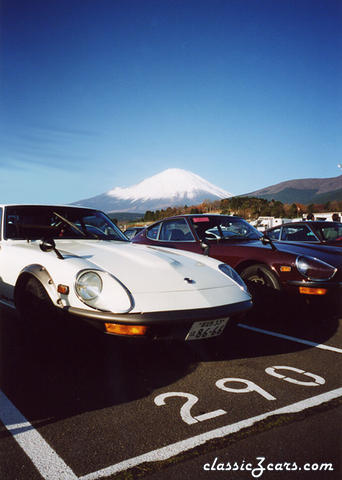 NISMO FESTIVAL 2001
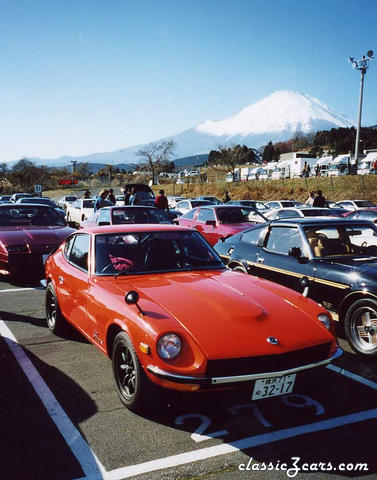
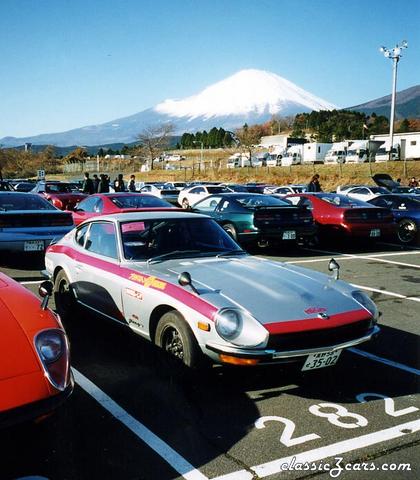
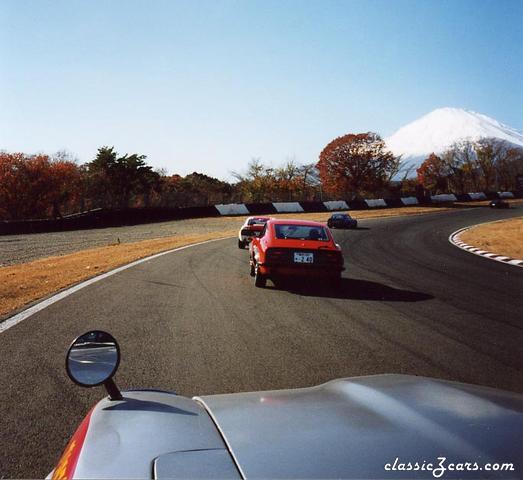 NISMO FESTIVAL 2001. Passengering a 432 around Fuji Speedway and trying to take a good photo.Here's an interesting pair of pictures. This is a Factory "Works" built rally car, in fact its the car that came third in the 1972 Monte Carlo Rally ( crewed by Rauno Aaltonen and Jean Todt ). I took the photos on a visit to the NISMO HQ at Omori in Tokyo, where the car was temporarily on display. Take a look at the Handbrake position and the Centre Console. Interesting isn't it? Alan T. ( ps - That's the Brake Bias Control Valve that you can see hiding under the cutout in the console. Somebody has taken the knob as a souvenir............... ).
 Hi Mr C and Steve ( sjcurtis ), Yes - Nissan added an extra couple of digits to the HS30 chassis number codes, and this was to coincide with the release of the "Fairlady 240Z" ( "HS30" VIN prefix ) models in the Japanese market in October 1971. Previous to that they only had the 2-litre models over there. If you have call to search for parts for an HS30 made in that few months of production around late 71 and early 72, then it can get confusing. Quite a lot of Nissan's own data from parts manuals and the Sports Option lists gives a cut-off that seems to have been arbitrarily decided on as 01/72 ( I guess meaning that any HS30 made from January 1972 would have the extra digit in the number ) but in truth this seems not to be accurate. Thats why its always fascinating to try to find the highest Export HS30 VIN number before the switch ( and the highest S30 "Home" market VIN number before the switch too ). Its VIN number bingo! I used to own a UK-market "240Z" that was the Storage Bin type body, and that was marked "HS30-01916". My Fairlady 240ZG is "HS30-11856". Alan T.Hi Rick, You are lucky that the Australian dealers obviously kept a good record of what they imported back in the 1970's. Contrast this with my usual experience with UK dealerships who have no idea that Nissan even made something called a Z before the Z32........... A car magazine borrowed one of my old cars to do a photo shoot ( it was a UK-spec. 1973 240Z ) and they took it to Nissan UK's headquarters at Rickmansworth to use as a backdrop. Lots of staff came out of the offices during the shoot and had absolutely no idea what they were looking at. Sign of the times I suppose........... Alan T.Hi Mark, Yes, the PCD ( Pitch Circle Diameter ) of the S30-series Z is 114.3mm, and its a four-stud as you know. Many Japanese manufacturers went with a Metric equivalent of existing Imperial sizes, to make life simpler for everybody. PLEASE be careful that you don't accidentally end up with a close but not quite right PCD if you are buying used Watanabes. The Mazda PCD of 120mm has often been bought by mistake ( been there - bought the t-shirt! )................ You also want to be REALLY careful of the auction sites like e-bay, as I've spotted mis-described Watanabes on there before now. The most common mistake is for sellers to advertise the FWD type of wheel as being suitable for an early Z. Pay attention to Eric B's explanation of the offset types and model types and all should be well. The sizes that you seem to be interested in should visually appear to be very deeply dished ( lots of Negative Offset ) and not so "flat" looking, so it really ought to be apparent what type is being sold from any posted pictures that you can see. I run 14 inchers on my car ( currently 8J ) and frankly I find that with modern rubber they offer a little TOO MUCH grip for my liking. They grip and grip and then let go very suddenly, with not a lot in between. Not good on a very busy Track Day circuit event. I'd prefer harder and less grippy tyres but they are a devil to find in the 14 inch diameters, so you will be a lot better off with 15 inch or more. I am using a British-made tyre ( AVON CR65 TURBOSPEED 225/60x14 ) but I guess you will have a lot bigger choice available to you than I do over here. Good luck, Alan T.
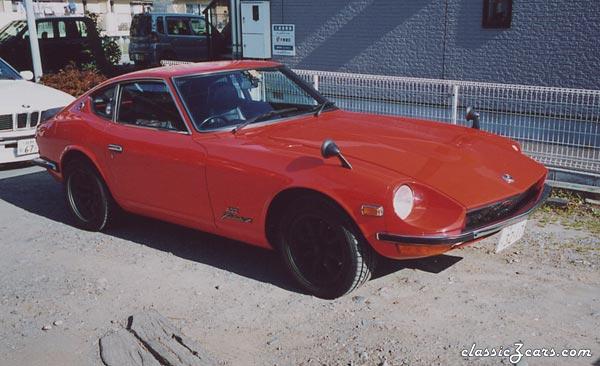
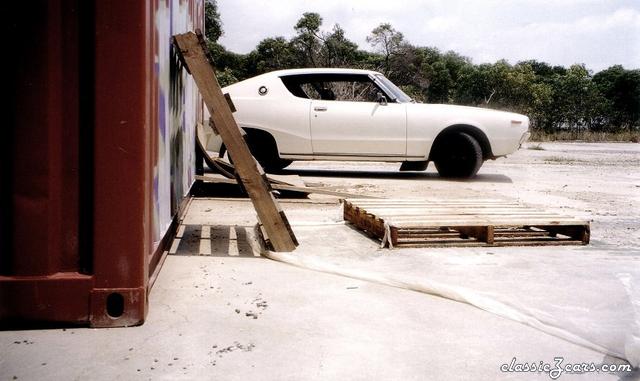 Fresh off the boat? Sneaky photo! 10/10 for artistic photo effect...........
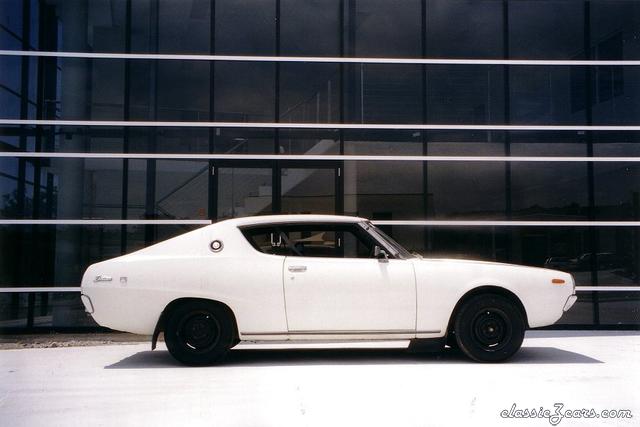 Dig the no-hubcaps look, Alfadog. What a peach.


Important Information
By using this site, you agree to our Privacy Policy and Guidelines. We have placed cookies on your device to help make this website better. You can adjust your cookie settings, otherwise we'll assume you're okay to continue.