HS30-H
Supporting Member
-
Joined
-
Last visited
Everything posted by HS30-H
-
Hi Scaryfast, My project car ( replica of a 432-R ) is currently in the paint shop at FOURWAYS ENGINEERING. You can see some pics of it there in my Gallery. You can take a look at another car restored and painted at FOURWAYS by going to the Gallery of another user ( SAINT ). I was there yesterday actually, checking on the latest progress of my paint job. Its been there a long time, as I agreed to have the car worked on 'when they had space'. Finally the body is panelled up and its being primered next week if all goes according to plan. Yesterday the following cars were in the workshop; *ASTON MARTIN DBR1( 2? ) - full body-off resto. *ASTON MARTIN DB5 - rolling resto. *"PAGODA" MERC SL - engine work. *MGB ROADSTER - Ford Type 9 transmission conversion. *240Z HISTORIC RALLY CAR - half built. *432-R replica project ( mine ) - in paint shop. *240Z "70'S ROADSPORTS" class race car ( between races ). *ASTON MARTIN DB5 or ( DB6? ) VANTAGE CONV. - resto. *ASTON MARTIN "ZAGATO REPLICA" race car - resting. Interestingly, they say they prefer to work on the early Z cars much more than anything else they do. They certainly have very little in the way of compliments for the Astons! Alan T.
-
........and here's photo 2: Alan T.
-
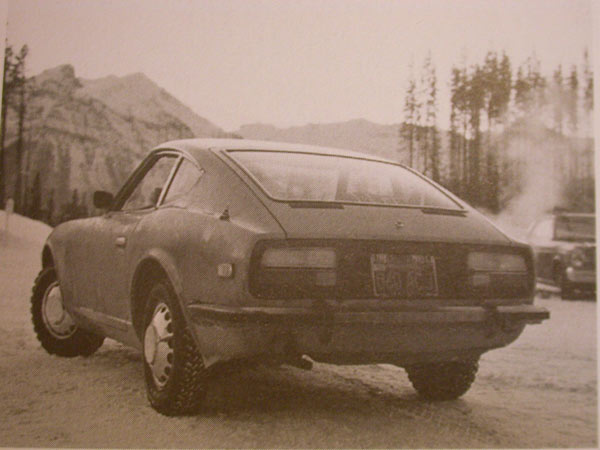
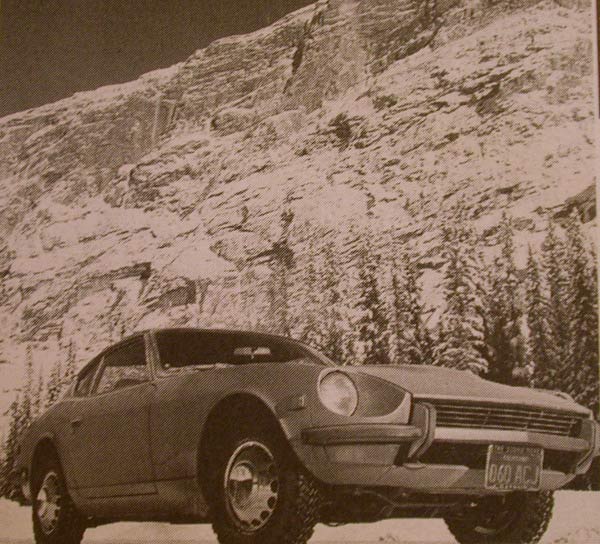
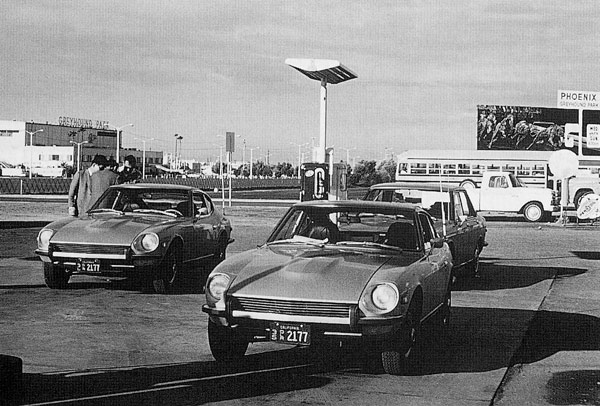
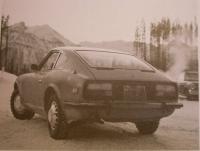
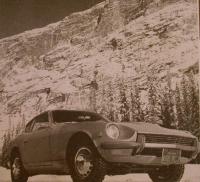
Here are a couple of photos of the testing trip that was undertaken. I am told that this was a three month exercise ( August, September & October of 1969 ) during which a route from the Canadian Rockies to Death Valley and back was traversed many times. They wanted to take in extremes of cold and heat whilst racking up some serious mileage on these cars, and reporting their findings back to the Factory. Naturally, making sure that the cars would survive these extremes without giving trouble would be a very important part of making sure of the model's success in that particular market ( the biggest potential market in the World ). On the subject of rubber strips on the bumpers - don't forget that the Japanese Domestic market had more than one choice. The Fairlady Z was the base model with NO rubber trims on the bumpers, and the Fairlady Z-L was the higher grade model which DID have the rubber strips on the bumpers. The Fairlady Z 432 DID have the rubber strips, and the Fairlady Z 432-R did NOT have the rubber strips. Domestic models came both with and without rubbers strips on the bumpers. Here's photo 1:
-
-
Sounds like he's a little confused about what "matching numbers" means.............. Just like any other car manufacturer, Nissan did have the occasional car that didn't quite come up to standards. These cars would be sent to a special section that would usually fix the problems. A car would have to be REALLY bad for the engine to be taken out and installed in another car, or for the engine not to be installed in the first place. In any case, if this happened the VIN tag on the car could be amended ( replaced ) or if no engine had been installed then the engine number would not be on the tag in the first place. So he's talking rubbish. The engine number is not stamped on the actual "frame" ( body ) of the car - only the VIN number is actually stamped ( on the firewall ). If the engine number on this particular car does not match the engine number stamped on the tag, then its not the original engine. There were some markets where the engine number was not on the tags either............. Alan T.
-
I afraid I'm only endowed with a very small Hard Drive ( hence the very long nose on the car........... ). Its actually just a very large cupboard. The 'Wife' calls it something else. That's great information from Kats isn't it? Its made my weekend start off with a high. As Kats has shown, there IS more data to be got from its custodians at Nissan and I've never been happy to accept the nonsense figures and guesstimates that have been published before now. Nissan seem to be slowly stirring from their slumber and getting the message that tomorrow's PR might be helped somewhat if they took care of yesterday's heritage. I'm not sure if this is due to the fuss about the Z33 or the effects of a lot of interest and probing from people like Kats - but its certainly been more apparent that they are coming out of their shell a little. The news that they really ARE planning a proper museum in Japan has got to be good news for us all. Hats off to Kats! Alan T.
-
I'm afraid the figures from that "Datsun 280ZX" book are just nonsense, and cause more confusion than anything else. Its a real shame that Nissan ( USA? ) could publish something like that without making a better job of it. One of the main problems is that it is totally ignoring all the non-"240Z" models. I can't get my head around this. Why do people always talk about the "240Z" without including all the other models of S30-series Z? The HS30 and HLS30 were only TWO types of S30-series Z. I think its a big mistake to think of the 240Z model as being anything other than a PART of the S30-series Z range. I also think the American "model year" system tends to cloud the issue of actual manufacturing date. I'm personally more interested in the actual date that the car went through the Factory than the "Model Year" that the US-market assigned to it ( although I do understand WHY this system was created ). Lots of production and sales figures mix these up, and it makes things even harder to understand. You can see this confusion from the amount of questions that arise over the actual dates of these cars. I'm sorry to say that I have still not seen any DEFINITIVE production figures that include ALL the iterations of the S30 model range. I have several different sets of figures for the Japanese market, let alone any other markets and models:ermm: . Alan T.
-
..and another; Alan T.
-
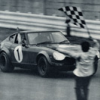
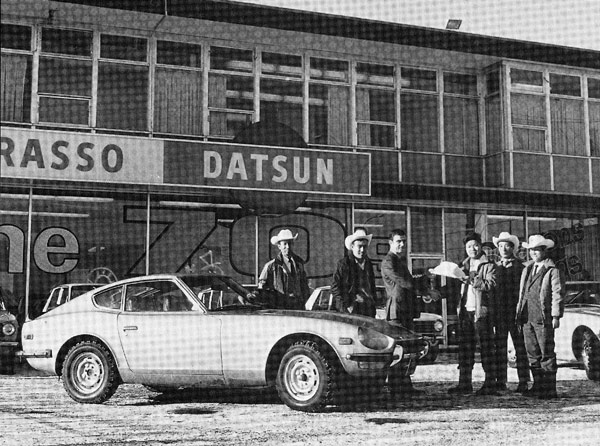
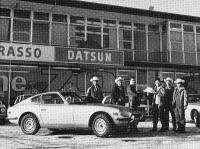
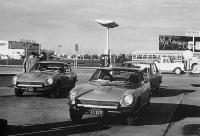
Hi Kats, Well done! Its great to see new information about those early days of pre-production, and I for one certainly appreciate your efforts and the fact that you are sharing this new data. I agree with your translations of "Kojyo Shisaku" and "Seisan Shisaku". In the business that I am involved with, we use virtually the same terms in English and Japanese. We usually translate "Kojyo" as "Factory" and "Seisan" as "Production" in my business, so I would think that you could possibly translate "Kojyo Shisaku" as "Pre-Production Prototype" and "Seisan Shisaku" as "Production Prototype". Perfect translation between English and Japanese is not always possible! At the very least, these figures show that the LHD cars were not produced "first", and that there were indeed RHD cars being pre-productionised at the same time. In fact, up to November 1969 more RHD prototypes had been made than LHD prototypes. That's nice to see, as it might help to get the message across with regard to the LHD cars NOT being the "First" as is sometimes claimed. I had read in some Japanese magazine articles that the test crews in North America had come across problems that caused a hold-up in production. I had also heard that Domestic market cars had not been held up in the same way, and that the 'problems' were mainly caused by the crank vibrations on the L24 engines. Of course, the S30 and PS30 would not have suffered these, so maybe that influenced the decision to press on with Domestic production while Export production was held up? The driveshaft vibration problem was finally fixed much later with the repositioning of the diff. - so I wonder if this was too big a job to redesign in late November and December and they had to leave it until much later? Interesting. Great data, Kats. This should give us good material to discuss for some time to come! Here are some pics. of the North American test crews at work, which may be of interest to some: Alan T.
-
I posted a pic of the ones on my car back on the last page. Admittedly not the best angle - but you can see where they mount and roughly how they would work. Alan T.
-
This kind of item used to be mandatory for many other Japanese domestic models too. You can see the same function performed in different ways on different models. The story about it being a 'safety' measure is true and is not just something I dreamed up on my own. Anyone who has walked and driven on the really tight Japanese back streets where cars and trucks share the road space ( with no separation between pavement / sidewalk and road ) with pedestrians and cyclists will know what I mean. The Japanese domestic mirrors of the S30-series Z were spring-mounted for the same purpose ( safety of pedestrians ). They do indeed perform a useful function in cushioning the bumper from the sheetmetal - but that's probably just a spin-off and a piece of simple but clever design. Alan T.
-
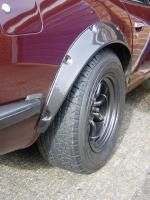
Here's what the real thing looks like installed on my car ( a Japanese domestic market model ): Alan T.
-
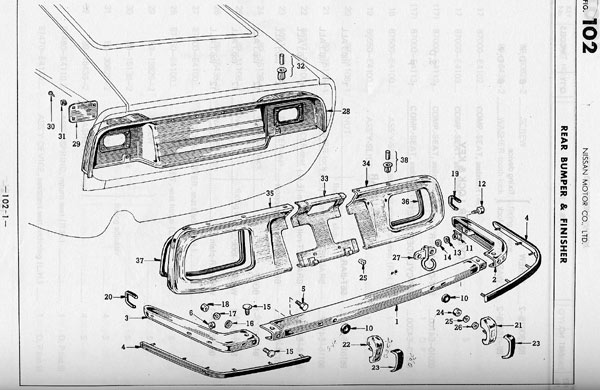
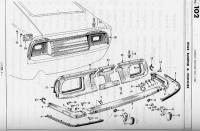
They were actually a genuine Factory part. The original intention of these was to stop pedestrians, cyclists, motorcyclists ( and stray dogs ) being 'hooked' by the rear bumper end as the car passed close by. They also protected the end of the bumper from digging into the sheetmetal during any contact with solid objects.............. Just about every Japanese domestic market S30-series Z had these fitted to them, and I believe that at least some of the early USA-market cars had them too. Strangely, our UK-market cars did NOT have them as part of the normal spec. - although a few cars with them fitted did arrive here. I think the ones on ebay are reproductions? *19 = Part no. 62692-E4100 - BASE-rubber, bumper ( R.H ) *20 = Part no. 62693-E4100 - BASE-rubber, bumper ( L.H ) See this illustration from one of the Factory Parts Lists: Alan T. ( not necessarily a purist, though........... )
-
The VIN number is low because its LHD. They made very few LHD cars compared to RHD cars in that model. Remember that the LHD and RHD models had their own number sequences. The "H" in the VIN refers to the L24 engine - which is what the "P30" number on the engine block also denotes. The L24 engines had their own number sequence no matter what they were fitted to - so the engine numbers are consequently difficult to follow unless you are looking at an HLS30 and referring to data for US-import Z cars. I wouldn't want to have the task of looking for parts for this particular car. Hen's teeth and rocking-horse S**t come to mind! Alan T.
-
If I were you I would log into hybridz.org and do a search for "Showcars" and "G-Nose". A few members over there have dealt with this supplier and seem to be rather less than happy. With any of these 1-piece or 3-piece "G-Nose" kits ( even though they don't look like the Factory G-Nose, they still insist on calling them a G-Nose kit ) there are always fit and finish issues. The proper Factory cars used 5 pieces, and they were of VERY high quality - with captive nuts in all the right places. Even then they are slightly mobile and require a little adjustment every now and then. In my opinion, the best G-Nose replica parts are to be found in Japan, and even then they usually require a bit of work to make them mount properly and fit right. Alan T.
-
That's good to hear Fred. Were there some UK-mainland owners in attendance? I think I spy a dark green 2+2 in your pics, and if its the same one that I'm thinking of it is an exceptionally good car. Thanks for the report. Alan T.
-
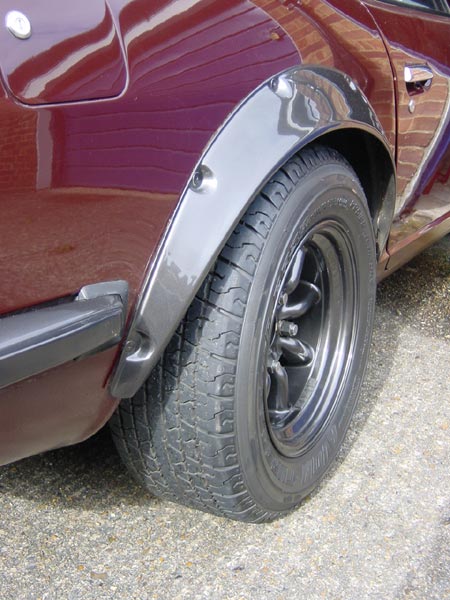
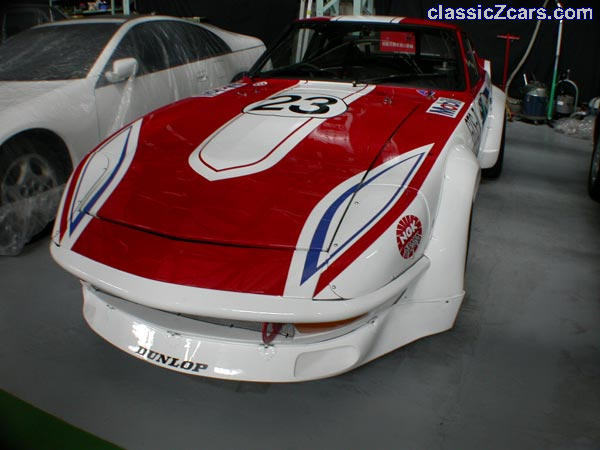 Got a few more photos - but I think this is enough for now............. This car is fitted with the spoiler for the G-Nose that is commonly referred to in Japan as the "Works Type B" version ( it was the second shape of spoiler for the G-Nose that was homologated, and sold through the Sports Option catalogue ). You can indeed still get replicas of these, but they are very vulnerable and prone to damage. They also need to be used with the "Full Works" super-wide Overfenders - which, as you can see, were much wider than the "Type A" and the "ZG" type Overfenders.
 -
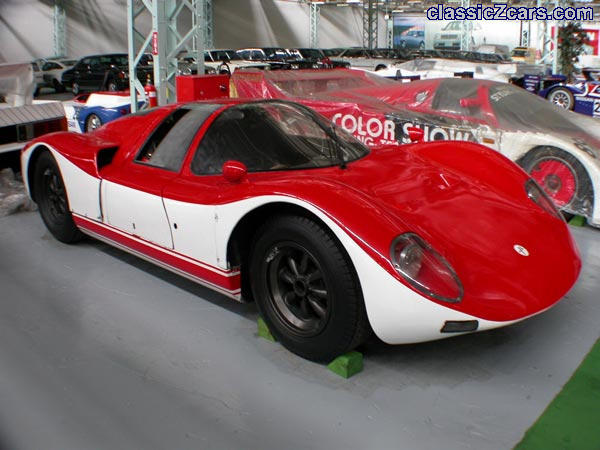 Yes - that's correct. This car was fitted with the Prince GR8 engine, and the S20 was basically a de-tuned and reconfigured version of the GR-8. Nissan even referred to the GR-8 as being the origin of the S20 in their advertising and press releases for the GT-R and 432.
 -
Works 240ZR at Zama.
-
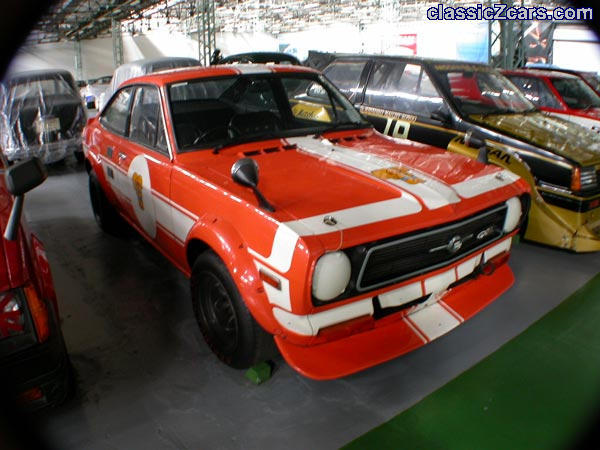 Works Race Sunny at Zama.
 -
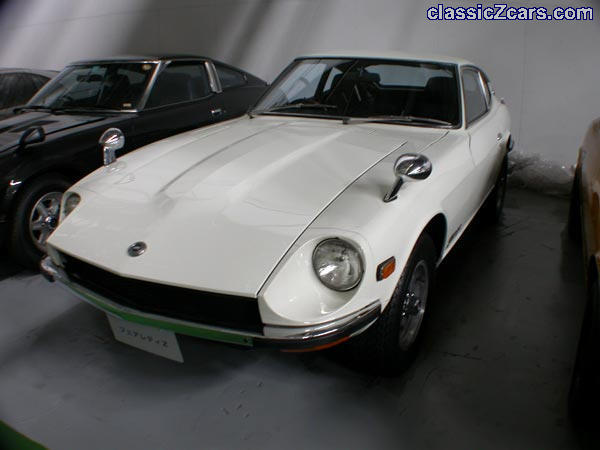 Late Fairlady Z at Zama.
 -
Nissan R380-II at Zama.
-
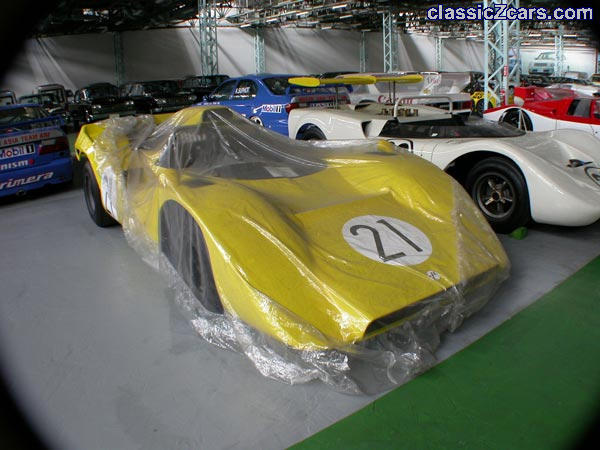 Nissan R382 at Zama.
 -
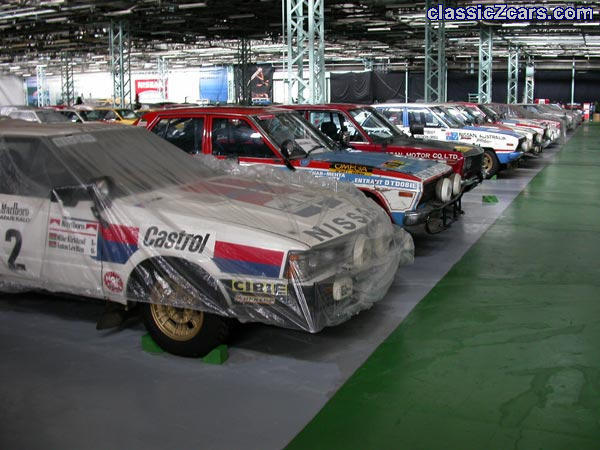 Line-up of Works rally cars at Zama.
 -
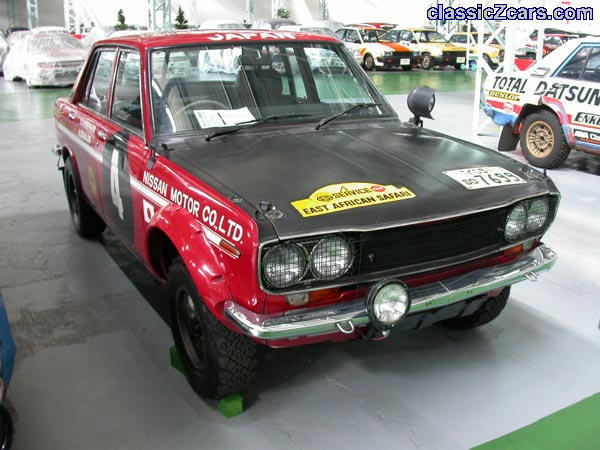 Safari Rally 510 Bluebird at Zama.