HS30-H
Supporting Member
-
Joined
-
Last visited
Everything posted by HS30-H
-
From the album: Miscellaneous
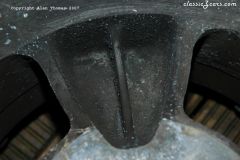
Rear side casting detail of Nissan works Kobe Seiko 4-spoke magnesium race wheel. -
From the album: Miscellaneous
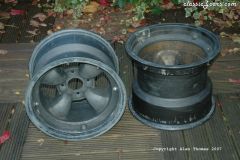
9.5j x 15 front and 12j x 15 rear Nissan works Kobe Seiko 4-spoke magnesium race wheels. -
From the album: Miscellaneous
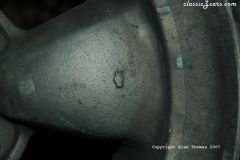
Nissan 'hamburger' logo cast into Nissan works Kobe Seiko 4-spoke magnesium race wheels. -
From the album: Fairlady Z432-R replica project
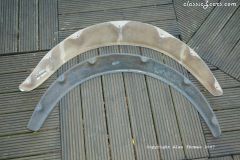
NOS 432R and ZG Overfender moulding comparison. -
From the album: Fairlady Z432-R replica project
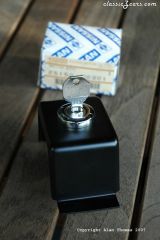
Replica 432R starter switch bracket. Mounts on trans tunnel behind gear lever. -
From the album: Fairlady Z432-R replica project
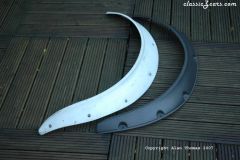
Comparison of 432R and ZG Overfenders. -
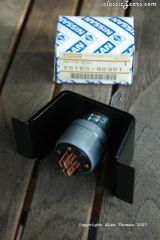
From the album: Fairlady Z432-R replica project
Replica 432R starter switch bracket. Mounts on tunnel behind gear shift lever. -
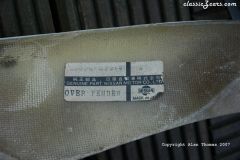
From the album: Fairlady Z432-R replica project
Genuine NOS 432R Nissan 'Sports Option' overfender. -
GOOD answer. My hat is off to you. I think the ZCCA needs more people like you! As I said before, the questions I posed were somewhat rhetorical. I think I got the same answer from you(?) the last time I asked something similar: non-USA/Canada market cars would end up - by default - in the 'Modified' class, even if they were totally stock, because the ZCCA judges would be unlikely to be able to judge them objectively. I'm nothing if not a pragmatist, and I would honestly feel sympathy for the ZCCA judges if somebody stuck something like a 1970 432R in front of them in a showroom stock class and expected to get anywhere. I would not actually expect them to know what they needed to know, but it would be an interesting exercise nonetheless. If I had unlimited funds I might even consider attempting it! On the other hand, if I had truly unlimited funds I might sponsor a proper WORLD convention of S30-series Z cars - to take place in Japan, and with all market models and variants present and correct with their owners. That would be fun. Alan T.
-
I thought it would be more likely to be "........Here come the Judge!" Surely they would be looking for a car that was being judged to have the correct type of parts and equipment for that market model ( ie - as it left the factory ) if they are judging a 'Stock' class? Sure there are a multitude of parts that were shared by all models in all markets that were built around the same period, but if a USA market HLS30U is fitted with something like - for example - a UK market distributor, then surely it is up to the judges to pick up on it and the owner to explain it? I suspect your question would have been too close to a 'How Long Is a Piece Of String' to answer. You see, to me your above comment strikes right to the heart of what I'm talking about. I don't see why anyone would necessarily feel under any obligation to travel halfway around the world to "share" any information on cars and specifications that are not even present. You are familiar with the idea of 'The mountain going to Mohammed' I take it? Frankly, I think if an organisation wants to promote itself as some kind of world authority on a subject then it had better open its eyes to the whole story of that subject, rather than just one part of it. Some very significant members of said organisation are happy to tell people that certain models of the S30-series Z family are "irrelevant", or indeed that it is unnecessary to think of the S30-series Z as a family of models made for different markets and market sectors. Quite a fundamental problem I would say. Of course, if the ZCCA judging panel wasn't implied to be the single, all powerful, all-wise and all-seeing body of the world ( see the three posts that I objected to in just this thread ) then it would not be an issue, and "assholes" like me would not need to pipe up. First of all Will, I'd remind you that I have on many occasions tried to be of help and assistance to people that needed information or data that I had access to. You yourself are one of them. I don't think I need to be reprimanded for not trying to be helpful. There's an open invitation to anyone who needs anything specific, and I will always do my best to help. But I certainly do NOT want to be sending half of a very precious, rare and hard-won collection out of my sight! There's also the question of copyright ( you are going to be selling these CDs, are you not? ) as I feel sure that a lot of what I have will not be covered by any agreement / dispensation you have obtained from Nissan in the USA. Really, what has this got to do with the subject I brought up? Like I said, I haven't been backward in coming forward to try and help where anyone needed specific information that I might hold. It's not MY obligation or duty to educate ZCCA officials on market models that they do not judge, but it IS my right to point out that the ZCCA should not be held up as some kind of WORLD authority on the S30-series Z car by default. 26th-Z made a great answer to me in post #58 on this thread, and addressed the crux of my questions whilst showing some understanding of what I might be objecting to with my post #54. I think he - at least partly - 'gets' where I'm coming from. I don't see how pointing the finger at me for not lending some ( unspecified!? ) stuff to your monster CD project is actually relevant to this? The ZCCA might like to try starting its own non-USA/Canada market model data collection if it really wants to be all-inclusive. But that's the point; I'm not so sure that ( if it could speak! ) it would actually claim to be the defining World authority on the first generation S30-series Z that some people are implying that it is ( see post #54 again ). Alan T.
-
Ha! I knew you'd reply with that. Fair enough. But just because the ZCCA is 'the only game in town' so to speak should not imply that it is a defining authority for the whole world. I've asked the question before ( admittedly rhetorical, as I know the answer ); would these 'trained' ZCCA judges be able to judge market models other than those they are most familiar with? If Kats brought over his 432, would the judges know what was correct and what was not? How about if I brought over my 240ZG? How about if Len Welch brought his UK-market 240Z over? I'm not saying that these cars would be contenders ( although Kats' car might well be ), but my point is could these cars be judged to the same level of expertise and accuracy as the USA/Canada market models? Somehow I think not. I'm not denigrating the ZCCA in any way ( I'm sure that they have excellent standards and high expertise ) - just trying to get this into some kind of WORLD perspective. Do you get the point? I'm not trying to be a thorn in anyone's side here. I'm just trying to ask that we be mindful of the terms that we use, and their implications. IDEALLY, I'd like to see the people who designed and made these cars judging them - but sadly that isn't going to happen, is it? Yes, I remember the Bonhams auction very well ( I was there ). There were NO ex-Works 240Z rally cars at that auction. Some random ex-Works parts attached to standard road car bodyshells, yes - but no proper, correct, historic ex-Works cars. That's it in a nutshell. Alan T.
-
Carl, That's a bit of a strange list to my eyes. I don't know what data you used to set that price range ( $100K + ) for the Works rally 240Zs ( I noticed you didn't include any Works 260Zs? ) as I am not aware of any that have come onto the open market in the last ten years or more - although a couple have changed hands privately. Surely you can't put a Works-built ( and therefore fundamentally different to a modified standard road bodyshell ) rally car of international significance - such as the 1971 and 1973 East African Safari Rally winners - into the same price bracket as others? It's something of a moot point, as Nissan surely have no intention of selling their Safari-winning 240Zs, but I think an insurance valuation alone would show that those cars would most likely top any list you care to make. Even Nissan's ex-Aaltonen '72 Monte Carlo Rallye third place finisher would be right up there, without even having won a race. There are other ex-Works cars in captivity, but they really have to be judged on a case-by-case basis. There was a very large variation in build detail depending on the season they were built in, and what event they were aimed at. I noticed too that you quoted a price range of "$75K to "$125K" for "any of the Fairlady Z 432s" - which is also a bit out of focus. For many years now, it has been the much rarer Fairlady Z432R models that have been leading the way as far as high sale prices are concerned. With a fundamentally different bodyshell to the 'ordinary' Z432 model, it is hard to lump the 'PZR' model in with its 'PZ' sister. And $125K US is only going to net you a 432R restoration project these days. It might not be enough to buy a really nice 432 either, as prices are on a steep upward curve. Even original factory 240ZGs are starting to command pretty serious money in Japan these days. Alan T.
-
......... In the USA. ......... In the USA. .......... In the USA. Gentlemen, Just a little reminder that this is ( supposedly ) an international forum, dedicated to the subject of a Japanese car. Thank you! Alan T.
-
Quoted from: http://www.240rs.jp/HXI%207635.html ? I'm sad to report that Bill Blydenstein passed away just a few weeks ago. RIP. Alan T.
-
You already have most of the information in the photo caption. There's not much more in it. My translation of the caption: "Second from the left is Katayama. On the far right is his younger sister. The car is a '35 ( as in 1935 ) year-style Phaeton. Photograph taken in the first year of ( Katayama ) joining the company." To be honest - as far as the other articles in this 'Mook' ( a compilation of previously published articles from Nostalgic Hero magazine ) are concerned - I found the article on Nissan staff engineer TAKEI Michio of greatest interest. Here is somebody who had direct - hands-on - involvement in the development of the S30-series Z, and who travelled extensively outside Japan in his work. A story that has not been told before, and from the horse's mouth so to speak. Great stuff. Alan T.
-
I've seen this comment from Katayama in other articles, and I have to say that I have always found it breathtakingly gauche and ................... well, disappointing to say the least. First of all it is rather a long way from the truth, and secondly it amounts to a fairly big smack in the face for the team(s) of people who really can claim to be the 'hands on' people involved in the concept, design, engineering and production of the cars, let alone the company that actually employed them all. Alan T.
-
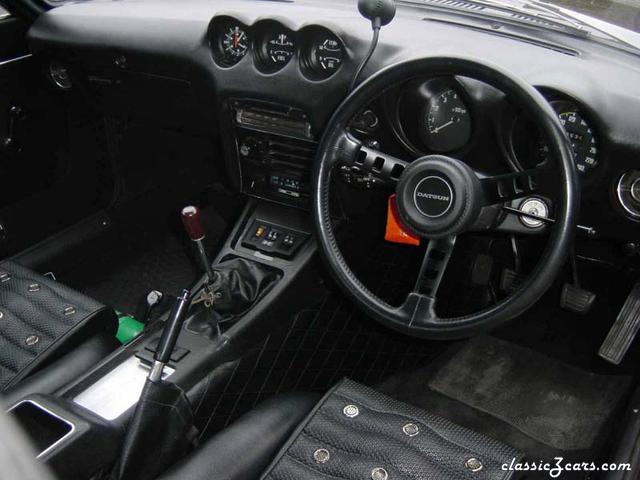 That's a Japanese Shinto Bhuddist 'Omamori' - a small woven silk pouch containing a Shinto Bhuddist icon and a prayer for safety, usually bought from a temple at New Year. Think of it as the equivalent of a St Christopher medal, if you like. It is intended to help protect the owner from danger, and they are often given as gifts to loved ones in Japan. They only have a one year lifespan, and you are supposed to return them to a temple to have them ceremonially burned at New Year ( and get another one........ ). It's hanging from my light / wiper multi switch stalk.
 -
Quite a lot of the 'data' in that "432R" article is wrong, and the article has been pretty much debunked. In actual fact, the car in question appears to have been a plain vanilla PS30'Fairlady Z432' rather than the much rarer and basically quite different PS30-SB 'Fairlady Z432-R'. The article was discussed on this forum here: http://www.classiczcars.com/forums/showthread.php?t=17507 Alan T.
-
Discussed several times on this forum in the past. Here's at least one thread: http://www.classiczcars.com/forums/showthread.php?t=7697
-
jmark, Fourways Engineering over here in the UK bought a lot of the remaining stock of 'Option' direct-drive B-type transmission parts from NISMO USA a few years back. They will almost certainly have this third gear ( and the counter gear ) in stock. Fourways Engineering 10-12 Maidstone Road, Borough Green, Kent, England TN15 8BD Tel: +(44) 1732 884288 Fax: +(44) 1732 883244 Email: fourwayeng@aol.com http://www.fourways-engineering.co.uk/ You need to speak to Mr Geoff Jackson. Alan T.
-
Hooray for.........

-
Exactly. I don't think that is any excuse whatsoever, and in fact it even scares me a little ( albeit vicariously ). If these people are proper, professional used car importers then they HAVE to know what they are selling. Ignorance is absolutely NO excuse. They are going to mislead people by mis-describing these cars, and I'm sure that there are laws that they will fall foul of in doing so. At the very least I'd hope that a company selling such a car would lead the way in educating / advising their potential customers on what they are selling. It is a lovely car and I'm sure it represents a fair return for the price, but they are not selling a 'GT-R' and therefore they should not describe the car as one. I don't see the magic words 'lookalike' or 'replica', and there's no mention of the VIN prefix or true model type either. Lachlan, I believe I told you the sad story of the young lady here in the UK who spent almost all of her inheritance on buying and importing what she was led to believe was a real C10 GT-R? Turned out to be a GT that was dressed up as a GT-R, and a completely rotten one at that. It looked good in photos. She was more than a little naive, but was it completely her fault? I don't think so........... I've got absolutely nothing against replicas or lookalikes ( quite the opposite! ) and it is the right of the owner to put whatever badges or emblems he likes on his car. But when he comes to sell it, he needs to describe it as what it really is. Better for him, and better for all of us too. Alan T.
-
It would. But the car that 'Prestige Motorsport' are trying to sell is a GT-R 'replica', based on a GT or GT-X. Quite different. I've seen them doing this before. Somebody should take them to task for it. If they described an R32 GTS as a 'GT-R' they'd get laughed at long and hard, but with the older stuff less people are willing to pull them up on it. Don't know why............?
-
As far as I'm aware, this 'Fairlady 260ZE 2by2' model never actually made it into a sales showroom - although it must have got within an inch of being released. Even if it did, it would have soon been recalled just like those 2-seater 'Fairlady 260Z' models that got retro-fitted with L20 engines and their VIN numbers re-stamped. Early 1974 was - by all accounts - a pretty turbulent time at Nissan. The Yom Kippur War of late 1973 had created what was called the 'Oil Shock' in Japan ( Japan having no domestic oil supply ) and there was a massive swing away from 'performance' image models of car. Nissan curbed much of their domestic racing activity in an effort to make it look as though they were taking the subject of economy seriously. Strange times, with some parallels to what we are going through today......... They don't appear to have much in common with the Japanese 'factory' items though. I would have thought race teams such as these would have produced their own simplified and lightened versions ( with the bumper moulded in ) that incorporated / accommodated the wider wheelarches and the front air dams / spoilers. Question: Were such cars allowed to use these front ends in IMSA GTU races because the 'Fairlady 240ZG' model in Japan had been homologated for FIA Group 4 competition, or was it simply because similar items were 'available' for the general public to buy from Datsun Competition USA? Alan T.
-
Yes, there was a small 'street tuning' shop called 'Speed Shop Shinohara' - but there was/is absolutely no connection between that business and Nissan's 'SSS' ( Super Sports Sedan ) spec models. Mr Shinohara would have still been in Kindergarten when the 411 SSS Bluebird debuted in May 1965. 411 SSS followed on from the 1200 'SS' ( Sports Sedan ) of March 1964. Alan T.