HS30-H
Supporting Member
-
Joined
-
Last visited
Everything posted by HS30-H
-
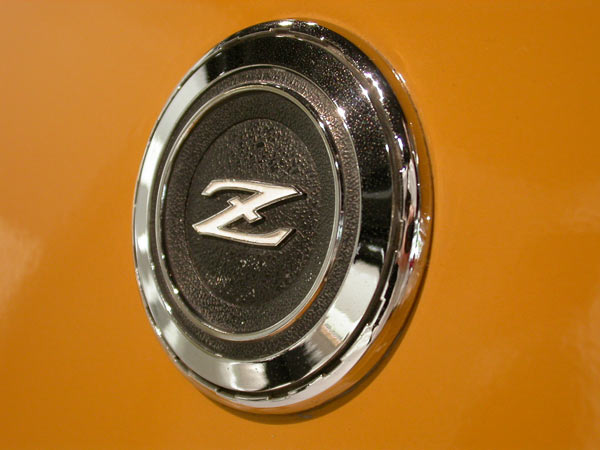
Hi Kats, I always thought that the cars in the Japanese press-release photos, which were shown to journalists at the press-only launch prior to the Tokyo Auto Show, carried some details that were not 100% finalised. Its easy to imagine that some of the emblems / badges might have been pre-production samples or even models - put on the cars because the final production items had not yet been finished..... I have not seen the pillar emblems that were seen on the press / show cars actually fitted to any 'production' version car. I have two sets of part numbers for the emblems fitted to the Japanese-market cars: *76807-E4100 ORNAMENT - rear quarter ( R.H. ) *76808-E4100 ORNAMENT - rear quarter ( L.H. ) superseded by: *76807-E8200 ORNAMENT - rear quarter ( R.H. ) *76808-E8200 ORNAMENT - rear quarter ( L.H. ) ( from C# S30-04551 & PS30-00401 ) The E8200 numbers are the VENTED type emblem. I knew the vented type emblems were handed left and right ( I've often seen them fitted the wrong way around! ) but I did not realise that the non-vented type were handed too. You learn something new every day. If there were two part numbers for the early non-vented type emblem then it would be easy to establish a pattern to the story. However, as there are not, I suspect its more a case of the earliest versions being modified in production without a change to the part number........ Incidentally, I have found THREE part numbers for the Fuel Filler Lid closings: *78820-E4100 CYLINDER arse'Y - fuel filler lid *78820-E8200 CYLINDER arse'Y - fuel filler lid ( what's the difference between these two? ) And then this one, which was quoted as being for the 432-R: *84360-E4602 LOCK arse'Y - fuel filler lid ( which I presume is in fact the non-locking turn button type, despite its description ). I think we can't ignore the fact that we might be looking at pre-production or mock-up emblems, first-production types, and then 'improved' or cost-reduced versions - ALL without any difference in part number, and with varying consistency in fitment to cars as they came off the line. All very confusing when we try to make sense of it retrospectively...... Alan T. edit for SP.
-
Poor Gav, Its all too easy to make a faux pas with foreign words and names. Hey, where have the Smilies gone? Smilies are OFF. Did I turn them off by accident? Alfadog, I shall avoid the lemon flavour lollies from now on :-) Alan T.
-
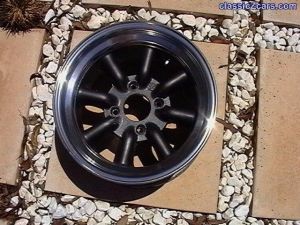
Congratulations on your wheel purchase trs, However, I think that particular design was originally made for slightly more modern cars than the S30-series Z, like the DR30 Skyline for example. You might need spacers to use those on the front of an early Z. They have a fairly positive offset ( rather than negative ) and with that width this can mean you get some interference between the wheel ( or more especially the tyre ) and the inner wing ( fender ) sheetmetal and suspension components ( especially the springs and spring seats ) at full steering lock. You can sort this out with spacers, but that gives you clearance issues with bodywork and you might need flares or Overfenders. You could use them on the rear with - I would think - less chance of clearance problems. Gav, just a heads-up mate - there's only one 'n' in Watanabe. If you spell it "Want a nabe" it makes a good joke in Japanese. A "Nabe" ( pronounced "Nab ay" ) is a Japanese iron cooking pot. I think you might end up with something that will not fit on your car!:-) All the best, Alan T.
-
bump test
-
Hi Nate, Amen to what Ben wrote above. And Mr Camouflage is right, the original Overfenders on the Factory ZG were attached with big Pop rivets. The example of the yellow "Mr K." car is a useful one. That car was NOT a real ZG, but I believe that it DID wear a genuine Nissan option G-Nose. The very earliest of these were virtually the same as those used on the Factory ZG model cars ( the "HS30-H" ) and were made in Japan. However, within a very short time Datsun Competition in the USA were supplying locally-sourced copies. I would say that the best thing to do in this kind of situation is to trust your eyes and use a good cold-blooded attitude when inspecting the car. Don't get carried away by the apparent presence of a G-Nose or replica G-Nose, as the base car is the most important factor. If you are thinking of buying, then don't let the G-Nose issue sway you. If you really want to go the G-Nose or ZG replica route then that is something that can fairly easily be achieved at a later date. I can always offer my help on that score. All the usual caveats will apply when looking at the base car. I presume it will be LHD and a USA-market model. If it turns out to be RHD, then try to collect extra data; the VIN number, approximate date of manufacture ( try to ascertain this from the usual detail change points ) and the original base colour of the car. Take a note pad if necessary. Note down anything you think unusual. There's always a chance with an RHD car in the USA that the present owner does not know what he has got. That can be either a good or a bad thing; in many cases the owner thinks he has something that in fact he does not.......... To identify a genuine Factory G-Nose, just look at the quality. The originals were a very accurate and neat job, with the lower panel made from fine woven GRP mat. They have lots of captive nuts in little cages. Corners and edges are sharp and well-defined. The later radiator inlet panels have ducts / air flow mouldings on them which are easily visible ( they were to assist the air con ). They are separate mouldings that are bolted on. They are very thin with a smooth outer surface and many people mistake them for aluminium panels. They are not. The earlier cars did not have these at all ( like mine ) as they were an attempted fix for the overheating issues that automatic transmissioned air-con equipped cars were suffering . The bonnet ( sorry - hood ) extension panel is a one-piece moulding that is SMOOTH on both sides. You will have to put your hand up inside the car's mouth to ascertain this ( tell it to say AAAH ). Originals have strengthening ribs moulded into the underside. The original front bumpers were big and heavy one-piece urethane mouldings. They are slightly squishy to the touch, but harden up a lot with age. If you flick it with your finger it should not sound hollow or hard. Aftermarket and even the later Datsun Competition G-Nose replica panels are usually made from chopped strand GRP, with the front bumper being made from the same stuff. Just look at the quality and decide for yourself whether you think its any good or not. Some of the better ones are excellent quality, and quite good enough. However, the real ones are a cut above that. They really are very good. A race mechanic friend of mine ( he used to work in the carbon fibre shops that made the bodies for the Mercedes cars that flipped at Le Mans a few years ago.....! ) had a look at my ZG and said that the lower panel was 'top notch' stuff. Race-quality he reckoned. If you want any detail photos then PM me your e-mail address and I'll get some over to you. Fingers crossed that you'll get a Z soon:classic: Good luck! Alan T. edit: has this post disappeared? Its not showing as it should......
-
And Alan is extremely jealous. Whatever happened to all the Nissan service tools here in the UK? I never see any anywhere.... Kats, I need loads of wire hose clamps for my 432R replica project. Do you want to make some for me? Forget flying those airliners, you have a future as a Z restoration parts specialist.:classic: Alan T.
-
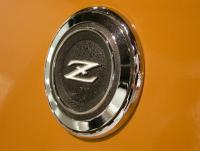
Not wishing to steal your thunder, Kats - but I think the earliest type of B pillar emblem on the 432 is possibly the rarest of all the Z emblems. It was round, and looks very similar to the later 'vent' type of B pillar emblem fitted to all the later models, BUT if you look at it closely its not actually a vent at all......
-
*STAR ROAD I can't say that I've been to this particular garage, but they ARE in the Tokyo metropolitan area - so you could get there from Shinjuku relatively easily. They are in the Edogawa ward of Tokyo. That's "Downtown". tel: 03 5668 5675 e-mail: starroad@ci.mbn.or.jp The following three are in Saitama prefecture, but essentially in the sprawling suburbs north of Tokyo: *R.S. START ( Skyline / Z performance parts ) Kami-Fukuoka Shi ( Shi = City ), Saitama Ken ( Ken = prefecture ). tel: 049 262 2848 www.rsstart.com *HBC 240 ( used Z cars / Skylines + some parts ) Yashio Shi, Saitama Ken. tel: 048 995 4800 *KAMEARI ENGINE WORKS ( L-series engine specialists ) Yashio Shi, Saitama Ken. tel: 048 998 2323 The following are in Chiba prefecture, which is the prefecture east of Tokyo - and where Narita Airport is located: *PLATINUM ( used cars - many old Nissans, used parts too. ) Ichihara Shi, Chiba Ken. tel: 0436 36 7631 *BIKO WORKS ( used cars and parts. Some cars with RB swaps ) Chiba Shi, Chiba Ken. tel: 043 286 7400 www.seikoh.co.jp/bikou The following are in the Yokohama area, not too far from Tokyo: *FLEX AUTO REVIEW ( used cars - a very big chain ) Yokohama Shi, Kanagawa Ken. tel: 045 941 7333 www.rakuten.co.jp/flexauto/ e-mail: info@flexauto.net *VINTAGE CAR YOSHINO ( used cars, some used parts ) Yokohama Shi, Kanagawa Ken. tel: 045 701 9604 www.7plala.or.jp/yoshinojihan/ e-mail: yoshinojihan@violin.ocn.ne.jp edit: Sorry - their website address is not working, so it must be wrong. This is what they have published, so it must be a misprint, and I can't find the right url. Sorry. At least their e-mail address is the correct one. The following are further out, but well worth a visit if you can make it: *CITY AUTO ( new parts, used parts, performance parts ) Gunma Ken. tel: 0276 88 5366 *SPIRIT GARAGE ( performance parts, new parts, used parts ) Gunma Ken. tel: 0270 62 0441 www.spiritgarage.com All in all, I recommend a trip to SPIRIT GARAGE out of the whole list. You will see some good stuff there, and be able to buy your Overfenders / Flares at the same time. Make sure they are not having a day off when you visit. The good news is that they are usually open on Sunday. Gunma and back is a day's round trip from Tokyo though. If I can be of any more help, please let me know. Good luck! Alan T.
-
Thanks Z-point for volunteering me..... I'm always worried about recommending places / shops / garages of Z-related interest in Japan. Sometimes I get a report back that a place I sent somebody to was a 'let down' or 'not very good.....'. You can't really go to Japan expecting to find shops and businesses that look like a Z superstore, or a Wal Mart dedicated just to Z cars. Japan just isn't like that. Sure there are big general-purpose automotive stores like Yellow Hat, Auto Helloes, AS Auto Tech and Autobacs etc, but for the most part these are glorified tyre shops with 1000 different types of car shampoo on their shelves. The 'Super Autobacs' stores are a little more interesting, but even these have a lot of 'surface' bling and not a lot of depth. If you are - like us - into old cars, then there is not a lot to occupy you in one of these stores. There are more and more used parts 'recycling' shops springing up in Japan lately, though. Some of these can be of interest, and its possible to find Z-related and L-series engine related parts in the chains like 'UP GARAGE'. However, much of the older stuff in these shops really needs to be closely inspected. The truth is that the best used parts tend to change hands privately or on web auctions these days........ There are not many Z specialist shops and garages in Japan, as they really could not make enough business out of the Z scene. They tend to cater for other cars, and at the very least for other types of old Nissan cars. The pure restoration workshops tend to be just that, and not really have a 'shop front' that caters for drop-in visitors. They also do not tend to have much stock of new or used parts on their shelves. This can be a slight disappointment to a visitor. Tokyo is a huge and sprawling city, and most of the old-car related businesses have been pushed towards the neighbouring counties. Indeed, many of them started in the suburbs or on the edge of the countryside and have now moved further and further outside town. This means it can be something of a trek to get to them. All the more reason to be disappointed if you get there and its not quite what you were hoping for. Language problems are not to be underestimated! I hope it does not sound too rude to say that hard-core auto enthusiasts ( everywhere in the world ) were not necessarily the best language students when they went to school. However, having said that, a common interest is a great way of breaking the ice - and I would recommend taking along a few photos of your car and some data / spec. lists on the parts you use. Its always handy to have a pretty firm idea of what you are looking for too, rather than having an "I'll know it when I see it" kind of attitude. That's what I've found anyway. If you are looking for a set of Overfenders for an S30-series Z then say so straight away. Addresses in Japan can be a big problem for visitors. In fact, they can be a big problem for the Japanese themselves. Older district names and villages can be a particular problem, as the Kanji characters are in some cases almost impossible to read correctly without reference to a Japanese Post Office address guide. Computers have been helping with this in some respects, and its possible to get great help from local authority websites. In most cases you will be faced with a train journey that calls for changing trains and train lines / companies. This can be confusing and time consuming. Even after getting off the train at the nearest station you are sure to be faced with a good walk or even a taxi ride to the address you are seeking. Japanese maps ( especially the home-made types used by shops and restaurants in their advertisements ) can be extremely inaccurate! My advice is to call on the help of hotel staff, or the staff of the company that you will be working at. This can be invaluable. Indeed, hotel Concierges in Japan are extremely helpful and will go out of their way to assist you in getting to where you want to go. In the past I've had a full route planned out for me by hotel staff, and they even called my destination address to get local street advice. Fantastic. Basically, if you say to them "I want to go here" - then they will surely make a good job of helping you get there with the minimum of fuss. Office colleagues / staff will surely be just as helpful. I've just returned from a trip to Japan, and whilst there I rented a car ( in Tokyo ) because I wanted to visit around 6 addresses in the Yokohama / Kanagawa area all on one day. The car was the latest Skyline 350GT, with a very trick navigation system. It had a function where you could key in a telephone number, and it would guide you to the address. I've used this type of navigation system in the past, but they were a bit hit and miss. This one was GREAT. It constantly re-set itself if I took a detour or made a false move. Maybe you could consider a rental car for this purpose? I'll list some possible targets on the next post:
-
Hi Kats, "Shippou-yaki" ( can be read as 'seven treasures ware' ) is the same process that we call 'Enamel' in English. Originally it was a process used in jewellery making, but automobile makers used a simplified process in the 20th Century for their emblems and badges. I understand what you mean, Kats. The emblems really are finely made - like a piece of jewellery. The 2000GT really IS low. The roofline is incredibly low, and you really have to get down into the car. I can understand Matsuo san wanting to make a sleek and elegant car like this..... That X-shape chassis is very similar to the Lotus design. It is well-known that many car makers around the world took notice of what Chapman and his staff were making. But maybe if they started their design process a few years later, Toyota and Yamaha would have opted for a unibody design. That might have made it a lot cheaper to make, and a lot cheaper to sell. In that case, it might have been a bigger seller - especially in export markets. Yamaha started a long relationship with Toyota, especially for their engines. I used to help out on a friend's Formula 3 racing team back in the early 1980's, and at that time they were using Toyota twin-cam four "Novamotor" engines. The cylinder heads had a casting mark on the front, reading "YAMAHA". Nice to have you back, Kats. I flew ANK from KIX to Kochi last week, and I was thinking about asking the pilot if he knew you!. All the best, Alan T.
-
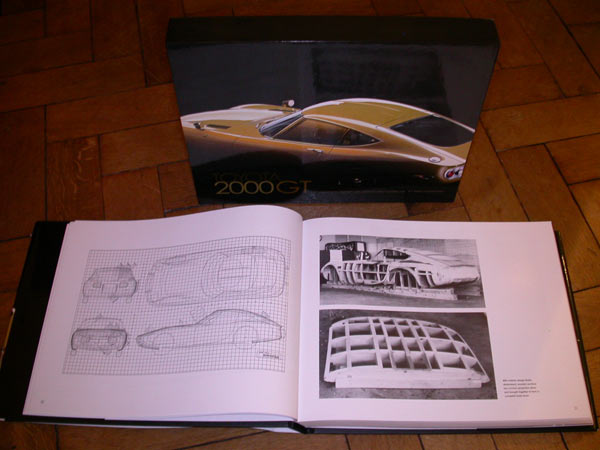
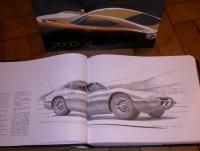
More:
-
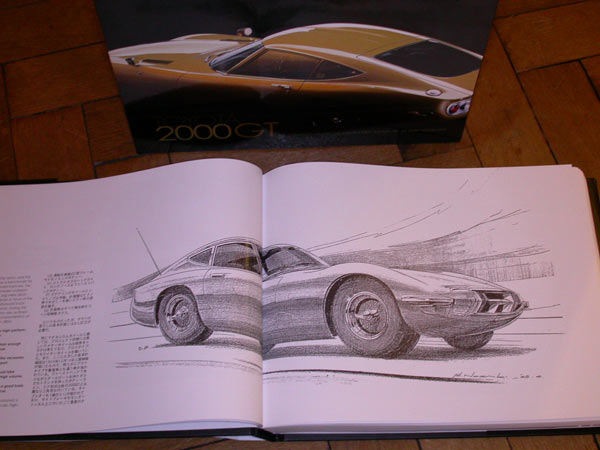
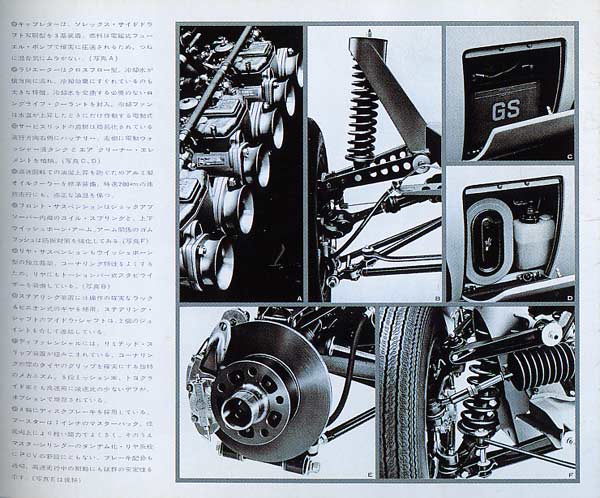
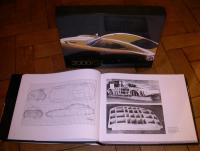
Nice combination of Japanese and English text, with great drawings / illustrations:
-
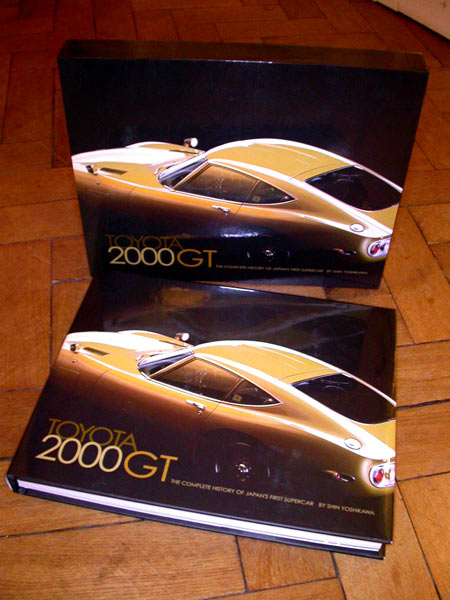
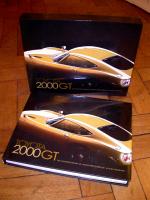
I've been harping on about this book so much that I thought I should give you a peep at what it looks like. Its fairly hefty, with a really nice slip-cover:
-
When I asked the same question, I was told that one was for sandwiches and the other was for the drinks....... One is for the battery, and the other houses the air filter box and the windscreen washer bottle:
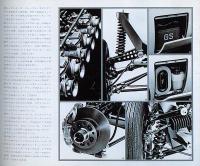
-
Ben, I know a bit about them ( been a fan for a long time ), but the Shin Yoshikawa book has been a real revelation. Most of the stuff I wrote above comes almost verbatim from his book.:classic: If its too expensive for you, at least try to get a good look at it in a bookshop or library. The prototype and racing sections are fabulous. I know you like that side of the story. One day I'd like to see a book of the same depth and quality on the S30-series Z. Unfortunately, the situation at Nissan and the fact that many of the major players in the story are no longer part of the organisation means that this will probably never happen. www.driversdoor.com DriversDoor Inc. produced the book. Maybe its cheaper in the USA than it is in Japan ( where I bought it ). Alan T. ps - sorry, I don't know why "access is restricted" to their site, but any sales enquiries could be directed to the publishers at: kai@frazmtn.com
-
Hi Kats, Nice to see you posting here again.:classic: The 'normal' production Toyota 2000GT was coded "MF10", and this model was made in both RHD and a few LHD layouts. Right at the end of production of the MF10, Toyota had a try at making something more suitable for the USA export market. This was coded "MF12L", and it is this model that carried the bodywork and trim differences that can be seen in the photos, although the chin scoop was also seen on some MF10 cars that ( like the MF12L ) were fitted with air conditioners. The engine of the MF12L was the Type 2M-B ( an SOHC 2.3 litre design that was usually fitted to the Crown R ). This engine produced 10BHP less than the DOHC 2 litre type 3M, but gave 18lb-ft more torque. The MF12L was heavier than the MF10, and had a lower top speed. Toyota figured that the SOHC engine would be less of a challenge for overseas dealers to service and repair, and the extra torque and unfussed power delivery of the bigger engine would be better suited to the requirements of the USA market. Less than ten MF12L models were actually built. Toyota realised early on in production that a cheaper version would be better suited to the USA export market, and developed a prototype called the "390A". One of the first things to be binned was the complicated and expensive retracting headlamp system, to be replaced by an incongruous pair of bugeye lamps, and the other front and rear lamps were also changed to suit coming USA laws. The dash was simplified into a one-piece plastic moulding, and many other cost-saving efforts were made. The 390A was - perhaps mercifully - never approved for production. The whole story of the 2000GT from beginning to end is a real education, and its easy to see that Nissan learned a lot from Toyota's 'mistakes'. Many parts of the story have parallels with the story of the S30-series Z cars, but with Nissan taking a different philosophical approach ( that Savile Row suit / Levis 501 comparison ) and aiming for maximum sales by keeping costs and therefore retail price low. The 2000GT was a great car, but born at the wrong time......... Kats, that USA collector you mentioned is probably Mr Craig Zinn of Florida, who has a big collection of the cars. Bob Tkacic and Peter Starr are I believe the USA's most prominent 2000GT specialists and restorers. I can't recommend the Shin Yoshikawa book highly enough. It costs a fortune, but in my opinion its worth every penny. Alan T. ps - I forgot about the Handbrake / E-Brake on the Toyota 2000GT. An umbrella handle sticking out of the dash. Bloody awful thing to use!
-
Hi Ben, Yes, they made LHD models and many of these were exported to the USA. Shin Yoshikawa's book gives details on the export market cars and where they were originally sent to. There are some serious 2000GT collectors in the USA. Some of the Shelby-run race cars still exist - in the hands of USA collectors I believe. We used to have a few here in the UK. One of them originally belonged to 1960's fashion model 'Twiggy'; it was given to her by Toyota as a present for promoting the 2000GT in Japan. That car eventually went to the States I believe. Almost all the other UK cars went back to Japan over the last decade or so, and there are only a handful left over here now. Alfadog, I couldn't agree more with you about the convertible. It just looks wrong. Alan T.
-
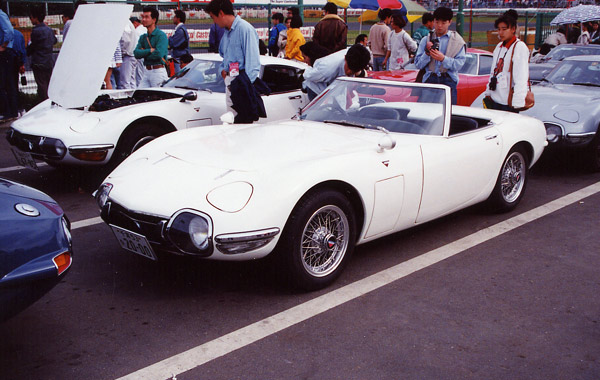
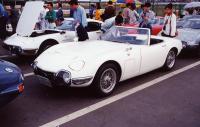
Here's the car that was going around ahead of us. It was a replica of the convertible in "You Only Live Twice", and it was very well done. I always prefer coupes though......
-
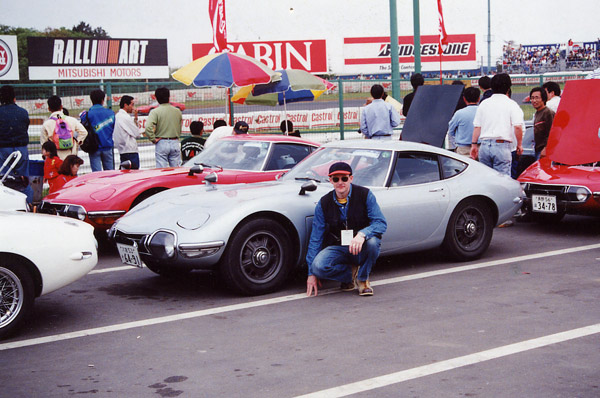
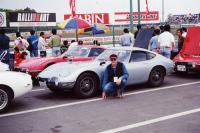
This thread got me enthusiastic. I went digging through lots of old photos. Here's one of me with the car I drove around the Tsukuba track:
-
Yes, back now - but not entirely 'at home', if you know what I mean. I think my body clock is still in another time zone. I keep waking up at 4am. I'm glad others on here have seen a 2000GT in the metal. They really are quite small and delicate looking. I'd describe the 2000GT as a Savile Row suit of a car, with an S30-series Z more like my favourite pair of Levi's 501 XX jeans. I'd feel comfortable in either, as long as they fitted the occasion. Alan T. :classic:
-
Could do. Would need - at the very minimum, and off the top of my balding head - 12 categories at least? Is it even possible to set a poll with that many categories? I think a few of the categories will have less than one vote, and would only be there for politeness:ermm: Alan T.:classic:
-
Truth be told, Goertz had just as little real input into the Toyota 2000GT as he did with the S30-series Z. He has been credited with penning the A550X ( the Yamaha / Nissan collaboration that Yamaha later showed to Toyota ) but the A550X was nothing more than a reference tool for Toyota when they were putting together their plan for the car that became known as the 2000GT. Satoru Nozaki was the designer / stylist, Hidemasa Takagi was in charge of engine development, Shinichi Yamazaki was in charge of chassis and suspension development, and Shihomi Hosoya was assistant designer and a very competent development driver. It is Nozaki who should be given credit with the looks / style of the "2000GT", from Yamaha YX122, 280A, 390A, 460A prototypes and 311S racer, through to MF10 and MF12 production cars. The 2000GT was never really in direct competition with the Z, as it was first put on sale to the general public several years before the Z and hit its peak production well before the Z too. They were two quite different automobiles, with different philosophies behind them. I've been lucky enough to see many of these cars in Japan, and have even had the opportunity to drive one around the Tsukuba race circuit. The 2000GT was a fantastic car, and would be VERY high on my personal shopping list if I had the kind of money that is required to buy one of them these days. In my experience they are quite often slated by people who have never driven one, and in some cases never even seen one in the metal. I heartily recommend Shin Yoshikawa's excellent book "Toyota 2000GT", published by KAI, with ISBN number 0-932128-10-6. Hell its more than a book - its a positive bible on these cars. Alan T.
-
Some Fairladies were 'Fairlady 240Z's', but not all of them......... Probably the only really foolproof way of referring to ALL of the 'first generation' Z cars with one catch-all label is to do what Nissan themselves did, and call them all "S30" series Z cars. Nissan even uses the "S30" type name for the Japan-only 'S31' VIN-prefixed cars. To Nissan, anything pre S130-series is an S30 ( including the S31 ). The problem - as I see it - is that many people refer to the "240Z" are the 'original' Z, when in fact this is only half the story. I had a conversation with the guy who rents one of the garages next to mine a few weeks ago. He looked at my Fairlady Z-L project car ( a bare painted body, up on jackstands ) and sucked through his teeth. "Looks like a big job" he hissed pessimistically, "what is it?". "A 1970 Fairlady 240Z-L" I replied, "and I'm turning into a replica of a Fairlady Z432-R". His face was blank. "What's that then?" he said, "it looks like a 240Z". "I can see why you might say that" I replied, "they were brother and sister, but technically different models of the same basic S30-series type Z". He looked slightly confused for a moment, and then a spark of recognition lit up his face; "So its a 240Z, but different!" he exclaimed triumphantly......... Although only relevant to a few members here, it would be nice to see a list that was a bit more comprehensive and included models that were not officially sold outside Japan ( but nevertheless did exist. Some of these cars found their way outside Japan through private channels. I own two of these orphans. I believe there are other members here who have cars that would not fit into the list as it now stands. My 1970 Fairlady Z-L ( 'S30' VIN prefix ) certainly does not fit into the list. Its most certainly NOT a '240Z'. However, the '240Z' and the Fairlady Z-L are both 'S30-series' Z cars..... My 1971 Fairlady 240ZG is ( technically ) a '240Z', but its perhaps not what most people would think of when they hear or read about a 240Z. Summing up? Its a quagmire! Not all Fairladies are Z's. Not all Z's are Fairladies. Not all Fairladies are Fairlady 240Z's. The permutations are endless:dead: Since the debut of the Z33 ( notice I didn't write '350Z' ) I've seen many journalists comparing them to the "original 240Z". I guess its just a matter of perspective, but it would be nice to see a well-informed journalist comparing to the "original S30-series Z". Too late now I suppose... Alan T.
-
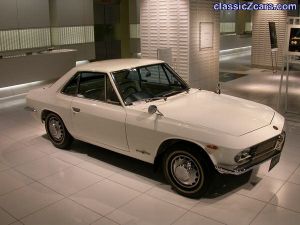 Older, but not necessarily wiser:p
 -
 Crikey Lachlan, you made a great job of that! Looks excellent.