Carl Beck
Community Member
-
Joined
-
Last visited
Everything posted by Carl Beck
-
I used to have American Collector many many years ago - so I don't know what they do today. First let me say that in all too many cases the Agent selling the insurance - misinforms the potential customer by saying things like "you are limited to 2500 miles per year" or "you can't drive the car more than 2500 miles per year" - just to weed out real Collectors with Classic Cars, from Enthusiasts that plan to drive their cars "almost" every day. Some Agents say these things - but when you read your Policy you will normally find that there is no specific mileage limit placed on the car. Always Always keep in mind that what the Agent says is meaningless - what is written in the Policy is what defines the coverage provided and the limits on the cars purpose/use. All that said - I have used the Hagerty for many many years now. They will tell you that most of the time the cars they insure are rarely driven over 2,500 miles per year - but that mileage alone is not a limit. If you drive it over 2500 miles one year - no problem. The restriction is that the car must be used for pleasure use only, NOT FOR DAILY TRANSPORTATION, nor to use as a temporary substitute for daily transportation... Classic Car Insurance is relatively inexpensive - and really IMPORTANT for our old Z's - as they provide excellent coverage with an Agreed Value at very reasonable prices. Get your Policy and go over it with your attorney if possible - see what it says... If your not happy with the Policy, switch to another carrier.. Personally I always recommend the Hagerty and they love our old Z's... FWIW, Carl B.
-
Hi Paul: At least one of the problems is - you drive it like an old lady:stupid: If you want to accelerate when you are running along at 3800RPM - DOWNSHIFT!! and run that puppy up to 6,500 RPM before shifting... While the L24's have plenty of low end torque, they really don't wake-up and run {come fully onto their power band} below 4000-4500RPM. 4500RPM shifts are fine in stop and go traffic in first and second... When you hit the freeway on ramps you should be running it up to 5500-6000RPM in the lower gears - just to keep the carbon from building up on the tops of your pistons. In my personal experience the harder you run an L16,18,24,26,28 the better they run and the longer they stay on the road. I've never seen one of these engines hurt by running them at anything below 6500RPM. FWIW, Carl B.
-
Hi Joel: A list doesn't exist - and it wouldn't do you much good unless you already know what the parts looked like to begin with. Your best bet is to take a lot of digital pictures showing all the details of the car - and post them here for review/comment. This group can tell you just about everything that is right/wrong with the car. You however have to get clear pictures that show every aspect of the car including the undercarriage... FWIW, Carl B.
-
Hi Kats: Off hand, I do not believe that a smaller diameter output tube on the L20 tank, would by itself have an adverse effect on the triple carb set up on your S20. A smaller output tube running from the tank to the electric fuel pump, combined with a fuel pump that was weak {or under performing} - could certainly adversely effect the performance of the S20. The triple carb's need to be feed fuel to their fuel input line at 2.5 to 3 psi. The size of their {the carbs} fuel input , combined with the fuel pressure specified - determines the total volume of fuel needed to keep their float bowls full. As long as the electric fuel pump at the tank, could provide enough fuel to keep the 432 fuel lines at the engine pressurized at 2.5 to 3 psi - - the engine should perform to specification. If the electric fuel pump was not able to maintain a fuel line pressure of 2.5 to 3 psi - - then the S20 engine would not perform to spec. Using a fuel line out of the tank to the fuel pump - one size smaller than needed would make the fuel pump work harder, but it should have been able to overcome the minor restriction and still supply enough volume to maintain the needed 2.5 to 3 psi - on the output side of the pump. It is possible that the fuel pump simply did not have enough margin or performance range {ie it just wasn't strong enough} to supply the needed volume of fuel at full throttle. Tthe only way you would know for sure if the pump was supplying enough fuel - is if you had a fuel pressure gauge in line with the carb's - that you could see while making a full throttle run. Second way of telling would have been to make a full throttle run with the car - then pull the spark plugs and see if they were indicating a lean mixture. Third way of telling would have been to install a wide-band CO2 probe in exhaust system - hooked to an Air/Fuel Meter. At any rate it sounds like you have already solved the problem - even if we don't know for certain what caused it. The pictures of the fuel tank are very interesting, and it looks like the shop did a great job. Thanks for sending them along. Interesting to see that the shop cut an access hole in the top of the tank, then welded it back up. FWIW, Carl B.
-
Hi Mike: You got a DEAL on that one~~!! Haven't heard any more from Gayle about the reproductions. I sent her pictures of the one I have last year. BRE does have a newer style BRE Jacket that they sell, so maybe they gave up on the reproduction.. FWIW, Carl B.
-
Actually the cloths pins were there to hold the metal fuel line out away from the metal on and heat of the engine block and/or intake manifolds. Wood doesn't really absorb heat nor conduct it away very well.
-
Get the car running. Drive it for a few hundred miles... then repeat the test. If it hasn't ran in two years and wasn't near normal operating temp.'s a compression test will actually tell you nothing.. FWIW, Carl B.
-
Fouled with what? Carbon, Oil, Wet Gasoline? Carl B.
-
08214-82810 STUD-M8x1.25 MANIFOLD (this is all other studs, than the two listed below) 08214-83510 STUD-M8x1.25 MANIFOLD Engine Slinger (this is the one your asking about) 08214-83210 STUD-M8x1.25 MANIFOLD YOKE (this is the front stud-as I recall it is the shortest) FWIW, Carl B.
-
Odd to see a 72 918 car with a Black rather than White interior.. This car was on E-Bay 10 Oct 08 -with a BIN of $21K All depends on the quality of the repaint... Shame it needed to be repainted with only 31K miles... FWIW, Carl B.
-
Hi Rich: That is simply beautiful... what a jewel you have there. Looking at the picture - I would highly recommend that you get a new set of Tension/Compression Rod bushings and replace the originals. The originals look to be very cracked... The Tension/Compression Rod plays a critical role in the stability of the front suspension. Left worn and not doing their job, puts a great degree of additional stress on all the other components of the front suspension. The T/C bushings are very easy to replace and I'm pretty sure you can still get them from the Nissan Parts Dept. FWIW, Carl B.
-
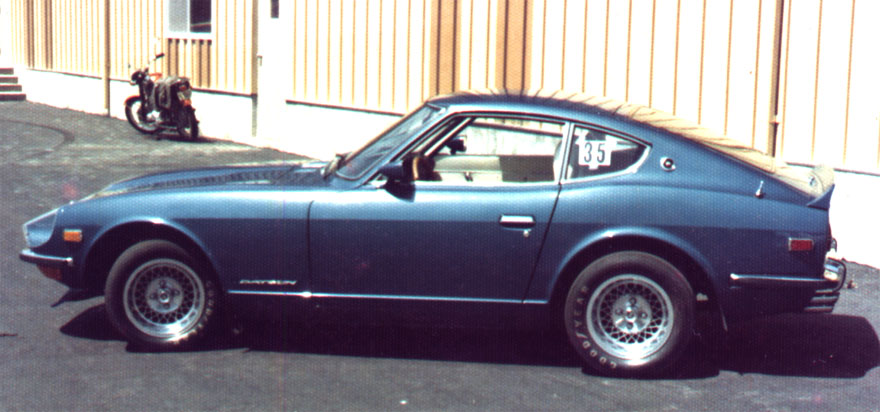
I'll bet that the Previous Owner really appreciates your publishing that picture of himLOL Here is a picture of my 72 when we ran {AIR} 14x7 Appliance Wire Mesh wheels on the front and 13x8's on the rear with Goodyear Bluestreaks for auto-cross duty. The 13's on the rear were short enough to clear the lower spring perch on the stock strut... and they lowered the overall gearing... It was really fun waxing the 911's and Corvettes on the weekend... I don't have any pictures of my hair style from that period:finger: FWIW, Carl B.
-
Arne has made a real science out of what is or what is not a real Appliance wheel... We should accept no substitute... Kind of like what is or is not a real "Libra" by American Racing... Glad I said "are commonly called".... rather than "those are". Nonetheless that is a great site for wheel references pictures ZWOLF... FWIW, Carl B.
-
Gee.... a mile - - who makes them? One Mile = 1609m / 5280 ft. According to CIBIE their light patterns are: CIBIE OSCAR 460mtr / 1509ft. Super OSCAR 750mtr / 2450ft. OSCAR XENON {HID} 1200m / 3937ft That may very well be true. Not to be picky but a few extra comments. I'll just add that we should not confuse terms by comparing halogen headlights with sealed beam headlights. Today - both replaceable bulb and sealed beam type halogen headlights are legal and available in the US. Both sealed beam and replaceable bulb type headlights are made by Cibie and Hella as well as others. No question in my mind that the replaceable bulb type headlights from CIBIE/HELLA come with better reflectors and higher grade directional glass. The question is; "how much better do you really need and is the extra price worth the extra benefit?" The halogen headlights offered in a sealed beam format in Auto Parts Stores are about $18.00 each and they offer a pretty good upgrade to the original headlights on our Z's. Hella for example offers a sealed beam halogen headlight at around $49.00 each... The replaceable bulb types - with the better reflectors and lead glass directional lens are around $75.00 each. Of course both CIBIE and HELLA offer less expensive, and lower quality units in the $45.00 each range as well. Sadly today just because it bares a known brand name, doesn't mean you are buying "the best". You also want to assure that the units you are buying are made for use in your country - the directional lens are cut for either "Right Hand Drive" or "Left Hand Drive".... {so watch what you buy on E-Bay}. FWIW, Carl B.
-
This is a very common problem with our now 36+ year old Z's. All the rubber fuel lines age and crack, that includes fuel feed, fuel return, fuel filler as well as all the rubber hoses that run though the passenger cabin for the Fuel Vapor Recovery system. Then there are leaks around the rear hatch due to aged/cracked hatch seals, tail light seals as well as body seam sealers that are cracking. Not to mention rust holes that have not been properly fixed in the past... Exhaust leaks under the car, or a overly rich fuel mixture, or float bowls that overflow.... All these items can be fixed and the truth is that ALL of them have to be fixed to eliminate the odor in the car... FWIW, Carl B.
-
Appliance Baskets or Appliance Wire Baskets is what they are commonly called around here.. The "honeycomb" wheels were stock on the 81 280XZ as I recall.. but I wouldn't bet much on that.. FWIW, Carl B.
-
Sounds like you may have some crud in the fuel filter, or at the pickup in the tank. The car will start/run because the crud falls back to the bottom of the tank/or filter. Then the crud gets picked up - plugs the filter/or the pick in the tank and the car stops. Let it sit until the crud floats to the bottom again - and it will start... First thing I'd try is changing the fuel filter... With cars that have been sitting for prolonged periods, or cars that get a tank of bad gas.. it is easy to go though a couple filters in a hurry.. Just what comes to mind... FWIW, Carl b.
-
Hi Mike: Great... These Newsletters capture the spirit that used be associated with the Datsun Brand.. We we "Green" long before it was Politically CorrectLOL FWIW, Carl B.

-
Hummm.... If I'm thinking of the right seal - that square end is supposed to go over the metal on the door and under the stainless steel window frame. That is to say that the rubber is sandwiched between the two parts. If you trim it, and you don't have something between that window frame and the steel in the door - road vibration may cause the window frame to wear or knock the paint off the metal...and you can wind up having the rust come back. As I recall, I rolled the window down, then loosened to bolts that go though the door so that I could pry the window frame back just far enough to stick the rubber seal back over the metal door lip... FWIW, Carl B.
-
Ospho is a mild solution of phosphoric acid. DoD tests from decades ago and more recently repeated have shown that a phosphoric acid wash on steel is the most effective method of controlling oxidation while at the same time etching a smooth metal surface. By a chemical action phosphoric acid converts iron oxide to iron phosphate. Iron phosphate is inert. It is important to allow enough time for the acid to complete its chemical action however, before cleaning any residue off. For bare metal that is freshly sanded, that can be as little as an hour. Then it can be washed off with water, dried and primed. Water??? Yes, a water wash will not cause rust to form on top of a bare metal treated with a proper acid wash, followed by being dried off {blown dry with compressed air or dried with a heat gun}. You just don't want to leave an acid residue under your primer/paint. Other than the epoxy primers, automotive primers are not vapor/moisture barriers. Nonetheless if you washed the metal down with Ospho, then primed the surface - 3 weeks should not present a problem if the car was not subjected to rain or sitting outside going through thermo cycles. Matter of fact you want to allow time for any "bondo" type epoxy body fillers to completely cure/dry. {meaning all chemical action has stopped between the hardner and filler}. When you see body fillers bubbling up under a paint job - - six months to a year after the work was done - highest chance is that the body filler wasn't allowed enough time to completely cure in the first place. FWIW, Carl B.
-
Looking only at the video - still looks like $6K is cheap...If you just wanted a nice Z to drive and enjoy.. it would be hard to do better back East. Looks like the car was originally silver -and the engine bay looks clean at least.. Of course you would have to see the quality of the paint job in person.. FWIW, Carl B.
-
Import Tax.... Duty and Taxes???? What happened to free trade?.... FWIW, Carl B.
-
Hi Mike: Interesting question. The first set of wheels that I have, had been coated inside with something. It was kind of a greenish gray, and looked like an epoxy. I assumed it was done to keep the air in, so I did not remove it when I bead blasted the exterior. The second set that Les found and shipped to me, had been blead blasted already, and who ever did it blasted the interior of the wheels as well.. So I don't know if there had ever been anything on them. I painted the inside of the wheel that I used for the spare with POR-15 before mounting the tire. Your 15" aluminum wheels look GREAT! I'm sure you'll be much happier with them for street use. FWIW, Carl B.
-
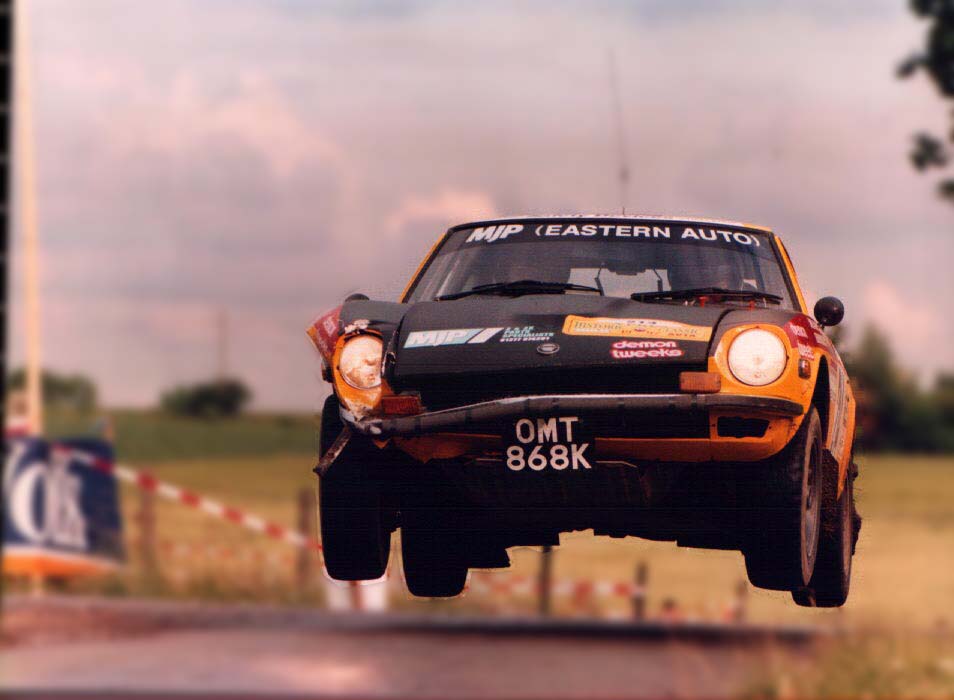
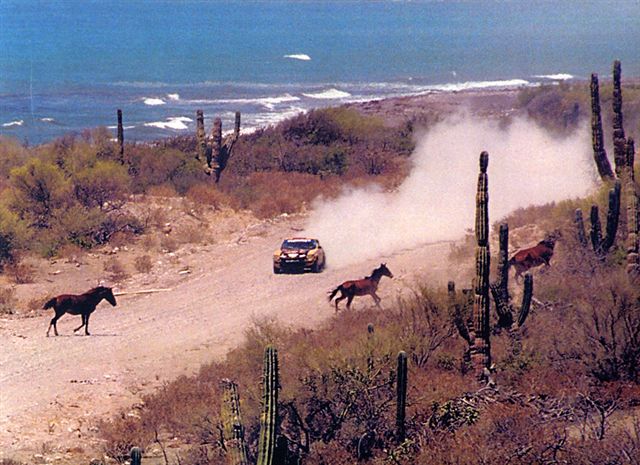
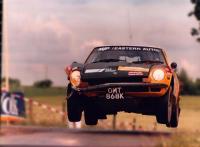
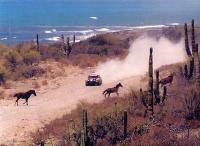
Are you thinking of this picture? {see the one on the Left below} It was taken at the Ypres Rally in Belgium. {thanks to James Morris for sending it} OR PERHAPS: Kevin's Yellow/Red 240Z may look familiar to some in the U.S. Could be you think you saw it racing here in the Pacific Northwest, or maybe running the Panama-Alaska Rally in 1997... There is a reason for that.... Kevin's Yellow/Red 240Z was originally owned by Robert Trinder. Robert left England about 23 years ago to move to Canada. Robert then bought a former Road Race 240-Z and prepared it for Rally duty. He kept the same color scheme as he had before. It was entered in a few Stage Rallies and then Robert and Scott Trinder ran the 1997 Panama-Alaska Rally with the car in vintage class finishing an impressive 6th overall. Rick Hintz bought the car in 98. Rick and Mark Swalley {Mark Johnson substituting} then used it in SCCA's Group 5 Rally Competition. David Birchall bought the car in 2005 and had plans to keep it in Rally trim... http://ZHome.com/Racing/RALLY/Hintz.htm Second Picture is Trinder's car on the Baja Stage of the Panama-Alaska Rally in 97. It JUST PASSED UNDER the nose of that horse!!! A tenth of a second later, the horse and Z would have been history. FWIW, Carl B.
-
Thanks for Posting this Alan. Amazing. I can truly appreciate the amount of time, the continual effort and seemingly endless supply of money that a project of this nature can consume. I know that Kevin enjoyed every second of it. Really nice article. Does anyone know if this Magazine is available on the News Stands here in the US? FWIW, Carl B.