HS30-H
Supporting Member
-
Joined
-
Last visited
Everything posted by HS30-H
-
Hi Carl, Naturally, collectors and enthusiasts of 'period' parts will put a premium on the items that are perceived as the most desireable, and it is usually the market that sets the level for this. You and I both know that. I'm part of that world just as much as you yourself are. I sometimes find myself paying a higher price than I would like for those 'must have' items, and I certainly would not wish to sell anything that is rare or difficult to replace unless I could either trade it for something else I need or get a good price to enable me to buy something else I need or want badly enough. In the case of Minilite wheels, it will be the most 'correct' and period-appropriate pertaining to the car in question that will be most in demand. A period-accessorised Escort Mexico, or indeed a 'Works' Type-49 shelled Escort Twin Cam would normally be seen as somewhat incomplete without a set or two of the 'correct' Mag Minilites. Therefore that kind of wheel ( in the correct size and condition ) can fetch a premium here in the UK. However demand outstrips supply, and serious sporting use of old Magnesium wheels can be dangerous. Therefore a set of the more recently-manufactured versions in either Mag or Aluminium are usually seen as perfectly OK, as long as they 'look' right. Of course, the older wheels are coveted by the serious collectors - but they are rarely used in anger. In many cases the new wheels are just as costly as the 'originals'. Whether new or 'original', one thing is for sure; they are not much use to anybody sitting in a box at the back of the garage.:classic: In answer to your questions, we come to the same impasse again; namely, what do you want to call the 'original production facility'? As I have stated, the original company ( founded by Mr Derek Woodton ) was called Tech Del. Ltd. - and their first wheels were the classic eight-spoke design called the "Minilite" which was made of Magnesium. Within a few years, an Aluminium version was also offered. So, the 'original' manufacturer did indeed offer both Mag and Ally versions of the Minilite wheel. When you talk of a 'buyout' its hard to know what or when you mean. As previously mentioned, Tech Del. Ltd. went through many phases of making money and losing money, and restructured at least once before the 1960's had finished. What is for sure ( and this is the point that I think you want answered ) is that they offered both Mag and Aluminium versions of the same wheel at least by the early 1970's. The Aluminium version is not a recent addition to the range............ They are a small and quite friendly company ( unless you were to accuse them of being impostors! ) and are quite approachable. If you want the real nitty-gritty I suggest you call them and ask them in person. The contact details are in my previous post. Alan T
-
Carl, If you want to argue it through to the enth degree, then you have to decide just where "Minilite" went out of business the FIRST time...... Like many British companies involved in the motorsports world in the 1960's and 1970's, they suffered from can't pay and won't pay clients - which sometimes led to the company needing to re-register or restructure in order to protect themselves. Some of these clients disappeared and some of them did quite well for themselves in the end ( take for example Mr Frank Williams - a well-known wheeler-dealer in the 1960's and 1970's - who just had a couple of cars with his name on them finish in first and second places in the French Formula 1 GP ). The "original" Minilite wheels ( 'Minilite' is a registered trademark ) were, as I said, manufactured by a company called "Tech Del. Ltd". The owner of this company - which was for many years based in Acton, west London - was Mr Derek Woodton, who was quite a well-known face in the UK motorsport world. Mr Woodton's company was restructured and re-formed more than once in the Sixties - let alone in the Seventies - so if you want to talk about the 'original' company you are really only referring to a paper identity registered with Companies House here in the UK. As I said before, the manufacturer of the original Minilite wheel was Tech Del. Ltd. - and that is the name of the company that still makes them. They have all the original drawings, blueprints, rights and history of the Minilite range of wheels, and they have the blessing of Mr Derek Woodton. They have a direct descendancy from the 'original' company ( regardless of how many times that company have had to restructure or re-register ) and therefore they are the closest thing possible to being the manufacturers of the original Minilite wheel. It seems silly to argue the toss as to whether this is the 'original' company or not. This is not a situation where a new company has sprung up to make use of a dormant brand name or revive a long-dead design. This company is part of the Minilite family tree. Alan T.
-
Hi 240znz, Sorry - I'll sort out my PM box ( didn't realise it was full ). I think the seller has mis-described the number and that you are correct; it will almost certainly be "HS30-00352". I think you will find that its true date of manufacture was very early in 1970 rather than late 1969. RHD cars were indeed made in 1969, but an HS30 in the mid three-hundreds is going to be a 1970 for sure. Hope it turns out to be good enough to buy. Let us know how you get on.............. Good luck! Alan T
-
A small Corsican gentleman by the name of Napoleon had quite a lot of success a little while ago, which these jokes of French military victories seem to forget. He led the French army to many victories, and it took quite a while for the rest of Europe to get him under control. Many of the streets and squares of Paris are named after Napoleonic victories............... One of his big mistakes was to over-extend himself by pushing deep into Russia and stretching his lines of supply whilst the weather closed in on him, a mistake repeated by a certain Austrian with a distinctive moustache in the middle of the last century. This could be a good lesson for any large country or coalition that thinks it can fight on several fronts at the same time, and still keep its lines of supply going. Alain T.
-
The original MINILITE wheel was made by a company called "TECH-DEL LTD." just down the road from me here in west London. They still exist, but they have moved further west to Taunton in the county of Somerset. Minilite UK website Alan T.
-
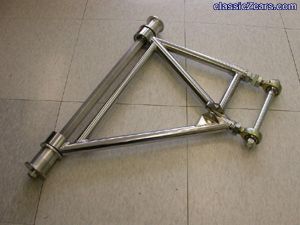 I got these in for somebody else, but they were so well made that I could not resist sticking a pic or two up here. Bit pricey though...........
 -
From the album: Fairlady 240ZG ( HS30-H )
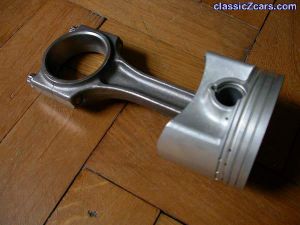
89mm Piston on 138mm Con Rod. -
From the album: Fairlady 240ZG ( HS30-H )
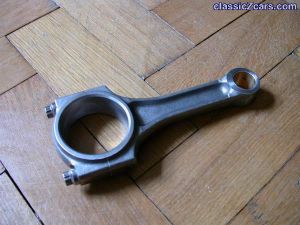
138mm Con Rod. -
From the album: Fairlady 240ZG ( HS30-H )
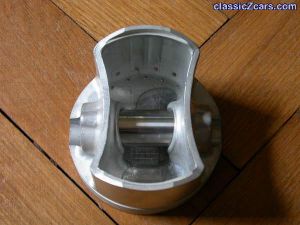
89mm forged piston. -
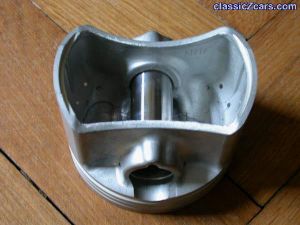
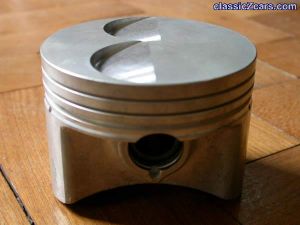
From the album: Fairlady 240ZG ( HS30-H )
89mm forged piston. -
From the album: Fairlady 240ZG ( HS30-H )
89mm forged piston. -
From the album: Fairlady 240ZG ( HS30-H )
Fabricated rear suspension wishbone. Made in Japan. -
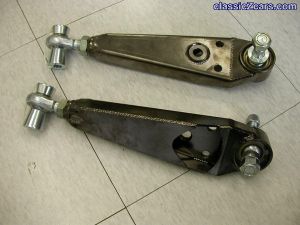
From the album: Fairlady 240ZG ( HS30-H )
Fabricated front TCAs. Made in Japan. -
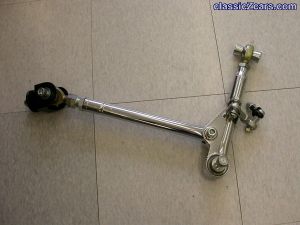
From the album: Fairlady 240ZG ( HS30-H )
Fabricated front TCA and Compression Rod. Made in Japan. -
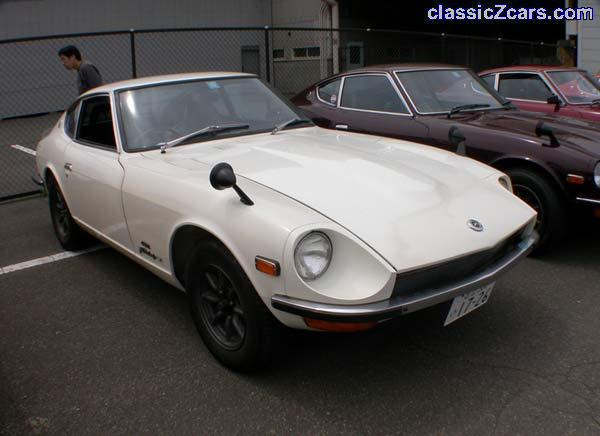 Hi Ben, I think the size on this particular car are indeed 6j, but they might well be 14 inch rather than 15. The 15 inch would certainly give you a better choice of tyres right through the range of widths, so would be the best long-term choice. Good luck.
 -
Sven, I suggest that you, Philip and mull get together and get your own back on That Ozzy Guy..................:devious: Alan T.
-
Hi to Sven ( mull ) and welcome, We don't have all that many cars over here in the UK, but we have quite a lot of useful parts that are left over from dead cars ( ! ). That may be useful for you in the future. Actually there ARE some good cars over here, but you do not see them advertised for sale very often. Many of them change ownership without even being advertised. And of course, many of our cars here are RHD. That may be something that would be inconvenient for you in a country full of LHD cars. One thing to bear in mind is that 5-speed transmissions and 3.9 ratio diffs are still very plentiful over here - so if you do get an American car that has not been converted, you know where to look. I'll e-mail you with some information on cars for sale here, just out of interest. Maybe importing a car already in the EC would save you quite a lot of money? Anyway, welcome and good luck. Alan T.
-
Hi Z Kid, I think the Navigator is probably not waving, but holding on for dear life. I don't know about this particular car, but some of the Works cars had a grab strap on the roof panel edge above the door. It was usually fitted according to the Navigator's personal preference. Don't forget that the Navigator had a really important job to do in calling the pace notes / maps for the driver. I should imagine Billstam is steadying himself with one hand and holding his notes with the other. Looks like the car is set up in a pretty fast drift down a ( Welsh? ) forest stage, which must be pretty frightening! Hi Guus, Old Woking Service Station no longer exists as an actual company, I believe. I drove through Old Woking a few years ago ( its just a short drive away from the old McLaren International HQ in Woking ) and could not find the original buildings. They might be still there, but I did not see any old signs or other evidence of the original garage and workshop. However - as I say - the family still live relatively locally I believe, and Gary Hicks still owns the car. The story behind the different spec. of the front quarters and indicators is that they would not pass the UK's Ministry of Transport regulations for lighting ( the indicator postion was too low for UK law ). This apparently caused a hold-up on imports while a redesign was carried out at the Factory for parts to attach to UK-market cars. As far as I know, this DID indeed only apply to the UK-market cars, and was specifically caused by the need to comply with the UK laws. All the best, Alan T.
-
Hi Guus, Nice photo! Did you know that particular Works car ( originally Japanese-registered as "TKS 33 SU 4079" ) still exists? Its here in Southern England, and it belongs to a family member of the "Old Woking Service Station". On the '73 RAC it was fitted with the LY "Crossflow" engine and Nissan ECGI fuel injection system, giving roughly 255 BHP. Old Woking Service Station ( the base for the Works team while they were in the UK ) acquired the car from Nissan after the RAC rally, and it was re-registered in the UK as "LPE 66P". It went on to do many other UK national events, and took part in the 1975 RAC rally too ( driven by Kevin Videan ). Your photo shows an interesting detail of this car, in that before the '73 RAC it was fitted with the UK-type of lower front quarters, with their lack of cut-outs for the indicator lamps. As can be seen, the UK-type of front indicators ( usually mounted on the top of the front bumper ) were attached to the 'Drop' bumper uprights. The car is still fitted with its LY engine, but the Injection was replaced long ago by a set of Mikuni carburettors. Alan T.
-
I think they look great until you see human beings sitting in them. Soon as a normal sized person sits in one it starts to look a little claustrophobic in there. Are the seats too far away from the floor or something ( or are all the drivers I see in them just sitting on their inflated egos? ). Give me the Coupe over the Roadster any day, though. The Coupe is also about twice as stiff torsionally and has consequently far superior handling. I love 'em, but if I was lucky enough to have one I think I'd want to look like I was sitting in it rather than on it. Alan T.
-
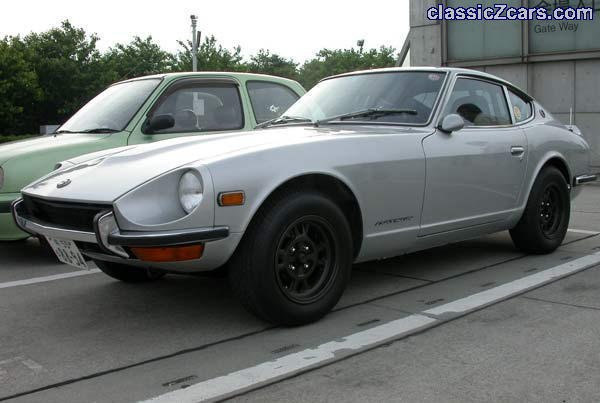 Hi Ben, Yes - actually they are a set of the ( very expensive ) Japanese aluminium replicas of the Works "Rally Mag" wheels made by Kobe Seiko. Owner of this car is Mr Makoto Suzuki, and he has modified it to his taste ( note the "Datsun" emblem, front bumper over-riders and Sebring mirrors ). Engine is a really nicely set up 2.6 that loves to rev. Cheers - Alan T.
 -
Hi Zedrally, The early Sports Option roll over bars and the Works-modified versions of them were initially only a 'hoop' type. They mounted at the location shown above, and also had two 'drop' bars that came down from the hoop to the rear floor at a slight angle ( backwards ) - making them in essence a 'four-point' cage. These located into special brackets that were bolted into captives that had to be brazed into the floor. Yes - you could call this a 'half cage' and it really isn't very safe by modern standards. Proper cages that had bars over the doors dropping down to the floor just before the dash ( with a little kink to follow the dash ) - making them six-point cages - did not come until '73 on the Works circuit race cars, and even later than that on the FIA Rally cars. Alan T.
-
Hi Kmack, I have been looking around for a long time for either a genuine Sports Option roll-over bar, or an accurate replica of one. Any genuine ones that I saw in Japan were MEGA expensive ( they are really very sought-after ) and the replicas were nothing like as good as the originals. Therefore I have been collecting data to make my own, and have been able to use a genuine Sports Option bar and mount kit as reference. The finished item will go in my 432R replica project car. If you want me to e-mail you more detailed pics and specs for the genuine item, then drop me a PM with the mail address which you would like me to send it to ( there are quite a few pics ). It might be useful reference for you if you want to make your won version. Best regards, Alan T.
-
Since these captive nuts were welded onto the panel BEFORE the bodyshell was put together ( impossible to weld them into a closed-off panel ), it means that Nissan Shatai would have had to have had TWO piles of panels; one type for markets that did not get the Sports Option list, and one type for markets that did. I'm not surprised that they chose to attach them to ALL market panels, as it would solve any possibility of mix-ups at the same time as allowing the use of the Sports Option roll over bar should anyone wish to fit one at a later date. Sure they COULD have been used as body fixture mounts, but next time you have the trim off a car you might like to have a close look at them. Notice that ( usually ) the nuts have been painted in the same grey panel primer as the inside of the panel ( suggesting that they were on there when the primer was applied - probably when the panel was sub-assembled and closed off ). Notice also that this primer can sometimes be seen to have covered the thread of the nuts ( it has on several that I have looked at ) and that any fixture bolted into these after priming would surely have taken some of this out ( no? ). Note also that the body colour paint ( car interior side ) usually covered by the trim under the quarter window completely covers this are ( look at my first photo ). This means there could not have been a fixture attached to it while that paint was being applied. Carl, you are looking down the wrong end of that telescope again. You talk about percentages of Export and Domestic cars, but you forget that at the start of production these percentages were NOT a foregone conclusion. We know that they were HOPING to sell a great number of cars to the US market, but they did not KNOW that it would be that kind of percentage. Hence a number of details that were perhaps not totally necessary on the Export cars were carried onto the basic design and shared by all models. If you want an example of this, take a look at the extra windsreen wiper mount holes pressed into the panel that holds the windscreen wiper spindles. Configured for use in both LHD and RHD wiper orientation. What were those percentages again? I suggest you also look at the rear wishbones for evidence of the rear anti-roll bar end link attachment points, as your early US market cars were not actually fitted with rear anti-roll bars, but I believe they still had the hole and spot-welded strengthener. But why are you even approaching the subject in this way? There were LHD Works FIA rally cars that used the Sports Option roll over bar, so the mounting holes certainly do NOT form any kind of ammunition for a LHD vs RHD argument. If the captive nuts in question actually did get used as mounts for a jig or production line fixture, then that is of great interest. I want to know what every detail on these cars is for. What is without doubt is that they WERE used to mount part of the bracketry that supported the Sports Option roll over bar in the shell. Its a good and very strong design ( for the period ) that considerably beefs up the centre of the shell. I can't think of any other model of car that used captives already in EVERY shell as mounts for a Factory-supplied Sports Option roll-over bar. Alan T.
-
Fantastic new information, Kats - thank you! I don't want to dwell on it too much - but thank you sincerely for your encouragement to me. You do a very good and important job of raising awareness of the Export models in Japan, and I have great respect for that. We are both trying to achieve a balanced perspective, I think. It pains me when people call the RHD cars ( and the Domestic models in particular ) "irrelevant", as its clear that just as much effort went into them as the LHD models. Those photos of production charts that you supplied for 1969 ( Japanese calendar year Showa 44 ) are things of wonder to me. Its so good to have an official document to back up those figures from Nissan Shatai that were in your first post. I think that the figures speak for themselves. Regarding the Steering Wheel and Horn Pad question, I have never had the opportunity to compare the differences side-by-side in my hands. However, I believe that ALL ( RHD or LHD ) Export steering wheels were the same, and changed at the same time too. I always believed that the Japanese domestic model difference was for ergonomic reasons ( reach ) and wondered about safety too. I always point out the extra seat brackets on the Domestic bodyshells ( not fitted to Export models ) that allowed the seat runners to be unbolted from the floor and repositioned further forward - essentially allowing a very short driver ( especially Japanese ladies ) to reach the pedals and other controls safely and comfortably. I think this is part of the same thinking. Matsuo san's combined rotary column switch / stalk is a thing of wonder too. One of the things that hit me when I first drove a Z was just how clever and convenient this was to use. I also saw and used the equivalent on many more modern Nissan models when I was living in Japan. Its a shame Matsuo san could not patent it. When I was living there, I also noted the regulation about switching from dipped headlamps down to sidelights when waiting at traffic signals or an intersection ( in order to avoid blinding oncoming traffic ) and I always thought this was a great idea. The rotary switch makes this operation just a finger-flick away. Excellent idea and excellent engineering. They last a long time too! Matsuo san's Citizen watch is a lovely story too. It is so typical of a man like Matsuo to appreciate the fine things, and to be inspired by good design and engineering and apply that inspiration to his own designs. The mystery lady with the prototype car photo is fascinating. I'm not sure if the photo is distorted, but the quarter window shape looks different from the final design, and possibly the windscreen rake also? There were a lot more of these clays and plastic prototypes than the previously published photos normally show. I am very very glad that Matsuo san has kept them, along with his original sketches for the body shapes. One day we will be able to give the team that designed, engineered and built the S30-series Z its true acclaim, and Matsuo san's collection will be valuable evidence for this. This is all very inspiring Kats. Sincerely - thank you. Alan T