


HS30-H
Supporting Member
-
Joined
-
Last visited
Everything posted by HS30-H
-
Just for the record part 2: I'm seriously offended at some of the comments that have been made on this thread. A couple of people that have made them are people that I thought better of, too. My original intention was to create a thread that gathered a bit of data on pedal stampings. I've been looking at pedal stampings for some time ( along with other 'dated' and identified items on these cars ) as I've always been fascinated by the array of outsourced component manufacturing companies, and the divisions within Nissan that produced the parts that were put together to make the cars. The stampings on the pedals are not very easy to decipher and it has fascinated me for some time as to what they actually signified. Maybe that's a bit too dry a discussion on its own, so I tried to create a thread with a little 'bait' in the form of a prize. I will still honour this promise IF anybody actually has identical stampings on BOTH pedals in their car. In hindsight ( after being accused of being a scammer and other sideways remarks ) maybe I should have just asked the question and not tried to 'motivate' people by offering them anything as an incentive except interest itself. I'm seriously pissed off to be accused of creating a "scam". I'm not very much enlightened about pedal stampings but I AM a bit more enlightened about some of the members of this site now. Alan T.
-
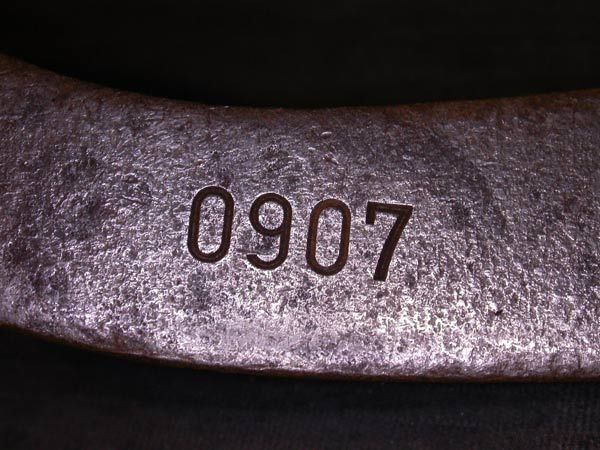
Great, now I'm being branded a scam artist:finger: Alan T. Just for the record, here's my other pedal:
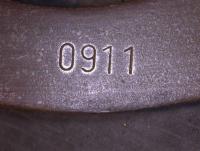
-
-
26th-Z, if its the same on both pedals then you have won already and we don't get any interesting letters and numbers from anybody else ( you spoilsport ). Automatics don't count. Sorry about that Enrique. I actually forgot all about the slush-boxers..............
-
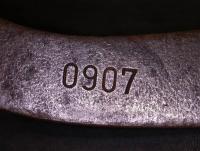
Hi bill, That's not 907 AD - that's day and month.:cheeky: No year was stamped ( I shouldn't think they were expecting to have 'stock' that was over a year old.......). Alan T.
-
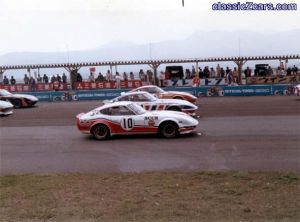 Uploaded here with Watanabe's permission / consent? Now they are all watermarked with THIS site's address and covered by THIS site's copyright.
 -
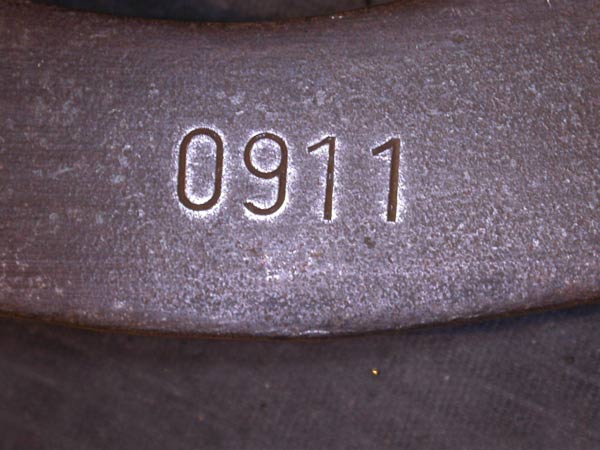
Who wants to play a little game with me? Its called PEDAL MANUFACTURING DATE BINGO and everybody who has an S30-series Z car is welcome to play. If you win, then you get a prize posted to you via Her Majesty's Royal Mail ( don't get too excited........ ) no matter where on this big old World you happen to live. The rules are set by ME ( you knew there had to be a catch, didn't you? ) but at least they are not biased to early or late, RHD or LHD or any other parameter. Just like real Bingo, this is a game of LUCK rather than skill or cunning ( unless you cheat ). Here's what you have to do. Get your head down inside your footwell ( watch out for the smell of doggy doos and any old cigarette ends ) and look at the numbers stamped into your Brake and Clutch pedals. They are on the side ( one or the other ) and usually about halfway down, or sometimes nearer to the pedal pad end. You should see FOUR numbers on each pedal. Make a note of BOTH Brake and Clutch pedal numbers. Now, here's the Bingo bit. Anyone who has EXACTLY THE SAME manufacturing date stamp for BOTH Brake and Clutch pedals wins the game. In the event of more than one player having the same numbers, the player who PROVES it first ( photographic evidence please ) wins the game. 99% of you probably can't be bothered, but for the sad 1% who can I'll make sure that your prize fits in with the car / year that you own. As the Bingo Caller, I can't win of course:classic: Alan T. Here's what you are looking for:
-
Report with video here:Ferrari vs Eurofighter
-
That's a nice-looking car, but I have no idea why its being described with the line "THIS IS THE FIRST OF THE GT-R'S....." The first GT-R was the 4-door PGC10, and the KPGC10 2-door Hardtop didn't come out until two years later. This car - as a GT / GTX is NOT a GT-R of any sort, despite the fact that it looks similar externally. Its had some GT-R lookalike parts put onto it but the GT-R shell was quite different in many respects. Like I said, nice car - but a slightly misleading line in the description might confuse a prospective buyer. Alan T.
No it doesn't actually. These photos are all ripped from the R.S.Watanabe website...................trumpet blowing.........
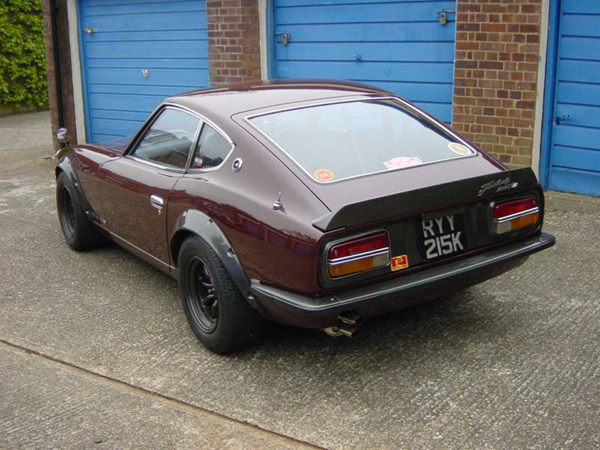
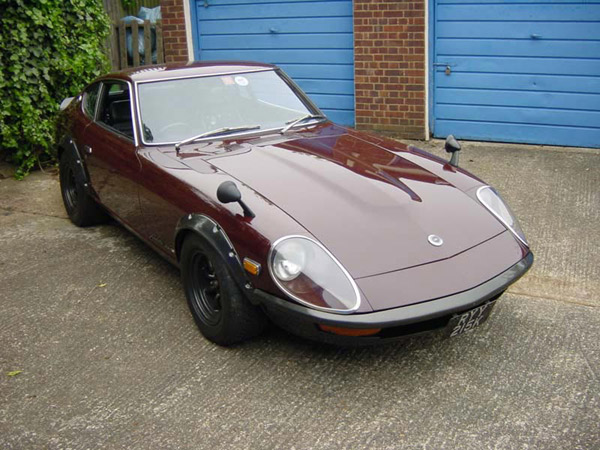
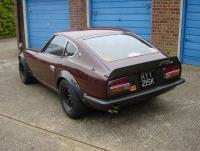 Do you mean the S30-series as a whole or the base-model Fairlady Z ( S30-S )? If you mean the S30-series as a whole then I'd agree with you, but in a worldwide sense the base-model S30-S Fairlady Z - especially unmolested and unmodified early production models - are certainly one of the rarer variants. There are not all that many early and unmolested Fairlady Z-L's out there either....... There seem to be plenty of relatively early HLS30 models knocking around ( a good handful of them over here in the UK, and I saw lots in Japan too ) so I can imagine why the REALLY early VIN numbers command a premium. I don't think I have seen many REALLY low VIN number RHD cars come up for sale recently, and somehow I suspect that something with a really early ( two digit? ) VIN RHD car in good to excellent condition would easily match any of the low-VIN LHD cars on the price it could command at sale. Condition would be the crunch factor of course. Exchange rates would come into play, and I know several countries where the value of the local currency would help to trump a US Dollar price. Of course, VIN number Bingo and any discussion of prices / potential value etc etc are purely in the eye of the beholder, and must be taken on a case-by-case basis. There's also the factor of limited production in the first place. I rather suspect that a genuine PS30-SB would win the limited production rarity award if there was one to be awarded. You could get into an argument about all sorts of parameters, but in my mind the 432R wins hands-down because it was an OFFICIAL Factory product that WAS sold to the general public and was also on display to the Japanese press at the preview event in October 1969, and on the Nissan display stand at the Tokyo Motor Show just a few weeks later. That particular car would be something of a Holy Grail for a serious collector and something of an icon that would deserve a place in Nissan's museum ( yet to be built ). I would also have thought that local-market dealer promotion editions would mainly be valued in the country or area of their sale? I don't know much about the American special-editions but I would have thought that they would usually fall into this kind of category? There's also the factor of the car's location in respect to its rarity. I know a little about this, as I own what we know is the only GENUINE Factory-built HS30-H ( Fairlady 240ZG ) in Europe. This makes it rare in its current location, but if it was taken back to Japan it would be quite a lot less rare ( although GENUINE ZG's - as opposed to fakes and replicas - are actually not all that common over there either ).
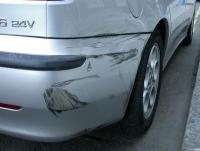
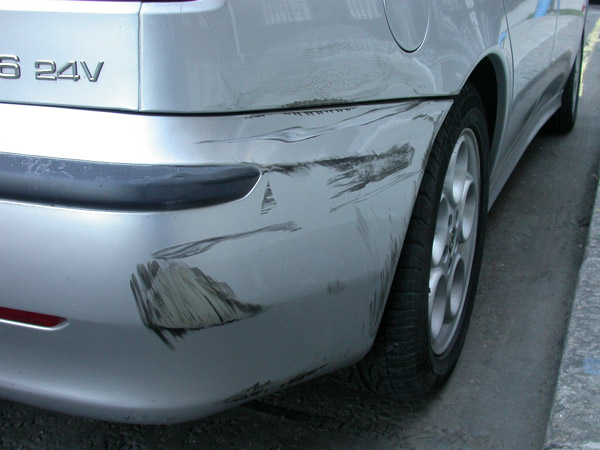
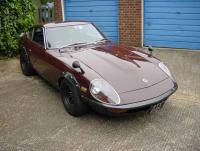 Is this a game of VIN number bingo? If it is, then EVERYONE has a unique and rare car.............. You're asking about people "on here" ( members of this site ) right? I know quite a few people who are NOT members of this site who have 'rare' and unusual cars, and one of them does not even own a computer. I learned a good time ago that there is always someone somewhere who has something better / rarer / 'more unique'. Its the quiet ones you have to watch................:classic:Hi Steve, I thought I'd chime in here, as the makers of Lumenition products are based just a couple of miles from me here in London ( although they are on the other side of the river ). Their "Optronic" ignition system is a good conversion to get rid of the standard points and condenser. Its all fairly fool-proof and long-lived as a long as you install the black box in a place where it won't get too hot. It likes to have a little bit of airflow over its cooling vanes.............. They have a good reputation over here and there are many types of cars that run their products. AUTOCAR ELECTRICAL EQPT. LTD. - for LUMENITION I used to run the Lumenition OPTRONIC setup on my old red car, and it was great. However, you have to be aware that a great percentage of distributor-related woes are not electrical but MECHANICAL. That is to say, half the time the bearings in the dizzy itself are so shot that the signal is all over the place. The Lumenition kit claims to fix this, as the optical signal is not affected by distributor shaft and bearing wear. At the moment my ZG is running a hybrid system based on Lucas parts ( horror of horrors! ). Its a brand-new Lucas distributor for a Triumph GT6 engine adapted to fit the L24, running a Lucas electronic ignition unit. It works just fine, and never needs to be touched. I have a better setup stashed away which is destined to go on my 3096cc engine project ( which has been on the backburner for the last few years ). That engine should be fairly potent and I figured that a better setup was probably prudent. Its a full-custom KAMEARI distributor with a CDI made by ULTRA. Its pretty impressive to look at, and they guarantee excellent results on the bigger N/A engines. My S20 engine uses an electronic distributor system ( Mitsubishi ) as standard, so I might leave that alone. Cheers, Alan T.Thanks to everybody for the kind comments. Its much appreciated. Seems that if I had been hurt I would have got a better reaction from the Police. However, the Police are ignoring the other guy's obvious INTENT to reverse into me and therefore his INTENT to hit my car and do injury to me. Frankly I would have thought that attempting to hurt me was almost as serious as actually causing injury. It was only my avoiding action that stopped him from hitting me when he was aiming at me in reverse gear. That and the fact that he was having trouble keeping the thing going in a straight line whilst reversing.............. New developments this morning. I went to hand in my crime report paperwork to my local Police station, and was told that they have actually tried to trace the owner of the Land Rover by using the registration number that was on the vehicle. Surprise surprise ( not ) - the number is a false one and relates to a vehicle that is recorded as no longer existing, and is still under the name of a former owner a long way outside London. Great. This almost certainly means the guy will change the plates once again and be able to swan around as though nothing has happened, safe in the knowledge that he cannot be traced. There's a lot of this about at the moment; the proliferation of speed cameras, bus lane and traffic signal enforcement cameras and zone charging cameras means that some of the less law-abiding citizens will hide their true identity and the identity of their vehicle by using false plates. Meanwhile, the more legitimate and law-abiding citizens are EASY to catch and fine. I should have guessed that his plates were false. They were, after all, held on by yellow electrical tape! My suspicion is that not only was his vehicle on false plates, but that it was also probably stolen, uninsured and untaxed. He may even have been banned from driving previously and judging by his misjudgment in overtaking me he may also have been drunk or otherwise under the influence ( drugs? ). Unless the Police get lucky or he does something even more stupid I doubt he will be picked up. In the meantime he can cruise around as he likes, and nobody will be able to touch him. However, I feel that he probably lives around the area where our little encounter happened. He seemed to know the backstreets quite well, and he originally pulled out behind me from a very residential area of side streets. I think I might have to take a slow evening drive around and see if I can find his Land Rover. Once again, cheers for the shoulders to cry on. All the best, Alan T.Those L20E pistons might be a bit of a sloppy fit in that F54 block. Like a 'prick in a top hat' as my dad used to say:classic:Today I became a statistic. Just another victim of a Hit and Run lunatic. Plenty of these happen everyday, and it just happened to be my turn. Pootling along in my 'everyday' car down a relatively traffic-free street here in central London, a Land Rover ( short wheelbase 4WD ) popped into my rear-view mirror and very quickly filled it. He was sitting right on my tail with his headlights on main beam, and at very high revs. Obviously in some kind of hurry, I thought ( not unusual for London......... ). He was not able to overtake because of oncoming traffic, so I gradually increased speed in the hope that I would get a little bit of air between us. No such luck. Land Rover man decided to stick even closer. A bit further down the road and there's a gap in the oncoming traffic. Land Rover man drops back a metre or so and takes a stab at overtaking. Unfortunately, he misjudged it and whacked my offside rear quarter as he went past. The impact was enough to pitch my car slightly sideways and make the tyres chirp. Land Rover man nearly loses it completely but just about gathers it all up again and speeds off! I gave chase ( at least to get his full registration number ) and followed him down a few small residential streets at speed. He was trying to get away........... I caught him up easily ( the Alfa is actually pretty quick, and the Landie was no match ) and he slowed down, then stopped. Great - he wants to talk, I think. Actually no, he wants to ram me. He reversed towards my car at a good speed, so I selected reverse and retreated. After several ridiculous backwards and forwards encounters ( I'm quite SURE he was aiming to hit me, and not just bluffing ) he makes off again. I take down his number and as many details as I can and head to the nearest Police station. To be met with a wave of indifference! They don't want to try and catch him, they don't want to even attempt to trace him! "He will be long gone by now"................ I'm given a four-page form and told to go away and fill it in. When I bring it back they will decide if they want to pursue it further. Great. Now I'm looking for sympathy and mourning the inevitable rise in my insurance premium next year. Good job I wasn't in a Z. Alan T. survey the damage here:
 Hi Tomohawk, I find it interesting that you might want to re-position the lever. Are you finding it difficult or awkward to use, or is the main thought to do with using different consoles? I have always ( personally ) found that the lever positioning on the LHD cars was most inconvenient and unergonomic, as its much too far away from the natural and comfortable position that would suit the wrist / elbow / shoulder joint combination. I would have thought that a lever mounted on TOP of the trans tunnel would be pretty difficult to use? The tunnel is already pretty high, and sitting down nice and low in the Z ( as nature and good posture intended ) would leave the lever a bit too high up to use ergonomically in my opinion. A centrally-positioned lever would have made the layout more suitable to use in both LHD and RHD versions, but as we know the designers did actually bias the layout of some features of the car towards RHD ( see the "Interior Ergonomics" thread for more discussion on this ). Actually, putting it down on the floor towards the OUTSIDE of the vehicle might make it a bit easier to use and would free up the choice of centre consoles completely. However, there is almost certainly not enough space between the seat and the inner sill / rocker panel to do this. It would also mean getting in and out of the car would need a little more care to avoid a sudden surprise! As for your comments regarding the design of the original Z, I would have to point out that there are plenty of cars that people are always trying to 'improve' or re-engineer in retrospect. In fact, name me one that nobody has ever messed with. Frankly I think its human nature, and people like us always want to improve or personalise a product so that it suits us better ( or so we think! ). Before dissing the original design of the Z car, we have to take into consideration that it was designed, engineered and built DOWN to a price. Any product is always compromised by many factors, and the designers have to compromise and make concessions for it to be a sales success. A true carte-blanche design with no concession to market-needs would probably be a sales failure even if it were a critical success. The masses need to be pleased, and that is why things change to suit the market that they are aimed at. Mr Yoshihiko Matsuo and his team made many concessions when the Z was being designed and productionised, and they were not allowed to do some of the things that they wanted to do. The accountants even made them re-design some parts of the car to keep the production costs down. Perhaps this was a good thing, and perhaps not. Its all quite subjective. You might not have realised it, but many of the items and ideas that you mentioned WERE available as options in the Japanese market ( er, except the CD - which had not been invented - but an 8-track stereo was. Remember 8-tracks?! ). Unfortunately for us, many of those parts were not very well known in the "Export" markets - but they did exist, and the design team had a good handle on what was needed in the race and street-tuning worlds. I certainly don't think that installing a V8 necessarily 'improves' the Z - but people can do what they like can't they? Its all just a matter of taste. But please don't put down the design just because people want to re-engineer or 'improve' it in some way. This does NOT mean that the original design was as bad as you make it sound, especially as you are looking back at it with just about 34 years of retrospect and acquired wisdom. I noticed that you have asked the same question over at Zcar.com and HybridZ. Personally speaking, I don't expect you to get much of an answer at Zcar.com ( if you get one at all..... ) but - as has been suggested - you might well get a more engineering-led response at HybridZ, as there are some very educated engineering minds over there. I don't think Zedrally or anyone else was taking a swipe at you personally, and you have to make allowances for some of the 'foreigners' on this site ( yeah - that includes me :classic:). We sometimes have a different perspective on things and I know that I myself have to stop and think twice and make allowances for the fact that this is a US-based site - even if it is floating around in cyberspace. Debate without argument is a fast-dying art. Let's try to keep that in focus. Sincerely, Alan T.
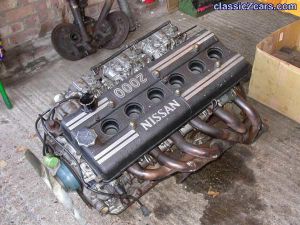 L28 engine and S20 engine similarities are easier to list than their differences. They share the fact that they have 6 cylinders and 6 plugs - but just about everything else is different. Stock horsepower was quoted at 160 for the S20 engine, and you'd better figure around 1,000,000 JPY for a complete core engine that needs a rebuild. As for the cost of shipping, I can only tell you what freight costs are from Japan to UK - but I should imagine that Japan to USA would be cheaper. Big question to ask yourself is - WHY would you want an S20 in the first place? For me its easy to answer - its all about 'flavour' - but for you I suspect you might be happier with less flavour and more ultimate power, not to mention a better bang-for-buck ratio! You could take an L28 and make a fantastic tuned engine out of it for less than the cost of the rebuild-core S20 ( without even shipping it ). These things are certainly not cheap............
This is engine no.2 - the spare. The one that is going in the car ( no.1 ) is still in Japan having a little bit of work done to it ( gear-driven oil-pump conversion, a bit of head work and stuff like that ). No.1 is due to be shipped out before Christmas but is coming by Sea Freight - so I won't get it until mid to end of January at the earliest. Even then I'm doing the final build myself - so it'll be a good few months before its together.
L28 engine and S20 engine similarities are easier to list than their differences. They share the fact that they have 6 cylinders and 6 plugs - but just about everything else is different. Stock horsepower was quoted at 160 for the S20 engine, and you'd better figure around 1,000,000 JPY for a complete core engine that needs a rebuild. As for the cost of shipping, I can only tell you what freight costs are from Japan to UK - but I should imagine that Japan to USA would be cheaper. Big question to ask yourself is - WHY would you want an S20 in the first place? For me its easy to answer - its all about 'flavour' - but for you I suspect you might be happier with less flavour and more ultimate power, not to mention a better bang-for-buck ratio! You could take an L28 and make a fantastic tuned engine out of it for less than the cost of the rebuild-core S20 ( without even shipping it ). These things are certainly not cheap............
This is engine no.2 - the spare. The one that is going in the car ( no.1 ) is still in Japan having a little bit of work done to it ( gear-driven oil-pump conversion, a bit of head work and stuff like that ). No.1 is due to be shipped out before Christmas but is coming by Sea Freight - so I won't get it until mid to end of January at the earliest. Even then I'm doing the final build myself - so it'll be a good few months before its together.
From the album: Fairlady Z432-R replica project
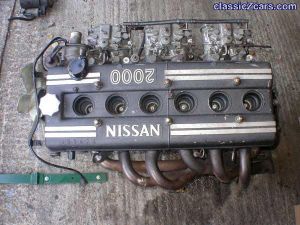
From the album: Fairlady Z432-R replica project
top-down view of my spare S20 engine.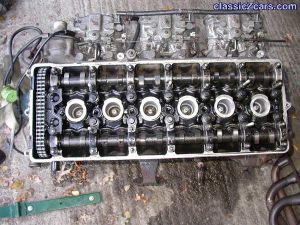
From the album: Fairlady Z432-R replica project
Cam cover removed on my spare S20 engine.

Important Information
By using this site, you agree to our Privacy Policy and Guidelines. We have placed cookies on your device to help make this website better. You can adjust your cookie settings, otherwise we'll assume you're okay to continue.