HS30-H
Supporting Member
-
Joined
-
Last visited
Everything posted by HS30-H
-
Well, first of all, 'PS30-00017' ( if the car was indeed "no.17" as the article claimed ) is not on the list of noted PZRs. Secondly, the description of the car ( even with its obvious inaccuracies and mistakes ) does not sound like a true PZR to me. I think the journalist would have noticed the lack of numerous items on the car ( such as eyeball ducts, clock, heater / demister systems - unless the owner put these back in, which did happen - centre console, ignition switch, carpets, standard seats, spare wheel well etc etc ) and the presence of others ( acrylic windows, FRP bonnet etc etc ) and noted their differences to the '240Z' instead of saying that they were the same..... The pictures tell their own story. The car is wearing the full rubber-trimmed bumpers ( not PZR items ) and full window rubber garnishes and drip rail garnishes, as well as some dress-up details. It seems strange to me that the owner would choose a super-basic PZR and then add items that came standard on the stock 432 and other models. Its missing the whole point of the 'R' spec ( less is more ) and seems to me to indicate that the car started life as a stock PS30 rather than the ultra-rare PZR. I also think the journalist would have noted the spare tyre sitting on the rear deck of a PZR ( if the car had a spare at all ) and the reason for this. He didn't. Seems to me that the owner was exaggerating slightly, and the journalist didn't know the difference between a PZ and a PZR anyway.
-
The R190 / R192 fits anywhere the R180 fitted, and vice-versa. It takes the same mountings and same driveshafts as the R180. R180 and R190 / R192 were essentially the same design internally. R200 was a fundamentally different design . R190 / R192 is just like an R180 on viagra.
-
It looks like an EMPI GT steering wheel to me. Looks very cool, and 'period correct' I'd say. Used, NOS or a 'Flat Four' repro, Victor?
-
Hi Jim, Nice links! Nissan took R380-series race cars to South America and South Africa too. I sent Lincoln Small some information and photos about the Brabham BT8 ( chassis no. SC-9 ) owned by Prince / Nissan, but he never acknowledged receipt and hasn't updated the pages for a long time. Some relevant photos and info posted on this thread ( from around post no.50 onwards ) back in 2003: Nissan's collection of old cars Don't fret about this subject being 'OT' Jim. It most certainly isn't. Cheers, Alan T.
-
Hi Jim, Interesting article. Thanks for taking the time to scan and put it up. It was originally from the January 1974 edition of 'MODERN MOTOR" magazine, I believe. I'm afraid the article wasn't strictly correct factually, and Mr Don Knight ( the owner of the car ) wasn't being completely truthful about the car either.... First of all, the car being described in the article is clearly a Fairlady Z432 ( PS30 ) and not a Fairlady Z432-R ( PS30-SB ). Secondly, the journalist writes: "All the stock running gear, suspension, interior layout, transmission, body, etc are 240Z components" which is not true. For example, the suspension ( spring and damper rates ) of the 432 were different to the '240Z' in all market versions, and the diff in the early 432 was the R192 ( equipped with an LSD ) rather than the R180 of the '240Z' ( although it got an R200 from 1973 ). He also writes ( presumably in good faith ) that the owner claims to have fitted a "Rally option cam" when the S20 had two cams and no "Rally" cam option to choose. He's getting his L-series and S20 option parts mixed up. He then relates that the car has "Racing headers and a dual pipe exhaust system" when the 432 had what could be considered a 'race' header and dual pipe system as stock equipment. He also reckons that "A tad has been milled off the head to bring up the compression ratio" which is NOT the way the increase compression on the S20, as it completely messes up the cam drive geometry ( you need to change the pistons to increase compression ). Again, L-gata and S20 practices being mixed up. He writes that the "differential has been modified for better acceleration - a 4.1 ratio" when the stock ratio on the early 432 was 4.44 and even the later 432 had a 4.375 ratio R200. A 4.1 would not 'improve' acceleration over the stock ratios. Sorry to make a negative post about the article, but I think it is important to point out the mistakes and confusing information to save them from being quoted as fact in future. Alan T.
-
'LR' is basically what the Works called the Factory race engines fitted with the 'normal' type ( non-Crossflow SOHC ) head castings. Again, specs were a moving target - but in essence it refers to a Factory race L-series 6 engine.
-
Hi Jim, WOW - nice picture. I haven't seen that one before. Let's see ( I hate being put on the spot like this ). I'd say it was probably Round 4 of the 1973 Grand Champion Series - the 'Fuji Masters 250km', held on 10th October ( at FISCO, obviously ). 1st - Kazato Hiroshi ( Chevron B23 ). 2nd - Tanaka Hiroshi ( March BMW ). 3rd - Tsutsumi Tomohiko ( Lola T212 ). Incidentally, the great Henri Pescarolo ( March BMW ) came home in 15th place. Kazato covered 41 laps, over the course of 1 hour, 13 minutes, 26.56 seconds for an average speed of 200.973km/h. Tanaka was only 8 seconds behind him at the finish. Always nice to see Kurosawa getting a bit of bad luck ( the miserable sod ). Did I pass? If you've got any more Z pace car shots I'd like to see you ( anyone? ) add them to this thread. I feel a bit like a unicyclist spinning plates at times. Cheers, Alan T.
-
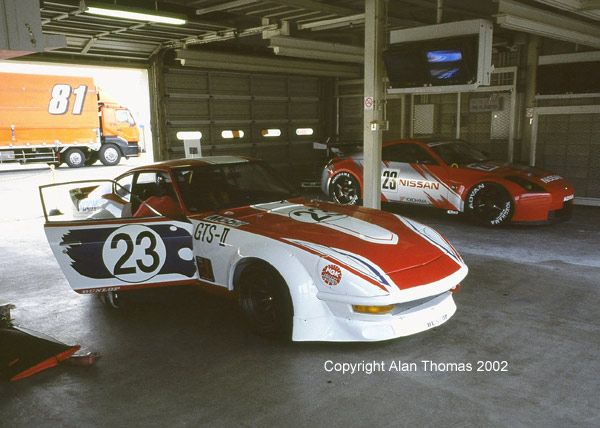
Hi Chris, A brief synopsis? Whew, even that might take a bit of doing...... But essentially we are talking about a roughly two year period between the first of the aero parts equipped factory cars in late 1971 and the 'Type B' aero package equipped works cars illustrated by the red and white car now owned by NISMO. Basically you can see all the stuff in the Sports Option lists, except that the true 'Works' parts had a little more work go into them. Yanagida's car evolved from a carburated LR engine into ( eventually ) an injected LY 'Crossflow' with dry sump. Direct Drive ( Dogleg ) 5-speeds, R192 4-pinion LSD diff ( later an R200 ), vented MK63 four-pot brakes ( later cars had these on the rear as well ), Lobro-jointed driveshafts, 100 Litre fuel tanks ( 120 Litre later ), fully adjustable gas struts with camber-adjustable uniball top mounts, etc etc. Some of the Works cars had fairly trick bodies, and were pretty light. Getting down to fine details you have to talk about individual cars, and almost on a race-by-race basis. The specs changed very quickly. The red and white car pictured at the 2002 NISMO Festival is fitted with an LY28 Crossflow running on 50PHH Mikunis ( it would originally have had Injection at some point ) and an Option Direct-Drive 5-speed. The green / white / black car belonging to Terashima san ( a 240ZR replica ) is running a 3 Litre L-series with a trick Works head casting, Sports Opt crank, 50PHH Mikunis, dry sump, Option 2 Direct Drive 5-speed, and a whole host of genuine Works and Sports Option parts. Hope that gives a little insight.
-
Hi Emil, Yes, I know what you mean. That Fujimi box art is pretty special isn't it? Many people say that they don't like the looks of the ZG, but most of them have never set eyes on a Factory example in the metal ( and plastic ). Surely the fact that the 'HS30-H' Fairlady 240ZG was legal for street use in Japan ( as a Nissan Factory-supplied showroom model available to the Generel Public ) is more relevant? It was also JAF homologated, and the JAF homologation was recognised by the FIA - with the paperwork to back this up. There is also a good case for legal precedent of use in Europe ( my car ) and I can back you up if need be. My biggest problem was with the Insurance companies, who didn't have the ZG model on their computers. It took a lot of work to straighten that out and get covered. I don't see how the USA comes into this, and the Fairlady 240ZG was never officially sold outside Japan anyway. Surely your best course of action is to link any replica to the precedent set by the Factory model, even in the case of bolt-on parts to a '280Z'? Yes, the first of the Factory race cars to use the ZG/ZR aero packages were more simple - and were closer to the roadgoing ZG looks-wise. But they only lasted a few months before evolving further - so pictures are more scarce. I have a fair few though, and will scan some up for you. Maybe I'll send them to you direct. Cheers, Alan T.
-
Hi Lachlan, Glad you liked the pics. Go back to post no.28 on this thread and look at the attached photo of the Nissan Racing School car on the cover of the Sports Option list for the HS30. If you look closely you can see just what they did to the front valance corners to give tyre clearance on full steering lock with those wide wheels and tyres. Some of the Works cars were cut away and re-rolled in this area too. Once they started getting their super-wide aero kits on it was no longer necessary - so you really only see it for a short period on the race cars. On the street was another matter though. My ZG has had its lower front panel clearanced in this area at some time in the murky past of its street life in Japan, and you can see clearancing on many other cars too. One restorer in Japan has a constant turnover of cars coming to him these days to put right all these old indiscretions..... Cheers, Alan T.
-
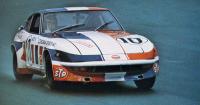
For Emil, A front-on colour shot of Yanagida's car from May 1972:
-
Go to Goodwood in June. Maybe the car won't quite be doing 'what it was meant to do' - but at least you can see and hear it be driven up the hill with enthusiasm. Got any details of the 'motorsport history' for this car? And is that a sunroof under those bricks and cardboard?
-
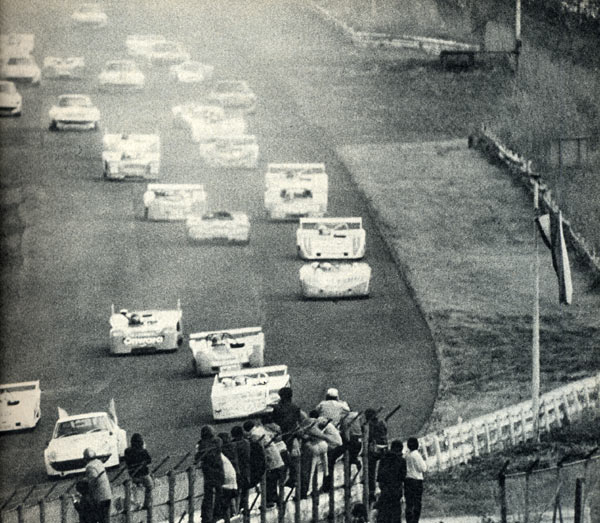
And another couple: First up, a 432 ( probably the one of the same Nissan Racing School cars again ) pacing one of the Grand Champion series races at FISCO in mid 1972 ( a rare colour shot ). Second, a view from the outside of the first corner banking at FISCO looking back down the main pit straight at another 1973 Grand Champion Series field of sports prototypes with a gaggle of Works and privateer GT2 class Z cars behind them. All these being led round by a Z pace car wearing the ZG/ZR aero body kit. Probably another one of the Nissan Racing School / SCCN cars. Enjoy.
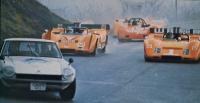
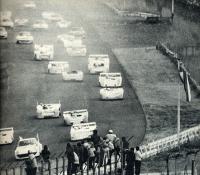
-
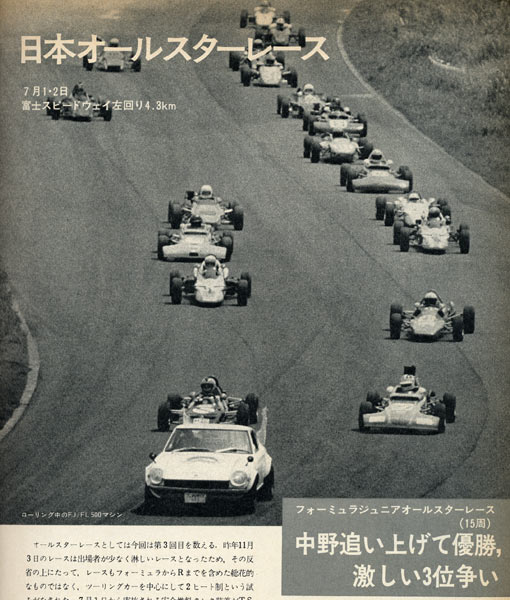
Found another pic of one of the Nissan Racing School cars carrying out Pace Car duties. This time its a Formula Junior / 'FL500' single-seater race in July 1972:
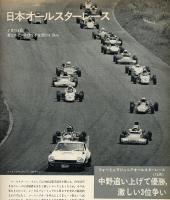
-
Hi Emil, Glad to be able to help. I think the Fujimi kit is a good example of the 'artistic license' of the kit makers. They had the moulds and tooling for the standard Fairlady 240ZG, and - like many kit manufacturers - decided to release a version with different box art and decals to maximise the use of the tooling. The box art and the model kit itself do not accurately represent the actual car used as a base for the kit version.... Yanagida's car did evolve gradually ( from a 'short nose' car, as I mentioned above ) but I don't think it ever looked exactly like the box art illustration of the Fujimi kit - which is lovely all the same! I agree about the paintscheme and stickers, they do look good. Replicating the car as per the Fujimi box art would be a lot cheaper and easier than replicating the true look of Yanagida's actual car. That might be a useful thought to keep in mind. Take a look in my Gallery here for pics of a real Factory-made 240ZG as reference. Cheers, Alan T.
-
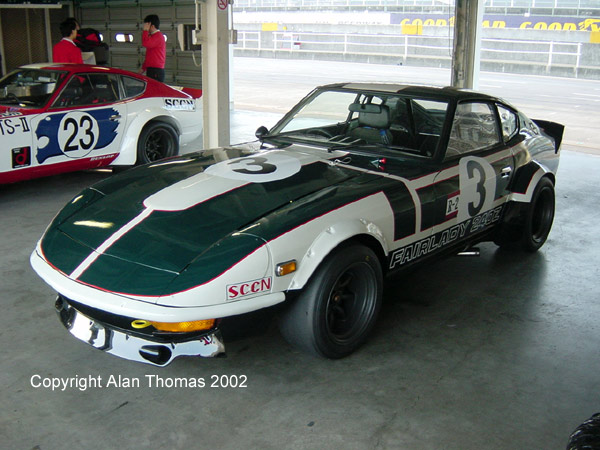
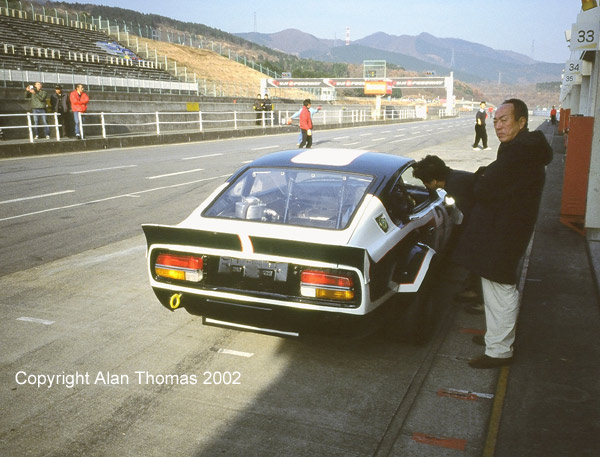
This is complicated. The EBBRO model was based on the restored 240ZR owned by NISMO. This car was originally one of the Nissan Racing School fleet, and Nissan don't actually know exactly which race car this originally was ( or don't want to tell ). They restored it to a livery / paint scheme that was used by one of the original SCCN Works 240ZR race cars, but almost certainly not this particular car. So EBBRO made a model of the NISMO-restored ex-NRS fleet, ex-Works 240ZR that was painted to look like another car. Complicated. Emil expressed interest in replicating ( I think ) Yanagida's car per '72 Fuji 1000km spec. It should be noted that this car was wearing the Works 'Type A' Overfender and airdam set over its ZG panels, whereas the NISMO-restored car is wearing the much wider and more extreme later 'Type B' Overfender and airdam set over the same ZG panels. Note the differences. Here are some pics to help illustrate those differences: Taken at the 2002 NISMO Festival at Fuji Speedway, pictures of my friend Shigeru Terashima's green / white / black 240ZR replica ( Type A aero package ) and the NISMO-restored genuine 240ZR ( Type B aero package ). Also a photo of Mr Haruhito Yanagida himself in the pitlane on practice day, with Terashima san's 240ZR replica ( which he drove at the Festival ).
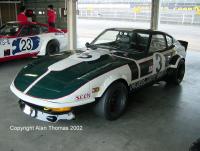
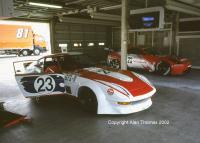
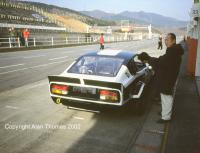
-
It does indeed, and will be seen at the Goodwood Festival of Speed next month - driven by owner Mr Nick Howell and guest drivers. I'm sorry to say that a lot of the 'history' of 'Big Sam' quoted on zhome.com is inaccurate. Probably not the fault of zhome.com - but it needs to be corrected / updated just the same.
-
Replicating a car that still exists might be seen as a slightly strange thing to do, especially in the same country.
-
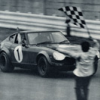
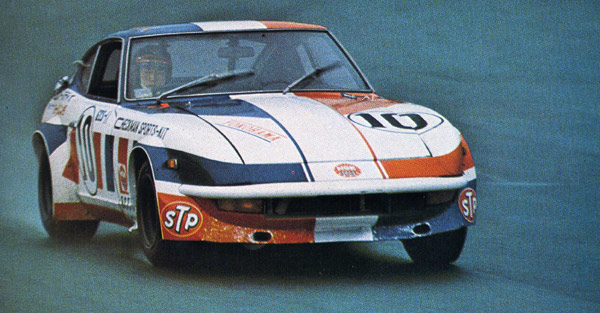
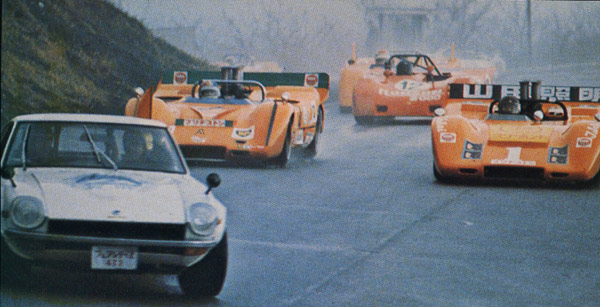
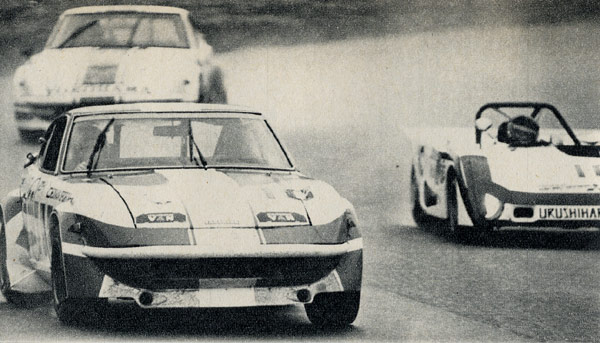
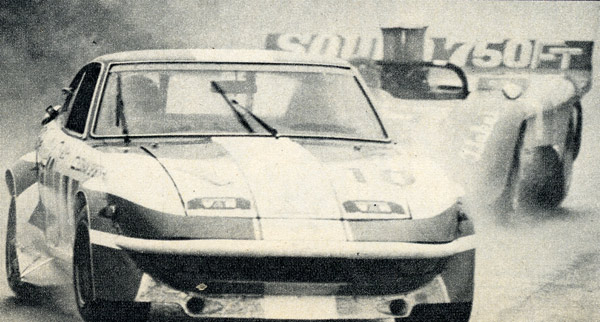
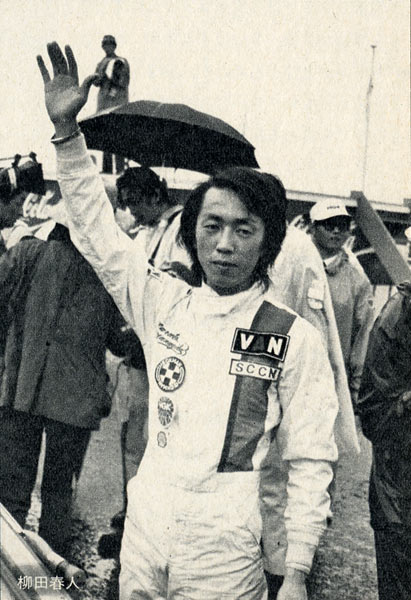
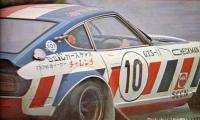
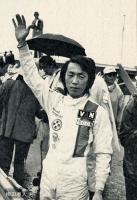
Hi Emil, I'm guessing that I know the particular car you are referring to. The clue is the Fujimi kit..... It is almost certainly based on the car driven by Haruhito ( 'Haru' ) Yanagida, who went on to found tuning company 'CENTRAL 20' - specialising in Z cars. Yanagida started his race career as a privateer back in the late Sixties, driving a Fairlady SR. He joined the Nissan Racing School as a pupil and became one of their top graduates. He started racing a Z as a privateer, but was soon elevated to semi-Works support and became one of Nissan's SCCN team drivers. He received Works parts for his car, and quickly became one of the most successful drivers of Works '240ZR' race cars. He was particularly noted for his skill in wet conditions, and earned the nickname 'Ame no Yanagida' ( rough translation would equate to 'Yanagida of the rain' - or perhaps 'Rain Master Yanagida' would be more in the spirit of what was intended ). He had a fairly long race career, even taking the wheel of Touring Cars and Group C machines. 'CENTRAL 20' became more of a focus for him after his race career ended, and is still going strong ( they have produced many parts for the Z33 ). Yanagida's son became a race driver - another graduate of the Nissan Racing School - and ties up the Z racing history of the Yanagida family very nicely, as he became one of Nissan's Works drivers of the JGTC Z33 cars. Yanagida senior's car ( like most race cars of that era ) was something of a moving target in respect to its specification. It started out as a 'short nose' race car, but was then upgraded to the full Works 'ZR' aerodynamic package ( the first of these was nicknamed the 'Type A' package ) which is the configuration your Fujimi kit illustrates. The car was updated frequently, eventually being fitted with the 'Type B' aero package and taken far beyond the standard Works ZR spec - with the addition of extra aero parts ( including a 'Batmobile' style double rear fin arrangement ). If you want to replicate the car in its 1972 FUJI 1000km race guise ( as per the Fujimi artwork ) then you will need to obtain a replica of the full Works 'Type A' ZG/ZR aero package from a Japanese supplier. These replicas are still being produced by more than one company. I helped a friend here in the UK source one a couple of years ago ( he is building a replica of the 1975 / 1976 Le Mans 24hr race car ) and the quality was fine. There are lots of other things to think about ( suitable wheels and tyres to fill up those huge arches for example ) and you will want to have a car that has a bite to match its bark. Yanagida's car was pretty fast and featured some rather exotic mechanical specifications, but you don't need to replicate these to get the same feel. These Works-associated race cars are something of a pet subject of mine. I'd be pleased to try and help you with any further research if I can. Here are some reference pics of Yanagida's car. First shows him being overtaken by the Lola T290 of Urushihara, and second with the McLaren M12 of Sakae looming in his mirrors. Third is a closeup 'mood' shot in colour, and finally a portrait of Yanagida himself from mid 1972. Hope that helps. Cheers, Alan T.
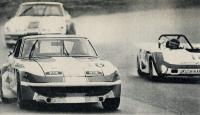
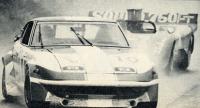
-
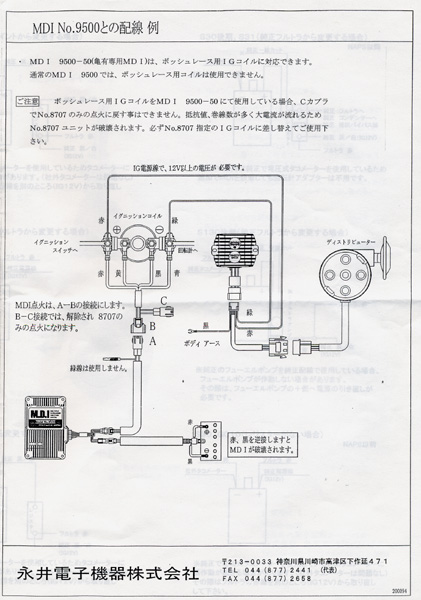
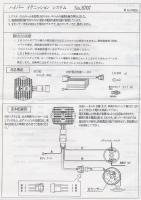
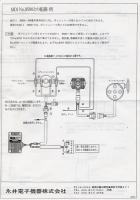
Eric, 'Nagai Denshi' is the parent company ( Oyagaisha ) that manufacures the 'Ultra' ignition systems and componentry. The scans that I posted are the instructions that I received with the CDI and MDI systems that I purchased from Ultra. If you look at the bottom of the page it even says 'Nagai Denshi' in big letters. You asked about the ignition system components on the PITROAD website ( scans from the KAMEARI catalogue ) and that's what I posted about. Not the full 'Ultra' lineup. Alan T.
-
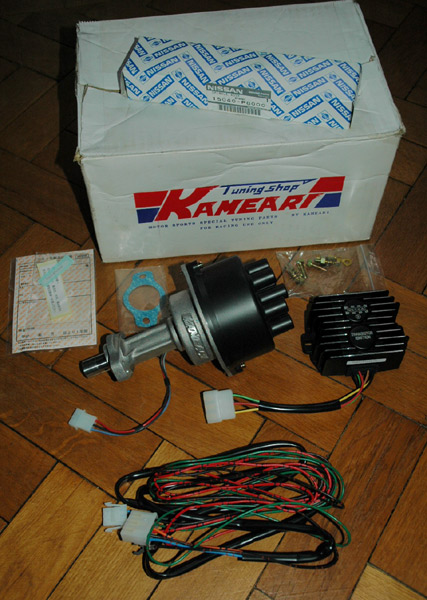
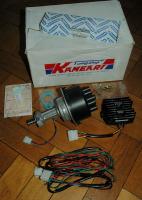
The Pit Road site annoys me because they simply scanned the Kameari catalogue pages and stuck them up on their website. Most of the prices are now actually out of date..... Basically you are looking at two different types of ULTRA ignition system there: Ultra's CDI ( Capacative Discharge Ignition ) is actually a licensed version of the Lumenition system, with an optical trigger replacing the points in the stock distributor. You can buy this system on its own. Kameari's Ultra CDI + Kameari distributor kit combines the Ultra CDI with Kameari's own distributor casting and improved internals - with it's obvious benefits over a tired stock distributor. This is the kit I have and which I pictured above. The Ultra MDI ( Multiple Discharge Ignition ) system is another step up in ignition power that can be utilised in combination with the above systems if desired. Don't ask me to compare any of this to the MSD parts, as I know next to nothing about them I'm afraid. See the wiring diagram scans below, which I hope will explain the method of use and the combinations much better than I can myself:
-
I have one. The KAMEARI distributor kit includes an ULTRA electronic ignition unit. Ultra have been making electronic ignition systems since the late Sixties, and have a pretty good name in Japan. The distributor body itself is a special casting, and has improved internals over the Nissan ( Hitachi ) Electronic distributor, but the Nissan cap is interchangeable. One of the good things about buying a new distributor is that it will of course be more accurate than an original ( often worn out ) unit with tens of thousands of miles on it. If you live in Japan, then the Kameari kit is a reasonable price and kills more than two birds with one stone.
-
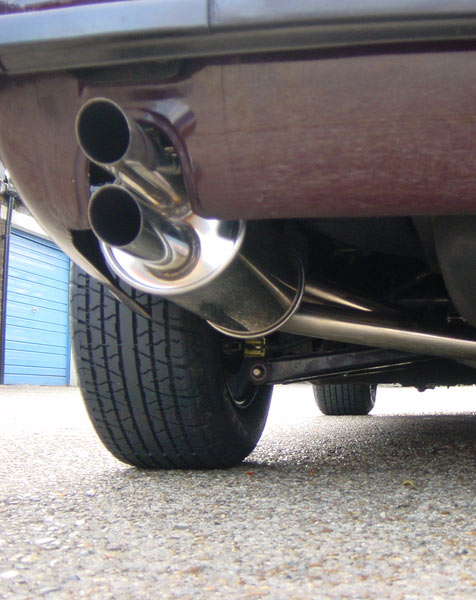
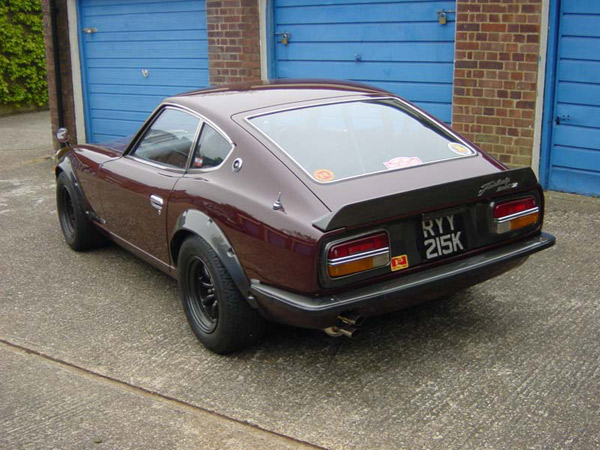
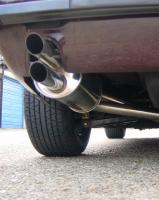
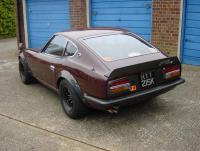
Derrick, SPIRIT GARAGE make the stainless system you can see fitted to my car in the above photos. It's a good quality piece and should last a long time. They have special offers on these from time to time, so maybe talk to Itagaki san ( the owner ) and see if he will do you a deal. Spirit Garage are in Gunma ken, so maybe you should take a drive up there. Itagaki san might even show you his race car - which is pretty impressive. Spirit Garage tel: 0270 620441 Good luck, Alan T.
-
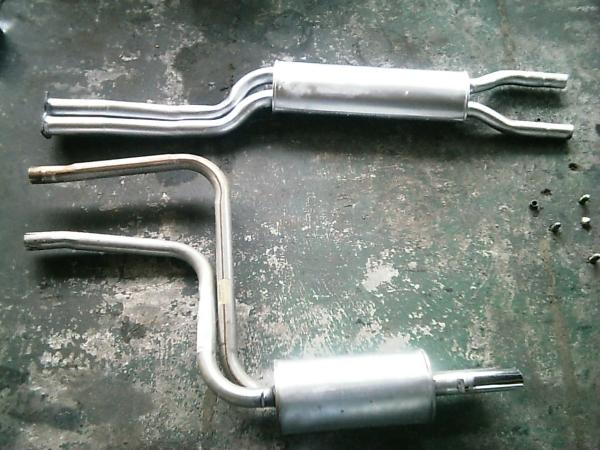
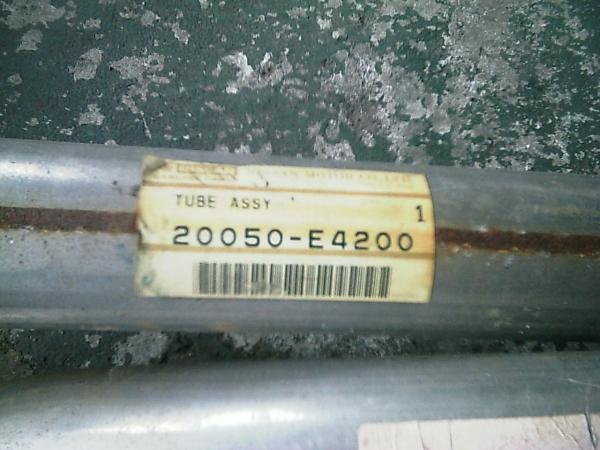
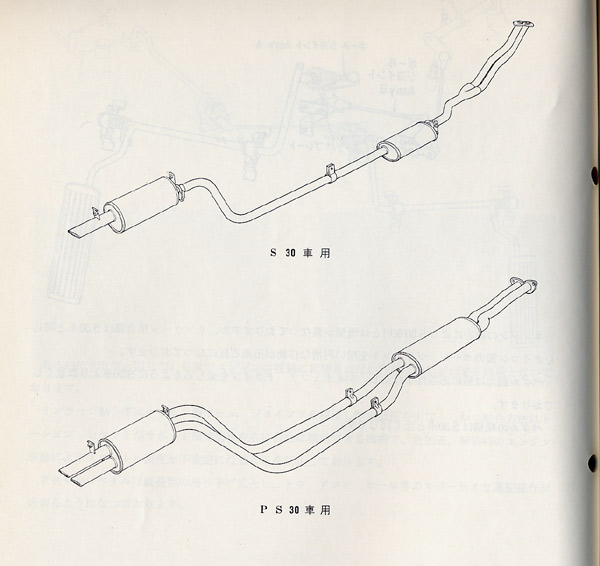
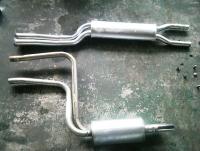
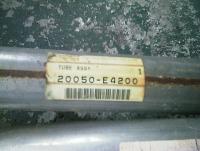
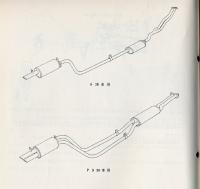
We have discussed the Japanese market dealer options on this Forum several times, and the twin pipe exhaust system ( standard equipment on the 432 & 432R ) was included: S30 Japanese market dealer options HS30 Japanese market dealer options The standard front diff crossmember on all S30 / S31 models ( for all Export markets as well as Domestic ) had two exhaust-clearance cutouts for good reason...... I have the Spirit Garage stainless steel twin pipe system on my ZG, and can vouch for its quality. I also have a genuine Nissan ( mild steel ) twin pipe system which will be fitted to my 432R replica. See pics below:
-
Or the Porsche driver wasn't actually all that good a driver in comparison to the guys in 'lesser' cars? I think fuel consumption should have been similar, if not actually in the favour of the Porsche. Only a 2-litre remember. All joking apart, that 906 should have walked it. It was a purpose-built race car, and the Z should not have been able to keep up had they both been prepared and driven to their maximum potentials. Kitano beat it, and he was one of Japan's all-time best. That was probably enough on the day.