268Z
Supporting Member
-
Joined
-
Last visited
Everything posted by 268Z
-
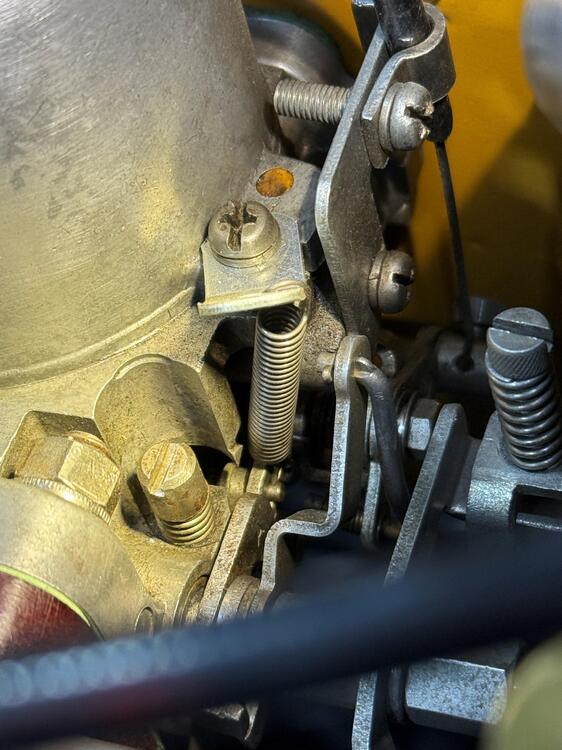
I recently was having trouble getting the nozzle on one of my 3-bolt SU carbs to completely return to full-up position with the choke cable(s) in the OFF position. I tried everything, cleaning the nozzles, cleaning the carb body, ample application of lube, bending the thin tab, different positions of choke cable clamping, even installing a brand new needle, but the rear carb's nozzle just wouldn't return snug to the carb body on its own. It would stay if you pushed it up by hand but would not return on its own. I resorted to installing a spring to the linkage to help pull the nozzle up. It works great! Interestingly, the linkage arm that the spring is attached to already has a factory notch cut in it that, as far as I can tell, serves no other purpose. 🤔 So, here's a possible solution to your nozzle problems when nothing else works.
-
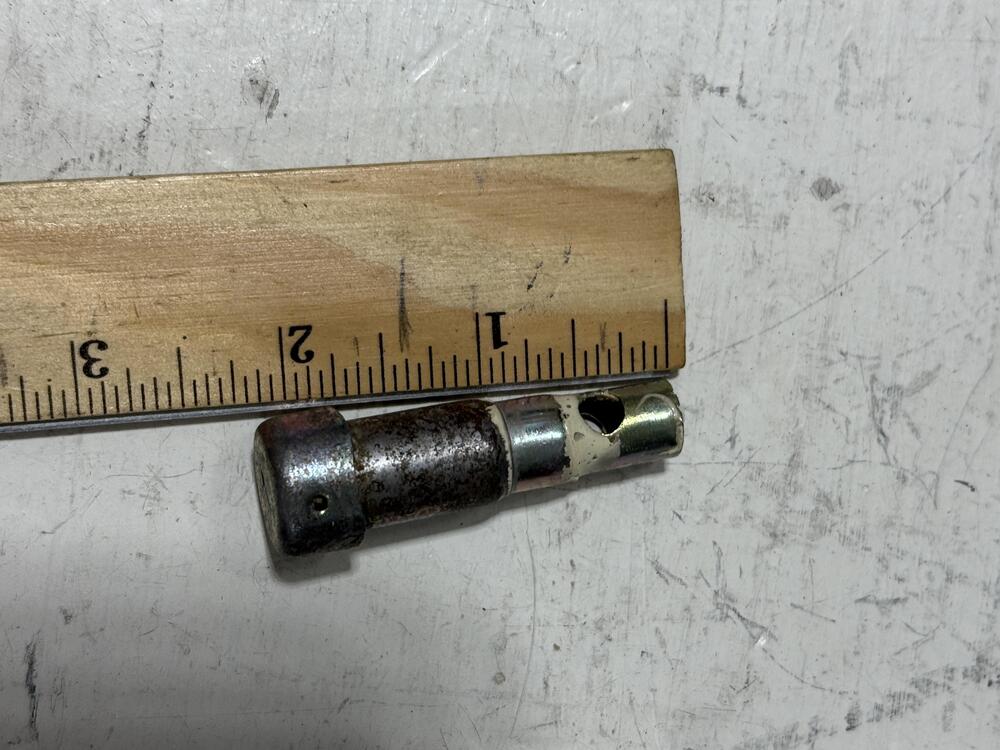
No worries. Thank you for the response - I just did a search for Volvo suspension bolts and found some that do look like yours. The ones you have look like they were originally made to be dowel pins (tools) for transmission installations, so I thought I'd ask. I've recently obtained some 10x1.25 bolts that I will be modifying for installations, so I'm set. Thanks again!
-
Ya, I'll measure with the gasket. The one I have on hand is OEM. EDIT: My mistake. I should measure without the gasket per FSM. Good point about making sure the bearing is fully seated on the shaft. I'll check that. Could also be maybe someone replaced that bearing with one that was a tad (very tad and unlikely) wider than OEM.
-
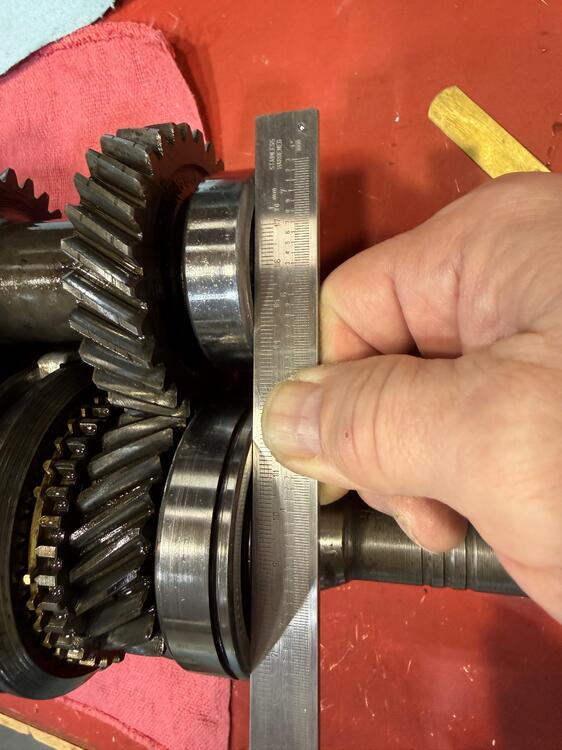
So no preload? OK, I do have a depth gauge (actually shown in one of the photos above) and will try measuring it first. If it measures <.1mm then I'll probably just leave it without a shim. It does appear to have been working the way it is without any issues. Thanks again.
-
Thank you, Zed Head! I'm going to go ahead and pick one up. zcardepot has a .3mm shim available. I did see in the manual regarding taking measurements but wasn't sure exactly how to do that. Plastigauge? I also didn't know it's supposed to preload so thanks for mentioning that. I'll do a dry fit with a .3mm and see if the front cover bottoms against the case easily or not. If it's snug then I'll check for any unusual noise or resistance by turning the input shaft. Also, thanks for the link to yoshiparts. I'm stateside but they may have something I need in the future.
-
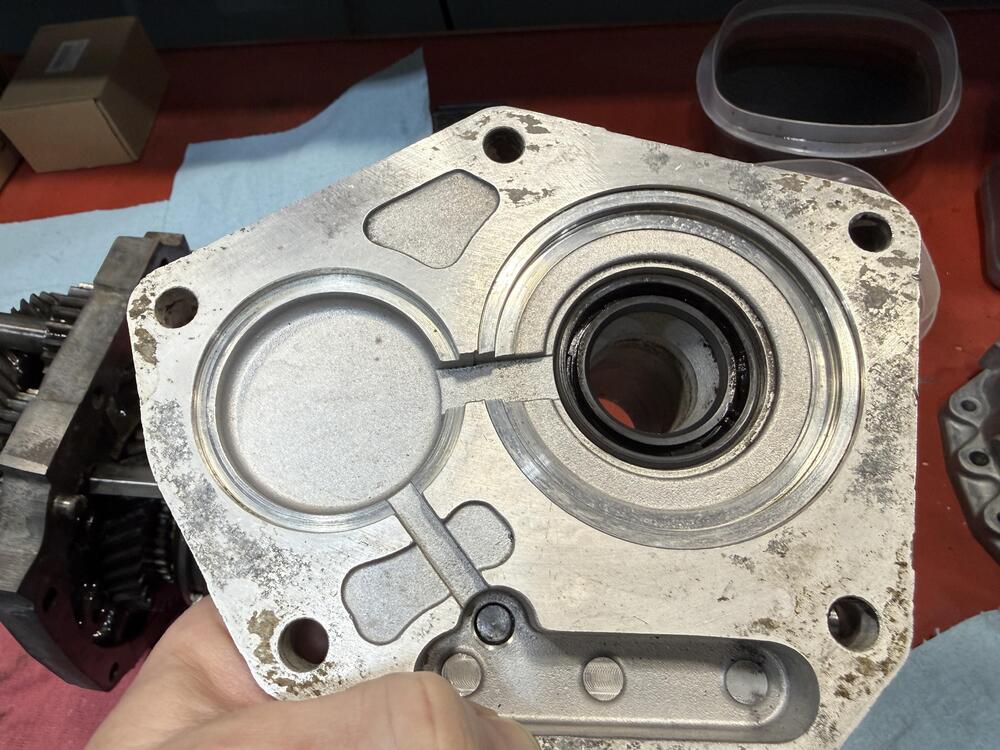
Has anyone ever pulled the front cover from an FS5W71B and find no shim between the front countershaft bearing and front cover? There isn't a shim on this one I recently purchased. I know it's been run in a car without the shim but don't know for how many miles - I wasn't able to see/hear it run while in a car either. Everything seems to checkout when turning the front shaft by hand in all 5 gears and reverse; no ablenormal slack or funny noises (checked before removing the front cover). There was no worrysome shavings on the drain plug magent. All the gears and internals appear to be in great condition. The front cover does not show any abnormal wear where the shim would normally go. As far as I can tell the front of the countershaft bearing and main shaft bearing are on the same plane (is that correct?). If anything, the counter shaft bearing may be about .04" forward, but there's a normal degree of slack in both bearings' outer rings that could cause it to look that way. So what should I do? Run it as-is or buy a shim? The FSM describes the shim as a shim, not a thrust washer. If it were a thrust washer it would definitely something I'd buy and use.
-
HusseinHolland, where did you get these transmission dowel pins? I can't find any online that are metric. I have a few extra bolts I can use to make my own dowels but would like a set like these.
-
Thanks, inline6. The transmission I’m working on has the single ear. I believe the1980 FS5W71B was the same as the ‘81-83 5-speeds, with the only difference being a different over-drive ratio. I’ve confirmed, via turning the input shaft and comparing the rotations in 5th gear of the output shaft, that mine is the ‘81-83 variety.
-
Thanks, EuroDat. That’s kinda what I’m thinking too about there being a little extra durability for use on a 4x4. Thanks for the other info as well. I’m putting this “K” R180 in my 240Z and will be using a pair of “buttons” that allow the original 240Z’s stub axles to bolt onto it like the factory R180 that came with the car.
-
I've done this exact same thing before as well. Works!
-
OK.Ya that answers my curiosity. Figured it wasn’t a super rare transmission but thought I’d ask. I’ll check 5th gear when I get home to see what rario it is.
-
I’ve recently acquired an R180 “K” differential (4.11 gear set) that has a metal breather on the top. I can’t find anything using google that matches it. Anyone know something about it? I don’t know what vehicle it was originally removed from (maybe a front unit for a 720 pickup?). It does not have a limited slip. Just curious about it as I haven’t found any information from any make/model that used a metal breather like it.
-
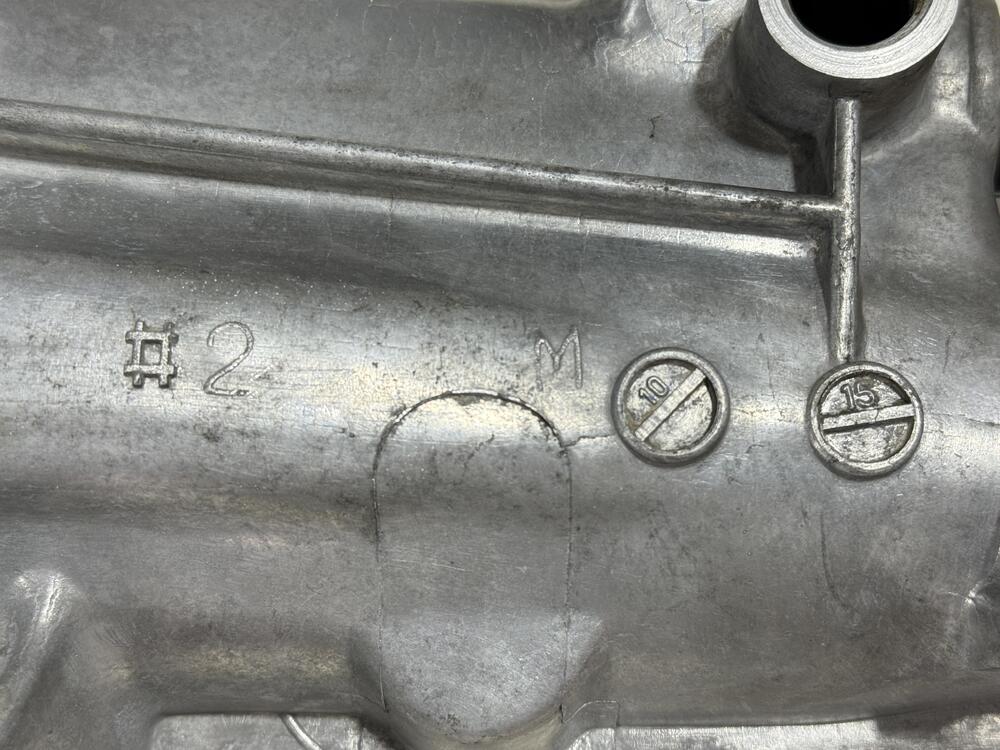
I’ve recemtly acquired a close-ratio 5-speed that, I assume, is a FS5W71B. While checking over and cleaning it I see there is a marking that says “#2” (see left side of photo). The # is part of the casting but the 2 has been manually stamped into the aluminum. Being curious, I did some googling and didn’t find anything other than some information on “competition” transmissions that could be had with three different gear set options, described as “1”, “2”, and “3”. Anyone know if this stamping of a 2 denotes the transmission as being a competition variety? Or is it just a common stamping that references something else? I haven’t yet turned the input shaft to count the rotation of each gear.
-
Sorry to resurrect this old of a thread (it's been informative in my research regarding luggage straps) but how cool is that?! The S30 with the VIN HLS30 00240. That's a keeper!
-
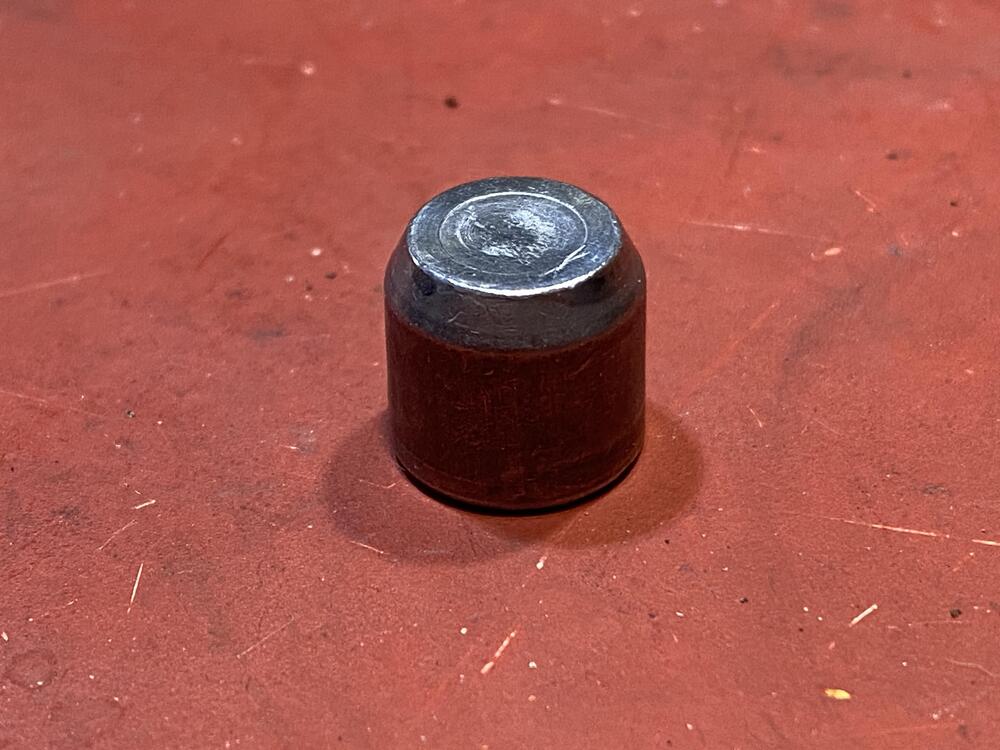
Found it. SOB. It was with the extra freeze plugs I have. Fun times! Lol. Thank you for the replies. And yes, turning the pump CCW. Gonna shoot for having it all buttoned back up by Saturday. Wish me luck!
-
I mean the pump will prime itself before installation, but it won't pump any oil in the engine when installed. The valve cover is off and there's no sign of oil movement, even at full drill speed (I tried that - lol). The original 240Z gauge does not move. I may try pulling the oil sensor out and push some oil into the block's internal passage that goes to the pump. That's where the pump pushes oil to first, correct? One thing that just came to mind is the oil passageway plug that goes into the front of the block. I remember pulling it out and looking at it but am now only 80%ish sure I reinstalled it. I'll check my workbench when I get home from work. Would that affect pressure? I did replace all the freeze plugs (except rear of block) , but none of them plug any oil passageways, correct?
-
Just reinstalled the L24 in my 1972 240Z after refreshing it. By that I mean remove carbs, intake, exhaust, timing cover, etc. to clean them up, repaint the block, then reassemble. I did not touch any internals of the engine or head. The car ran perfect when motor was pulled a few months ago. Now I can't get the oil to prime. I'm using a new high volume "turbo" oil pump that does prime itself with a screw driver. But using a long tool to prime the engine (counter clockwise) the engine will not prime. I've also tried packing the pump with petroleum jelly but no luck. Both the old oil pump (which was working just fine) and this new pump do the same thing: no priming of the engine. Oil pan has 5.5 quarts of oil. The only thing I can think of is the pickup tube is not air tight. But before I pull the oil pan, anyone have any ideas to check first?

-
Pulled the engine on my 240Z to freshen it and the engine bay up. Discovered two stripes on the camshaft when the valve cover was removed, one is red and one is white. Googled and searched the forum for something but have not found anything regarding stripes on camshafts. Anyone ever seen this or have any idea what it means? There are some stamps on the rear as well. The car is a 1972 240Z that is very close to original/stock. The engine may have been rebuilt at some point.


-
Thank you, siteunseen! Looks like it's factory then.
-
I've pulled this flywheel out of my 1972 240Z. The car has 110k and likely has had at least one engine rebuild, so not sure this flywheel is original. It weighs in at 20 pounds on my bathroom scale. Out of curiosity, I've tried to ID it via google and various forums including here. The only cast and stamping marks I can see are JAPAN, 219, and 16030. Is this a common flywheel one may find in a 240Z? I'm taking it in, BTW, to have it turned and balanced as the engine has a bit of a vibration above 5,000 RPMs that a new harmonic balancer did not correct. Not a big deal since the engine is not modified so there's not much power up there anyway. I'll probably have it lightened to 18 pounds or so to help with rev matching downshifts though. I have read that the early 240Z's had 17 pound flywheels and experienced vibrations around 7,000 RPMS but I'm not going to be racing mine any time soon so figure I'll be okay if I keep it under 5,000 RPMs.

-
BINGO!! Turns out, I had the wires plugged into the wrong sides of the diode (backwards). I switched them and now the car reads 14.37 volts at idle. Thank you both for pointing me in the right direction! Yeehaw!
-
Yes, that's what I'm looking at now (when I get home from work).
-
OK, I'll do that first.
-
OK, ya that is something I can double check. The connector on the alternator I have is in a = formation not a T, but I understand what you are referring to. I guess it's not a direct replacement for the 280ZX, but is a 70amp unit https://zcardepot.com/products/alternator-high-amp-80-240z-260z-280z?_pos=1&_sid=0210ca6f4&_ss=r&variant=19280584015985 Sorry about that. Is a 1N5062 diode (like this https://www.amazon.com/NTE-Electronics-1N5062-Rectifier-Tolerance/dp/B008UFVQMS ) the correct diode to use? I'll try one instead of the MSA unit.
-
My 1972 240Z has me majorly stumped. It seems the alternator is not getting the message that it needs to recharge the battery. I’ll try to not write a novel, but here’s some background. I’ve owned it for just over a year and drove it all last summer with no issues. Then I accidentally left the lights on when parked and had to jump start it. The ammeter swung to the right while the battery was being charged as I drove it and then it started jumping around. After a few days of it jumping around, it returned to center and has not moved since. The car continued to run just fine for a few weeks, then quite charging one day. It will jump start just fine but will not charge the battery on its own. There was never any smell of wires burning and all wires appear to be in excellent condition. Here’s some pertinent info: 1 - The battery is a new (2024) AGM battery. It ran well before the lights being left on. NAPA has since tested it as being good. I have also tried using two other regular deep cycle batteries. 2 - The alternator that was on the car at the time of lights being left on was (I think) from a 260 or 280Z. A PO had replaced the factory harness plug with a round style connector that Nissan used for the later Z’s. It had an external regulator. It now has a new 280ZX style alternator with an internal regulator from zcardepot.com. NAPA has tested this alternator as good. I’ve replaced the round connector with the correct style connector (vintageconnectons.com) and have installed a resistor plug/connector from MSA. The black/white IGN stripe wire passes through the resistor and leads to the upper terminal of the alternator’s connection. The white 12V wire jumps to the lower terminal on the alternator’s connection. 3 - I have removed the ammeter and joined the two wires together. 4 - I have inspected the fuse box. 5 - I have tested continuity between every two points I can think of, both 12V and ground. Have even test each fuse. Everything tests good. 6 - I have tried running a wire directly from the 12V sensing wire on the alternator to the starter where the battery connects. 7 - The fusible link is new and tests good for continuity. 8 - All the wiring (aside from the alternator’s connection that was once altered) appears to be 100% factory. 9 - I have added (prior to the lights being left on) a headlight harness with relay and have upgraded the wiper motor to a Honda unit, but both of these items are on an isolated 12V circuit that is not even plugged in right now. 10 - I have searched numerous message boards, blogs, and studied the FSM. There is a lot of great information available, but nothing that I can find that has worked. None of these things (or any combination of) have made any difference. Here is what is happening when connecting a multimeter to the battery (or any 12V point): The charge holds steady when the engine is not running and the battery does not drain if left for a few days or even weeks but will slowly drop with the engine running. It will only charge if I add a portable battery charger plugged in from the wall – with the engine running or not. This circuit on the car is quite simple, so I can’t think of anything else to check. The engine runs like normal while it has enough charge so I don’t think the coil or other ignition components are causing the problem. Could they? Any ideas on what to look at next?