HS30-H
Supporting Member
-
Joined
-
Last visited
Everything posted by HS30-H
-
-
-
-
-
-
-
-
-
-
-
-
-
-
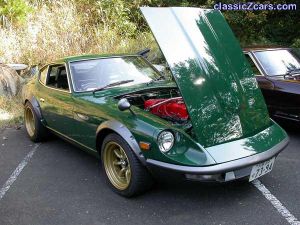
 Custom G-Nose on Fairlady Z.
-
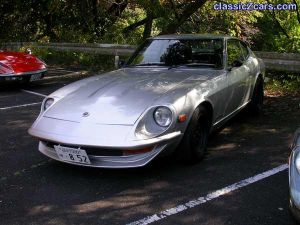 Odd custom version of G-Nose with integrated airdam.
-
 GP Maroon ZG. I think it was a real one. Very sanitary. Modern wheels by "Work".
-
 Two G-Nosed cars. Rare wheels on the car in the foreground.
-
 Lineup of guest and member cars at CLUB S30 & S30 OWNERS CLUB combined meeting at Sagamiko, Japan.
-
 Lineup of guest and member cars at CLUB S30 & S30 OWNERS CLUB combined meeting at Sagamiko, Japan.
-
 Lineup of guest and member cars at CLUB S30 & S30 OWNERS CLUB combined meeting at Sagamiko, Japan.
-
 Lineup of guest and member cars at CLUB S30 & S30 OWNERS CLUB combined meeting at Sagamiko, Japan.
-
 Lineup of guest and member cars at CLUB S30 & S30 OWNERS CLUB combined meeting at Sagamiko, Japan.
-
 Lineup of guest and member cars at CLUB S30 & S30 OWNERS CLUB combined meeting at Sagamiko, Japan.
-
Great! Thanks very much indeed. I'll start uploading straight away. Somebody's going to have to clear and approve them too - so I guess there will be another short delay while this happens. Hope people think the pics are worth the fuss............. All the best, Alan T.
-
Hi Guus, No - its not just a coincidence. You can indeed pay a little extra in Japan for numbers of your choice - but you have to work it out within the parameters of the various laws that apply. You can't specify letters - only numbers, and obviously they can't have been issued to any other car. There is the advantage that the Hiragana syllable before the number changes - so a great many people could have the "240" number for the same issuing area and taxation code as Kats - but the difference would be in the Hiragana prefix. When you look at Japanese numberplates, the Japanese characters of the top line identify the issuing area ( in Kats' case, it is 'Kobe' ) and the numbers after that identify the taxation code applying to the vehicle ( in Kats' case it is '330' - which replaces the old '33' code, and is for cars of a certain category over 2 Litre capacity ). Below those are the Hiragana syllable, which is a simple alphabetic sequence that starts with 'sa', 'si', 'su', 'se', 'so' etc etc and runs through all the syllables that they use. Then there's space for four numbers - but you don't have to use the full four, as you can miss the first three numbers altogether if you start with a single digit on the right. Look out for the bulk uploads of the event pics when we get the space allocated. You will see lots of versions of the same idea. Did I explain that clearly, or is it all as clear as mud?! Alan T. PS - Guus, the 'Foreign Use' or 'Translation' plates seen on the Works rally cars are simply a translation of the Japanese characters into Roman letters. Hence "TKS" signifies the Shinagawa issuing area ( TKS = Tokyo, Shingawa - although the Japanese original plate just says "Shinagawa" ), "33" the taxation code, and "SA" is the phonetic romanised version of the Hiragana syllable prefixing the number.